- Published
- March 14, 2026
AED for Business: Why You Need One & How to Choose


You’ve decided to get an AED for your business. That’s a huge step toward protecting your team. But now you’re staring at a wall of options, and it’s easy to feel overwhelmed. You’re not just buying a device; you’re investing in peace of mind, and you need to be confident you’re making the right choice. This guide is here to cut through the noise. We’ll walk you through the decision, transforming complex details into clear, simple steps so you can choose the best AED for your business with confidence.
Every year in the United States, over 356,000 cardiac arrests happen outside of a hospital. The unfortunate reality is that nearly 90 percent of them are fatal. An AED is the single most effective tool for giving someone a chance at survival, but its effectiveness is tied to time. For every minute that passes without defibrillation, the chance of survival drops by 7 to 10 percent. Having an AED on hand transforms a bystander into a first responder, creating a vital bridge to life during those critical moments before professional help arrives.
Why Your Business Needs an AED
Running a business means looking out for your people—employees, clients, and visitors. While you hope an emergency never happens, being prepared is a core responsibility. A Sudden Cardiac Arrest (SCA) can strike anyone, at any time, regardless of their age or health. Having an Automated External Defibrillator (AED) on-site isn’t just about checking a box for safety; it’s about creating an environment where people are protected and empowered to save a life. It’s a powerful statement that you value the well-being of every person who walks through your doors, and it starts with having the right tools to protect your team.
The Critical Minutes After Sudden Cardiac Arrest
When someone experiences Sudden Cardiac Arrest, their heart stops beating effectively, and the clock starts ticking. For every minute that passes without defibrillation—the electric shock that can restore a normal heart rhythm—the chance of survival drops by about 10 percent. Since many adults spend a significant part of their day at work, the workplace is a common setting for these emergencies. An SCA can happen to an employee, a customer, or a visitor, and with tragically low survival rates for out-of-hospital events, waiting for EMS is often not enough. An AED is the crucial bridge in that gap, designed for anyone to use with clear voice instructions. It turns a bystander into a first responder, dramatically changing the outcome when every second counts.
Expert Recommendations for Workplace Safety
Leading organizations like OSHA and the American Heart Association strongly recommend AEDs as a core part of any workplace safety program. Think of it like a fire extinguisher—it’s better to have one and not need it than to need one and not have it. Investing in complete AED packages is the first step, but readiness goes beyond just having the device. These guidelines also emphasize the importance of preparation, which is why comprehensive CPR and AED training is so critical. Equipping your team with both the tools and the skills builds confidence and shows everyone that you’ve taken proactive steps to foster a culture of preparedness and care.
How to Choose the Right AED for Your Business
When you’re not a medical professional, it’s easy to get lost in technical specifications. The best AED for a home, small business, school, or community center isn’t necessarily the one with the most features. It’s the one that’s right for your specific environment and the people who might use it. Let’s break down the five most important factors to consider.
Semi-Automatic vs. Fully Automatic AEDs
One of the first choices you’ll face is whether to get a semi-automatic or a fully automatic AED. The difference is simple and comes down to how the life-saving shock is delivered. A semi-automatic model will analyze the person’s heart rhythm and, if a shock is needed, it will prompt you to press a flashing button. This design gives the rescuer final control, ensuring everyone is clear before the shock is administered. On the other hand, a fully automatic AED also analyzes the heart rhythm, but it delivers the shock on its own after giving a clear verbal warning. This can be a great feature for a nervous rescuer, as it removes the hesitation that can come with pressing the button. Both types of AEDs are safe, effective, and designed for lay responders, so the best choice is simply the one that feels right for your team.
Important Features for Business Environments
Beyond the shock delivery method, a few other features are essential for a business setting. First, consider who frequents your space. If children are often present, you’ll need an AED with pediatric capabilities, which typically means having separate, smaller pediatric pads that deliver a reduced shock. You should also think about your physical environment; a dusty warehouse or a humid pool deck requires a more durable device than a standard office. Finally, an AED must be ready to work at a moment’s notice. This means keeping track of battery and pad expiration dates. To make this easier, many organizations use a management program to handle maintenance checks and supply reminders. While modern AEDs are designed for anyone to use, providing CPR and AED training is the best way to ensure your team feels confident enough to act quickly and correctly when it matters most.
Is It Easy for Anyone to Use?
In a high stress emergency, simplicity is everything. Most modern AEDs are designed for laypersons, but some models go above and beyond to make the process foolproof. Look for features like clear, calm voice prompts that guide you step by step, from applying the pads to when to administer a shock. Some devices also provide real time CPR feedback, coaching you on the correct rate and depth of chest compressions. This guidance can be invaluable for an untrained user, removing the guesswork and building the confidence to act decisively.
Do You Need to Protect Children, Too?
If your AED will be placed in a home, school, daycare, or community center where children are present, pediatric capability is non negotiable. Children require a lower energy shock than adults. AEDs accommodate this in two main ways: with separate pediatric electrode pads or with a special key or switch that reduces the energy level delivered through the standard adult pads. Using pediatric pads is straightforward, but it means you must have them on hand and ensure they haven’t expired. A device with a pediatric key or button can be a more convenient all in one solution.
Will It Fit Your Space and Last?
Consider where your AED will be stored and who might need to carry it. For home use, a compact and lightweight model that can be stored in a closet or under a sink is often ideal. For a small business, community pool, or sports team, you might prioritize a more rugged device. Look for the Ingress Protection (IP) rating, which indicates how well the device is protected against dust and water. A higher rating means greater durability, making the AED suitable for more demanding environments like a workshop or outdoor area.
What’s the Real Cost of an AED?
The initial purchase price is only one part of the equation. Every AED has disposable components with a limited shelf life that must be replaced to keep the device ready. Electrode pads typically need to be replaced every two to four years, and batteries last anywhere from four to seven years. When comparing models, look beyond the upfront cost and calculate the long term investment. At Response Ready, we believe in transparent pricing so you can understand the full cost and plan accordingly, without any surprises down the road.
Business AED Package Pricing
Implementing an Automated External Defibrillator is a critical safety investment for any business, and the cost can vary. Generally, you can expect business-ready AED packages featuring top models like the Philips HeartStart OnSite or ZOLL AED Plus to range from about $1,400 to $2,500. This price typically includes not just the device itself but also the essential accessories needed to create a complete and visible rescue station in your workplace. While it’s a significant purchase, it’s important to view it as a one-time investment in the well-being of your employees and customers. Having an AED on-site demonstrates a powerful commitment to safety and can be the deciding factor in a life-or-death situation.
Recertified AEDs: A Budget-Friendly Alternative
If a brand-new device isn’t in the budget, don’t let that stop you from making your workplace safer. Recertified AEDs are an excellent, budget-friendly alternative that provides the same life-saving capability at a lower cost. A “recertified” device isn’t just a used one; it has been meticulously inspected, tested, and restored by professionals to meet the original manufacturer’s performance standards. These units come with fresh pads and batteries and are verified to work just like new. Opting for a recertified AED makes this essential technology accessible to more businesses, ensuring that financial constraints don’t stand in the way of preparedness.
What Comes in a Business AED Package?
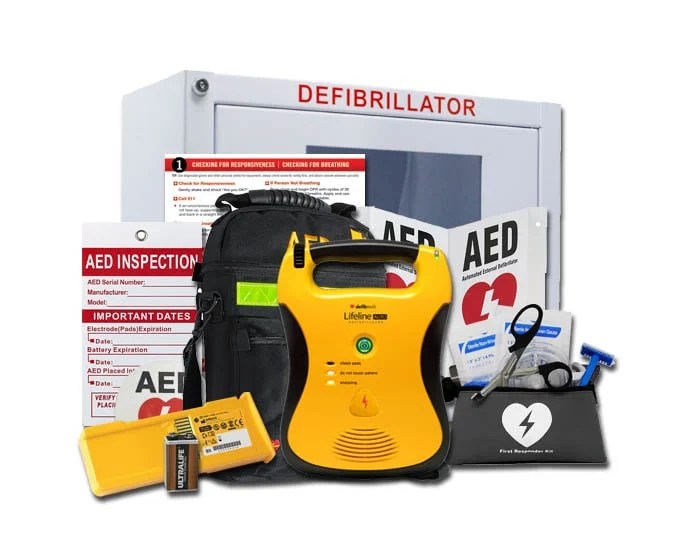
When you purchase an AED package for your business, you’re getting more than just the defibrillator. A comprehensive package is designed to make your AED program effective and easy to manage from day one. In addition to the AED machine itself, a typical bundle includes a battery, a set of adult electrode pads, and a carrying case for portability. Most business packages also come with a wall-mounted cabinet and a 3D sign to ensure the AED is highly visible and easily accessible during an emergency. Some packages may also include a first aid kit, a window decal, and an inspection tag to help you keep track of maintenance.
Purchasing Options for Organizations
For businesses with multiple locations or larger facilities, outfitting each site with an AED requires a coordinated approach. Managing dozens of devices across different offices or stores can be complex, which is why specialized programs exist to simplify the process. These solutions help with everything from initial purchasing and installation to ongoing maintenance and compliance tracking for your entire fleet of AEDs. At Response Ready, we offer programs like our AED Rental Program that can make it easier for organizations to scale their safety initiatives. This ensures every location is equally prepared and that all devices are consistently maintained and ready to use.
Understanding FDA Approval and Prescriptions
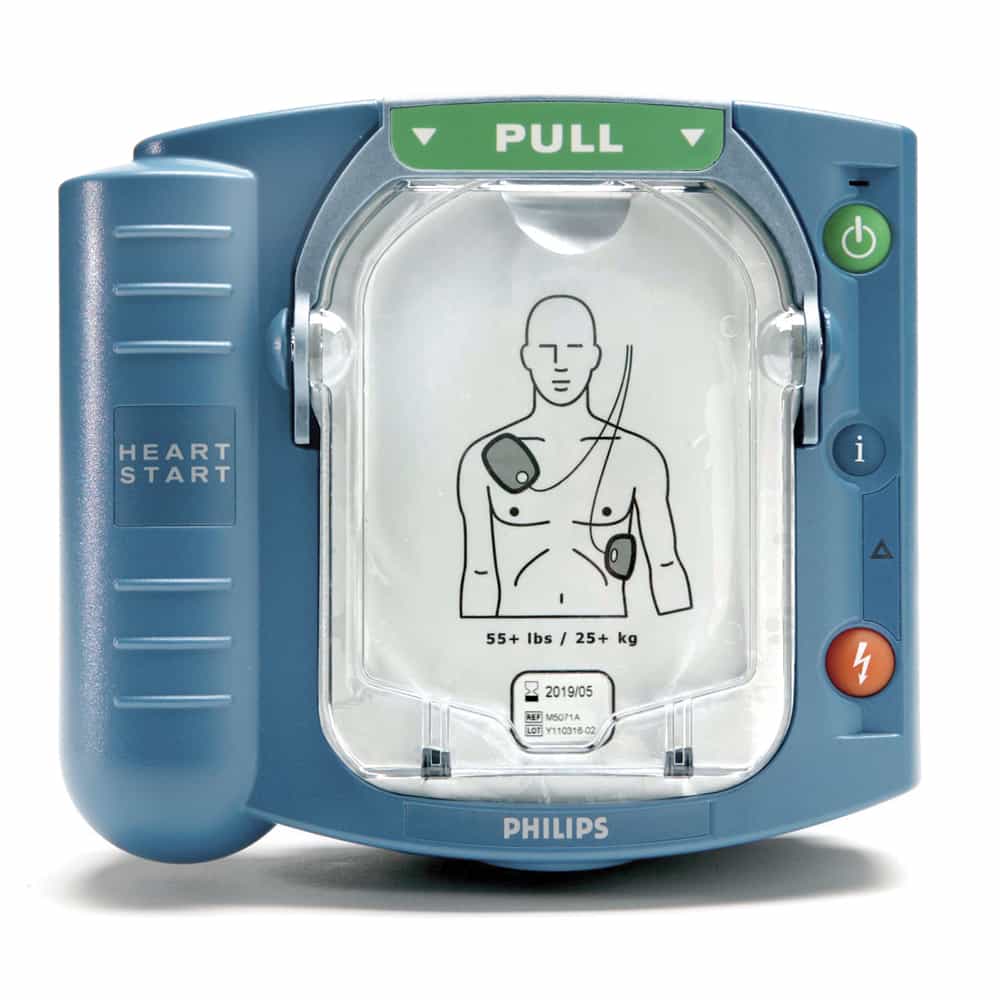
For a long time, all AEDs required a physician’s prescription for purchase. This has changed. The Philips HeartStart OnSite is currently the only AED that has been granted over the counter status by the FDA, meaning you can purchase it for personal use without a prescription. This removes a significant barrier for homeowners and families. While other excellent models are available with a prescription, which we can easily facilitate, the OnSite accessibility makes it a leading choice for home settings.
Our Picks: The Best AEDs for Business
While the perfect AED depends on your unique needs, some models consistently stand out for their reliability and user friendly design in non medical settings. We have a carefully curated selection of FDA approved devices so you can find the ideal solution to fit your space, budget, and skill level at Responseready.
-
Philips HeartStart OnSite:
Often considered the best for simplicity and home use. It’s lightweight, intuitive, and the only AED available without a prescription, making it incredibly accessible for families. -
HeartSine Samaritan PAD 350P/360P:
This is one of the most compact, lightweight, and durable AEDs on the market. Its combined battery and pad cartridge simplifies maintenance with a single expiration date to track. -
Defibtech Lifeline:
Known for its ruggedness and straightforward two button operation. This is an excellent choice for small businesses, community centers, or any environment where the device might face more wear and tear.
ZOLL AED Plus
The ZOLL AED Plus is a favorite in workplaces for one simple reason: it actively helps you perform better CPR. It’s known for providing real-time CPR feedback, which is crucial for effective defibrillation. This feature guides you on the correct rate and depth of chest compressions, taking the guesswork out of the equation. With clear voice prompts like “Push harder” and a visual bar graph showing you how you’re doing, it’s like having a coach by your side. This makes it an excellent choice for environments where users may not have formal training. The unique one-piece electrode pad design also simplifies placement on the chest, saving precious time and reducing stress during a chaotic event.
Cardiac Science Powerheart G5
The Cardiac Science Powerheart G5 is all about flexibility, making it a great fit for a wide range of organizations. It offers both fully automatic and semi-automatic options, which lets you choose the model that best suits your team’s comfort level and training. A semi-automatic device prompts the user to push a button to deliver the shock, while a fully automatic model delivers the shock on its own after a clear warning. This flexibility makes it suitable for any environment, from corporate offices to fitness centers. The Powerheart G5 also features daily self-tests, escalating energy levels, and dual-language capabilities, ensuring it’s a reliable and accessible device for any responder.
You Have an AED. Now What?
Your commitment to safety doesn’t end at checkout. Proper placement and maintenance are just as important as the device itself. Place your AED in a central, visible, and unlocked location where it can be retrieved in under 90 seconds. Everyone in your home or office should know where it is.
Regular readiness checks are also crucial. Modern AEDs perform automated daily, weekly, and monthly self tests to ensure the battery and internal systems are working correctly. Most have a simple status indicator, like a green light or checkmark, that shows it’s ready. Our Response Ready App makes this even easier, allowing you to log your monthly checks with a quick scan from your phone.
For businesses and organizations, managing multiple devices and staying compliant with local regulations can be complex. That’s why we offer end to end support. Our AED365 program offers comprehensive management solutions, including medical oversight and maintenance reminders, to ensure your devices are always prepared for an emergency. We also provide a full menu of training programs for AED use, CPR, and first aid to empower you and your team to act with confidence.
Choosing an AED is one of the most important decisions you can make. By focusing on ease of use, your environment’s specific needs, and the total cost of ownership, you can select a device that provides true peace of mind. You are not just buying a box; you are building a lifeline.
Frequently asked questions
Q: Are AEDs difficult to use if I have no medical training?
A: Not at all. Modern AEDs are specifically designed for untrained bystanders. They use clear, calm voice instructions and visual diagrams to guide you through every step of the process. The device analyzes the heart rhythm and will only advise a shock if it is needed, making it impossible to shock someone accidentally.
Q: Do I need a prescription to buy an AED for my home?
A: In most cases, yes, but there is an exception. The Philips HeartStart OnSite is the only model FDA approved for sale over the counter without a prescription, making it a popular choice for home use. For other models, Response Ready can easily help you obtain the necessary prescription during the purchase process.
Q: What are the ongoing costs of owning an AED?
A: The main ongoing costs are for replacing the electrode pads and the battery. Pads typically expire every 2 to 4 years, and batteries last between 4 and 7 years, depending on the model. It’s important to factor these replacements into your budget when choosing a device.
Q: How do I know if my AED is working and ready to use?
A: All AEDs perform regular automated self tests. They have a visual readiness indicator, usually a flashing light or a status screen, that shows you at a glance whether the device is ready for use. We recommend checking this indicator as part of a monthly routine. The Response Ready App can help you track these inspections easily.
Q: Where is the best place to store my AED at home or in my office?
A: The best place is a central, easily accessible location that isn’t locked. It should be visible and in a spot where anyone can grab it quickly in an emergency. Avoid areas with extreme temperatures or high humidity. Common spots include a main hallway, kitchen, or near a fire extinguisher.
Understanding Legal Requirements
While placing an AED in your business is always a smart safety measure, for some organizations, it’s also the law. State and local regulations vary, but requirements often apply to specific venues like gyms, schools, and large public buildings. For example, some jurisdictions mandate that any building over a certain square footage with a minimum number of daily occupants must have an AED available. It’s essential to research your local ordinances to ensure you’re compliant. Even if it’s not legally required, following guidelines from organizations like OSHA and the American Heart Association demonstrates a commitment to safety that protects your employees and customers, and it can also limit liability in an emergency.
Registering Your AED with Local Emergency Services
Owning an AED is about more than just having the device on-site; it’s about integrating it into your community’s emergency response network. Many states require you to register your AED with local emergency services, and this simple step is incredibly important. When someone calls 911 to report a cardiac arrest, the dispatcher can see your registered AED on their map and direct a nearby bystander to retrieve it while paramedics are on their way. This can save critical minutes and dramatically improve the chance of survival. This registration is a key part of a complete AED program, ensuring your device is a known resource for the entire community.
Why Purchase From an Authorized Dealer?
When you’re buying life-saving equipment, where you buy it from matters. Purchasing from an authorized dealer like Response Ready ensures you receive a new, genuine, FDA-approved device that is fully covered by the manufacturer’s warranty. Unauthorized sellers on third-party marketplaces may offer lower prices, but they often come with risks, including counterfeit devices, expired components, or products that aren’t eligible for support or recalls. An authorized dealer provides more than just a product; you get the assurance of quality and access to a team trained by the manufacturers. We can help you choose the right AED package and provide ongoing support for the life of your device.
Training and Program Management
An AED is a powerful tool, but the confidence to use it comes from training. Providing CPR and AED training for your team empowers them to act quickly and effectively, turning bystanders into capable first responders. Beyond the initial setup, an AED requires ongoing management. This includes performing regular readiness checks, tracking the expiration dates of electrode pads and batteries, and ensuring your program remains compliant with local laws. To simplify this, our AED Total Solution program offers comprehensive support, including medical oversight, maintenance reminders, and compliance management, so you can be sure your device is always ready to save a life.
Key Takeaways
- Match the AED to your environment: Select a device based on your specific workplace, not just a list of features. Consider if you need pediatric options, a durable model for a demanding space, and whether a semi or fully automatic device is the best fit for your team.
- Plan for the total cost of ownership: The initial price is only part of the investment. Be sure to account for the long-term replacement costs of essential supplies like batteries and electrode pads to create a realistic and sustainable budget.
- Build a complete readiness plan: An AED is most effective when supported by a solid program. This means placing it in a visible location, conducting regular maintenance checks, providing CPR and AED training, and registering your device with local emergency services.
Related Articles
- Choosing the best AED for your home school or business
- How to choose the best AED for your home school or small business
- Best AED for Your Office | Workplace Defibrillator Guide — Response Ready
- How to choose a user friendly AED for your home or business
- How to choose the right AED for your home or small business
Disclaimer for information purposes only:
The information provided on this website is intended for general educational and informational purposes only. It is not medical advice and should not be used as a substitute for professional diagnosis, treatment, or care. Always consult a qualified healthcare or medical professional regarding any health-related questions or concerns.
While we strive to ensure the information shared is accurate and up to date, no guarantees are made regarding completeness, accuracy, or applicability to any individual situation. Use of this content is at the reader’s sole discretion and risk.
This website is part of the Response Ready family of emergency preparedness and training resources, including CPR & first aid training and compliance services, AED sales and program support, AED program management software, and medical oversight solutions provided through our affiliated platforms:
• CPR1.com
• AEDLeader.com
• AEDTotalSolution.com
• MDSIMedical.com
By accessing or using this website, you agree to release, indemnify, and hold harmless the website owners, authors, contributors, and affiliated entities from any claims, losses, damages, or liabilities arising from the use or reliance on the information presented.