Why AED Requirements Matter for Your Business
Sudden cardiac arrest (SCA) strikes more than 350,000 Americans outside hospitals every year, and it does not discriminate by location. It happens in offices, gyms, schools, churches, and retail stores. When an automated external defibrillator (AED) is used within the first few minutes, survival rates can exceed 70%. Without one, the odds drop below 10%.
A growing number of states now require certain businesses to have AEDs on-site. Even where mandates do not exist, the legal and ethical case for having a defibrillator is compelling. This guide breaks down AED requirements by state so you can determine whether your business is legally obligated to have one, and what steps to take if it is.
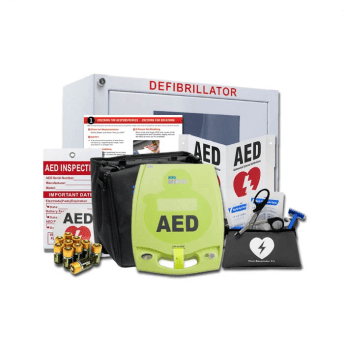
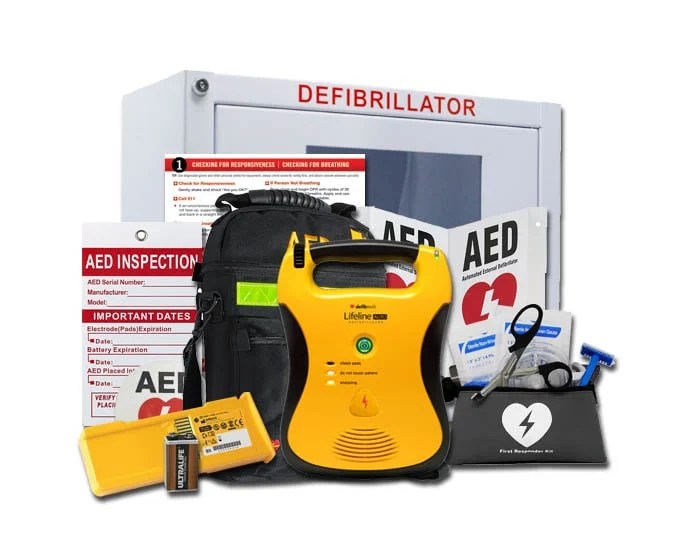
Looking for the right AED for your business? Explore our AED value packages or call 858-665-2025 to speak with a specialist who can help you choose the best option for your facility.
Which States Require AEDs for Businesses?
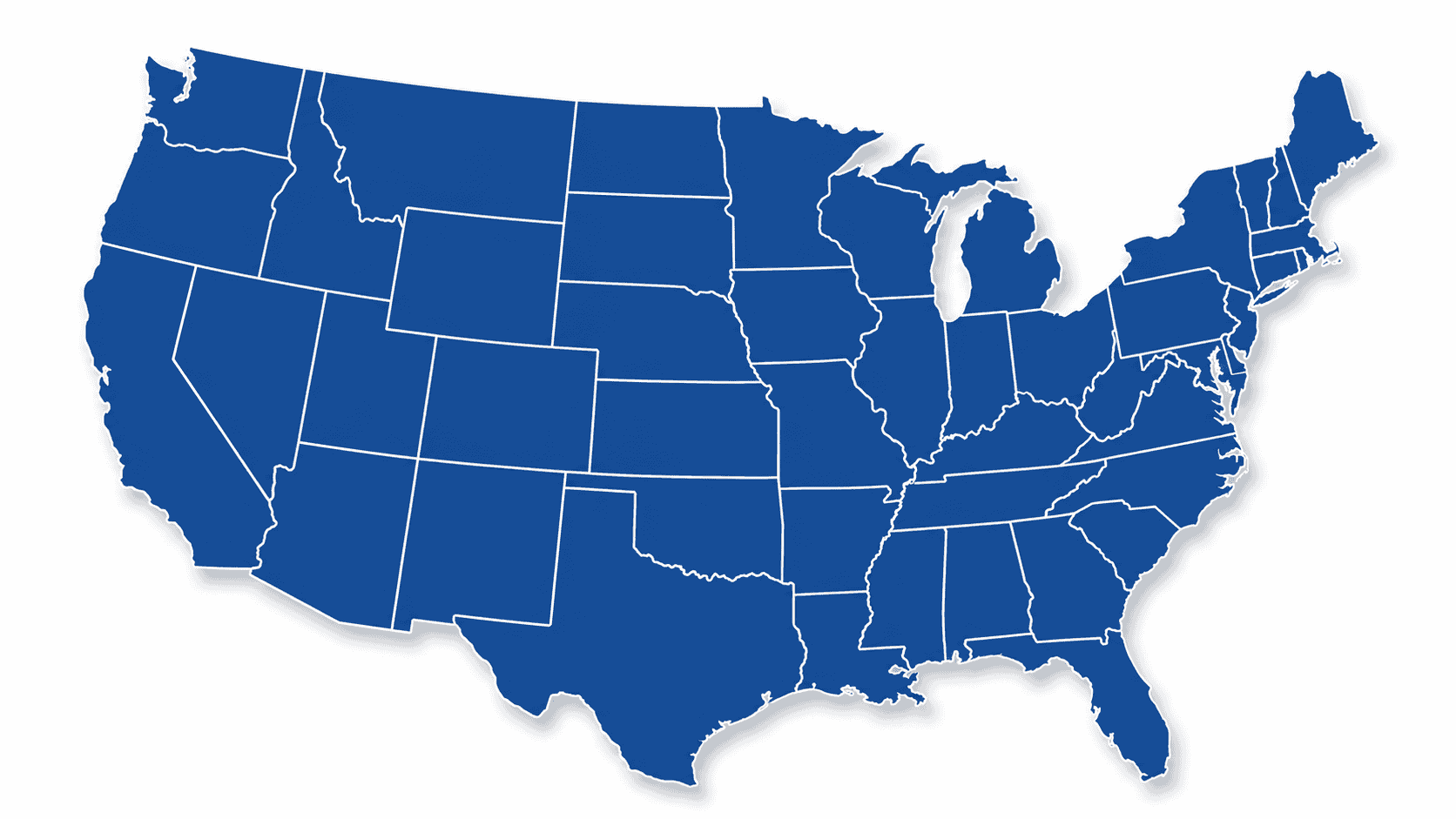
AED requirements vary by state — and by setting. Many states require AEDs in schools, health and fitness facilities, or state-owned buildings, while rules for general businesses differ widely and change over time. This page is general information, not legal advice. For an authoritative, up-to-date overview, see the CDC Public Access Defibrillation (PAD) State Law Fact Sheet, and confirm the current rules with your state health department. Not sure what applies to your organization? Call Response Ready at 858-665-2025.
AED laws vary widely from state to state. Some have broad mandates covering multiple business types, while others only address specific industries or facility sizes. Below is a summary of the states with the most significant workplace AED requirements.
States With Broad AED Mandates
- New York: Requires AEDs in all public schools, health clubs, public places of assembly with occupancy over 300, and dental offices. One of the most comprehensive state AED laws in the country.
- California: Mandates AEDs in health studios and fitness facilities. Also requires AEDs in many public buildings and strongly encourages them in workplaces with 200+ employees.
- Illinois: Requires AEDs in all schools (public and charter), fitness facilities, and indoor physical fitness facilities.
- New Jersey: Mandates AEDs in schools, health clubs, and all state and county government buildings.
- Massachusetts: Requires AEDs in schools, health clubs, and encourages them in workplaces.
- Florida: Mandates AEDs in all high school athletic programs and strongly encourages them for other businesses.
- Texas: Requires AEDs in all schools with interscholastic athletic programs and encourages them for large businesses.
- Oregon: Requires AEDs in health clubs and fitness centers.
- Arkansas: Mandates AEDs in all fitness centers and long-term care facilities.
- Rhode Island: Requires AEDs in all health clubs, schools, and state buildings.
States With School-Specific Mandates
At least 16 states require AEDs in K-12 schools. These include New York, California, Illinois, New Jersey, Florida, Texas, Pennsylvania, Ohio, Maryland, Virginia, Georgia, Connecticut, Michigan, Washington, Arizona, and Massachusetts. If you operate a school or manage a school AED program, check your state’s specific requirements carefully.
States With Fitness Center Mandates
More than 20 states now require health clubs and fitness centers to maintain at least one AED on the premises. If you own or operate a gym, this is one area where compliance is non-negotiable. The exact list continues to expand as legislators recognize the elevated cardiac risk during physical exertion.
Which Business Types Are Legally Required to Have AEDs?
Even if your state does not have a blanket business AED mandate, your specific industry may still be subject to requirements. Here are the business types most commonly covered by AED legislation.
Schools and Educational Institutions
Schools are the most heavily regulated category. Many states require at least one AED per building, trained staff, and a written emergency action plan. The American Heart Association recommends AEDs within a 3-minute walk of any location in a school. Learn more about CPR and AED training programs for school staff.
Fitness Centers and Health Clubs
Because exercise can trigger cardiac events in individuals with undiagnosed conditions, over 20 states mandate AEDs in gyms. Most laws require the devices to be accessible and staff to be trained in their use.
Large Workplaces and Corporate Offices
Several states require AEDs in offices and workplaces above certain occupancy thresholds. OSHA does not currently require AEDs in the workplace at the federal level, but many safety experts consider them a best practice for any facility with 50 or more employees.
Government Buildings and Public Venues
Federal buildings, state facilities, airports, and convention centers frequently fall under AED mandates. If your business involves public-facing venues or government contracts, AED compliance may be a contractual requirement even where it is not legally mandated.
Healthcare Facilities and Dental Offices
Some states, including New York, require AEDs in dental offices and outpatient medical facilities. If you operate in the healthcare space, having an AED is both a regulatory and a patient-safety issue. Read our complete guide to AEDs for dental offices and medical practices to understand compliance requirements and program setup for clinical environments.
Need help choosing the right AED program for your organization? The AED Total Solution managed compliance program handles device tracking, maintenance reminders, staff training coordination, and physician oversight for just $99 per year. Call 858-665-2025 to learn more.
AED Compliance Checklist for Businesses

Whether your state mandates AEDs or you are implementing one proactively, follow these steps to ensure compliance.
- Research your state and local laws. Review your state’s public health and safety statutes. Check county and city ordinances as well, since some local jurisdictions have stricter requirements than the state.
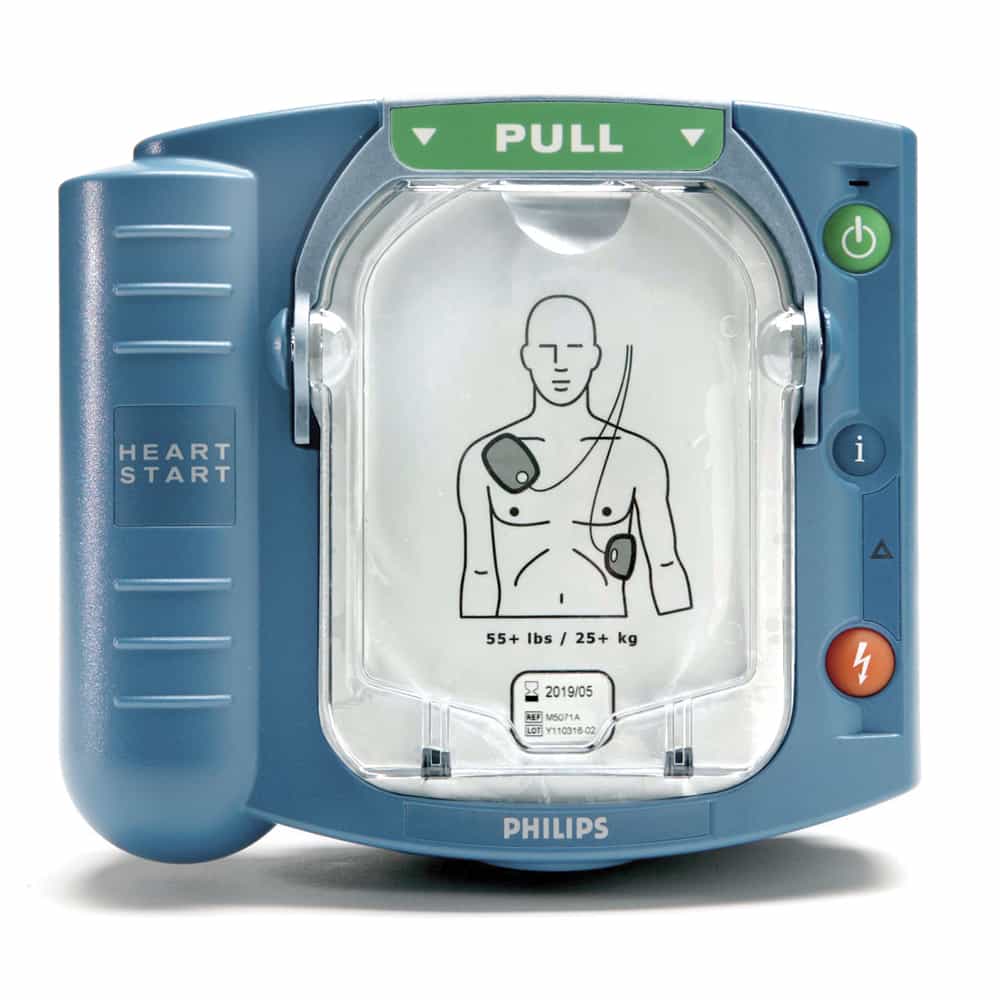
- Choose an FDA-approved AED. Only FDA-approved AED devices should be used. Response Ready carries all six FDA-approved AED brands: Philips, ZOLL, HeartSine, Stryker, Cardiac Science, and Defibtech.
- Place the AED in an accessible location. Mount the device in a high-traffic area within a 3-minute walk of all occupied spaces. Use a visible wall cabinet with signage.
- Train your staff. Most state laws require at least some employees to be trained in CPR and AED use. Schedule CPR/AED training for key staff members on a regular cycle.
- Register your AED. Many states require you to register your AED with local EMS or a state registry. This ensures first responders know an AED is available at your location.
- Establish a maintenance schedule. Check pads and batteries regularly for expiration dates. Follow a documented AED maintenance checklist to keep your device rescue-ready.
- Obtain physician oversight. Some states require a medical director to oversee your AED program. Response Ready provides medical director services through Dr. Ann Jarris, MD, MBA, FACEP.
- Create a written emergency action plan. Document the steps employees should take during a cardiac emergency, including who retrieves the AED, who calls 911, and who performs CPR.
Consequences of Not Having an AED
Businesses that fail to comply with AED mandates may face the following consequences.
- Fines and penalties. States with AED mandates can impose fines on non-compliant businesses. In some jurisdictions, repeated violations can result in escalating penalties or facility closure orders.
- Civil liability. If a cardiac arrest occurs at your business and no AED is available, you could face wrongful death lawsuits. Juries are increasingly sympathetic to plaintiffs in cases where a readily available, low-cost device could have saved a life.
- Insurance consequences. Some commercial liability insurers offer premium discounts for businesses with AED programs. Conversely, a lack of AED compliance in a mandated state could be used to argue negligence in an insurance claim.
- Reputational damage. A preventable death at your facility can result in lasting reputational harm, negative press, and loss of customer trust.
Good Samaritan Law Protections for AED Use
One common concern that holds businesses back from purchasing AEDs is fear of legal liability. The good news: all 50 states and the District of Columbia have Good Samaritan laws that protect individuals who use an AED in good faith during an emergency.
These laws generally protect:
- The person who uses the AED on a cardiac arrest victim
- The business or organization that owns the AED
- The physician who provides medical oversight for the AED program
As long as the AED is properly maintained, the user acts in good faith, and the device is used on someone experiencing a genuine cardiac emergency, liability exposure is minimal. In fact, the greater legal risk is not having an AED at all.
Ready to protect your business and your people? Contact us or call 858-665-2025 to discuss AED options for your facility. We offer free shipping on orders over $99 and a 30-day money-back guarantee.
Frequently Asked Questions
Does OSHA require AEDs in the workplace?
OSHA does not currently mandate AEDs at the federal level. However, OSHA’s best practices guidelines recommend AEDs as part of a comprehensive workplace first aid program, and many states have their own requirements. Businesses in high-risk industries or with large workforces should strongly consider adding AEDs regardless of federal requirements.
How many AEDs does my business need?
The general guideline is one AED for every 50,000 square feet, or enough to ensure any occupied area is within a 3-minute walk of a device. Multi-story buildings should have at least one AED per floor. Consult your state’s specific requirements and consider your facility layout.
Do I need to train employees to use an AED?
Most states with AED mandates require at least some trained responders on-site. Even where training is not legally required, the American Heart Association strongly recommends it. Modern AEDs provide voice and visual prompts that guide untrained users, but formal CPR/AED training increases confidence and response speed.
How much does an AED cost for a business?
AED devices from FDA-approved manufacturers typically range from $1,400 to $2,900. Value packages that include a cabinet, signage, and a first responder kit offer better overall value. Rental programs starting at $45 per month are also available for businesses that prefer lower upfront costs.
What happens if someone uses our AED and the patient does not survive?
Good Samaritan laws in all 50 states protect AED users who act in good faith. An AED will only deliver a shock if it detects a shockable heart rhythm. You cannot harm someone by using an AED incorrectly, as the device makes the medical decision. The legal risk of not having an AED far outweighs the risk of having one.
How often do AED pads and batteries need to be replaced?
AED pads typically expire every 2 to 5 years, and batteries last 4 to 5 years depending on the manufacturer. Check your device’s specific requirements and set calendar reminders. A managed program like the AED Total Solution handles these reminders automatically.