- Published
- April 13, 2026
AED for Dentist Offices and Medical Practices — Why Every Clinic Needs One


Why Dentist Offices and Medical Practices Need an AED
Medical emergencies don’t wait for an ambulance. In dental offices and medical practices, patients face unique cardiac risks from sedation, anxiety, and pre-existing conditions. An automated external defibrillator (AED) can mean the difference between life and death when sudden cardiac arrest strikes in your clinic.
Every year, roughly 356,000 out-of-hospital cardiac arrests occur in the United States. While most happen at home, a significant percentage occur in medical and dental offices where patients are already under stress. The American Dental Association (ADA), the American Heart Association (AHA), and OSHA all recognize the value of having AEDs readily accessible in healthcare settings.
This guide covers everything dental and medical practice owners need to know about choosing, implementing, and maintaining an AED program for their clinic.
Cardiac Emergencies in Dental and Medical Offices
Dental and medical practices see a higher-than-average rate of medical emergencies compared to typical workplaces. Here’s why:
Why Dental Offices Are High-Risk Settings
- Sedation and anesthesia — Local anesthetics containing epinephrine can trigger cardiac arrhythmias in susceptible patients. Conscious sedation and nitrous oxide add additional cardiovascular risk.
- Patient anxiety and stress — Dental phobia affects up to 36% of the population. Extreme anxiety triggers adrenaline surges that can provoke cardiac events, especially in patients with underlying heart conditions.
- Vasovagal syncope — The most common medical emergency in dental offices. While usually benign, fainting can mask or trigger more serious cardiac events.
- Aging patient demographics — Older adults with cardiovascular disease, hypertension, and diabetes are at elevated risk during dental procedures.
- Drug interactions — Patients taking blood thinners, beta-blockers, or other cardiac medications may react unpredictably to dental anesthetics.
Common Medical Emergencies in Clinical Settings
Studies published in the Journal of the American Dental Association have found that roughly one-third of dentists will encounter a medical emergency in their office during their career. The most common emergencies include:
- Syncope (fainting) — most frequent
- Allergic reactions and anaphylaxis
- Angina and cardiac chest pain
- Cardiac arrest (rare but fatal without immediate intervention)
- Seizures
- Hypoglycemic episodes
- Respiratory distress
When cardiac arrest occurs, survival drops roughly 10% for every minute without defibrillation. With average EMS response times of 7-10 minutes, having an AED on-site dramatically improves outcomes.
Protect Your Patients and Staff
Response Ready carries all six FDA-approved AED brands and offers expert guidance for dental and medical practices. Our team of EMS professionals will help you choose the right AED for your clinic.
AED Requirements for Dental and Medical Practices
While there is no single federal law mandating AEDs in every dental or medical office, several regulatory bodies and professional organizations strongly recommend them:
Professional Guidelines
- American Dental Association (ADA) — The ADA recommends that dental offices maintain emergency preparedness equipment, including AEDs, especially when administering sedation.
- American Heart Association (AHA) — The AHA recommends AED access in all healthcare facilities and public spaces where cardiac arrest may occur.
- OSHA — While OSHA does not specifically mandate AEDs, its General Duty Clause requires employers to provide a workplace free from recognized hazards. Having an AED supports compliance.
- State dental boards — Many states require dental offices that offer sedation to have emergency equipment, including AEDs, as part of their sedation permit requirements.
State-by-State Requirements
AED requirements vary significantly by state. Some states mandate AEDs in specific healthcare settings, while others offer Good Samaritan protections for AED use. Check our comprehensive AED requirements by state guide for your specific obligations.
Key state considerations for dental and medical practices:
- Sedation permits — States including California, New York, Texas, and Florida require AEDs as part of sedation/anesthesia permit requirements.
- Good Samaritan protections — Most states provide legal immunity for Good Samaritan AED use, protecting practitioners who use an AED in good faith.
- Training requirements — Some states require that clinical staff maintain current CPR and AED certification.
Choosing the Right AED for Your Practice
Not all AEDs are the same. When selecting a defibrillator for a dental or medical office, consider these factors:
Key Features to Look For
- Clear audio and visual prompts — In a high-stress emergency, step-by-step voice guidance ensures proper use even for staff with limited training.
- Compact, wall-mountable design — Dental and medical offices need space-efficient AEDs that are quickly accessible from treatment rooms.
- Fast shock delivery — Look for AEDs with rapid analysis and charge times (under 10 seconds) to minimize interruption to CPR.
- Real-time CPR feedback — Advanced AEDs like the ZOLL AED 3 provide real-time CPR coaching, ensuring compressions meet AHA guidelines.
- Long battery life and low maintenance — Choose an AED with a battery life of 4-5 years and pads that don’t expire quickly to minimize ongoing costs. See our AED maintenance checklist.
- Durability and reliability — FDA-approved AEDs undergo rigorous testing. Only purchase from authorized distributors to ensure genuine products and full warranties.
Recommended AED Models for Clinical Settings
Response Ready carries all six FDA-approved AED manufacturers, giving you the widest selection available from any single distributor. Top picks for dental and medical practices include:
| AED Model | Best For | Key Feature | Price Range |
|---|---|---|---|
| ZOLL AED 3 | Practices wanting CPR coaching | Real-time CPR feedback with depth and rate monitoring | $2,000-$2,500 |
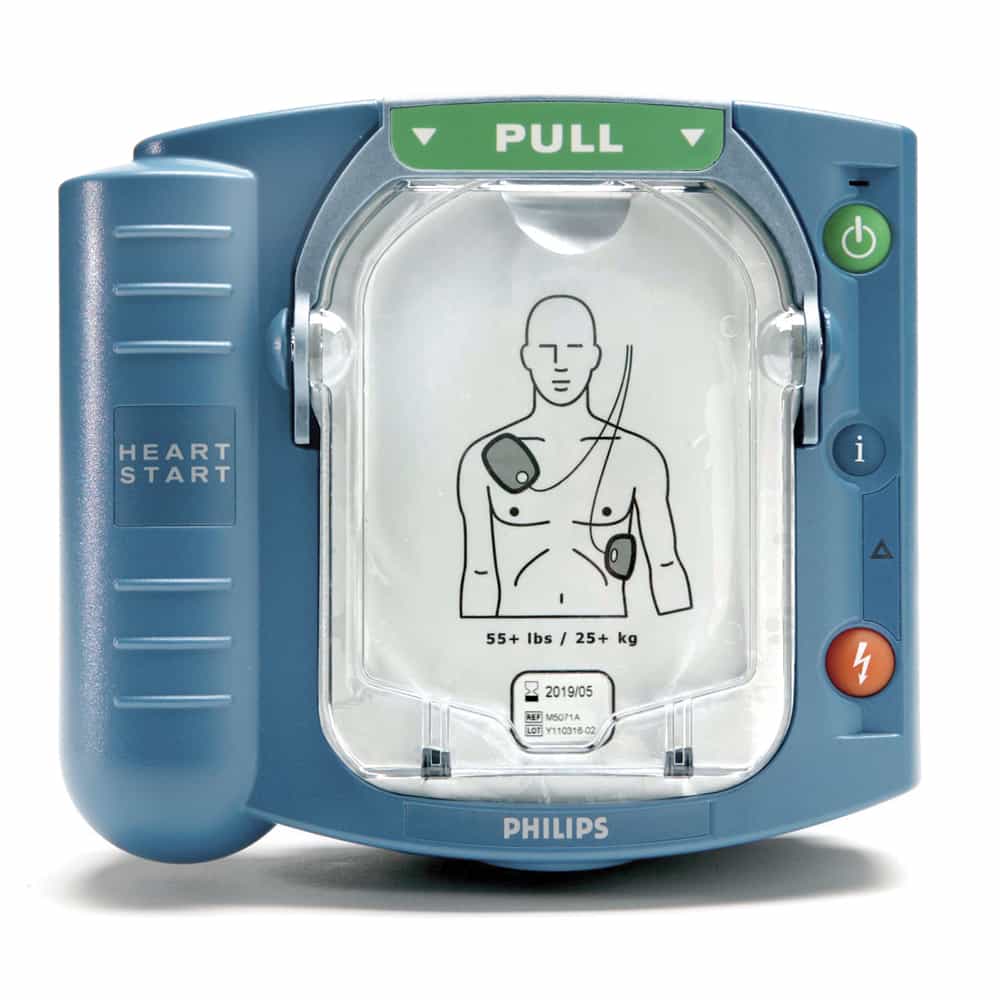
| Philips HeartStart FRx | Multi-room practices | Rugged, portable design with infant/child key | $1,500-$1,900 |
| HeartSine Samaritan PAD 360P | Small practices | Fully automatic (no button push required), lightweight | $1,400-$1,700 |
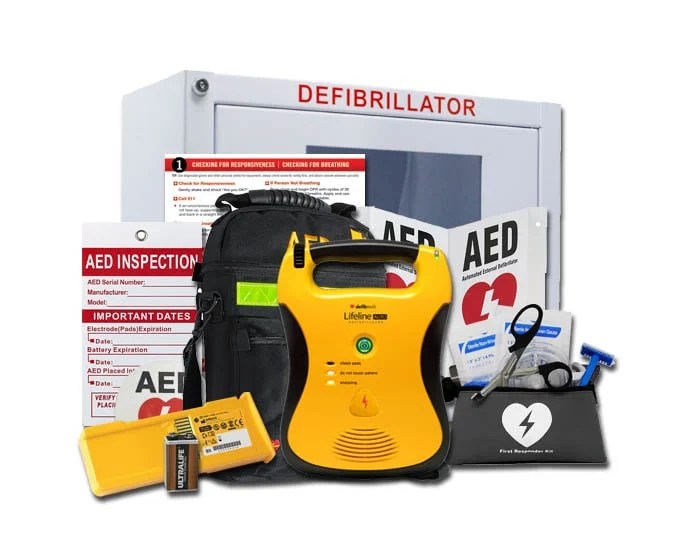
| Defibtech Lifeline VIEW | Practices prioritizing ease of use | Full-color video screen with step-by-step video guidance | $1,800-$2,200 |
For a detailed side-by-side comparison, see our AED brands comparison guide. Need help choosing? Contact our team for a free consultation tailored to your practice.
How to Implement an AED Program in Your Practice
Purchasing an AED is just the first step. A complete AED program ensures your team is prepared to respond effectively. Here’s how to set up your program:
Step 1: Assess Your Practice’s Needs
- How many treatment rooms do you have?
- How far is your farthest treatment room from the AED location?
- Do you administer sedation or anesthesia?
- What is the average age and risk profile of your patient population?
- How many staff members need to be trained?
For most dental offices and small medical practices, one AED is sufficient if it can be reached within 60 seconds from any treatment area. Larger practices or multi-floor clinics may need two or more units.
Step 2: Choose Your AED and Placement
- Mount the AED in a central, visible location — A hallway between treatment rooms is ideal. Use a wall cabinet with clear signage.
- Avoid locked cabinets — In an emergency, every second counts. Use open-front or alarmed cabinets that provide immediate access.
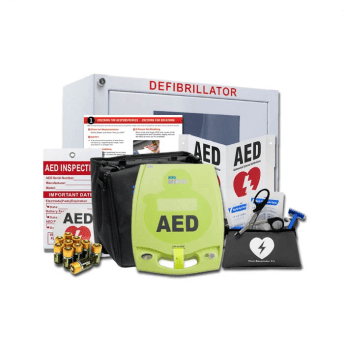
- Consider a value package — Most AED packages include the device, pads, battery, cabinet, signage, and a rescue kit for a better overall value.
Step 3: Train Your Staff
All clinical and front-office staff should be trained in CPR and AED use. Training options include:
- AHA Heartsaver CPR/AED — The standard certification for non-healthcare professionals (front desk, dental assistants).
- AHA BLS (Basic Life Support) — Required for dentists, hygienists, and nurses. Learn the difference between BLS and CPR certification.
- In-office team training — Response Ready’s nationwide instructor network can provide on-site group training for your entire team.
Step 4: Establish a Maintenance Schedule
AEDs require regular checks to ensure readiness:
- Monthly visual inspections — Check the status indicator light, pad expiration dates, and battery level.
- Replace pads — Every 2-4 years depending on the model (or immediately after use).
- Replace batteries — Every 4-5 years for most models.
- Document everything — Maintain a log of inspections, training dates, and equipment status.
Response Ready’s AED Total Solution program handles all of this for you — pad and battery replacements, compliance tracking, and ongoing support for just $99/year.
Simplify AED Compliance for Your Practice
The AED Total Solution program manages your entire AED lifecycle — from pad and battery replacements to compliance tracking and staff training reminders. Let us handle the maintenance so you can focus on patient care.
Learn About AED Total Solution → | Call us: 858-665-2025
Cost of an AED Program for Dental and Medical Offices
Investing in an AED program is affordable, especially when weighed against the potential cost of a patient emergency without one:
Initial Investment
- AED device — $1,400 to $2,500 depending on features and brand
- Wall cabinet and signage — $150 to $300 (often included in value packages)
- Staff training — $50 to $100 per person for CPR/AED certification
Total first-year cost for a small practice: approximately $1,800 to $3,200. For a detailed cost breakdown, see our AED pricing guide.
Ongoing Costs
- Replacement pads — $30 to $100 every 2-4 years
- Replacement battery — $100 to $300 every 4-5 years
- Training recertification — $50 to $100 per person every 2 years
- AED program management — $99/year with Response Ready’s AED Total Solution (optional but recommended)
AED Rental Option
If purchasing isn’t feasible right now, Response Ready offers AED rental programs starting at $45-$75 per month, including the device, maintenance, and support.
Frequently Asked Questions
Are dentists required to have an AED in their office?
There is no universal federal requirement, but many states require AEDs as part of sedation permits. Professional organizations including the ADA and AHA strongly recommend AEDs in all dental offices. Even without a mandate, having an AED is a best practice that protects patients and staff.
Can dental office staff use an AED without medical training?
Yes. AEDs are designed for use by anyone, even without training. The device provides step-by-step voice prompts and will only deliver a shock if the patient’s heart rhythm requires it. However, all dental staff should maintain current CPR/AED certification for the most effective response.
How many AEDs does a dental or medical office need?
Most single-location practices need one AED, placed centrally so it can be reached within 60 seconds from any treatment room. Larger practices, multi-story buildings, or clinics with multiple wings may need additional units.
What is the liability risk of having (or not having) an AED?
Good Samaritan laws in most states protect AED users from liability. The greater liability risk is often in not having an AED — especially if your practice administers sedation. Malpractice insurers increasingly view AED programs favorably.
How often should an AED be inspected in a medical office?
Perform a visual inspection monthly (check status indicator, pad expiration, battery level). Full functional checks should align with manufacturer recommendations. Use our AED maintenance checklist to stay on schedule.
Does insurance cover AED purchases for dental offices?
AEDs are typically a deductible business expense. Some professional liability insurers offer discounts for practices with AED programs. Check with your malpractice carrier — the AED may partially or fully pay for itself through reduced premiums.
Ready to Protect Your Practice?
Response Ready is the only distributor authorized by all six FDA-approved AED manufacturers. Our EMS-trained team will help you select the right AED, set up your program, and keep your practice compliant year after year.
Disclaimer for information purposes only:
The information provided on this website is intended for general educational and informational purposes only. It is not medical advice and should not be used as a substitute for professional diagnosis, treatment, or care. Always consult a qualified healthcare or medical professional regarding any health-related questions or concerns.
While we strive to ensure the information shared is accurate and up to date, no guarantees are made regarding completeness, accuracy, or applicability to any individual situation. Use of this content is at the reader’s sole discretion and risk.
This website is part of the Response Ready family of emergency preparedness and training resources, including CPR & first aid training and compliance services, AED sales and program support, AED program management software, and medical oversight solutions provided through our affiliated platforms:
• CPR1.com
• AEDLeader.com
• AEDTotalSolution.com
• MDSIMedical.com
By accessing or using this website, you agree to release, indemnify, and hold harmless the website owners, authors, contributors, and affiliated entities from any claims, losses, damages, or liabilities arising from the use or reliance on the information presented.