Why Gyms and Fitness Centers Need an AED
Sudden cardiac arrest (SCA) can strike anyone, at any time, but the risk rises significantly during intense physical activity. The American Heart Association reports that vigorous exercise temporarily increases the risk of cardiac events, particularly in individuals with undiagnosed heart conditions. For gyms and fitness centers, this creates a unique and serious safety concern.
Consider the reality: your facility hosts members ranging from young athletes to older adults, many pushing their cardiovascular systems to the limit. Some may have underlying conditions they are not even aware of. When cardiac arrest occurs, every second counts. Survival rates drop 7% to 10% for every minute without defibrillation. With emergency medical services averaging 8 to 12 minutes to arrive, an on-site AED (automated external defibrillator) can mean the difference between life and death.
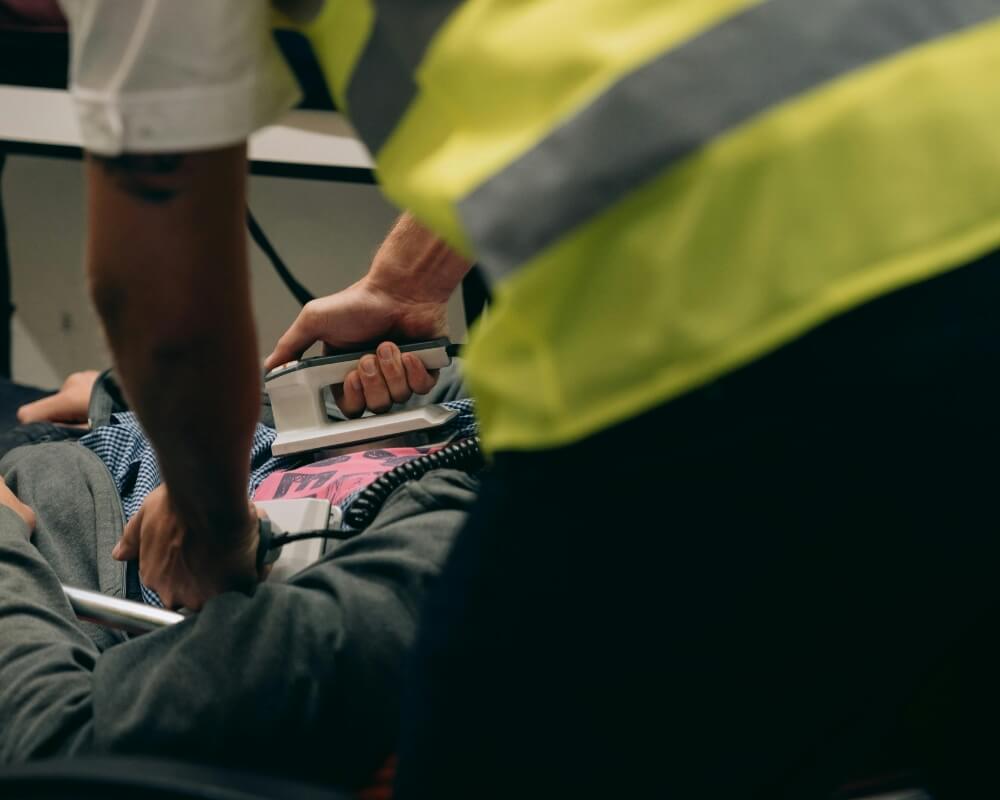
An AED is designed so that anyone can use it, even without medical training. The device analyzes the heart’s rhythm and delivers an electrical shock only when needed to restore a normal heartbeat. When used within the first few minutes of cardiac arrest, AEDs can increase survival rates to nearly 40%, compared to just 9% with CPR alone.
Get certified in CPR
Adult & Pediatric First Aid/CPR/AED — Blended Learning
Self-paced online + in-person skills check. 2-year certification.
CPR, AED & First Aid Certification
Instructor-led on-site. Practice on real manikins and AED trainers.
State Laws Requiring AEDs in Gyms
More than 20 U.S. states now mandate that gyms and fitness centers have AEDs on their premises. These laws reflect a growing recognition that fitness facilities are high-risk environments for sudden cardiac events. If your gym operates in one of these states, compliance is not optional; it is a legal obligation.
Some notable state requirements include:
- California: Health studios and fitness centers must have at least one AED on-site, with trained staff available during business hours.
- New York: Health clubs are required to maintain AEDs and ensure staff are trained in CPR and AED use.
- Illinois: Physical fitness facilities must have AEDs and at least one trained operator present during operating hours.
- Louisiana: Fitness centers with a certain membership threshold must maintain functional AED programs.
- Oregon: Health clubs are required to have AEDs accessible and staff trained to use them.
- New Jersey: Health clubs must have AEDs and personnel trained in their use.
- Arkansas: Fitness facilities must maintain AEDs with trained staff.
Requirements vary by state and may depend on factors like facility size, membership numbers, or the types of activities offered. For a complete overview of what your state requires, visit our detailed AED requirements by state guide. You can also review our AED compliance guide for step-by-step instructions on meeting regulatory standards.
Even in states without a specific gym AED mandate, having a defibrillator is strongly recommended. OSHA’s General Duty Clause requires employers to maintain a safe workplace, and fitness industry best practices increasingly include AED programs as a standard of care.
Benefits of Having an AED in Your Gym
Beyond legal compliance, equipping your fitness facility with an AED delivers significant advantages for your business, your staff, and your members.
Protecting Member Lives
This is the most important reason. When cardiac arrest strikes, immediate access to an AED gives your staff the ability to deliver a life-saving shock before paramedics arrive. Combined with CPR, an AED dramatically improves the chances of survival.
Reducing Liability Exposure
Gyms that fail to provide AEDs in states where they are required face potential fines and, more critically, exposure to wrongful death lawsuits. Even in states without mandates, having an AED program demonstrates a duty of care that can protect your facility in legal proceedings. All 50 states provide Good Samaritan law protections for individuals who use an AED in good faith during an emergency.
Building Member Confidence
Members notice when a gym prioritizes safety. Visible AED placement, trained staff, and posted emergency protocols signal that your facility takes their well-being seriously. This can be a meaningful differentiator in a competitive fitness market and contributes to member retention and positive word-of-mouth.
Meeting Insurance Requirements
Many insurance carriers offer reduced premiums for facilities with AED programs. Some carriers may even require AEDs as a condition of coverage. Investing in a defibrillator program can offset its cost through lower insurance rates over time.
Best AEDs for Gym Environments
Not every AED is equally suited for a fitness center. Gyms present unique challenges: high humidity near pools and showers, dust from equipment areas, the need for rapid deployment during group classes, and use by staff with varying levels of medical training. Here are our top recommendations for gym environments:
ZOLL AED 3
The ZOLL AED 3 features a high-resolution LCD display with real-time CPR feedback, helping even untrained rescuers deliver effective chest compressions. Its IP55 dust and water resistance rating makes it ideal for gym environments, including areas near pools or outdoor fitness zones. WiFi connectivity enables remote monitoring, so your team always knows the device is rescue-ready.
Philips HeartStart FRx
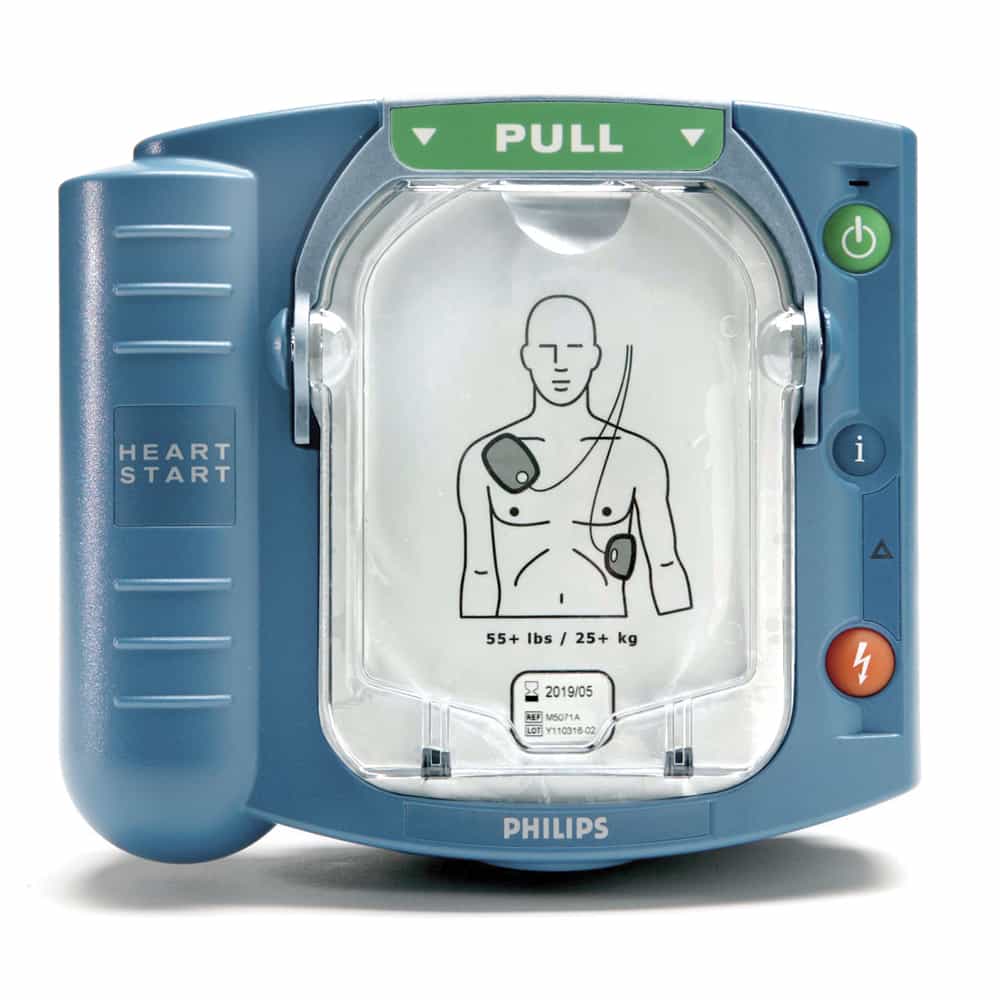
Built for demanding environments, the Philips HeartStart FRx is rugged, lightweight, and designed for use by non-medical responders. Its intuitive voice prompts guide users through each step, and the device is rated for use in environments with dust, moisture, and temperature variations, making it well-suited for fitness facilities.
HeartSine Samaritan PAD 360P
At just 2.4 pounds, the HeartSine Samaritan PAD 360P is one of the lightest AEDs available, making it easy to grab and carry anywhere in your gym. It is fully automatic, meaning it delivers the shock without the operator pressing a button, which removes hesitation during a high-stress emergency. Its IP56 rating provides excellent protection against dust and water.
Physio-Control LIFEPAK CR2
The LIFEPAK CR2 features ClearVoice technology that adapts its instructions based on the noise level in the environment, a useful feature in busy gym settings. Its cprINSIGHT technology allows CPR to continue during heart rhythm analysis, reducing hands-off time. WiFi connectivity through LIFELINKcentral enables remote device management.
For a full comparison of features, pricing, and warranty details across all major brands, check out our best AED machine buying guide. You can also explore our AED brand comparison to find the right model for your specific facility needs.
Where to Place AEDs in Your Gym
Strategic placement is critical. The goal is for any staff member or bystander to be able to retrieve the AED and reach the victim within 3 minutes. Consider these placement guidelines:
- Main entrance or front desk: The most visible and accessible location, ensuring staff can grab the AED quickly during any emergency on the floor.
- Cardio and weight room areas: These high-exertion zones carry the greatest cardiac risk. Placing an AED nearby reduces response time during the most likely scenarios.
- Pool and spa areas: Water environments require IP-rated AEDs placed in visible, accessible locations near the deck or entrance. Ensure the AED is stored in a protective AED wall cabinet to protect it from moisture.
- Group fitness studios: High-intensity classes like spinning, HIIT, and CrossFit push participants hard. An AED in or near the studio reduces critical response time.
- Upper floors or distant wings: In larger facilities, a single AED at the front desk may not be sufficient. Additional units ensure coverage within the 3-minute response window throughout the building.
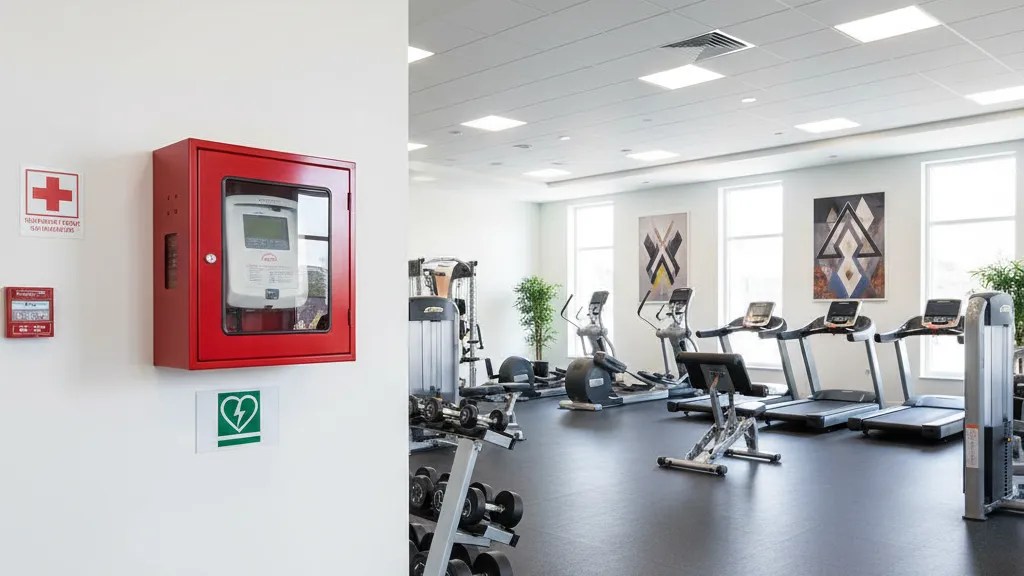
Mount AEDs in clearly marked wall cabinets at a height accessible to all staff. Use universal AED signage so that anyone, including members and visitors, can locate the device instantly in an emergency.

RECOMMENDED
HeartSine Samaritan 350P AED Package
Compact, fully-automatic AED designed for first-time responders. Pads, battery, carry case and wall sign included.
Training Your Gym Staff
An AED is only effective if someone on-site knows how to use it. Most states that require gym AEDs also mandate that staff be trained in CPR and AED operation. Even in states without training mandates, proper staff preparation is essential.
Here is what an effective gym AED training program includes:
- CPR and AED certification: All front-line staff, including personal trainers, front desk employees, and group fitness instructors, should hold current CPR and AED certification. Courses are typically available through the American Heart Association or American Red Cross and take just a few hours to complete.
- Regular practice drills: Schedule quarterly emergency response drills so staff can practice the full sequence: recognizing cardiac arrest, calling 911, beginning CPR, retrieving the AED, and using the device.
- New hire onboarding: Include AED training as a standard part of your new employee orientation process.
- Certification renewal: Most CPR/AED certifications expire after two years. Track expiration dates and schedule renewals proactively. Our guide on how long CPR certification lasts covers the details.
AED Maintenance and Compliance
Placing an AED in your gym is not a one-time task. Ongoing maintenance is essential to ensure the device works when you need it most. Studies show that 15% to 20% of AEDs are not rescue-ready when checked, often due to expired pads or batteries.
Your maintenance checklist should include:
- Monthly visual inspections: Check the AED’s status indicator light, confirm the device is in its designated location, and verify that no components appear damaged.
- Pad and battery replacement: AED pads typically expire every 2 to 4 years, and batteries last 4 to 5 years depending on the model. Track these dates and replace components before they expire. Our AED battery and pad replacement guide walks you through the process for every major brand.
- Compliance documentation: Maintain a log of inspections, training records, and maintenance activities. Many states require this documentation for compliance audits.
- AED registration: Register your AED with your local EMS system so dispatchers know a device is available at your location. Learn more in our AED registration guide.
For gym owners who want to simplify this process, Response Ready’s AED Total Solution program manages inspections, pad and battery tracking, compliance documentation, and physician oversight for just $99 per year, so you can focus on running your facility while your AED program stays rescue-ready.
AED Cost and Budget Options for Gyms
Budget should not be a barrier to protecting your members. AED prices range from approximately $1,400 to $2,900 depending on the brand and features. Several options make AEDs accessible for gyms of all sizes:
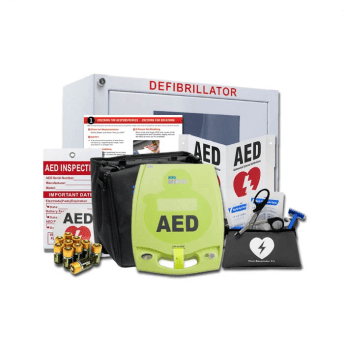
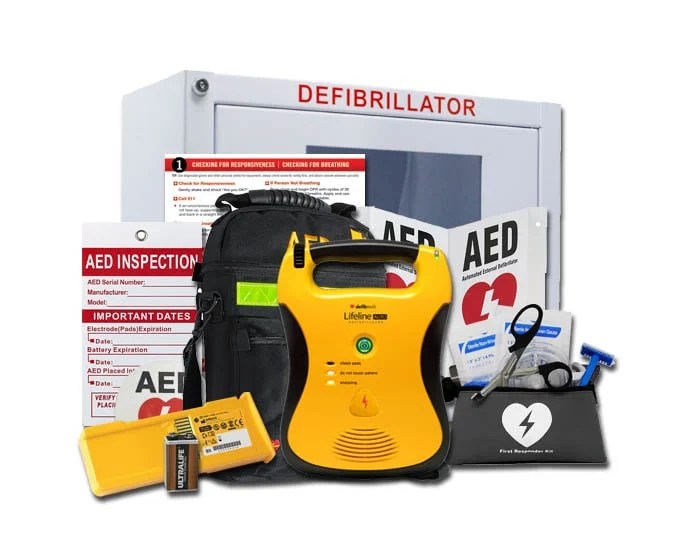
- Value packages: Bundled AED packages include the device, carrying case, wall cabinet, signage, and spare pads, saving hundreds compared to purchasing each item separately.
- Rental programs: If upfront costs are a concern, AED rental programs start at $45 per month and include the device, consumables, and maintenance support. This option is ideal for gyms that want full protection without a large capital expenditure. Learn how renting compares to buying in our AED rental vs. purchase comparison.
- Grants and funding: Many organizations offer AED grants and funding programs that can subsidize or fully cover the cost of a defibrillator for qualifying facilities.
- Multi-unit discounts: Gyms that need multiple AEDs for different areas of their facility can request a custom quote for volume pricing.
If your fitness center hasn’t budgeted for a full AED purchase yet, an AED rental for your gym keeps you compliant from day one without the upfront cost. Monthly plans cover the device, replacement pads and batteries, and compliance tracking, so your front-desk team isn’t chasing expiration dates. The ZOLL AED Plus is especially popular for gyms because of its real-time CPR feedback during high-intensity environments.
Frequently Asked Questions
Are gyms required to have AEDs?
More than 20 states require gyms and fitness centers to have AEDs on their premises. Requirements vary by state and may depend on factors like facility size and membership numbers. Even in states without a specific mandate, having an AED is considered a best practice and may be required by your insurance carrier.
How many AEDs does a gym need?
The number of AEDs depends on your facility’s layout. The goal is for any AED to be retrievable and at the victim’s side within 3 minutes. Most single-floor gyms need at least one AED, while larger or multi-story facilities may need two or more to ensure full coverage.
Can gym staff use an AED without medical training?
Yes. AEDs are designed for use by anyone, including bystanders with no medical background. The device provides step-by-step voice instructions and will only deliver a shock if it detects a shockable heart rhythm. However, CPR and AED training is strongly recommended and may be required by your state.
How much does an AED for a gym cost?
AED prices typically range from $1,400 to $2,900 depending on the brand and model. Rental programs are available starting at $45 per month. Value packages that include the AED, cabinet, signage, and spare pads offer the best overall value for gym owners.
What maintenance does a gym AED require?
AEDs require monthly visual inspections, periodic pad replacement (every 2 to 4 years), battery replacement (every 4 to 5 years), and documentation of all maintenance activities. Many states require compliance logs for audits. Managed programs like Response Ready’s AED Total Solution handle all of this automatically.
Does having an AED affect gym insurance rates?
Many insurance carriers offer reduced premiums for facilities with AED programs. Some carriers may require AEDs as a condition of coverage. Consult with your insurance provider to understand how an AED program may impact your rates.
Not sure which AED or training fits your needs?
A Response Ready product expert walks you through it — no obligation.
Protect Your Members Today
Every gym owner and fitness facility manager has a responsibility to provide a safe environment for their members and staff. With more than 20 states mandating AEDs in fitness centers and the proven ability of defibrillators to save lives during cardiac emergencies, the case for having an AED in your gym is clear.
Whether you are opening a new gym, expanding to a second location, or bringing an existing facility into compliance, Response Ready can help you find the right AED solution for your needs. Browse our complete AED buying guide, explore our flexible rental programs, or contact our team at 858-665-2025 for a personalized recommendation.