Why Learning CPR Can Save a Life
More than 350,000 out-of-hospital cardiac arrests happen in the United States every year. When a bystander begins cardiopulmonary resuscitation immediately, the victim’s chance of survival can double or even triple. Yet fewer than 40% of cardiac arrest victims receive bystander CPR before emergency medical services arrive.
CPR, short for cardiopulmonary resuscitation, manually pumps blood through the body when the heart stops beating. This keeps oxygen flowing to the brain and vital organs until professional help arrives or an AED can restore a normal heart rhythm. Whether you are a parent, teacher, coach, or concerned neighbor, knowing how to perform CPR is one of the most valuable life skills you can learn. This guide covers CPR for adults, children, and infants using the latest American Heart Association guidelines.
Browse FDA-approved AEDs from all 6 manufacturers at Response Ready or call 858-665-2025 to speak with our emergency preparedness team.
How to Perform CPR on an Adult: Step-by-Step
Adult CPR follows the C-A-B approach recommended by the American Heart Association: Compressions, Airway, Breathing. Follow these CPR steps for adults.
- Check the scene for safety. Make sure the area is safe for you and the victim before approaching.
- Check for responsiveness. Tap the person’s shoulder firmly and shout “Are you okay?” If there is no response, proceed immediately.
- Call 911. Call emergency services or ask a bystander to call. If an AED is nearby, have someone retrieve it right away.
- Position the victim. Place the person on their back on a firm, flat surface.
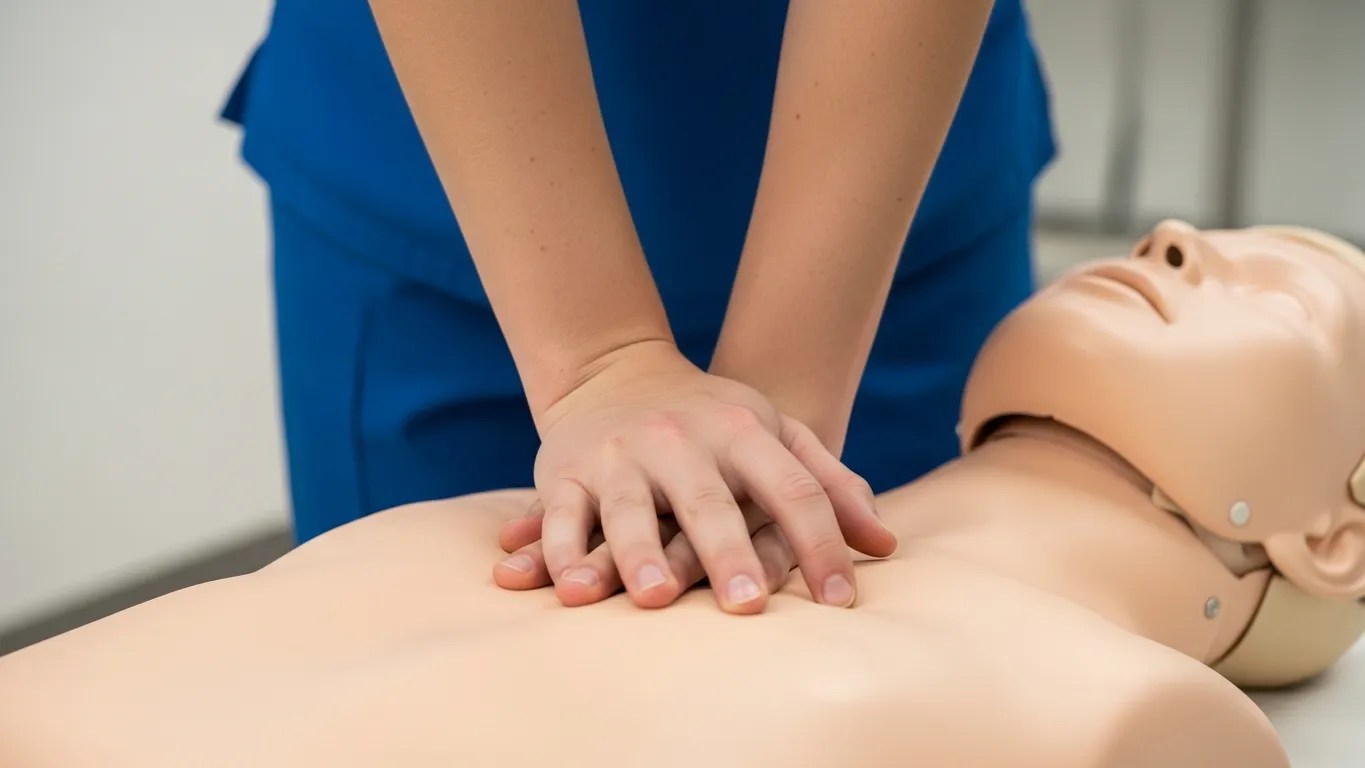
- Begin chest compressions. Place the heel of one hand on the center of the chest, on the lower half of the breastbone. Place your other hand on top and interlock your fingers. Keep your arms straight and shoulders directly above your hands. Push hard and fast, compressing at least 2 inches deep at a rate of 100 to 120 compressions per minute.
- Open the airway. After 30 compressions, tilt the head back gently by lifting the chin with two fingers. This opens the airway.
- Give rescue breaths. Pinch the nose shut, create a complete seal over the mouth, and give 2 breaths. Each breath should last about 1 second and make the chest visibly rise.
- Continue the cycle. Repeat the pattern of 30 compressions and 2 breaths. Do not stop until emergency medical services arrive, an AED becomes available, or the person starts breathing normally.
What Is Hands-Only CPR?
Hands-only CPR uses only chest compressions without rescue breaths. The American Heart Association recommends it for untrained bystanders or anyone uncomfortable giving mouth-to-mouth breathing. Research shows it is nearly as effective as conventional CPR for adults in the first few minutes.
To perform hands-only CPR, call 911 first, then push hard and fast on the center of the chest at 100 to 120 compressions per minute. Keep pushing until help arrives or an AED is available. A helpful rhythm guide is the beat of “Stayin’ Alive” by the Bee Gees, which plays at approximately 100 beats per minute.
Hands-only CPR works best for adults who collapse suddenly in front of a witness. For drowning victims, children, and infants, conventional CPR with rescue breaths is recommended because these emergencies are more often caused by breathing problems rather than heart rhythm issues.
How to Perform CPR on a Child (Ages 1 to 8)
The CPR steps for children follow the same sequence as adult CPR with a few important adjustments. Children are smaller and require slightly less force during compressions.
- Check responsiveness and call for help. Tap the child and shout their name. If unresponsive, have someone call 911. If you are alone, perform CPR for 2 minutes before calling.
- Begin chest compressions. Use one hand (or two for larger children) on the center of the chest. Compress about 2 inches deep at 100 to 120 compressions per minute.
- Open the airway. Tilt the head back gently to a neutral position and lift the chin.
- Give rescue breaths. Pinch the nose, seal your mouth over the child’s mouth, and give 2 breaths. Watch for the chest to rise.
- Continue cycles of 30 compressions and 2 breaths until emergency services arrive.
The compression-to-breath ratio of 30:2 stays the same for children as for adults. The main difference is compression depth and the option to use one hand instead of two.
How to Perform Infant CPR (Under 1 Year)
Infant CPR requires a gentler approach due to the baby’s small size and fragile body.
- Check responsiveness. Flick the bottom of the infant’s foot gently. Never shake a baby.
- Call 911. If you are alone, perform CPR for 2 minutes first, then call emergency services.
- Begin chest compressions. Place two fingers (index and middle finger) on the center of the chest, just below the nipple line. Compress about 1.5 inches deep at 100 to 120 compressions per minute.
- Open the airway. Tilt the head to a neutral “sniffing” position. Do not tilt the head back too far, as this can actually block an infant’s airway.
- Give rescue breaths. Cover both the infant’s mouth and nose with your mouth. Give 2 gentle puffs of air. Watch for the chest to rise slightly.
- Continue 30 compressions and 2 breaths until help arrives.
Rescue breaths are especially important for infants because pediatric cardiac arrest is most often caused by respiratory failure rather than a heart rhythm problem. The two-finger compression technique prevents applying too much force to a baby’s developing ribcage.
Get CPR and AED certified through CPR1 training by Response Ready. Call 858-665-2025 to schedule group or individual training.
How CPR and AED Work Together: The Chain of Survival
CPR alone cannot restart a heart in ventricular fibrillation. Understanding the difference between AED and CPR is essential for any emergency response plan. An automated external defibrillator (AED) delivers an electrical shock that can restore a normal heart rhythm. When CPR and an AED are used together within the first 3 to 5 minutes of cardiac arrest, survival rates can reach 70% or higher.
The chain of survival includes four critical links: early recognition, early CPR, early defibrillation, and early advanced care. Here is how to integrate an AED into your CPR response:

- Start CPR immediately. Do not wait for the AED. Begin chest compressions as soon as you confirm the person is unresponsive and not breathing normally.
- Turn on the AED when it arrives. Press the power button. Most AEDs provide clear voice prompts that guide you through every step.
- Apply the electrode pads. Place the pads on the patient’s bare chest as shown in the diagram on the pads: one on the upper right chest, one on the lower left side.
- Let the AED analyze. The device will analyze the heart rhythm automatically. Make sure no one is touching the patient during analysis.
- Deliver a shock if advised. If the AED recommends a shock, make sure everyone is clear and press the shock button.
- Resume CPR immediately after the shock. Continue 30 compressions and 2 breaths for 2 more minutes before the AED re-analyzes.
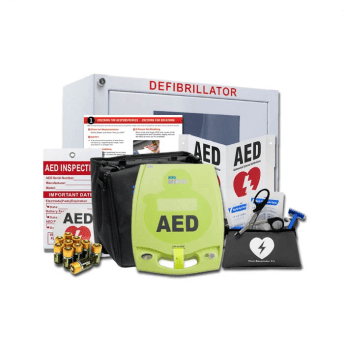
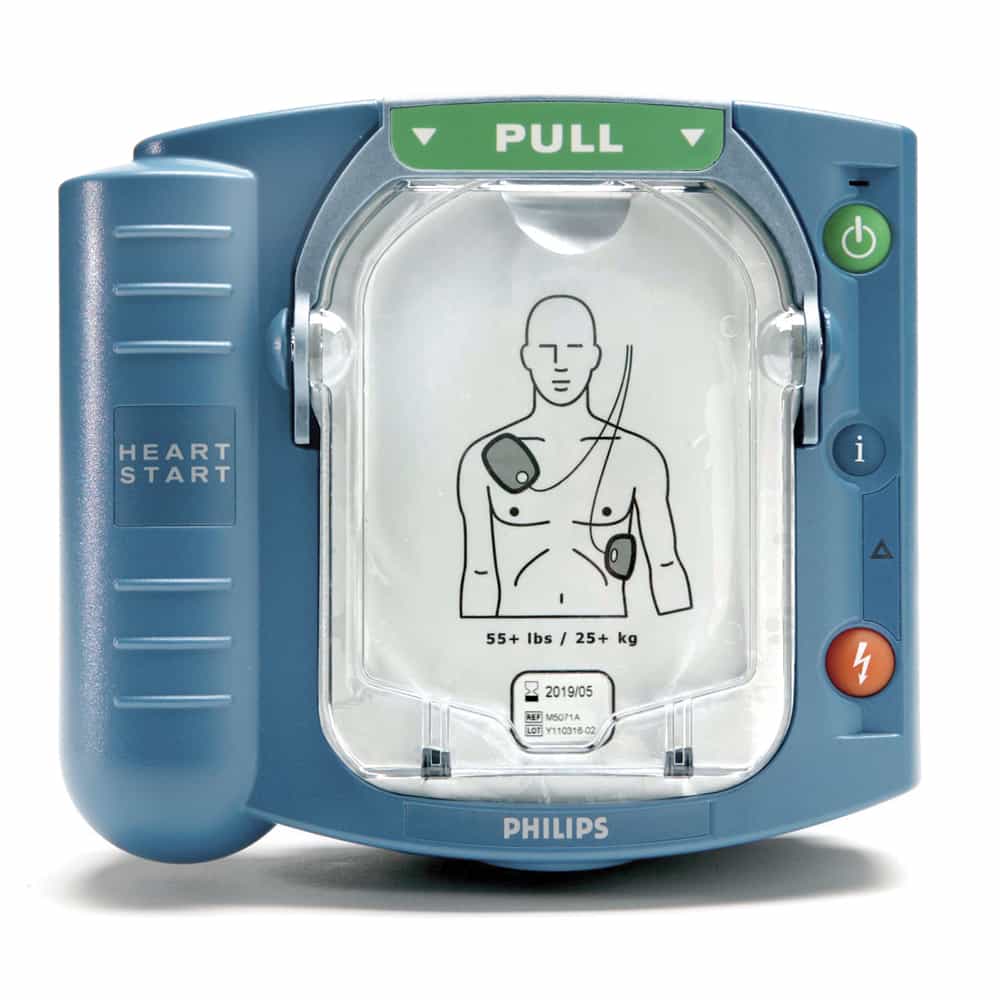
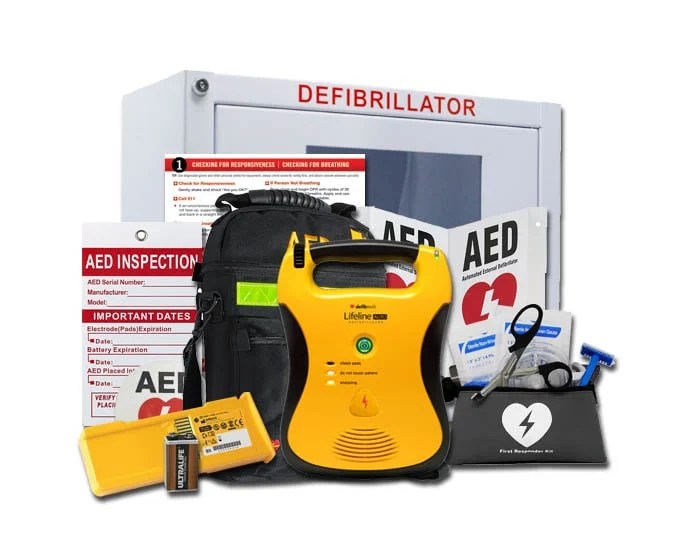
Response Ready is the only distributor that carries all 6 FDA-approved AED manufacturers: Philips, ZOLL, HeartSine, Stryker/Physio-Control, Cardiac Science, and Defibtech. Every AED from Response Ready comes with clear voice instructions designed for use by untrained bystanders.
Shop AED value packages with cabinets, signage, and first responder kits. Need help choosing the right AED? Call 858-665-2025.
Common CPR Mistakes to Avoid
Even well-intentioned bystanders make errors during CPR that reduce its effectiveness.
- Compressions too shallow. Push at least 2 inches deep for adults. Shallow compressions do not circulate enough blood to sustain life.
- Compression rate too slow or too fast. Maintain 100 to 120 compressions per minute. Use a metronome app or the beat of a familiar song.
- Stopping compressions unnecessarily. Every pause reduces blood flow to the brain. Minimize interruptions to under 10 seconds.
- Improper hand placement. Hands should be on the lower half of the breastbone, not on the stomach or upper chest.
- Not allowing full chest recoil. Let the chest fully rise between compressions. Leaning on the chest prevents the heart from refilling with blood.
- Delaying action out of fear. Doing something is always better than doing nothing. Good Samaritan laws in all 50 states protect bystanders who attempt CPR in good faith.
Why Hands-On CPR Training Matters
While this guide provides a solid reference for CPR steps, hands-on training builds the muscle memory and confidence needed to act effectively under pressure. Response Ready’s CPR1 training program offers certified CPR, AED, and first aid courses through a nationwide instructor network. Not sure when your card expires? Check our guide on how long CPR certification lasts to stay up to date.
Training formats include in-person, on-site, and blended learning through the American Red Cross. For healthcare settings, learn about the differences between BLS and CPR certification. The American Red Cross Adult First Aid/CPR/AED Blended Learning course combines online study with an in-person skills session. Courses typically last 2 to 4 hours covering CPR, AED operation, and choking response.
Organizations including schools, gyms, workplaces, and churches can schedule on-site group CPR training to build emergency readiness across their team. Response Ready also provides the AED equipment, ongoing compliance support, and the medical knowledge resources that organizations need to maintain a complete cardiac emergency response program.
Frequently Asked Questions About CPR
How long should you perform CPR?
Continue CPR until emergency medical services take over, the person starts breathing normally, an AED is available and ready to use, or you are physically unable to continue. Do not stop unless one of these conditions is met.
Can you hurt someone by performing CPR?
Rib fractures can occur during CPR, especially in older adults. However, broken ribs heal. A person in cardiac arrest will die without intervention. The benefit of CPR always outweighs the risk of minor injury from chest compressions.
Do you need to give mouth-to-mouth during CPR?
For adult victims, hands-only CPR with compressions only is effective and recommended for untrained bystanders. For children and infants, rescue breaths are important because their cardiac arrests are often caused by breathing problems.
What is the correct CPR compression rate?
The American Heart Association recommends 100 to 120 compressions per minute for all age groups. The song “Stayin’ Alive” by the Bee Gees provides a helpful tempo guide at approximately 100 beats per minute.
Should you use an AED before starting CPR?
Start CPR immediately. If an AED is within reach, turn it on and follow its prompts while continuing compressions. If someone needs to go retrieve an AED, continue CPR without interruption until the device arrives.
Is infant CPR different from adult CPR?
Yes. Infant CPR uses two-finger compressions instead of full-hand compressions, with a shallower depth of about 1.5 inches. Rescue breaths cover both the mouth and nose. The head should be tilted to a neutral position rather than extended backward.