When someone collapses from sudden cardiac arrest, their survival depends on a series of rapid, coordinated actions. The American Heart Association calls this sequence the chain of survival, and it is the single most important framework for saving lives during a cardiac emergency. Every link in this chain matters. Break one, and the chances of a positive outcome drop dramatically.
Over 350,000 out-of-hospital cardiac arrests happen in the United States each year. Fewer than 12% of those victims survive. The cardiac arrest survival rate depends almost entirely on how quickly bystanders respond with CPR and an AED. The chain of survival exists to change that statistic by giving bystanders, first responders, and medical professionals a clear action plan when every second counts.
This guide breaks down both the adult chain of survival and the pediatric chain of survival, explains why each link matters, and shows you how to prepare your home, school, or workplace for a cardiac emergency.
Ready to prepare your organization? Response Ready carries AEDs from all six FDA-approved manufacturers and provides CPR/AED training to help you strengthen every link in the chain. Contact us today to get started.
What Is the Chain of Survival?
The chain of survival is a series of critical actions that, performed in sequence, give a person in cardiac arrest the best chance of survival. Developed by the American Heart Association (AHA), this framework applies to both in-hospital and out-of-hospital cardiac emergencies.
Think of each step as a link in an actual chain. If one link is weak or missing, the entire chain fails. When all links are strong, survival rates can increase from under 10% to over 50% in communities with robust emergency response systems.
The cardiac chain of survival has evolved over the years as medical research has advanced. The current AHA guidelines recognize that adults and children require slightly different approaches, which is why there are separate chains for each.
The Adult Chain of Survival: 6 Critical Links

The adult chain of survival focuses on out-of-hospital cardiac arrest (OHCA) in adults and teens. It includes six links:
1. Recognition and Activation of Emergency Response
The chain starts the moment someone recognizes that a person is unresponsive and not breathing normally. Call 911 immediately. Do not hesitate. Do not assume someone else has already called. Early recognition and rapid activation of the emergency response system sets everything else in motion.
Signs to watch for include sudden collapse, no pulse, no breathing or only gasping breaths, and unresponsiveness to voice or touch.
2. Early CPR with an Emphasis on Chest Compressions
High-quality CPR is the most important action a bystander can take. Knowing how to perform CPR correctly can mean the difference between life and death. Begin chest compressions immediately at a rate of 100 to 120 compressions per minute, pushing at least 2 inches deep on the center of the chest. If you are trained, alternate 30 compressions with 2 rescue breaths. If you are not trained or not comfortable giving breaths, hands-only CPR with continuous chest compressions is effective and recommended.
CPR keeps oxygenated blood flowing to the brain and vital organs. Without it, brain damage can begin within 4 to 6 minutes. Learn more about workplace CPR training and why AED and CPR training go hand in hand.
3. Rapid Defibrillation with an AED
For most adult cardiac arrests, the heart is in a rhythm called ventricular fibrillation (V-fib), a chaotic electrical pattern that prevents the heart from pumping blood. The only effective treatment for V-fib is an electrical shock delivered by a defibrillator (AED).
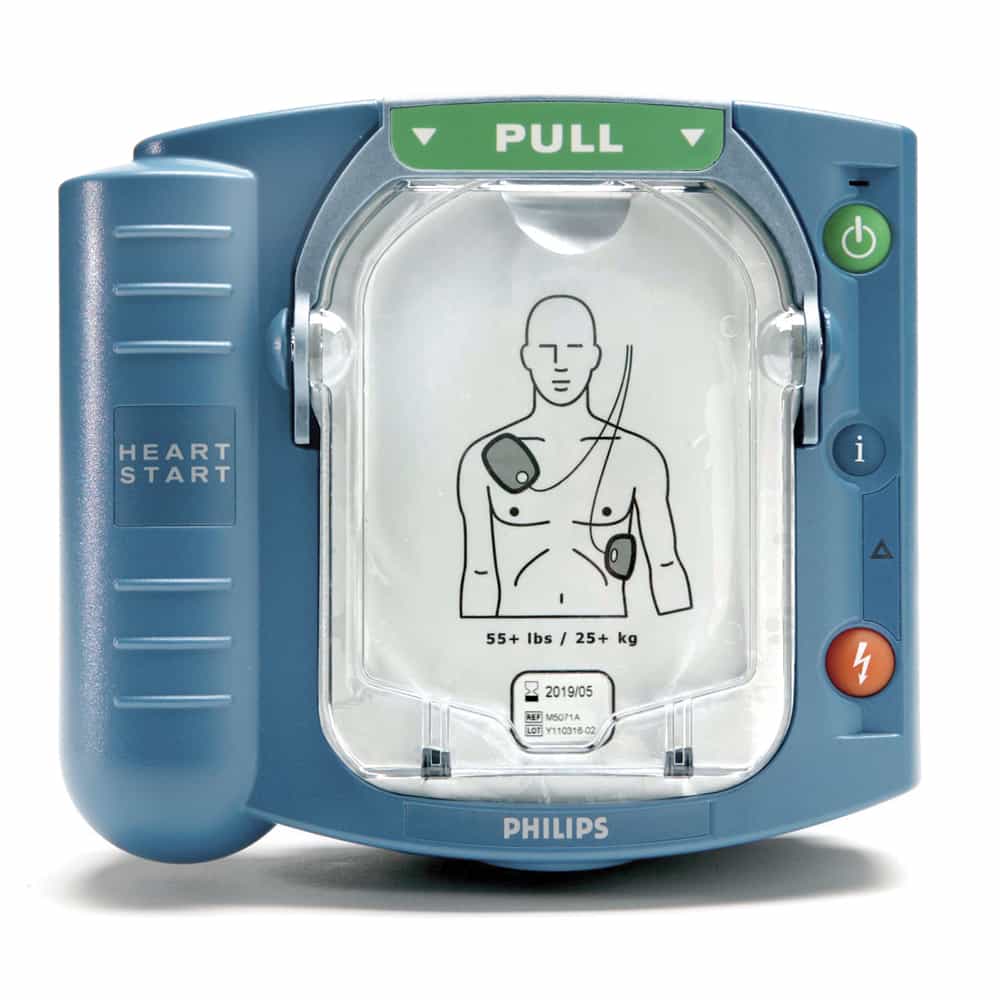
Every minute without defibrillation reduces the chance of survival by 7% to 10%. An automated external defibrillator is designed for use by anyone, even without medical training. The device analyzes the heart rhythm and delivers a shock only when needed. Proper AED pad placement is essential for effectiveness.
4. Advanced Life Support by EMS
When paramedics arrive, they provide advanced interventions including IV medications (epinephrine), advanced airway management, and cardiac monitoring. Their goal is to stabilize the patient and maintain the work started by bystanders.
5. Post-Cardiac Arrest Care
Hospital-based care focuses on identifying and treating the underlying cause of the arrest, optimizing organ function, and managing complications. This may include targeted temperature management (therapeutic hypothermia), cardiac catheterization, and intensive care monitoring.
6. Recovery
The newest addition to the AHA chain of survival, the recovery link recognizes that surviving cardiac arrest is just the beginning. Survivors often need physical rehabilitation, cognitive therapy, psychological support, and ongoing cardiac care to return to their daily lives.
Is your workplace or school prepared? Having an AED value package on site with proper training can mean the difference between life and death. Talk to our emergency preparedness team about the right solution for your organization.
The Pediatric Chain of Survival: Key Differences
The pediatric chain of survival addresses cardiac arrest in infants and children. While the overall structure mirrors the adult chain, there are critical differences because cardiac arrest in children is usually caused by respiratory failure or shock rather than a primary heart problem.
1. Prevention of Arrest
Unlike the adult chain, the pediatric chain begins with prevention. Most pediatric cardiac arrests are caused by breathing problems, drowning, choking, or trauma rather than heart rhythm abnormalities. Recognizing and treating these conditions before they progress to cardiac arrest is the most effective intervention.
This is why pediatric first aid and CPR training is so valuable for parents, teachers, and childcare providers.
2. Early High-Quality CPR
For children, CPR technique differs from adults. Compressions should be about one-third the depth of the chest (approximately 2 inches for children, 1.5 inches for infants). For infants, use two fingers or the two-thumb encircling technique. The compression-to-breath ratio is 30:2 for a single rescuer and 15:2 for two trained rescuers.
Because pediatric arrests are often respiratory in origin, rescue breaths are especially important for children and infants.
3. Activation of Emergency Response
Notice the order difference: for children, if you are alone, provide 2 minutes of CPR before calling 911. For adults, you call 911 first. This is because children are more likely to benefit from immediate CPR since their arrests are typically caused by oxygen deprivation.
If there are two rescuers, one begins CPR while the other calls 911 and retrieves the AED.
4. Advanced Life Support
Pediatric advanced life support (PALS) involves age-appropriate medications, dosing, airway equipment, and protocols specifically designed for smaller patients.
5. Post-Arrest Care and Recovery
Pediatric post-arrest care focuses on neurological monitoring, temperature management, and addressing the underlying cause. Recovery for children may include developmental assessments and age-appropriate rehabilitation.
Adult vs Pediatric Chain of Survival: Key Differences at a Glance
| Feature | Adult Chain of Survival | Pediatric Chain of Survival |
|---|---|---|
| First link | Recognition and 911 activation | Prevention of arrest |
| Primary cause of arrest | Heart rhythm problem (V-fib) | Breathing failure or shock |
| CPR priority for lone rescuer | Call 911 first, then begin CPR | Provide 2 minutes of CPR, then call 911 |
| Rescue breaths | Optional (hands-only CPR is effective) | Essential (respiratory origin) |
| Compression depth | At least 2 inches | About 1/3 chest depth (2 in. child, 1.5 in. infant) |
| Compression-to-breath ratio (2 rescuers) | 30:2 | 15:2 |
| AED pads | Standard adult pads | Pediatric pads (reduced energy) if available |
| Number of links | 6 links | 5 links (recovery combined with post-arrest) |
Why Every Second Counts: The Survival Timeline

The relationship between time and survival in cardiac arrest is stark:
- 0 to 4 minutes: Brain damage begins. CPR must start immediately.
- 4 to 6 minutes: Brain damage becomes likely without intervention.
- 6 to 10 minutes: Brain damage is almost certain without CPR and defibrillation.
- After 10 minutes: Survival is unlikely without all links of the chain activated.
Average EMS response time in the United States is 7 to 14 minutes. That means bystander action during the first few minutes is often the only thing standing between survival and death. Communities with public access defibrillation programs and trained bystanders consistently show survival rates 2 to 3 times higher than the national average. Explore how AED accessibility impacts survival rates for a deeper look at this data.
How to Strengthen Your Chain of Survival
Whether you manage a school, workplace, gym, church, or community center, here are actionable steps to strengthen every link in the cardiac chain of survival:
Get Trained in CPR and AED Use
Training gives people the confidence and muscle memory to act fast. Consider CPR/AED/First Aid certification courses for your team. Regular refresher training every two years keeps skills sharp.
Place AEDs in Accessible Locations
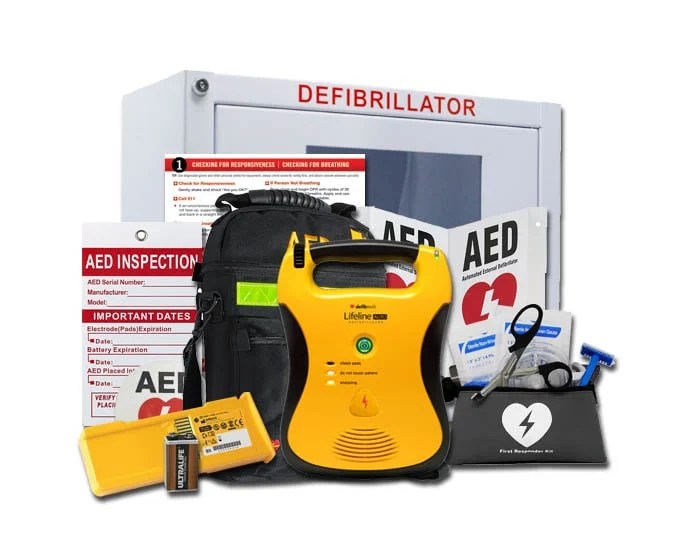
An AED that is locked away or hidden does not save lives. Place devices in high-traffic areas with clear signage. AED cabinet placement and compliance guidelines can help you choose the right location. Consider an AED program management service to handle maintenance, pad and battery replacement, and compliance tracking.
Create an Emergency Action Plan
Every facility should have a written cardiac emergency response plan that includes designated responders, AED locations, 911 protocols, and regular practice drills. Know who does what before an emergency happens.
Maintain Your Equipment
AEDs require regular maintenance to ensure readiness. Pads expire, batteries deplete, and software may need updates. Follow a consistent AED maintenance checklist to stay prepared. Learn about AED certification requirements in your state to ensure compliance.
Need help building your emergency preparedness plan? Response Ready provides AED packages, training, and ongoing program management to keep your organization prepared. Call us at 858-665-2025 or visit our website to learn more.
Frequently Asked Questions
What are the 5 links in the chain of survival?
The adult chain of survival has six links as updated by the AHA: (1) recognition and activation of emergency response, (2) early CPR, (3) rapid defibrillation, (4) advanced life support, (5) post-cardiac arrest care, and (6) recovery. Earlier versions listed five links before recovery was added.
What is the difference between the adult and pediatric chain of survival?
The adult chain of survival starts with recognizing cardiac arrest and calling 911, while the pediatric chain of survival starts with prevention. Pediatric cardiac arrest is usually caused by breathing problems, so rescue breaths and early CPR are prioritized over immediate 911 activation for lone rescuers.
Can you use an AED on a child?
Yes. Most modern AEDs include pediatric pads or a pediatric mode that reduces the energy delivered for patients under 8 years old or under 55 pounds. If pediatric pads are unavailable, adult pads can be used. Never delay defibrillation because of concern about pad type.
How long do you have to start CPR before brain damage occurs?
Brain damage can begin within 4 to 6 minutes after cardiac arrest if no CPR is performed. Starting chest compressions immediately keeps blood flowing to the brain and can prevent or reduce brain injury until an AED or EMS arrives.
Do you need training to use an AED?
No formal training is required. AEDs are designed for use by anyone, including people with no medical background. The device provides voice prompts and visual instructions that guide you through every step. However, training builds confidence and speed, which is why CPR/AED courses are strongly recommended.