When someone collapses from sudden cardiac arrest, two interventions determine whether they survive: CPR and an AED. Most people have heard of both, but few understand the critical difference between them or why you need both in your emergency response plan. The distinction matters because CPR and AEDs do fundamentally different things, and using only one without the other cuts a victim’s survival odds dramatically.
Get your team ready for a cardiac emergency. Response Ready provides AEDs from all six FDA-approved manufacturers and certified CPR/AED training. Contact us at 858-665-2025 to get started.
Over 350,000 out-of-hospital cardiac arrests happen in the United States every year, yet fewer than 12% of victims survive. Understanding the cardiac arrest survival rate data shows why both interventions matter. That gap between crisis and survival is where CPR and AED use by bystanders makes the biggest difference. This guide breaks down what each does, how they compare, and why combining both gives someone in cardiac arrest the best chance of making it home to their family.
What Is CPR?
CPR stands for cardiopulmonary resuscitation. It is a manual technique where a rescuer pushes hard and fast on the center of a person’s chest to keep blood circulating when the heart has stopped. CPR also includes rescue breaths to deliver oxygen to the lungs, though hands-only CPR using chest compressions alone is recommended for untrained bystanders.
Here is what CPR does during a cardiac emergency:
- Maintains blood flow to the brain and vital organs
- Buys critical time until an AED or paramedics arrive
- Keeps the heart in a shockable rhythm longer, making defibrillation more likely to succeed
CPR alone cannot restart a heart that has stopped. Think of it as a bridge: it keeps oxygenated blood moving so the brain does not suffer irreversible damage during the minutes between cardiac arrest and defibrillation. Without CPR, brain death can begin in as few as four to six minutes.
What Is an AED?
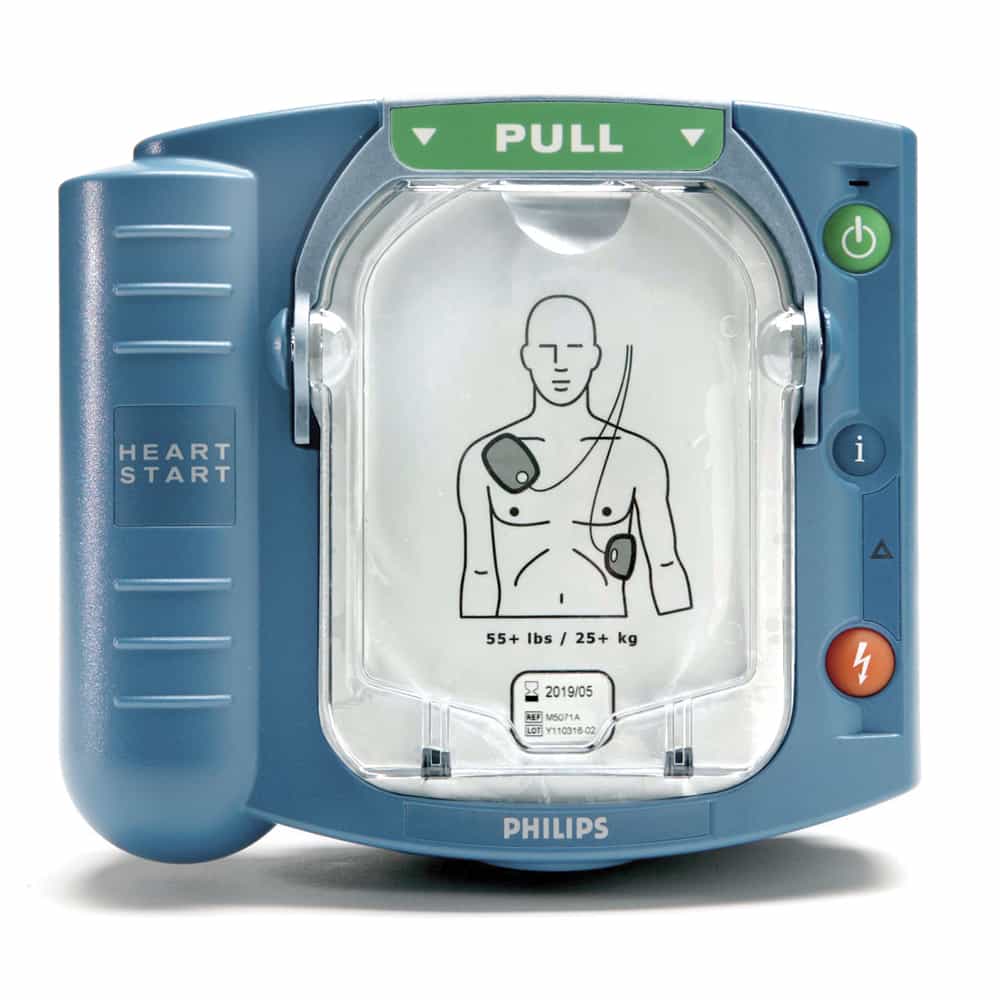
An AED, or automated external defibrillator, is a portable electronic device that analyzes a person’s heart rhythm and delivers an electrical shock if it detects a life-threatening arrhythmia like ventricular fibrillation. The shock, called defibrillation, is designed to reset the heart’s electrical system so it can resume a normal rhythm.
Key facts about AEDs:
- Designed for anyone to use, with clear voice prompts that guide you through every step
- Analyzes heart rhythm automatically and will only deliver a shock when it detects a shockable rhythm
- Cannot harm a person who does not need a shock, because the device makes that decision for you
- Available in public spaces like airports, gyms, schools, and offices
An AED is the only tool that can actually correct the electrical malfunction causing cardiac arrest. While CPR keeps blood flowing, the AED addresses the root cause. Learn more about what an AED is and how it works.
AED vs CPR: Side-by-Side Comparison
Understanding the difference between an AED and CPR comes down to their purpose, how they work, and who can use them. Here is a direct comparison:
| Feature | CPR | AED |
|---|---|---|
| What it does | Manually pumps blood through the body | Delivers an electrical shock to reset the heart |
| How it works | Chest compressions and rescue breaths | Electrode pads analyze rhythm and shock if needed |
| Can it restart the heart? | No, it maintains circulation only | Yes, it can restore a normal heart rhythm |
| Equipment needed | None, just your hands | Portable AED device |
| Training required | Recommended but not required for hands-only CPR | Not required; the device provides voice instructions |
| When to use | Immediately when someone is unresponsive and not breathing | As soon as the device is available |
| Who can use it | Anyone | Anyone |
| Effectiveness alone | Doubles or triples survival odds vs. doing nothing | Can increase survival to over 70% when used within first few minutes |
| Used together | CPR + AED within the first 3-5 minutes raises survival rates above 50% | |
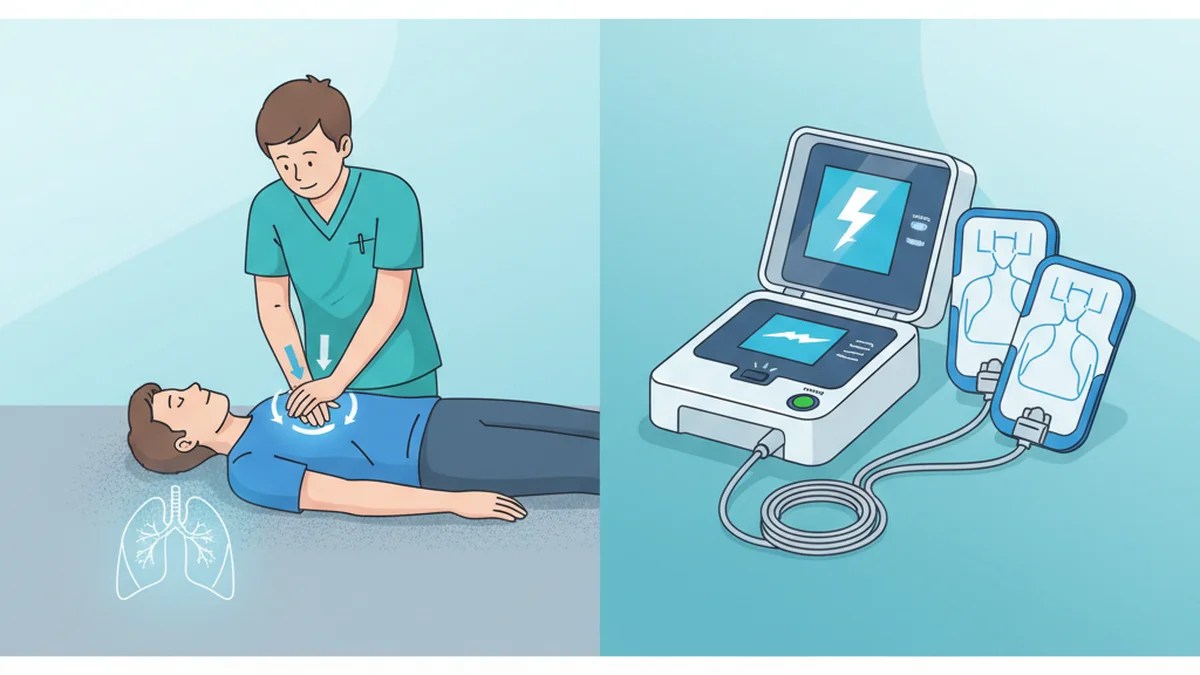
The bottom line: CPR is the bridge, and the AED is the fix. One keeps the patient alive while the other corrects the problem.
How CPR and AEDs Work Together in the Chain of Survival
The American Heart Association’s chain of survival is the framework that shows exactly why both CPR and AED use are essential. It consists of five critical links:
- Recognition and calling 911: Identify that someone is in cardiac arrest and activate emergency services immediately.
- Early CPR: Begin chest compressions right away to keep blood flowing to the brain.
- Rapid defibrillation: Use an AED as soon as one is available to shock the heart back into rhythm.
- Advanced medical care: Paramedics provide IV medications, advanced airway management, and transport.
- Post-cardiac arrest care: Hospital teams provide ongoing treatment and recovery support.
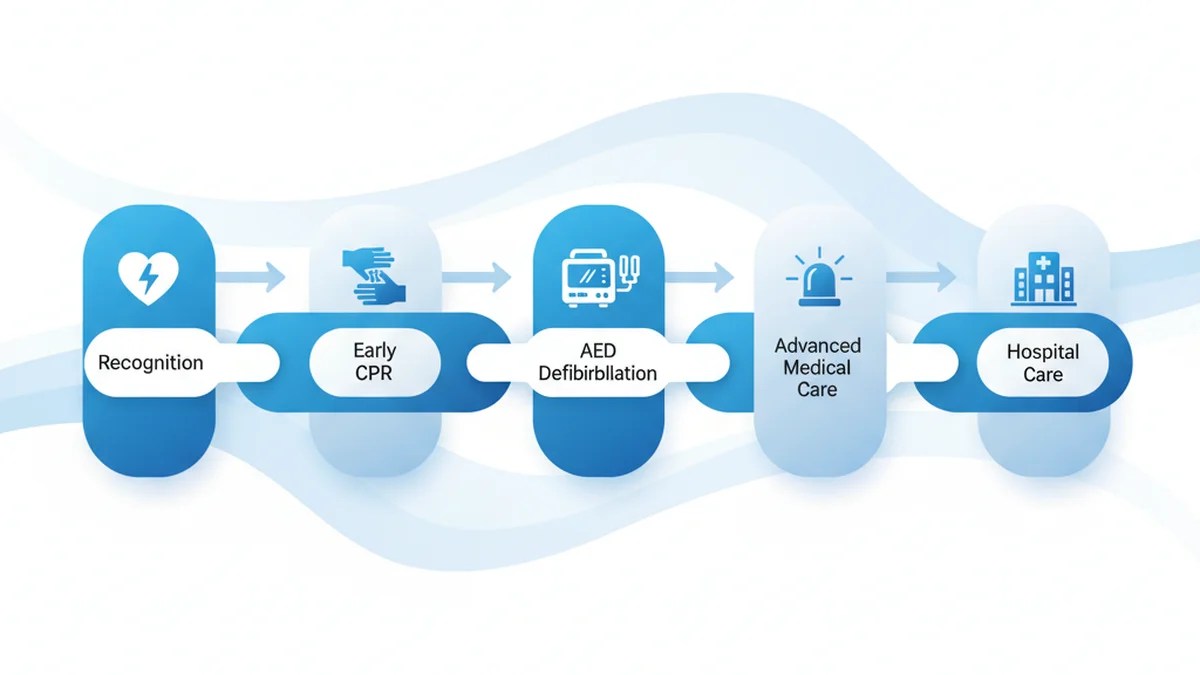
Notice that CPR is link two and AED use is link three. They are sequential, not interchangeable. You start CPR immediately while someone retrieves the AED. When the AED arrives, you pause compressions briefly to attach the pads, let the device analyze the rhythm, and deliver a shock if advised. Then you resume CPR immediately.
Here is the critical statistic: for every minute without CPR and defibrillation, survival drops by 7-10%. When bystanders perform CPR and use an AED before paramedics arrive, survival rates can exceed 50%. Without either intervention, survival is below 5%.
Does your workplace, school, or facility have an AED? Response Ready carries AEDs from all six FDA-approved manufacturers, with expert guidance to help you choose the right device. Get a free consultation to find the best AED for your needs.
Do You Need Both CPR and an AED?
Yes. This is not a matter of choosing one over the other. Here is why both are necessary:
CPR without an AED: You keep blood flowing, which is essential. But CPR alone cannot fix the heart’s chaotic electrical rhythm. The patient’s odds of survival decrease every minute that defibrillation is delayed, even with perfect chest compressions.
An AED without CPR: If you skip CPR and wait for an AED, the brain and organs suffer oxygen deprivation during those critical minutes. Even if the AED successfully restores a normal rhythm, the patient may have sustained brain damage from lack of circulation.
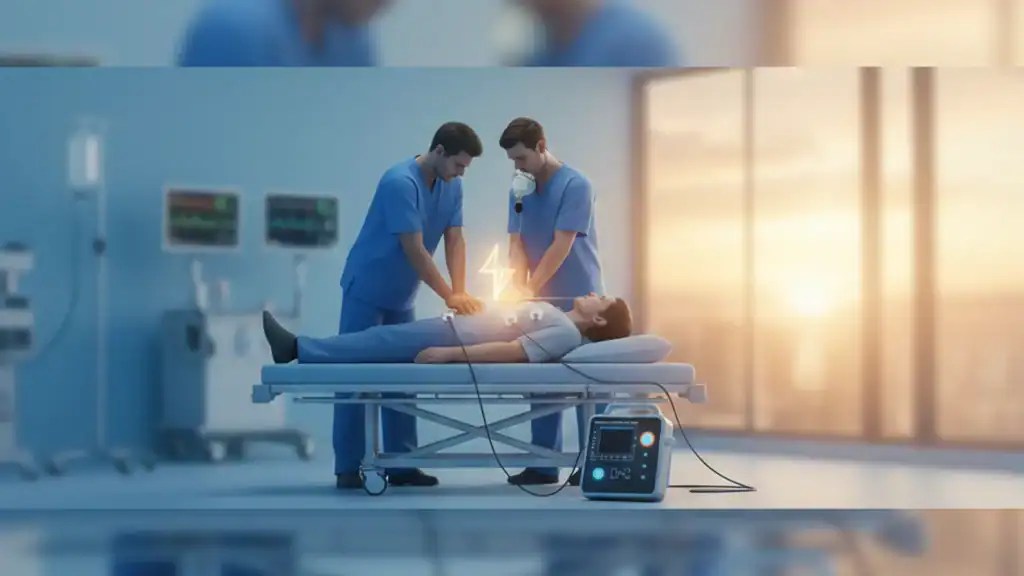
CPR and an AED together: This is the combination that saves lives. CPR maintains circulation while the AED corrects the electrical problem. Studies consistently show that bystander CPR combined with early AED use produces the highest survival rates for out-of-hospital cardiac arrest.
The real-world protocol during a cardiac emergency looks like this:
- Call 911
- Start CPR immediately
- Send someone to get the nearest AED
- Continue CPR until the AED is ready
- Follow the AED’s voice prompts (it will tell you when to stop compressions)
- Resume CPR after the AED delivers a shock or advises “no shock”
- Continue until paramedics take over
Getting Trained and Equipped
Knowing the difference between CPR and an AED is the first step. The next step is making sure you and your organization are both trained and equipped to act.
CPR and AED Training
While AEDs are designed to be used without formal training, CPR/AED certification courses build the confidence and muscle memory needed to act decisively under pressure. Response Ready offers certified training through a nationwide instructor network with real emergency response experience.
Choosing the Right AED
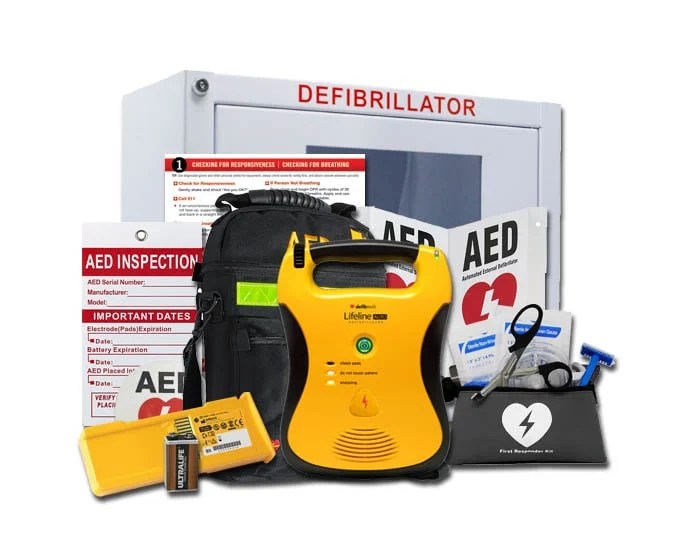
If your home, business, school, or organization does not have an AED, now is the time to get one. Response Ready is an authorized distributor of all six FDA-approved AED manufacturers: Philips, ZOLL, HeartSine, Stryker, Cardiac Science, and Defibtech. Whether you need a single device for your home or a fleet for a multi-site organization, we can help you choose the right AED and support you with training, maintenance, and compliance.
For AEDs with real-time CPR coaching, which guide you through compression depth and rate while you perform CPR, see our breakdown of AEDs with CPR feedback technology.
Every second counts in a cardiac emergency. Response Ready helps you prepare with AEDs from all six FDA-approved manufacturers and certified CPR/AED training. Contact us today to get your emergency action plan started.
Frequently Asked Questions
Can you use an AED without CPR training?
Yes. AEDs are designed for untrained bystanders and provide step-by-step voice instructions. However, combining AED use with CPR significantly improves survival odds, so getting trained in both is strongly recommended.
Does CPR restart the heart?
No. CPR maintains blood flow to the brain and vital organs by manually pumping the heart through chest compressions. Restarting a heart in cardiac arrest requires defibrillation, which is what an AED does.
When should you use an AED versus CPR?
You should use both. Start CPR immediately when someone is unresponsive and not breathing normally. Use an AED as soon as one becomes available. The AED will guide you on when to pause CPR for rhythm analysis and shock delivery.
How quickly does an AED need to be used?
Ideally within the first three to five minutes of cardiac arrest. For every minute without defibrillation, the chance of survival drops by 7-10%. This is why having an AED accessible in your building, not locked away or far from high-traffic areas, is critical.
Is an AED safe to use on someone who does not need it?
Yes. An AED analyzes the heart’s rhythm before delivering a shock. If the device does not detect a shockable rhythm, it will not deliver a shock. You cannot accidentally harm someone by using an AED.