- Published
- April 2, 2026
Why AED and CPR training go hand in hand


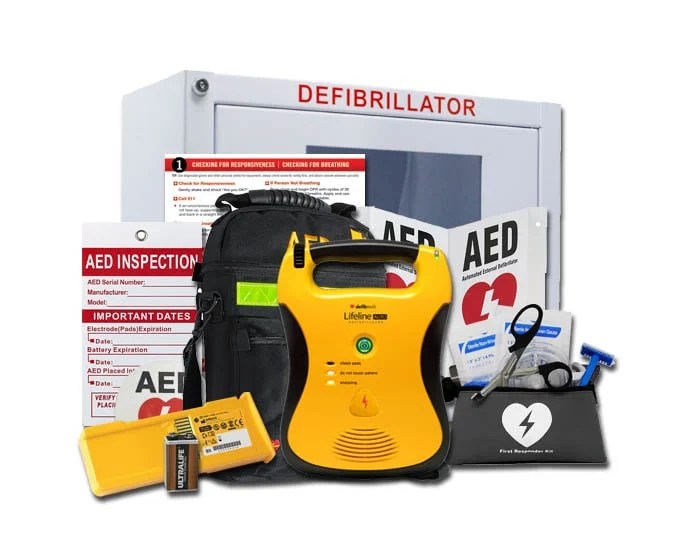
When a sudden cardiac arrest strikes at a community pool, a small business office, or even at home, panic is often the first response. You might see the Automated External Defibrillator (AED) in its case on the wall, a symbol of preparedness. But in that critical moment, a question hangs in the air: Does anyone actually know how to use it? More importantly, are they confident enough to act when every second is the difference between life and death?
Having an AED is a crucial first step, but the device itself is only half of the solution. True emergency preparedness isn’t just about owning the right equipment; it’s about empowering people with the skills and confidence to use it effectively. This is where CPR and AED training becomes the inseparable partner to the technology, transforming a bystander into a first responder.
The two part puzzle of saving a life
To understand why training is so vital, it helps to see sudden cardiac arrest as a problem that requires a two part solution. Think of CPR and the AED as two essential puzzle pieces that must fit together perfectly.
CPR, or cardiopulmonary resuscitation, serves as a temporary life support system. When a person’s heart stops beating effectively, their brain and other vital organs are starved of oxygen. High quality chest compressions manually pump oxygenated blood throughout the body, buying precious time. However, CPR alone rarely restarts the heart.
That’s where the AED comes in. An AED is designed to do one specific job: analyze the heart’s rhythm and, if necessary, deliver a controlled electrical shock called defibrillation. This shock is intended to reset the heart’s chaotic electrical activity, much like rebooting a computer, giving it a chance to resume a normal rhythm.
The synergy is critical. For every minute that passes without both CPR and defibrillation, the chance of survival decreases by a staggering 7 to 10 percent. CPR acts as the bridge, keeping the brain and heart viable until the AED can be brought to the scene and deliver its life saving shock.
The numbers that tell the real story
You don’t have to take our word for it. Decades of research paint a clear picture of how this partnership saves lives. The data consistently shows that when a bystander intervenes with both CPR and an AED before emergency medical services arrive, they can dramatically change the outcome.
In fact, immediate bystander CPR and the use of an AED can double or even triple a person’s chance of surviving a sudden cardiac arrest. Without that intervention, the odds are grim. This data underscores a powerful truth: the most important factor in a cardiac emergency is often the person standing right there. For homeowners, school administrators, and small business owners, this highlights the immense responsibility and opportunity to protect your community.
But aren’t AEDs designed to be foolproof?
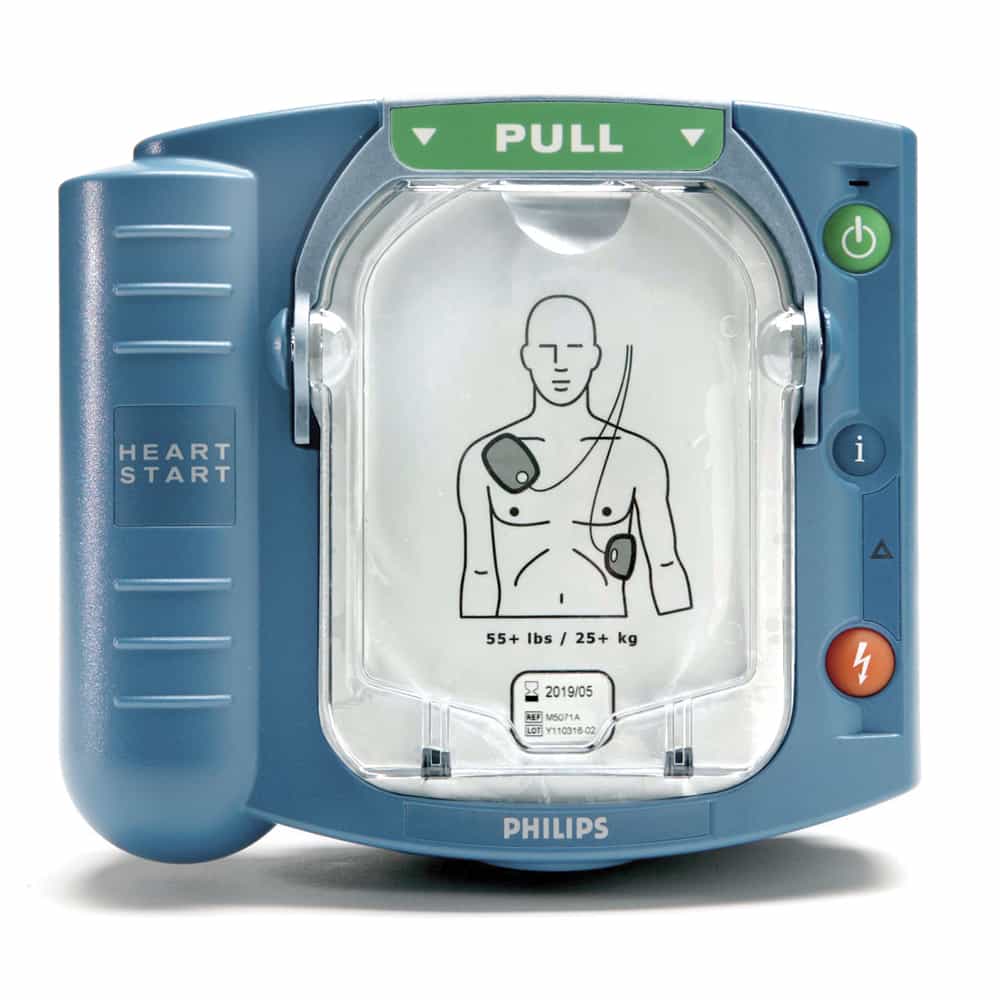
It’s a fair question. Modern AEDs from trusted brands like Philips, HeartSine, and ZOLL are engineered for simplicity. They provide clear, calm voice prompts and visual diagrams that guide a user through every step, from placing the pads to delivering a shock. They are incredibly smart machines designed so that nearly anyone can operate them.
However, the barrier in a real emergency is rarely the technology. It’s human hesitation.
A 2011 study published in the Annals of Emergency Medicine identified the top reasons bystanders hesitate to use a public AED. The results were telling: 27 percent feared they would harm the victim, and 13 percent were afraid of being sued. These fears are powerful, and in a high stress situation, they can lead to fatal delays.
This is the confidence gap that training is designed to close. Training transforms intellectual knowledge into muscle memory. It replaces panic with a clear plan of action, giving you the certainty to act decisively when it matters most.
What confident action looks like with training
A comprehensive CPR and AED course does more than just show you which buttons to press. It builds a foundation of competence that allows you to manage an entire emergency scene effectively. Through hands on practice and expert guidance, you learn how to:
-
Quickly recognize the signs of sudden cardiac arrest and differentiate it from other emergencies.
-
Perform high quality chest compressions at the right depth and rate, a key point emphasized in the American Heart Association’s 2020 guidelines.
-
Use an AED with speed and precision, minimizing interruptions to chest compressions.
-
Understand your role within the full Chain of Survival, from calling 911 to handing off care to professionals.
-
Overcome the fear of causing harm by understanding that action is always better than inaction.
When you invest in training for your family, staff, or community members, you are investing in the confidence to act correctly and without hesitation. Learn more about CPR and AED certification levels and training formats to find the right course.
Finding the right training for your family or team
Preparing for an emergency shouldn’t be complicated. Just as we at Response Ready make it simple to find the right AED for your space and budget, we believe training should be just as accessible. Whether you’re a parent wanting to protect your family or a manager ensuring workplace safety, there’s a solution that fits your needs.
Our programs are designed for everyday people, not just medical professionals. We break down complex procedures into simple, memorable steps. By exploring our accessible CPR and AED training courses, you can find flexible options available both online and in person to build the life saving skills that turn a piece of equipment into a complete safety solution.
Ready to take action? Browse CPR training courses at Response Ready.
Frequently asked questions
Q: Can I be sued for using CPR or an AED on someone?
A: All 50 states have Good Samaritan laws designed to protect bystanders who provide reasonable aid in an emergency. These laws exist to encourage people to help without fear of legal repercussions. Training courses often cover the specifics of these protections in your area.
Q: What if I do it wrong or forget the steps?
A: This is a common and understandable fear, but it’s one that training directly addresses. Remember, any attempt to provide CPR is better than no attempt at all. Furthermore, the AED itself will not deliver a shock unless it detects a shockable heart rhythm, so you cannot accidentally harm someone with it. The most critical mistake is doing nothing.
Q: How long does a CPR and AED certification last?
A: Standard CPR and AED certifications are typically valid for two years. This ensures your skills remain fresh and up to date with any changes in guidelines. We make it easy to track and manage recertification for your entire team through our AED365 program management and mobile app.
Q: Is online training as effective as in person training?
A: Both formats have their benefits. Online courses offer incredible flexibility and are great for learning the core concepts. Blended learning, which combines online coursework with a short, in person skills session, is often the best of both worlds. It provides hands on practice with CPR manikins and AED trainers, which is critical for building muscle memory and confidence.
Disclaimer for information purposes only:
The information provided on this website is intended for general educational and informational purposes only. It is not medical advice and should not be used as a substitute for professional diagnosis, treatment, or care. Always consult a qualified healthcare or medical professional regarding any health-related questions or concerns.
While we strive to ensure the information shared is accurate and up to date, no guarantees are made regarding completeness, accuracy, or applicability to any individual situation. Use of this content is at the reader’s sole discretion and risk.
This website is part of the Response Ready family of emergency preparedness and training resources, including CPR & first aid training and compliance services, AED sales and program support, AED program management software, and medical oversight solutions provided through our affiliated platforms:
• CPR1.com
• AEDLeader.com
• AEDTotalSolution.com
• MDSIMedical.com
By accessing or using this website, you agree to release, indemnify, and hold harmless the website owners, authors, contributors, and affiliated entities from any claims, losses, damages, or liabilities arising from the use or reliance on the information presented.