Why Daycare Centers Need AEDs
Cardiac emergencies can happen anywhere, including daycare centers and childcare facilities. While parents trust these environments to keep their children safe, few consider the risk of sudden cardiac arrest (SCA) affecting staff members, visiting parents, or even children with undiagnosed heart conditions. An automated external defibrillator (AED) in a daycare setting can mean the difference between life and death during those critical first minutes.
According to the American Heart Association, survival rates from sudden cardiac arrest drop approximately 10 percent for every minute that passes without defibrillation. Emergency medical services typically take eight minutes or longer to arrive, and in rural areas, response times can exceed 15 minutes. Having an AED on-site at your daycare center bridges this gap and gives staff the ability to respond immediately.
Daycare centers face unique circumstances that make AED readiness especially important:
- Adult staff members are at risk. Childcare workers experience the same cardiac risk factors as any working adult. Physical demands such as lifting children, bending, and managing active classrooms can trigger cardiac events in individuals with underlying conditions.
- Parents and visitors enter the facility daily. Drop-off and pick-up times bring dozens of adults through your doors each day, any of whom could experience a cardiac emergency.
- Children can experience cardiac events. While rare, pediatric sudden cardiac arrest does occur. The American Heart Association reports that approximately 9,500 children under 18 experience SCA annually in the United States.
- Remote locations increase risk. Many daycare centers operate in residential neighborhoods, strip malls, or rural areas where ambulance response times are longer than average.
Get certified in CPR
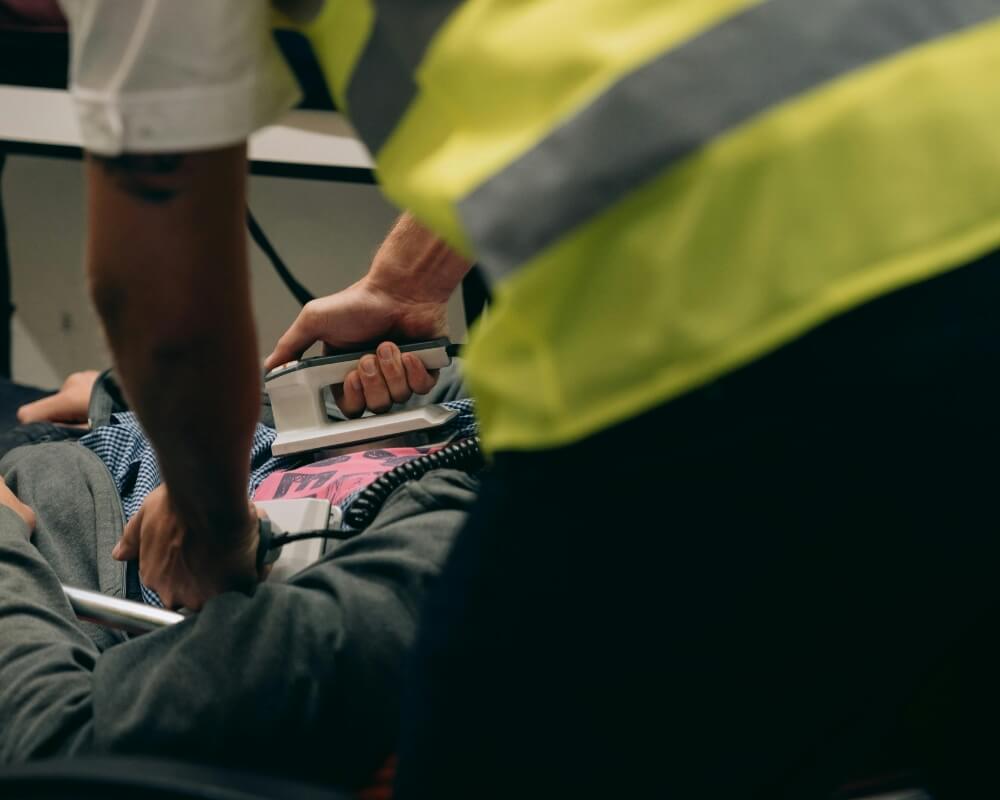
Adult & Pediatric First Aid/CPR/AED — Blended Learning
Self-paced online + in-person skills check. 2-year certification.
CPR, AED & First Aid Certification
Instructor-led on-site. Practice on real manikins and AED trainers.
Understanding Pediatric AED Capabilities
One of the most important considerations for daycare centers is selecting an AED with pediatric capabilities. Children under eight years old or weighing less than 55 pounds require lower energy levels during defibrillation. Most modern AEDs offer pediatric settings through one of two methods: dedicated pediatric electrode pads or a pediatric key or switch that adjusts the energy output.
Pediatric Pads vs. Pediatric Key
Pediatric electrode pads are specifically designed for smaller bodies. They deliver a reduced energy dose, typically 50 to 75 joules compared to the 150 to 200 joules delivered by adult pads. These pads are placed on the child’s chest and back rather than in the standard adult placement.
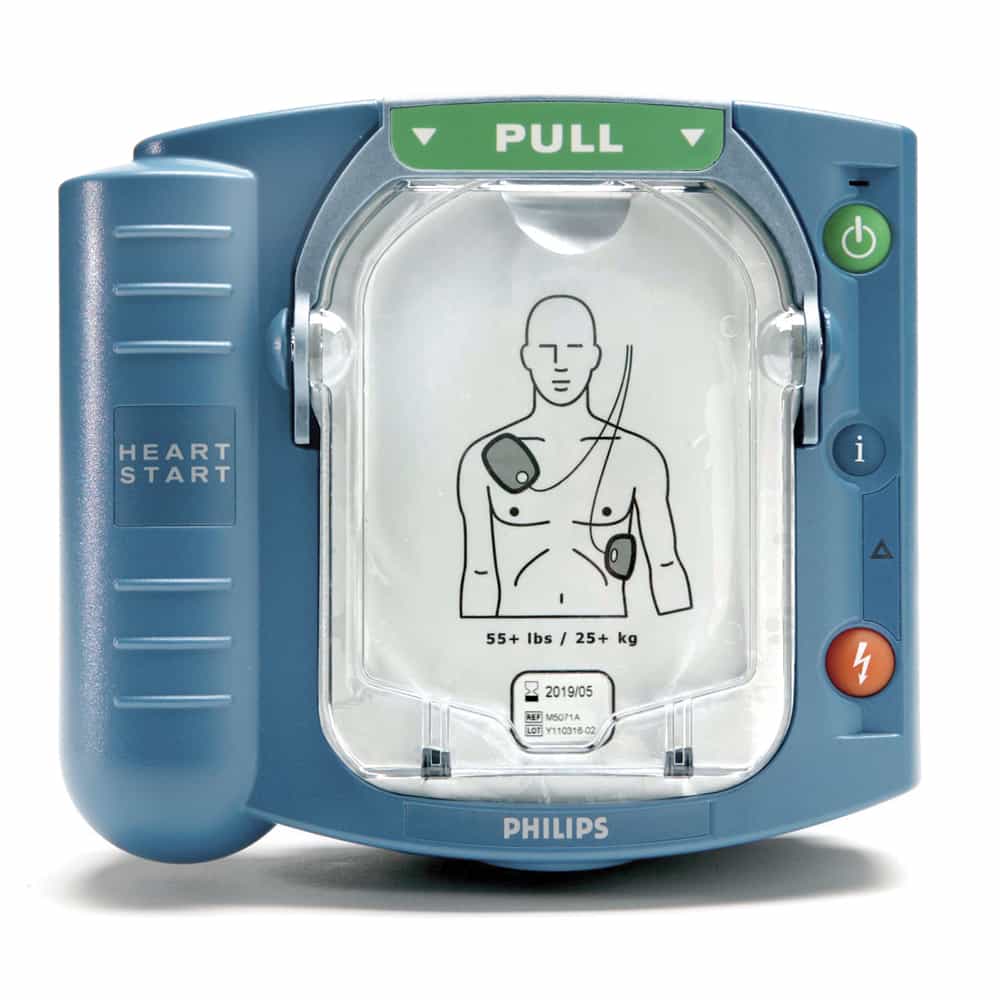
Some AED models use a pediatric key or switch instead. The Philips HeartStart FRx, for example, uses an infant/child key that reduces the energy output when inserted. This approach allows a single set of pads to work for both adults and children, simplifying the rescue process.
Recommended AED Models for Daycare Centers
When choosing an AED for a childcare facility, prioritize models that offer reliable pediatric capabilities, clear voice prompts, and simple operation. Here are models that work well in daycare settings:
- HeartSine Samaritan PAD 350P – At just 2.4 pounds, this is the lightest AED available. It uses dedicated pediatric pads (Pad-Pak Pediatric) and provides clear voice and visual prompts. The IP56 dust and water rating makes it durable in busy childcare environments. Starting at $1,461.60.
- Philips HeartStart FRx – Features the infant/child key for quick switching between adult and pediatric modes. The rugged design meets military drop-test standards, and the SMART pads technology guides rescuers through each step. Starting at $2,060.00.
- Physio-Control LIFEPAK CR2 – Offers ClearVoice technology with step-by-step instructions and allows CPR to continue during heart rhythm analysis. WiFi connectivity enables remote monitoring through LIFELINKcentral. Pediatric pads available separately. Starting at $2,256.00.
- ZOLL AED 3 – Features a high-resolution LCD display with real-time CPR feedback. The child mode reduces energy delivery for pediatric patients. WiFi connectivity allows program managers to monitor device readiness remotely. Starting at $2,307.00.
State Requirements for AEDs in Childcare Facilities
AED requirements for childcare centers vary significantly by state. While no federal law mandates AEDs in daycare centers specifically, several states have enacted legislation that applies to childcare facilities either directly or through broader public building requirements.
States with AED Requirements That May Apply to Daycare Centers
The following states have AED-related laws that could affect your childcare facility:
- New York – Requires AEDs in public buildings, which may include licensed childcare centers depending on occupancy and classification.
- California – Health and Safety Code encourages AED placement in buildings with high public traffic. Licensed childcare facilities serving large numbers of families should consider compliance.
- Illinois – The Physical Fitness Facility Medical Emergency Preparedness Act requires AEDs in fitness facilities, and broader building codes may extend to childcare operations in certain commercial spaces.
- Texas – Encourages AED placement in public and commercial buildings. Some municipalities have additional requirements for facilities serving children.
- Florida – Requires AEDs in certain public buildings and has Good Samaritan protections for AED users.
Even in states without explicit childcare AED mandates, having a defibrillator on-site demonstrates a standard of care that can strengthen your licensing position and reduce liability exposure. For a comprehensive breakdown of state laws, visit our AED Requirements by State guide.
How to Implement an AED Program at Your Daycare Center
Setting up an AED program for your childcare facility involves more than purchasing a device. A well-structured program includes proper placement, staff training, ongoing maintenance, and documentation. Follow these steps to build a program that keeps your facility prepared.
Step 1: Assess Your Facility
Walk through your daycare center and identify the areas where people spend the most time. Consider the main classroom areas, the reception or lobby, outdoor play areas, and any separate buildings or portable structures. The goal is to position AEDs so that any location in your facility is within a 90-second round trip of a device.
For most daycare centers, one AED is sufficient if the facility is a single building under 10,000 square feet. Larger facilities, multi-building campuses, or centers with outdoor play areas that are far from the main building may need two or more units.
Step 2: Choose Your AED
For daycare centers, select a model with pediatric capabilities. The HeartSine Samaritan PAD 350P and the Philips HeartStart FRx are both excellent choices for childcare environments due to their pediatric options, lightweight design, and simple operation.
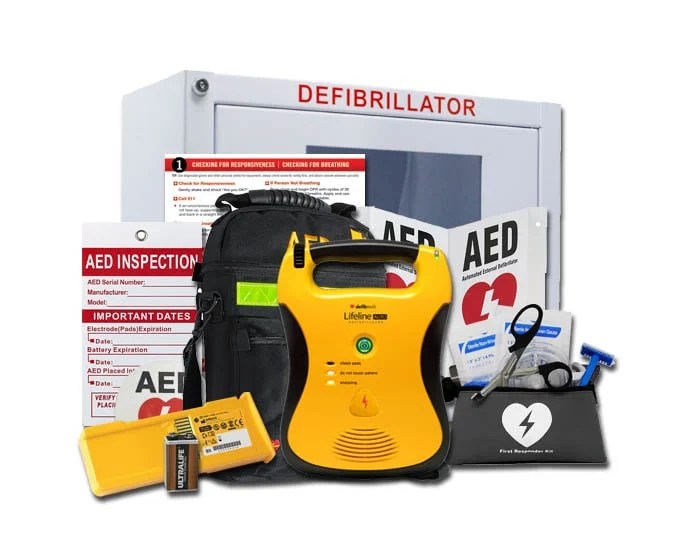
Consider purchasing a value package that includes the AED, a wall-mounted cabinet, signage, spare pads, and a rescue kit. Bundled packages save hundreds of dollars compared to buying components separately.
Step 3: Install in an Accessible Location
Mount your AED in a wall cabinet near the main entrance or reception area. This placement ensures quick access from any part of the building and makes the device visible to all staff members. Choose a location that is:
- Visible from common areas
- Accessible without keys or codes during operating hours
- Away from direct sunlight and extreme temperatures
- At adult height, out of reach of young children
- Clearly marked with AED signage
Step 4: Train Your Staff
Every staff member who interacts with children should receive CPR and AED training. Most states require at least one CPR-certified person on-site at all times during childcare operations. Training through programs like those offered by Response Ready’s training services ensures your team knows how to respond confidently during an emergency.
A thorough training program for daycare staff should cover:
- Recognizing the signs of sudden cardiac arrest in adults and children
- Proper AED operation, including switching between adult and pediatric modes
- CPR techniques for adults, children, and infants
- Calling 911 and coordinating with emergency services
- Using the AED on a child, including correct pad placement
- Post-event procedures and documentation
Training certifications typically expire every two years. Build recertification into your annual staff development schedule. For more information on certification timelines, read our guide on how long CPR certification lasts.
Step 5: Establish a Maintenance Schedule
AEDs require regular inspections to ensure they are rescue-ready when needed. Research shows that 15 to 20 percent of AEDs are not ready for use when an emergency occurs, often due to expired pads, depleted batteries, or missed software updates.
Your maintenance schedule should include:
- Monthly visual inspections – Check the status indicator light, verify pads are sealed, and confirm the battery level is adequate.
- Annual comprehensive checks – Replace pads and batteries before expiration, run self-diagnostic tests, and update emergency contact information.
- After any use – Replace used pads immediately, recharge or replace the battery, and contact your AED provider for post-event support.
Response Ready’s AED Total Solution program automates these maintenance tasks with automated reminders, compliance tracking, and physician oversight for just $99 per year. This service ensures your device is always rescue-ready without adding to your staff’s workload.

RECOMMENDED
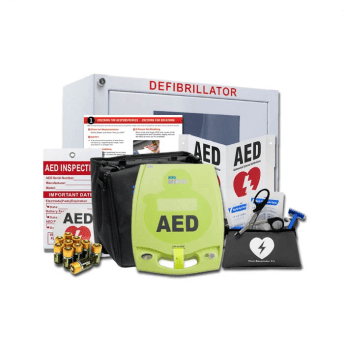
HeartSine Samaritan 350P AED Package
Compact, fully-automatic AED designed for first-time responders. Pads, battery, carry case and wall sign included.
AED Costs for Daycare Centers
Understanding the full cost of an AED program helps daycare operators budget effectively. Here is a breakdown of typical expenses:
| Item | Typical Cost |
|---|---|
| AED device (value package) | $1,400 – $2,900 |
| Wall-mounted cabinet with alarm | $150 – $350 |
| Pediatric pads (separate purchase) | $50 – $150 |
| Staff CPR/AED training (per person) | $50 – $100 |
| AED program management (annual) | $99/year |
| Replacement pads (every 2 years) | $40 – $100 |
| Replacement battery (every 4-5 years) | $100 – $300 |
For a single-location daycare center, the initial investment for a complete AED program, including device, cabinet, pediatric pads, and staff training, typically ranges from $1,800 to $3,500. Ongoing annual costs for maintenance and program management average $150 to $300.
If upfront costs are a concern, Response Ready offers an AED rental program starting at $45 per month. Rental programs include the device, all consumables, maintenance, and the AED Total Solution management platform, making it a budget-friendly option for childcare facilities.
Legal Protections for Daycare Centers with AEDs
Many daycare operators hesitate to install AEDs because of liability concerns. In reality, having an AED and trained staff significantly reduces legal risk rather than increasing it.
All 50 states have Good Samaritan laws that provide legal protection to individuals who use AEDs in good faith during an emergency. These protections typically cover:
- Any person who uses an AED on a victim of apparent cardiac arrest
- The facility or organization that owns and maintains the AED
- The entity responsible for AED training
To maintain these protections, your daycare center should:
- Ensure staff are trained in AED use and CPR
- Follow manufacturer guidelines for AED maintenance
- Keep documentation of training records and device inspections
- Notify local EMS about the AED location (required in some states)
A documented, well-maintained AED program demonstrates a proactive commitment to safety. This standard of care strengthens your position in any liability scenario far more than not having an AED at all.
Frequently Asked Questions
Can you use an AED on a child at a daycare center?
Yes. Modern AEDs are designed to be used on both adults and children. For children under eight years old or weighing less than 55 pounds, use pediatric pads or activate the pediatric mode on your device. If pediatric pads are not available, adult pads can be used in an emergency, as the American Heart Association recommends using an AED regardless of pad type rather than delaying treatment.
How many AEDs does a daycare center need?
Most single-building daycare centers need one AED, placed near the main entrance or reception area. Larger facilities with multiple buildings, separate outdoor play structures, or campuses spread across a wide area may benefit from two or more units. The standard guideline is that no location should be more than a 90-second round trip from an AED.
Are daycare centers legally required to have AEDs?
Requirements vary by state. While no federal law specifically mandates AEDs in daycare centers, several states require AEDs in public buildings, licensed childcare facilities, or buildings that serve children. Even without a mandate, installing an AED is considered a best practice for any facility responsible for the safety of children and staff.
What training do daycare staff need to use an AED?
Staff should complete a CPR and AED certification course, which typically takes four to six hours. Most states require at least one CPR-certified staff member to be present during all operating hours. Certifications from the American Heart Association, American Red Cross, or equivalent organizations are widely accepted. Recertification is usually required every two years.
How much does it cost to put an AED in a daycare?
A complete AED program for a daycare center, including the device, cabinet, pediatric pads, and basic staff training, typically costs between $1,800 and $3,500. Rental programs are available starting at $45 per month, which includes the device, consumables, and program management services.
What is the best AED for a daycare center?
The best AED for a daycare center is one with pediatric capabilities, simple operation, and durable construction. The HeartSine Samaritan PAD 350P is an excellent choice for smaller facilities due to its lightweight design and dedicated pediatric pads. The Philips HeartStart FRx is ideal for facilities that want a single device that easily switches between adult and pediatric modes with its infant/child key.

Not sure which AED or training fits your needs?
A Response Ready product expert walks you through it — no obligation.
Protect Your Daycare Center Today
Every daycare center has a responsibility to prepare for medical emergencies. An AED program gives your staff the tools and confidence to respond to sudden cardiac arrest within minutes, potentially saving the life of a child, parent, or coworker.
Response Ready offers complete AED solutions for childcare facilities, including pediatric-capable devices, wall cabinets, staff training, and ongoing program management. Our team can help you select the right AED for your daycare center and build a compliance program that meets your state’s requirements.
Call us at 858-665-2025 to speak with an AED specialist about your daycare center’s needs, or browse our AED solutions by industry to find the right package for your facility.