- Published
- June 4, 2026
Philips HeartStart AED Review: OnSite, FRx, and FR3 Compared

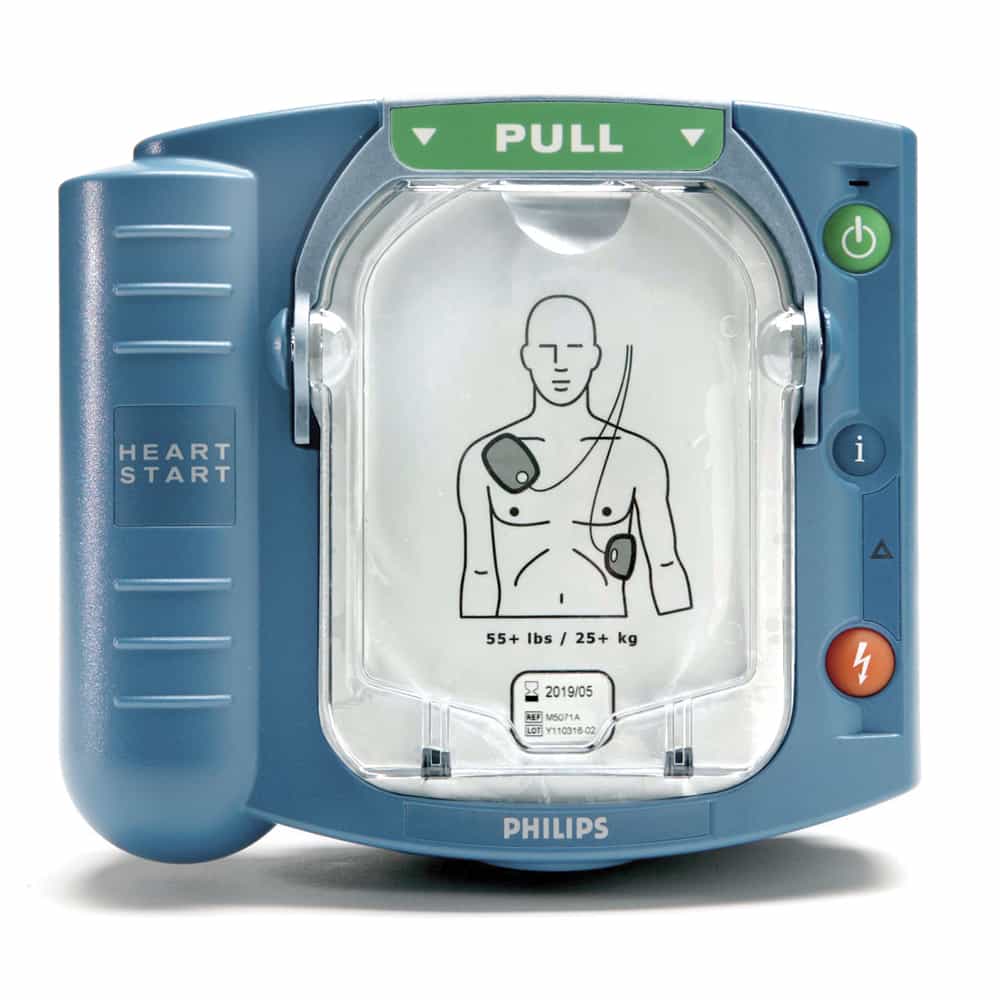
Philips is the most recognized name in the AED industry, and for good reason. The Philips HeartStart lineup includes three distinct models, each built for a specific type of user and environment. Whether you are a first-time buyer choosing an AED for your home or office, or a professional responder who needs clinical-grade reliability, there is a Philips HeartStart defibrillator designed for you.
Browse all Philips HeartStart AEDs at Response Ready or call 858-665-2025 to speak with an AED specialist.
In this review, we compare the Philips HeartStart OnSite, the Philips HeartStart FRx, and the Philips HeartStart FR3 side by side. We will cover specifications, features, ideal use cases, and total cost of ownership so you can make a confident purchasing decision.
Why Choose a Philips HeartStart AED?
Philips HeartStart AEDs are trusted by hospitals, first responders, schools, and businesses worldwide. Philips was one of the first companies to make AED technology accessible to non-medical users, and the HeartStart line reflects decades of innovation in emergency cardiac care. All three models share core strengths that set the Philips brand apart.
- Life Guidance technology provides clear, step-by-step voice instructions during an emergency
- SMART Analysis evaluates the heart rhythm and only advises a shock when appropriate
- Daily self-testing ensures the device is always ready for use
- Pre-installed pads and battery mean each device is virtually ready out of the box
- 8-year manufacturer warranty on all consumer models
For a broader look at how all six FDA-approved AED brands compare, read our complete AED brands comparison guide.
Philips HeartStart OnSite, FRx, and FR3: Side-by-Side Comparison
The Philips HeartStart OnSite, FRx, and FR3 each serve different audiences. The comparison table below summarizes the key differences across all three Philips defibrillator models to help you identify the right fit quickly.
| Feature | HeartStart OnSite (M5066A) | HeartStart FRx (861304) | HeartStart FR3 (861388) |
|---|---|---|---|
| Best For | Homes, offices, small businesses | Schools, public spaces, rugged environments | EMS, hospitals, professional responders |
| User Level | Untrained layperson | Layperson to trained responder | Professional/clinical |
| Starting Price | $1,529 | $2,010 | ~$2,520+ |
| Weight | 3.3 lbs | 3.5 lbs | 3.5 lbs (with battery) |
| Dust/Water Rating | IP21 | IP55 | IP55 |
| Pediatric Mode | Separate pediatric pads required | Infant/Child Key (no separate pads) | Infant/Child Key (no separate pads) |
| CPR Coaching | Voice prompts | Real-time CPR guidance via blue i-button | Smart CPR with rhythm evaluation |
| ECG Display | No | No | Yes (optional color LCD) |
| Shock Delivery Time | ~10 seconds | ~10 seconds | ~8 seconds |
| Data Management | No | No | Bluetooth, software integration |
| Warranty | 8 years | 8 years | 8 years |
Philips HeartStart OnSite Review: Best AED for Home and Office Use
The Philips HeartStart OnSite AED (M5066A) is the most popular consumer AED in the United States. It is designed for people with no medical training, making it the ideal first AED for a home, small office, or community space. The OnSite activates instantly when you pull the green handle, and its Life Guidance voice system walks you through every step of the rescue process.
At a starting price of $1,529, the Philips HeartStart OnSite offers exceptional value. It arrives with pads and a battery pre-installed, a slim carry case, a first responder kit, and free shipping. Response Ready also offers a Philips HeartStart OnSite Value Package starting at $1,579.60, which bundles the AED with a wall cabinet and additional accessories.
OnSite Key Strengths
- Simplest AED to operate. Pull the green handle and follow the voice prompts. No buttons to press before the device guides you.
- No prescription required. The OnSite is the only Philips AED that can be purchased without a prescription in many jurisdictions.
- 85 daily self-tests. The OnSite runs automatic checks on its pads, battery, and internal circuits every day.
- Training mode built in. Insert a training cartridge and the device becomes a safe practice unit.
OnSite Considerations
- Requires separate pediatric pads for children under 55 lbs, which adds to long-term costs
- IP21 rating means it is not ideal for outdoor or wet environments
- No real-time CPR depth feedback
Our recommendation: The Philips HeartStart OnSite is the best choice for first-time AED buyers who want a reliable, easy-to-use device for an indoor environment. If you need help deciding, read our complete AED buyer’s guide.
Philips HeartStart FRx Review: Best AED for Schools and Public Spaces
The Philips HeartStart FRx AED (861304) is built for tougher environments where durability matters. Starting at $2,010, the FRx is designed for schools, fitness centers, churches, public buildings, and any location where the AED may be exposed to dust, moisture, or heavy foot traffic. The FRx carries an IP55 ingress protection rating, meaning it is tested against dust and water jets.
Thinking about placing an AED in your school, gym, or workplace? Call Response Ready at 858-665-2025 for a personalized recommendation.
One of the FRx’s biggest advantages is its cost-saving Infant/Child Key. Instead of purchasing separate pediatric pads, you insert the key and the device automatically adjusts shock energy and voice instructions for younger patients. The key lasts for the lifetime of the device, which reduces long-term replacement costs significantly.
FRx Key Strengths
- IP55 rugged rating. Tested against dust and water jets, plus a 1,000 lb crush test.
- Infant/Child Key eliminates separate pediatric pads. One set of SMART Pads II works for all ages.
- EMS-compatible pads. When paramedics arrive, they can continue using the pre-connected FRx pads with their advanced equipment.
- Real-time CPR coaching. Press the blue i-button for compression depth and rhythm guidance.
FRx Considerations
- Higher price point than the OnSite ($2,010 vs. $1,529)
- No ECG display or data management features
- Slightly heavier at 3.5 lbs
Our recommendation: The Philips HeartStart FRx is the best choice for organizations that need a durable AED for public or semi-outdoor environments, especially schools and facilities that serve both adults and children. Response Ready offers a Philips HeartStart FRx Value Package starting at $2,060.60 with a wall cabinet and accessories included.
Philips HeartStart FR3 Review: Best AED for Professional Responders
The Philips HeartStart FR3 (861388) is a professional-grade defibrillator designed for EMS teams, hospital rapid response units, and clinical settings. Starting around $2,520, the FR3 is the smallest and lightest professional AED from a leading global manufacturer. It delivers a shock in approximately 8 seconds, which is the fastest in the Philips HeartStart lineup.
The FR3 features Smart CPR technology that evaluates the patient’s heart rhythm and determines whether to advise a shock immediately or recommend CPR first. It also offers an optional color LCD screen that displays ECG waveforms, giving trained responders critical clinical data during the rescue. Bluetooth connectivity enables seamless data transfer to Philips management software for post-event review and quality improvement.
FR3 Key Strengths
- Fastest shock delivery. Approximately 8 seconds from power-on to shock, reducing critical hands-off time.
- Smart CPR. Evaluates rhythm quality to determine optimal shock-first or CPR-first therapy.
- Optional ECG display. Color LCD shows real-time waveforms for trained clinicians.
- Bluetooth and data management. Transfer event data wirelessly to Philips software for review and compliance.
- Military tested. Meets MIL-STD-810F standards and holds US Army Airworthiness Release certification.
- IP55 rated. Same rugged dust and water protection as the FRx.
FR3 Considerations
- Highest price point in the Philips HeartStart lineup (~$2,520+)
- Designed for professional use; not typically purchased for home or small office settings
- ECG display configuration adds to the cost (~$2,990 for ECG model)
Our recommendation: The Philips HeartStart FR3 is the right choice for professional medical teams, fire departments, and EMS agencies that need clinical-grade data and the fastest possible shock delivery. Response Ready carries FR3 accessories, batteries, and replacement pads to support your FR3 program.
How to Choose the Right Philips HeartStart AED
Choosing between the Philips HeartStart OnSite, FRx, and FR3 comes down to three factors: who will use the device, where it will be placed, and what level of clinical data you need. Here is a quick decision framework.
- Choose the OnSite if your rescuers have little to no medical training and the AED will stay indoors.
- Choose the FRx if you need durability for a public space, school, or gym, and you want pediatric capability without buying separate pads.
- Choose the FR3 if you are a professional responder who needs ECG data, Bluetooth connectivity, and the fastest shock delivery available.
No matter which Philips HeartStart model you choose, regular AED maintenance is essential to keep your device rescue-ready. Response Ready also offers the full line of Philips AED accessories, including replacement batteries and electrode pads.
For help selecting the right AED, read our guide to AED costs or explore how Philips AEDs are changing emergency preparedness.
Frequently Asked Questions About Philips HeartStart AEDs
What is the difference between the Philips HeartStart OnSite and FRx?
The Philips HeartStart OnSite is designed for untrained users in indoor settings and starts at $1,529. The Philips HeartStart FRx is built for harsher environments with an IP55 rating and includes an Infant/Child Key that eliminates the need for separate pediatric pads. The FRx starts at $2,010.
Is the Philips HeartStart FR3 available for consumer purchase?
The Philips HeartStart FR3 is primarily sold to professional medical teams, EMS agencies, and hospitals. It is a clinical-grade device with ECG display and Bluetooth data management capabilities. Contact Response Ready at 858-665-2025 for pricing and availability.
Do Philips HeartStart AEDs require a prescription?
The Philips HeartStart OnSite can be purchased without a prescription in many states. The FRx and FR3 may require a prescription depending on your location and jurisdiction. Response Ready can guide you through the purchasing process for any model.
How long do Philips AED batteries last?
Philips HeartStart AED batteries typically last 4 years in standby mode. The FR3 battery can deliver up to 300 shocks or 12 hours of monitoring on a single charge. Response Ready carries replacement Philips batteries for all models.
Can I use one set of pads for both adults and children?
The Philips HeartStart FRx and FR3 both use an Infant/Child Key that adjusts therapy for pediatric patients using the same adult pads. The OnSite requires separate pediatric pads, which can be purchased from Response Ready.
What warranty do Philips HeartStart AEDs come with?
All three Philips HeartStart models come with an 8-year manufacturer warranty. Response Ready also offers the AED Total Solution program for $99 per year, which provides ongoing compliance management, maintenance tracking, and post-event support.
Ready to protect your home, school, or workplace with a Philips HeartStart AED? Shop Philips AEDs at Response Ready or call 858-665-2025 for expert guidance.
Disclaimer for information purposes only:
The information provided on this website is intended for general educational and informational purposes only. It is not medical advice and should not be used as a substitute for professional diagnosis, treatment, or care. Always consult a qualified healthcare or medical professional regarding any health-related questions or concerns.
While we strive to ensure the information shared is accurate and up to date, no guarantees are made regarding completeness, accuracy, or applicability to any individual situation. Use of this content is at the reader’s sole discretion and risk.
This website is part of the Response Ready family of emergency preparedness and training resources, including CPR & first aid training and compliance services, AED sales and program support, AED program management software, and medical oversight solutions provided through our affiliated platforms:
• CPR1.com
• AEDLeader.com
• AEDTotalSolution.com
• MDSIMedical.com
By accessing or using this website, you agree to release, indemnify, and hold harmless the website owners, authors, contributors, and affiliated entities from any claims, losses, damages, or liabilities arising from the use or reliance on the information presented.