The thought of using an AED can be intimidating, but modern devices are designed to be your calm, clear guide through a chaotic moment. They are built for people with no medical training, empowering you to act decisively when every second is critical. The real purpose of having an AED is to build confidence—the confidence to know you have a reliable tool ready to help, and the confidence to use it correctly when the time comes. Finding the best AED for your situation means choosing a device that feels intuitive and supportive. We’ll walk you through the features that matter most, from simple voice prompts to real-time CPR coaching, so you can select a defibrillator that makes you feel prepared, not panicked.
Want to understand the technology behind these devices? Read our guide on how AED defibrillator machines work.
Key Takeaways
- The “best” AED is the one for your specific setting: An AED for a quiet home has different needs than one for a rugged worksite or a busy school. Consider factors like durability, portability, and pediatric capabilities to ensure your device is a perfect fit for its environment.
- Prioritize features that guide the user: While all modern AEDs are safe, features like clear voice prompts, video instructions, and real-time CPR feedback are designed to help anyone act confidently. These support tools can significantly improve rescue quality, especially for untrained bystanders.
- Plan for the total cost of ownership: The initial purchase price is only part of the story. Remember to account for the future replacement of essential accessories like pads and batteries to create a sustainable preparedness plan and ensure your device is always ready to use.
Get certified in CPR
Adult & Pediatric First Aid/CPR/AED — Blended Learning
Self-paced online + in-person skills check. 2-year certification.
CPR, AED & First Aid Certification
Instructor-led on-site. Practice on real manikins and AED trainers.
What Makes an AED the “Best” Choice for You?
Finding the right Automated External Defibrillator (AED) isn’t about picking the one with the most features or the highest price tag. The “best” AED is the one that fits your specific needs, your environment, and the people you want to protect. Think of it as choosing a partner for an emergency—you want one that’s reliable, easy to understand, and ready to act when you need it most. Before you start comparing models, take a moment to consider what truly matters for your situation.
Your first consideration should be ease of use. In a high-stress moment, you need a device that provides clear, simple instructions. Look for AEDs with calm voice prompts and easy-to-follow visual guides. Some models are fully automatic, meaning they will deliver a shock on their own if needed, which can help reduce hesitation. Others are semi-automatic, requiring you to press a button to deliver the shock. Neither is better than the other; it’s about what makes you feel most confident.
Next, think about where the AED will live. An AED for a quiet office has different needs than one for a bustling gym or an outdoor sports league. Consider the device’s durability—its resistance to dust and water (often shown as an IP rating) is important for more rugged environments. Portability is also key. A lightweight, compact device is easier to grab and carry to the scene of an emergency. For a detailed comparison, see our portable AED guide. If you’re preparing for your home or a school, you’ll also want to check for pediatric capabilities. Many modern AEDs for sale can be used on children with special pads or a key.
Finally, look at the long-term picture. The initial purchase price is only part of the story. Every AED requires ongoing maintenance, including replacing the AED pads and batteries every few years. Factoring in the total cost of ownership will help you make a sustainable choice. Some devices also offer advanced features like real-time CPR feedback, which coaches you on the rate and depth of chest compressions. This can be an invaluable tool for improving the quality of care you provide while waiting for professional help to arrive.
Comparing the Top AEDs on the Market
Choosing an automated external defibrillator can feel like a big decision, but it helps to think of it like picking the right tool for a specific job. While all modern AEDs for sale are designed to be used by anyone, regardless of training, they each have unique features that make them better suited for certain environments and users. Some models are celebrated for their simplicity, making them perfect for a home where stress levels might be high and the user wants straightforward guidance. Others offer advanced CPR coaching that can give a responder the confidence to act effectively in a busy workplace or community setting.
The goal is to find a device that aligns with your specific needs, the potential users, and the environment where it will be stored. For example, a device for a construction site will have different durability requirements than one kept in an office cabinet. Similarly, an AED for a school might benefit from pediatric capabilities. Are you looking for something compact and rugged for a vehicle or sports team? Or do you need a device with clear, step-by-step instructions for a public space like a church? Understanding the key strengths of the top models is the first step in making a confident choice. Below, we’ll break down six of the most trusted AEDs on the market, highlighting what makes each one stand out so you can find the perfect fit for your preparedness plan.
Philips HeartStart OnSite AED
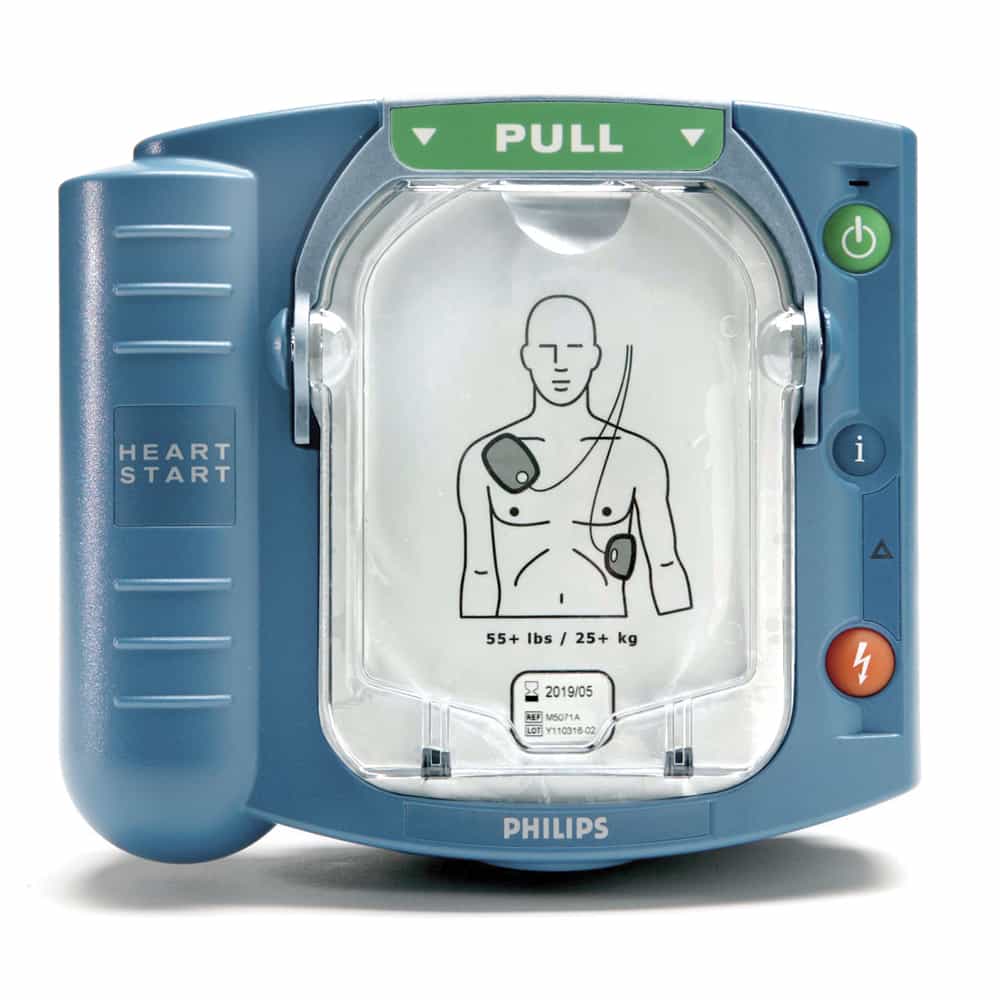
The Philips HeartStart OnSite AED is one of the most popular choices for home use, and for good reason—it’s designed for simplicity when every second counts. Its clean, intuitive interface features calm, clear voice instructions that guide you through every step of the rescue process, from placing the pads to delivering a shock. The pads are pre-connected and the battery is long-lasting, so it’s always ready to go. This focus on user-friendliness helps remove the intimidation factor, making it an excellent option for anyone who wants a straightforward, reliable device to protect their family. It’s the only AED available over-the-counter without a prescription, a testament to its safe and simple design.
ZOLL AED Plus
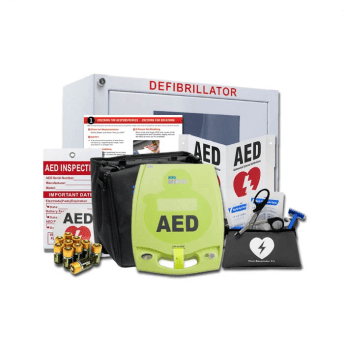
If you’re concerned about performing CPR correctly, the ZOLL AED Plus is a standout. Its most notable feature is Real CPR Help®, which provides real-time feedback on your chest compressions. The device gives you audio and visual cues, letting you know if you need to push harder or if you’re doing a great job. This built-in coaching can make a huge difference in the quality of CPR, which is critical for a positive outcome. The ZOLL AED Plus uses consumer lithium camera batteries that are easy to find and replace, and its pads and batteries have a five-year shelf life, reducing long-term maintenance costs. It’s a fantastic choice for workplaces, gyms, and schools where a lay responder might need extra guidance.
Physio-Control LIFEPAK CR2
When a cardiac emergency happens in a public place, speed is everything. The Physio-Control LIFEPAK CR2 is engineered for fast and effective use, even by someone with no prior training. It features a simple, two-step operation and ClearVoice™ technology that adjusts the volume of its prompts to be heard in a noisy environment. One of its best features is its ability to analyze the heart rhythm during chest compressions, which minimizes pauses and allows for a faster shock delivery if needed. This makes the entire rescue process more efficient. Its sleek, modern design and easy-to-use interface make it a top choice for public access defibrillation (PAD) programs in offices, airports, and community centers.
HeartSine Samaritan PAD 450P
The HeartSine Samaritan PAD 450P is known for being exceptionally compact, durable, and user-friendly. It’s one of the lightest and smallest AEDs available, making it easy to store in tight spaces or include in a mobile emergency kit. Despite its small size, it’s tough, boasting a high rating for dust and water resistance. This makes it a great fit for industrial settings, sports fields, or any environment where it might be exposed to the elements. The Samaritan PAD 450P also includes an integrated CPR Rate Advisor that uses audible and visual prompts to help you maintain the correct rate of chest compressions, providing valuable support without overwhelming the user.
Cardiac Science Powerheart G5
The Cardiac Science Powerheart G5 is a powerful and intelligent device designed to be rescue-ready at a moment’s notice. It performs daily, weekly, and monthly self-tests on its battery, pads, and internal circuitry, so you can be confident it’s working properly. The G5 features fully automatic operation, meaning it will deliver a shock on its own if one is needed—the rescuer doesn’t have to press a button. This can help reduce hesitation during a stressful event. It also offers dual-language capabilities, allowing the user to switch between two pre-set languages with the touch of a button. This makes it an excellent choice for diverse workplaces and public settings.
Defibtech Lifeline View AED
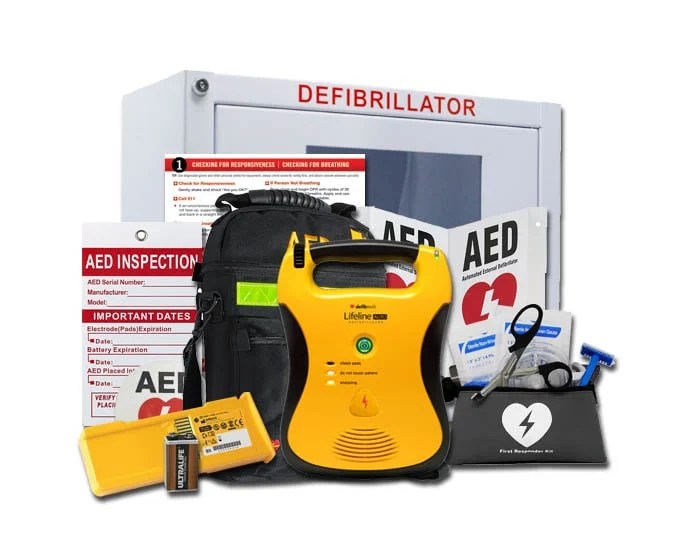
For visual learners, the Defibtech Lifeline View AED is a game-changer. It’s the first and only AED with a full-color video screen that shows you exactly what to do. Instead of just listening to audio prompts, you can watch clear demonstrations for everything from pad placement to performing CPR and rescue breathing. This multi-sensory approach is incredibly helpful in a chaotic emergency, as it provides an extra layer of guidance and reassurance. The video instructions can help anyone feel more confident and capable of performing a rescue. Its combination of video, voice, and text instructions makes it a uniquely supportive device for any public or private setting.
What Key Features Should You Look for in an AED?
When you’re choosing a life-saving device, the details matter. While all FDA-approved AEDs for sale are designed to be safe and effective, certain features can make a device easier to use, more reliable, and better suited for your specific environment. Understanding these key features will help you feel confident that you’re selecting the right tool to protect your family, colleagues, or community. From clear instructions that guide you through a stressful moment to self-maintenance checks that ensure readiness, these are the things that separate a good AED from a great one. Let’s walk through the most important features to consider.
Voice Prompts and Visual Guides
In an emergency, clarity is everything. The best AEDs are designed for people with little to no medical training, using simple, direct instructions to guide the entire rescue process. Look for a device with loud, clear voice prompts that tell you exactly what to do and when to do it—from applying the pads to performing CPR. Many models also include illuminated diagrams or on-screen text that visually reinforces the audio commands. These guides are incredibly helpful in noisy environments or for responders who are hearing impaired. They cut through the chaos and panic, allowing anyone to act decisively and correctly.
Battery Life and Maintenance Needs
An AED is only useful if it’s ready to go at a moment’s notice. That’s why battery life is a critical feature. Most modern AED batteries last between four and seven years on standby, but this can vary. When comparing models, consider not just the lifespan but also the replacement cost, as this is a key part of the long-term cost of ownership. The same goes for electrode pads, which also have an expiration date. A device with a long-lasting battery and pads means less frequent maintenance and greater peace of mind, ensuring your AED is prepared to perform when you need it most.
Real-Time CPR Coaching
Sudden cardiac arrest survival depends on two key actions: a shock from an AED and high-quality CPR. While many people have a basic understanding of CPR, performing it correctly under pressure is another story. Some of the most advanced AEDs now include real-time CPR coaching. Using sensors in the electrode pads, these devices provide live feedback on your chest compressions, telling you to push harder, faster, or slower. This feature can dramatically improve the quality of CPR, which is essential for keeping blood flowing to the brain and heart. It’s like having an expert by your side, giving you the confidence that you’re doing everything possible to help.
Shock Speed and Energy Levels
When a heart is in a fatal rhythm, every second without a shock decreases the chance of survival. That’s why a key performance feature is the AED’s “time-to-shock”—how quickly it can analyze the heart’s rhythm and charge to deliver a shock after the pads are applied. The fastest devices can do this in under 10 seconds. You may also see different approaches to energy levels. Some AEDs deliver a fixed dose of energy with each shock, while others use escalating energy, increasing the power of subsequent shocks if the first one isn’t successful. Both are proven, effective approaches cleared by the FDA.
Durability and Weather Protection
An AED needs to be able to withstand the environment where it’s stored. A device kept in a climate-controlled office has different needs than one in a dusty workshop, on a boat, or by a swimming pool. Look for the device’s IP (Ingress Protection) rating, which tells you how resistant it is to dust and water. A higher rating means more protection. The device should also be rugged enough to handle being dropped or jostled during a rescue. Choosing a durable, well-protected AED ensures it will function reliably, no matter where an emergency happens.
Self-Testing and Maintenance Alerts
You shouldn’t have to wonder if your AED is ready to work. Modern AEDs remove the guesswork by performing regular, automated self-tests—often daily, weekly, and monthly. These tests check the battery life, pad connection, and internal electronics to confirm everything is in working order. If an issue is detected, such as a low battery or an expired pad, the device will alert you with a visible indicator (like a flashing red light) and an audible chirp. This proactive monitoring is one of the most important features for ensuring your device is always rescue-ready without requiring constant manual checks. For a detailed walkthrough of what to check and when, use our AED maintenance checklist.
Pediatric-Ready Capabilities
Sudden cardiac arrest can happen to children, but their smaller bodies require a lower-energy shock than adults. If your AED will be in a place with children—like a school, church, or community center—it’s essential to have a pediatric option. Most AEDs accommodate this in one of two ways: with special pediatric AED pads that reduce the shock energy, or with a pediatric key or button that adjusts the device’s settings for a child. Both are effective, so choose the option that feels simplest for you. This capability ensures you’re prepared to rescue a person of any age.
How Do the Top AED Brands Compare?
When you start looking at different AEDs for sale, you’ll quickly notice a few brand names that come up again and again. Philips, ZOLL, Physio-Control (now part of Stryker), HeartSine, and Cardiac Science are all leaders in the industry, and for good reason. Each of these manufacturers produces high-quality, FDA-approved devices that are proven to save lives. While any of their AEDs will be a reliable choice, they each have unique strengths that make them better suited for different environments and users.
Think of it like choosing a car. Every car will get you from point A to point B, but some are built for off-roading, some for family road trips, and others for city driving. Similarly, some AEDs are designed for ultimate simplicity, making them perfect for homes or public spaces where a first-time user might be the one responding. Others offer advanced features like real-time CPR feedback, which can give a rescuer the confidence to perform high-quality chest compressions. Some are compact and rugged for on-the-go use, while others are known for their rapid shock delivery. Understanding these key differences will help you find the perfect match for your specific needs, ensuring you feel confident and prepared.
Philips: Known for Simplicity
If you’re looking for an AED that’s incredibly straightforward, Philips is a great place to start. The Philips HeartStart OnSite is famous for its user-friendly design, featuring a simple interface that allows even untrained users to operate it effectively. With clear, calm voice instructions that guide you through every step, it’s designed to remove the intimidation factor from a high-stress situation. The device often includes long-lasting AED batteries and pre-connected pads, which saves precious time during an emergency. This focus on simplicity makes it a top choice for homes, offices, and community centers where the person responding may have little to no formal training.
ZOLL: A Focus on CPR Feedback
The ZOLL AED Plus stands out by doing more than just delivering a shock—it actively coaches you through CPR. This device provides real-time audio and visual feedback on the quality of your chest compressions, telling you to “push harder” or confirming “good compressions.” This guidance is critical because effective CPR is a key factor in survival from sudden cardiac arrest. The ZOLL AED Plus ensures that users can deliver life-saving compressions at the correct depth and rate. This feature empowers anyone, from a trained first responder to a concerned bystander, to perform CPR with confidence, making it an excellent tool for improving rescue outcomes.
Physio-Control: Built for Speed and Performance
Often trusted by medical professionals, Physio-Control LIFEPAK AEDs are engineered for rapid response and powerful performance. The LIFEPAK CR2, for example, is highly recommended for its quick and effective design. It allows for rapid deployment in emergency situations, which is essential for saving lives. This device can analyze the heart rhythm during CPR, which minimizes pauses in chest compressions and allows for faster shock delivery. While they are a favorite among first responders, LIFEPAK AEDs are also designed to be user-friendly for the public, combining professional-grade technology with simple, clear instructions.
HeartSine: Valued for Its Compact Design
For those who need a portable and durable solution, the HeartSine Samaritan PAD is an excellent choice. It’s known for its compact and lightweight design, making it easy to transport and store in a vehicle, a backpack, or a small office. This portability and durability make it a favored choice for both public and private settings, especially for sports teams, outdoor clubs, or mobile workforces. HeartSine devices also feature a unique Pad-Pak system that combines the battery and electrode pads into a single cartridge. This simplifies maintenance, as you only have to track one expiration date for your AED accessories.
Cardiac Science: Designed to Be Rescue Ready
Cardiac Science puts a heavy emphasis on reliability with its Powerheart line of AEDs. The Cardiac Science Powerheart G5 AED is recognized for its smart shock analysis and fully automatic operation, which allows it to be ready for use at a moment’s notice. The brand’s “Rescue Ready” technology means the device performs daily, weekly, and monthly self-tests on its core components, including the battery, pads, and internal circuitry. A visible status indicator confirms it’s ready to go, giving you peace of mind that your AED will perform as expected when an emergency strikes. This focus on readiness makes it a trusted choice for organizations that need to ensure their equipment is always functional.

RECOMMENDED
HeartSine Samaritan 350P AED Package
Compact, fully-automatic AED designed for first-time responders. Pads, battery, carry case and wall sign included.
What Is the Price Range for a Quality AED?
When you decide to purchase an automated external defibrillator (AED), one of the first things you’ll consider is the cost. It’s helpful to view this as an investment in safety, whether it’s for your home, office, or community center. The price of an AED can range significantly, typically from around $1,400 to over $2,500, and this variation is tied directly to the device’s features, durability, and technology. It’s important to remember that all FDA-approved AEDs for sale are designed to do one thing exceptionally well: deliver a life-saving shock during sudden cardiac arrest. They are all effective and safe for lay responders to use.
The price differences you’ll see often come down to the extra support features that can help a rescuer feel more confident and act more effectively during a chaotic emergency. For example, some models offer real-time feedback on the quality of your CPR compressions, while others provide full-color video instructions. More expensive devices might also have higher durability ratings for dust and water resistance, making them suitable for outdoor or industrial settings. As you explore your options, think about your specific environment and who is most likely to use the device. A simple, straightforward AED might be perfect for a home, while a more feature-rich model could be ideal for a busy public space. Understanding what drives the cost will help you find the right balance between features and budget.
Budget-Friendly Options ($1,400-$1,600)
AEDs in this price range are excellent, reliable choices that provide all the essential functions needed to save a life. These devices are designed for simplicity and ease of use, featuring clear voice prompts and straightforward instructions to guide a rescuer through every step. While they may not have advanced features like real-time CPR feedback or full-color screens, they are incredibly effective and meet all FDA requirements for safety and performance. A budget-friendly AED is a fantastic option for homes, small offices, or community groups where cost is a key consideration but preparedness remains a top priority. They prove that you don’t need to spend a fortune to have a high-quality, life-saving device on hand.
Mid-Range Models ($1,600-$1,800)
Moving into the mid-range, you’ll find AEDs that offer more advanced rescuer support. Many devices in this category include features like CPR coaching, which provides real-time feedback on the rate and depth of chest compressions to help you perform higher-quality CPR. Some models may also offer bilingual prompts, enhanced visual guides on a larger screen, or faster shock times. These additional features can be particularly valuable in public settings like schools, gyms, or larger workplaces, where the rescuer may have little to no training. The added guidance can build confidence and improve the overall effectiveness of the response, making these models a solid investment for many organizations. Businesses and institutions purchasing AEDs for multiple locations can save significantly through wholesale AED programs with volume pricing and dedicated support.
Premium Devices ($1,800+)
Premium AEDs are built for high-demand environments and often include the most advanced technology available. These top-tier devices typically feature comprehensive CPR feedback that measures rate, depth, and recoil, ensuring every compression is as effective as possible. You’ll also find models with rugged designs that offer superior protection against dust and water, making them ideal for industrial sites, sports fields, or use by professional first responders. Other premium features can include Wi-Fi connectivity for easier device management and maintenance alerts, full-color video displays, and technology that automatically adjusts shock levels for pediatric patients. These devices represent the best in preparedness technology for those who need maximum performance and durability.
What Is the Total Cost of Ownership?
The initial purchase price is just one part of an AED’s overall cost. To ensure your device is always ready to use, you’ll need to perform routine maintenance, which includes replacing key components every few years. The two main consumables are the AED pads (electrodes) and the AED batteries. Electrode pads typically have a shelf life of two to five years, while batteries last between four and seven years, depending on the model. The cost for these replacements can range from $150 to over $400 for a set. When choosing an AED, it’s smart to look up the replacement costs for its accessories to get a clear picture of the long-term financial commitment and budget accordingly. For a detailed breakdown, see our complete AED cost guide.
How Price Reflects Features and Reputation
Ultimately, the price of an AED reflects its combination of features, durability, and the manufacturer’s reputation. A higher price tag often corresponds with more advanced rescuer support, such as detailed CPR feedback or video instructions, which can make a significant difference in a high-stress emergency. It can also indicate a more robust build designed to withstand harsh conditions. While every FDA-approved AED is a capable life-saving tool, investing in a model with features that match your environment and potential users’ needs can improve outcomes. Think of it as an investment in confidence—for you and for anyone who might need to step up and save a life. The cost of a life is immeasurable, and having the right tool on hand is what matters most.
Which AED Is Right for Your Environment?
The best AED isn’t a one-size-fits-all device. The right choice depends entirely on where you plan to keep it and who is most likely to use it. A device that’s perfect for a quiet home environment might not be the best fit for a bustling school hallway or a rugged outdoor worksite. Thinking through your specific needs will help you find a defibrillator that offers the right combination of features, durability, and ease of use. Let’s look at some common settings and the AEDs for sale that are best suited for each one.
The Best AEDs for Home Use
When you’re choosing an AED for your home, simplicity is everything. In a stressful situation, you want a device that is intuitive and provides clear, calm instructions. The Philips HeartStart Home and OnSite models are excellent choices because they are designed specifically for people with no medical training. They feature straightforward voice prompts that guide you through every step, from placing the pads to delivering a shock. Another great option is the ZOLL AED Plus, which offers real-time CPR feedback, telling you if you need to push harder to maintain effective chest compressions. These features provide an extra layer of confidence when every second counts. See our full comparison of the best AEDs for home use.
Top Choices for Offices and Workplaces
In an office or workplace, an AED needs to be accessible. For a full walkthrough of OSHA compliance and program setup, see our workplace AED buying guide. The device should also be easy for any employee to use, regardless of their background. The Philips HeartStart OnSite and ZOLL AED Plus are again top contenders here because of their user-friendly interfaces. They are built to be reliable with minimal maintenance, which is a huge plus for busy facility managers. Complete AED packages are often the most practical solution for businesses, as they typically include the defibrillator, a wall-mounted cabinet for visibility, and a response kit. This ensures your team has everything it needs to act quickly and confidently during an emergency.
Ideal AEDs for Schools and Public Areas
For schools, community centers, and other public spaces, an AED must be durable, highly visible, and simple enough for a bystander to operate. The HeartSine Samaritan PAD models are fantastic for these settings because they are compact, lightweight, and exceptionally durable. They also have a high IP rating, meaning they are well-protected against dust and water. The Defibtech Lifeline is another solid choice, known for its ruggedness and straightforward two-button operation. Placing these devices in accessible, clearly marked cabinets ensures that anyone can grab one and begin helping immediately, which is critical in high-traffic environments.
AEDs for Outdoor or Rugged Settings
Standard AEDs may not hold up in demanding environments like construction sites, sports fields, or manufacturing floors. For these settings, you need a device built to withstand the elements. The ZOLL AED models are known for their high IP ratings, offering superior protection against dust and water intrusion. Another excellent option is the Defibtech Lifeline View, which features a full-color video screen that provides visual instructions—a game-changer in noisy or chaotic environments where voice prompts might be hard to hear. Pairing these tough devices with the right AED accessories, like a weatherproof carrying case, ensures your equipment stays ready to perform.
Common AED Myths, Debunked
When it comes to life-saving equipment, misinformation can cause hesitation—and in a sudden cardiac arrest, every second counts. Many of the fears surrounding AEDs are based on outdated ideas or scenes from movies. The truth is, modern AEDs are incredibly smart, safe, and designed specifically for people without medical training to use confidently.
Let’s clear up some of the most common myths. Understanding how these devices actually work will help you feel more prepared to step in and make a difference when it matters most.
Myth: Only Medical Professionals Can Use an AED
This is one of the biggest and most dangerous misconceptions. The reality is that Automated External Defibrillators were designed for the public. They are built to be used by anyone, regardless of their level of training. That’s why you see them in airports, gyms, and schools. Each device provides clear, calm voice instructions and visual diagrams to walk you through every step, from placing the pads to delivering a shock. The goal is to empower bystanders to act immediately, as waiting for paramedics can take too long. You can browse a wide range of AEDs for sale that are FDA-approved for public use.
Myth: Using an AED Is Complicated or Dangerous
It’s natural to worry about doing something wrong in a high-stress situation, but an AED is designed to prevent user error. The device does the hard work for you by analyzing the person’s heart rhythm. It will only advise a shock if it detects a specific, life-threatening arrhythmia. You cannot accidentally hurt someone with an AED; the real danger lies in delaying its use. While formal CPR and AED training is always a great idea to build confidence, the device itself is your guide. It’s as simple as turning it on and following the prompts.
Myth: An AED Might Accidentally Shock Someone
This is a common fear, but it’s unfounded. AEDs have sophisticated sensors and software that analyze the heart’s electrical activity. The device will not allow a shock to be delivered unless it confirms a shockable rhythm, like ventricular fibrillation. It cannot shock someone with a normal heartbeat, nor can it be triggered to shock someone accidentally. The machine will clearly instruct everyone to “stand clear” before it delivers a shock, ensuring the safety of the rescuer and any other bystanders. The built-in safety features make it a reliable tool for any lay responder.
Myth: AEDs Can’t Be Used on People with Pacemakers
You absolutely can and should use an AED on someone who has a pacemaker or an implantable cardioverter-defibrillator (ICD). The key is to ensure proper pad placement. If you can see or feel a device implanted under the skin (usually on the upper chest), simply avoid placing the AED pad directly over it. Place the pad at least one inch away from the implanted device. The AED will still be able to accurately analyze the heart rhythm and deliver a life-saving shock if one is needed. The presence of a pacemaker should never be a reason to hesitate.
Myth: You Have to Perform CPR Before Using an AED
While CPR is a critical component of saving a life, the top priority is to use an AED as soon as it becomes available. You don’t need to wait or perform a certain number of compressions before applying the pads. The best course of action is to turn on the AED and follow its instructions immediately. The device will guide you, telling you when to apply the pads, when to stand clear for a shock, and when to resume CPR. Many modern AEDs even provide real-time feedback on your compressions. Think of CPR and the AED as a team—they work together to give the person the best chance of survival.
How to Choose the Right AED
Picking the right AED isn’t about finding a single “best” device—it’s about finding the best device for you. The ideal AED for a quiet home office is different from one needed at a bustling community pool. Thinking through your specific needs will help you find a reliable device that gives you the confidence to act in an emergency. By considering a few key factors, you can make a choice that fits your environment, budget, and the people who might one day use it.
Assess Your Environment and Risks
First, think about where the AED will be stored and used. An AED for your home should be simple and intuitive, as the user might be a family member with little to no training. Models like the Philips HeartStart OnSite are designed specifically for home use with clear, calm voice instructions.
On the other hand, a device for a school, gym or fitness center, or outdoor setting needs to be more durable. Look for AEDs with high ratings for dust and water resistance. You should also consider whether children are likely to be present. If so, you’ll want an AED with easy-to-use pediatric pads or a child mode. The right AEDs for sale will match the unique demands of your location.
Consider Your Training and Support Needs
A common myth is that only medical professionals can use an AED. The truth is, modern AEDs are designed for anyone to use. They provide clear voice and visual instructions to walk you through every step, from applying the pads to performing CPR. You don’t need to be an expert to save a life.
That said, CPR and AED training can make a huge difference in your confidence. While you can operate an AED without it, training helps you feel more prepared and act more decisively in a high-stress situation. When choosing a device, consider one with features like real-time CPR feedback, which can help you perform more effective chest compressions.
Account for Maintenance and Ongoing Costs
The initial purchase price of an AED, which typically ranges from $1,400 to over $1,800, is just the beginning. To keep your device ready for an emergency, you’ll also need to plan for the cost of replacement parts. Both AED pads and batteries have expiration dates and must be replaced every few years, even if they are never used.
These ongoing costs vary between models, so it’s a good idea to check the price and lifespan of the accessories before you buy. Some AEDs also perform regular self-tests and will alert you when a battery is low or a part needs replacing, which helps simplify maintenance and ensures your device is always ready to go.
Make Your Final Decision
Once you’ve considered your environment, potential users, and budget, you can make an informed choice. The goal is to find a balance between features, ease of use, and long-term cost. If upfront cost is a concern, consider an AED rental program as a flexible alternative to purchasing. Instead of focusing only on the price tag, think about the value of having a reliable device that you and others feel comfortable using.
If you’re outfitting a workplace or community center, pre-configured AED packages can be a great option. These bundles often include the AED, a storage cabinet, extra pads, and a first aid kit, giving you everything you need in one purchase. Don’t hesitate to use buyer’s guides or speak with an expert to find the perfect fit.
Ready to take action? Browse our full AED collection at Response Ready to find the right device for your needs.
Related Articles
- How to choose the right AED for your organization
- How to choose an AED you can confidently use in an emergency
- How to choose a user friendly AED for your home or business
- Which AED brand offers better features for your needs?
- AED Machine 101: A Complete Buyer’s Guide

Not sure which AED or training fits your needs?
A Response Ready product expert walks you through it — no obligation.
Frequently Asked Questions
Do I really need formal training to use an AED? While training is fantastic for building confidence, you absolutely do not need it to use an AED. These devices were designed specifically for untrained bystanders to use effectively during an emergency. As soon as you turn it on, it will begin speaking to you with clear, calm instructions that guide you through every single step of the process. The device does the thinking for you, so you can focus on helping.
With so many features, what’s the one thing I should prioritize? Instead of focusing on a single feature, the most important thing to prioritize is your specific environment. The “best” AED is the one that fits the place and people it’s meant to protect. For a quiet home, simplicity and clear instructions might be your top priority. For a noisy construction site or a busy gym, you might prioritize durability and features like real-time CPR feedback to help a rescuer stay on track.
Can I use the same AED on a child that I would use on an adult? Yes, most modern AEDs are equipped for pediatric rescues. This is usually handled in one of two ways: either with smaller, pediatric-specific electrode pads or with a special key or switch that reduces the energy level of the shock. If your AED will be kept in a place where children are present, like a school, community center, or your home, it’s essential to make sure the model you choose has this capability.
What happens after the AED is used in an emergency? After an AED is used, a few simple steps are needed to get it ready for the next emergency. The electrode pads are for single use only and will need to be replaced. You should also contact the manufacturer or your supplier to report the event. They can help you get a new set of pads, check the battery status, and ensure the device’s data is downloaded if needed for medical review. This process ensures your device is back in service and ready to protect someone else.
Is a more expensive AED always a better choice? Not at all. Every FDA-approved AED on the market is proven to be safe and effective at saving a life. A higher price tag typically reflects more advanced features, such as real-time CPR coaching, a full-color video screen, or a more rugged, waterproof design. The best choice for you is the one that meets the needs of your environment and your budget, not necessarily the one with the most features.