- Published
- March 25, 2026
Confident Use of an AED: From Bystander to Rescuer


The thought of using an Automated External Defibrillator (AED) during a sudden cardiac arrest can feel overwhelming. You might be asking yourself, “Can I, a lay responder, really use this to save a life? What if I do something wrong?” These are completely valid concerns. But modern AEDs are designed specifically for people just like you—to turn hesitation into action. This guide is all about building that readiness. We’ll break down what makes an AED user-friendly, helping you select a device that fosters confident use so you’re prepared to act when it matters most. Your actions can make the ultimate difference.
Research confirms the life-saving impact of bystander intervention. One study found that when an AED is used by a bystander, the person’s chance of survival is 66.5%. That number drops to 43.0% if they have to wait for EMS to arrive and deliver the shock. Having an easy-to-use AED in your home, school, workplace or community center empowers anyone to become a critical link in the chain of survival. This guide will walk you through how to choose a device that builds your confidence and prepares you to act effectively.
What It Means to Be a Confident Rescuer
When we talk about confidence in an emergency, we aren’t talking about being fearless or having all the answers. True confidence is much quieter. It’s the steady assurance that comes from knowing you’re prepared to take the right next step. It’s less about being a hero and more about being a helper—someone who can stay grounded and act effectively when things get chaotic. This kind of confidence isn’t something you’re born with; it’s something you build through knowledge and preparation. It’s the feeling of knowing you have the right tools and the basic skills to make a difference, allowing you to focus on the person in front of you instead of on your own uncertainty. This mindset transforms you from a bystander into a capable first responder.
The Core of Confidence: Certainty in a Crisis
At its heart, confidence is simply certainty. It’s the belief that you can handle what’s in front of you. In a sudden cardiac arrest scenario, this certainty comes from two places: understanding the problem and knowing the solution. You don’t need a medical degree to understand that the person needs help immediately, and the solution is to call 911, start CPR, and use an AED. When you’re certain of these steps, you can act with purpose. This isn’t about pretending you’re not scared—it’s about letting your preparation guide you through the fear. That certainty allows you to trust the process, trust your equipment, and most importantly, trust yourself to do what needs to be done.
Where the Word “Confident” Comes From
The word “confident” comes from the Latin word confidere, which means “to have full trust.” This origin reminds us that confidence is fundamentally about trust. When you’re a confident rescuer, you trust in your training, you trust in the life-saving technology of the AED, and you trust that your actions, however imperfect, are far better than no action at all.
Healthy Confidence vs. Arrogance
It’s important to distinguish the calm, healthy confidence of a prepared rescuer from arrogance. Confidence is internal; it’s a quiet self-assurance that you can follow instructions and use your tools correctly. It’s about holding your head high because you’ve taken the steps to be ready. Arrogance, on the other hand, is an overestimation of your own abilities and can lead to reckless decisions. In an emergency, there’s no room for ego. A confident rescuer listens carefully to the AED’s prompts, works with others on the scene, and understands their role is to be a crucial link in the chain of survival until professional help arrives.
Types of Confidence in an Emergency
In a high-stakes situation like a sudden cardiac arrest, your confidence rests on two key pillars. The first is your belief in your own ability to perform the necessary actions. The second is your trust in the equipment you’re using to help you. When both of these are strong, you’re in the best possible position to respond effectively. One without the other can leave you feeling hesitant. For example, you might have the best AED in the world, but if you don’t trust yourself to use it, you might freeze. Conversely, you might feel personally capable but hesitate if you’re unsure the device will work correctly. Building both types of confidence is the key to true readiness.
Belief in Your Abilities
Believing in your own abilities starts with practical, hands-on experience. The best way to feel confident in your skills is to acquire and practice them in a low-stress environment. Taking a certified course is an excellent way to learn the proper techniques for CPR and how to operate an AED. This type of CPR & AED training demystifies the process, providing you with muscle memory and a clear mental checklist to follow. When you’ve practiced applying the pads and listening to the prompts, you’ll feel much more prepared to do it in a real emergency. This training ensures you are not just confident about responding, but confident when you respond.
Trust in Your Equipment
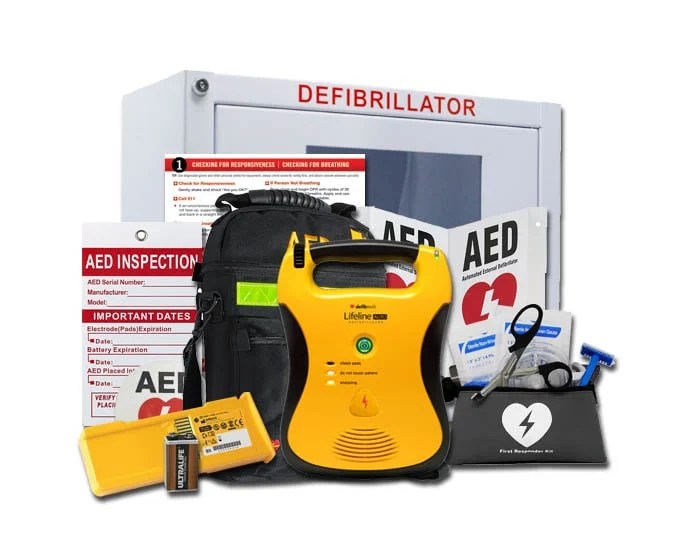
Modern AEDs are designed for laypeople, with clear, calm voice instructions that guide you through every step. Trusting your equipment means knowing that the device is built to be nearly foolproof. It will tell you exactly where to place the pads, when to stand clear, and when to administer a shock. The AED analyzes the person’s heart rhythm and will only deliver a shock if it’s medically necessary, which removes the fear of making a mistake. This trust is strengthened when you choose a reliable, FDA-approved device. Having a complete AED package with up-to-date pads and batteries ensures your equipment is ready to perform when you need it most, allowing you to focus on the person who needs your help.
What’s the Most Important AED Feature for a Lay Rescuer?
When comparing AED models, it’s easy to get lost in technical specifications. But for a lay responder in a high stress situation, one factor stands above all others, ease of use. A user-friendly AED is one that provides simple, clear guidance when every second counts.
The best devices for homes, schools, and small businesses are built to eliminate guesswork. They achieve this through a few key features:
-
Calm Voice Prompts:
The AED should speak to you with clear, step-by-step instructions, guiding you through the entire process from pad placement to when to stand clear. -
Visual Indicators:
Simple graphics that light up to show you where to place the pads and what to do next provide crucial reinforcement to the voice commands. -
Intuitive Design:
The device should be simple to turn on and operate, often with just one or two buttons. Complex menus or settings have no place in a device designed for public access.
Every AED available from the Response Ready superstore is FDA-approved and designed for simplicity, but understanding the core differences will help you find the perfect fit.
Fully Automatic vs. Semi-Automatic: Which AED Is Right for You?
One of the first choices you’ll encounter is whether to get a fully automatic or semi-automatic AED. The difference is simple and comes down to how the electric shock is delivered.
A semi-automatic AED will analyze the person’s heart rhythm and, if a shock is needed, it will prompt you to press a flashing button to deliver it. This gives the rescuer final control over the shock delivery.
A fully-automatic AED also analyzes the heart rhythm, but if a shock is required, it will deliver it automatically after giving a loud verbal warning to stand clear. This design removes the step of having to press the shock button, which can be a point of hesitation for some rescuers.
So, which one is right for you? For public spaces like community centers or schools where the user may have little to no training, a fully automatic model is often recommended to reduce the chance of a user freezing up. For homeowners or small business teams who plan to take AED and CPR training, a semi-automatic device is an excellent choice, as training builds the confidence needed to press the button.
A Practical Comparison of User-Friendly AEDs
While many AEDs are user-friendly, a few models consistently stand out for their intuitive design, making them ideal for lay person rescuers. Instead of just comparing technical data, let’s look at the actual user experience.
Philips HeartStart OnSite
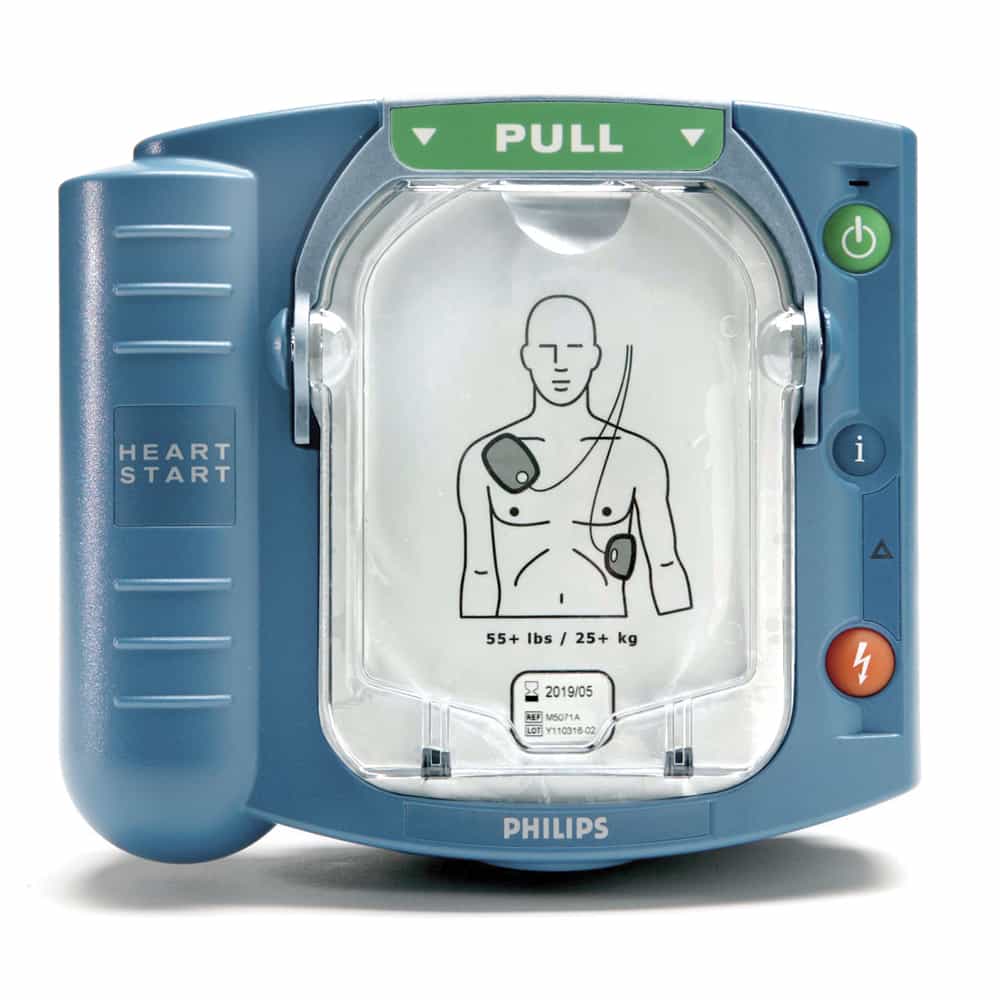
Often considered one of the best AEDs for home use, the Philips HeartStart OnSite AED is built for extreme simplicity. Its voice prompts are calm and direct, walking you through each step. The device includes “SMART Pads” that can sense when they have been placed on the body, allowing the AED to automatically adjust its instructions to your pace. This intuitive feedback helps you feel supported and in control throughout the rescue.
Cardiac Science Powerheart G5
The Cardiac Science Powerheart G5 AED is another top choice, especially for those worried about performing CPR correctly. Its standout feature is the RescueCoach, which provides real-time CPR feedback. It tells you to push faster or slower, ensuring your compressions are effective. This coaching can be invaluable, as effective CPR is critical to a successful outcome. The G5 also features dual language capabilities, making it a great option for diverse multilingual communities.
HeartSine Samaritan PAD
The HeartSine Samaritan PAD 350P is known for being compact, lightweight, and incredibly easy to maintain. It uses an innovative Pad-Pak that combines the battery and electrode pads into a single cartridge. This means you only have one component to track for expiration, simplifying upkeep. When the time comes, you replace the entire cartridge, ensuring your device is always ready. This simplicity makes it a favorite for organizations looking for a low-maintenance solution.
Beyond the Device: What Else Do You Need for Confident Use?
Choosing a user-friendly AED is the first step. Building the confidence to use it is the second. Even the most intuitive device can be intimidating in a real emergency without some familiarity. This is why hands-on training is so important.
Taking a certified CPR and AED training course transforms a feeling of uncertainty into one of preparedness. Training builds muscle memory and allows you to walk through the steps of a rescue in a controlled, low-stress environment. When you’ve practiced placing the pads and responding to the prompts, you’ll be able to act more quickly and decisively if an emergency ever occurs.
Ongoing readiness is just as crucial. Tools like the Response Ready App help manage your AED program by automating readiness checks and compliance reminders. Users love how it simplifies managing devices across multiple locations, with one reviewer on the App Store noting, “This app makes it so much easier to manage defibrillators in different locations. Convenient and intuitive.”
Feeling Confident vs. Acting Confidently
There’s a big difference between feeling confident and acting confidently, especially in an emergency. You don’t need to feel like a superhero to be an effective rescuer. The real goal is to have the muscle memory to act decisively even when your heart is pounding. This is where preparation makes all the difference. Hands-on training lets you practice in a controlled, low-stress environment, walking through the steps of placing pads and following prompts until they become second nature. When you’ve done it before, you’re better equipped to push past the fear and do what needs to be done. True preparedness isn’t about eliminating nerves; it’s about building the skills to act effectively in spite of them.
Describing a Confident Manner
A well-designed AED can be a calm partner in a chaotic moment, essentially lending you its confidence. The best devices guide you with a clear, steady voice, breaking down the rescue into simple, manageable steps. An intuitive design with just one or two buttons removes any guesswork, letting you focus on the person in front of you, not on figuring out the equipment. Some AEDs even provide real-time feedback on your CPR compressions, coaching you to make them more effective. This guidance is crucial because it helps ensure the most critical tasks are done correctly, allowing you to act with a confident manner, knowing you’re giving the person their best possible chance at survival.
Your Checklist for Choosing an AED with Confidence
As you finalize your decision, use this simple checklist to ensure you’ve covered all the bases.
-
Primary Users:
Will the AED be used by the general public with no training (favoring fully-automatic) or by family or staff who will be trained (semi-automatic is a great fit)? -
Guidance Features:
Does the device have clear, easy-to-understand voice prompts and visual cues? -
CPR Assistance:
Do you want a device that provides real-time CPR feedback to help guide the rescuer? -
Maintenance:
How simple are the replacement batteries and pads to manage and replace? Is there a single cartridge system or are they separate components? -
Support & Training:
What training resources are available to ensure you and your team are confident and prepared to use the device?
Understanding the Language of Confidence
Confidence is more than just a feeling; it’s a state of readiness. When we talk about being prepared for an emergency, what we’re really talking about is building the confidence to act. The words we use to describe this feeling matter because they shape our mindset. Understanding the nuances of “confidence” can help us better identify what we need to feel prepared. It’s not about being fearless, but about knowing you have the tools and the training to make a difference when it counts. This clarity helps turn anxiety into a focused, actionable plan for when you’re needed most.
Commonly Confused Words: Confident vs. Confidant
Let’s start with a common point of confusion. While they sound similar, “confident” and “confidant” have very different meanings. To be confident is to feel sure of yourself and your abilities. It’s an adjective describing a feeling of self-assurance. A confidant, on the other hand, is a noun for a person you trust with your secrets. You might tell a confidant that you’re nervous about responding to an emergency, but the goal of proper training is to help you feel confident in your skills. Knowing this distinction helps clarify our goal: to build internal certainty, not just find someone to share our doubts with.
Synonyms for Confident
The word “confident” has several synonyms that each highlight a different aspect of this powerful feeling. When you feel assured or secure, you trust in your knowledge and your equipment. Being optimistic or hopeful reflects a belief in a positive outcome, which is vital in a high-stress situation. Other words like self-assured and proud point to a deep-seated belief in your own capabilities. Thinking about these different shades of meaning can help you pinpoint what part of your preparedness plan needs more attention. Do you need to feel more secure in your equipment, or more self-assured in your skills?
The Opposite of Confident: Diffident
To truly appreciate what it means to be confident, it helps to understand its opposite: diffident. A person who is diffident is hesitant and lacks self-confidence. In an emergency, diffidence can lead to inaction. It’s that feeling of freezing up, not because you don’t care, but because you’re unsure of what to do. The best way to overcome diffidence is through preparation. When you have an easy-to-use AED and have practiced the steps in a training course, you replace hesitation with a clear plan of action, leaving no room for doubt to take hold.
Using Prepositions with “Confident”
How we talk about confidence also matters. The prepositions we use can add precision to what we mean. For example, you might feel confident with a person or a team after practicing your emergency response plan together. You become confident in your ability to perform CPR or confident about using an AED after completing a certification course. You might also feel confident when you know your equipment is properly maintained and ready to go. Using these prepositions correctly helps you articulate exactly where your confidence comes from—your team, your skills, or your tools.
Your Next Step: From Bystander to Confident Rescuer
Choosing an AED is a powerful step toward protecting your family, your students, your employees, or your community. By prioritizing ease of use and backing it up with proper training, you are turning a moment of potential panic into an opportunity to save a life. You don’t need a medical degree to be a hero, you just need the right tools and the confidence to use them.
If you have more questions or would like a personalized recommendation based on your specific needs, our team of experts is here to help. You can reach out via live chat or contact us directly for guidance.
Frequently asked questions
Q: Can I get in trouble for using an AED if I’m not a doctor?
A: No. All 50 states have Good Samaritan laws that protect bystanders who act in good faith to help someone during a medical emergency. These laws are designed to encourage people like you to help without fear of legal repercussions.
Q: Can I accidentally shock someone who doesn’t need it?
A: No. An AED is designed to be completely safe. The device will only deliver a shock if its internal computer analyzes the person’s heart rhythm and determines that a shockable rhythm is present. It will not shock someone who has a normal heartbeat or no heartbeat at all.
Q: What’s the difference between pads for adults and children?
A: Pediatric pads, for example the Cardiac Science Powerheart® G5 Pediatric Intellisense™ Defibrillation Electrode Pads, are smaller and deliver a lower-energy shock that is appropriate for children. Most AED models offer pediatric pads or a special key that adjusts the shock level for a child. It’s important to have the correct pads for your environment, especially for schools and community centers.
Q: How often do I need to replace the battery and pads?
A: The lifespan of AED pads and batteries varies by manufacturer, but typically pads last around two years and batteries last between two and five years. Every AED has clear expiration dates on its components, and regular checks are essential to ensure it’s always ready.
Q: Is an AED enough or do I still need to learn CPR?
A: An AED and CPR work together to provide the best chance of survival. CPR helps circulate oxygenated blood to the brain and other vital organs, while the AED works to restore a normal heart rhythm. Taking a combined CPR and AED course is the best way to prepare for a cardiac emergency.
Key Takeaways
- Build confidence through practical steps: True readiness isn’t about being fearless; it’s about knowing you have the right tools and skills. You can develop this certainty by understanding how an AED works and what your role is in an emergency.
- Prioritize ease of use when selecting an AED: In a crisis, simplicity is key. Look for a device with clear voice instructions, helpful visual guides, and CPR feedback to eliminate guesswork and help you act decisively.
- Combine your equipment with hands-on training: An AED is a powerful tool, but training is what prepares you to use it effectively. A certification course provides the practice needed to move past hesitation and respond with purpose when someone needs you.
Related Articles
- How to choose a user friendly AED for your home or business
- How to choose an AED you can confidently use in an emergency
- How to choose the easiest AED for your home or small business
- How to choose the right AED for your organization
Disclaimer for information purposes only:
The information provided on this website is intended for general educational and informational purposes only. It is not medical advice and should not be used as a substitute for professional diagnosis, treatment, or care. Always consult a qualified healthcare or medical professional regarding any health-related questions or concerns.
While we strive to ensure the information shared is accurate and up to date, no guarantees are made regarding completeness, accuracy, or applicability to any individual situation. Use of this content is at the reader’s sole discretion and risk.
This website is part of the Response Ready family of emergency preparedness and training resources, including CPR & first aid training and compliance services, AED sales and program support, AED program management software, and medical oversight solutions provided through our affiliated platforms:
• CPR1.com
• AEDLeader.com
• AEDTotalSolution.com
• MDSIMedical.com
By accessing or using this website, you agree to release, indemnify, and hold harmless the website owners, authors, contributors, and affiliated entities from any claims, losses, damages, or liabilities arising from the use or reliance on the information presented.