- Published
- February 16, 2026
What's the Easiest AED to Use? A Buyer's Guide


The fear of doing something wrong can cause people to freeze during an emergency. When it comes to using an AED, that hesitation can be the difference between life and death. That’s why modern AEDs are designed to be foolproof, but some are far more intuitive than others. The goal isn’t just to have the equipment on hand; it’s to have a tool that removes doubt and guides a rescuer with absolute clarity. We’ll explore what makes a device truly user-friendly, from its design to its instructions, helping you identify the easiest AED to use for your specific needs and giving you the assurance to act when it matters most.
How to Find the Easiest AED for Your Home or Business
When a sudden cardiac arrest occurs, every second is critical. With over 70% of these events happening at home, the person most likely to respond isn’t a paramedic, but a family member, a coworker, or a neighbor. In that high stress moment, the single most important feature of an Automated External Defibrillator (AED) is not how many bells and whistles it has, but how simple it is to use.
The reality is that under extreme pressure, even simple tasks can feel overwhelming. That’s why choosing an AED should focus on one question: which device gives an untrained user the most confidence to act decisively? This guide will walk you through the essential features that define true ease of use, cut through the technical jargon, and explain why a straightforward design like the Defibtech Lifeline AED is often the best choice for protecting your home, community center, or small business.
What Does ‘Easy to Use’ Mean During an Emergency?
In a crisis, our ability to process complex information diminishes. An AED with multiple buttons, a complicated screen, or a multi step activation process can cause hesitation when decisiveness is most needed. True ease of use is about reducing this cognitive load, allowing a rescuer to act on instinct guided by the device.
Survival rates from out of hospital cardiac arrest can be as high as 74% when an AED is used within the first three minutes. This incredible success is possible because modern AEDs are designed for lay rescuers. They remove the guesswork, but the simplest designs remove the hesitation, too.
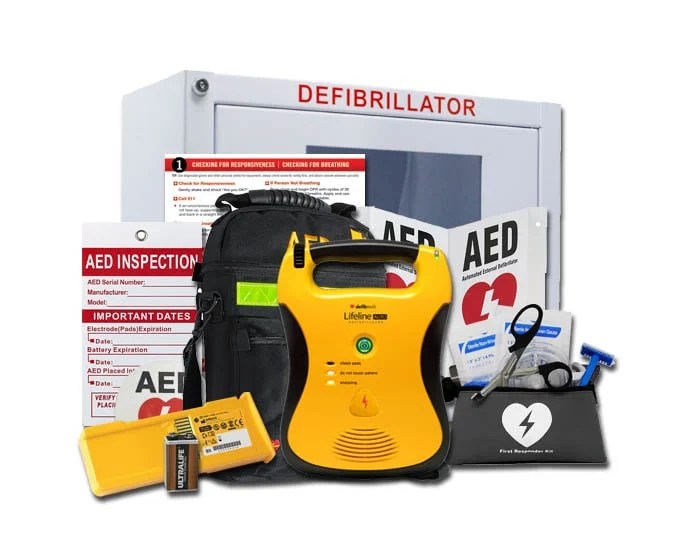
The Defibtech Lifeline AED is engineered around this principle. It features a clean, simple interface with just two buttons.
-
A green button to turn the unit on.
-
A red button to deliver a shock.
There are no lids to open or complex screens to navigate. From the moment it’s turned on, a calm, clear voice guides you through every step, from placing the electrode pads to performing CPR. This focused design ensures that anyone can operate the device confidently, turning a moment of panic into a moment of life saving action.
Must-Have Features for an Easy-to-Use AED
While the Defibtech Lifeline AED sets the standard for simplicity, there are several core features you should look for in any user-friendly device. Understanding these will help you evaluate your options and make a confident choice.
Look for Clear Voice and Visual Prompts
The most critical feature for a lay rescuer is guidance. An effective AED should provide loud, simple, and direct audio prompts. It should tell you exactly where to place the pads, when to stand clear, and when it is safe to touch the person. Some devices supplement this with flashing lights that draw your eye to the next step. These essential audible prompts and visual cues are what transform a bystander into a first responder.
Let the AED Do the Work: Automatic Operation
You can’t use an AED incorrectly and accidentally harm someone. Modern devices automatically analyze the person’s heart rhythm to determine if a shock is needed. They will only advise and charge for a shock if a life threatening arrhythmia is detected. This fail safe is built into all FDA approved AEDs and is a key reason they are safe for public use. The advanced biphasic waveform technology used in these devices also improves effectiveness while minimizing risk.
Simple Pads for Stress-Free Placement
Applying the electrode pads correctly is the first major step in a rescue. User friendly AEDs feature pads that are pre connected to the device and have clear, simple diagrams printed on them showing exactly where they go on the body. This eliminates a common point of confusion and saves precious time. For rescues involving children, look for devices that offer easy to use pediatric pads or an attenuator to reduce the energy of the shock.
Biphasic Shock Technology
You might come across the term “biphasic shock” when looking at different AEDs, and it’s a feature worth understanding. It simply refers to how the device delivers the life-saving electrical shock. Older, monophasic devices sent a shock in one direction. Modern biphasic technology is smarter, sending the current in two directions—first to the heart, and then back again. This two-way path is just as effective at restoring a normal heart rhythm, but it does so using significantly less energy. This is a huge advantage because it’s gentler on the body and reduces the risk of injury to the heart muscle and other tissues.
Because they are more energy-efficient, devices using biphasic technology can be made smaller, lighter, and more portable without sacrificing power. This advancement is a key reason why today’s automated external defibrillators are so user-friendly and accessible for public spaces, homes, and businesses. It’s a sophisticated feature that works behind the scenes to make the rescue process safer and the device itself easier to manage, giving you one less thing to worry about in a high-stress situation.
How to Use an AED Step-by-Step
Knowing what makes an AED easy to use is the first step; feeling confident about how to use it is the next. The great news is that these devices are designed to guide you. You don’t need to be a medical professional to save a life. The AED will be your partner, telling you exactly what to do from the moment you turn it on. If you can follow simple voice instructions, you can operate an AED. Let’s walk through the process so you know what to expect in an emergency.
The 7 Steps of an AED Rescue
When someone collapses from sudden cardiac arrest, your immediate actions can make all the difference. While waiting for paramedics, using an AED is the most effective way to help. The device will walk you through these steps with clear voice prompts, but familiarizing yourself with them now will help you act with even more confidence.
- Check for responsiveness and call for help. Gently shake the person and ask if they are okay. If there’s no response, immediately tell someone to call 911 and get the AED.
- Start chest compressions. Don’t wait for the AED to arrive. Begin CPR right away.
- Turn on the AED. As soon as it arrives, power on the device. It will immediately start giving you instructions.
- Attach the electrode pads. Expose the person’s bare chest and follow the diagrams on the pads for correct placement.
- Let the AED analyze. Plug the pads’ connector into the AED if it isn’t already. The device will tell you to stop CPR while it analyzes the person’s heart rhythm.
- Clear the area and deliver a shock. If a shock is needed, the AED will tell you to stand clear. Make sure no one is touching the person, and press the shock button when instructed.
- Continue CPR. After the shock, or if no shock is advised, the AED will prompt you to continue chest compressions until emergency services arrive.
Following these steps is crucial, and hands-on practice is the best way to build muscle memory. Taking a certified CPR and AED training course can give you the practical skills to respond effectively when it matters most.
Special Considerations When Using an AED
AEDs are designed for nearly everyone, but a few specific situations require slight adjustments to ensure the pads make good contact with the skin and can work effectively. Being aware of these considerations for women and children will ensure you’re prepared for any scenario.
Using an AED on Women
Sudden cardiac arrest can happen to anyone, regardless of gender. When responding to a woman, the steps are the same, but proper pad placement is key. The electrode pads must be applied to bare skin on the chest. This means you will need to remove any clothing, including bras, that might get in the way. If a person has larger breasts, you may need to gently move the left breast out of the way to place the pad correctly underneath it, as shown in the diagram on the pad itself. The goal is to ensure direct skin contact so the AED can analyze the heart rhythm accurately and deliver an effective shock if needed.
Using an AED on Children
While less common, sudden cardiac arrest can also occur in children. Most standard AEDs can be used on a child, but it’s critical to use the right equipment. The electrical shock delivered by an AED is calibrated for an adult, which can be too strong for a small child. For this reason, you should use special pediatric pads or an attenuator, which reduces the energy of the shock to a safer level for a child’s body. If you have an AED in a place where children are present, like a school, community center, or your home, make sure you have the appropriate pediatric AED pads on hand and know how to switch them out.
Comparing the Easiest AEDs on the Market
While several excellent AEDs are available, they approach user friendliness in different ways. Here’s how they compare when simplicity is your top priority.
-
Defibtech Lifeline AED:
Its two button operation is arguably the most straightforward on the market. By eliminating lids and screens, it strips the process down to its essentials, making it an ideal choice for environments where the user will likely have no training. Its rugged design also makes it a durable, reliable option for any setting.
-
Philips HeartStart OnSite:
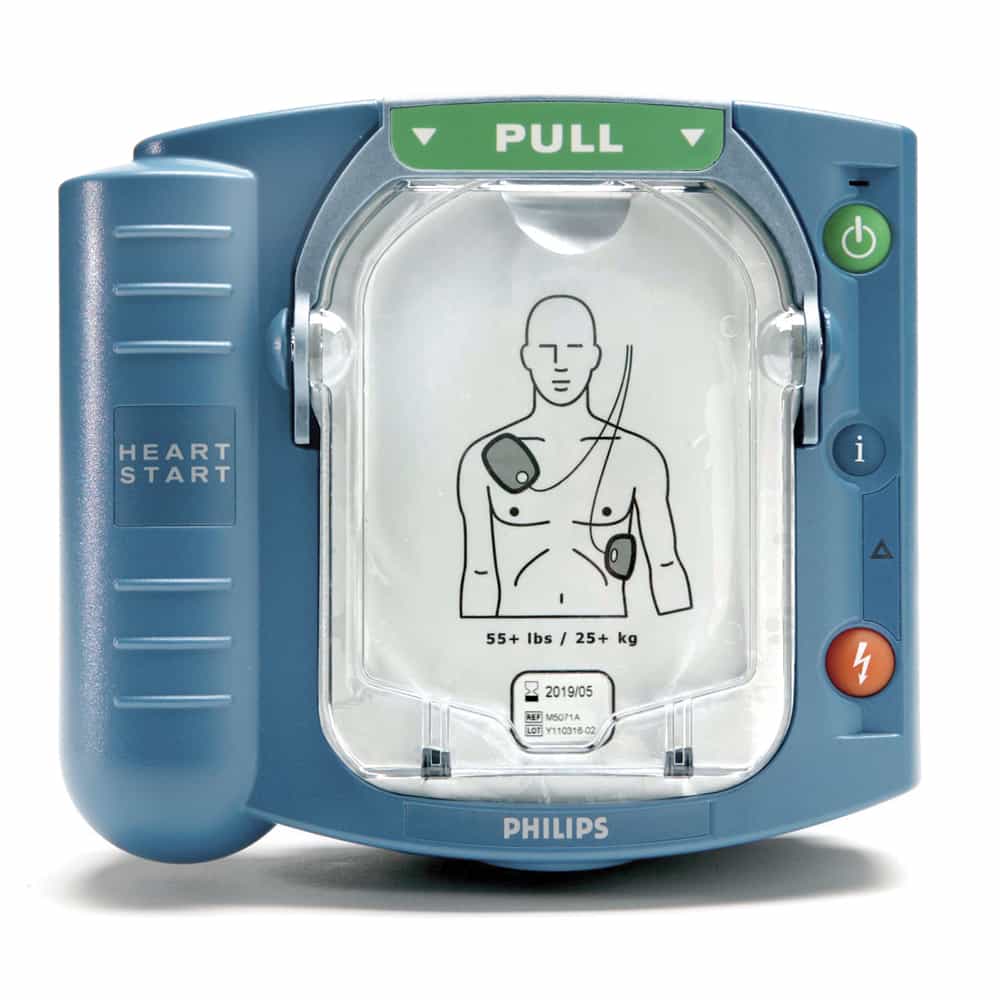
As the only AED approved by the FDA for over the counter sale, the HeartStart OnSite is a popular choice for homes. It features intuitive voice commands and activates when you pull a prominent handle. It is very easy to use, though its multi step activation may be slightly less direct than the Lifeline’s simple power button.
-
ZOLL AED Plus:
The ZOLL AED Plus is known for its Real CPR Help feature, which provides real time feedback on the depth and rate of chest compressions. While this is an excellent tool for trained responders, the additional information and visual interface can sometimes be a bit much for a first time user in a panic.
-
HeartSine Samaritan PAD:
Known for its compact and lightweight design, the Samaritan PAD is highly portable. It uses an innovative Pad-Pak that combines the battery and pads into a single cartridge, simplifying maintenance. Its operation is simple, with clear audio and visual prompts to guide the user.
FDA-Approved AEDs for Home Use
When you’re choosing an AED for your home, you want a device that is not only medically effective but also incredibly simple for anyone to operate under pressure. The FDA has approved several models specifically with the lay user in mind, ensuring they are safe and straightforward. Among the top choices, two devices consistently stand out for their user-friendly design and reliability in a home setting: the Philips HeartStart OnSite and the HeartSine Samaritan 350P. Both are excellent options that prioritize clear instructions and intuitive operation, giving you the confidence to act when it matters most.
Philips HeartStart OnSite
The Philips HeartStart OnSite holds a unique distinction as the only AED that the FDA has approved for over-the-counter sale, which speaks volumes about its safety and ease of use. This makes it a go-to choice for many families. The device is designed for simplicity from the start; you activate it just by pulling a prominent handle. From there, clear and calm voice commands guide you through every step of the rescue process, from pad placement to delivering a shock. While its activation is a bit more involved than a simple power button, the guided, step-by-step process ensures you never feel lost or overwhelmed.
HeartSine Samaritan 350P
Another fantastic option for home use is the HeartSine Samaritan 350P. This AED is known for being exceptionally compact and lightweight, making it easy to store and grab in an emergency. Its standout feature is the innovative Pad-Pak, which combines the battery and electrode pads into a single, easy-to-replace cartridge. This smart design simplifies maintenance by giving you only one expiration date to track. The Samaritan 350P provides clear audio and visual prompts to guide you, and its high durability rating (IP56) means it’s well-protected against dust and water, ensuring it’s ready when you need it.
Other Models with Advanced Features
While simplicity is key for most home users, some situations—like in a workplace or community center with trained responders—might call for an AED with more advanced capabilities. Devices like the Defibtech Lifeline and Cardiac Science PowerHeart G5 offer a great balance of user-friendliness with added functionalities. For those seeking even more sophisticated tools, models such as the Physio Control CR2 and the ZOLL AED 3 provide features like full-color touch screens and enhanced, real-time CPR feedback on compression depth and rate. These features can help a rescuer perform higher-quality CPR, which is a critical factor in survival from cardiac arrest.
Understanding AED Costs and Purchasing
Investing in an AED is one of the most meaningful steps you can take to protect your family, employees, or community. While the price tag is an important factor, it’s not the only one to consider. The true cost of an AED includes its initial purchase price plus the long-term expenses for maintenance and supplies. Understanding the full financial picture, from prescription requirements to where you buy, will help you make a smart, sustainable investment in safety. It’s also helpful to know that there are financial assistance options available if the upfront cost feels out of reach. This section will walk you through everything you need to know to purchase an AED with confidence.
Initial Price and Long-Term Ownership
A new AED for home or business use typically costs between $1,400 and $2,000. This initial price gets you the device itself, one set of adult electrode pads, and one battery. However, the most important financial metric to consider is the “total cost of ownership.” This refers to all the expenses you’ll incur over the AED’s entire lifespan, which is usually around eight to ten years. The primary recurring costs are for replacement AED pads and batteries. Both of these essential components have expiration dates and must be replaced every two to five years, depending on the model, to ensure the device is always ready to function in an emergency.
Comparing Long-Term Costs
When you’re comparing different AED packages, don’t just look at the initial sticker price. Dig a little deeper into the cost and lifespan of the replacement supplies. Some models may have a lower upfront cost but more expensive or frequent battery replacements, making them costlier over time. For example, the HeartSine Samaritan PAD uses a combined battery and pad cartridge called a Pad-Pak, which simplifies maintenance but has a different replacement cost and schedule than a device with separate components. Calculating the total cost over a decade will give you a much clearer picture of which AED is the most economical choice for you.
Prescription Requirements
One common question is whether you need a doctor’s prescription to buy an AED. Because they are classified as Class III medical devices by the FDA, most AEDs do require one. However, there’s an important exception for home users. The Philips HeartStart OnSite and the HeartSine Samaritan 350P are the only two models currently approved by the FDA for over-the-counter sale without a prescription, making them popular choices for household preparedness. For all other models intended for businesses, schools, or other organizations, a prescription is necessary. The good news is that a reputable, authorized dealer like Response Ready handles this process for you, making the purchase seamless and straightforward.
Where to Buy an AED
You might see AEDs for sale at big-box retailers, but for a life-saving device, it’s best to purchase from a specialized, authorized dealer. These suppliers offer a level of expertise and support you simply won’t find elsewhere. Their staff can answer detailed questions about different models, explain the nuances of maintenance schedules, and help you choose the right device for your specific needs—whether it’s for a small apartment or a large office building. Plus, authorized dealers often have more competitive pricing and can ensure you’re getting a new, factory-sealed unit with a full warranty and fresh supplies.
The Benefit of Authorized Dealers
Purchasing from an authorized dealer provides peace of mind that extends far beyond the initial sale. These specialists are your long-term partners in preparedness. They can help you set up a maintenance and compliance program, send reminders when your pads and batteries are about to expire, and provide support if you ever have questions about your device. As an authorized dealer for all FDA-approved AED manufacturers, Response Ready provides this comprehensive support, ensuring you not only have the right equipment but also the confidence to maintain it properly. This relationship is invaluable for ensuring your AED remains rescue-ready for years to come.
Refurbished AEDs
In your search, you may come across refurbished or recertified AEDs at a lower price point. While this can seem like a good way to save money, it’s important to proceed with caution. An AED is a critical piece of medical equipment that must work flawlessly during an emergency. Buying a new device from an authorized source guarantees that it includes the latest software, a full manufacturer’s warranty, and brand-new batteries and pads with the longest possible shelf life. For the ultimate reliability and peace of mind, investing in a new unit is almost always the recommended choice.
Financial Assistance Options
The cost of an AED can be a significant hurdle for some families and organizations. Unfortunately, health insurance typically does not cover the purchase unless a member of the household has been diagnosed by a physician as being at high risk for sudden cardiac arrest. It is always worth calling your provider to check, but don’t be discouraged if it’s not covered. Many communities find creative ways to fund these life-saving devices through grants, local business sponsorships, or community fundraisers like bake sales or car washes. For businesses or events needing a temporary solution, an AED rental program can also be a flexible and affordable alternative to purchasing.
Your AED Checklist: Ready for an Emergency?
Owning an AED is the first step, ensuring it’s ready to work is just as important. All modern AEDs perform regular self tests to check the battery, pads, and internal circuitry. A simple, visible status indicator will let you know if the device is ready or needs attention.
To make management even easier, the Response Ready App helps you automate monthly readiness checks and compliance reminders right from your phone. Users praise its convenience, with one reviewer noting, “This app makes managing your AED program so convenient and easy. The scanning feature helps speed up the process.”
Even with the easiest devices, confidence is key. We strongly encourage hands-on CPR and AED training for your family or team. A short class can build the muscle memory and assurance needed to act effectively without hesitation.
Creating a Maintenance Routine
Once you have an AED, the next step is making sure it’s always ready to perform. Thankfully, this isn’t a demanding task. Modern AEDs are designed to be low-maintenance and conduct their own routine self-tests to check the battery life, pad readiness, and internal software. Your main job is to perform a quick visual check about once a month. Just look for the green status indicator light, which confirms the device has passed its self-test and is ready for a rescue. If the light is red or the device is chirping, it’s signaling that something, like an expiring battery, needs your attention.
Pad and Battery Replacement Schedules
The two most important components you’ll need to track are the electrode pads and the battery, as both have finite lifespans. The gel on AED pads, which helps them stick to the body and conduct electricity, dries out over time. Because of this, pads must be replaced after every use or every two years, whichever comes first. The long-life lithium batteries in most AEDs typically last between four and five years. It’s a good idea to write the expiration dates on a piece of tape on the AED’s case or set a recurring reminder on your calendar so you’re never caught off guard.
Proper AED Storage
Where you keep your AED is just as important as maintaining it. The device should be stored in a location that is central, visible, and easily accessible to anyone in an emergency—not locked in a cabinet or tucked away in a closet. For a home, a spot in the main living area or kitchen is ideal. In a business or community space, it should be mounted on a wall in a high-traffic area. Proper storage also means protecting the device from extreme temperatures and humidity, so avoid keeping it in a car or an unheated garage. Using dedicated storage solutions like a wall cabinet can keep the device secure and visible.
Checking for Recalls
While rare, medical devices can be subject to recalls. When you first purchase your AED, be sure to register it with the manufacturer. This ensures you will be notified directly if there are any safety updates or recalls related to your specific model. You can also periodically check the FDA’s medical device recall database for any new information. Purchasing from an authorized dealer like Response Ready helps ensure you receive a new, fully supported device and provides a reliable point of contact for any questions about your AED’s performance, safety, and longevity, giving you one less thing to worry about.
Feel Confident and Prepared to Save a Life
When choosing an AED for your home or small business, remember the environment in which it will be used. In a moment of chaos and fear, simplicity is not just a feature, it is the bridge to confident, life saving action.
The Defibtech Lifeline AED was designed for exactly this reality. Its unwavering focus on two button simplicity and clear voice guidance empowers anyone to step up and make a difference. Explore our AED value packages to find a complete solution that brings peace of mind to your space.
Frequently asked questions
Q: Do I really need an AED at home or in my small business?
A: Yes. With over 70% of cardiac arrests occurring at home and EMS response times averaging 7 to 10 minutes, having an AED on site can dramatically increase the chance of survival from as low as 3% to as high as 74%.
Q: Can I hurt someone by using an AED incorrectly?
A: No. All modern, FDA approved AEDs are designed to be safe for lay rescuers. The device will analyze the heart’s rhythm and will only charge and deliver a shock if a dangerous arrhythmia is detected. It will not shock a person with a normal heart rhythm.
Q: What is the single most important feature in an AED for an untrained user?
A: The most critical feature is a simple, intuitive design that minimizes confusion. Look for an AED with minimal buttons, such as the Defibtech Lifeline’s two button system, and loud, clear voice instructions that guide you through every step of the rescue.
Q: How often do I need to replace AED pads and batteries?
A: Replacement schedules vary by manufacturer, but typically, AED pads last for about two years and batteries last between four and five years. The AED will perform regular self checks and provide an audible and visual alert when it is time to replace them.
Q: Is the Defibtech Lifeline AED suitable for use on children?
A: Yes. While the standard adult pads can be used on children over 8 years of age or weighing more than 55 pounds, you should use pediatric pads for younger or smaller children. These pads reduce the energy level of the shock to a dose appropriate for a child.
Key Takeaways
- Choose simplicity over complex features: In a crisis, the most effective AED is the one that’s easiest to use. A device with minimal buttons and clear voice prompts removes hesitation and helps anyone act with confidence.
- Understand the rescue process now: An AED will guide you, but knowing the basic steps ahead of time builds the confidence to act effectively. Familiarize yourself with the process, from calling 911 to starting CPR.
- Plan for ongoing readiness: Owning an AED is more than a one-time purchase. Create a simple routine to check your device monthly and keep track of expiration dates for pads and batteries to ensure it’s always ready to work.
Related Articles
Disclaimer for information purposes only:
The information provided on this website is intended for general educational and informational purposes only. It is not medical advice and should not be used as a substitute for professional diagnosis, treatment, or care. Always consult a qualified healthcare or medical professional regarding any health-related questions or concerns.
While we strive to ensure the information shared is accurate and up to date, no guarantees are made regarding completeness, accuracy, or applicability to any individual situation. Use of this content is at the reader’s sole discretion and risk.
This website is part of the Response Ready family of emergency preparedness and training resources, including CPR & first aid training and compliance services, AED sales and program support, AED program management software, and medical oversight solutions provided through our affiliated platforms:
• CPR1.com
• AEDLeader.com
• AEDTotalSolution.com
• MDSIMedical.com
By accessing or using this website, you agree to release, indemnify, and hold harmless the website owners, authors, contributors, and affiliated entities from any claims, losses, damages, or liabilities arising from the use or reliance on the information presented.