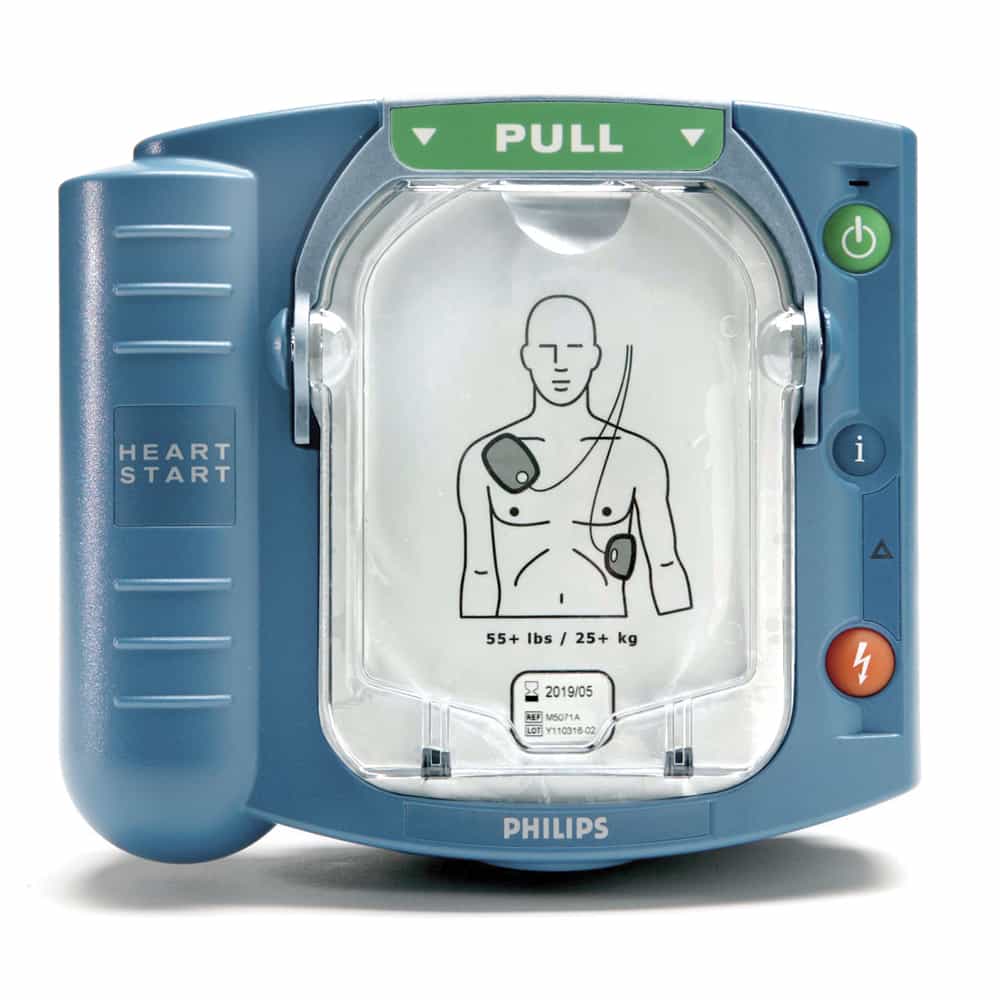
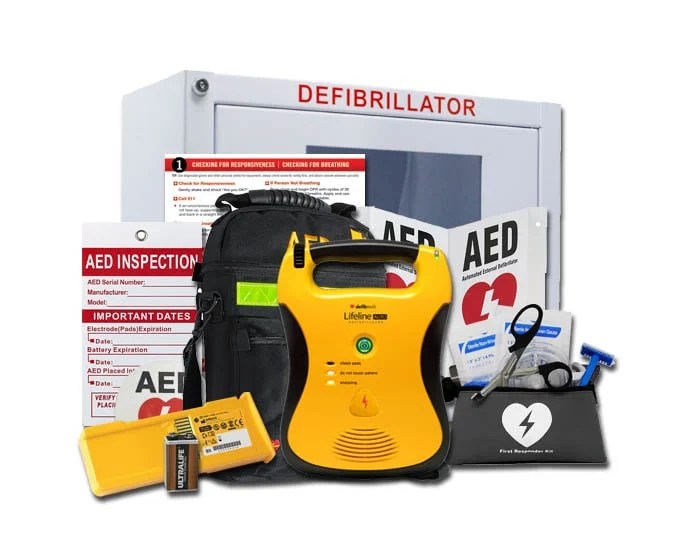
You made a powerful commitment to safety by getting an AED for your home, school, or business. But the initial purchase is just the first step. A critical factor often overlooked is the battery. The FDA reports that battery issues cause nearly one in four AED failures—a completely preventable problem. Understanding the complete AED lifespan, and the total defibrillator life span of its parts, is key to its reliability. Choosing the right battery isn’t just about cost—it’s about making sure your device is ready to save a life.
Many people focus on the upfront cost of an AED, but the long term expenses for essentials like replacement batteries and pads can significantly alter the total investment over the device’s life. This guide will walk you through the real costs of AED ownership, helping you understand how a smarter choice on battery life today can lead to significant savings and greater peace of mind tomorrow.
Why AED Lifespan Matters for Emergency Readiness
An Automated External Defibrillator (AED) is more than just a piece of equipment; it’s a lifeline. When someone experiences sudden cardiac arrest (SCA), their chances of survival decrease with every passing minute. Having an AED nearby can literally be the difference between life and death. But here’s the crucial part: simply owning an AED isn’t enough. The device must be functional, reliable, and ready to use at a moment’s notice. Its lifespan, along with the expiration dates of its core components like batteries and electrode pads, directly impacts its readiness. A well-maintained device within its operational life gives a rescuer the confidence to act, knowing the tool in their hands will perform as expected. Neglecting this aspect introduces a dangerous false sense of security, undermining the very reason you invested in preparedness in the first place.
The Critical Role of a Functional AED
Think of an AED like a fire extinguisher. You hope you never have to use it, but if you do, you need it to work flawlessly. As experts at Defibtech note, “Having an AED isn’t enough; it must be properly maintained and ready to use.” An AED with an expired battery or old pads is no more effective than having no AED at all. Regular checks and timely replacement of parts are non-negotiable responsibilities of AED ownership. This ongoing maintenance ensures your device can deliver a life-saving shock when needed. Programs that help manage maintenance schedules and compliance can simplify this process, ensuring your device is always prepared to protect your family, employees, or community members when an emergency strikes.
Understanding Sudden Cardiac Arrest Statistics
To grasp why a functional AED is so vital, it helps to understand the scale of the problem. According to research highlighted by Defibtech, around 366,807 people in the U.S. experience out-of-hospital sudden cardiac arrest each year. The stark reality is that without immediate intervention, survival is unlikely. However, the combination of prompt CPR and the quick use of an AED can dramatically improve a person’s chance of survival. These statistics aren’t meant to cause fear but to empower you with knowledge. By ensuring your AED is always ready, you are actively strengthening the chain of survival and turning a grim statistic into a story of hope for someone in your community.
How Long Does an AED Machine Last?
One of the most common questions we hear is about the lifespan of the AED unit itself. Unlike its batteries and pads, the device doesn’t have a hard expiration date printed on it. Generally, you can expect an AED to last between 8 and 15 years. This range depends heavily on several factors, including the specific model, how well it’s cared for, and the environment where it’s stored. An AED kept in a climate-controlled office will likely have a longer operational life than one exposed to fluctuating temperatures in a vehicle or outdoor cabinet. Over time, technology also advances, and internal components can degrade, which is why manufacturers provide a general lifespan estimate. Eventually, the device will need to be replaced to ensure it meets current performance standards and remains reliable.
Overall Lifespan of an AED Unit
While the machine itself can last up to 15 years, its effectiveness is tied to consistent upkeep. Proper storage in a designated cabinet protects it from dust, moisture, and damage, extending its life. Regular self-tests, which most modern AEDs perform automatically, will alert you to any internal issues. It’s important to remember that even if the unit seems fine, its technology will eventually become outdated. Manufacturers may stop producing compatible pads and batteries, making it impossible to maintain. Planning to replace your AED after about a decade is a smart, proactive approach to keeping your emergency response plan current and effective.
Understanding AED Warranties
A manufacturer’s warranty is a key indicator of an AED’s expected durability and reliability. Most new AEDs for sale come with a warranty that lasts between five and eight years. This warranty typically covers manufacturing defects in the device itself, not the consumable accessories like batteries or pads, which have their own separate, shorter warranties. It’s important to read the fine print to understand what is and isn’t covered. For example, damage from improper storage or failure to perform recommended maintenance might void the warranty. Think of the warranty as the manufacturer’s promise of quality for a set period, but remember that overall readiness still depends on your commitment to ongoing care.
How Long Do AED Batteries Last?
To make an informed decision, it is important to understand a few key terms that manufacturers use to describe a battery’s life. They are not always interchangeable and each has a different meaning for you as an AED owner.
Shelf Life vs. Standby Life: What’s the Difference?
Think of “shelf life” as the battery’s expiration date if it were left in its original packaging on a shelf. It is the maximum amount of time the battery will last before it must be installed in an AED. Once you unwrap the battery and install it in your defibrillator, a different clock starts ticking.
“Standby life” (sometimes called service life) is the amount of time the battery can be expected to last once installed in the AED, assuming it is not used for a rescue. The AED performs regular self tests, which consume a small amount of power over time. This standby life is the number you should focus on for calculating your long term replacement schedule and costs. For example, a battery might have a 5 year standby life, meaning you will need to replace it five years from the date of installation.
How Usage Impacts Battery Life
That standby life is a great baseline, but it’s based on the assumption that the AED remains untouched until its next scheduled maintenance. The reality is often different. Every time you power on the device—whether for a genuine rescue or a training drill—it consumes a significant amount of battery power. Delivering an electrical shock is an especially high-demand function that can substantially reduce the battery’s remaining life. Think of it like the mileage on a car; the more you drive it, the faster you’ll need to refuel. This is why tracking usage is just as important as tracking the installation date, as it directly impacts how soon you’ll need a replacement.
A depleted battery is one of the most common reasons an AED fails during an emergency. When someone is experiencing sudden cardiac arrest, you don’t want to discover your life-saving device is powerless. This is why regular checks and having a reliable replacement plan are non-negotiable parts of AED ownership. Ensuring your device is always equipped with a functional battery is fundamental to being truly prepared. At Response Ready, we stock a full range of FDA-approved AED batteries to help you stay on top of your maintenance schedule and ensure your device is always ready to perform when a life is on the line.
Standard vs. High-Capacity: Which Battery Do You Need?
For many popular AED models, such as the Defibtech Lifeline AED, you have a choice between a standard battery and a high capacity battery. While the high capacity option has a higher initial cost, a closer look at the numbers reveals it is often the more financially sound choice over the long run.
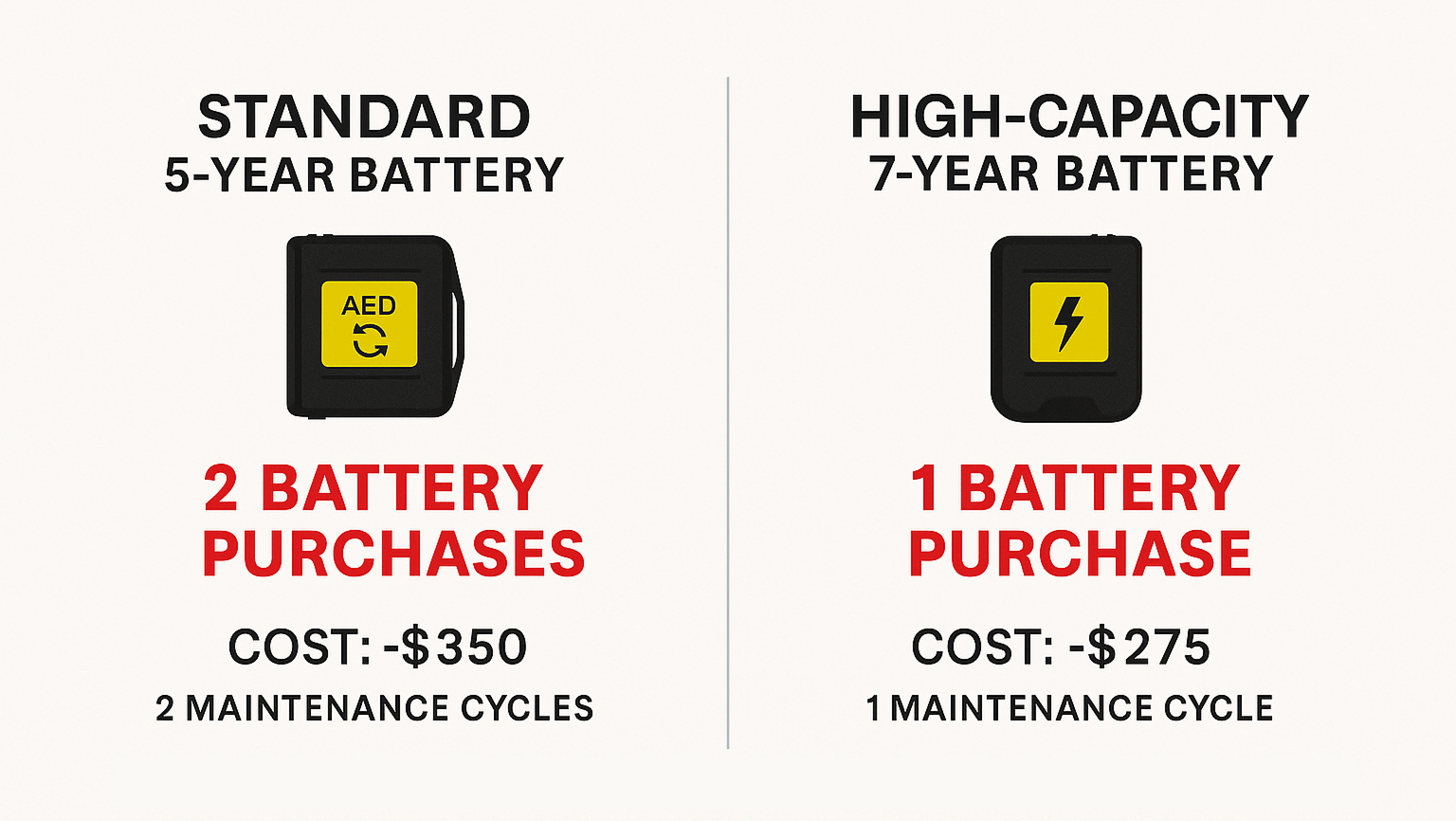
A typical standard battery has a standby life of five years. A high capacity battery extends that to seven years. Let’s break down the total cost of ownership over a 10 year period for a single AED.
|
Metric |
Standard 5-Year Battery |
High-Capacity 7-Year Battery |
|
Typical Upfront Cost |
~$175 |
~$275 |
|
Standby Lifespan |
5 Years |
7 Years |
|
Replacements in 10 Years |
1 |
0 |
|
Total Battery Cost (10 Yrs) |
~$350 |
~$275 |
|
Maintenance Cycles |
2 (initial + 1 replacement) |
1 (initial only) |
|
Peace of Mind |
Standard |
Enhanced |
As you can see, while the initial cost is lower for the standard battery, you will have to purchase a replacement at the five year mark. This not only increases your total spending by about $75 but also doubles the maintenance effort. For a small business owner or a school administrator responsible for multiple devices, cutting down on these recurring tasks is a significant operational benefit.
More Than Just Batteries: Other AED Costs to Consider
While the battery is a major part of your long term cost, there are a few other elements to keep in mind for a complete financial picture.
The Lifespan of Your AED Pads
Like batteries, AED pads have a limited shelf life, typically around two years. They must be replaced after any use or once they reach their expiration date. Factoring in pad replacements every couple of years is essential for accurate budgeting and ensuring your device is always ready for a rescue.
Why AED Pads Expire
It’s easy to think of an expiration date on AED pads as a simple suggestion, but it’s a critical safety deadline. The reason lies in the adhesive gel that coats each pad. This gel does more than just stick to the skin; it creates a secure connection that allows the AED to analyze the heart’s rhythm and deliver a life-saving shock effectively. Over time, this gel naturally dries out. When that happens, the pads can lose their ability to adhere properly to a person’s chest. As noted by the nonprofit Starting Hearts, this poor connection can make the electric shock less effective during a rescue. That’s why you must replace pads after any use or as soon as they expire, ensuring your device is always ready to perform when seconds count.
Staying Compliant with AED Program Management
Keeping track of battery and pad expiration dates is a critical part of a successful AED program. For organizations with multiple devices, this can become a demanding administrative task. This is where a longer life battery simplifies things. Fewer replacement cycles mean less tracking and lower risk of a compliance lapse. The Response Ready App is designed to help automate this process, making it easy to manage your devices right from your phone.
Ensuring Your AED is Always Ready to Use
An AED is more than just a piece of equipment; it’s a lifeline. But for it to work when you need it most, it has to be maintained properly. Think of it like the smoke detector in your home—you trust it to be ready, but that readiness depends on regular checks and proper care. Taking a few simple steps to monitor your AED ensures that your investment is always prepared to save a life. This involves a combination of letting the device do its own work and performing quick manual checks to confirm everything is in order.
Maintenance and Readiness Checks
Modern AEDs are designed to be low-maintenance, but not “no-maintenance.” They are smart devices that constantly monitor their own health, but they still need a human partner to ensure they are physically sound and ready for action. Establishing a simple routine for readiness checks is one of the most important responsibilities of an AED owner. This process is straightforward and typically involves two key components: the AED’s automatic self-tests and your own quick visual inspections. Together, these checks provide the confidence that your device will function as expected during an emergency.
Automatic Self-Tests
One of the best features of today’s AEDs is their ability to perform automatic self-tests. These internal checks run on a daily, weekly, and monthly basis to verify the condition of the battery, the functionality of the internal electronics, and the connection of the electrode pads. It’s the device’s way of giving you a constant status update without you having to do anything. If the AED detects an issue during one of these self-tests, it will alert you with an audible chirp or a visual warning, like a flashing red light, signaling that it needs attention.
Manual Visual Inspections
Even with reliable self-tests, a quick visual inspection is essential. Make it a habit to check the AED’s status indicator light at least once a month. Typically, a green light means the device is ready for use. If you see a red light or hear a chirping sound, it’s time to investigate. This usually points to an issue with the AED battery or pads that needs to be addressed immediately. Also, take a moment to check for any visible damage to the device or its case and ensure that essential supplies, like razors or gloves, are still present.
Proper AED Storage Conditions
Where you store your AED has a direct impact on its longevity and reliability. Extreme temperatures, both hot and cold, can degrade the battery and shorten the life of the electrode pads. It’s best to keep your AED in a climate-controlled, accessible location. Store it in a dry place away from direct heat sources like radiators and protect it from any potential exposure to liquids, which could damage the sensitive electronic components. A designated, highly visible wall cabinet is an ideal solution, as it keeps the device safe while ensuring it can be easily located in an emergency.
When to Replace Your Entire AED Unit
While consumables like batteries and AED pads have clear expiration dates, the AED unit itself also has a finite lifespan. Most manufacturers provide a warranty of around eight years, and this is a good general indicator of the device’s expected service life. Over time, electronic components can degrade, and technology advances. Eventually, manufacturers may stop producing accessories for older models, making it difficult to find replacement parts. Knowing when to retire your old device and invest in a new one is a key part of maintaining a reliable emergency response plan.
Signs It’s Time for a New AED
If your AED repeatedly fails its self-tests even after you’ve replaced the battery and pads, it’s a clear sign that the unit needs to be serviced or replaced. An AED can only save a life if it’s working correctly. Other indicators include visible damage to the unit’s casing or connectors, or if the manufacturer has discontinued support for your specific model. If your device is approaching the end of its warranty period, it’s a good time to start researching newer models and planning for an upgrade to ensure you have the most reliable technology available.
How to Properly Dispose of an Old AED
You can’t simply toss an old AED or its battery in the trash. Because they contain electronic components and powerful batteries, they are often considered hazardous waste and require special disposal. Expired AEDs and their batteries must be taken to a designated e-waste or special recycling center. Before you dispose of the unit, be sure to check your local regulations for specific instructions. Some manufacturers or suppliers may also offer trade-in or take-back programs that can simplify the process for you, ensuring the device is handled in an environmentally responsible way.
Choosing the Right AED for Your Organization
Choosing the right battery ultimately depends on your specific situation.
For a family placing a single AED in their home, the simplicity of a seven year battery means one less thing to worry about. You install it once and have confidence in its readiness for years to come.
For a school, community center, or business managing several AEDs, the benefits are even clearer. The long term cost savings multiply with each device, and the reduction in maintenance tasks frees up valuable time for your staff.
By investing a little more upfront in a longer life battery, you can save time and money over the lifespan of your device. When customizing your Defibtech Lifeline AED Value Package, selecting the high capacity 7-year battery is a smart choice for lowering your total cost of ownership. It is a strategic decision that enhances reliability and reduces your administrative burden.
Ready to take action? Shop AED accessories at Response Ready.
Frequently asked questions
Q: Why is a high capacity battery more expensive upfront?
A: A high capacity battery uses more advanced lithium cell technology to provide a longer service life and is backed by a longer manufacturer warranty. While the initial investment is higher, it saves you money over a 10 year period by eliminating the need for a mid life replacement purchase.
Q: Does a longer battery life really reduce maintenance that much?
A: Yes. For every AED you manage, choosing a 7 year battery over a 5 year battery cuts your battery replacement tasks in half over a ten year horizon. This reduces the time spent ordering, tracking, and physically replacing components, which is a significant benefit for busy administrators.
Need a complete overview of replacement intervals for all six AED brands? See our AED battery and pad replacement guide for brand-by-brand schedules and expiration date tips.
Q: What happens if I forget to replace my AED battery?
A: Forgetting to replace an expired battery is one of the leading causes of AED failure during a rescue attempt. The device will typically signal a low battery with a chirping sound or flashing light, but if this is missed, the AED may not be able to deliver a shock in an emergency. This is why reliable batteries and diligent AED maintenance are so critical.
Q: Are all AED batteries the same?
A: No, they are not interchangeable. Each AED brand and model requires a specific battery designed for its hardware and software. You can explore a full range of brand specific batteries and accessories to find the correct one for your device, ensuring it remains fully operational and under warranty.
Key Takeaways
- Focus on the consumables to ensure readiness: Expired batteries and pads are the leading, yet preventable, causes of AED failure. Tracking their replacement dates is the most critical part of keeping your device reliable.
- Calculate long-term costs to save money: A high-capacity battery may have a higher initial price, but it often lowers the total cost of ownership and reduces maintenance tasks over the device’s lifespan.
- Trust the self-tests, but verify with your eyes: While AEDs run their own internal checks, a simple monthly visual inspection of the status indicator light is the best way to confirm your device is ready for an emergency.
Related Articles