- Published
- April 1, 2026
The Simple Step-by-Step AED Guide for Emergencies

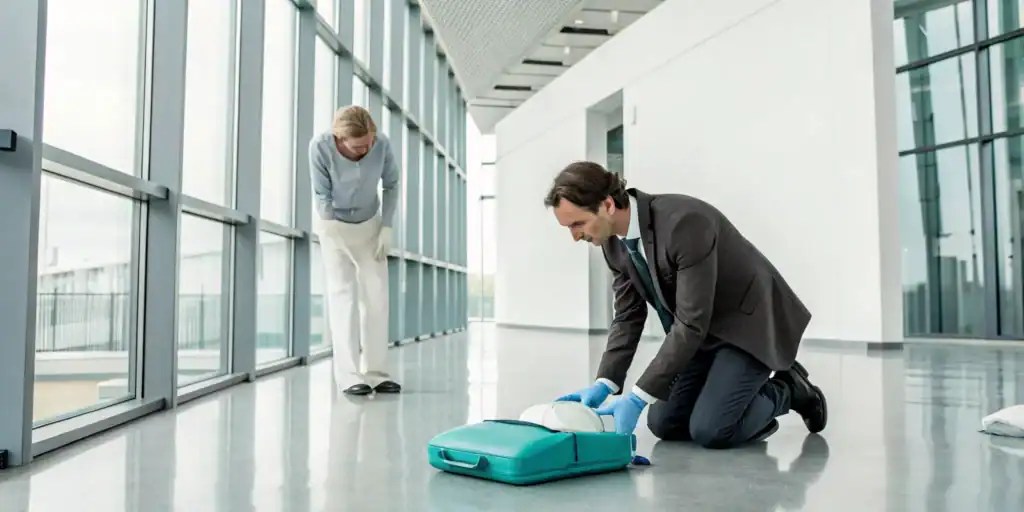
You probably have a fire extinguisher in your kitchen and a first aid kit in your car. These are essential tools for handling common emergencies. But what about the ultimate medical emergency: sudden cardiac arrest? An automated external defibrillator (AED) is the one tool that can restart a heart, yet many people feel unprepared to use one. They see them on the wall at the gym or airport but aren’t sure what to do next. This practical AED guide fills that gap. We’ll cover everything from recognizing the signs of cardiac arrest to maintaining your device, ensuring you’re ready to act. Think of this as the missing manual for one of the most important safety devices you can have.
Key Takeaways
- You don’t need to be a medical expert: AEDs are designed for people without medical training. They provide clear voice instructions and have built-in safety features that analyze the heart’s rhythm, ensuring a shock is only delivered when absolutely necessary.
- Know the signs and follow the steps: If you find someone who is unresponsive and not breathing normally, call 911 and get an AED. Simply turn the device on, apply the pads to the person’s bare chest as shown in the diagrams, and follow its lead.
- Keep your device and skills ready: Preparedness is an ongoing process. Regularly check that your AED’s battery and electrode pads have not expired, and consider taking a CPR and AED training course to build the confidence to act effectively in an emergency.
What Is an Automated External Defibrillator (AED)?
An automated external defibrillator (AED) is a portable, life-saving medical device designed to help someone experiencing sudden cardiac arrest (SCA). Think of it as a smart first aid tool for the heart. When a person’s heart suddenly stops beating effectively, an AED can analyze its rhythm and, if necessary, deliver a controlled electrical shock to help it reset (Learn more about what a defibrillator is and how it works.). This intervention is often the single most important factor in surviving an out-of-hospital cardiac arrest.
What makes AEDs so powerful is that they are built for anyone to use, regardless of medical training. You don’t need to be a doctor or paramedic to be a hero. The device uses clear voice prompts, lights, and sometimes on-screen diagrams to walk you through every step of the process, from applying the electrode pads to performing CPR. It’s a common misconception that an AED will shock anyone it’s attached to. The reality is much safer: the device is intelligent and will only advise and deliver a shock if it detects a life-threatening, irregular heart rhythm. This built-in safety feature removes the guesswork and empowers you to act with confidence when every second counts.
How Does an AED Work?
When you turn on an AED and apply the electrode pads to a person’s bare chest, the device immediately begins to monitor the heart’s electrical activity. It’s looking for a specific chaotic rhythm, like ventricular fibrillation, which prevents the heart from pumping blood. If this dangerous rhythm is detected, the AED will charge itself and instruct you to deliver a shock.
This electrical shock, called defibrillation, is designed to briefly stop all electrical activity in the heart. The goal is to interrupt the chaotic rhythm and give the heart’s natural pacemaker a chance to regain control and resume a normal beat. The entire process is guided by the AED’s calm, clear instructions, ensuring you know exactly what to do and when to do it.
What Are the Different Types of AEDs?
While all AEDs serve the same fundamental purpose, they come in two main operational styles: semi-automatic and fully-automatic. A semi-automatic AED will advise you when a shock is needed, and you will have to press a flashing button to deliver it. A fully-automatic model will provide a verbal warning and then deliver the shock on its own, without requiring you to press a button. The choice between them often comes down to user preference and workplace protocols.
Beyond that, AEDs can have different features, such as text screens for noisy environments, real-time CPR feedback to guide your compressions, and varying levels of durability. A critical feature for anyone who might treat a child is pediatric capability. This is managed either with special pediatric pads that reduce the energy of the shock or with a child mode key or button on the device itself.
When Should You Use an AED?
In the middle of an emergency, things can feel chaotic and overwhelming. Knowing exactly when to use an automated external defibrillator (AED) is just as important as knowing how to use one. The good news is that you don’t have to make a complex medical diagnosis. AEDs are designed for a very specific, life-threatening event called Sudden Cardiac Arrest, and the signs are straightforward enough for anyone to recognize.
The key is to quickly assess the situation and the person’s condition. If someone has collapsed, your immediate actions can make all the difference. An AED is a powerful tool, but it’s only effective when used in the right circumstances. Think of it this way: while CPR manually keeps blood flowing to the brain, an AED is what can actually restart a heart that has stopped beating correctly. The device itself is smart; it won’t deliver a shock unless it detects a shockable heart rhythm, which removes the guesswork for you. Your job is simply to recognize the initial signs of trouble and get the device connected as quickly as possible. Let’s walk through exactly what to look for so you can feel confident knowing when it’s time to grab an AED and take action.
How to Recognize Sudden Cardiac Arrest
Sudden cardiac arrest (SCA) is not the same as a heart attack. A heart attack is a “plumbing” problem where a blockage stops blood flow to the heart. SCA is an “electrical” problem. It happens when the heart’s electrical activity becomes chaotic, causing it to stop beating suddenly and unexpectedly. When this occurs, blood flow to the brain and other vital organs ceases, and the person will collapse.
Without immediate intervention, SCA is fatal within minutes. The only effective treatment is an electrical shock from a defibrillator, which can restore the heart’s normal rhythm. (Learn more about what a defibrillator does and how it saves lives.) This is why having access to an AED and knowing the signs of SCA is so critical. Taking a CPR & AED training course can give you the hands-on practice to respond with confidence.
Key Signs It’s Time to Use an AED
You should use an AED when someone is experiencing Sudden Cardiac Arrest. While you can’t see the electrical chaos in their heart, the external signs of cardiac arrest are clear and distinct. If you find someone who has collapsed, check for these two things:
- They are unresponsive. The person does not respond when you tap them on the shoulders and shout, “Are you okay?” They won’t move, speak, or otherwise react.
- They are not breathing normally. They may not be breathing at all, or they may be taking infrequent, noisy gasps. This gasping is not normal breathing and is a sign of cardiac arrest.
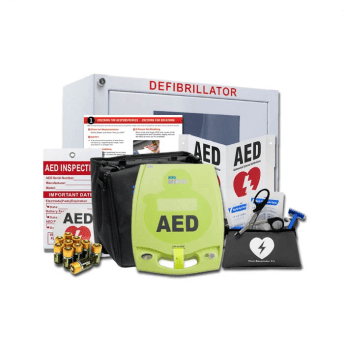
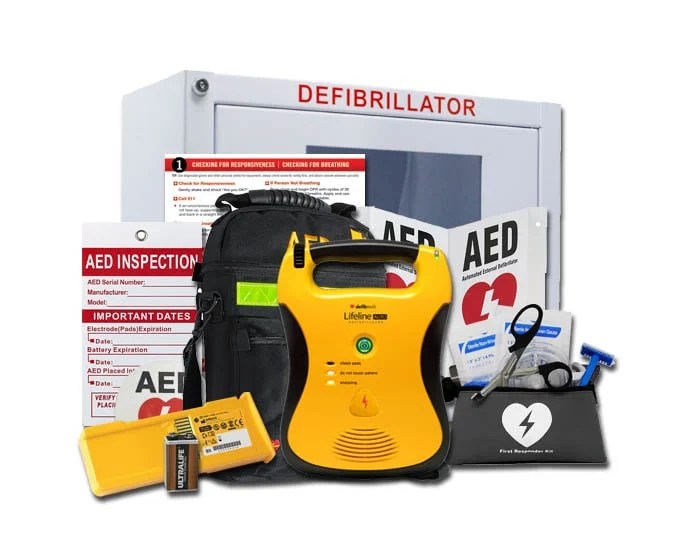
If the person is unresponsive and not breathing normally, it’s time to act. Yell for someone to call 911 and get an AED immediately. Having complete AED packages on-site in workplaces, schools, and community centers ensures this life-saving equipment is ready to go. Schools in particular benefit from a structured AED program that includes staff training and compliance management.
How to Use an AED: A Step-by-Step Guide
Using an AED for the first time can feel daunting, but these devices are designed to be used by people just like you, with no medical background required. Modern AEDs provide clear, calm voice instructions, visual diagrams, and text prompts to walk you through every action. The machine does the complex work of analyzing the heart’s rhythm and deciding if a shock is needed. Your job is simply to listen and follow along. The most important thing is to act quickly and confidently. Just turn on the device and follow its lead.
For a complete overview of how defibrillator machines work and which brands to consider, see our defibrillator machine guide.
Remember, a sudden cardiac arrest is an electrical problem in the heart, and an AED is the only thing that can correct it. By using an AED, you are giving someone their best possible chance of survival. The steps are straightforward and built for high-stress situations. From turning the device on to placing the pads and delivering a shock, you will be guided the entire time. This guide breaks down those instructions into simple, actionable steps so you know exactly what to expect. Think of the AED as your partner in the rescue. It won’t let you deliver a shock unless it’s absolutely necessary, which removes any guesswork. Your confidence in these moments matters, and knowing these steps ahead of time can make all the difference.
Step 1: Check for a Response and Call 911
Before you do anything else, check if the person is responsive. Gently shake their shoulders and shout, “Are you okay?” If they don’t respond and are not breathing or are only gasping, immediate action is critical. Point to a specific person and tell them to call 911 and get the AED. If you are alone, call 911 yourself and put your phone on speaker, then get the AED. Activating the emergency response system as soon as possible is a crucial first step that ensures professional help is on the way while you provide initial care.
Step 2: Power On the AED and Prepare the Chest
Once you have the AED, turn it on by pressing the power button. The device will immediately begin speaking to you. Its first instruction will likely be to prepare the person’s chest. You need to remove any clothing covering the chest area to expose the bare skin. If the chest is wet, wipe it dry so the pads can stick properly. Some AED rescue kits include scissors for cutting away clothing and a razor for shaving a very hairy chest, which can interfere with pad contact. Follow the AED’s prompts to get the person ready for the next step.
Step 3: Apply the Electrode Pads
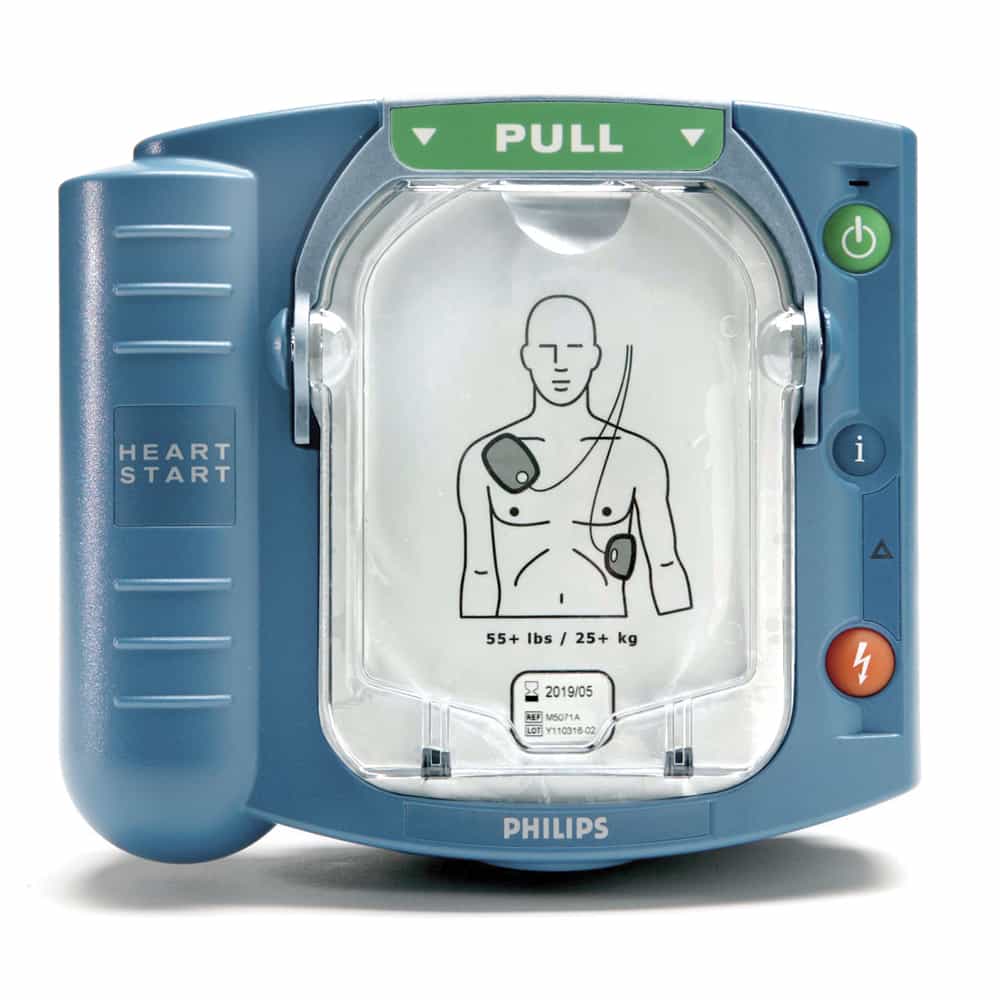
Open the sealed package containing the AED pads. Each pad has a protective backing that you’ll need to peel off. The pads themselves, and often the packaging, will have clear diagrams showing you exactly where to place them. Attach one pad to the person’s upper right chest, just below the collarbone. Place the other pad on their lower left side, below the armpit. Make sure the pads are pressed firmly against the skin. If the pads are not making good contact, the AED will let you know. Proper placement is key for the device to accurately analyze the heart’s rhythm.
Step 4: Let the AED Analyze (and Stand Clear)
After you’ve applied the pads, the AED will tell you it’s analyzing the person’s heart rhythm. At this point, it is vital that no one is touching the person. The device needs a clear reading, and any movement can interfere with the analysis. Loudly and clearly state, “Stand clear!” or “Everybody clear!” to make sure everyone nearby knows not to touch the person. This is a critical safety step to ensure the AED functions correctly and to protect yourself and other responders from the electrical shock if one is delivered.
Step 5: Deliver the Shock if Instructed
If the AED determines that a shock is needed, it will advise you to deliver one. Depending on the type of AED you are using, this will happen in one of two ways. A semi-automatic AED will have a flashing button that you need to press to deliver the shock. A fully-automatic AED will deliver the shock on its own after giving a verbal warning and a countdown. In either case, make sure you repeat the command to “stand clear” one more time right before the shock is delivered.
Step 6: Continue CPR After the Shock
Immediately after the shock is delivered, or if the AED determines that no shock is needed, the device will prompt you to begin or resume CPR, starting with chest compressions. Don’t wait. Place your hands in the center of the chest and push hard and fast. The AED will often provide a metronome beat to help you maintain the correct compression rate. Continue following the AED’s instructions, which will guide you through cycles of CPR and analysis until emergency medical services arrive. Taking a CPR and AED training course can help you feel even more prepared to perform these life-saving skills.
Can Anyone Use an AED?
A common question we hear is, “Do I need to be a doctor to use an AED?” The answer is a clear and simple no. Automated external defibrillators are specifically designed for people without medical training to use during an emergency. They are built to be straightforward, with voice prompts and visual guides that walk you through every single step. The goal is to empower anyone to step in and help save a life. Let’s clear up a few common concerns so you can feel confident if you ever need to act.
Debunking Common Myths About Using an AED
One of the biggest myths is that you need special training to operate an AED. While CPR and AED training is always a great idea, these devices are made for lay responders. Once you turn it on, a calm voice will tell you exactly what to do, from applying the pads to when to stand clear. Another worry is that you might accidentally hurt someone by shocking them unnecessarily. You can put that fear to rest. An AED is a smart device that analyzes the person’s heart rhythm. It will only advise and deliver a shock if it detects a life-threatening arrhythmia. It simply will not shock a healthy heart.
Understanding Good Samaritan Laws
Hesitating in an emergency is normal, and many people worry about the legal risks of helping. That’s where Good Samaritan laws come in. These laws exist in all 50 states to offer legal protection to people who provide reasonable assistance to someone in a medical emergency. The specifics can vary, but the core idea is to encourage bystanders to act without fear of being sued if their efforts are not successful. When you use an AED in good faith to save a life, these laws are designed to protect you. They remove a major barrier, allowing you to focus on what matters most: helping the person in front of you.
Using an AED on Children and Infants
Yes, you can and should use an AED on a child or infant experiencing sudden cardiac arrest. The key is to use the right equipment if it’s available. Look for pediatric AED pads, which are designed for children under 8 years old or weighing less than 55 pounds. These smaller pads are placed on the child’s chest and back and deliver a weaker, safer electrical shock. If you don’t have pediatric pads, use the adult ones. It is far better to use an adult AED on a child than to do nothing at all. Just make sure the pads don’t touch each other. After applying the pads, simply follow the AED’s voice prompts just as you would for an adult.
What Safety Precautions Should You Take?
AEDs are designed to be safe for anyone to use, but a few precautions will ensure the best outcome for everyone involved. Paying attention to your environment, checking for medical devices, and properly preparing the person’s chest are simple but vital steps. These actions help the AED work effectively and keep you, the rescuer, completely safe. Here’s what you need to know.
Avoiding Environmental Hazards
Water is the biggest environmental hazard to watch for. If someone has collapsed in or near water, move them to a drier spot and quickly wipe their chest dry before applying the AED pads. A dry surface ensures the pads stick firmly and the electrical therapy goes to the heart, not across the skin. Also, make sure no one is touching the person during the analysis and especially not during the shock. This simple “stand clear” step prevents the electrical current from traveling to anyone else.
What to Do About Pacemakers and Medication Patches
You can still use an AED on someone with a pacemaker or medication patch. If you see or feel a hard lump under the skin on their chest, that’s likely a pacemaker. Just make sure not to place an AED pad directly over it; position it at least an inch to the side. For medication patches, you must remove them before applying a pad. These patches can block the shock and cause skin burns. If you have gloves, use them to peel off the patch and wipe the area clean before you continue.
How to Properly Prepare the Chest
The electrode pads need direct contact with clean, dry skin to work correctly. First, remove all clothing from the person’s chest. Many AED packages include trauma shears to cut through fabric quickly. If the person has a very hairy chest, you may need to shave the areas where the pads will go so they can adhere properly; a prep razor is often included for this. Also, remove any necklaces that could interfere with pad placement. These quick prep steps ensure the AED can deliver the most effective treatment possible.
Where Can You Find an AED?
Knowing how to use an AED is one thing, but finding one quickly during an emergency is just as important. Fortunately, these life-saving devices are becoming more common in public spaces. They are typically stored in highly visible, wall-mounted cabinets marked with a universal AED sign, which looks like a heart with a lightning bolt inside. The key is to take note of their locations in places you visit often, like your office or local gym, so you’re prepared to act fast if you ever need to.
Finding AEDs in Public Places
You can find AEDs in many high-traffic public areas where large groups of people gather. Think about places like airports, shopping malls, sports stadiums, concert venues, and community centers. They are often placed in central locations like near front entrances, information desks, or elevators. Because a sudden cardiac arrest can happen to anyone at any time, having these devices accessible in public can dramatically improve a person’s chance of survival. The next time you’re out, make it a habit to spot the AED, just so you know where it is. Hotels and resorts are increasingly adding AEDs to lobbies, fitness centers, and pool areas as part of their emergency preparedness programs.
AEDs in Workplaces and Schools
Many workplaces and schools now include AEDs as a standard part of their safety plans. Organizations are increasingly recognizing the need to protect their employees, students, and visitors. You’ll often find them in school nurses’ offices, near gymnasiums, or in main office buildings. In a corporate setting, they might be located near reception areas or in break rooms. Having an on-site AED, combined with staff who have completed CPR & AED training, creates a much safer environment for everyone and ensures a rapid response is possible.
Should You Have an AED at Home?
While we often think of AEDs being in public places, having one at home can be a smart decision, especially if a family member has a history of heart conditions or is considered high-risk. The reality is that most cardiac arrests occur at home. Having an AED on hand means you can respond in those first critical minutes before emergency services arrive. If you’re considering this, there are many user-friendly AED packages designed specifically for home use, giving you and your family an essential tool for peace of mind.
How to Maintain Your AED
Owning an AED is a huge step toward being prepared, but its life-saving potential depends on one thing: it has to work when you need it. An AED requires a little upkeep to stay rescue-ready, but it isn’t complicated. It just involves a few quick checks, replacing parts before they expire, and storing the device correctly. Let’s walk through exactly what you need to do to keep your AED in top shape, so you can have complete confidence in it during an emergency.
Your AED Inspection Checklist
A quick monthly check-in is all it takes to make sure your AED is ready. First, look for the status indicator. Most AEDs have a small light that should be green, indicating it’s passed its self-test. If it’s red or chirping, it needs attention. Next, check the electrode pads. Confirm they are sealed and within their expiration date, as the gel on expired pads can dry out. Finally, verify the battery’s expiration date and ensure essential supplies like scissors and a small towel are with the device.
When to Replace Batteries and Pads
When someone experiences sudden cardiac arrest, every second is critical. The chance of survival drops significantly for each minute that passes without help, which is why a fully functional AED is so important. The two most critical components that need timely replacement are the AED batteries and the electrode pads. Both have a limited shelf life, typically lasting two to five years. Set a calendar reminder a few months before they expire so you have time to order new ones. Using expired parts can mean the AED won’t deliver a life-saving shock.
Proper AED Storage and Care
Where you keep your AED is just as important as its condition. Store it in a central, visible, and unlocked location where people can find it quickly. Avoid places with extreme temperatures or high humidity, as these can damage the device. A designated wall cabinet is a great option for keeping it safe and accessible. Beyond physical storage, proper care includes making sure people know how to use it. Regular CPR and AED training ensures that family members or colleagues feel confident enough to act decisively. An AED is most effective when paired with a prepared responder.
What to Do After an Emergency
Using an AED is a critical step in saving a life, but your job isn’t quite finished once the shock is delivered. The moments that follow are just as important for giving the person the best possible chance of survival. Knowing what to do while you wait for emergency medical services (EMS) to arrive helps ensure a smooth transition of care. It also involves a few simple but essential steps to get your life-saving equipment ready for the future.
After the intensity of the moment passes, taking the time to properly document the event and care for your AED ensures you and your community remain prepared. This follow-through is a key part of a successful emergency response, turning a stressful event into a well-managed one.
Next Steps for Post-Emergency Care
After the AED delivers a shock, immediately resume chest compressions. Continuous CPR is vital for keeping blood circulating to the brain and other organs until the heart can beat on its own again or until help arrives. The AED will continue to monitor the person’s heart rhythm and may advise another shock, so listen carefully to its prompts.
Do not remove the AED pads from the person’s chest. Paramedics can use the information from the pads and may even be able to plug them directly into their own equipment. Continue performing CPR and following the AED’s instructions until you see obvious signs of life, like breathing, or until medical professionals take over. Proper CPR and AED training will give you the confidence to handle this entire process effectively.
How to Document and Report the Event
Once the person is in the care of medical professionals, take a moment to write down everything you remember about the event. Note the time the person collapsed, when the AED was used, how many shocks were delivered, and any changes you observed in their condition. This information provides a valuable timeline for the hospital staff. If the emergency occurred in a workplace or public setting, be sure to follow the organization’s incident reporting procedures.
Finally, remember to service your AED. After any use, you will need to replace the electrode pads and check the battery. Many organizations use an AED management program to handle post-event reporting and ensure the device is restocked and ready for another emergency.
How to Choose the Right AED
Deciding to purchase an AED is a huge step in protecting your family, colleagues, or community. With different models and features available, picking the right one can feel a little overwhelming, but it doesn’t have to be. The best AED for you really depends on your specific environment and who is most likely to use it. For example, an AED for a school with trained nurses on staff might have different features than one for a small office or a private home. The great news is that all modern AEDs are designed to be used by people with little to no medical background. They are built to be safe, effective, and straightforward. As you explore your options, focus on ease of use, durability, and the support that comes with it. For a detailed comparison of every FDA-approved brand, see our complete AED machine buying guide.
Key Features to Look For
When you’re comparing different AEDs for sale, you’ll notice they all share the same core purpose: to check a person’s heart rhythm and, if needed, deliver a shock to restore a normal heartbeat. The key difference lies in how they guide you through the process. Look for a device with clear, calm voice prompts and simple visual diagrams. As Stryker notes, most AEDs have these features to help anyone, even without training, use them correctly. You’ll also see options for semi-automatic or fully-automatic devices. A semi-automatic AED will tell you when to push a button to deliver a shock, while a fully-automatic model provides a warning and then delivers the shock on its own. Both are safe and effective; the choice often comes down to preference. Also, consider the device’s durability rating (IP rating).
Don’t Forget Accessories and Training
An AED is just one piece of the puzzle. To be truly prepared, you need a complete system that includes the right accessories and proper training. If purchasing an AED is not in your budget, renting an AED is a cost-effective alternative that includes maintenance and compliance support. The American Heart Association emphasizes that workplaces should have AED programs that include employee training in First Aid, CPR, and AED use. Having the skills to respond confidently is just as important as having the equipment. Certified CPR and AED training teaches you how to recognize an emergency and use the device as part of a seamless response. Your AED also needs a few essential accessories. Make sure you have at least one spare set of AED pads and a backup battery, as they have limited shelf lives. If children are often present, consider getting pediatric pads. Finally, store your AED in a visible, accessible cabinet and perform regular maintenance checks.
Related Articles
- What Does the AED Abbreviation Stand For?
- What Is an AED? How AED Work— Response Ready
- The AED Acronym: What It Means for Saving a Life
- When should you use an AED? — Response Ready
Understanding how to use an AED is essential, but many people also confuse defibrillators with pacemakers. Learn the difference between a defibrillator and a pacemaker to better understand these cardiac devices.
Frequently Asked Questions
Can I accidentally hurt someone by shocking them if they don’t actually need it? This is a really common worry, but you can set it aside. An AED is a smart medical device, not just a button that delivers a shock. It will only advise and deliver a shock if it detects a specific, life-threatening heart rhythm. It will not shock a person with a normal heartbeat or someone who has no heart rhythm at all. The machine makes the decision for you, so you can act with confidence knowing you can’t do any harm.
What’s the main difference between a semi-automatic and a fully-automatic AED? The difference is really just about who pushes the shock button. Both types of AEDs will analyze the person’s heart and decide if a shock is needed. A semi-automatic model will then tell you to push a flashing button to deliver the shock. A fully-automatic model will give a clear verbal warning and a countdown, then deliver the shock on its own. Neither is better than the other; it’s truly a matter of personal or organizational preference.
Do I really need to take a training course before I can use an AED? You don’t need a certification to use an AED in an emergency. These devices are designed for anyone to use, and they guide you with clear voice instructions. That said, taking a CPR and AED training course is an excellent idea. It gives you hands-on practice, which helps build the confidence to act quickly and effectively when things feel stressful. Think of it as a way to prepare yourself so you can be an even more capable helper.
What should I do if a child needs help and I only have adult AED pads? If a child is in cardiac arrest and you only have adult pads, you should absolutely use them. It is always better to use the available AED than to do nothing. The most important thing is to make sure the two pads do not touch each other on the child’s small chest. A good way to do this is to place one pad on the center of the child’s chest and the other on the center of their back. Then, just follow the AED’s instructions as you normally would.
How much work is it to maintain an AED at home or in my office? Maintaining an AED is much simpler than you might think. The device runs its own self-tests daily, weekly, and monthly. Your job is to do a quick visual check about once a month. Just look for the green status light to confirm it’s ready and check the expiration dates on the battery and pad packages. Most parts last for several years, so you only need to replace them occasionally. A few minutes of attention each month ensures your device is ready to save a life.
Disclaimer for information purposes only:
The information provided on this website is intended for general educational and informational purposes only. It is not medical advice and should not be used as a substitute for professional diagnosis, treatment, or care. Always consult a qualified healthcare or medical professional regarding any health-related questions or concerns.
While we strive to ensure the information shared is accurate and up to date, no guarantees are made regarding completeness, accuracy, or applicability to any individual situation. Use of this content is at the reader’s sole discretion and risk.
This website is part of the Response Ready family of emergency preparedness and training resources, including CPR & first aid training and compliance services, AED sales and program support, AED program management software, and medical oversight solutions provided through our affiliated platforms:
• CPR1.com
• AEDLeader.com
• AEDTotalSolution.com
• MDSIMedical.com
By accessing or using this website, you agree to release, indemnify, and hold harmless the website owners, authors, contributors, and affiliated entities from any claims, losses, damages, or liabilities arising from the use or reliance on the information presented.