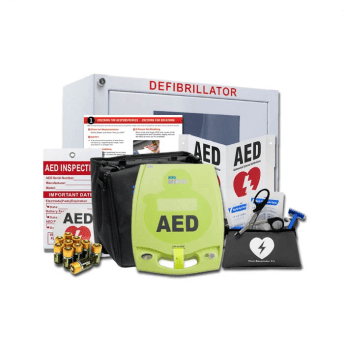
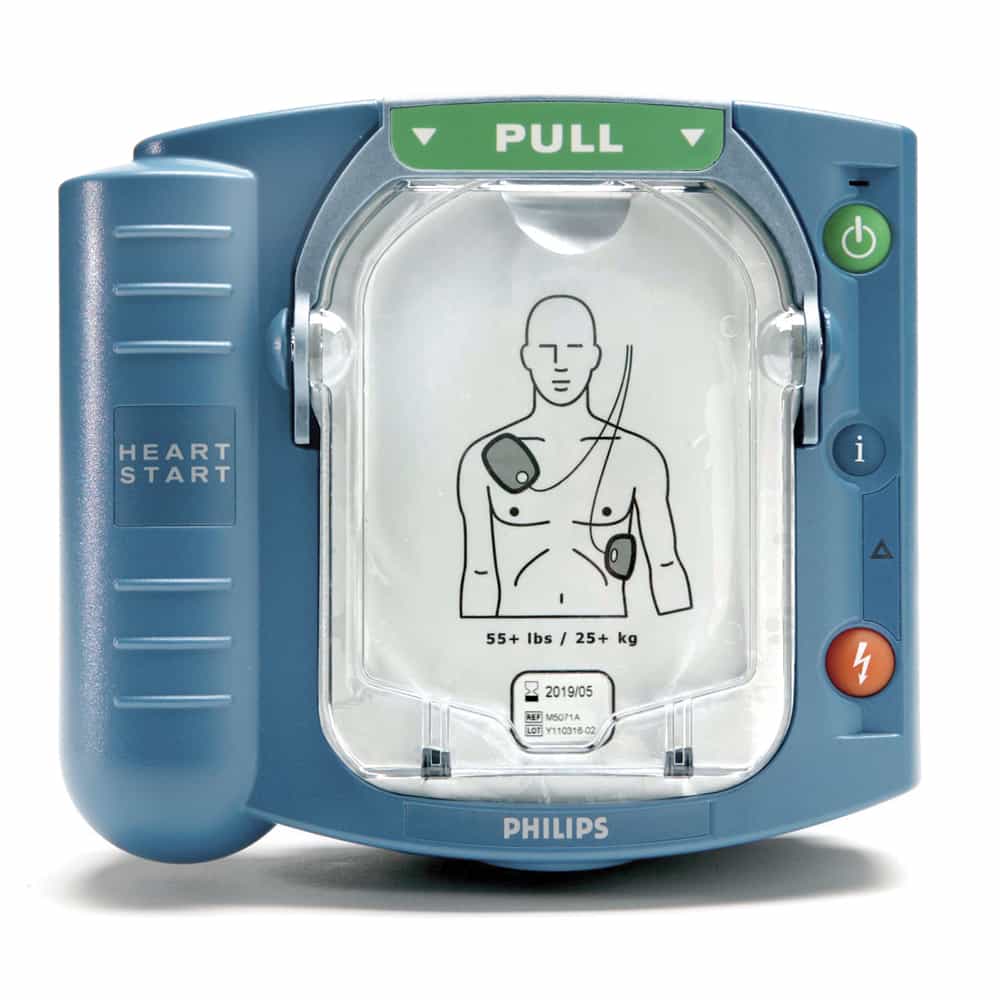
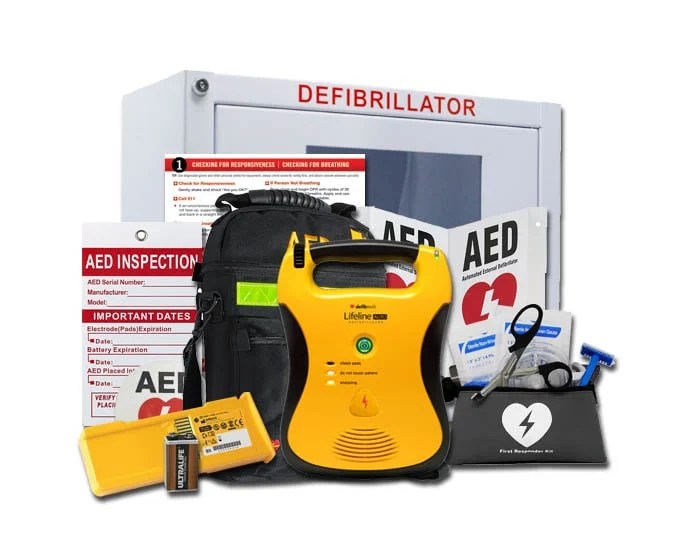
Many people think defibrillators are complex machines reserved for doctors in a hospital. That image, often shaped by dramatic TV shows, can make the idea of using one feel intimidating. But the public-access devices you see every day are fundamentally different, and their name explains why. The aed acronym stands for Automated External Defibrillator, and it’s designed to bust the myth that only experts can save a life. The device is automated, meaning it does the hard work of analyzing the heart’s rhythm for you. It empowers any bystander to become an immediate responder when every second counts.
Key Takeaways
- AEDs are built for bystanders: These devices are designed for people with no medical background. They provide clear voice instructions and only deliver a shock if one is needed, removing the fear and guesswork so you can take confident, life-saving action.
- Time is the most critical factor: A person’s chance of surviving sudden cardiac arrest drops significantly with every passing minute. Using an AED immediately—even before paramedics arrive—is the single most important factor in a positive outcome.
- A successful response requires a plan: Simply having an AED isn’t enough. For it to be effective, it must be placed in a visible location, regularly maintained, and supported by people who know where it is and feel prepared to use it through training.
Get certified in CPR
Adult & Pediatric First Aid/CPR/AED — Blended Learning
Self-paced online + in-person skills check. 2-year certification.
CPR, AED & First Aid Certification
Instructor-led on-site. Practice on real manikins and AED trainers.
What Does AED Stand For?
You’ve probably seen them in airports, gyms, and offices—those small, brightly colored boxes mounted on the wall. But what exactly is an AED, and what does the acronym stand for? Understanding the name is the first step to appreciating just how powerful these devices are in an emergency.
The Acronym Explained
AED stands for Automated External Defibrillator. Let’s break that down, because each word tells you something important about how it works. Automated means the device analyzes the heart’s rhythm on its own and determines if a shock is needed, guiding you with clear voice prompts. You don’t have to make any medical decisions. External means it works from outside the body—you simply apply pads to the person’s bare chest. Finally, Defibrillator refers to its function: to stop fibrillation, which is a chaotic and ineffective heartbeat. By delivering a controlled electrical shock, an AED can help the heart reset to a normal rhythm.
What It Means for Saving a Life
Knowing the name is one thing, but understanding what an AED does for someone in sudden cardiac arrest (SCA) is what truly matters. When SCA occurs, the heart suddenly stops beating effectively, and blood flow to the brain and other vital organs ceases. For every minute that passes without defibrillation, the chance of survival drops significantly. Brain damage can begin in just a few minutes. Using an AED alongside CPR can dramatically improve outcomes, with studies showing survival rates as high as 40% when a bystander intervenes. It’s a critical tool that empowers anyone to step in and give someone their best chance at life, which is why CPR and AED training is so valuable for everyone. For the full breakdown of what AED stands for and how these devices save lives, read our complete guide to automated external defibrillators.
How Does an AED Work?
At its core, an Automated External Defibrillator (AED) is a smart, portable medical device designed to help someone experiencing sudden cardiac arrest. It might sound complicated, but its function is straightforward: it analyzes the heart’s rhythm and, only if necessary, delivers an electrical shock to help it return to a normal beat. Think of it as a clear-headed helper in a chaotic situation. The device takes on the heavy lifting of diagnosis, so a bystander can focus on the simple, life-saving steps.
Modern AEDs for sale are built for anyone to use, regardless of medical training. Once you turn it on, it guides you with calm, clear voice instructions. It tells you exactly where to place the electrode pads on the person’s chest and when to stand clear. This automation removes the fear and guesswork from the equation, empowering you to act confidently and give someone their best chance at survival while you wait for professional help to arrive. The entire process is designed to be as simple as possible because in an emergency, simplicity is key. The machine makes the critical decisions, leaving you free to follow its lead and provide immediate care.
Reading the Heart’s Rhythm
The first and most critical job of an AED is to act as a detective for the heart. Once the AED pads are correctly placed on the bare chest, the device begins to analyze the heart’s electrical activity. It’s specifically looking for a life-threatening, chaotic rhythm like ventricular fibrillation (VF) or ventricular tachycardia (VT), which are the most common causes of sudden cardiac arrest. These rhythms prevent the heart from pumping blood effectively. The AED’s internal computer makes this assessment automatically, so you don’t have to interpret anything. It simply tells you, “Analyzing heart rhythm, do not touch the patient.”
Delivering a Life-Saving Shock
If the AED detects a shockable rhythm, it will let you know it’s time to deliver a controlled electrical shock. The device will charge itself and then instruct you to press a flashing button. This shock, called defibrillation, is designed to briefly stop the heart’s chaotic electrical activity. The goal is to reset the heart, much like restarting a computer, giving its natural pacemaker a chance to regain control and restore a normal, effective rhythm. The AED will not deliver a shock unless it is absolutely necessary, which is a key safety feature that protects both the rescuer and the patient.
Smart Safety Features
AEDs are designed with the user’s safety and confidence in mind. One of their most important features is that they will only advise a shock if a life-threatening heart rhythm is detected. You simply cannot accidentally shock someone who doesn’t need it. The device provides loud, clear voice prompts for every single step, from applying the pads to performing CPR. Many models also include visual diagrams and a CPR metronome to help you keep the right pace for chest compressions. While these devices are incredibly intuitive, completing a CPR & AED training course can give you the practice and confidence to act without hesitation.
Why Are AEDs So Important?
When a medical emergency strikes, our first instinct is often to call 911 and wait for help. But for someone experiencing sudden cardiac arrest (SCA), waiting isn’t an option. Their life depends on immediate action, and an Automated External Defibrillator (AED) is the one tool that empowers a bystander to provide the life-saving intervention needed. An AED is more than just a piece of equipment; it’s a bridge between a life-threatening event and the arrival of professional medical responders. Understanding its importance starts with understanding the reality of SCA and the critical role time plays in survival.
The Reality of Sudden Cardiac Arrest
Sudden cardiac arrest is an electrical malfunction in the heart that causes it to stop beating unexpectedly. It’s not the same as a heart attack, which is more of a plumbing problem caused by a blockage. During SCA, blood flow to the brain and other vital organs ceases almost instantly. Without intervention, this can lead to irreversible brain damage or death within minutes. SCA can happen to anyone, regardless of age or health status, often without any warning signs. This is why having publicly accessible AEDs for sale in places like offices, gyms, and schools is so crucial—it puts the power to save a life directly into the hands of those nearby.
Why Every Second Counts
When someone collapses from sudden cardiac arrest, the clock starts ticking immediately. For every minute that passes without a defibrillating shock, their chance of survival drops by about 10%. After just three to five minutes, brain damage can begin to set in. Because the average response time for emergency medical services can be much longer than that, relying solely on their arrival is often too late. The person who can make the biggest difference is the one who is already there. This is where CPR & AED training becomes so valuable, giving you the confidence to act decisively when every single second is critical to a positive outcome.
How AEDs Improve Survival Rates
The statistics are clear: AEDs save lives. While the survival rate for an out-of-hospital cardiac arrest is tragically low without immediate intervention, the story changes dramatically when a bystander uses an AED. Studies have shown that early defibrillation with an AED can increase the chance of survival by up to 70%. These devices are designed to be used by anyone, analyzing the heart’s rhythm and delivering a shock only if it’s needed. By providing that essential electrical shock, an AED can restore a normal heartbeat and give a person their best possible chance. Having complete AED packages available in your community or workplace turns bystanders into immediate responders.
How Are AEDs Different from Hospital Defibrillators?
When you picture a defibrillator, you might think of a dramatic hospital scene from a movie—doctors with paddles, shouting, “Clear!” While those devices and public-access AEDs share the same goal of restoring a normal heart rhythm, they are fundamentally different tools. Hospital defibrillators are complex medical instruments operated by highly trained professionals. The Automated External Defibrillators (AEDs) you see in airports, gyms, and schools are specifically designed for anyone to use during an emergency, regardless of their medical background.
Manual vs. Automated Devices
The biggest distinction lies in how they operate. The defibrillators you see in hospitals are manual. This means a doctor or paramedic must interpret the person’s heart rhythm on a screen, decide if a shock is appropriate, and then manually select the energy level before delivering it. It’s a complex process that requires significant medical expertise. In contrast, an AED is automated. It has a built-in computer that analyzes the heart’s rhythm through the electrode pads. The device makes the critical decision of whether a shock is needed all on its own, removing the guesswork and empowering a bystander to take decisive action.
Comparing Training Needs
Because hospital defibrillators are manual, using one correctly requires extensive training and a deep understanding of cardiac electrophysiology. Medical professionals spend years learning to read ECGs and manage advanced cardiac life support protocols. On the other hand, AEDs are built for people with little to no medical experience. While formal CPR and AED training is always a great idea to build confidence and efficiency, it’s not a prerequisite for using one. The device is designed to be intuitive enough for an untrained bystander to operate effectively under pressure, providing help while waiting for emergency services to arrive.
Designed for Anyone to Use
Every feature of an AED is designed for simplicity and clarity. Once you turn it on, a calm, clear voice guides you through the entire process. It will tell you exactly where to place the electrode pads, often with the help of clear diagrams printed right on them. The AED will then instruct you to stand back while it analyzes the heart rhythm and will let you know if a shock is advised. If a shock is needed, the device will tell you to press a flashing button. It won’t deliver a shock unless it detects a rhythm that can be corrected by one. This critical safety feature ensures you can’t accidentally harm someone, removing any fear of making a mistake.
How to Use an AED: A Step-by-Step Guide
Using an AED might seem intimidating, but these devices are specifically designed for lay responders—people just like you. They provide clear, calm, voice-guided instructions to walk you through every action. The most important thing is to act quickly and confidently. Here’s a simple breakdown of the steps to follow.
Step 1: Check for Safety and Call 911
First, quickly scan the area to make sure it’s safe for you and the person in need. Look for any immediate dangers like traffic, fire, or water. Once you know the scene is secure, check if the person is responsive. Tap their shoulder firmly and shout, “Are you okay?” If they don’t respond and aren’t breathing normally—or are only gasping for air—they are likely in sudden cardiac arrest. Your next move is the most critical: call 911 immediately or point to a specific person and tell them to call. This single action gets professional help on the way while you prepare to use the AED.
Step 2: Apply the AED Pads
As soon as the AED is by your side, turn it on. The machine will immediately begin speaking to you with clear, calm instructions. First, you’ll need to expose the person’s bare chest. If their chest is wet, wipe it dry so the pads can make good contact with the skin. Open the package of AED pads and peel off the protective backing. The pads themselves have simple diagrams showing you exactly where to place them: one on the upper right side of the chest, just below the collarbone, and the other on the lower left side of the chest, below the armpit. Press them down firmly.
Step 3: Let the AED Guide You
Once the pads are correctly in place, the AED automatically starts analyzing the person’s heart rhythm. During this time, it’s crucial that no one touches the person. The device will tell you if a life-saving shock is needed. If it is, the AED will charge and instruct you to press the flashing shock button. Before you do, make sure everyone is clear by loudly saying, “Clear!” After the shock is delivered, the AED will immediately guide you on what to do next, which is almost always to begin CPR. Taking a CPR & AED training course can help you feel even more prepared to perform these steps with confidence.
Step 4: Stay with the Person Until Help Arrives
Your job isn’t over after the first shock. The AED will continue to be your guide. Keep following its voice prompts, which will typically instruct you to perform two minutes of CPR before it analyzes the heart rhythm again. This cycle of analysis, shock (if needed), and CPR guidance will repeat until emergency medical services arrive and take over. Do not remove the pads or turn off the AED. You are the vital link in the chain of survival, providing essential care until the paramedics are on the scene.

RECOMMENDED
HeartSine Samaritan 350P AED Package
Compact, fully-automatic AED designed for first-time responders. Pads, battery, carry case and wall sign included.
Who Can Use an AED?
When you see an Automated External Defibrillator, it’s natural to wonder if you’re qualified to use it. The simple answer is yes, you are. AEDs were specifically created for bystanders—people just like you—to use during an emergency without any prior medical experience. The entire device is built around the idea that the person using it will be under stress and may have never seen one before.
These devices are designed to be foolproof. They provide clear, calm, and spoken instructions that walk you through every single step, from where to place the electrode pads to when to stand clear. Many models also include visual diagrams right on the device or its case. The goal is to remove guesswork and empower anyone to provide critical help while waiting for emergency medical services to arrive. You don’t need to be a doctor or a paramedic; you just need to be willing to act.
You Don’t Need to Be a Medical Professional
The most important thing to know about modern AEDs is that they are designed for lay responders. Unlike the complex machines you see in hospitals, these devices are automated for safety and simplicity. Once the pads are applied, the AED analyzes the person’s heart rhythm on its own. It will only advise and deliver a shock if it detects a life-threatening arrhythmia. You cannot accidentally shock someone who doesn’t need it. This smart technology makes it possible for anyone, regardless of their background, to confidently use one of the many AEDs for sale today and potentially save a life.
Common Myths About Using an AED
Many people picture the dramatic defibrillator scenes from movies, where a doctor yells “Clear!” and delivers a powerful shock. This often leads to the myth that using an AED is complicated or dangerous for the rescuer. In reality, public-access AEDs are fundamentally different from the manual defibrillators used by medical professionals. Those require extensive training to interpret heart rhythms and decide when to shock. An AED, however, makes that decision for you. It automates the process, ensuring a shock is only delivered when it’s absolutely necessary. The device handles the complex analysis so you can focus on following its simple instructions.
Understanding Good Samaritan Laws
One of the biggest fears that can cause hesitation in an emergency is the worry of legal consequences. What if you do something wrong? Fortunately, Good Samaritan laws exist to protect bystanders who step in to help. These laws vary by location but generally shield people who act in good faith from liability when providing emergency aid. The purpose of these laws is to encourage people to help without fear of being sued. When you use an AED to help someone in cardiac arrest, you are protected. These legal protections are a crucial part of a community’s emergency response system, ensuring that a willingness to help is supported, not punished.
Where Should AEDs Be Placed?
An AED can’t save a life if no one can get to it in time. That’s why placement is everything. The goal is to have a defibrillator within a three-to-five-minute round trip from anywhere an emergency might occur. Think about the places where you spend your time—where large groups of people gather, where physical activity is common, or where medical help might be delayed. When someone experiences sudden cardiac arrest, their chance of survival drops by about 10% for every minute that passes without defibrillation. This makes quick access absolutely critical.
Strategic placement ensures that a bystander can grab the device and return to the person in cardiac arrest while another person calls 911. You’ll often find them in visible, unlocked cabinets, clearly marked for emergencies. The more accessible an AED is, the better the chance of a positive outcome. Placing them thoughtfully in our communities, workplaces, and even homes creates a network of safety that protects everyone. It’s about turning passive spaces into prepared ones, empowering anyone present to become a first responder. The following are some of the most important places to have an AED ready to go.
In Public Spaces and Community Centers
You’ve likely walked past an AED dozens of times without even noticing it. They are often placed in highly visible spots in airports, shopping malls, gyms, hotels, and community centers. You’ll typically see them in brightly colored, wall-mounted cases near main entrances, elevators, or information desks. This is all part of a public access defibrillation (PAD) strategy, which aims to make these devices as common and accessible as fire extinguishers. Having complete AED packages in these locations empowers ordinary people to step in and act decisively during an emergency, bridging the critical gap until professional responders arrive on the scene.
At Workplaces and Schools
We spend a huge portion of our lives at work or school, making these locations prime spots for an AED. Sudden cardiac arrest can affect anyone, regardless of age or fitness level, and having a device on-site can be the difference between life and death for a colleague or student. But placement is only half the battle. It’s just as important to make sure everyone knows where the AED is and feels prepared to use it. Creating a culture of readiness through regular drills and accessible CPR & AED training ensures your team or student body can respond with confidence. When people are trained, they’re more likely to act quickly, turning a moment of panic into a coordinated, life-saving response.
Why You Might Want One at Home
When we think of emergencies, we often picture them happening out in public. Yet, many sudden cardiac arrests happen at home, so having an AED there could save critical time. This is especially true for families with a history of heart disease or for individuals with known risk factors. While it may seem like an extra precaution, an AED provides a powerful layer of security in the one place you should feel safest. If you’re considering purchasing one, there are many user-friendly AEDs for sale designed specifically for home use, giving you the tools to protect the people who matter most.
Overcoming Barriers to AED Access
Having more AEDs available is a huge step forward, but it’s only part of the solution. For these devices to save lives, people need to know where they are, feel confident using them, and have a clear plan of action. Let’s look at some of the common hurdles to widespread AED access and how we can clear them, one step at a time.
The Need for More Awareness and Training
An AED can’t help if no one knows it’s there or feels prepared to use it. That’s why awareness and training are so important. When people feel hesitant, they lose precious seconds. Building confidence starts with education. This means more than just a one-time class; it’s about creating a culture of readiness where everyone, from office staff to students, knows what to do in an emergency.
Effective CPR & AED training demystifies the process, showing you just how simple these devices are to operate. Regular reminders and drills also keep the information fresh. When people are empowered with knowledge, they’re more likely to step up and act decisively when it matters most.
Addressing Cost and Placement Challenges
The cost of an AED can feel like a significant hurdle, especially for smaller organizations or families. However, it’s helpful to frame it as an investment in safety. There are also flexible options available, like fundraising initiatives or rental programs, that can make acquiring an AED more manageable. An AED rental program can be a great way to get a device on-site without a large upfront expense.
Equally important is where you put the device. An AED tucked away in a locked office or a basement storage room isn’t accessible. It needs to be in a visible, central location where people can grab it quickly. Clear signage, posters, and announcements in newsletters or company-wide emails help ensure everyone knows exactly where to find it during a crisis.
How Communities Can Improve Access
Improving AED access is a team effort. Whether it’s for a school, a workplace, or a local gym, creating a solid plan makes all the difference. A great first step is to appoint a program manager to oversee the AED and develop a cardiac emergency response plan. This plan should outline clear roles, from the person who calls 911 to the person who retrieves the AED.
Putting together a small response team can also ensure there are always trained individuals ready to act. The most important part is practice. Running drills helps test your plan, identify any gaps, and build the muscle memory needed to respond calmly and effectively. By taking these steps, a community can turn a single device into a life-saving program.
How to Choose the Right AED
Choosing an AED is a significant step toward being prepared, and it’s important to find a device you can count on. While they are all designed to save lives, a few key differences can help you decide which one is the right fit for your home, business, or community space. Let’s walk through the most important things to consider so you can feel confident in your choice.
Why FDA Approval Matters
First and foremost, only purchase an AED that has been approved by the U.S. Food and Drug Administration (FDA). This isn’t just a suggestion—it’s the single most important factor for ensuring safety and reliability. FDA approval means the device has undergone rigorous testing to meet strict standards for effectiveness and quality. When you choose from a selection of FDA-approved AEDs, you can trust that the device will perform as expected during a high-stakes emergency. It’s the ultimate seal of approval that guarantees you’re getting a medical device that’s ready to save a life.
Essential Features to Look For
Modern AEDs are designed for anyone to use, regardless of medical training. The best devices provide clear instructions that guide you through every step of the process. Look for features like calm, direct voice prompts and simple visual diagrams on the device or pads. These guides remove the guesswork and help you stay focused. A crucial feature is the AED’s ability to automatically analyze the person’s heart rhythm. It will determine on its own whether a shock is necessary, which means you don’t have to make that critical decision. This smart technology ensures a shock is only delivered if it can help, taking the pressure off you as the responder.
The Importance of Ongoing Support
An AED is not a “set it and forget it” device. Its life-saving potential depends on it being ready to work at a moment’s notice, and that requires simple but consistent maintenance. Before you buy, understand the manufacturer’s recommendations for replacing AED batteries and electrode pads, which expire over time. It’s also a good idea to designate someone to perform regular visual checks to confirm the AED’s readiness indicator is green. For organizations, finding a partner that offers ongoing support can simplify compliance and maintenance, ensuring your device is always prepared to help.
How to Get Involved in AED Awareness
Knowing what an AED is and why it’s important is the first step. The next is turning that knowledge into action. Building awareness isn’t just about sharing facts; it’s about creating a network of prepared individuals who can confidently step in during an emergency. When more people know how to use an AED and where to find one, the entire community becomes safer. You can play a vital role in this effort, whether you’re advocating for a device in your office or simply learning the skills to use one yourself. Here are a few practical ways to get involved and make a real difference.
Find Local Training Programs
Confidence is key in an emergency, and nothing builds confidence like hands-on training. Taking a course in CPR and AED use equips you with the muscle memory and knowledge to act decisively when someone suffers a sudden cardiac arrest. These programs are designed for everyone, not just medical professionals. You’ll learn how to recognize the signs of SCA, perform high-quality chest compressions, and operate an AED correctly. By getting certified, you become a life-saving resource for your family, colleagues, and community. Look for certified CPR & AED training in your area to gain the skills that can help save a life.
Partner with Community Organizations
You can extend your impact by bringing AED awareness to the places you spend your time. Start a conversation at your workplace, gym, school, or place of worship about installing an AED. Partner with community leaders to publicize the locations of existing devices so everyone knows where to find them in an emergency. You could help organize drills or informational sessions to ensure students, staff, and members feel prepared. Advocating for comprehensive AED packages that include the device, storage, and signage can help create a heart-safe environment and empower an entire organization to respond effectively.
Keep Your AED Ready to Use
If your organization already has an AED, one of the most important things you can do is ensure it’s always ready for an emergency. This means regularly checking the device and its supplies. Make sure the AED pads haven’t expired and the battery is fully charged. Beyond maintenance, focus on visibility. Use internal newsletters, posters, and clear signage to remind everyone where the AED is located. The more people who know its location and feel confident in its readiness, the more likely it is to be used quickly and effectively when the moment arrives.
Related Articles
- AED Guideline Archives — Response Ready
- AED Archives — Response Ready
- Certified AED Defibrillators for Workplace Safety — Response Ready

Not sure which AED or training fits your needs?
A Response Ready product expert walks you through it — no obligation.
Frequently Asked Questions
Can I accidentally hurt someone with an AED? This is a common and completely understandable fear, but the short answer is no. AEDs are designed with powerful safety features that prevent you from delivering a shock to someone who doesn’t need one. The device analyzes the person’s heart rhythm and will only advise a shock if it detects a life-threatening electrical problem. If the person’s heart has a normal rhythm or no electrical activity at all, the AED will not allow a shock to be delivered. The greatest danger in a sudden cardiac arrest situation is inaction.
Should I still use an AED if I don’t know CPR? Yes, absolutely. If you have access to an AED, using it is the most critical action you can take for someone in sudden cardiac arrest. The device is your guide and will tell you exactly what to do, step by step. While CPR is extremely important for circulating oxygenated blood, defibrillation is what can actually reset the heart’s chaotic rhythm. Don’t let a lack of CPR training stop you from using an AED to save a life.
What happens after the AED delivers a shock? After a shock is delivered, your job isn’t over, but the AED will continue to guide you. The device will immediately instruct you to begin performing chest compressions. It will often provide a metronome or a beat to help you keep the right pace. After about two minutes of CPR, the AED will tell you to stop so it can analyze the person’s heart rhythm again. You should continue to follow the device’s prompts—alternating between CPR and analysis—until emergency medical professionals arrive and take over.
Do I need to do anything to maintain an AED? Yes, an AED requires some simple but very important upkeep to ensure it’s ready for an emergency. The two main components that need attention are the electrode pads and the battery, both of which have expiration dates and must be replaced periodically. Most AEDs perform regular self-checks and have a clear readiness indicator—usually a green light or checkmark—that lets you know it’s good to go. A quick visual check as part of a regular routine is all it takes to make sure your device is prepared to help.
Can an AED be used on a child? Most modern AEDs are designed to be used on children as well as adults. Many models come with special pediatric pads that deliver a lower-energy shock suitable for a child’s smaller body. Some devices use a single set of pads with a key or a switch to change to a pediatric mode. If you are in a situation where you only have adult pads available for a child, you should still use them, as a shock at an adult dose is far better than no shock at all.