Sudden cardiac arrest and heart attack are two of the most misunderstood medical emergencies in the United States. Many people use these terms interchangeably, but they are fundamentally different conditions that require different responses. Understanding the difference between cardiac arrest and heart attack could save a life, including your own.
Learn how an AED can help save a life during sudden cardiac arrest. Call 858-665-2025 to speak with our team.
Sudden cardiac arrest (SCA) kills more than 350,000 Americans every year outside of hospitals, according to the American Heart Association. A heart attack, while serious, has a much higher survival rate when treated promptly. The critical difference lies in what happens to the heart and how quickly bystanders need to act.
What Is Sudden Cardiac Arrest?
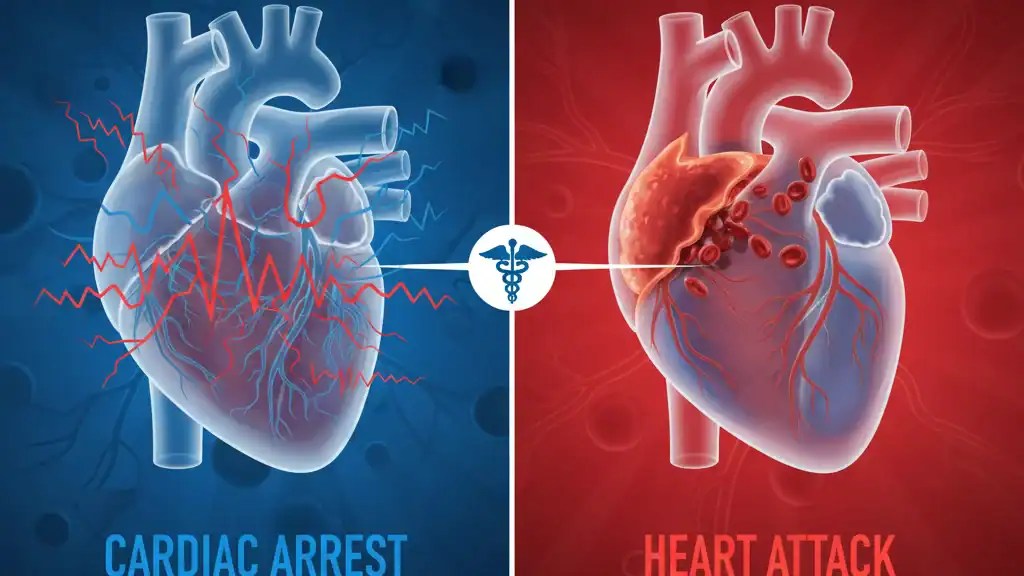
Sudden cardiac arrest is an electrical malfunction of the heart that causes it to stop beating effectively. During cardiac arrest, the heart’s electrical system short-circuits, triggering an abnormal rhythm called ventricular fibrillation. The heart quivers instead of pumping blood, and within seconds, the person loses consciousness, stops breathing, and has no pulse.
Sudden cardiac arrest is not a heart attack. It is a sudden, unexpected loss of heart function that can strike anyone at any age, including young athletes with no prior symptoms of cardiac arrest. Without immediate intervention, including CPR and defibrillation with an automated external defibrillator (AED), death occurs within minutes.
Common Causes of Sudden Cardiac Arrest
Several conditions can trigger sudden cardiac arrest:
- Ventricular fibrillation (V-fib): The most common cause, where the heart’s lower chambers quiver chaotically instead of pumping
- Coronary artery disease: Blocked arteries can create conditions that disrupt the heart’s electrical system
- Cardiomyopathy: Structural changes to the heart muscle that affect electrical conduction
- Inherited heart conditions: Conditions like long QT syndrome, Brugada syndrome, and hypertrophic cardiomyopathy
- Severe physical stress: Intense exercise, major blood loss, severe electrolyte imbalances, or a blow to the chest (commotio cordis)
- Prior heart attack: Scar tissue from a previous heart attack can create abnormal electrical pathways
What Is a Heart Attack?
A heart attack (myocardial infarction) is a circulation problem caused by a blocked artery that cuts off blood flow to a section of the heart muscle. Unlike sudden cardiac arrest, the heart usually continues beating during a heart attack, but the blocked blood supply causes heart tissue to die if not restored quickly.
A heart attack occurs when a buildup of fatty plaque inside a coronary artery ruptures, forming a blood clot that blocks the artery. The longer the artery remains blocked, the more heart muscle is damaged. Prompt medical treatment to restore blood flow is essential to minimize permanent damage.
Common Symptoms of a Heart Attack
Heart attack symptoms often develop gradually over minutes, hours, or even days:
- Chest pain or pressure: A squeezing, fullness, or uncomfortable pressure in the center of the chest that lasts more than a few minutes or comes and goes
- Upper body discomfort: Pain or discomfort spreading to the arms (especially the left arm), back, neck, jaw, or stomach
- Shortness of breath: Difficulty breathing, with or without chest pain
- Cold sweat: Breaking out in a cold, clammy sweat
- Nausea or lightheadedness: Feeling sick to the stomach or dizzy
- Fatigue: Unusual, unexplained tiredness, especially in women
Important: Women are more likely to experience atypical symptoms such as jaw pain, nausea, back pain, and extreme fatigue rather than classic chest pain.
How Are Cardiac Arrest and Heart Attack Different?
The difference between cardiac arrest and heart attack comes down to the underlying mechanism. Cardiac arrest is an electrical problem; a heart attack is a plumbing problem. Here is a side-by-side comparison:
| Factor | Sudden Cardiac Arrest | Heart Attack |
|---|---|---|
| What happens | Heart stops beating (electrical failure) | Blood flow to heart is blocked (circulation failure) |
| Consciousness | Person collapses and becomes unresponsive within seconds | Person is usually conscious and aware |
| Pulse | No pulse | Pulse is present |
| Breathing | Stops breathing or only gasping | Usually still breathing, though may be labored |
| Onset | Sudden, without warning in most cases | Symptoms may develop gradually over minutes to hours |
| Warning signs | Rarely any warning signs beforehand | Often preceded by chest pain, shortness of breath, or fatigue |
| Treatment | Immediate CPR and AED defibrillation | Call 911; aspirin; medical procedures to open blocked artery |
| Survival rate | About 10% overall; up to 38% with early AED use | Over 90% when treated promptly at a hospital |

Can a Heart Attack Lead to Cardiac Arrest?
Yes. A heart attack can trigger sudden cardiac arrest, and this is one of the most important connections between these two conditions. When heart muscle is damaged or starved of oxygen during a heart attack, it can disrupt the heart’s electrical system and cause ventricular fibrillation, leading to cardiac arrest.
This is why time matters so much during a heart attack. The faster a person receives treatment to restore blood flow, the lower the risk of developing a life-threatening arrhythmia that could progress to cardiac arrest. It is also why having an AED available at your workplace or home is critical, even if you are primarily concerned about heart attacks.
Get your team trained in CPR and AED use so they can respond to any cardiac emergency. Call 858-665-2025 to get started.
Why Do AEDs Matter for Sudden Cardiac Arrest?
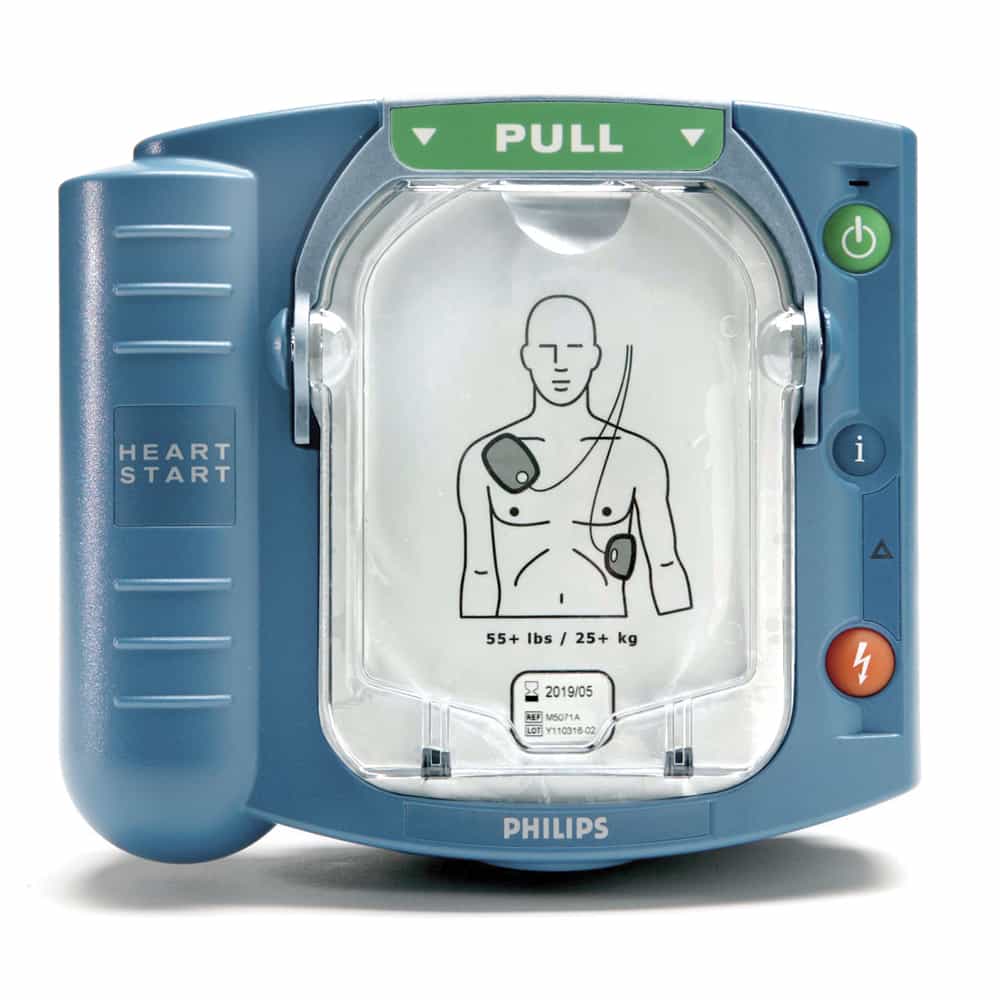
An automated external defibrillator (AED) is the single most important tool for treating sudden cardiac arrest outside of a hospital. An AED delivers an electrical shock that can restore the heart’s normal rhythm during ventricular fibrillation. Without defibrillation, survival decreases by 7 to 10 percent with every minute that passes.
Here is why AEDs are so effective:
- Survival rates quadruple: When an AED is used within the first few minutes, survival rates increase from about 10% to nearly 38%
- Designed for anyone: Modern AEDs provide step-by-step voice instructions and real-time CPR feedback so that even untrained bystanders can use them
- Safe and reliable: AEDs analyze the heart rhythm automatically and will only deliver a shock if one is needed
- Portable and accessible: AEDs are compact enough to be mounted in hallways, gyms, schools, offices, and even kept at home
Response Ready carries all six FDA-approved AED brands, giving you access to expert guidance on choosing the right device for your specific environment.
What Should You Do During a Cardiac Emergency?
Knowing how to respond during a cardiac emergency can mean the difference between life and death. Here is what to do in each situation:
If Someone Collapses and Is Unresponsive (Suspected Cardiac Arrest)
- Call 911 immediately (or have someone call while you start hands-only CPR)
- Begin CPR: Push hard and fast in the center of the chest, at least 2 inches deep, at a rate of 100 to 120 compressions per minute
- Use an AED as soon as one is available: Turn it on, follow the voice prompts, and apply the pads to the bare chest. The AED will analyze the heart rhythm and instruct you whether to deliver a shock
- Continue CPR until emergency medical services (EMS) arrive or the person shows signs of recovery

If Someone Is Experiencing Heart Attack Symptoms
- Call 911 immediately. Do not drive to the hospital yourself
- Chew an aspirin (325 mg or four 81 mg baby aspirin) unless allergic or advised otherwise by a doctor
- Keep the person calm and seated in a comfortable position
- Be ready to perform CPR if the person loses consciousness and stops breathing, as the heart attack may have triggered cardiac arrest
- Have an AED nearby in case the situation escalates to cardiac arrest
Who Is at Risk for Sudden Cardiac Arrest?
Sudden cardiac arrest can happen to anyone, but certain factors increase risk:
- Previous heart attack: The leading risk factor, as scar tissue can create dangerous electrical pathways
- Heart failure or cardiomyopathy: Weakened heart muscle is more prone to arrhythmias
- Family history: Genetic heart conditions can run in families, sometimes causing SCA in young people with no prior symptoms
- Age: Risk increases with age, particularly after 45 for men and 55 for women
- Drug use: Recreational drugs like cocaine and amphetamines can trigger sudden cardiac arrest
- Electrolyte imbalances: Abnormal levels of potassium or magnesium can affect heart rhythm
Organizations that serve populations with elevated cardiac risk, such as schools, fitness centers, workplaces, and churches, should consider implementing an AED program as part of their emergency preparedness plan.
How to Prepare Your Organization for Cardiac Emergencies
Whether you manage a school, office, gym, or community center, here are practical steps to prepare for both heart attacks and sudden cardiac arrest:
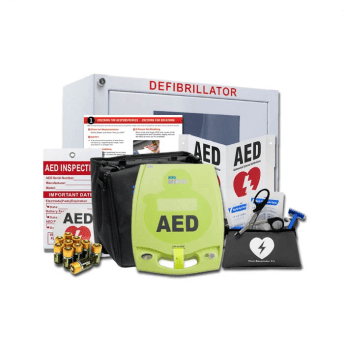
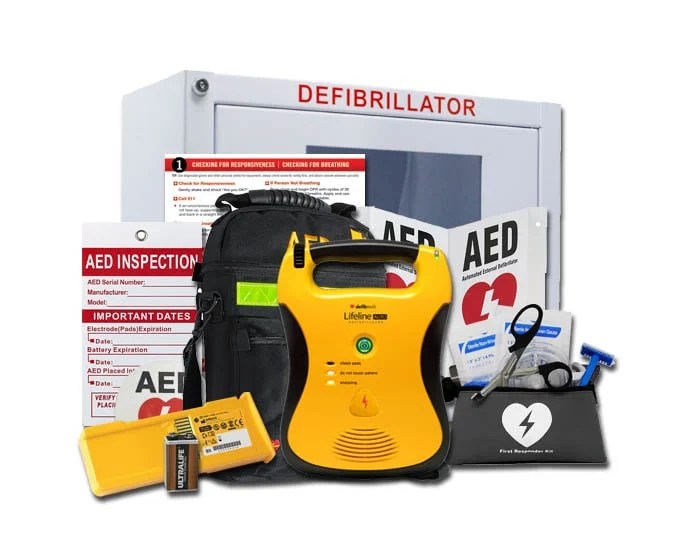
- Install AEDs in accessible locations: Place them where they can be reached within 3 minutes of any point in your facility. AED value packages include everything you need: the device, cabinet, signage, and first responder supplies
- Train your staff: CPR and AED training empowers employees to act quickly and confidently during a cardiac emergency
- Create an emergency action plan: Document who is responsible for calling 911, who retrieves the AED, and who performs CPR
- Maintain your equipment: Ensure AED pads and batteries are current, and conduct regular inspections. AED program management services can automate this process for you
- Know your state requirements: Many states mandate AEDs in schools, gyms, and public buildings. Check the AED requirements for your state
Explore AED options from all six FDA-approved manufacturers and find the right device for your organization. Call 858-665-2025 for expert guidance.
The Numbers Behind Cardiac Arrest and Heart Attack
Understanding the scale of these cardiac emergencies helps explain why preparedness is so important:
- 350,000+ Americans experience sudden cardiac arrest outside of a hospital each year
- 805,000 Americans have a heart attack every year, with one occurring roughly every 40 seconds
- 90% of out-of-hospital cardiac arrest victims die before reaching the hospital
- Survival increases to 38% when a bystander uses an AED before EMS arrival
- Every minute without defibrillation reduces the chance of survival by 7 to 10 percent
- Only about 10% of public places in the United States currently have an AED available
These statistics make it clear that wider AED availability and public education about the difference between cardiac arrest and heart attack are essential to reducing preventable deaths from sudden cardiac arrest. Every organization that places an AED in an accessible location and trains its people to respond is directly contributing to better cardiac emergency outcomes in its community.
Frequently Asked Questions
What is the main difference between cardiac arrest and a heart attack?
Cardiac arrest is an electrical malfunction that causes the heart to stop beating, while a heart attack is a blockage in a coronary artery that restricts blood flow to part of the heart muscle. During cardiac arrest, the person collapses and has no pulse. During a heart attack, the heart continues to beat but part of the muscle is being damaged.
Can you survive sudden cardiac arrest without an AED?
Survival is possible with CPR alone, but chances are significantly lower. CPR without an AED has a survival rate of roughly 10%, while using an AED within the first few minutes increases survival to approximately 38%. The AED is the only device that can correct the dangerous heart rhythm causing cardiac arrest.
How quickly does sudden cardiac arrest cause death?
Without CPR and defibrillation, sudden cardiac arrest causes death within 4 to 10 minutes. Brain damage begins within 4 to 6 minutes of oxygen deprivation. This is why immediate bystander response with CPR and an AED is so critical. Understanding the chain of survival helps explain why every link in the emergency response sequence matters.
Can young, healthy people experience sudden cardiac arrest?
Yes. While sudden cardiac arrest is more common in older adults, it can affect young people and athletes. An estimated 9,500 children and young adults under 18 experience SCA in the United States each year. Inherited heart conditions, structural heart defects, and blows to the chest during sports are common causes in younger individuals.
Are AEDs safe for untrained bystanders to use?
Yes. Modern AEDs are designed for use by anyone, regardless of medical training. They provide clear voice instructions, analyze the heart rhythm automatically, and will only deliver a shock if one is medically appropriate. You cannot accidentally harm someone with an AED.
What causes cardiac arrest in young athletes?
Sudden cardiac arrest in young athletes is most commonly caused by hypertrophic cardiomyopathy (an inherited condition that thickens the heart muscle), coronary artery anomalies, and commotio cordis (a blow to the chest at a critical point in the heart’s electrical cycle). Pre-participation cardiac screening can help identify some of these risks.