What Is an AED and Why Does It Matter?
An Automated External Defibrillator (AED) is a portable medical device that analyzes a person’s heart rhythm and delivers an electrical shock to restore a normal heartbeat during sudden cardiac arrest (SCA). More than 350,000 out-of-hospital cardiac arrests happen in the United States every year, according to the American Heart Association. When a bystander uses an AED within the first few minutes, survival rates can double or even triple. Knowing how to use an AED is one of the most valuable skills any person can have.
AEDs are designed for use by everyday people with zero medical training. The device provides voice prompts and visual instructions that guide you through every step. You do not need to diagnose the heart rhythm yourself because the AED does that automatically. Your job is to follow the prompts, stay calm, and act quickly. Good Samaritan laws in every U.S. state also protect people who use an AED to help someone in cardiac arrest.
How Does an AED Fit Into the Chain of Survival?
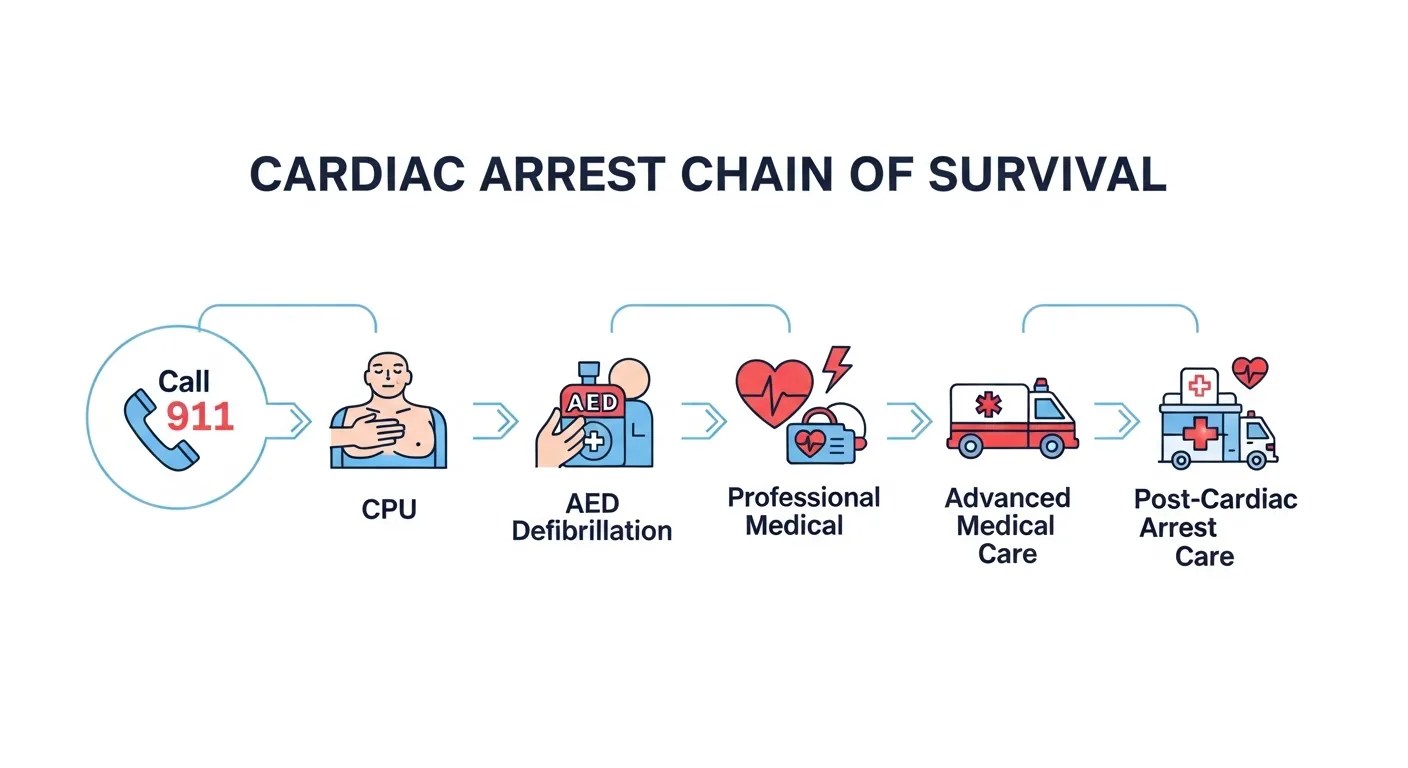
The Chain of Survival is a five-step sequence recommended by the American Heart Association to give a cardiac arrest victim the best chance of surviving. Each link in the chain depends on the one before it, and using an AED is the third critical link. Response Ready provides the AED equipment, training, and support that make this chain possible for organizations and individuals nationwide.
The five links in the Chain of Survival are:
- Early recognition and calling 911 to activate emergency medical services.
- Immediate CPR to maintain blood flow to the brain and heart.
- Rapid defibrillation with an AED to restore a normal heart rhythm.
- Advanced medical care provided by paramedics and emergency physicians.
- Post-cardiac arrest care including hospital treatment and rehabilitation.
For every minute that passes without defibrillation, the chance of survival drops by approximately 7% to 10%. That is why having an AED nearby and knowing how a defibrillator works are so important. CPR alone keeps blood circulating, but only an AED can correct the abnormal heart rhythm that causes most cardiac arrests.
How to Use an AED: Step-by-Step Instructions
Using an AED defibrillator involves a clear sequence of steps that anyone can follow. The entire process typically takes less than two minutes. Here is exactly what to do when someone collapses and you suspect sudden cardiac arrest.
Step 1: Assess the Scene and Call 911
Check that the area is safe for you and the victim. Look for hazards like standing water, exposed wires, or traffic. Tap the person on the shoulder and shout, “Are you okay?” If the person does not respond, is not breathing normally, or is only gasping, call 911 immediately. If someone else is nearby, ask them to call 911 while you begin helping.
Step 2: Start CPR Right Away
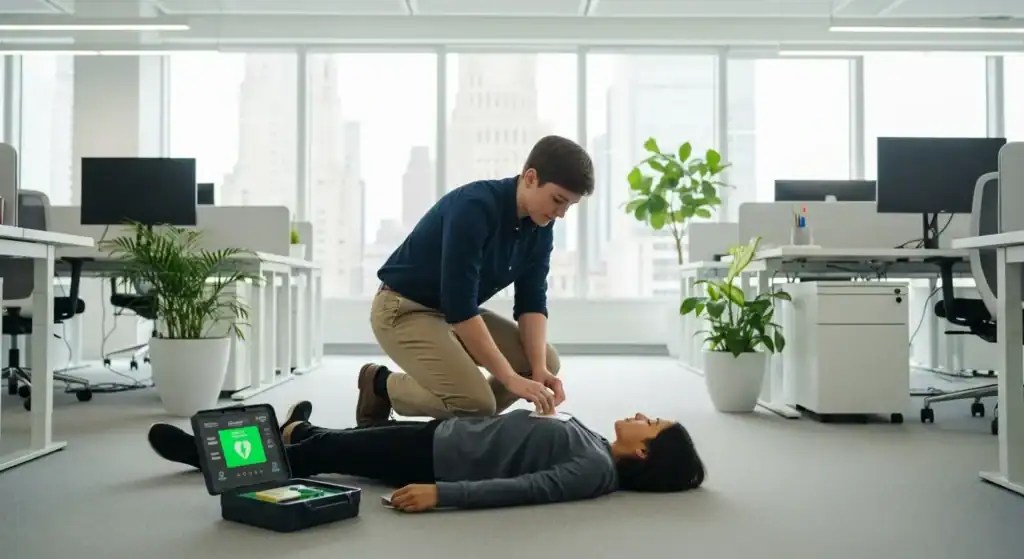
Begin chest compressions while someone retrieves the nearest AED. Place the heel of one hand on the center of the person’s chest (on the lower half of the breastbone). Place your other hand on top and push hard and fast, at least 2 inches deep, at a rate of 100 to 120 compressions per minute. If you are trained in CPR, give 2 rescue breaths after every 30 compressions. If you are not trained, hands-only CPR (compressions without breaths) is still effective and recommended.
Step 3: Turn On the AED
Open the AED case and press the power button. Some AED models turn on automatically when you open the lid. The device will begin providing voice prompts immediately. Listen carefully to each instruction and follow them in order. Every FDA-approved AED sold by Response Ready provides clear, spoken directions designed for first-time users.
Step 4: Expose the Chest and Apply the Pads
Remove or cut away any clothing covering the person’s chest. The chest must be bare and dry for the pads to stick properly. Open the AED pad package and peel the backing off each pad. Each pad has a diagram showing exactly where it goes:
- Pad 1: Place on the upper right side of the chest, just below the collarbone.
- Pad 2: Place on the lower left side of the chest, below the armpit.
Press each pad firmly against the skin to ensure good contact. If the person’s chest is wet, wipe it dry with a towel or cloth before applying the pads. If the person has excessive chest hair that prevents the pads from sticking, use the razor included in most AED kits to shave the area quickly.
Step 5: Let the AED Analyze the Heart Rhythm
Once the pads are in place, the AED will analyze the person’s heart rhythm. During this analysis, make sure nobody is touching the person. Say “Stand clear” loudly to warn anyone nearby. The AED needs a few seconds of undisturbed contact to read the heart rhythm accurately.
Step 6: Deliver the Shock (If Advised)
If the AED detects a shockable rhythm (such as ventricular fibrillation or ventricular tachycardia), it will tell you to press the shock button. Make absolutely sure no one is touching the person before you press the button. Say “Stand clear” one more time, visually confirm that everyone is away, and then press the shock button firmly.
If the AED determines that no shock is needed, it will instruct you to continue CPR. Follow its directions. Not every cardiac arrest involves a shockable rhythm, and the AED is smart enough to know the difference. You cannot accidentally shock someone who does not need it.
Step 7: Continue CPR and Follow AED Prompts
After the shock is delivered (or if no shock was advised), immediately resume CPR. The AED will prompt you to continue compressions and will re-analyze the heart rhythm every two minutes. Keep following the voice prompts until emergency medical services arrive or the person begins to move, breathe normally, or respond.
Do not remove the AED pads, even if the person starts breathing again. Leave them attached until paramedics take over.
How to Use an AED on Children and Infants
AED pad placement differs for children and infants compared to adults. Response Ready carries AED models from all six FDA-approved manufacturers, and most include pediatric pads or a pediatric mode specifically designed for younger patients.
Children (Ages 1 to 8)
Use pediatric AED pads if they are available. Pediatric pads deliver a lower energy dose appropriate for a child’s smaller body. If the AED has a pediatric mode or key switch, activate it before applying the pads. If pediatric pads are not available, use adult pads. Place them in the standard position (upper right chest and lower left side). If the child’s chest is too small for both pads to fit without touching, place one pad on the center of the chest and the other on the center of the back (front-to-back placement).
Infants (Under 1 Year Old)
For infants, always use pediatric pads if available. Place one pad on the center of the infant’s chest and one pad on the center of the infant’s back. Never let the two pads touch each other. If you only have adult pads, you can still use them in the front-to-back position. An AED shock is always better than no treatment at all during cardiac arrest.
Common AED Mistakes to Avoid
Even though AEDs are designed to be simple, first-time rescuers sometimes make errors that can reduce effectiveness. Knowing these common mistakes ahead of time helps you avoid them when seconds count.
- Delaying AED use to keep doing CPR. CPR is critical, but defibrillation is what restores a normal heart rhythm. Retrieve and apply the AED as quickly as possible. If two people are present, one should do CPR while the other gets the AED.
- Placing pads over clothing or jewelry. Pads must go directly on bare, dry skin. Remove necklaces or medical alert pendants from the chest area. Cut through shirts or bras if needed.
- Not pressing pads firmly enough. Loosely applied pads create air gaps that weaken the electrical signal. Press each pad down firmly and smooth out any bubbles or wrinkles.
- Touching the person during analysis or shock. Any contact during analysis can interfere with the reading. During a shock, contact can transfer the electrical current to you. Always shout “Stand clear” and verify visually before pressing the shock button.
- Placing pads on a wet surface. Water conducts electricity and can reduce the shock’s effectiveness or create a safety hazard. Move the person to a dry area if possible, or dry the chest thoroughly before pad placement.
- Removing the pads after one shock cycle. Leave the pads attached even after a successful shock. The AED will continue monitoring and may need to deliver additional shocks.
- Being afraid to use the AED. You cannot make the situation worse by using an AED. The device will not deliver a shock unless one is needed. Doing nothing is the greatest risk during cardiac arrest.
Popular AEDs for Your Organization
Choosing the right AED depends on your environment, budget, and the level of training your team has. Here are some of the most trusted AED models available through Response Ready:
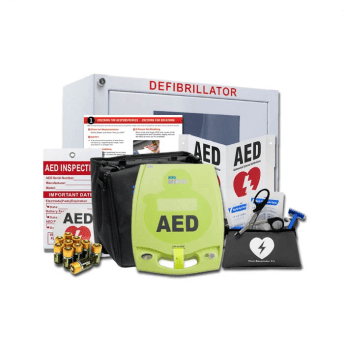
- ZOLL AED 3 delivers real-time CPR feedback through a full-color touchscreen, making it an excellent choice for corporate and healthcare settings.
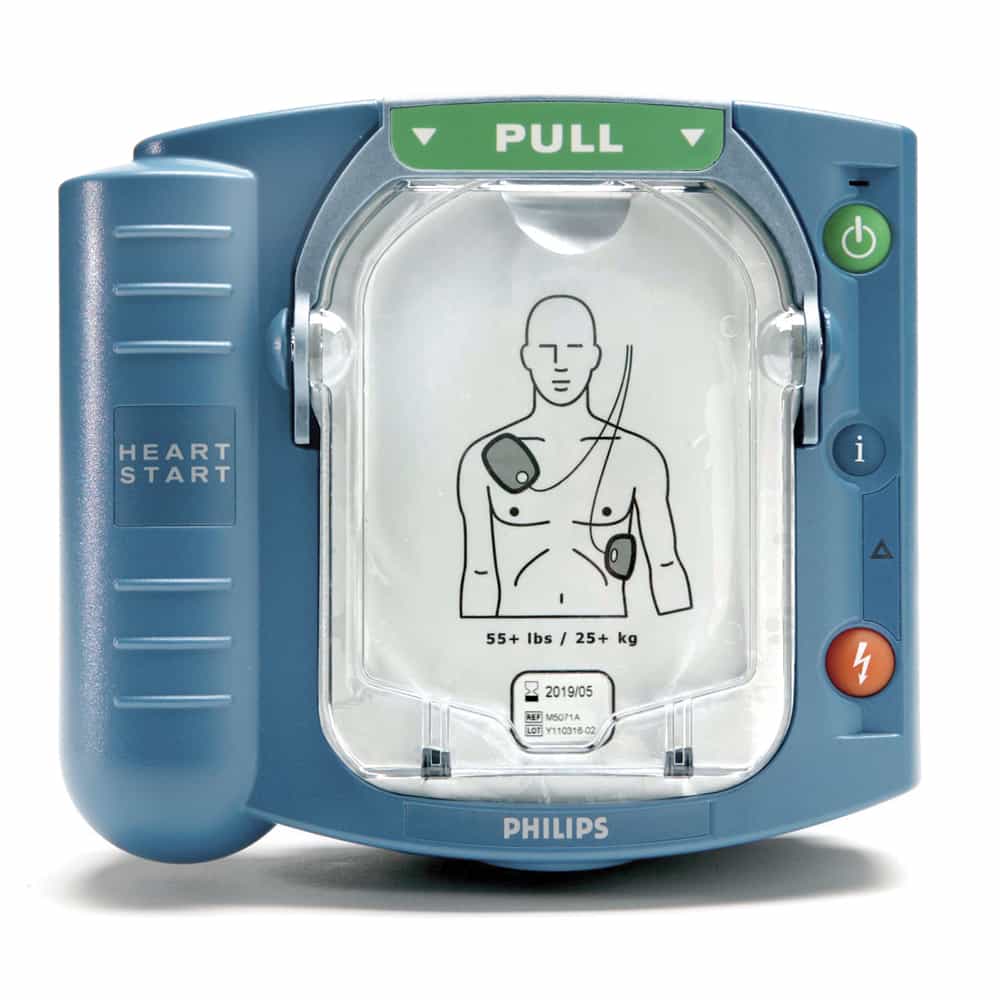
- Philips HeartStart OnSite Value Package bundles everything you need to start an AED program, including cabinet, signage, and carry case.
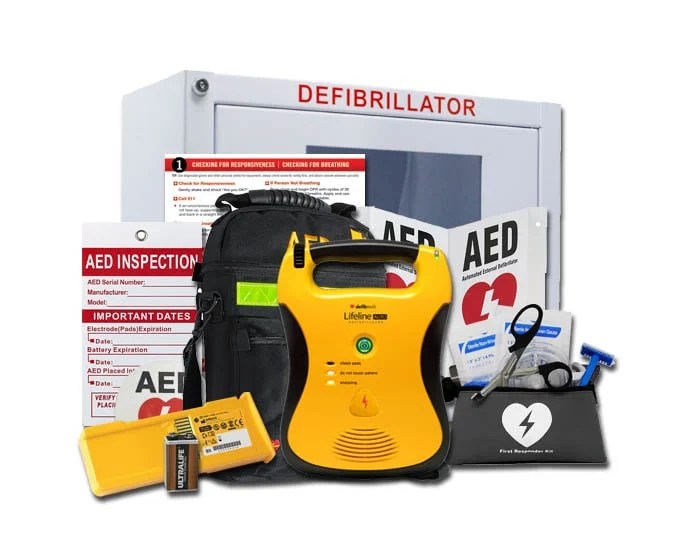
- Defibtech Lifeline AED uses a simple two-button design that works well for locations where rescuers have minimal training.
- HeartSine Samaritan PAD 350P weighs just 2.4 pounds, making it one of the most portable AEDs on the market.
- LIFEPAK CR2 features ClearVoice technology that adapts its coaching based on environmental noise levels.
Need help deciding? Read our complete AED buyer’s guide or call Response Ready at 858-665-2025 for personalized recommendations.
Frequently Asked Questions About Using an AED
Do you need training to use an AED?
No formal training is required to use an AED. Every AED provides voice prompts and visual instructions that guide untrained users through the process. However, taking a CPR and AED certification course builds confidence and helps you respond faster in a real emergency. Response Ready offers nationwide CPR and AED training programs through certified instructors.
Can you hurt someone by using an AED incorrectly?
An AED will only deliver a shock if it detects a shockable heart rhythm. If the person does not need a shock, the AED will not allow one. You cannot accidentally harm someone by using the device. The biggest risk is not using the AED at all.
What if the person has a pacemaker?
If you see or feel a hard lump under the skin on the person’s chest (usually near the collarbone), that may be a pacemaker or implanted defibrillator. Place the AED pads at least one inch away from the device. Do not place a pad directly on top of the pacemaker. The AED will still work effectively.
Can you use an AED on a child?
Yes. Use pediatric pads or a pediatric mode if available. For children ages 1 to 8, pediatric pads are preferred because they deliver a lower energy dose. If pediatric pads are not available, use adult pads. For infants under 1 year, place pads in a front-to-back position on the chest and back.
Where can I find an AED in a public place?
AEDs are commonly located in airports, shopping malls, gyms, schools, office buildings, and other public spaces. Look for wall-mounted AED cabinets marked with a heart symbol or green AED sign. Many buildings list AED locations on their emergency maps. Response Ready helps organizations set up AED programs with proper signage and cabinet placement.
How long does it take for an AED to work?
The AED analysis and shock delivery process takes approximately 10 to 20 seconds once the pads are properly placed. The entire process from turning on the AED to delivering the first shock typically takes under two minutes. Faster AED application leads to better survival outcomes.