- Published
- March 27, 2026
Manual Defibrillator vs. AED: What's the Difference?

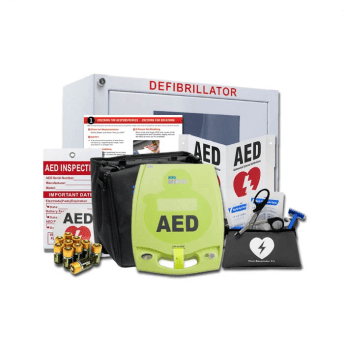
Think of it like this: a professional chef has razor-sharp knives that require skill and training, while your kitchen has a simple, safe vegetable peeler anyone can use. Both tools get a job done, but they’re built for very different users. The same is true when comparing an AED to a manual defibrillator. A manual defibrillator is the chef’s knife—a complex medical instrument for trained doctors and paramedics. An Automated External Defibrillator (AED), however, is the vegetable peeler. It’s a brilliantly simple, safe, and effective tool designed for any bystander to save a life during sudden cardiac arrest. No medical degree required.
Key Takeaways
- An AED is the right tool for the public: These devices are designed for anyone to use, with automated analysis and clear voice prompts that guide you through every step. Manual defibrillators are complex instruments reserved for trained medical professionals.
- Don’t hesitate to act in an emergency: If someone is unresponsive and not breathing normally, call 911 and use an AED. The device is foolproof—it analyzes the heart rhythm and will only advise a shock if it detects a life-threatening condition, so you can’t accidentally harm someone.
- Perform simple checks to stay prepared: Your AED is only life-saving if it works. Make a habit of checking the device’s status indicator and keep track of the expiration dates for the pads and battery to ensure it’s always ready to go.
Understanding Sudden Cardiac Arrest
To appreciate why an AED is such a vital tool, it helps to understand the emergency it’s designed to treat: sudden cardiac arrest (SCA). SCA is a life-threatening condition that can happen to anyone, anywhere, at any time. Unlike what you might see in movies, it’s not always a dramatic, chest-clutching event. It’s an electrical malfunction in the heart that causes it to stop beating unexpectedly. When the heart stops, blood flow to the brain and other vital organs ceases. Without immediate intervention, the outcome is tragically predictable. This is where a bystander with the right knowledge and tools can make all the difference, turning a moment of crisis into a story of survival.
Sudden Cardiac Arrest vs. a Heart Attack
People often use the terms “sudden cardiac arrest” and “heart attack” interchangeably, but they are very different medical emergencies. Think of it this way: a heart attack is a “plumbing” problem, while SCA is an “electrical” problem. A heart attack occurs when a blockage in an artery stops blood from flowing to a part of the heart muscle. The person is usually awake and can describe their symptoms. Sudden cardiac arrest, on the other hand, is caused by a chaotic electrical rhythm that makes the heart quiver uselessly instead of pumping. The person collapses, becomes unresponsive, and stops breathing normally. While a heart attack can sometimes lead to SCA, they are not the same thing.
The Chain of Survival: Steps to Save a Life
Responding to sudden cardiac arrest is a race against time, and success depends on a series of critical actions known as the Chain of Survival. The first link is immediately recognizing the emergency and calling 911. Next, starting high-quality CPR right away keeps oxygen-rich blood flowing to the brain. The third and most crucial link for an electrical problem is rapid defibrillation, which is where an AED comes in. An AED can deliver an electrical shock to reset the heart’s rhythm. These steps are followed by the arrival of advanced medical care from first responders. Every link in this chain is vital, and a bystander’s quick action can significantly improve the chances of survival.
How Defibrillation Restores a Normal Heart Rhythm
When the heart is in a state of ventricular fibrillation—that chaotic, quivering rhythm—it can’t pump blood. Defibrillation is the only thing that can stop it. Both manual defibrillators and AEDs work by sending a controlled electrical shock to the heart. This shock briefly stops all electrical activity, giving the heart’s natural pacemaker a chance to reset and resume a normal, effective rhythm. Modern Automated External Defibrillators are designed to make this process simple. The device analyzes the heart’s rhythm through pads placed on the chest and determines if a shock is needed, guiding the user through the entire process with clear voice instructions.
The Critical 3-10 Minute Window for Success
When someone experiences SCA, every second counts. The chance of survival decreases by about 10% for every minute that passes without defibrillation. The most effective time to deliver a shock is within the first three to ten minutes of collapse. After that, the odds of a successful outcome drop dramatically. Because the average response time for emergency medical services can often be longer than this, having an AED on-site and ready to use is absolutely critical. It bridges the gap between the time of collapse and the arrival of professional help, giving a person the best possible chance to survive.
When a Shock Isn’t the Answer: Unshockable Rhythms
It’s important to know that not all cardiac arrests are treatable with a shock. Some heart rhythms, like asystole (a flatline), are considered “unshockable.” This is where the intelligence of an AED is so reassuring. The device is programmed to analyze the heart’s electrical activity and will only advise a shock if it detects a shockable rhythm like ventricular fibrillation. If no shock is needed, it will tell you to continue CPR. This built-in safety feature makes it impossible for a user to accidentally harm someone. You can act with confidence, knowing the AED will make the right call.
How Does an AED Actually Work?
An AED, or Automated External Defibrillator, is a life-saving device that’s surprisingly simple. Think of it as a smart first aid tool for the heart. When someone experiences sudden cardiac arrest (SCA), their heart’s electrical rhythm becomes chaotic, and it can no longer pump blood to the brain and other vital organs. An AED is a small, portable device designed to analyze that rhythm and, if necessary, deliver a controlled electrical shock to help it reset.
The goal isn’t to “jump-start” a flatlined heart, like you often see in movies. Instead, an AED is used to stop a dangerously chaotic rhythm, giving the heart a chance to resume its normal, effective beat. These devices are specifically designed for bystanders to use during an emergency, often before medical professionals can arrive. They are a critical link in the chain of survival, empowering anyone to step in and make a difference when every second counts. The “automated” part is key—the device does the complex work of analyzing the heart, so you don’t have to. It guides you through every step, making a stressful situation much more manageable. Even without formal training, the device’s instructions are clear enough for anyone to follow, turning a bystander into a first responder.
What Makes an AED So Simple to Use?
The real magic of an AED is its simplicity. It was designed from the ground up for people with no medical background. When you open or turn on the device, it immediately begins speaking to you with clear, calm voice instructions. It will tell you exactly what to do, one step at a time, even if you’ve never had formal CPR & AED training. Most models also include simple diagrams right on the device or the electrode pads themselves, showing you precisely where to place them on the person’s bare chest. You don’t have to guess or worry about making a mistake—the AED walks you through the entire process, from pad placement to standing clear for a shock.
How an AED Knows When to Deliver a Shock
Once the AED pads are in place, the AED takes over the most critical task: analyzing the person’s heart rhythm. The device uses sophisticated software to determine if the rhythm is one that can be corrected by an electrical shock, such as ventricular fibrillation (a chaotic quivering) or ventricular tachycardia (a dangerously fast rhythm). If one of these “shockable” rhythms is detected, the AED will charge itself and tell you to press the shock button. Importantly, it will not deliver a shock if the heart rhythm is normal or if there is no rhythm at all. This built-in safety feature makes it impossible to accidentally harm someone, providing peace of mind for the rescuer.
How Is an AED Different From a Manual Defibrillator: What’s the Difference?
While both an Automated External Defibrillator (AED) and a manual defibrillator are designed to restore a normal heart rhythm during sudden cardiac arrest, they are fundamentally different tools built for different users and situations. Think of it like a point-and-shoot camera versus a professional DSLR. An AED is the point-and-shoot: it’s designed for anyone, regardless of training, to use effectively in an emergency. It automates the most critical steps to make saving a life as simple as possible.
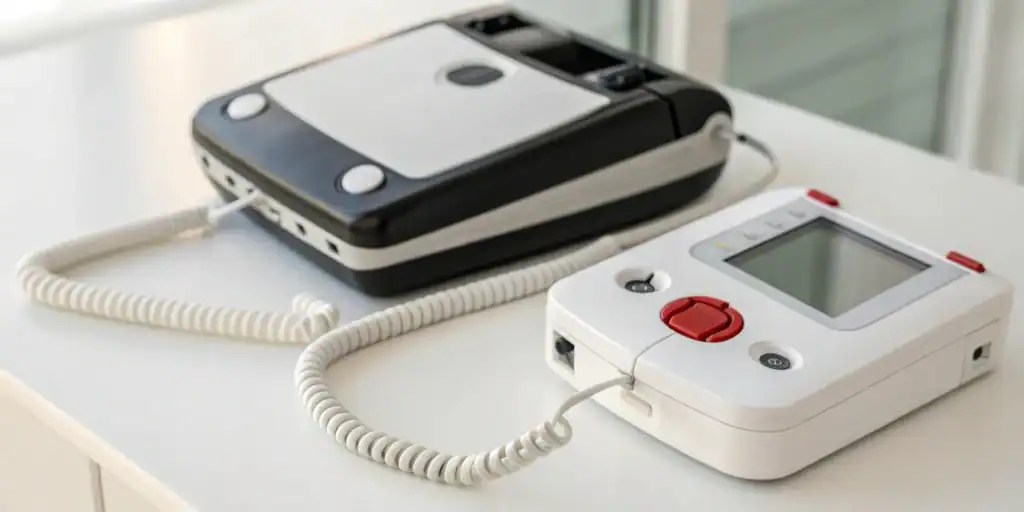
A manual defibrillator, on the other hand, is the professional-grade DSLR. It’s a complex medical instrument intended for trained healthcare providers like paramedics, nurses, and doctors. It offers a wide range of functions that require expert knowledge to operate correctly. The core difference lies in who—or what—is in control. With an AED, the device analyzes the situation and guides the user. With a manual defibrillator, the medical professional is in the driver’s seat, making all the critical decisions. This is why having public access to AEDs for sale is so crucial; they empower everyday people to act confidently while waiting for professional help to arrive.
What Can a Manual Defibrillator Do That an AED Can’t?
A manual defibrillator is much more than just a shock-delivery device. It’s a sophisticated diagnostic tool that gives medical professionals a detailed view of a patient’s heart. Unlike an AED, a manual defibrillator has advanced capabilities, including detailed cardiac monitoring (like an EKG) that allows a doctor to identify the specific type of arrhythmia, or irregular heartbeat, a person is experiencing. Many manual defibrillators also offer functions like synchronized cardioversion for certain arrhythmias and external pacing, which sends small electrical impulses to help a heart that is beating too slowly maintain a steady rhythm. These features allow a trained expert to provide a much broader range of cardiac care right on the spot.
Synchronized Cardioversion for Irregular Rhythms
While an AED is designed to treat the chaotic, life-threatening rhythms of sudden cardiac arrest, a manual defibrillator can address other serious heart rhythm problems. One of its key functions is synchronized cardioversion. This procedure involves delivering a low-energy shock that is timed, or synchronized, with a specific part of the patient’s heartbeat. It’s used to treat certain types of rapid but organized arrhythmias that aren’t causing full cardiac arrest but are still dangerous. A medical professional must first interpret the EKG, identify the specific rhythm, and then choose the correct energy setting and timing. This level of diagnostic control is precisely why it’s a feature for trained experts and not part of a public-access AED, which is built to handle one critical job with total automation.
Transcutaneous Pacing for Slow Heartbeats
Sometimes the heart’s electrical problem isn’t that it’s beating chaotically, but that it’s beating far too slowly—a condition called bradycardia. A manual defibrillator can function as a temporary, external pacemaker through a feature called transcutaneous pacing. In this mode, the device sends small, regular electrical impulses through the pads to stimulate the heart muscle and make it beat at a normal rate. This can be a life-saving bridge until a more permanent solution, like an internal pacemaker, can be implanted. This is another advanced medical intervention that requires a professional to assess the patient and decide on the appropriate pacing rate and electrical current, highlighting the difference between a targeted emergency tool and a comprehensive clinical instrument.
Integrated Vital Signs Monitoring
Beyond just delivering a shock, a manual defibrillator is a powerful, all-in-one patient monitoring system. Paramedics and hospital staff use it to get a complete picture of a patient’s condition. In addition to providing a detailed multi-lead EKG, these devices can measure other critical vital signs, such as blood oxygen levels (SpO2), blood pressure, and respiratory rates. This integrated monitoring allows healthcare providers to see how the patient is responding to treatments in real-time and make informed decisions on the spot. An AED, by contrast, is intentionally focused on a single task: analyzing the heart rhythm and advising a shock if needed. It provides all the necessary tools for a lay rescuer without the complexity of a full diagnostic workstation, which is why our AED packages are designed for straightforward, immediate action.
Comparing Functionality and Required Skill
The biggest difference between the two devices is the level of user intervention required. An AED is designed for simplicity: you turn it on, apply the pads, and follow the voice prompts. The device automatically analyzes the heart’s rhythm and determines if a shock is necessary. If it is, the AED will either deliver the shock automatically or instruct the user to press a button. A manual defibrillator requires the operator to perform these steps themselves. A paramedic or doctor must read and interpret the patient’s EKG on the screen, decide if defibrillation is the right treatment, select the appropriate energy level for the shock, and then deliver it. This complexity is necessary in a clinical setting but makes it completely unsuitable for public use.
The Hands-On Operation of a Manual Defibrillator
Operating a manual defibrillator is an active, multi-step process that relies entirely on the operator’s medical expertise. Unlike an AED that makes decisions for you, a paramedic using a manual device is in complete control. They begin by analyzing the patient’s heart rhythm on a detailed EKG screen, a skill that requires extensive formal training to master. Based on their interpretation, they must decide if the rhythm is “shockable” and if defibrillation is the appropriate treatment. If it is, they then have to manually select the correct energy level for the shock, charge the machine, and deliver the electricity at the precise moment. Every single step—from diagnosis to treatment—is a critical judgment call made by the healthcare professional, not the device itself.
Why Manual Defibrillators Require Expert Training
Using a manual defibrillator effectively requires extensive medical training and professional judgment. Healthcare providers spend years learning how to interpret complex heart rhythms and understand the nuances of cardiac emergencies. They are trained to make split-second decisions about when to shock, how much energy to use, and what other treatments might be needed. This is why you’ll only find manual defibrillators in hospitals and ambulances. In contrast, an AED is designed to remove the guesswork. The required CPR & AED training focuses on building the confidence to act quickly, apply the pads correctly, and follow the device’s simple instructions. The AED handles the complex analysis, empowering anyone to be a first responder.
An Overview of Defibrillator Types
While the term “defibrillator” might bring to mind a single type of device, there are actually several different kinds, each designed for a specific user and situation. The most important distinction is between the devices used by the public and those used by medical professionals or prescribed for high-risk patients. For everyday emergencies in places like offices, schools, and community centers, the Automated External Defibrillator (AED) is the go-to tool. It’s designed for simplicity and empowers anyone to become a first responder. Beyond these public-access devices, there are also more personal, advanced defibrillators prescribed by doctors for individuals with specific heart conditions. These include implantable and wearable devices that provide continuous monitoring and protection. Understanding these categories helps clarify which tool is right for which circumstance, ensuring that the right technology is available when and where it’s needed most.
Automated External Defibrillators (AEDs)
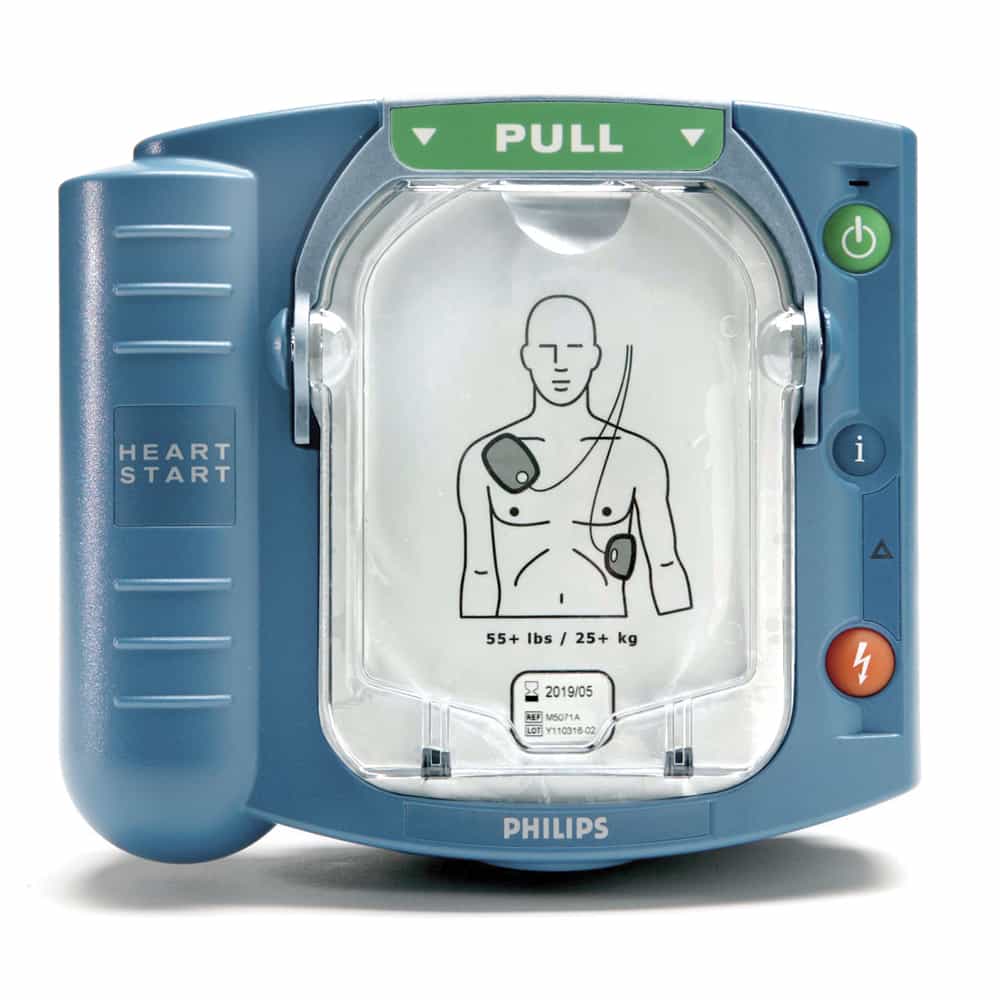
Automated External Defibrillators are the devices you see in wall-mounted cabinets in airports, gyms, and workplaces. They are the only type of defibrillator designed for use by the general public. The core mission of an AED is to make saving a life as straightforward as possible. It automates the most difficult parts of a rescue—analyzing the heart’s rhythm and determining if a shock is needed. The device then provides clear, step-by-step voice instructions to guide the rescuer through the entire process, from applying the electrode pads to performing CPR. This simplicity is intentional; it removes the fear and uncertainty that can cause people to hesitate in an emergency, empowering bystanders to take decisive action in the critical minutes before professional help arrives.
Semi-Automatic vs. Fully Automatic AEDs
When you start looking at different AED models, you’ll notice they are categorized as either semi-automatic or fully automatic. The difference is small but important. A semi-automatic AED, the most common type, will analyze the heart rhythm and, if a shock is needed, instruct the rescuer to press a flashing button to deliver the shock. This gives the rescuer final control, allowing them to ensure everyone is clear of the person before the shock is administered. A fully automatic AED also analyzes the rhythm, but if a shock is required, it will provide a verbal warning and countdown before delivering the shock on its own, without requiring the rescuer to press a button. Both types are incredibly safe and effective, and choosing between them often comes down to personal or organizational preference. Many find that complete AED packages provide everything needed to get started, regardless of the model you choose.
Implantable and Wearable Defibrillators
Unlike public-access AEDs, implantable and wearable defibrillators are personal medical devices prescribed by a doctor for individuals with a high risk of sudden cardiac arrest. These devices are designed to provide constant, automated protection without the need for a bystander. They continuously monitor the patient’s heart rhythm 24/7. If a life-threatening arrhythmia is detected, the device can automatically deliver a corrective electrical shock to restore a normal heartbeat. These defibrillators are not for public use; instead, they serve as a built-in safety net for those with known, serious heart conditions, offering peace of mind and immediate intervention that an external device can’t provide.
Implantable Cardioverter-Defibrillators (ICDs)
An Implantable Cardioverter-Defibrillator (ICD) is a small, battery-powered device that is surgically placed under the skin, usually in the chest or abdomen. Thin wires, called leads, connect the ICD to the heart. This device constantly tracks the heart’s electrical activity. If it detects a dangerously fast or chaotic rhythm, it can do two things: first, it can try to pace the heart back to a normal rhythm with low-energy electrical pulses. If that doesn’t work, it will deliver a high-energy shock to reset the heart. An ICD is a long-term solution for patients with chronic conditions that put them at risk for sudden cardiac arrest, acting as a permanent guardian for their heart.
Wearable Cardioverter-Defibrillators (WCDs)
A Wearable Cardioverter-Defibrillator (WCD) offers similar protection to an ICD but without surgery. It consists of a vest worn under the clothes that contains sensors to monitor the heart and electrode pads to deliver a shock. The vest is connected to a small monitor worn on a belt or shoulder strap. A WCD is typically prescribed as a temporary measure for patients who are at risk for sudden cardiac arrest for a limited time—for example, while recovering from a heart attack or waiting for a heart transplant or ICD implantation. If the WCD detects a life-threatening rhythm, it alerts the user and, if the person becomes unconscious, delivers a corrective shock.
Who Is Qualified to Use Each Device?
When you picture a defibrillator, you might think of a doctor in a hospital shouting “Clear!” before delivering a shock. That device is a manual defibrillator, and it’s worlds apart from the Automated External Defibrillator (AED) you’d find in an airport or office building. The most important difference between them isn’t just the technology—it’s who is meant to use them. One is designed for highly trained medical experts, while the other is built so that any bystander can step in and save a life. Understanding this distinction is key to feeling confident and prepared in an emergency.
Why Anyone Can (and Should) Use an AED
Think of an AED as your calm, clear-headed partner in a crisis. These devices were specifically created for people without any medical background to use effectively. As soon as you open the case and turn it on, an AED provides simple, step-by-step voice instructions and visual guides. It tells you exactly where to place the electrode pads and what to do next. The most brilliant part? The device analyzes the person’s heart rhythm on its own and determines if a shock is actually needed. It will not deliver a shock unless it detects a life-threatening arrhythmia, which removes any guesswork and makes the process incredibly safe. They are truly public devices, designed to empower any bystander to become a first responder.
The Professionals Who Use Manual Defibrillators
Manual defibrillators, on the other hand, are complex medical instruments intended only for trained healthcare professionals like paramedics, nurses, and doctors. Unlike an AED, a manual defibrillator doesn’t make decisions for the user. The operator must read and interpret the patient’s electrocardiogram (ECG), diagnose the specific heart problem, and then use their professional judgment to select the appropriate energy level for the shock. This level of analysis and decision-making requires extensive medical training and a deep understanding of cardiac emergencies. In the hands of a layperson, a manual defibrillator would be ineffective and potentially dangerous, which is why you’ll only find them in hospitals and ambulances.
Advanced Training: The ACLS Certification Requirement
The expertise needed to operate a manual defibrillator isn’t something you pick up in a standard first aid class. Healthcare professionals who use these devices are required to have advanced medical training, typically an Advanced Cardiovascular Life Support (ACLS) certification. This intensive course goes deep into reading complex heart rhythms from an ECG, understanding emergency cardiac medications, and making split-second clinical judgments. The operator is responsible for diagnosing the problem and manually selecting the right energy level for the shock—a high-stakes decision that requires years of practice. This is the fundamental reason these devices are reserved for clinical settings, whereas an AED is designed to remove that burden of analysis, empowering anyone to act with confidence.
How to Use an AED in an Emergency
Knowing how to respond during a cardiac emergency can make all the difference. While the situation is stressful, an Automated External Defibrillator (AED) is designed to be your calm, clear guide. These devices are built for bystanders, meaning you don’t need a medical degree to use one. They provide simple voice prompts and visual cues to walk you through every step, from placing the pads to delivering a shock.
The most important thing to remember is that acting is always better than doing nothing. An AED will not deliver a shock unless it detects a life-threatening heart rhythm, so you can’t accidentally harm someone with it. Your willingness to step in and use an available AED could save a life. The device handles the complex analysis; all you have to do is follow its lead.
Recognizing the Signs of Sudden Cardiac Arrest
The first step is recognizing when an AED is needed. Sudden Cardiac Arrest (SCA) can be identified by a few clear signs. If you find someone who has collapsed, check for a response. Tap them on the shoulder and shout, “Are you okay?” If they are unresponsive and are not breathing or are only gasping for air (this is called agonal breathing and is not normal), it’s time to act.
This is the critical moment to call 911, start CPR, and send someone to get the nearest AED. Don’t delay. In cases of SCA, the heart’s electrical activity is chaotic, and it can no longer pump blood effectively. An AED is the only thing that can restore a normal rhythm. Building the confidence to recognize these signs is a key part of being prepared, which is why CPR and AED training is so valuable.
Using an AED: A Simple Step-by-Step Guide
Once you have the AED, the process is straightforward. Modern AED packages are designed for anyone to use, regardless of training.
- Turn on the AED. As soon as it’s on, it will begin speaking to you with clear, calm instructions.
- Expose the person’s chest and apply the pads. The pads have diagrams showing exactly where they go—one on the upper right side of the chest and the other on the lower left side.
- Plug the pad connector into the AED. The device will tell you when to do this.
- Let the AED analyze. It will instruct you to stop CPR and ensure no one is touching the person. The device is analyzing the heart’s rhythm to determine if a shock is needed.
- Deliver a shock, if advised. If a shock is necessary, the AED will tell you to press the flashing shock button. Make sure everyone is standing clear before you do.
- Continue CPR. After the shock, the AED will prompt you to resume chest compressions until emergency services arrive.
Common AED Myths, Busted
Hesitation during an emergency is often fueled by myths. Let’s clear a few up so you can act with confidence.
One common fear is that you could hurt someone. The truth is, an AED will only advise a shock if it detects a specific, life-threatening arrhythmia. It will not shock a person with a normal heart rhythm. The greatest danger in a cardiac arrest situation is inaction.
Another myth is that only medical professionals should use AEDs. This is completely false. AEDs are specifically designed for public use by people with no medical background. The device does the thinking for you, providing step-by-step instructions for everything. While training builds confidence, it’s not a prerequisite for saving a life. The simple design empowers any bystander to become a first responder.
Seamless Handoff to Professional Responders
Using an AED isn’t just about filling the time until help arrives—it’s about becoming the first, critical link in the chain of survival. When you step in to use an AED, you are initiating life-saving care that perfectly complements the work of professional responders. The device guides you to perform the two most important actions for a cardiac arrest victim: delivering CPR and providing a defibrillation shock if needed. These are the exact steps that paramedics would take upon arrival. By acting quickly, you create a vital bridge between the moment of collapse and the start of advanced medical care, giving the person the best possible chance of survival. You’re not just a bystander; you’re an essential part of the rescue team.
Once emergency services arrive, they can take over care smoothly and efficiently, building on the foundation you’ve already established. They can see that an AED has been used and can immediately move on to administering medications or providing other advanced treatments. This seamless transition is incredibly important when every second counts. This is why having public access to AEDs is so crucial; they empower everyday people to act confidently and effectively, ensuring that life-saving care begins long before an ambulance can reach the scene. Your willingness to act, combined with the AED’s simple guidance, creates a powerful handoff that gives professional responders a head start in saving a life.
Why Public AEDs Are So Important
When sudden cardiac arrest strikes, the clock starts ticking immediately. The difference between life and death often comes down to what happens in the first few minutes, long before professional help can arrive. This is where public access to Automated External Defibrillators (AEDs) becomes so critical. Placing these devices in schools, offices, gyms, and community centers puts life-saving technology into the hands of everyday people. Having an AED nearby means that a coworker, a fellow gym member, or even a stranger can step in and provide the immediate care needed to restore a normal heart rhythm. It transforms bystanders from helpless witnesses into active, capable first responders, creating a stronger, more resilient community for everyone.
The Real-World Impact on Survival Rates
The numbers don’t lie: quick action with an AED dramatically changes outcomes. Every minute that passes without CPR or defibrillation decreases the chance of survival from cardiac arrest by about 10%. When you consider that the average response time for emergency services can be several minutes, the need for immediate intervention is clear. When a bystander steps in and uses an AED, the patient’s chance of survival can increase by as much as 300 percent. This incredible statistic shows just how powerful these devices are. They bridge the crucial gap between the moment a person collapses and the moment medical professionals take over, giving the heart a chance to reset and continue functioning.
The Statistics: How AEDs Change Outcomes
Let’s put the numbers into perspective. When someone has a sudden cardiac arrest, their chance of survival drops by about 10% for every minute that passes without defibrillation. Considering that the average emergency response time is 8 to 12 minutes in many areas, the outlook can be grim. This is where a bystander with an AED changes everything. When an AED is used before professional help arrives, survival rates can leap from under 10% to over 40%. This isn’t just a slight improvement—it’s a monumental shift that completely changes the odds. It proves that making AEDs publicly accessible isn’t just a good idea; it’s a critical strategy that directly translates into more lives saved.
Giving Bystanders the Confidence to Act
One of the biggest myths about defibrillators is that you need to be a doctor or paramedic to use one. The truth is, AEDs are designed for easy usage by anyone, regardless of their medical background. These smart devices provide clear, calm voice instructions and visual diagrams to walk you through every step, from placing the pads to delivering a shock. You don’t have to worry about making a mistake, either. An AED analyzes the person’s heart rhythm and will only advise and deliver a shock if it detects a life-threatening arrhythmia. This built-in safety feature makes it impossible to accidentally harm someone, removing the guesswork and empowering you to act with confidence when it matters most.
Which Defibrillator Is Right for Your Needs?
Deciding on the right defibrillator comes down to one key question: who will be using it? For most people, homes, and public spaces, the answer is always an Automated External Defibrillator (AED). These devices are specifically designed for bystanders without medical training to use during an emergency. They automate the most critical steps, making it possible for anyone to deliver life-saving care.
Manual defibrillators, on the other hand, are complex medical instruments intended only for trained healthcare professionals like paramedics, nurses, and doctors. They require the user to interpret cardiac rhythms and make clinical decisions, which is far beyond the scope of a layperson. For your home, office, school, or community center, an AED is the safe, effective, and appropriate choice. It provides the confidence and simplicity needed to act decisively when every second counts.
Should You Get an AED for Your Home or Office?
If you’re looking to prepare your home or organization for a cardiac emergency, an AED is what you need. These devices are designed for ease of use, with clear, calm voice instructions and visual guides that walk you through every step. You can find AEDs for sale that are compact, lightweight, and require minimal maintenance, making them perfect for storing in a central location at home, in a vehicle, or in a public building. The FDA has approved these devices for over-the-counter purchase, so you don’t need a prescription to get one. Having an AED on hand empowers you to be a first responder for your family, colleagues, or community members.
When Is a Manual Defibrillator the Right Choice?
A manual defibrillator is a tool for the pros. You’ll find these in hospitals and ambulances, where trained medical staff use them to treat complex cardiac events. Unlike an AED, a manual defibrillator requires the operator to read and interpret an electrocardiogram (ECG), diagnose the specific arrhythmia, and manually select the right energy level to deliver a shock. This level of intervention is critical in a clinical setting but is completely unnecessary—and unsafe—in the hands of an untrained user. For this reason, manual defibrillators are only operated by professionals who have undergone extensive medical training and certification.
What to Look for When Buying an AED
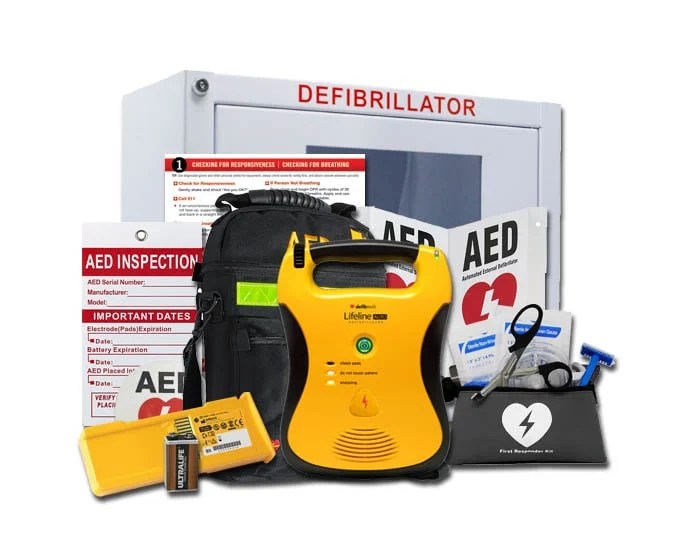
When selecting an AED, focus on features that build confidence and ensure reliability. A great AED should provide simple, step-by-step voice prompts and clear visual diagrams that guide you from placing the pads to delivering a shock. Many modern devices can also give real-time feedback on CPR, helping you maintain the correct rate and depth of chest compressions. Look for AED packages that include everything you need, like a carrying case, spare pads, and a first-aid kit. Ultimately, the best AED is one that is intuitive and straightforward, removing any guesswork so you can act quickly and effectively.
Understanding the Costs and Practical Considerations
Let’s be practical: an AED is a significant investment, but it’s one of the most important you can make for the safety of your family, employees, or community. Beyond the initial purchase, there are ongoing costs to consider, like replacing the AED pads and batteries every few years to ensure the device is always ready. When you weigh these expenses against the potential to save a life—knowing that immediate defibrillation can increase survival chances by up to 300 percent—the value becomes clear. For organizations looking for a flexible and budget-friendly way to stay prepared, options like an AED rental program can provide a complete solution without the large upfront cost. Ultimately, the price of an AED is measured not just in dollars, but in the peace of mind that comes from being equipped to act when it matters most.
How to Keep Your AED Ready for Action
An Automated External Defibrillator (AED) is one of the most important pieces of safety equipment you can have, but it only works if it’s ready when you need it. Think of it like the battery in a smoke detector—it needs a little attention to do its job properly. The good news is that maintaining an AED is simple and doesn’t require any special technical skills. Most modern AEDs even perform regular self-tests and will alert you with a chirp or a visual signal if something needs attention.
A few simple checks can ensure your device is prepared to save a life. This involves knowing where your AED is, making sure its essential components are up to date, and following the manufacturer’s guidelines. By creating a simple routine, you can have confidence that your AED is ready to go at a moment’s notice. Taking these small steps provides peace of mind and ensures you’re truly prepared for an emergency.
Your Simple AED Maintenance Checklist
Keeping your AED in working order is straightforward. First, make sure it’s stored in a visible and easily accessible location, and that family members or colleagues know where to find it. You should also register your device with the manufacturer. This allows them to notify you of any important safety alerts or recalls. Most importantly, get into the habit of checking the device’s status indicator regularly. Most AEDs have a small light or symbol that shows it has passed its latest self-test and is ready for use. If the indicator shows an error, consult the user manual to troubleshoot the issue. Following the manufacturer’s instructions is the best way to keep your device functioning correctly for years to come.
Knowing When to Replace AED Pads and Batteries
The two most critical components to monitor are the electrode pads and the battery, as both have expiration dates. AED pads are for single use only and must be replaced after any deployment, or once they expire—typically every two to four years. It’s a great idea to keep a spare set of pads with your device so you’re always prepared. Similarly, AED batteries don’t last forever and usually need to be replaced every two to five years, depending on the model. The expiration dates for both the pads and the battery are clearly marked on the packaging. Set a calendar reminder to check these dates annually so you can order replacements before they expire and ensure your AED is always ready to help.
Ready to take action? Browse our AED selection at Response Ready.
Related Articles
- What does manual defibrillator mean? — Response Ready
- Certified AED Defibrillators for Workplace Safety — Response Ready
While understanding the difference between AEDs and manual defibrillators is important, many people also wonder how pacemakers compare to defibrillators. These are fundamentally different devices that address opposite heart rhythm problems.
Frequently Asked Questions
What if I make a mistake? Can I accidentally shock someone who doesn’t need it? This is the most common fear, and the answer is a reassuring no. An AED is a smart device that makes the critical decisions for you. It will analyze the person’s heart rhythm and will only advise a shock if it detects a specific, life-threatening electrical problem. It is physically impossible for the device to deliver a shock to someone with a normal heartbeat or no heartbeat at all. The only real mistake you can make in a cardiac emergency is doing nothing.
Do I need special training to use an AED? While CPR and AED training is fantastic for building confidence, you do not need to be certified to use one to save a life. AEDs are specifically designed for untrained bystanders. The moment you turn it on, it begins speaking to you with clear, simple instructions that guide you through every step of the process. Just follow its lead.
Can an AED be used on a child or infant? Yes, but it’s important to use the correct equipment if it’s available. Most AEDs have separate, smaller pediatric pads designed for children under 8 years old or weighing less than 55 pounds. These pads deliver a lower-energy shock. If you don’t have pediatric pads, you can use the adult pads, but be sure to follow the placement diagrams carefully to ensure they don’t touch each other.
If an AED is available, should I use it right away or wait for the paramedics? You should use the AED as soon as it arrives. Every minute without defibrillation dramatically decreases a person’s chance of survival. Public access AEDs are designed to bridge the critical time gap between when a person collapses and when professional medical help gets there. Your first steps should always be to call 911, start CPR, and use the AED as soon as you can get your hands on it.
Once I buy an AED, what’s the most important thing to remember about maintenance? The most critical task is to keep track of the expiration dates on your electrode pads and battery. The pads have a gel that dries out over time, and the battery will eventually lose its charge. These components typically need to be replaced every two to five years, even if the AED is never used. The best way to stay on top of this is to set a recurring calendar reminder to check the dates and order replacements before they expire.
Disclaimer for information purposes only:
The information provided on this website is intended for general educational and informational purposes only. It is not medical advice and should not be used as a substitute for professional diagnosis, treatment, or care. Always consult a qualified healthcare or medical professional regarding any health-related questions or concerns.
While we strive to ensure the information shared is accurate and up to date, no guarantees are made regarding completeness, accuracy, or applicability to any individual situation. Use of this content is at the reader’s sole discretion and risk.
This website is part of the Response Ready family of emergency preparedness and training resources, including CPR & first aid training and compliance services, AED sales and program support, AED program management software, and medical oversight solutions provided through our affiliated platforms:
• CPR1.com
• AEDLeader.com
• AEDTotalSolution.com
• MDSIMedical.com
By accessing or using this website, you agree to release, indemnify, and hold harmless the website owners, authors, contributors, and affiliated entities from any claims, losses, damages, or liabilities arising from the use or reliance on the information presented.