- Published
- March 25, 2026
Manual override vs semi automatic AEDs which is right for your team


As a dedicated athletic trainer, onsite nurse, or corporate response team leader, you carry the vital responsibility of preparedness. When evaluating automated external defibrillators for your facility, a common question arises, should your team opt for a device with manual override capabilities or stick with the proven simplicity of a semi automatic AED? This decision isn’t just about features, it’s about optimizing response in high pressure situations, where every second counts and confidence is paramount.
The critical role of AEDs in sudden cardiac arrest
Sudden cardiac arrest (SCA) remains a leading cause of death, often striking without warning. The American Heart Association (AHA) reports that survival rates decrease by a staggering 7 to 10 percent every minute without defibrillation. With 80 to 85 percent of SCAs occurring outside of a hospital setting, frequently at home or in community spaces, quick action from bystanders is essential. Integrating bystander cardiopulmonary resuscitation (CPR) with defibrillation within three to five minutes can dramatically increase survival rates to between 40 and 70 percent. While the overall survival rate for SCA is only about 10 percent, public access defibrillation programs have been shown to improve these rates to 38 to 50 percent, highlighting the profound impact of readily available AEDs.
Understanding semi automatic AEDs
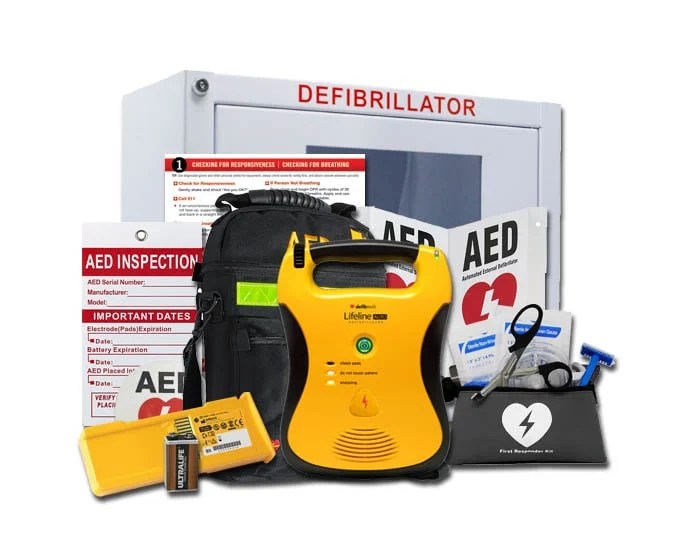
Semi automatic AEDs are the most common type found in public access defibrillation programs. They are specifically designed for ease of use, requiring minimal training, making them ideal for the general public and trained responders alike. When activated, these devices provide clear voice prompts and visual cues that guide the user through each step of the rescue process. After electrodes are placed on the patient’s chest, the semi automatic AED automatically analyzes the heart’s rhythm. If a shockable rhythm is detected, the device will advise the user to press a clearly marked shock button. This critical feature helps reduce user error in extremely stressful emergency situations, a benefit widely acknowledged by organizations like the Emergency Medicine Journal. Studies have even shown that lay rescuers can successfully use semi automatic AEDs up to 90 percent of the time, demonstrating their effectiveness and user friendliness.
Understanding manual override or professional AEDs
In contrast, manual override AEDs, often referred to as professional defibrillators, are typically used in clinical environments like hospitals and ambulances. These devices require extensive training and expertise, as they allow medical professionals to manually override settings, select specific energy levels for defibrillation, and interpret complex electrocardiogram (ECG) readings. While offering greater control, this complexity is reserved for highly skilled medical personnel who have received specialized training. For most public access scenarios, the added complexity of a manual device can introduce unnecessary delays and potential errors, especially under the immense pressure of a cardiac emergency.
The trained responder’s dilemma: control versus simplicity
For athletic trainers, onsite nurses, and corporate response teams, the choice between manual override and semi automatic AEDs often comes down to a perceived trade off between control and simplicity. As trained professionals, there’s a natural inclination to desire maximum control over a medical intervention. However, in the high stress environment of an actual sudden cardiac arrest, simplicity can be your greatest asset.
Even for highly trained individuals, cognitive function can be impacted by adrenaline and urgency. The American Heart Association emphasizes that semi automatic AEDs, with their automated analysis and clear prompts, streamline the decision making process, allowing responders to focus on chest compressions and patient care without needing to interpret complex rhythms. In fact, research published in the Journal of Emergency Medical Services indicates that trained medical personnel can use semi automatic AEDs just as effectively as manual devices in many scenarios, often with fewer procedural errors. The device’s ability to correctly identify shockable rhythms over 90 percent of the time provides a robust, evidence based foundation for its automated recommendations.
Key considerations for your team’s AED choice
When deciding which AED is right for your school, community center, or small business, consider these crucial factors:
Team skill level and training
While your team may be trained in CPR and AED use, the level of continuous, advanced training required for a manual device is significantly higher than for a semi automatic one. Most organizations find it more practical and cost effective to ensure comprehensive semi automatic AED training for all potential responders, especially considering how easily a semi automatic AED guides even a first time user through the process. Response Ready offers accessible CPR and AED training courses available both online and in person to ensure your team is confident and prepared.
Emergency environment
In public or semi public settings like schools, sports facilities, or offices, the priority is to deliver a life saving shock as quickly and safely as possible. These environments benefit immensely from devices designed for broad usability. Complex manual devices are better suited for controlled clinical environments where dedicated medical staff are constantly present.
Ease of use under pressure
The inherent design of semi automatic AEDs to reduce user cognitive load during an emergency cannot be overstated. Voice commands and visual prompts provide a guided experience, ensuring critical steps are not missed, which is vital when a patient’s life hangs in the balance.
Compliance and ongoing management
Owning an AED involves more than just the initial purchase. Regulatory compliance, device readiness checks, and maintenance are ongoing responsibilities. Response Ready’s AED program management services, including real time device monitoring and automated reminders, simplify these tasks. Our mobile app allows users to record AED readiness checks with ease, ensuring devices are always operational, a feature consistently praised by users for its convenience and intuitiveness.
Cost effectiveness
Generally, semi automatic AEDs are more affordable than their manual counterparts, not just in initial purchase price but also in ongoing training and maintenance. For homes, schools, and small businesses, this can be a significant factor in equipping multiple locations. Response Ready offers clear, upfront pricing and free standard shipping on any AED purchase over $99, alongside a one year price promise for peace of mind.
Why a top tier semi automatic AED is often the recommended standard
For the vast majority of public access and even corporate settings, the expert backed recommendation leans strongly towards a top tier semi automatic AED. These devices strike the ideal balance between sophistication and simplicity, providing the crucial technology needed to save a life without demanding the advanced interpretive skills required by manual defibrillators. They empower trained responders, and even lay rescuers, to act confidently and effectively.
Response Ready understands these nuances. We specialize in making life saving technology accessible and affordable. Our carefully curated selection of FDA approved devices includes user friendly models that are perfect for homes, schools, community centers, and small businesses. We simplify the entire process, from helping you select the right device to providing comprehensive support services.
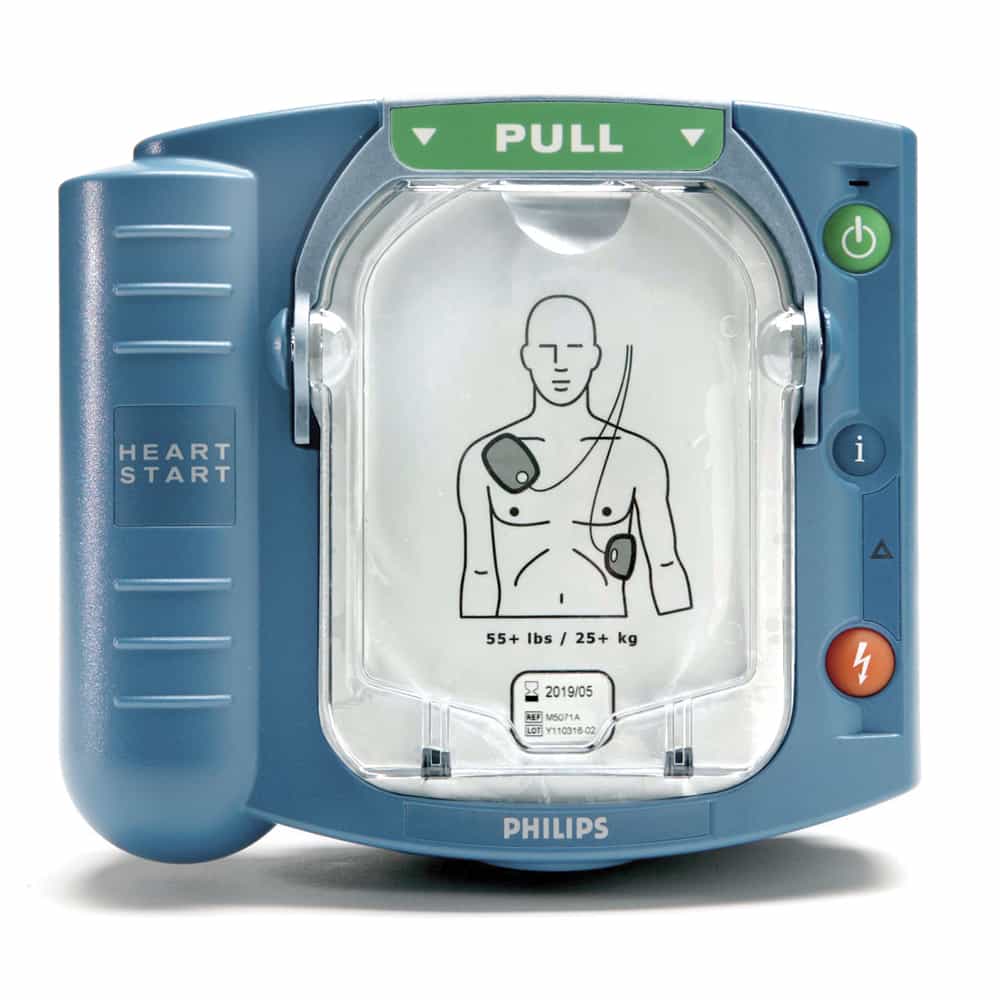
For teams seeking robust performance with user friendly design, we highly recommend exploring options like the Cardiac Science Powerheart G5 AED Value Package. This device combines real time CPR feedback with automatic shock delivery, making it incredibly intuitive. Another excellent choice is the Philips HeartStart OnSite AED, renowned for its compact design and clear voice instructions, guiding users through every step of a rescue. Both models exemplify the balance of advanced technology and ease of use that is crucial in emergency situations. You can find these and other reliable devices in our online superstore.
Response Ready your trusted partner in preparedness
Choosing an AED for your team is a significant decision. At Response Ready, we pride ourselves on being more than just a vendor, we are your trusted advisor in emergency preparedness. We offer a wide selection of AEDs and essential accessories, including replacement pads, batteries, and carrying cases. Beyond sales, our comprehensive AED program management ensures your devices remain compliant and ready, featuring real time device monitoring, automated maintenance reminders, and expert medical oversight. Our commitment to you includes a 30 day money back guarantee on unopened items and a secure shopping experience with https encryption.
For personalized support and expert recommendations, please do not hesitate to reach out via live chat, email. We’re here to guide you through every step of the purchase process, ensuring your team has the ideal solution to save lives.
Frequently asked questions
Q: Is a manual override AED truly necessary for trained responders like athletic trainers?
A: No, for most settings, a manual override AED is not necessary and can even introduce complexity during a stressful event. While trained responders appreciate control, semi automatic AEDs are designed to guide users effectively and reliably, even under pressure. Studies show that trained personnel use semi automatic devices just as effectively as manual ones in many scenarios, often with fewer errors, as the device automatically analyzes the heart rhythm.
Q: Can a semi automatic AED be used by untrained individuals if needed?
A: Yes, semi automatic AEDs are specifically designed for ease of use by both trained and untrained individuals. They provide clear voice prompts and visual cues that guide the user step by step, from applying pads to delivering a shock if advised. This user friendly design is why they are recommended for public access defibrillation programs in schools, community centers, and small businesses.
Q: How do semi automatic AEDs ensure accuracy if they are so simple to use?
A: Semi automatic AEDs incorporate advanced algorithms that analyze the patient’s heart rhythm with high accuracy. The American Heart Association states that AEDs correctly identify shockable rhythms over 90 percent of the time. This automated analysis means the device makes the critical shock decision, minimizing human error in a time sensitive situation.
Q: What ongoing support does Response Ready offer for AED management?
A: Response Ready offers comprehensive AED program management, training, and maintenance services. This includes real time device monitoring, automated compliance reminders, and access to our convenient mobile app for easy readiness checks. We also provide CPR and AED training courses to ensure your device is always emergency ready.
Q: Are Response Ready’s AEDs suitable for schools and small businesses with budget constraints?
A: Absolutely. Response Ready specializes in making life saving technology accessible and affordable for all. We offer a carefully curated selection of FDA approved devices and accessories at competitive prices.. Our value packages provide complete solutions, and we even offer flexible rental options for short term needs or trial periods.
Disclaimer for information purposes only:
The information provided on this website is intended for general educational and informational purposes only. It is not medical advice and should not be used as a substitute for professional diagnosis, treatment, or care. Always consult a qualified healthcare or medical professional regarding any health-related questions or concerns.
While we strive to ensure the information shared is accurate and up to date, no guarantees are made regarding completeness, accuracy, or applicability to any individual situation. Use of this content is at the reader’s sole discretion and risk.
This website is part of the Response Ready family of emergency preparedness and training resources, including CPR & first aid training and compliance services, AED sales and program support, AED program management software, and medical oversight solutions provided through our affiliated platforms:
• CPR1.com
• AEDLeader.com
• AEDTotalSolution.com
• MDSIMedical.com
By accessing or using this website, you agree to release, indemnify, and hold harmless the website owners, authors, contributors, and affiliated entities from any claims, losses, damages, or liabilities arising from the use or reliance on the information presented.