- Published
- March 25, 2026
6 Best AED Units for Sports Stadiums & Arenas

When you’re responsible for safety in a busy gym, a sprawling sports arena, or a complex industrial site, choosing an Automated External Defibrillator (AED) is a serious task. You aren’t just buying a device; you’re investing in a lifeline that must perform flawlessly under pressure. Finding the right aed units for sports stadiums or the best aed solutions for gyms requires more than a simple product comparison. These demanding settings need AEDs with specific features to ensure a rapid response. We’ll provide the authoritative guidance you need to make a confident, life-saving decision.
What is Sudden Cardiac Arrest in High-Risk Venues?
Sudden cardiac arrest (SCA) is a leading cause of death, affecting over 326,000 individuals outside of a hospital each year in the United States alone. It is a terrifying medical emergency where the heart abruptly stops beating effectively, often without warning. Unlike a heart attack, which is a circulation problem, SCA is an electrical problem. Without immediate intervention, brain damage begins within minutes, and survival rates decrease by 7 to 10 percent for every minute that passes without defibrillation. Shockingly, only about 1 in 10 individuals survive an out of hospital cardiac arrest. While bystander CPR can significantly improve outcomes by two to three times, it cannot restart the heart, only a shock from an AED can. This underscores the critical importance of having readily accessible and robust AEDs in high risk environments where SCAs are more likely or where immediate professional medical help might be minutes away.
In environments like sports facilities, sudden cardiac arrest is tragically the leading cause of death for student athletes. The intense physical exertion, coupled with undetected heart conditions, places individuals at higher risk. Similarly, industrial sites can present unique stressors, environmental factors, and physical demands that may contribute to cardiac events among workers. Gyms, with their concentrated areas of strenuous activity, also carry an elevated risk. In these settings, an AED must be more than just present, it needs to be resilient, intuitive, and equipped to handle the specific conditions and potential users.
The Alarming Statistics of SCA
The numbers surrounding sudden cardiac arrest are staggering and highlight the urgency of being prepared. Each year, over 366,000 people experience SCA outside of a hospital setting. The most critical factor in these situations is time. For every minute that passes without a shock from an AED, a person’s chance of survival drops by a devastating 10%. This isn’t just an issue for older adults; between 7,000 and 10,000 young people die from SCA annually, making it the leading cause of death for student-athletes. The good news is that immediate action makes a profound difference. Studies show that having a readily available AED can improve survival rates by more than seven times, turning a potential tragedy into a story of survival.
Unique Risks for Athletes
It’s a common misconception that sudden cardiac arrest only happens to people who are out of shape. The reality is that SCA can strike anyone, including highly conditioned athletes. Often, it’s the very first sign of an undiagnosed heart condition that becomes apparent during intense physical exertion. This puts athletes, gym-goers, and even staff in sports venues and health clubs at a unique risk. Because these environments are centered around strenuous activity, the potential for a cardiac emergency is always present. Placing AEDs in these locations is a critical safety measure that protects everyone, ensuring that a life-saving tool is within reach when it’s needed most.
Creating an Emergency Response Plan
Having an AED on-site is the first step, but knowing exactly what to do when an emergency happens is just as important. This is where an Emergency Response Plan (ERP) comes in. A well-thought-out ERP is your playbook for a crisis, removing the guesswork and panic from a high-stress situation. Your plan should clearly outline the step-by-step actions to take if someone collapses from SCA. This includes designating specific roles for your team members, such as who will call 911, who will start CPR, and who will retrieve and operate the AED. It’s also essential to map out the precise locations of all your AEDs and first aid kits so no time is wasted searching for them.
An effective ERP is a living document that should be reviewed and practiced at least once a year. Regular drills help ensure everyone on your team feels confident and remembers their role. The plan should also include details for guiding first responders to the victim’s location quickly. Building this plan might seem daunting, but it’s a foundational part of creating a safe environment. Integrating certified training into your ERP empowers your staff to act decisively, transforming them from bystanders into capable first responders who can make a life-saving difference while waiting for professional help to arrive.
The 3-Minute Rule for AED Placement
When it comes to AED placement, accessibility is everything. A good guideline to follow is the “3-minute rule,” which states that an AED should be retrievable and ready to use within three minutes of someone collapsing. This is a round-trip timeframe, accounting for someone running to get the device and returning to the victim. For larger venues like sports complexes with multiple fields, sprawling industrial sites, or multi-level gyms, this often means you’ll need more than one device. To see if your facility is covered, try testing your response time. Have someone start a timer from the furthest point in your venue and see how long it takes to get the AED. If it takes longer than three minutes, you know you have a gap in your coverage that needs to be addressed with an additional unit.
Training Your Team: Who Needs to Know CPR?
An AED is designed to be used by almost anyone, but confidence is key to a quick and effective response. That’s why training is so crucial. Ideally, key personnel like coaches, trainers, facility managers, and safety officers should be certified in both CPR and AED use. In a school or sports setting, it’s also a great idea to train athletes and even parents. The more people who are prepared to act, the safer your entire community will be. Modern training programs are straightforward, affordable, and can be completed in just a few hours. This small investment of time equips your team with the skills to keep blood flowing to the brain through CPR and to use an AED to restart the heart, forming a critical bridge of survival until paramedics arrive.
Legal Requirements and Public Access
Beyond being a best practice, having an AED is often a legal requirement. Many states have passed laws mandating that facilities like fitness centers, health clubs, and schools have AEDs on-site and accessible. These regulations vary, so it’s important for facility managers to be familiar with the specific laws in their state and municipality to ensure they are compliant. These laws are part of a broader movement known as Public Access Defibrillation (PAD), which aims to make AEDs as common and accessible in public spaces as fire extinguishers. The goal is to shorten the time between a person’s collapse and the first defibrillation shock, which is the single most important factor in surviving SCA.
One common concern for organizations is the liability associated with using an AED. Fortunately, all 50 states have Good Samaritan laws that offer legal protection to bystanders who act in good faith to help someone during a medical emergency, including the use of an AED. These laws are designed to encourage people to help without fear of being sued. Partnering with a preparedness expert can help your organization manage everything from initial device selection and placement to ongoing maintenance checks and compliance tracking, ensuring your AED program is always ready to go.
Choosing an AED for Your Stadium or Gym
When evaluating AEDs for a gym, sports arena, or industrial site, your focus should extend beyond basic functionality. You need a device that matches the intensity and demands of its environment and the capabilities of potential responders.
-
Durability and environmental resistance
AEDs in high risk environments often face challenges like dust, moisture, temperature fluctuations, or even physical impact. Look for devices with high Ingress Protection (IP) ratings, indicating their resistance to dust and water. A rugged construction ensures the AED can withstand bumps and drops, remaining operational when needed most. This is especially crucial for outdoor sports facilities or dusty manufacturing plants.
-
Advanced CPR feedback
While all AEDs provide voice prompts, some models offer advanced CPR feedback technology. This feature actively guides rescuers on the depth and rate of chest compressions, ensuring high quality CPR. In stressful, noisy environments, this real time feedback can make a profound difference, empowering even less experienced responders to deliver effective CPR until paramedics arrive. For high risk areas with trained responders, this precision can be invaluable.
-
Pediatric capability
Sudden cardiac arrest can affect people of all ages, including children and young athletes. If children or adolescents are present in your environment (e.g., school gyms, community sports centers), your AED must be capable of delivering appropriate shock levels for pediatric patients. Some AEDs use a specialized child key to adapt adult pads for pediatric use, eliminating the need for separate pads, while others require specific pediatric electrode pads.
-
Ease of use for diverse responders
In an emergency, every second counts. Your AED should be user friendly, with clear audio and visual instructions that can be followed by anyone, regardless of their medical training. While high risk environments may have trained personnel, bystanders might be the first on scene. A device that simplifies the rescue process increases the likelihood of successful intervention.
-
Battery life and maintenance
Regular maintenance is essential for AED readiness. Consider AEDs with long lasting batteries and easily accessible expiration dates for pads and batteries. A robust AED program management solution, like the one offered by Response Ready, can automate compliance reminders and ensure your devices are always rescue ready. Our mobile app, which has received positive reviews for its convenience, makes recording monthly readiness checks simple and efficient.
-
Program management and compliance
Beyond the device itself, the long term success of your AED program hinges on effective management. This includes complying with local and state regulations, ensuring proper placement, and tracking maintenance schedules. A comprehensive AED program management service can oversee these critical aspects, providing peace of time and ensuring your AED is always compliant and ready.
Top AED Units for Sports Stadiums: A Comparison
Selecting the right AED means understanding how different models stack up against these critical criteria. Here, we compare several top FDA approved AEDs suitable for high risk environments. For a full range of options, explore our AED Superstore.
Cardiac Science Powerheart G5: Rugged and Ready
The Cardiac Science Powerheart G5 Value Package stands out as a leading contender for demanding environments. It is engineered for ruggedness, boasting a high IP rating that protects against dust and water ingress, making it suitable for both indoor and outdoor settings, including sports arenas and industrial sites.
One of its most significant advantages is its advanced CPR feedback technology, known as IntelliSense CPR (ICPR) feedback. This feature provides real time audible and textual prompts, guiding rescuers to deliver effective chest compressions. In a high stress, noisy gym or manufacturing floor, this immediate feedback is invaluable, helping ensure high quality CPR and increasing the chances of survival. The Powerheart G5 also offers fast shock times and easy to understand voice prompts, enabling confident use by both trained professionals and lay rescuers. Its dual language capabilities are another benefit for diverse workplaces.
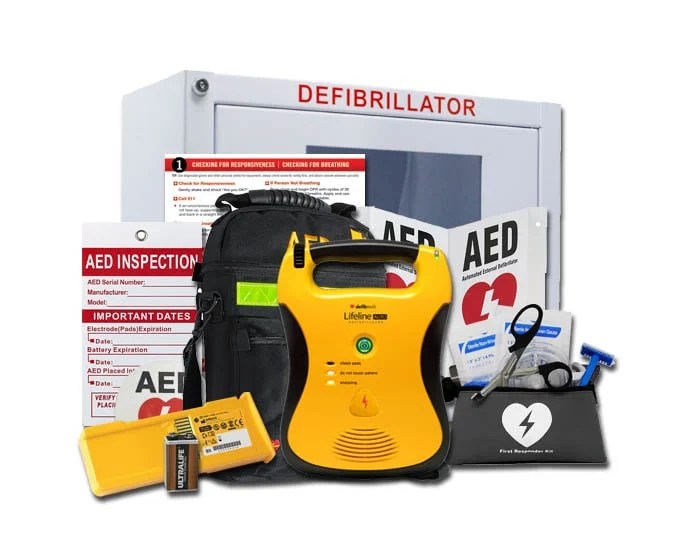
Defibtech Lifeline AED: Simple and Reliable
The Defibtech Lifeline AED is celebrated for its straightforward design and exceptional durability. This AED is built to be simple and incredibly robust, making it a reliable choice for environments where ease of use is paramount and conditions can be challenging. Its clean design minimizes confusion, offering clear voice prompts and visual cues to guide rescuers through the defibrillation process.
With a high IP rating and military standard drop and shock resistance, the Lifeline AED can endure the rigors of industrial settings or outdoor sports complexes. It also boasts an impressive battery life, often lasting several years, which reduces the frequency of maintenance checks. For organizations seeking a dependable, no nonsense device that can be deployed quickly by anyone, the Defibtech Lifeline AED offers robust performance. Consider the Defibtech Lifeline View AED or the Defibtech Lifeline ECG for additional features.
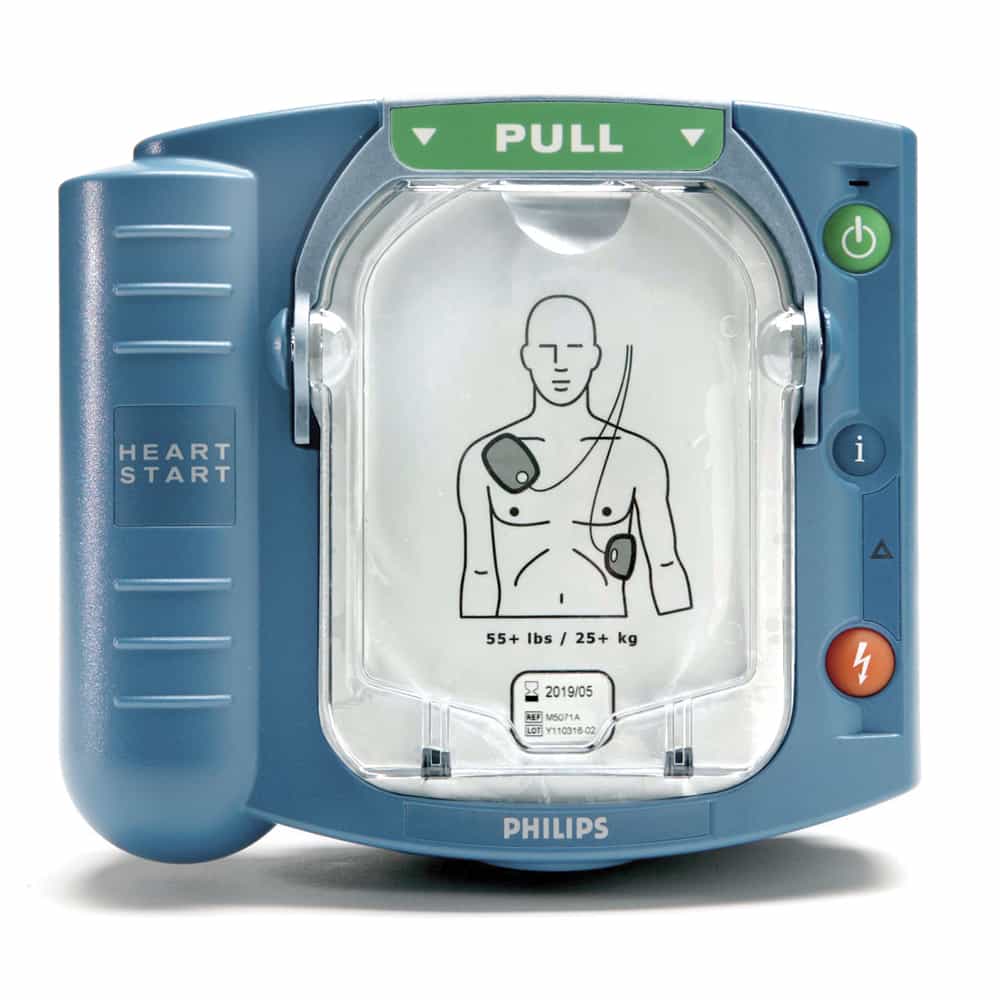
Philips HeartStart FRx: Versatile for Any Situation
The Philips HeartStart FRx is renowned for its versatility and user friendly design, making it an excellent option for environments that may encounter both adult and pediatric emergencies. Like the G5 and Lifeline, the FRx is built to be rugged, resisting dust and jetting water, suitable for a range of environments including schools, community centers, and athletic fields.
A key feature of the FRx is its infant/child key. This innovative accessory allows rescuers to use the same adult pads for children, simply by inserting the key. This eliminates the need for separate pediatric pads, streamlining the rescue process and reducing the potential for confusion or delay in an emergency involving a child. The FRx provides clear, calm voice prompts and visual indicators, making it easy for lay rescuers to follow instructions, even under pressure. Its intuitive guidance system ensures that responders can confidently administer life saving therapy.
ZOLL AED Plus: Built for Durability
The ZOLL AED Plus is engineered for the real world, making it a top choice for high-risk environments where durability is non-negotiable. Its rugged construction can handle the tough conditions of an industrial site or the sidelines of a sports field. What truly sets the ZOLL AED Plus apart is its Real CPR Help® technology. This feature provides real-time feedback on the depth and rate of chest compressions, guiding rescuers with a clear, metronome-like beat and voice prompts like “Push harder.” This guidance is critical in a chaotic emergency, helping ensure that CPR is effective. The device also features a unique one-piece electrode pad design that simplifies placement, reducing stress and saving precious time when every second counts.
HeartSine Samaritan PAD: Compact and User-Friendly
For facilities that need a portable and incredibly user-friendly device, the HeartSine Samaritan PAD is an excellent option. Known for its compact and lightweight design, it’s easy to grab and carry to any location within a large sports complex or multi-floor gym. Despite its small size, it’s tough, with a high IP rating that protects it from dust and water. The Samaritan PAD is designed for simplicity, featuring clear voice prompts and visual indicators that walk even an untrained bystander through the entire rescue process. This focus on ease of use makes it a reassuring choice for public spaces where the first responder could be anyone.
Physio-Control LIFEPAK CR2: Connected and Advanced
The Physio-Control LIFEPAK CR2 is a cutting-edge AED designed for high-performance environments that value advanced technology. Its standout feature is its connectivity, which allows it to send real-time data to emergency responders via Wi-Fi or a cellular network. This means that before paramedics even arrive, they can have a clear picture of the patient’s condition, allowing for a more seamless transition of care. The LIFEPAK CR2 also provides clear, calm instructions and is built with a robust design to ensure it performs reliably in demanding situations. Its advanced features make it a powerful tool for organizations looking to integrate their emergency response with professional medical services.
Understanding AED Packages and Costs
Purchasing an AED is more than just buying the device itself; it’s about setting up a complete life-saving station. That’s why it’s often best to invest in AED packages, which bundle the defibrillator with all the essential accessories you’ll need. A typical package includes the AED, a carrying case for portability, a wall-mounted cabinet for visibility and protection, and a rescue-ready kit with items like scissors and razors. When you’re thinking about cost, remember to look beyond the initial price tag. The long-term investment includes replacing AED pads and batteries, which have expiration dates. Planning for these recurring costs is a key part of maintaining a successful and compliant AED program.
Specialized Packages for Athletics
Athletic facilities have a unique set of needs, and specialized AED packages are designed to meet them head-on. These packages are curated for high-energy environments where cardiac arrest can happen to athletes or spectators. They typically feature rugged, portable AEDs that can be quickly transported across a field or court. Because young athletes can also be at risk, these packages often include devices with pediatric capabilities. Features like advanced CPR feedback are also prioritized, as they provide crucial guidance during a high-stress rescue. Investing in a package designed for athletics ensures you have a comprehensive solution ready for the specific challenges of your environment.
Trade-In and Support Programs
If you have an older or outdated AED, you don’t have to start from scratch. Many manufacturers and suppliers offer trade-in programs that allow you to exchange your old device for a discount on a new, more advanced model. This is a great way to upgrade your equipment affordably. Beyond the purchase, ongoing support is vital. A comprehensive program should include services like CPR and AED training for your staff and a maintenance plan to ensure your device is always operational and compliant with local regulations. These support systems provide peace of mind and are essential for keeping your emergency response plan effective.
How to Fund an AED for Your Organization
We know that the cost of an AED can feel like a significant hurdle, but it shouldn’t be a barrier to saving lives. Fortunately, there are many creative and effective ways to fund an AED for your gym, sports league, or workplace. With a little planning and community engagement, you can secure the funds needed to make your facility safer for everyone. From community events to formal grant applications, there are paths available to help you acquire this essential equipment. Let’s explore a few of the most common and successful strategies.
Fundraising and Community Support
Never underestimate the power of your community. Hosting a fundraising event, partnering with local businesses for sponsorships, or launching an online crowdfunding campaign can be incredibly effective. Frame your initiative as a community safety project—when people understand that their contribution could help save the life of a neighbor, friend, or family member, they are often eager to help. Engaging local schools, health organizations, and community groups can also help raise awareness and build momentum for your cause, making your facility a safer place for everyone who walks through its doors.
Applying for AED Grants
Many organizations are dedicated to improving public health and safety, and they often provide funding for AEDs through grant programs. These grants are frequently offered by community foundations, local and state governments, and national health organizations. To find them, start by researching grants aimed at enhancing safety in sports facilities, schools, or public spaces. The application process may require some effort, but securing a grant can cover a significant portion—or even the entire cost—of your AED program. It’s a fantastic way to get the equipment you need without straining your budget.
More Than a Device: Supporting Your AED Program
Choosing the right AED is just the first step. To truly optimize safety in your high risk environment, you need a comprehensive support system. Response Ready offers an end to end solution designed to make AED ownership and management accessible and affordable.
Our AED program management services provide peace of mind, handling critical aspects like real time device monitoring, automated maintenance reminders, and expert medical oversight to ensure your AED is always compliant with regulations and ready for an emergency. This is particularly vital for organizations with multiple devices or strict safety protocols. These efforts are compiled into the Response Ready App which simplifies compliance by allowing users to record AED readiness checks with ease, utilizing a scanning feature to speed up the process. Users consistently praise the app for making AED program management convenient and intuitive.
We also offer robust CPR and AED training courses. These courses empower your staff and community members with the skills and confidence to use an AED effectively and perform high quality CPR. For more insights into risk, you may find our health center blog useful for articles like “Sudden cardiac arrest in young athletes understanding the risks.”
Response Ready AED expertise, cultivating a consumer friendly platform rooted in secure https encryption. We offer clear, upfront pricing, free standard shipping on any order over $99, and a 30 day money back guarantee on unopened items. Connect with us for our expert recommendations to guide first time buyers or experienced safety managers through every step of the purchase process.
Routine AED Checks
Think of routine checks as your AED’s regular health check-up. This simple, consistent practice is the most important thing you can do to ensure your device is ready to perform in an emergency. Most AEDs conduct daily, weekly, and monthly self-tests and will display a clear readiness indicator—usually a green checkmark or flashing light—to show everything is in working order. Your monthly check should involve visually confirming this status, ensuring the device is accessible and undamaged, and checking the expiration dates on your AED pads and batteries. A robust AED program management solution, like the one offered by Response Ready, can automate compliance reminders and help you track these essential tasks to ensure your devices are always rescue-ready.
Annual Professional Inspections
While monthly checks are essential, an annual professional inspection provides a deeper level of assurance. This comprehensive review, conducted by a trained technician, goes beyond a simple visual check. It involves a more thorough diagnostic test of the device’s software and hardware, confirming it meets manufacturer specifications and is compliant with all current regulations. This inspection is your opportunity to catch any underlying issues and verify that your entire program is up to standard. A comprehensive AED program management service can oversee these critical inspections, providing peace of mind and ensuring your AED is always compliant and ready to save a life.
How to Choose the Right AED with Confidence
Equipping your gym, sports arena, or industrial site with an AED is a testament to your commitment to safety. By understanding the specific demands of your environment and matching them to an AED’s features, you can make a decision that truly enhances preparedness. Whether it is the rugged, CPR feedback enabled Cardiac Science Powerheart G5 Value Package, the durable and simple Defibtech Lifeline AED, or the versatile Philips HeartStart FRx with its child key, Response Ready provides the solutions and support you need.
Do not leave the safety of your people to chance. Explore our curated selection of FDA approved devices and accessories, and leverage our expert guidance and comprehensive support services. For personalized assistance in selecting the ideal AED solution and building a robust safety program, do not hesitate to contact us today.
Frequently asked questions
Q: What is the survival rate for sudden cardiac arrest if an AED is used?
A: When an AED is used by a bystander, the survival rate for sudden cardiac arrest can double or even triple. Each minute without defibrillation decreases the chance of survival by 7 to 10 percent, highlighting the critical importance of immediate AED application.
Q: How often should an AED be inspected in a high risk environment?
A: AEDs in high risk environments should be regularly inspected according to manufacturer guidelines and local regulations, typically monthly, to ensure readiness. Response Ready’s AED program management and mobile app can help automate these checks and compliance reminders.
Q: Can anyone use an AED or do you need special training?
A: AEDs are designed to be user friendly, providing clear voice prompts and visual instructions that can be followed by lay rescuers with no prior medical training. However, completing a CPR and AED training course significantly boosts confidence and effectiveness during an emergency.
Q: What is the difference between an AED for a home and one for an industrial site?
A: While all AEDs perform the same life saving function, those for industrial sites or high risk environments often feature enhanced durability, higher IP ratings for resistance to dust and moisture, and sometimes advanced CPR feedback. Home AEDs prioritize extreme simplicity and compact design.
Q: How does Response Ready help with AED compliance?
A: Response Ready offers comprehensive AED program management services, including real time device monitoring, automated maintenance reminders, and expert medical oversight, to ensure your AEDs meet all regulatory requirements and are always ready for use.
Key Takeaways
- Create a solid response plan before an emergency happens: Your strategy should include placing AEDs so they are reachable within three minutes, assigning clear roles to team members, and providing certified CPR and AED training to build confidence.
- Choose an AED built for your specific venue: High-traffic or demanding environments like gyms and stadiums require durable, water-resistant devices with features like real-time CPR feedback and pediatric settings to handle any situation effectively.
- Keep your AED rescue-ready with consistent management: Preparedness is an ongoing commitment, so use a program management service to track maintenance schedules, monitor supply expiration dates, and ensure your device is always compliant and ready to use.
Related Articles
Disclaimer for information purposes only:
The information provided on this website is intended for general educational and informational purposes only. It is not medical advice and should not be used as a substitute for professional diagnosis, treatment, or care. Always consult a qualified healthcare or medical professional regarding any health-related questions or concerns.
While we strive to ensure the information shared is accurate and up to date, no guarantees are made regarding completeness, accuracy, or applicability to any individual situation. Use of this content is at the reader’s sole discretion and risk.
This website is part of the Response Ready family of emergency preparedness and training resources, including CPR & first aid training and compliance services, AED sales and program support, AED program management software, and medical oversight solutions provided through our affiliated platforms:
• CPR1.com
• AEDLeader.com
• AEDTotalSolution.com
• MDSIMedical.com
By accessing or using this website, you agree to release, indemnify, and hold harmless the website owners, authors, contributors, and affiliated entities from any claims, losses, damages, or liabilities arising from the use or reliance on the information presented.