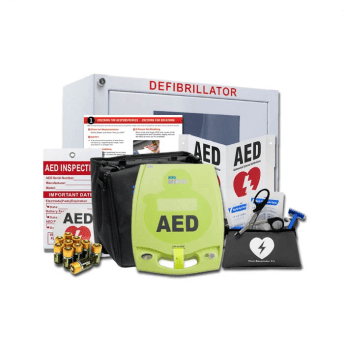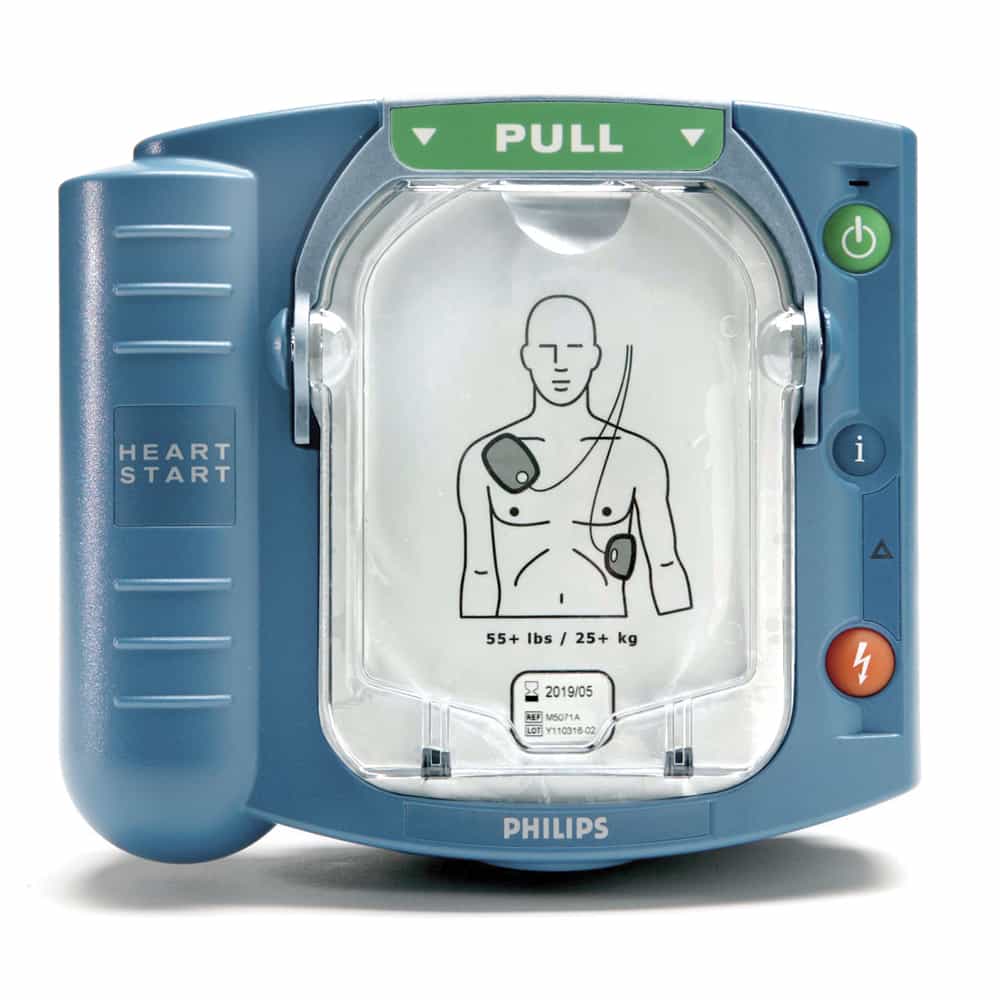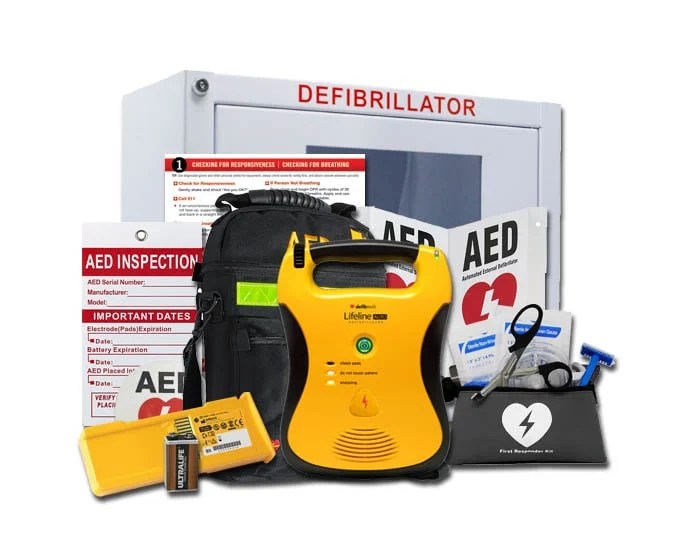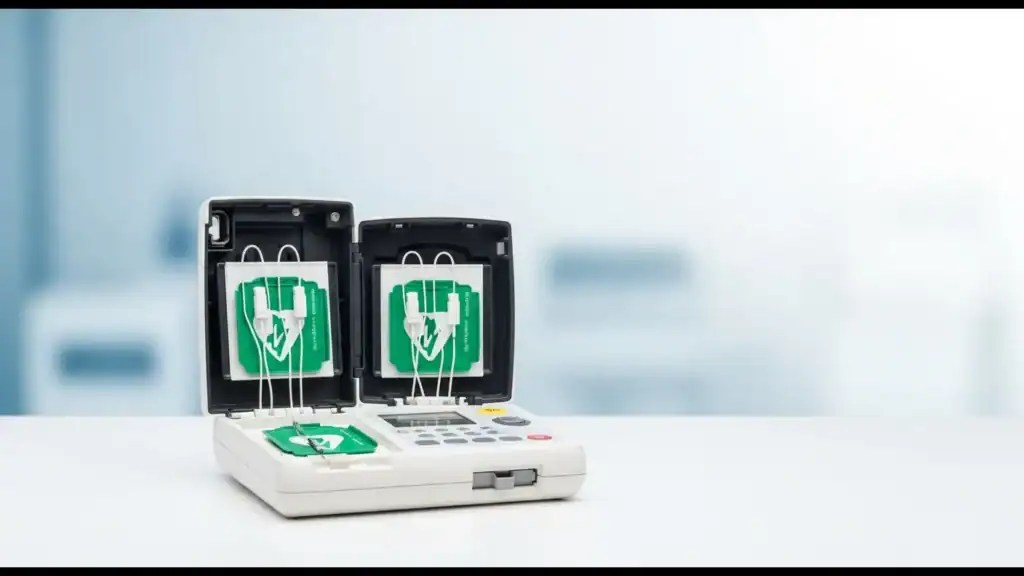
A defibrillator is a medical device that delivers a controlled electrical shock to the heart to restore a normal heartbeat during a life-threatening cardiac arrhythmia, such as ventricular fibrillation or pulseless ventricular tachycardia. Defibrillators are one of the most important tools in emergency cardiac care, and they save thousands of lives every year in the United States alone.
Browse Response Ready’s full selection of FDA-approved AEDs and defibrillator packages to find the right device for your home, workplace, or organization.
Whether you are a first-time buyer researching defibrillator options, a facility manager responsible for workplace safety, or simply someone who wants to understand how these devices work, this guide covers everything you need to know. Response Ready, an authorized distributor of all six FDA-approved AED manufacturers, has put together this comprehensive resource to help you make informed decisions about cardiac emergency preparedness.
What Is a Defibrillator? Definition and Core Purpose
A defibrillator is a device designed to detect and correct dangerous heart rhythms by sending an electric shock through the chest wall to the heart. The defibrillator definition, at its simplest, refers to any device capable of delivering therapeutic doses of electrical energy to the myocardium. The word “defibrillation” comes from the process of stopping fibrillation, which is the rapid, irregular, and ineffective quivering of heart muscle fibers.
The core purpose of a defibrillator machine is not to “restart” a stopped heart, as commonly portrayed in movies. Instead, defibrillators work by momentarily stopping the chaotic electrical activity in the heart, giving the heart’s natural pacemaker cells the opportunity to re-establish a coordinated, effective pumping rhythm. This distinction matters because defibrillators are most effective during specific types of cardiac arrest, not all cardiac emergencies.
How Does a Defibrillator Work?
A defibrillator works by analyzing the heart’s electrical activity through electrode pads placed on the patient’s chest, then delivering a precisely calibrated electrical shock when a shockable rhythm is detected. This process involves several steps that happen within seconds.
When a person experiences sudden cardiac arrest (SCA), the heart’s electrical system malfunctions. Instead of beating in a coordinated rhythm, the heart muscle fibers quiver chaotically. Blood stops flowing to the brain and vital organs. Without intervention, brain damage begins within four to six minutes, and death can follow within ten minutes.
The defibrillator’s electrode pads serve two functions: they read the heart’s electrical signals (similar to an ECG) and they deliver the shock. Modern defibrillators analyze the heart rhythm using sophisticated algorithms that can distinguish between shockable rhythms (ventricular fibrillation and pulseless ventricular tachycardia) and non-shockable rhythms (asystole and pulseless electrical activity).
When the device detects a shockable rhythm, it charges a capacitor to deliver between 120 and 360 joules of electrical energy. This energy passes through the chest wall and depolarizes a critical mass of the heart muscle simultaneously, interrupting the chaotic electrical activity and allowing the sinoatrial node to resume its role as the heart’s natural pacemaker.
Shockable vs. Non-Shockable Heart Rhythms
| Rhythm Type | Description | Shockable? | Defibrillator Action |
|---|---|---|---|
| Ventricular Fibrillation (VF) | Rapid, chaotic quivering of the ventricles | Yes | Delivers shock immediately |
| Pulseless Ventricular Tachycardia (pVT) | Very fast, ineffective ventricular contractions | Yes | Delivers shock immediately |
| Asystole (“Flatline”) | No electrical activity in the heart | No | Advises CPR only |
| Pulseless Electrical Activity (PEA) | Electrical activity present but no pulse | No | Advises CPR only |
What Are the Different Types of Defibrillators?

There are four main types of defibrillators, each designed for different settings, users, and patient needs. Understanding the differences between these defibrillator types helps buyers, healthcare professionals, and safety managers choose the right device for their situation.
Automated External Defibrillator (AED)
An automated external defibrillator, or AED, is a portable, battery-powered defibrillator designed for use by non-medical bystanders during sudden cardiac arrest. AEDs are the most common type of defibrillator found in public spaces, workplaces, schools, gyms, and homes. Response Ready carries AEDs from all six FDA-approved manufacturers, including Philips, ZOLL, HeartSine, Stryker/Physio-Control, Cardiac Science, and Defibtech.
AEDs guide users through the rescue process with voice prompts and visual indicators. The device automatically analyzes the patient’s heart rhythm and determines whether a shock is needed. Depending on the model, the AED either delivers the shock automatically (fully automatic AED) or prompts the user to press a button (semi-automatic AED). AED prices typically range from $1,400 to $2,900, depending on the brand and features.
- Best for: Public spaces, workplaces, schools, gyms, churches, homes
- Training required: None legally required, but recommended. AED certification courses teach proper technique.
- Portability: Lightweight (2 to 7 pounds), designed for wall-mounted cabinets or carrying cases
- Cost: $1,400 to $2,900 for the device; value packages include cabinets, signage, and first responder kits
Manual External Defibrillator
A manual external defibrillator is a hospital-grade device used by trained medical professionals, including paramedics, emergency physicians, and nurses. Unlike AEDs, manual defibrillators require the operator to interpret the heart rhythm displayed on a monitor, select the appropriate energy level, and manually trigger the shock.
Manual defibrillators offer greater flexibility and control than AEDs. They allow clinicians to adjust energy levels precisely, deliver synchronized cardioversion for certain arrhythmias, and use external pacing for bradycardia. These devices are standard equipment in emergency departments, intensive care units, and ambulances.
- Best for: Hospitals, ambulances, emergency departments
- Training required: Advanced cardiac life support (ACLS) certification
- Portability: Larger and heavier than AEDs, mounted on carts or carried in emergency bags
- Cost: $5,000 to $20,000+
Wearable Cardioverter-Defibrillator (WCD)
A wearable cardioverter-defibrillator, commonly known by the brand name LifeVest, is a vest-like garment worn continuously by patients at temporary risk of sudden cardiac arrest. The LifeVest monitors the patient’s heart rhythm 24 hours a day and can deliver a shock automatically if a life-threatening arrhythmia is detected, without requiring bystander intervention.
Physicians typically prescribe wearable defibrillators for patients recovering from heart attacks, those awaiting heart transplant, or patients with newly diagnosed heart failure who may need time before receiving an implantable device. The wearable defibrillator provides a bridge of protection during high-risk recovery periods.
- Best for: Patients at temporary high risk of SCA (post-heart attack, pre-transplant)
- Training required: Patient education provided by the prescribing physician
- Portability: Worn under clothing; includes a battery pack and monitor
- Cost: Typically covered by insurance; prescribed by a cardiologist
Implantable Cardioverter-Defibrillator (ICD)
An implantable cardioverter-defibrillator (ICD) is a small, battery-powered device surgically implanted in the chest, usually just below the collarbone. The ICD continuously monitors the heart’s rhythm through leads (wires) threaded into the heart chambers. When it detects a dangerous arrhythmia, it delivers an internal shock to restore normal rhythm.
ICDs are prescribed for patients with chronic, long-term risk of sudden cardiac arrest, including those with certain inherited heart conditions, previous cardiac arrest survivors, or patients with severely reduced heart function. Unlike external defibrillators, ICDs provide round-the-clock protection without requiring any external action.
- Best for: Patients with chronic high risk of SCA, cardiac arrest survivors, certain genetic conditions
- Training required: Surgical implantation by a cardiac electrophysiologist
- Portability: Fully implanted; no external equipment needed
- Cost: $30,000 to $50,000+ including surgery; typically covered by insurance
When Should You Use a Defibrillator?

A defibrillator should be used whenever a person collapses, becomes unresponsive, and stops breathing normally. These are the primary signs of sudden cardiac arrest, and every minute without defibrillation reduces the chance of survival by 7% to 10%. Using an AED within the first three to five minutes of cardiac arrest can increase survival rates to 70% or higher.
You do not need to be a medical professional to use an AED. The device is designed to be used by any bystander, and it will not deliver a shock unless it detects a shockable heart rhythm. This built-in safety feature means you cannot accidentally harm someone by using an AED. In addition, Good Samaritan laws in all 50 states provide legal protection for bystanders who use an AED in good faith during a cardiac emergency.
Step-by-Step: How to Use an AED
- Call 911 immediately or have someone else call while you retrieve the AED.
- Turn on the AED and follow the voice prompts.
- Expose the patient’s chest and apply the electrode pads as shown in the diagrams on the pads.
- Allow the AED to analyze the heart rhythm. Make sure no one is touching the patient.
- If a shock is advised, press the shock button (semi-automatic) or stand clear while the device shocks automatically (fully automatic).
- Begin CPR immediately after the shock, following the AED’s prompts.
- Continue the cycle of CPR and AED analysis until emergency medical services arrive.
Why Does Early Defibrillation Matter?
Early defibrillation is the single most critical factor in surviving sudden cardiac arrest outside of a hospital. The American Heart Association identifies early defibrillation as the third link in the Chain of Survival, following early recognition and early CPR. Response Ready supports this chain by making FDA-approved AEDs accessible to every home, school, workplace, and community organization.
Consider these statistics that underscore the urgency of rapid defibrillation:
- 350,000+ out-of-hospital cardiac arrests occur in the U.S. each year
- Less than 12% of out-of-hospital cardiac arrest victims survive without bystander intervention
- 7% to 10% decrease in survival for every minute defibrillation is delayed
- Up to 70% survival rate when an AED is applied within the first 3 to 5 minutes
- Average EMS response time: 7 to 12 minutes in most areas, well beyond the critical window
These numbers make a compelling case for widespread AED placement in homes, workplaces, and public spaces. With an AED on-site, the critical gap between cardiac arrest and defibrillation can be reduced from minutes to seconds.
Explore Response Ready’s AED value packages, which include everything you need: the AED device, cabinet, signage, and a first responder kit.
A Brief History of Defibrillation
The history of defibrillation stretches back nearly a century. In 1899, physiologists Jean-Louis Prevost and Frederic Batelli demonstrated that electrical shocks could induce and reverse ventricular fibrillation in dogs. The first successful human defibrillation was performed in 1947 by Dr. Claude Beck at Case Western Reserve University during open-chest surgery.
External (closed-chest) defibrillation became possible in 1956 when Dr. Paul Zoll demonstrated the technique. The first portable defibrillator was developed by Dr. Frank Pantridge in Belfast, Northern Ireland, in 1965 for use in ambulances. The modern AED, designed for use by untrained bystanders, was introduced in the 1990s and has since become a cornerstone of public access defibrillation programs worldwide.
How to Choose the Right Defibrillator for Your Needs
Choosing the right defibrillator depends on your setting, budget, and the people most likely to use the device. Response Ready carries AEDs from all six FDA-approved manufacturers, ensuring customers can compare options and find the best fit for their specific needs. Here are the key factors to consider:
- Setting: Schools, offices, gyms, and churches typically need one or more wall-mounted AEDs. High-traffic venues may need multiple units.
- User experience: Fully automatic AEDs (like the ZOLL AED 3) are ideal for locations where untrained bystanders are most likely to respond. Semi-automatic models give the rescuer more control over shock delivery.
- Pediatric capability: If children are present (schools, daycares, sports facilities), choose an AED with pediatric pads or a pediatric mode.
- Maintenance requirements: All AEDs require periodic battery and pad replacements. Response Ready’s AED Total Solution program ($99/year) handles compliance tracking, maintenance reminders, and program management.
- Budget: AED prices range from $1,400 to $2,900. Response Ready’s AED buyer’s guide compares features and pricing across all brands.
- Compliance: Many states require AEDs in schools, gyms, and certain workplaces. Check your state’s AED requirements to ensure compliance.
Defibrillator Maintenance and Readiness
Owning a defibrillator comes with the responsibility of keeping it rescue-ready at all times. A defibrillator machine that is not properly maintained may fail when it matters most. Regular inspections are simple and take just a few minutes each month.
- Monthly visual inspection: Check the status indicator light. A green light or checkmark means the device is ready. A red indicator or warning means attention is needed.
- Battery replacement: AED batteries last 2 to 5 years depending on the model. Replace batteries before they expire.
- Electrode pad replacement: Pads have a shelf life of 18 to 30 months. Expired pads may not adhere properly or conduct the shock effectively.
- Software updates: Some AED models support firmware updates. Check with the manufacturer or your AED program manager.
- Documentation: Keep a log of all inspections and maintenance activities. This is often required for AED registration and compliance.
Find the Right AED for Your Organization — Response Ready carries all 6 FDA-approved AED brands with free shipping, lifetime support, and a 30-day money-back guarantee. Call 858-665-2025 for personalized help.
Frequently Asked Questions About Defibrillators
What does “defibrillator” mean?
The defibrillator meaning comes from the word “defibrillation,” which refers to the process of stopping fibrillation (chaotic quivering) of the heart muscle. A defibrillator is the device that performs this process by delivering a controlled electrical shock to the heart.
Can a defibrillator restart a stopped heart?
No. A common misconception is that defibrillators restart hearts that have completely stopped (asystole or “flatline”). Defibrillators are designed to correct abnormal rhythms like ventricular fibrillation, not to restart a heart with no electrical activity. CPR is the appropriate intervention for a heart that has stopped.
Is it safe for an untrained person to use an AED?
Yes. AEDs are specifically designed for use by people with no medical training. The device provides step-by-step voice prompts and will only deliver a shock if it detects a shockable heart rhythm. You cannot accidentally shock someone who does not need it. Good Samaritan laws in all 50 U.S. states protect bystanders who use AEDs in good faith.
How much does a defibrillator cost?
AED prices typically range from $1,400 to $2,900 depending on the brand and features. Response Ready also offers AED value packages that include cabinets, signage, and first responder kits at bundled pricing. For organizations that prefer not to purchase, Response Ready offers AED rental programs starting at $45 to $75 per month.
What is the difference between an AED and a defibrillator?
An AED (automated external defibrillator) is one specific type of defibrillator. The term “defibrillator” is a broader category that includes AEDs, manual defibrillators, wearable defibrillators, and implantable cardioverter-defibrillators (ICDs). For a detailed comparison, read Response Ready’s AED vs. defibrillator guide.
Do all states require AEDs in public places?
AED requirements vary by state. At least 16 states mandate AEDs in schools, and more than 20 states require AEDs in fitness centers and gyms. Many states also require AEDs in government buildings and large public venues. Check Response Ready’s AED requirements and compliance guide for state-specific information.
How often should a defibrillator be inspected?
Most AED manufacturers and regulatory guidelines recommend monthly visual inspections. This involves checking the status indicator, verifying that pads and batteries are not expired, and confirming the device is in its designated location. Organizations using Response Ready’s AED Total Solution program receive automated maintenance reminders and compliance tracking.
Can AEDs be used on children?
Yes. Most modern AEDs can be used on children with pediatric electrode pads that deliver a lower energy dose. Some AED models, like the ZOLL AED 3, include a built-in pediatric mode. For infants under one year, follow your local emergency medical protocols. Having an AED with pediatric capability is essential for schools, daycares, and sports facilities.
Disclaimer: This article is for educational purposes only and does not constitute medical advice. Always call 911 in a cardiac emergency and follow the guidance of trained medical professionals.