How Long Does CPR Certification Last?
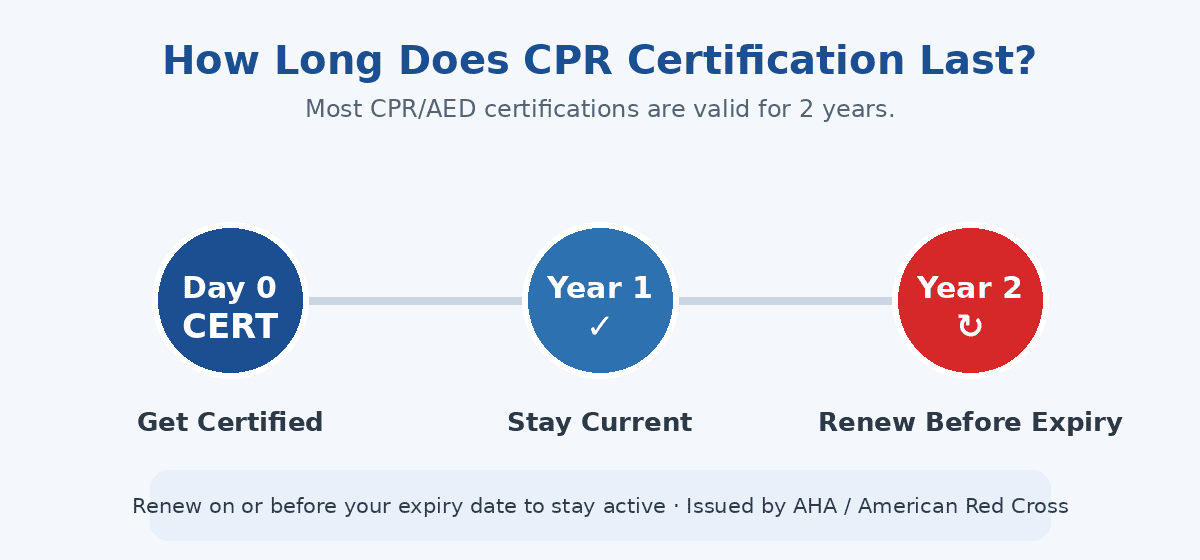
CPR certification lasts two years from the date you complete your course, regardless of which organization issued it. Both the American Heart Association (AHA) and the American Red Cross set a two-year validity period for all CPR, AED, and first aid certifications. After those two years, your certification expires, and you need to renew it to stay current.
Need CPR and AED training or recertification? Response Ready offers certified CPR, AED, and first aid courses through our nationwide instructor network. Browse CPR and AED training options or call us at 858-665-2025.
This applies to everyone: healthcare professionals, workplace first responders, teachers, coaches, fitness instructors, and concerned parents who want to be prepared. Knowing when your certification expires and how to renew it keeps you ready to act when someone experiences a cardiac emergency.
Does CPR Certification Expire?
Yes, CPR certification expires. Every major certifying organization in the United States sets an expiration date on CPR credentials. This is not an arbitrary policy. Medical guidelines for resuscitation are updated regularly as researchers discover better techniques and protocols.
The AHA publishes updated guidelines approximately every five years, with interim updates as new evidence emerges. The most recent major update came in 2020, with significant changes to compression depth recommendations, ventilation ratios, and the role of AEDs in the chain of survival. Skills also degrade over time without practice. Studies show that CPR performance quality begins to decline as early as three to six months after initial training, which is why regular renewal matters.
CPR Certification Validity Periods by Organization
The following table shows how long CPR certifications last from each major provider:
| Certifying Organization | Certification Duration | Course Types |
|---|---|---|
| American Heart Association (AHA) | 2 years | BLS, Heartsaver CPR/AED, Heartsaver First Aid |
| American Red Cross | 2 years | Adult/Pediatric First Aid/CPR/AED, BLS for Healthcare Providers |
| National Safety Council (NSC) | 2 years | CPR, AED, and First Aid |
| Health and Safety Institute (HSI/ASHI) | 2 years | CPR Pro, Basic First Aid, Bloodborne Pathogens |
| ECC (Emergency Care and Safety Institute) | 2 years | CPR, AED, First Aid |
Regardless of which provider you trained with, the standard validity period is two years. Some employers or state regulations may require more frequent renewal, so check your workplace policy or state requirements if you hold a job that mandates CPR certification.
CPR Renewal vs. Recertification: What Is the Difference?
Many people use “renewal” and “recertification” interchangeably, but there are important differences depending on your certifying organization and timing.
CPR Renewal typically refers to an abbreviated course available before your current certification expires. Renewal courses are shorter than the original certification because they assume you already have foundational knowledge. AHA renewal courses, for example, may run two to three hours instead of the four to five hours required for initial certification.
CPR Recertification usually means you are obtaining a new certification, sometimes after your previous one has already expired. If your certification has lapsed for an extended period, most organizations require you to take the full initial course again rather than a shorter renewal option.
Here is how they compare:
| Factor | CPR Renewal | CPR Recertification (Full Course) |
|---|---|---|
| When to take it | Before or shortly after expiration | Any time, especially if expired for months |
| Course length | 2-3 hours | 4-5 hours |
| Skills test required | Yes | Yes |
| Written exam | Sometimes abbreviated | Full exam |
| New certification card | Yes, valid for 2 more years | Yes, valid for 2 years |
The key takeaway: renew before your certification expires to save time and money. Most renewal courses are less expensive than full initial courses.
Ready to renew your CPR certification? Response Ready’s CPR1 training program offers both in-person and blended learning options with certified instructors nationwide. View CPR, AED, and First Aid courses or call 858-665-2025 to schedule.
What Happens If Your CPR Certification Expires?
If your CPR certification expires, several things happen depending on your situation:
- You are no longer officially certified. While your training does not disappear from memory, you cannot legally represent yourself as CPR-certified to employers, regulatory bodies, or clients.
- Workplace compliance issues. Many employers in healthcare, education, fitness, and childcare require current CPR certification. An expired certification could affect your employment status or prevent you from meeting OSHA workplace safety requirements.
- State mandate violations. In states that require CPR certification for certain professions, such as teachers, coaches, lifeguards, and personal trainers, an expired credential may mean you cannot perform your job duties.
- You may need a full course. If your certification has been expired for several months, most providers will require the full initial course rather than a shorter renewal.
You should also know that CPR and AED skills work together during cardiac emergencies. An expired CPR certification often means your AED training is also due for renewal. Consider a combined CPR/AED course to cover both at once.
Online vs. In-Person CPR Recertification
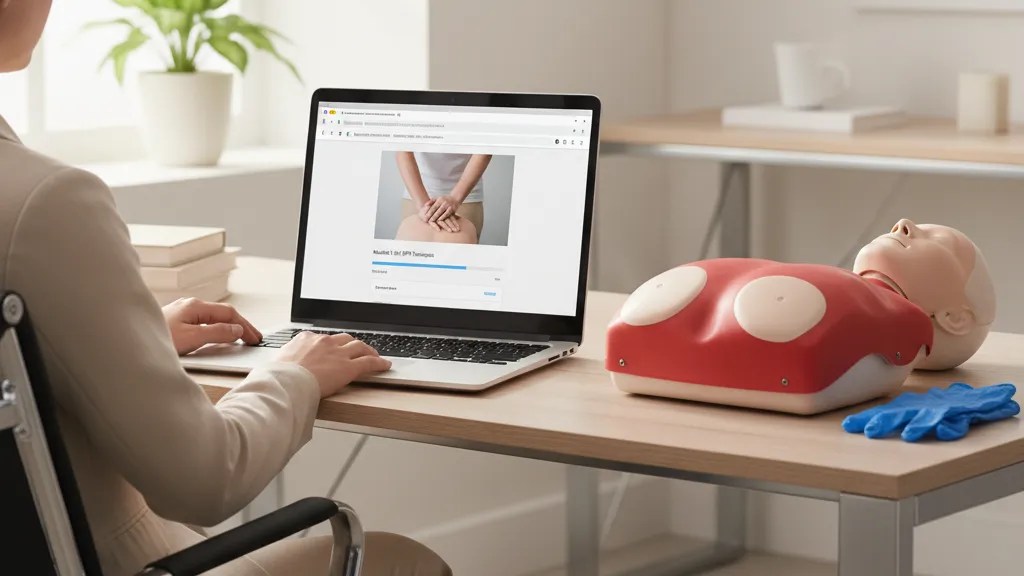
Modern CPR recertification comes in three main formats, each with distinct advantages:
In-Person CPR Courses
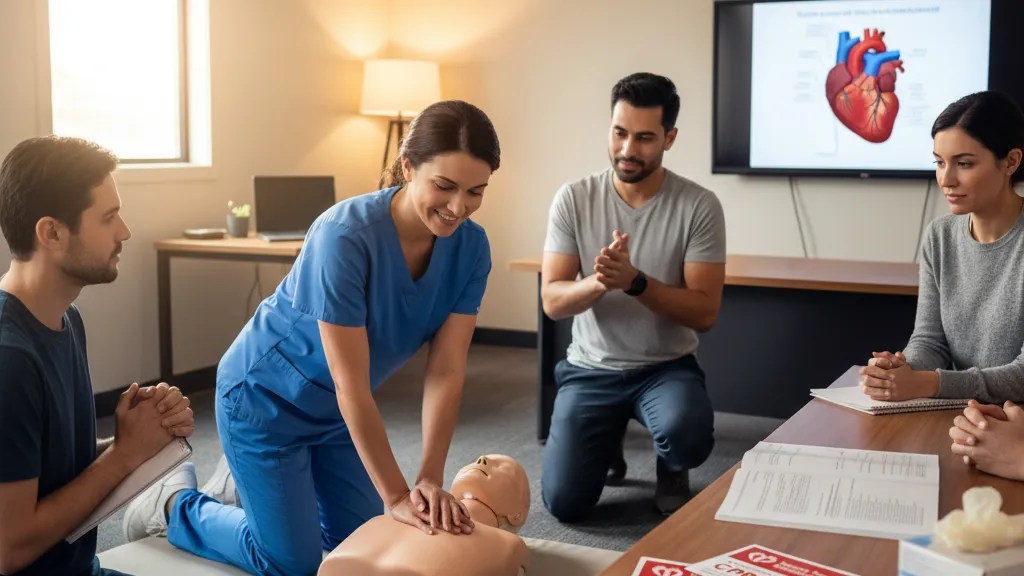
Traditional classroom courses remain the gold standard for CPR training. You practice hands-on skills with manikins under direct instructor supervision. Instructors correct your technique in real time, covering compression depth, rate, and proper CPR technique for adults, children, and infants. In-person courses typically take four to five hours for initial certification and two to three hours for renewal.
Blended Learning (Online + In-Person Skills Session)
Blended courses combine online self-paced learning with a shorter in-person skills evaluation. You complete the knowledge portion on your own schedule, then attend a brief hands-on session with an instructor who verifies your CPR skills. This format reduces classroom time while maintaining the critical hands-on component. Both the AHA and Red Cross offer blended learning options.
Fully Online CPR Courses
Some organizations offer entirely online CPR courses. These are convenient but come with important caveats. Many employers and regulatory bodies do not accept fully online CPR certifications because they lack a hands-on skills evaluation. Before enrolling in an online-only course, verify that your employer or state will accept it.
For healthcare workers, BLS certification almost always requires an in-person skills test regardless of how the knowledge component is delivered.
Who Needs to Keep CPR Certification Current?
While anyone can benefit from CPR and AED certification, certain professions and roles require it by law or employer policy:
- Healthcare professionals: Nurses, doctors, EMTs, paramedics, dental hygienists, and medical assistants
- Education staff: Teachers, coaches, school administrators, and childcare providers in many states
- Fitness professionals: Personal trainers, group fitness instructors, and gym staff
- Lifeguards and aquatic staff
- Law enforcement and firefighters
- Flight attendants and aviation personnel
- Construction and industrial workers where OSHA requires trained first responders on-site
- Childcare providers and nannies
Even if your profession does not require it, keeping your CPR certification current means you are always prepared. Approximately 350,000 out-of-hospital cardiac arrests occur in the United States each year. Bystander CPR combined with early AED use can double or triple a victim’s chance of survival.
Whether you are renewing for work requirements or personal preparedness, Response Ready can help. Our CPR1 training network offers AHA-aligned courses at locations nationwide. Learn more about CPR1 training programs or call 858-665-2025.
How to Renew Your CPR Certification: Step by Step
- Check your expiration date. Look at your certification card or eCard for the exact expiration date. Most providers also allow you to verify your status online.
- Choose your renewal format. Decide between in-person, blended learning, or online courses based on your employer requirements and learning preferences.
- Select a certified training provider. Make sure your provider is authorized by the AHA, Red Cross, or another nationally recognized organization. Response Ready’s CPR and AED training courses are delivered by certified instructors.
- Complete the course. Attend the training, pass the skills evaluation and written test.
- Receive your new certification card. Your new card is valid for two years from the completion date.
- Set a renewal reminder. Mark your calendar 60 to 90 days before your next expiration to give yourself time to schedule and complete renewal training.
Tips to Stay Current on Your CPR Certification
- Set calendar reminders at the 18-month mark so you have a six-month window to schedule your renewal.
- Combine CPR with AED and first aid training. Many providers offer bundled courses that cover all three, including AED certification. This saves time and ensures comprehensive emergency preparedness.
- Practice between certifications. Review compression techniques and AED operation periodically. Having an AED training device available for practice keeps skills sharp.
- Stay informed on guideline updates. The AHA and other organizations publish interim updates that may affect CPR protocols between your certification cycles.
- Keep your certification card accessible. Store a digital copy on your phone and keep the physical card with your important documents. Some employers require you to present proof of current certification annually.
Frequently Asked Questions
How long is a CPR certification good for?
CPR certification is good for two years from the date of completion. This applies to certifications from the American Heart Association, American Red Cross, National Safety Council, and most other recognized providers.
Can I renew my CPR certification online?
You can complete the knowledge portion of CPR renewal online through blended learning courses offered by the AHA and Red Cross. However, most employers and regulatory bodies require an in-person hands-on skills evaluation to complete the certification. Fully online certifications may not be accepted by all employers.
How long does it take to renew CPR certification?
CPR renewal courses typically take two to three hours if your certification is still current or recently expired. If your certification has been expired for an extended period, you may need to take the full four- to five-hour initial course.
Is there a grace period after CPR certification expires?
There is no official grace period for expired CPR certifications. Once your certification expires, you are no longer certified. However, most training providers will still allow you to take a renewal course within a few months of expiration rather than requiring the full initial course.
Do I need to retake the full CPR course if my certification expires?
It depends on how long your certification has been expired. If it expired recently (within a few months), most providers offer a shorter renewal course. If it has been expired for six months or longer, you will likely need to complete the full initial certification course.
Does my employer have to pay for CPR recertification?
If CPR certification is a requirement of your job, many employers cover the cost of initial certification and renewal. Check your company policy or speak with your HR department. Some states require employers to provide and pay for mandatory workplace safety training.