What Is the Heimlich Maneuver?
The Heimlich maneuver, also called abdominal thrusts, is a first aid technique used to dislodge an object from a choking person’s airway. Developed by Dr. Henry Heimlich in 1974, this simple procedure has saved hundreds of thousands of lives worldwide. When someone is choking and cannot breathe, cough, or speak, abdominal thrusts create an artificial cough by forcing air upward from the lungs to expel the blockage. Response Ready, an authorized distributor of life-saving equipment and CPR training provider, created this guide to help you act quickly and confidently in a choking emergency.
Ready to get trained in CPR, AED, and first aid? Response Ready offers certified CPR and first aid training through a nationwide instructor network. Hands-on training builds the confidence to act when every second counts. Contact us today or call 858-665-2025.
Choking is the fourth leading cause of unintentional death in the United States. It can happen to anyone, at any age, and it often happens fast. Knowing how to do the Heimlich maneuver is one of the most practical life-saving skills you can learn, and it requires no equipment at all.
This guide walks you through step-by-step instructions for performing abdominal thrusts on adults, children, infants, and even yourself. By the end, you will know exactly what to do if someone near you starts choking.
How to Recognize Choking
Before performing abdominal thrusts, you need to confirm the person is actually choking. Choking happens when food, a small object, or liquid blocks the airway. The signs differ depending on severity.
Signs of Mild Choking
- The person can still cough forcefully
- They can speak or make sounds
- They may wheeze between coughs
If someone is coughing effectively, encourage them to keep coughing. Do not perform abdominal thrusts on a person who can still cough, speak, or breathe. Intervening too early can actually make things worse.
Signs of Severe Choking
- Inability to cough, speak, or breathe
- Clutching the throat with one or both hands (the universal choking sign)
- Skin turning blue or gray, especially around the lips and fingernails
- High-pitched or squeaky sounds when trying to inhale
- Loss of consciousness
Severe choking is a medical emergency. Act immediately by performing abdominal thrusts and have someone call 911.
Heimlich Maneuver for Adults and Children Over Age 1
The technique for performing abdominal thrusts is the same for adults and children older than one year. For smaller children, you may need to kneel behind them instead of standing. Follow these steps carefully.
Step-by-Step Abdominal Thrusts
- Stand behind the person. Position yourself slightly to one side. Wrap both arms around their waist.
- Make a fist. Place the thumb side of your fist just above the person’s navel and well below the breastbone.
- Grasp your fist. Wrap your other hand around your fist for a firm grip.
- Deliver quick, upward thrusts. Press hard into the abdomen with a rapid inward and upward motion. Each thrust should be a distinct, forceful movement.
- Repeat until the object is expelled. Continue delivering abdominal thrusts until the person can breathe, cough, or speak, or until they lose consciousness.

Important Tips
- Each thrust should be separate and deliberate, not a continuous squeeze
- For pregnant women or obese individuals, perform chest thrusts instead. Place your fist on the center of the breastbone and thrust straight backward
- If the person loses consciousness, lower them to the ground and begin CPR. Check the mouth for visible objects before giving rescue breaths
- Always call 911 or have someone nearby call while you perform the Heimlich maneuver
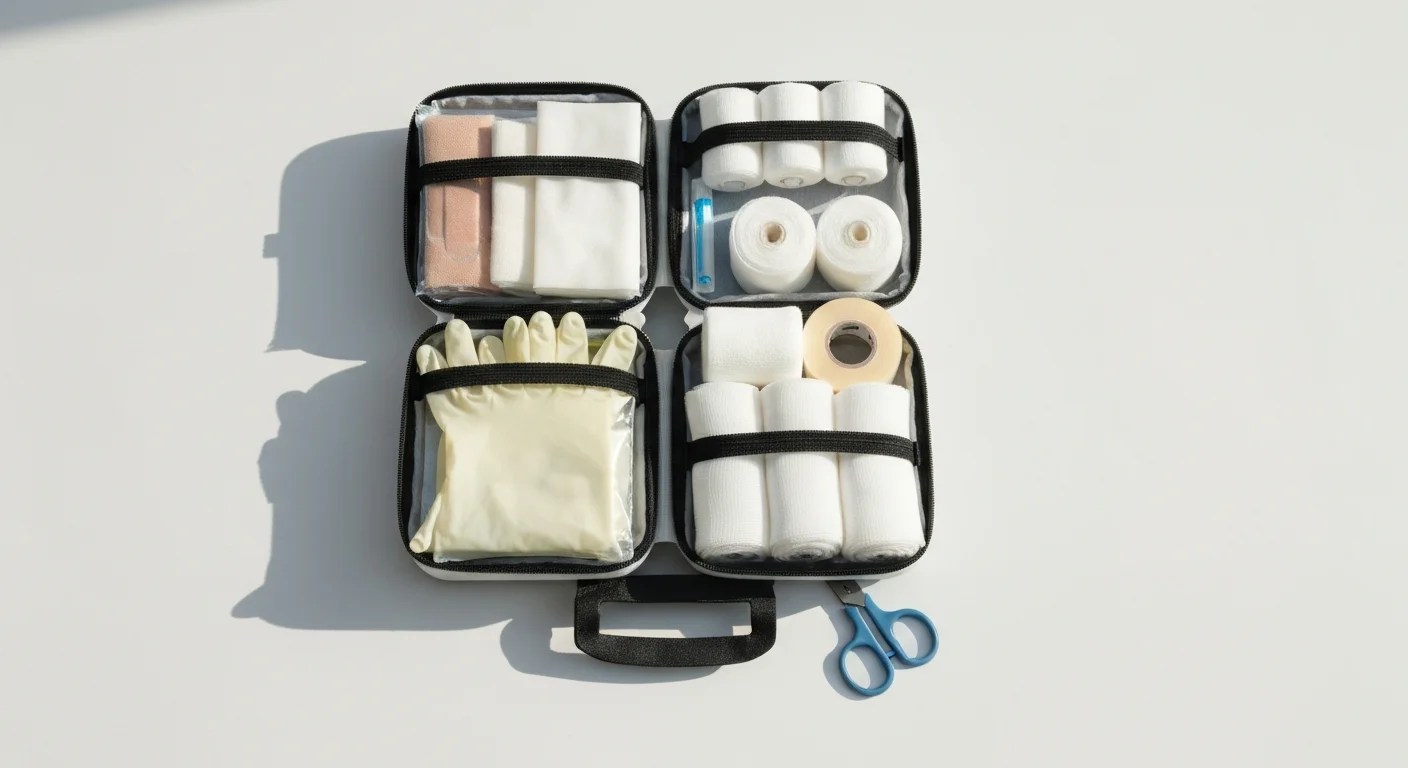
Build a safer workplace or home. Response Ready carries first aid kits and choking rescue devices that complement your first aid training. Browse our full selection at responseready.com or call 858-665-2025.
How to Help a Choking Infant (Under Age 1)
Infant choking requires a different approach because a baby’s body is too small and fragile for standard abdominal thrusts. The recommended technique for infant choking combines back blows and chest thrusts.
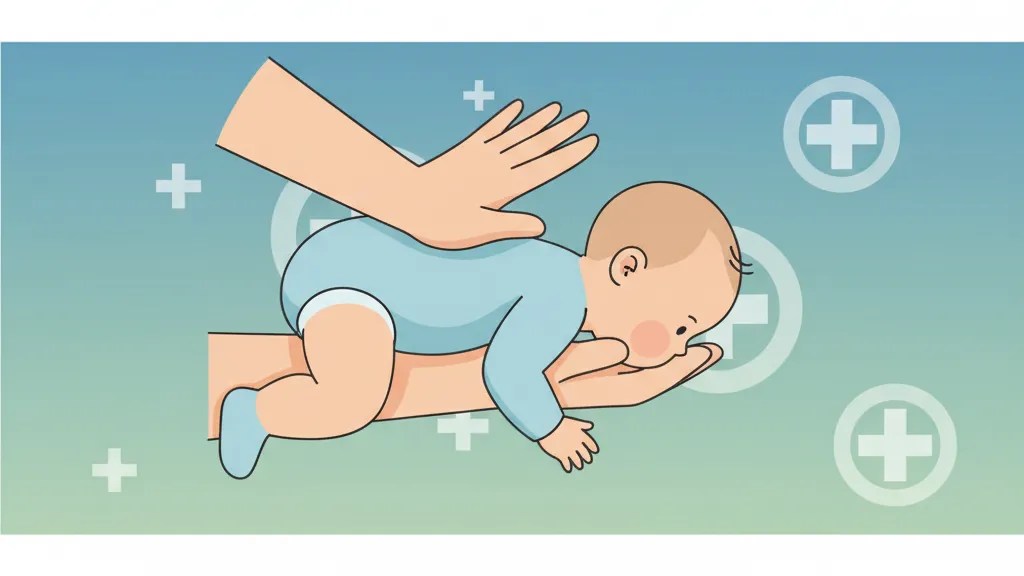
Step-by-Step for Infants
- Position the infant face-down on your forearm. Support the baby’s head and jaw with your hand. Rest your forearm on your thigh for stability. Keep the infant’s head lower than their chest.
- Deliver 5 back blows. Using the heel of your free hand, give 5 firm blows between the infant’s shoulder blades.
- Turn the infant face-up. Carefully flip the baby over, supporting the head and neck. Keep the head lower than the chest.
- Deliver 5 chest thrusts. Place two fingers on the center of the breastbone, just below the nipple line. Push down approximately 1.5 inches with each thrust.
- Repeat the cycle. Alternate between 5 back blows and 5 chest thrusts until the object is dislodged or the infant loses consciousness.
Critical Warnings for Infant Choking
- Never perform abdominal thrusts on an infant. Their internal organs are too vulnerable.
- Do not do a blind finger sweep. Only remove an object from the mouth if you can clearly see it. Sweeping blindly can push the object deeper.
- If the infant becomes unresponsive, begin infant CPR immediately and call 911.
How to Perform the Self-Heimlich Maneuver
Choking while alone is terrifying, but you can save your own life with the self-Heimlich maneuver. If no one else is around, act quickly.
Using Your Fists
- Make a fist and place the thumb side just above your navel.
- Grasp your fist with your other hand.
- Drive your fist inward and upward with a sharp, forceful thrust.
- Repeat until the object is dislodged.
Using a Chair or Countertop
- Position yourself behind a sturdy chair, countertop edge, or railing.
- Lean your upper abdomen (just above the navel) against the hard edge.
- Push yourself forcefully into the edge to create the same upward thrust effect.
- Repeat until you can breathe or the object comes out.
The self-Heimlich technique is just as effective as having another person help you. The key is acting fast before you lose the ability to generate force. If you have a phone within reach, call 911 before attempting self-rescue so help is already on the way.
When to Call 911
Call 911 immediately in any of these situations:
- The person is unable to breathe, cough, or speak
- Abdominal thrusts are not clearing the airway after several attempts
- The choking person loses consciousness
- You are alone and choking (call 911 first, then attempt self-rescue)
- The person is an infant or young child who is not responding to back blows and chest thrusts
Even after successfully clearing an airway obstruction, seek medical attention. Abdominal thrusts can cause internal bruising or rib injuries, and a medical professional should evaluate the person to rule out complications or any remaining debris in the airway.
Choking Prevention Tips
The best choking emergency is the one that never happens. These simple habits significantly reduce the risk of choking for both adults and children.
For Adults
- Cut food into small pieces and chew thoroughly before swallowing
- Avoid talking or laughing with food in your mouth
- Be extra cautious with common choking hazards like steak, hot dogs, hard candy, and grapes
- Limit alcohol during meals, which can impair the swallowing reflex
For Children and Infants
- Cut food into pieces no larger than half an inch for children under 4
- Supervise children during all meals and snacks
- Keep small objects like coins, buttons, batteries, and small toy parts out of reach
- Avoid giving children under 4 years old popcorn, whole nuts, whole grapes, hard candy, hot dogs (unless quartered lengthwise), or raw carrots
- Teach children to sit while eating and never run or play with food in their mouth
Prepare for any emergency before it happens. Response Ready provides complete first aid kits, choking rescue devices, and CPR and first aid training for homes, schools, and workplaces. Visit responseready.com or call 858-665-2025 to get started.
Frequently Asked Questions
Can you perform the Heimlich maneuver on yourself?
Yes. You can perform the self-Heimlich by making a fist above your navel and thrusting inward and upward, or by leaning your upper abdomen forcefully against the back of a sturdy chair or a countertop edge. Act quickly and call 911 if possible before attempting self-rescue.
What is the difference between the Heimlich maneuver and abdominal thrusts?
They are the same technique. “Abdominal thrusts” is the clinical term preferred by organizations like the American Red Cross, while “Heimlich maneuver” is the popular name most people recognize. Both refer to the inward-and-upward thrust applied just above the navel to expel an airway obstruction.
Should you perform the Heimlich maneuver on a choking infant?
No. Standard abdominal thrusts should never be used on infants under one year old. Instead, use a combination of 5 back blows and 5 chest thrusts. The infant’s organs are too fragile for the force generated by abdominal thrusts.
How many times should you perform abdominal thrusts?
Continue performing abdominal thrusts until the object is expelled and the person can breathe, or until they become unconscious. There is no set number of thrusts. If the person loses consciousness, transition to CPR and call 911 immediately.
Are choking rescue devices effective?
Suction-based choking rescue devices are designed as a last resort when traditional abdominal thrusts fail. While they can be helpful, major health organizations still recommend learning and using the Heimlich maneuver as your first response. A choking rescue device can be a valuable addition to your home or workplace first aid kit.
Can the Heimlich maneuver cause injuries?
Abdominal thrusts can sometimes cause bruising, sore ribs, or in rare cases, internal injuries. This is why medical evaluation after a choking event is always recommended, even when the obstruction is successfully cleared. The risk of injury is far outweighed by the alternative of not acting during a life-threatening choking emergency.