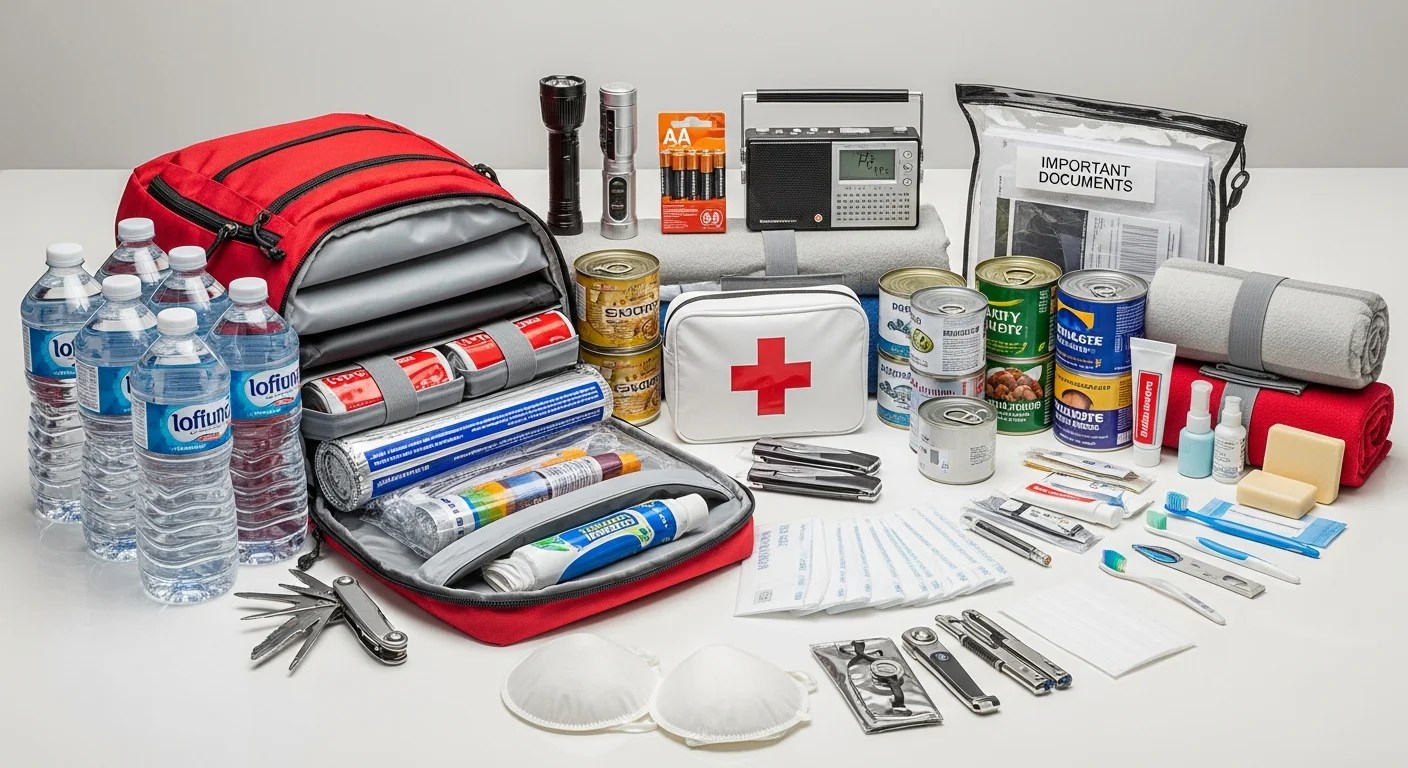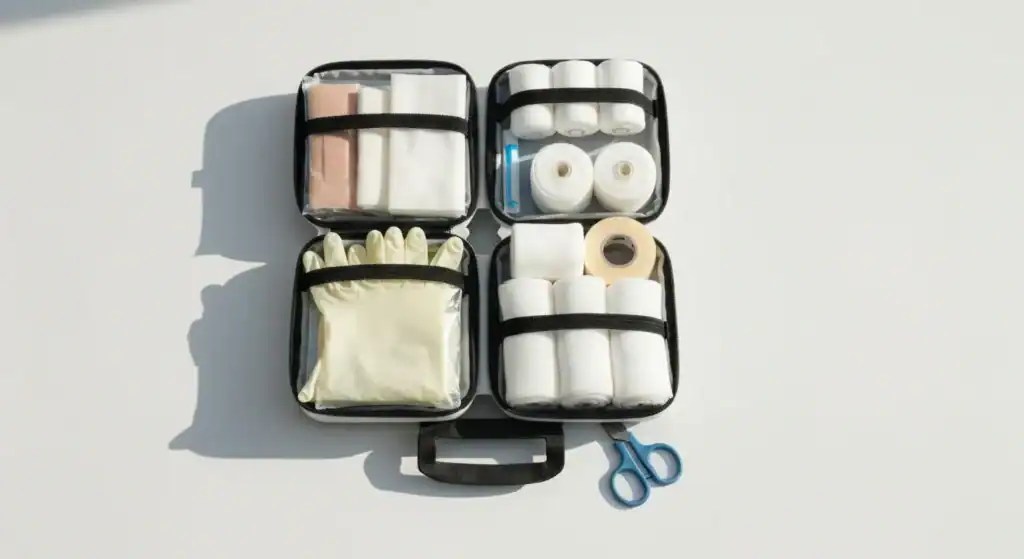
A first aid kit checklist is a comprehensive list of medical supplies and emergency items organized by purpose, ensuring you have the right materials to treat injuries, manage medical emergencies, and stabilize patients until professional help arrives. Response Ready provides first aid kits for homes, workplaces, vehicles, and travel, helping individuals and organizations prepare for emergencies with confidence.
Browse Response Ready’s complete collection of first aid kits designed for homes, offices, vehicles, and travel, all with free shipping on orders over $99.
Whether you are stocking a household medicine cabinet, meeting OSHA requirements at your workplace, preparing a roadside emergency kit for your car, or packing a travel-ready kit for your next trip, having the right supplies on hand can mean the difference between a minor incident and a serious medical situation. According to the National Safety Council, a well-stocked first aid kit is one of the most important safety investments any person or organization can make.
This guide from Response Ready walks through exactly what belongs in every type of first aid kit in 2026, with specific checklists for home, workplace, car, and travel kits. We also cover OSHA compliance requirements for employers and explain how to maintain your kit so it is always ready when you need it.
What Should Be in a First Aid Kit? The Essential Supplies Every Kit Needs
A first aid kit should contain supplies that address the most common injuries and medical situations: cuts, burns, sprains, allergic reactions, and bleeding. Response Ready recommends every first aid kit include a core set of items regardless of where it will be used, with additional supplies tailored to the specific environment.
The following list represents the universal foundation that every first aid kit needs:
- Adhesive bandages (assorted sizes, minimum 25 count)
- Sterile gauze pads (3×3 inch and 4×4 inch)
- Gauze rolls (2-inch and 4-inch widths)
- Medical adhesive tape (1-inch roll)
- Elastic bandage wraps (2-inch and 4-inch, for sprains and compression)
- Triangular bandage (for slings and immobilization)
- Antiseptic wipes (individually wrapped, minimum 10 count)
- Antibiotic ointment packets
- Hydrocortisone cream packets
- Burn cream or burn gel packets
- Disposable nitrile gloves (at least 2 pairs)
- Scissors (blunt-tip, medical grade)
- Tweezers (for splinter and tick removal)
- CPR breathing barrier (face shield or pocket mask)
- Instant cold pack
- First aid instruction guide
These items form the baseline. The sections below expand on what to add based on your specific situation.
Get certified in CPR
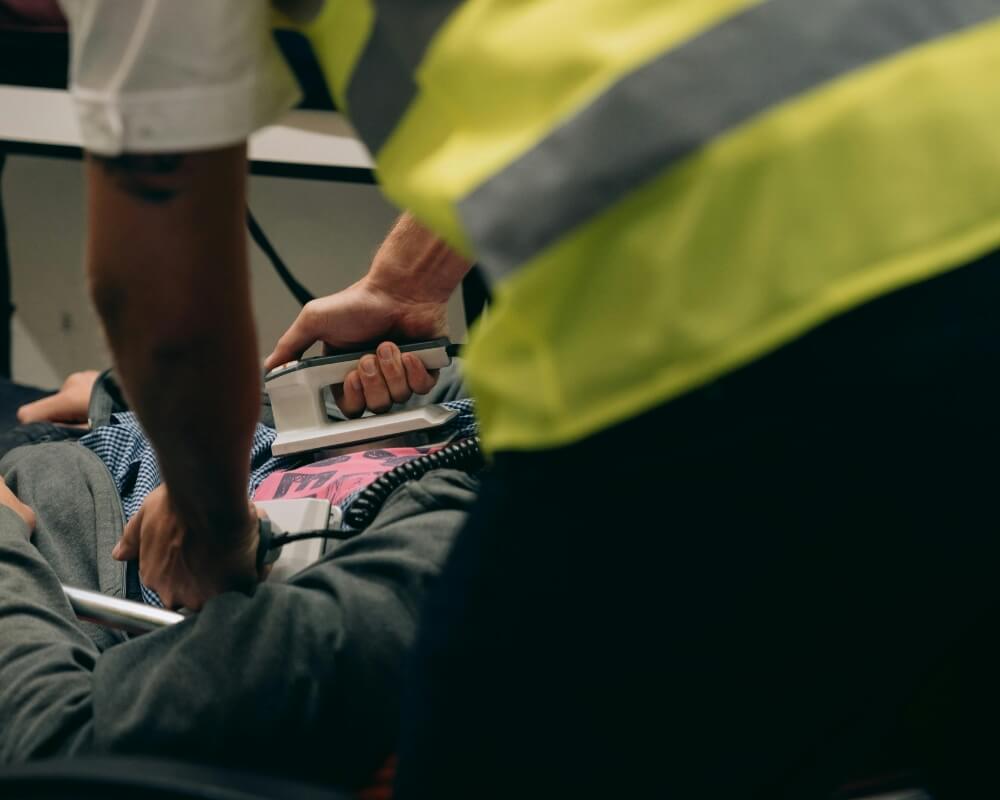
Adult & Pediatric First Aid/CPR/AED — Blended Learning
Self-paced online + in-person skills check. 2-year certification.
CPR, AED & First Aid Certification
Instructor-led on-site. Practice on real manikins and AED trainers.
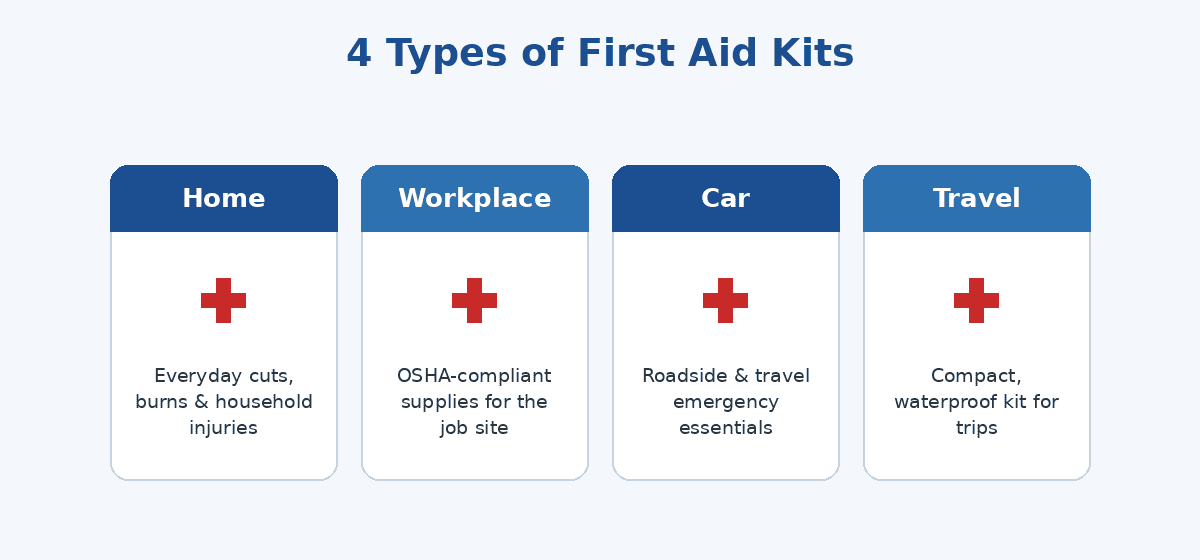
Home First Aid Kit Checklist: What Every Household Needs
A home first aid kit checklist should cover everyday injuries that occur around the house, from kitchen burns and playground scrapes to allergic reactions and minor sprains. Response Ready recommends keeping a home first aid kit in a central, easily accessible location that every family member knows about.
In addition to the essential supplies listed above, a home first aid kit should include:
- Digital thermometer
- Over-the-counter pain relievers (acetaminophen and ibuprofen, both adult and child doses if applicable)
- Antihistamine tablets (diphenhydramine for allergic reactions)
- Calamine lotion (for insect bites and rashes)
- Eye wash solution (sterile saline, 4 oz minimum)
- Butterfly closure strips (for wound closure without stitches)
- Finger splints
- Petroleum jelly (for wound care and protection)
- Emergency contact list (poison control: 1-800-222-1222, local emergency services)
- Prescription medications (copies of prescriptions and a supply of essential daily medications)
- Epinephrine auto-injector (if anyone in the household has severe allergies)
For families with children, add child-specific bandages, liquid pain relievers, and a bulb syringe. For households with elderly members, consider including a blood pressure monitor, glucose tablets, and a magnifying glass for reading medication labels.
Workplace First Aid Kit Checklist: OSHA Requirements Employers Must Follow
A workplace first aid kit must meet specific federal requirements set by the Occupational Safety and Health Administration (OSHA). Under OSHA standard 29 CFR 1910.151(b), employers are required to provide adequate first aid supplies in workplaces where employees may be exposed to injury or illness. OSHA does not prescribe a single mandatory list, but it references the American National Standards Institute (ANSI/ISEA Z308.1-2021) standard as a benchmark for minimum workplace first aid kit contents.
For a detailed breakdown of OSHA regulations, read Response Ready’s complete guide to OSHA first aid kit requirements.

ANSI/ISEA Z308.1-2021 Class A Minimum Requirements
The Class A standard covers workplaces with common injuries such as cuts, burns, and minor trauma. At minimum, an OSHA-compliant workplace first aid kit must contain:
| Item | Minimum Quantity (Class A) |
|---|---|
| Adhesive bandages (1 x 3 in) | 16 |
| Adhesive tape (2.5 yd) | 1 roll |
| Antibiotic treatment (0.5 g) | 10 packets |
| Antiseptic (0.5 g application) | 10 packets |
| Burn treatment (0.5 g) | 6 packets |
| Sterile pads (3 x 3 in) | 2 |
| Triangular bandage (40 x 40 x 56 in) | 1 |
| Gloves (disposable, exam-quality) | 2 pairs |
| Sterile gauze pad (4 x 4 in) | 1 pad |
| Hand sanitizer (0.5 g) | 6 packets |
| Roller bandage (2 in x 4 yd) | 1 roll |
| Scissors | 1 pair |
| Cold pack (4 x 5 in) | 1 |
| CPR barrier | 1 |
| First aid guide | 1 |
| Eye wash (1 fl oz) | 1 |
Class B (High-Risk Workplaces)
Workplaces with higher hazard levels, such as manufacturing plants, construction sites, and warehouses, should stock Class B kits. These contain larger quantities of Class A items plus additional supplies including multiple sizes of trauma pads (5 x 9 in and 8 x 10 in), elastic bandage wraps, eye coverings, and a splint.
Key OSHA Compliance Tips for Employers
- Accessibility: First aid kits must be readily accessible to all employees during every work shift
- Maintenance: Kits must be inspected regularly and replenished as items are used or expire
- Quantity: One kit is not enough for large workplaces. OSHA recommends one kit per 50 employees, distributed throughout the facility
- Training: If no medical facility is “in near proximity” (typically interpreted as within 3-4 minutes), OSHA requires at least one trained first aid provider per shift
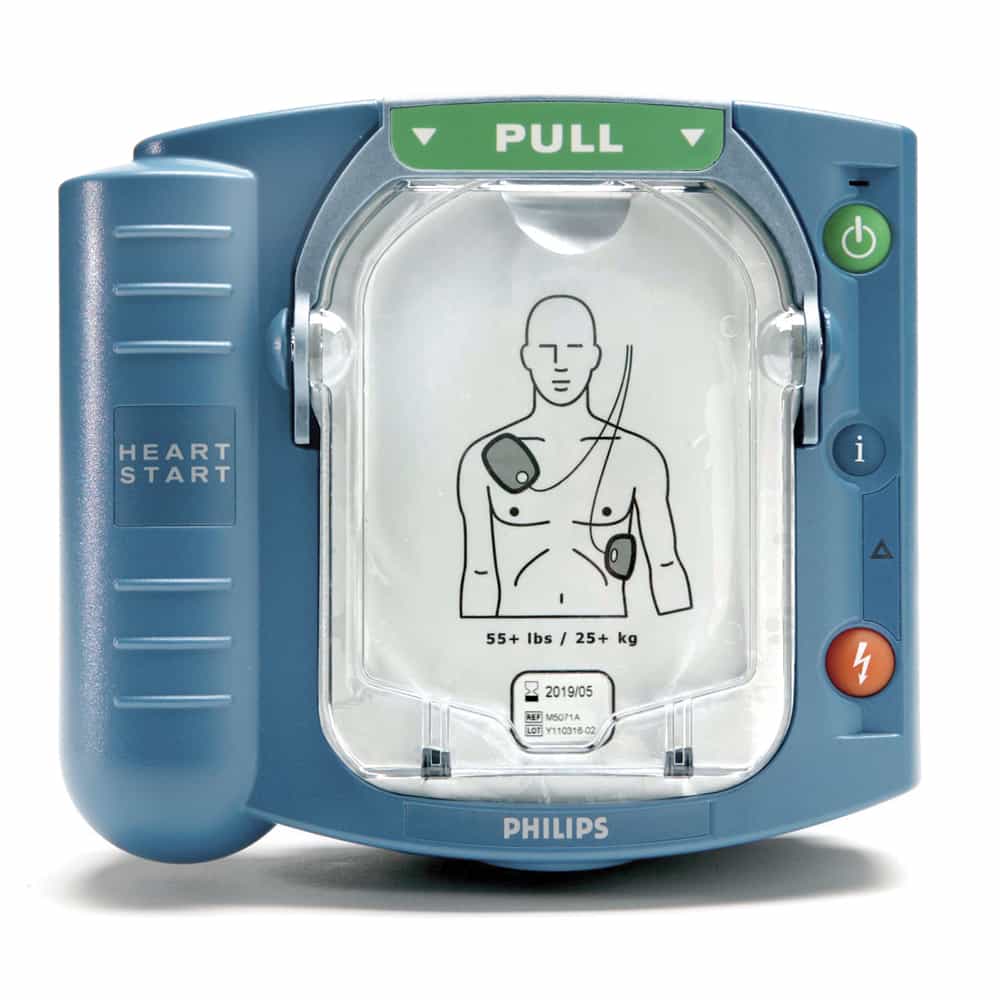
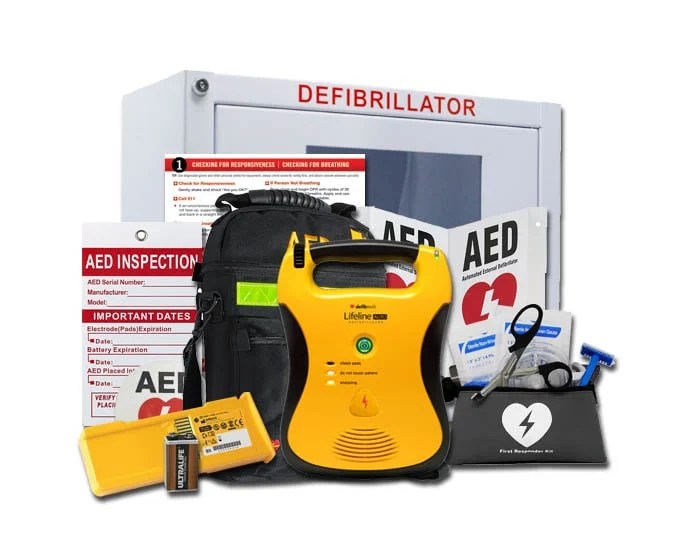
- AED consideration: While not mandated by OSHA for all workplaces, the American Heart Association recommends AEDs in any facility with more than 50 employees. Browse Response Ready’s AED collection
Ready to stock your workplace first aid kit? Response Ready carries a full selection of OSHA-compliant first aid kits designed for offices, warehouses, and job sites — with free shipping on orders over $99.
Car First Aid Kit Checklist: What to Keep in Your Vehicle
A car first aid kit serves a dual purpose: treating minor injuries on the go and providing emergency supplies during roadside incidents until help arrives. Response Ready recommends a compact, waterproof kit that fits in your trunk or glove compartment without taking up excessive space.
A car first aid kit should include all the essential supplies listed earlier, plus the following vehicle-specific items:
- Reflective emergency blanket (mylar space blanket for warmth and shock)
- Road flares or LED safety triangles
- Flashlight with extra batteries
- Multi-tool or pocket knife
- Seat belt cutter and window breaker tool
- Waterproof matches or lighter
- Duct tape (small roll, useful for splinting and temporary repairs)
- Sunscreen packets
- Insect repellent wipes
- Bottled water (rotate every 6 months)
- Non-perishable snacks (energy bars with long shelf life)
If you frequently drive in rural areas or travel long distances, consider adding a bleeding control kit to your car. Response Ready carries compact kits that include a tourniquet, hemostatic gauze, and pressure bandage, supplies that could save a life in a serious roadside emergency before EMS arrives.

RECOMMENDED
HeartSine Samaritan 350P AED Package
Compact, fully-automatic AED designed for first-time responders. Pads, battery, carry case and wall sign included.
Travel First Aid Kit Checklist: What to Pack for Trips
A travel first aid kit should be lightweight, TSA-compliant (if flying), and tailored to your destination. Response Ready recommends building a travel kit around the core essentials and adding destination-specific items based on your planned activities.
Base Travel First Aid Kit Contents
- Adhesive bandages (assorted sizes, 10-15 count)
- Antiseptic wipes (10 count)
- Antibiotic ointment packets (5 count)
- Gauze pads (3×3 in, 4 count)
- Medical tape (small roll)
- Moleskin (for blisters)
- Pain relievers (acetaminophen and ibuprofen)
- Anti-diarrheal medication
- Antihistamine tablets
- Motion sickness medication
- Electrolyte packets (for dehydration)
- Disposable gloves (2 pairs)
- Tweezers
- Small scissors
- Sunscreen (SPF 30+ travel size)
- Insect repellent
- Hand sanitizer
- Copies of prescriptions and insurance cards
Destination-Specific Additions
- International travel: Water purification tablets, oral rehydration salts, anti-malarial medication (if applicable), and a digital thermometer
- Hiking and camping: Snake bite kit, emergency whistle, waterproof matches, signal mirror, and an Israeli bandage for serious wounds
- Beach and tropical: Aloe vera gel, coral cut treatment, jellyfish sting relief, and extra sunscreen
- Cold weather: Hand warmers, lip balm with SPF, frostbite cream, and extra emergency blankets
How to Maintain Your First Aid Kit: Inspection and Replacement Schedule
A first aid kit is only effective if its contents are complete, unexpired, and properly stored. Response Ready recommends the following maintenance schedule to keep every first aid kit ready for use.
- Monthly check: Open the kit, visually confirm all items are present, and verify nothing has been used and not replaced
- Quarterly inspection: Check expiration dates on medications, ointments, antiseptic wipes, and cold packs. Replace any expired items immediately
- After every use: Restock any item that was used, no matter how small. A missing adhesive bandage today could mean a missing tourniquet tomorrow
- Annual review: Evaluate whether your kit still matches your needs. Has your family grown? Has your workplace changed? Have you started a new activity? Update the contents accordingly
Store first aid kits in a cool, dry location away from direct sunlight. Extreme heat and moisture degrade medications, adhesive products, and sterile packaging. For car kits, check supplies after every season change since temperature fluctuations accelerate expiration.
How to Choose the Right First Aid Kit
Response Ready carries a range of first aid kits designed for different environments and requirements. When selecting a kit, consider these factors:
- Number of people: A family of four needs a different kit than a 200-person office
- Location: Wall-mounted cabinets work best for workplaces, portable soft cases for vehicles and travel
- Compliance requirements: Employers must meet ANSI/ISEA standards. Look for kits labeled “ANSI A” or “ANSI B”
- Environment hazards: Construction sites, kitchens, and outdoor recreation areas each have unique injury patterns that require specialized supplies
- Portability: Travel and car kits need to be compact and lightweight while still covering essentials
Response Ready offers ANSI-compliant first aid kits from trusted manufacturers, with options ranging from compact 16-unit kits to large SmartCompliance cabinets that serve facilities with hundreds of employees. Every kit ships with free shipping on orders over $99 and a 30-day money-back guarantee.
Shop Response Ready’s first aid kit collection and find the right kit for your home, workplace, or vehicle. Call 858-665-2025 for personalized recommendations.

Not sure which AED or training fits your needs?
A Response Ready product expert walks you through it — no obligation.
Frequently Asked Questions About First Aid Kits
What should a basic first aid kit contain?
A basic first aid kit should contain adhesive bandages, sterile gauze pads, medical tape, antiseptic wipes, antibiotic ointment, disposable gloves, scissors, tweezers, a CPR breathing barrier, an instant cold pack, and a first aid instruction guide. These items address the most common injuries including cuts, scrapes, burns, and sprains.
What are the OSHA requirements for a workplace first aid kit?
OSHA requires employers to provide adequate first aid supplies under standard 29 CFR 1910.151(b). While OSHA does not prescribe a specific list, it references the ANSI/ISEA Z308.1-2021 standard as the benchmark. Class A kits cover general workplaces, while Class B kits serve high-hazard environments with additional supplies like trauma pads and splints.
How often should you check your first aid kit?
Response Ready recommends a monthly visual check to confirm all items are present, a quarterly inspection of expiration dates, immediate restocking after any use, and a full annual review to ensure the kit matches your current needs. Workplace kits should follow OSHA inspection requirements, which mandate regular maintenance.
What is the difference between a home first aid kit and a workplace first aid kit?
A home first aid kit focuses on everyday household injuries and often includes medications like pain relievers and antihistamines. A workplace first aid kit must meet ANSI/ISEA standards and focuses on occupational injuries such as burns, eye injuries, and trauma. Workplace kits also require higher quantities of supplies to serve multiple employees.
Do first aid kit supplies expire?
Yes. Medications, antibiotic ointments, antiseptic wipes, hydrocortisone cream, and cold packs all have expiration dates. Adhesive products can also degrade over time, losing their stickiness. Sterile packaging can be compromised by moisture and temperature extremes. Check expiration dates quarterly and replace expired items immediately.
What first aid kit is best for a car?
The best car first aid kit is compact, waterproof, and includes both medical supplies and roadside safety items like a reflective blanket, flashlight, and seat belt cutter. Response Ready carries vehicle-ready kits that combine essential medical supplies with emergency tools in a durable, temperature-resistant case.
Disclaimer: The information provided in this article is intended for general educational and informational purposes only. It is not medical advice and should not be used as a substitute for professional diagnosis, treatment, or care. Always consult a qualified healthcare or medical professional regarding any health-related questions or concerns.