What Is Hands-Only CPR?
Hands-only CPR is a simplified form of cardiopulmonary resuscitation that uses chest compressions alone, without mouth-to-mouth breathing. The American Heart Association (AHA) recommends this technique for untrained bystanders or anyone who is not confident performing conventional CPR with rescue breaths.
The concept is straightforward: if you see a teen or adult suddenly collapse and become unresponsive, you can help save their life with just two steps. Call 911, then push hard and fast in the center of the chest. That is hands-only CPR, and it is something anyone can learn in 60 seconds.
Every year, more than 350,000 out-of-hospital cardiac arrests occur in the United States. Fewer than half of these victims receive bystander CPR before emergency medical services arrive. Hands-only CPR removes the barriers that stop people from acting, giving every bystander the confidence to step in during the most critical minutes of a cardiac emergency.
Ready to go beyond the basics? Response Ready offers CPR and AED training courses through our nationwide instructor network so you can build real confidence for any emergency. Call us at 858-665-2025 to learn more.
Why Does Hands-Only CPR Work?
When someone goes into cardiac arrest, their heart stops pumping blood effectively. Within minutes, the brain and vital organs begin to suffer irreversible damage from oxygen deprivation. Chest compressions manually pump blood through the body, delivering the oxygen that is already in the bloodstream to the brain and heart.
Research published by the AHA shows that hands-only CPR performed by a bystander is just as effective as conventional CPR with rescue breaths for adults who collapse suddenly in an out-of-hospital setting. During the first several minutes of cardiac arrest, the victim’s blood still contains enough oxygen to sustain vital organs, as long as someone keeps that blood circulating through compressions.
The key factor is time. For every minute that passes without CPR, the chance of survival drops by 7 to 10 percent. By performing hands-only CPR immediately, you keep blood flowing until paramedics arrive or an automated external defibrillator (AED) can be used to restore a normal heart rhythm.
The Two Steps of Hands-Only CPR
Hands-only CPR consists of just two steps. Follow them if you see a teen or adult suddenly collapse and become unresponsive.
Step 1: Call 911 (or Ask Someone Nearby to Call)
Before you start compressions, call 911 immediately or direct a specific bystander to make the call. Tell the dispatcher that someone has collapsed and is not breathing normally. If possible, also ask someone to locate the nearest AED.
The 911 dispatcher can guide you through CPR over the phone if needed. Many dispatch centers are trained to provide telephone-assisted CPR instructions, so you will have real-time support while you work.
Step 2: Push Hard and Fast in the Center of the Chest
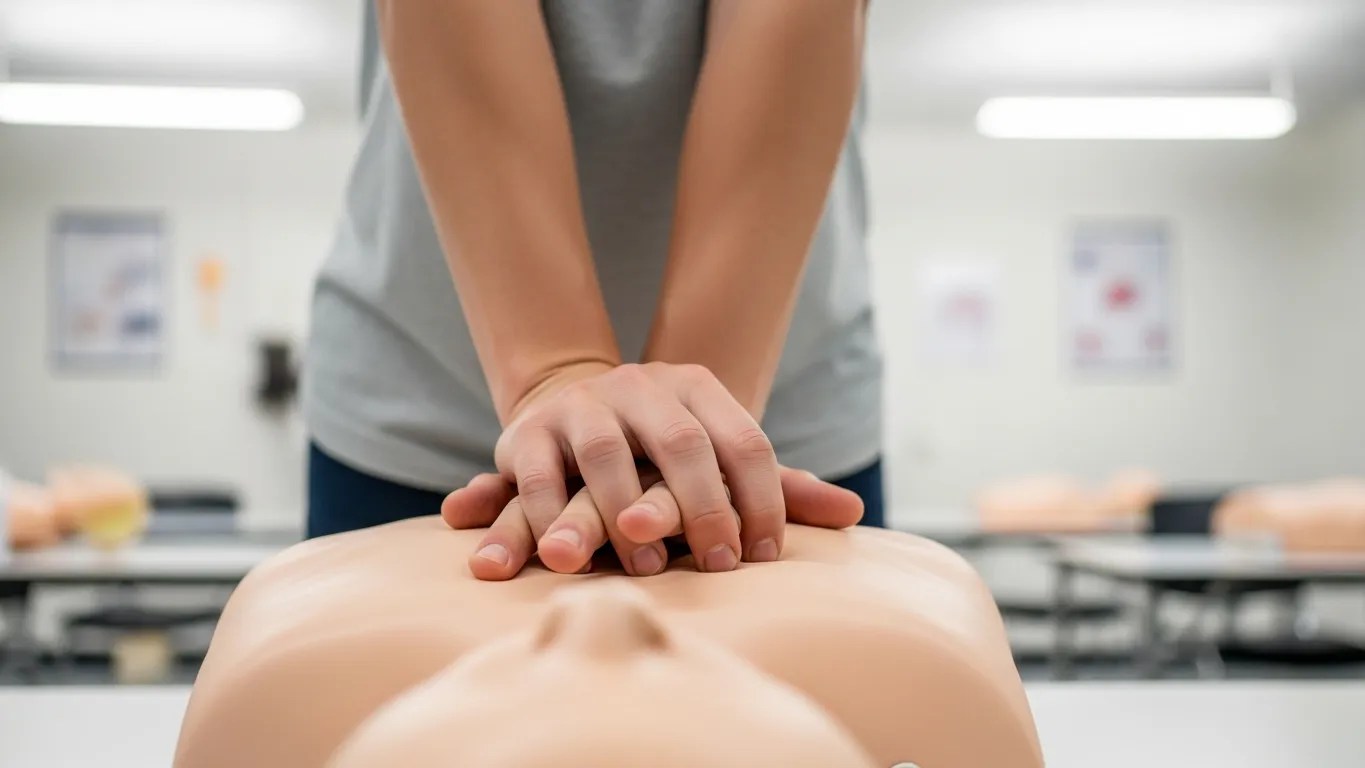
Kneel beside the person and place the heel of one hand on the center of their chest, right on the breastbone (sternum). Place your other hand on top and interlace your fingers. Keep your arms straight and your shoulders directly above your hands.
Push down at least 2 inches deep (about 5 centimeters) at a rate of 100 to 120 compressions per minute. Allow the chest to fully recoil between each compression. Do not stop until emergency medical services take over or an AED becomes available.
That is it. Two steps, no mouth-to-mouth, no special equipment. Just your hands and the willingness to act.
How to Find the Right Compression Rate: Use a Song
Compressing at 100 to 120 beats per minute can feel abstract until you match it to music. The AHA famously recommends using the beat of familiar songs to keep your rhythm steady during chest compressions.
The most well-known reference is “Stayin’ Alive” by the Bee Gees, which has a tempo of approximately 104 beats per minute. Hum or think of this song while performing compressions, and you will naturally fall into the correct range.
Other songs that match the recommended tempo include:
- “Crazy in Love” by Beyonce (99 BPM)
- “Hips Don’t Lie” by Shakira (100 BPM)
- “Walk the Line” by Johnny Cash (107 BPM)
- “Dancing Queen” by ABBA (101 BPM)
- “Another One Bites the Dust” by Queen (110 BPM)
Pick whichever song helps you maintain a steady rhythm. The goal is consistency: push hard, push fast, and do not stop.
When to Use Hands-Only CPR vs. Conventional CPR
Hands-only CPR is the right choice in specific situations. Understanding when to use it versus conventional CPR (with rescue breaths) helps you respond appropriately.
Use hands-only CPR when:
- A teen or adult suddenly collapses and is unresponsive
- You are not trained in conventional CPR
- You are trained but not confident performing rescue breaths
- You do not have a CPR barrier device available
Use conventional CPR with rescue breaths when:
- The victim is an infant or child
- The cardiac arrest was caused by drowning, drug overdose, or choking (respiratory causes)
- You are trained and confident in full CPR technique
- You have a CPR barrier device or pocket mask available
For children and infants, rescue breaths are especially important because pediatric cardiac arrests are more often caused by breathing problems rather than heart rhythm issues. If you are unsure, doing hands-only CPR is always better than doing nothing.
| Factor | Hands-Only CPR | Conventional CPR |
|---|---|---|
| Technique | Chest compressions only | Compressions + rescue breaths |
| Best For | Adults, teens (sudden collapse) | Infants, children, drowning, overdose |
| Training Required | No | Yes (certification recommended) |
| Compression Rate | 100-120 per minute | 100-120 per minute |
| Compression Depth | At least 2 inches | At least 2 inches (adults) |
| Rescue Breaths | None | 30:2 ratio (compressions to breaths) |
| AHA Recommendation | Untrained bystanders | Trained rescuers |
Want to learn both techniques? Our CPR1 training program covers hands-only CPR, conventional CPR, and AED use for adults, children, and infants. Browse our training courses or call 858-665-2025 to schedule a class.
Using an AED with Hands-Only CPR
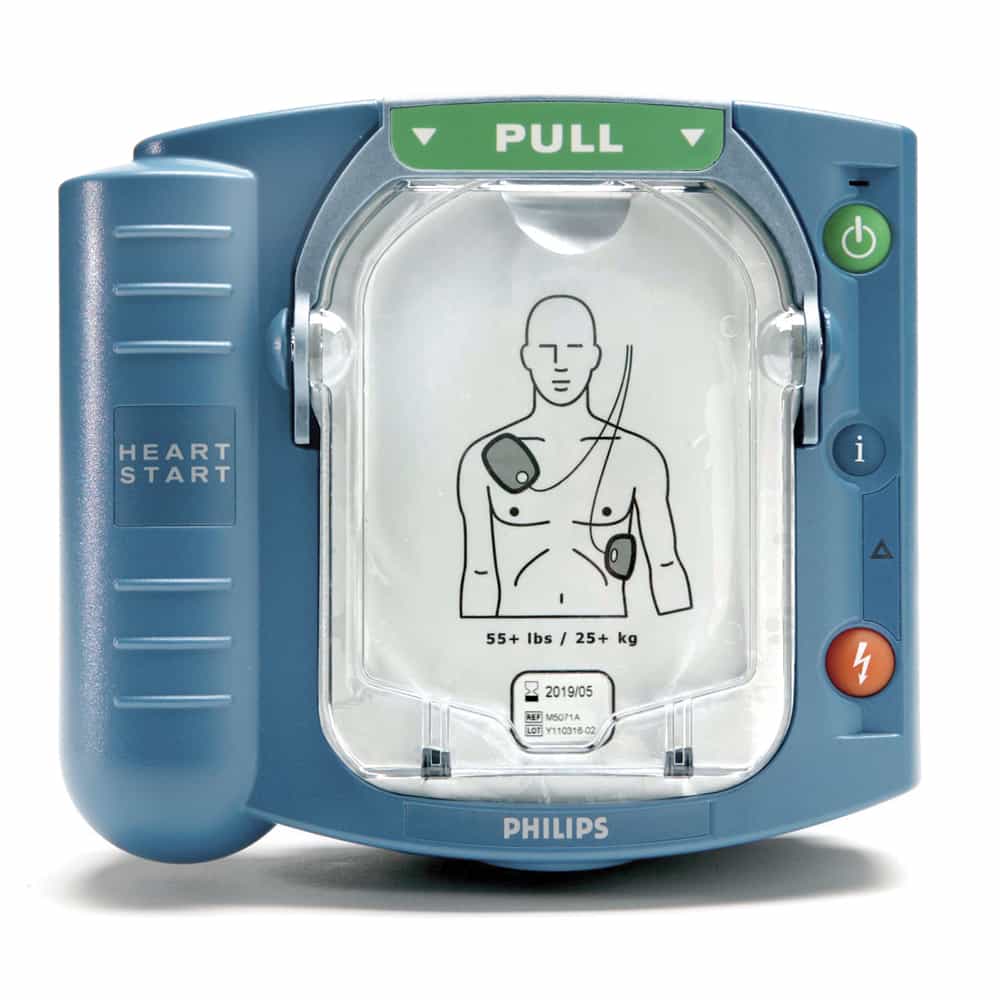
Hands-only CPR and AEDs work together as the two most critical links in the chain of survival. While CPR keeps blood flowing, an AED can actually correct the abnormal heart rhythm, such as ventricular fibrillation, that caused the cardiac arrest.
If an AED is nearby, have someone retrieve it while you continue compressions. When the AED arrives:
- Turn on the AED and follow the voice prompts
- Attach the electrode pads to the victim’s bare chest as shown in the diagrams on the pads
- Stand clear when the AED analyzes the heart rhythm
- Deliver a shock if the AED advises one
- Resume chest compressions immediately after the shock
When bystander CPR is combined with early AED use, survival rates from sudden cardiac arrest can increase to 50 percent or higher, compared to single-digit survival rates when no intervention occurs.
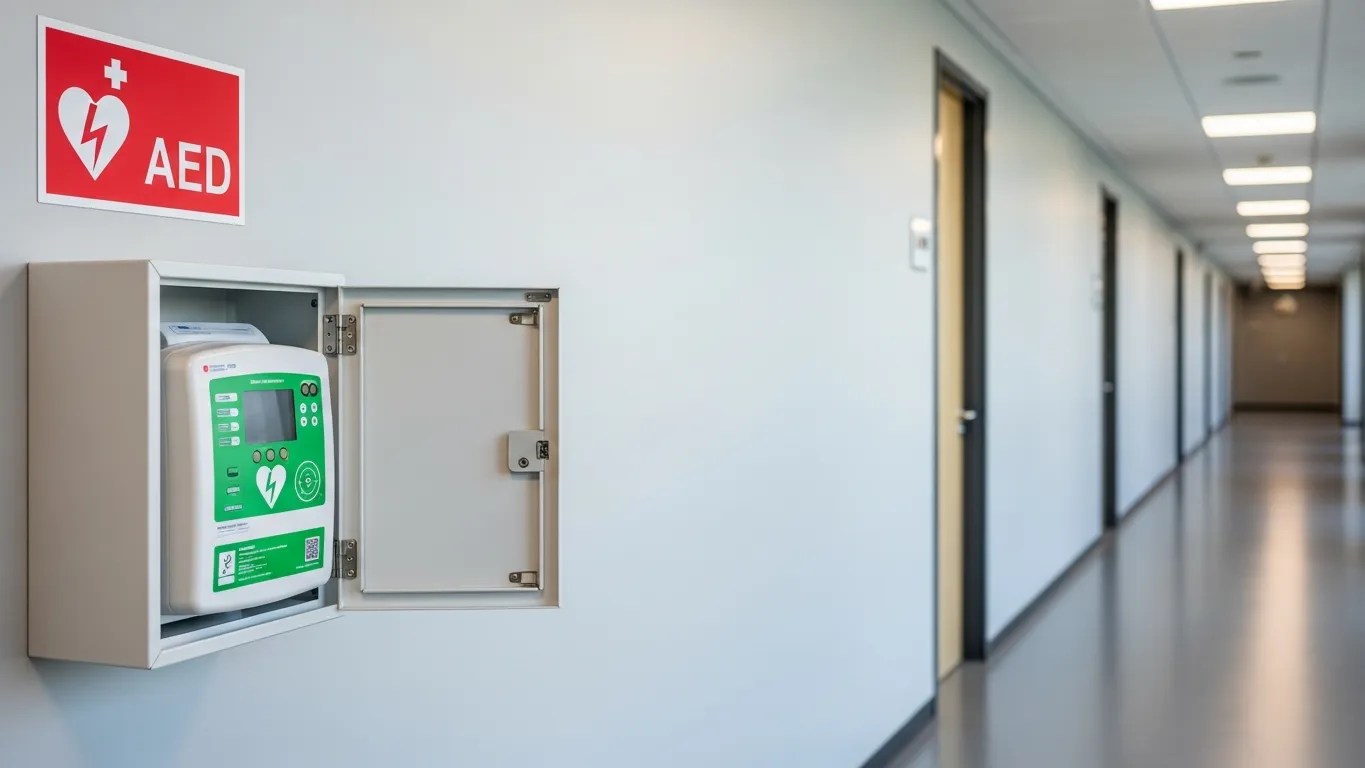
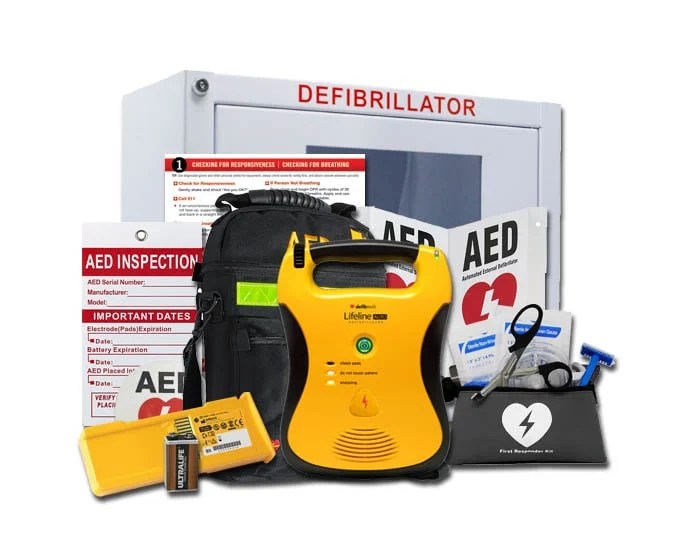
Having an AED accessible in your home, workplace, or community means the difference between waiting for paramedics and taking immediate, life-saving action. Explore AED packages that include everything you need to get started.
Common Mistakes to Avoid During Hands-Only CPR
Even with a simple two-step technique, a few common mistakes can reduce the effectiveness of your compressions:
- Compressing too shallow. Push at least 2 inches deep. Many bystanders are afraid of hurting the victim and do not press hard enough. Effective compressions require significant force.
- Compressing too slowly. Maintain a rate of 100 to 120 compressions per minute. Slower compressions reduce blood flow to the brain and heart.
- Stopping compressions. Every pause in compressions means blood stops flowing. Minimize interruptions. If you get tired, have another bystander take over immediately.
- Not allowing full chest recoil. After each compression, let the chest come all the way back up. Leaning on the chest between compressions reduces the heart’s ability to refill with blood.
- Delaying action. Do not spend time checking for a pulse or waiting to see if the person “wakes up.” If someone is unresponsive and not breathing normally, start compressions immediately.
Who Should Learn Hands-Only CPR?
The short answer: everyone. Hands-only CPR is designed to be accessible to people with no medical training. You do not need certification, special equipment, or prior experience. All you need is the knowledge of those two steps and the confidence to act.
However, certain groups benefit the most from learning this technique:
- Family members of people with heart disease. About 70 percent of out-of-hospital cardiac arrests happen at home. Knowing hands-only CPR means you can help the people closest to you.
- Teachers and school staff. Schools with AED programs benefit from having staff trained in both CPR and AED use.
- Gym and fitness center employees. Fitness centers in over 20 states are required to have AEDs on-site, and trained staff improves response times.
- Office workers and managers. Workplace CPR training prepares employees to respond before paramedics arrive.
- Church volunteers and community leaders. Faith-based organizations with older congregations should have trained responders on-site.
Frequently Asked Questions About Hands-Only CPR
Is hands-only CPR as effective as regular CPR?
Yes, for adults who collapse suddenly from cardiac arrest, hands-only CPR is just as effective as conventional CPR with rescue breaths. The AHA recommends it for untrained bystanders because the victim’s blood still contains enough oxygen in the first several minutes to sustain vital organs.
Can I hurt someone by performing hands-only CPR?
It is possible to crack a rib during chest compressions, especially in older adults. However, this is a minor injury compared to the alternative. Without CPR, a person in cardiac arrest will not survive. Broken ribs heal; cardiac arrest without intervention does not.
How long should I continue hands-only CPR?
Continue compressions until emergency medical services arrive and take over, an AED is available and ready to use, or the person starts breathing normally and moving on their own. Do not stop unless you are physically unable to continue, in which case have another bystander take over.
Do I need to be certified to perform hands-only CPR?
No. Hands-only CPR requires no certification. Anyone can perform it. However, getting certified in full CPR and AED use gives you a broader skill set for more situations. Explore CPR certification courses through Response Ready.
Am I legally protected if I perform hands-only CPR?
Yes. All 50 U.S. states have Good Samaritan laws that protect bystanders who provide emergency care in good faith. You cannot be held liable for injuries sustained during a good-faith attempt to save someone’s life.
Should I perform hands-only CPR on a child or infant?
For children and infants, conventional CPR with rescue breaths is preferred because pediatric cardiac arrests are more often caused by breathing problems. However, if you only know hands-only CPR, doing compressions alone is still far better than doing nothing.
Every second matters in a cardiac emergency. Response Ready provides AEDs from all six FDA-approved manufacturers, complete AED packages, and CPR and AED training to help you prepare for the unexpected. Call 858-665-2025 to speak with our emergency preparedness team today.