- Published
- February 17, 2026
Semi-Automatic vs Fully Automatic: Which AED to Buy?


In a cardiac emergency, the greatest obstacle isn’t the technology; it’s human hesitation. Even with a life-saving device in hand, the stress of the moment can cause a dangerous delay. This is why the discussion around semi-automatic vs fully automatic AEDs is so important. It all comes down to a single action: pressing the shock button. By understanding how each type of device manages this critical step, you can choose a model that removes psychological barriers and empowers anyone to act decisively. Let’s explore which option best builds the confidence needed to save a life.
Semi-Automatic vs. Fully Automatic AED: Which is Right for You?
When a sudden cardiac arrest occurs, every second counts. Choosing the right Automated External Defibrillator (AED) is one of the most important decisions you can make for your home, school, or business. But as you compare models, you’ll face a critical question: should you get a semi automatic or a fully automatic device?
The answer isn’t about which one is “better” but which one is best suited for your specific environment and the potential rescuers who might use it. This guide will walk you through the key differences, the psychology behind using an AED in a crisis, and help you make a confident, life saving choice. At Response Ready, we’ve spent over a decade helping people prepare for emergencies, and our expertise is here to guide you.
The Key Difference: Who Pushes the Button?
At their core, both semi automatic and fully automatic AEDs perform the same life saving function. They analyze a person’s heart rhythm and determine if a therapeutic shock is needed. Both use clear voice prompts and visual cues to guide a rescuer through every step, from pad placement to CPR. Crucially, neither type of AED will ever deliver a shock unless it detects a shockable heart rhythm, making them incredibly safe for anyone to use.
The only mechanical difference lies in how the shock is delivered:
- Semi Automatic AEDs (SAEDs):
After determining a shock is needed, the device instructs the rescuer to press a flashing button to deliver the shock. The rescuer is in control of that final step. - Fully Automatic AEDs (FAEDs):
After determining a shock is needed, the device gives a clear verbal warning and a countdown, then delivers the shock automatically without requiring a button press.
While this seems like a small distinction, it has a profound impact on how a rescue unfolds, especially when the person responding is a family member, a teacher, or a coworker with little to no medical training.
How a Semi-Automatic AED Works
A semi-automatic AED guides you through the entire rescue, but it gives you the final say before a shock is delivered. After you apply the AED pads to the person’s chest, the device analyzes their heart rhythm. If it detects a shockable rhythm, it will charge up and then instruct you to press a button, which is usually flashing to get your attention. This design puts you in control of that critical moment, allowing you to perform a final safety check and ensure no one is touching the person before you deliver the shock. This small step can provide a sense of control in a high-stress situation, which is why many trained responders and medical professionals prefer this type of device.
How a Fully Automatic AED Works
A fully automatic AED is designed to simplify the rescue process as much as possible by removing the need for the rescuer to press a shock button. Just like a semi-automatic model, it analyzes the heart rhythm after the pads are applied. If a shock is necessary, the device doesn’t wait for your input. Instead, it provides a clear verbal warning, such as “Shock advised, stand clear,” followed by a countdown. It then delivers the shock on its own. This automation can be a huge advantage for untrained bystanders who might hesitate or feel anxious about pressing the button themselves. By handling this step, the AED ensures the life-saving shock is delivered without delay.
Why User Confidence Matters in an Emergency
In a perfect world, a bystander would always use a nearby AED. The data is overwhelmingly clear: bystander AED use can double a person’s chance of survival. Research from the National Institutes of Health shows that survival rates jump to 53% when a bystander uses an AED. Yet, in reality, bystander defibrillation happens in only 2% to 5% of out of hospital cardiac arrests.
Why the gap? The answer is human nature. During a high stress emergency, people experience panic, fear of making a mistake, and a phenomenon known as the “bystander effect,” where everyone assumes someone else will act. This is where the shock button becomes a major psychological hurdle. The act of pressing that button can feel immense, causing a moment of hesitation that can cost precious seconds or even lead to a critical error.
One study found that 72% of AED use errors were related to the operator, including the rescuer simply failing to press the shock button. A fully automatic AED removes this moment of doubt and potential for error. By taking on the responsibility of delivering the shock, it empowers an untrained or panicked rescuer to focus solely on following the prompts and providing CPR.
Understanding the Technology and Its Importance
A Brief History of the AED
Automated External Defibrillators haven’t always been the compact, user-friendly devices we see today. When they were first introduced in the late 20th century, they were bulkier and primarily found in hospitals. But over the years, incredible advancements in technology have transformed them into essential tools for public safety. Modern AEDs are designed specifically for lay rescuers—people like you and me—with no medical background. They are lightweight, portable, and built to guide a user through a stressful event with total clarity. This evolution is critical because it has moved life-saving power out of the hands of just medical professionals and into our communities, workplaces, and homes.
Sudden Cardiac Arrest: The Statistics
To understand why having an AED nearby is so important, it helps to know the numbers. Sudden cardiac arrest (SCA) is a leading cause of death in the United States, with over 350,000 cases occurring outside of a hospital every year. When SCA strikes, the chances of survival are tragically low, often less than 10%. However, immediate CPR and a shock from an AED can double or even triple those odds. In fact, research shows that when a bystander uses an AED, survival rates can jump to over 50%. That’s a staggering difference, and it highlights the power that a single person with the right tool has to change an outcome. An AED package provides everything needed to be that person.
Common Myths and Misconceptions About AEDs
Despite the clear benefits, many people hesitate to use an AED because of a few persistent myths. The most common one is that you need to be a medical professional, but these devices are designed for anyone to use. Another misconception is that you could accidentally hurt someone. This is impossible; an AED analyzes the heart’s rhythm and will only deliver a shock if it detects a life-threatening arrhythmia. It simply will not shock a healthy heart. Finally, people worry they are too complicated. In reality, once you open the device, it provides clear, calm voice instructions and visual diagrams to guide you through every single step. Completing a CPR and AED training course can help build the confidence to act without hesitation.
How to Match an AED to Your Location
With this understanding, we can make clear, tailored recommendations based on where the AED will be placed and who is most likely to use it.
For Your Home
In a home setting, the rescuer will almost certainly be an untrained family member acting under extreme emotional distress. There is no room for hesitation.
- Recommendation:
A fully automatic AED. It simplifies the process and removes the psychological barrier of pressing the shock button, ensuring the life saving therapy is delivered without delay.
For Schools and Public Spaces
These locations have high foot traffic and a diverse mix of staff, volunteers, and public visitors with varying levels of confidence and training. Simplicity is essential.
- Recommendation:
A fully automatic AED. It is the most straightforward option for public access defibrillation programs, minimizing the chance of user error and empowering anyone on site to act decisively. Be sure to have pediatric pads or a child key available.
For Your Small Business
The right choice here depends on your staff. Do you have a dedicated response team with regular CPR and AED training?
- Recommendation:
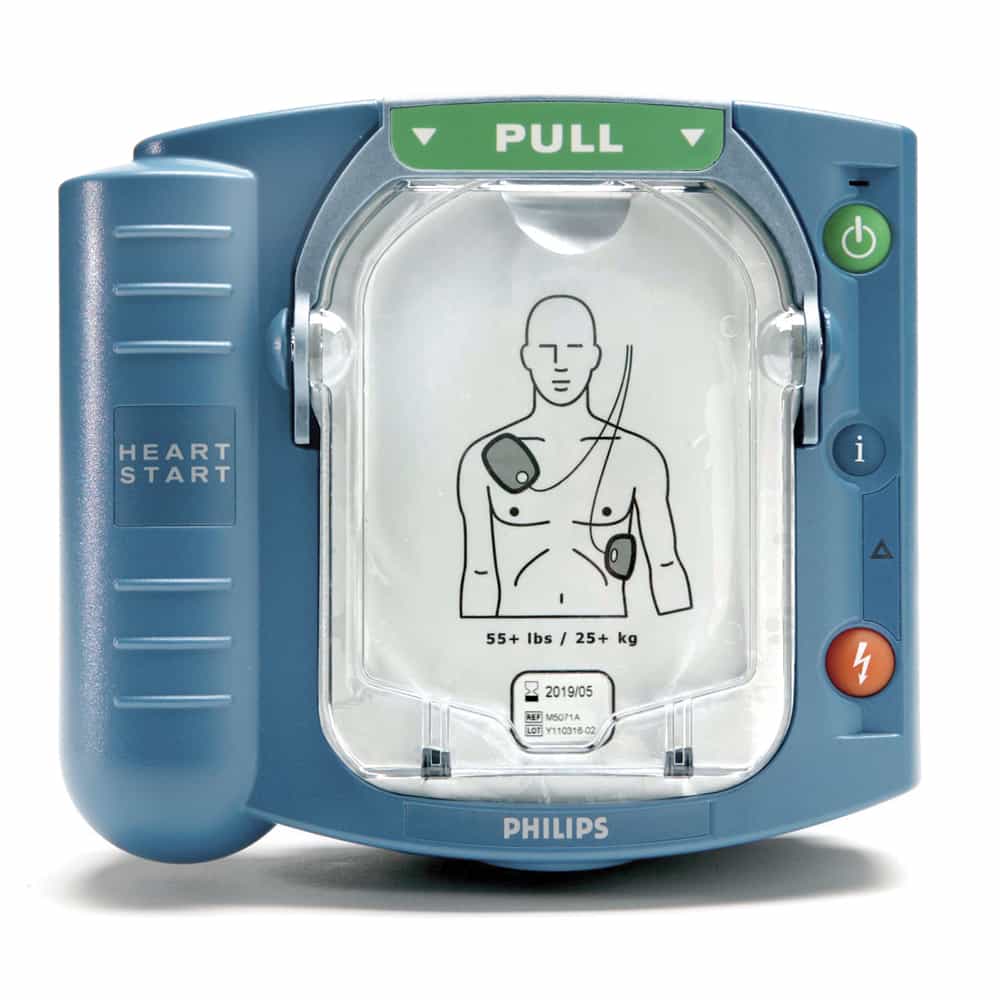
A fully automatic AED is still the safest choice, as it ensures any employee or even a customer can effectively use the device. However, if your business has a robust safety program with highly trained and confident responders, a semi automatic model like the Philips HeartStart OnSite AED can also be an excellent option.
Is a Hybrid AED the Smartest Choice?
What if you want the control preferred by some trained responders but also the simplicity needed for untrained bystanders? The Cardiac Science Powerheart G5 AED is one of the few devices on the market that offers a solution. It is available in both semi automatic and fully automatic versions, allowing you to choose the exact operational mode that fits your preparedness plan. This flexibility makes it an ideal choice for organizations that want to tailor their response capabilities without compromising on quality or ease of use. You can explore our Powerheart G5 value packages to get a complete solution.
What Else to Consider When Buying an AED
While the operational mode is a major decision, it’s just one piece of the puzzle. As you finalize your choice, also consider:
- CPR feedback:
Some models, like the ZOLL AED Plus, provide real time coaching on the rate and depth of chest compressions, which is proven to improve CPR quality. - Maintenance:
Consider the shelf life and cost of replacement pads and batteries. To simplify upkeep, the Response Ready App can help you track expiration dates and perform readiness checks. - Durability:
Look for the device’s IP (Ingress Protection) rating, which indicates its resistance to dust and water, especially if it will be stored in a gym, workshop, or outdoor area.
Legal Protections: Good Samaritan Laws
One of the biggest fears that can cause hesitation in an emergency is the worry about legal consequences. Thankfully, this is a fear you can set aside. Good Samaritan laws exist in all 50 states to provide legal protection for bystanders who step in to help during a crisis. These laws are designed to encourage people like you to act without fear of being sued. As long as you use the AED in good faith and follow the device’s clear instructions, you are shielded from civil liability. This legal safety net is a crucial part of public access defibrillation programs, ensuring that the focus remains on saving a life, not on potential legal fallout. It’s one more reason to feel confident grabbing that AED when it’s needed most.
Cost and Long-Term Maintenance
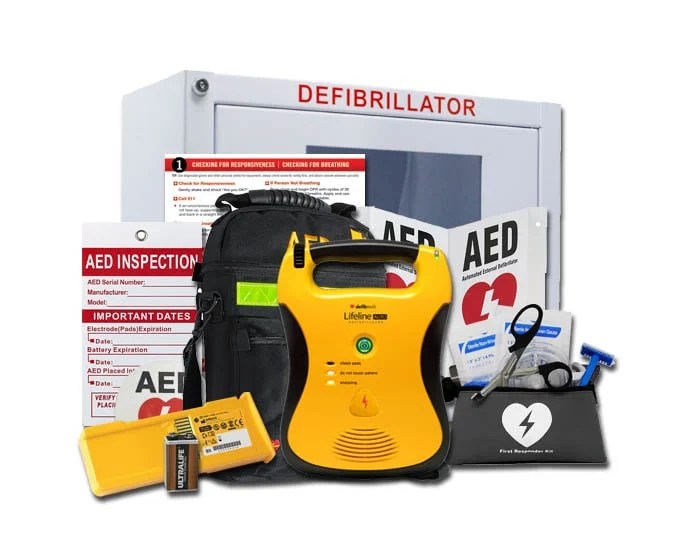
Purchasing an AED is an investment in safety, and it’s important to understand the full picture of ownership. Beyond the initial cost of the device, you’ll need to plan for the replacement of essential AED accessories over time. The electrode pads and batteries have specific expiration dates, typically lasting between two to five years. The gel on the pads can dry out, and batteries naturally lose their charge, so staying on top of these dates is critical for readiness. We recommend checking your AED’s status indicator regularly and keeping a spare set of pads and a battery on hand. At Response Ready, we help make this simple by offering complete AED packages and ongoing support to ensure your device is always prepared to perform.
How to Make a Confident, Life-Saving Decision
Choosing between a semi automatic and a fully automatic AED comes down to preparing for the human element of a crisis. By prioritizing simplicity and removing potential moments of hesitation, you empower anyone to become a hero.
The right AED is the one that gets used correctly and without delay. We are here to help you find the perfect device for your needs. Explore our curated selection in the Response Ready AED superstore or contact our expert team for personalized guidance.
Frequently asked questions
Q: Is a fully automatic AED safer than a semi automatic one?
A: Both types are equally safe. An AED, regardless of model, will only advise a shock if it detects a life threatening heart rhythm. The main difference is in user confidence, a fully automatic AED removes the potential for a rescuer to hesitate or fail to press the shock button.
Q: Can I hurt someone by using an AED on them?
A: No. AEDs are designed to be foolproof. The device analyzes the heart’s rhythm and will not deliver a shock unless one is medically necessary. You cannot accidentally shock someone who does not need it. The only real harm comes from not acting.
Q: Do I need formal training to use an AED?
A: While formal CPR and AED training is highly recommended to build confidence, AEDs are specifically designed for use by untrained bystanders. They provide simple, step by step voice and visual instructions to guide you through the entire process.
Q: Which type of AED is better for a public place like a mall or airport?
A: For public access settings with a high likelihood of untrained rescuers, fully automatic AEDs are strongly recommended. They simplify the process to its absolute essentials, reducing the chance for error and maximizing the chance of a successful outcome.
Q: Does Response Ready help with the ongoing maintenance of my AED?
A: Yes. We offer comprehensive AED program management through the Response Ready App to ensure your device is always compliant and ready for an emergency. Our services include automated reminders for pad and battery expirations and real time device monitoring.
Key Takeaways
- Understand the one key difference: the shock button. A semi-automatic AED requires the rescuer to press a button to deliver the shock, while a fully-automatic model delivers it for you after a clear verbal warning.
- Prioritize user confidence to reduce hesitation. In a crisis, fear can cause dangerous delays. A fully-automatic AED removes the psychological burden of pressing the shock button, ensuring life-saving therapy is delivered promptly.
- Match the AED type to your environment. For homes, schools, and public spaces with likely untrained responders, a fully-automatic AED is the most straightforward choice. A semi-automatic model can be a great option for workplaces with dedicated and regularly trained safety teams.
Related Articles
- Semi automatic vs fully automatic AED which is right for you
- Semi automatic vs fully automatic aeds a guide to choosing the right one
- Choosing your AED the complete guide to semi automatic
- Semi automatic vs fully automatic AED a guide to choosing with confidence
- Semi automatic versus fully automatic AEDs which is best for your situation
Disclaimer for information purposes only:
The information provided on this website is intended for general educational and informational purposes only. It is not medical advice and should not be used as a substitute for professional diagnosis, treatment, or care. Always consult a qualified healthcare or medical professional regarding any health-related questions or concerns.
While we strive to ensure the information shared is accurate and up to date, no guarantees are made regarding completeness, accuracy, or applicability to any individual situation. Use of this content is at the reader’s sole discretion and risk.
This website is part of the Response Ready family of emergency preparedness and training resources, including CPR & first aid training and compliance services, AED sales and program support, AED program management software, and medical oversight solutions provided through our affiliated platforms:
• CPR1.com
• AEDLeader.com
• AEDTotalSolution.com
• MDSIMedical.com
By accessing or using this website, you agree to release, indemnify, and hold harmless the website owners, authors, contributors, and affiliated entities from any claims, losses, damages, or liabilities arising from the use or reliance on the information presented.