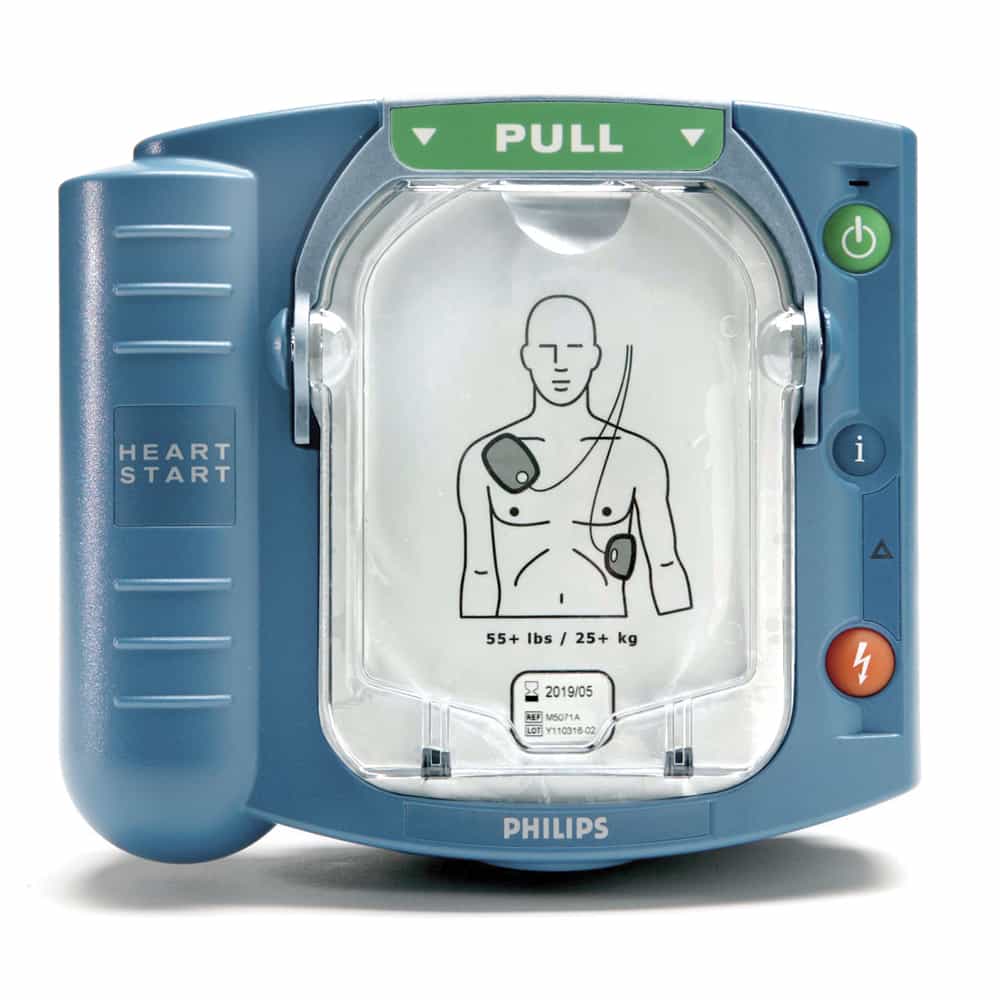
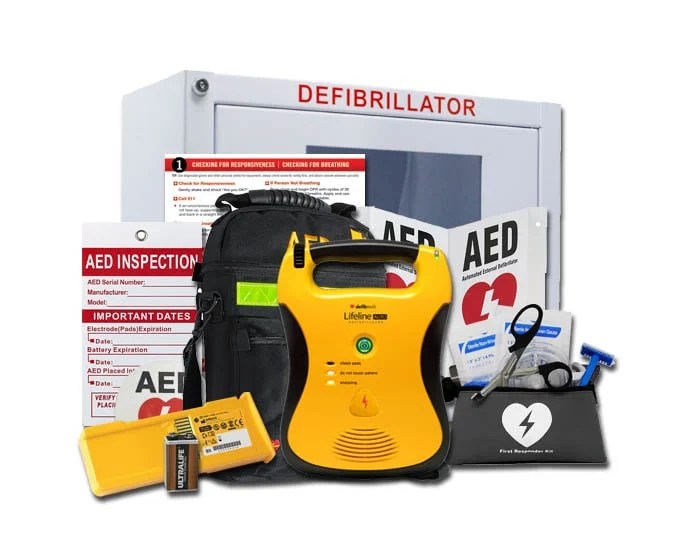
When you decide to place an Automated External Defibrillator (AED) in your school, office, or community center, you’re making a powerful commitment to protecting lives. But as you compare models, you’ll face a critical choice: should you get a semi automatic or a fully automatic device? The answer isn’t about which one is technically better. It’s about understanding human psychology in a crisis and choosing the device that gives your people the most confidence to act.
This guide will walk you through that decision, moving beyond a simple feature list to help you understand the real world factors that matter when every second counts.
The core difference in ten seconds
The only functional difference between these two types of AEDs comes down to a single action: delivering the electric shock.
-
Semi Automatic AEDs will analyze the patient’s heart rhythm and if a shock is needed, the device will prompt you to press a flashing shock button. You are in control of when the shock is delivered.
-
Fully Automatic AEDs will also analyze the heart rhythm, but if a shock is needed, the device will provide a clear verbal warning and countdown before delivering the shock on its own. There is no button for you to press.
Both devices are equally effective at saving lives. They both use the same technology to determine if a shock is required and will not deliver one otherwise. The choice between them is about the person using it, not the person receiving help.
Get certified in CPR
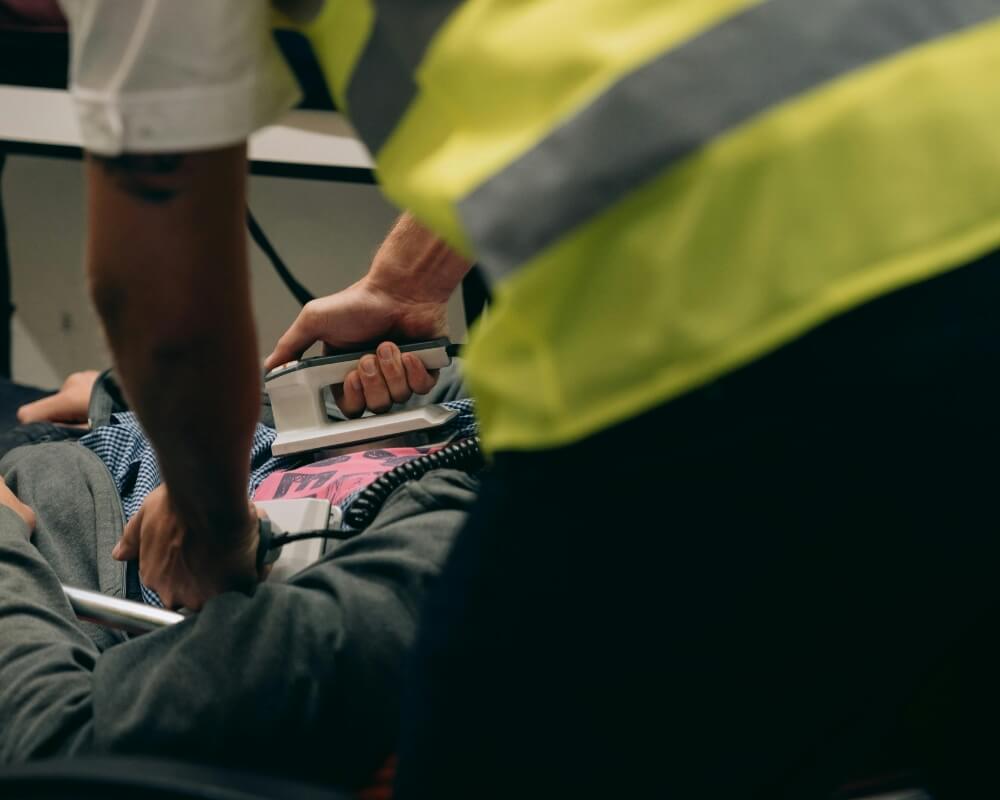
Adult & Pediatric First Aid/CPR/AED — Blended Learning
Self-paced online + in-person skills check. 2-year certification.
CPR, AED & First Aid Certification
Instructor-led on-site. Practice on real manikins and AED trainers.
The hidden factor your rescuer’s mindset in a crisis
Imagine the scene of a sudden cardiac arrest. It’s chaotic and stressful. A coworker, a student, or a visitor has collapsed. Someone calls 911, another starts CPR, and you bring the AED. You attach the pads, and the device tells you a shock is advised.
At this moment, a rescuer is dealing with immense pressure and self doubt. They are asking themselves, “Am I doing the right thing? What if I make a mistake?” This psychological hurdle is one of the biggest challenges in emergency preparedness. For a semi automatic device, this moment of doubt centers on the flashing shock button. The fear of pressing it at the wrong time or causing harm can lead to a dangerous delay known as “analysis paralysis.”
Data driven decisions the science of hesitation
This fear of making a mistake isn’t just a feeling, it’s a documented challenge in emergency response. Research provides a clear picture of how users interact with AEDs under pressure.
One of the most revealing statistics shows that in cases of AED user error, a staggering 72% of errors are attributed to the operator. A significant portion of these errors involve the failure to press the shock button when prompted. Rescuers simply hesitate.
Further studies reinforce this point. When a group of untrained nurses responded to a simulated cardiac arrest, they had a 0% error rate with fully automatic AEDs. When the same group used semi automatic devices, the error rate jumped to 7%. For an untrained lay rescuer, removing the need to press a button demonstrably reduces the chance of critical error.

RECOMMENDED
HeartSine Samaritan 350P AED Package
Compact, fully-automatic AED designed for first-time responders. Pads, battery, carry case and wall sign included.
Which rescuer profile fits your situation?
The best AED is the one that aligns with the training and psychological profile of its most likely users. Let’s identify which profile best describes your environment.
Profile A The everyday hero
This profile fits most public spaces: small businesses, schools, places of worship, community gyms, and homes. The rescuer is likely to be a staff member or bystander with basic awareness but no advanced medical training. Their main goal is to help, but they are operating under extreme stress and have a high potential for hesitation.
For this group, a fully automatic AED is often the superior choice. By automating the final step, it removes the single greatest point of hesitation. The device takes on the responsibility, freeing the rescuer to focus on CPR and keeping the area clear. It simplifies the process when simplicity is needed most.
Profile B The trained responder
This profile applies to environments with dedicated and routinely trained first responders, like industrial safety teams, dental clinics, or private ambulances. These users are often coached according to professional protocols, such as those from the American Heart Association, which involve verbally clearing the area before personally initiating a shock.
For these trained responders, a semi automatic AED provides a greater sense of control over the scene. The need to press a button aligns perfectly with their training and reinforces their command of the situation. They are conditioned to pause, check that no one is touching the patient, and then deliver the shock. This control is a familiar and expected part of their rescue process.
The flexible solution that fits both worlds
Understanding your rescuer profile makes the choice clearer. But what if you have a mix of users? Or what if you want the absolute best in modern AED technology regardless of the model?
This is where the Physio-Control LIFEPAK CR2 Value Package stands apart. It is one of the few top tier devices available in both fully automatic and semi automatic configurations. This flexibility means you don’t have to compromise. You can select the exact operating style that gives your team the most confidence while getting a device packed with industry leading features.
Furthermore, every LIFEPAK CR2 includes cprINSIGHT™ analysis technology. This allows the AED to analyze the patient’s heart rhythm while CPR is being performed, significantly reducing pauses in chest compressions. Fewer interruptions in CPR is a critical factor in improving survival rates.
By choosing the CR2, you are not just selecting a semi or fully automatic device, you are investing in a smarter, faster, and more flexible rescue system.
Choosing an AED is a major step. It’s a decision that reflects your commitment to safety and preparedness. Whether you need the simple, reassuring operation of a fully automatic model or the controlled response of a semi automatic one, the goal is the same, to empower anyone to save a life. By considering the human element first, you can make a choice that builds confidence and ensures your AED is ready for the moment it matters most.
Not sure which AED or training fits your needs?
A Response Ready product expert walks you through it — no obligation.
Frequently asked questions
Q: Is a fully automatic AED safer than a semi automatic one?
A: Both types of AEDs are equally safe. They use sophisticated algorithms to analyze a person’s heart rhythm and will only advise or deliver a shock if the specific, life-threatening arrhythmia is detected. The device will not shock a person who does not need it. The difference is about user operation, not patient safety.
Q: Will I get in trouble if I use an AED and the person doesn’t survive?
A: All 50 states have Good Samaritan laws to protect bystanders who act in good faith during an emergency. These laws are designed to encourage people to help without fear of legal reprisal. A fully automatic AED can provide additional peace of mind by reducing the chance of user error, as it handles the shock delivery itself.
Q: Is there a big price difference between semi automatic and fully automatic AEDs?
A: Generally, the price difference between the two configurations of the same model is minimal or nonexistent. Your decision should be based entirely on which model best suits the likely rescuers in your environment, not on cost.
Q: What if our staff gets professional training after we buy a fully automatic AED?
A: That’s great! More training always builds confidence. Even with professional training, a fully automatic AED remains an excellent and simple tool for any rescuer. If you anticipate ongoing training and compliance needs, consider a comprehensive service like AED program management to help keep your equipment and certifications up to date.