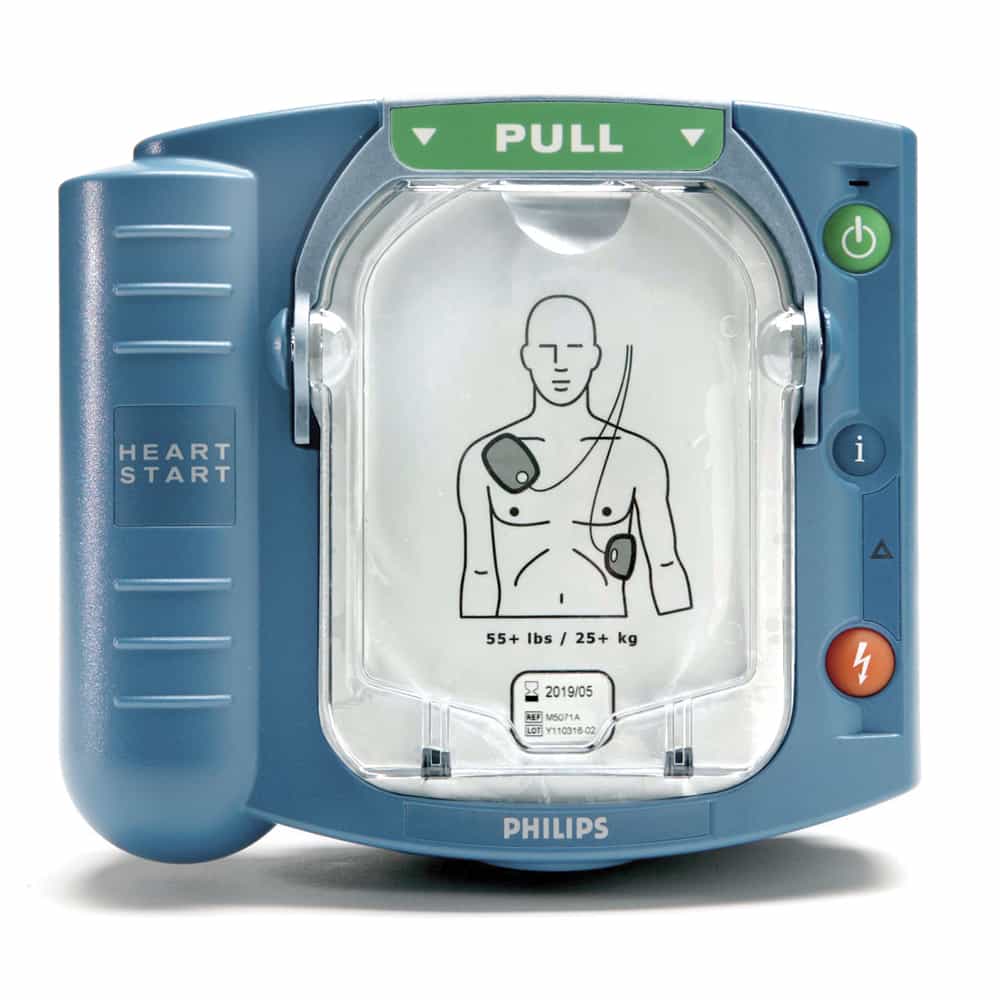
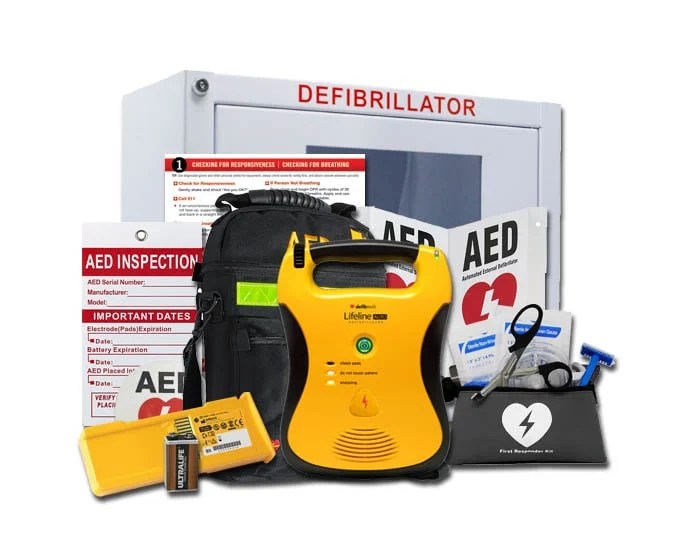
How to Evaluate AED Warranty & Maintenance for Long-Term Value
When you decide to place an Automated External Defibrillator (AED) in your home, school, or business, you’re making a profound investment in safety. But the real value of that investment isn’t just in the initial purchase. It’s in the confidence that your device will be ready to save a life years down the road. A low upfront cost can be tempting, but it often hides future expenses and reliability issues that can undermine your entire emergency preparedness plan.
Choosing the right AED involves looking beyond the sticker price to understand the complete ownership experience. A robust warranty and a proactive maintenance program are not just add ons, they are the foundation of long term reliability and peace of mind. They ensure your device remains a life saving asset, not a liability.
Decoding AED warranties what truly protects your investment
An AED warranty is more than a piece of paper. It’s a manufacturer’s promise of quality and a direct indicator of how long they expect their device to perform reliably. While most AEDs come with a warranty, they are not all created equal. Durations typically range from five to eight years, but the details of what’s covered can vary significantly.
A longer warranty, like the impressive 8 year protection offered with the Cardiac Science Powerheart G5 AED, signals a manufacturer’s deep confidence in their product’s engineering and durability. This extended coverage protects you from unexpected defects and repair costs, turning a variable expense into a predictable, one time investment. When paired with Response Ready’s one year price promise, you get assurance on both the device’s quality and its initial cost.
To make an informed decision, you need to understand what you’re comparing. Here’s what to look for:
-
Duration:
How many years is the device covered? An 8 year warranty provides three more years of protection than a standard 5 year warranty. -
Covered components:
Does the warranty cover the entire device or just specific parts? Understanding exclusions is critical. -
Claim process:
How straightforward is it to get support if something goes wrong? A complicated process can cause delays when you can least afford them. -
Voiding conditions:
Improper maintenance, using unauthorized accessories, or failing to update software can void a warranty. This is where a managed program becomes invaluable.
The lifespan of an AED device batteries and pads
While an AED unit itself is designed to last for years, often between 8 and 10, its most critical components have much shorter, fixed lifespans. The batteries and electrode pads are the consumables that make a rescue possible, and they must be replaced regularly, whether the device is used or not.
-
AED batteries:
These typically need replacement every 2 to 7 years, depending on the model. A dead battery is the most common reason for AED failure. -
AED electrode pads:
Pads expire every 1.5 to 5 years. The conductive gel on the pads dries out over time, which can prevent the AED from analyzing the heart rhythm correctly or delivering an effective shock. They also must be replaced after every use.
Forgetting to track these expiration dates is a common and dangerous oversight. A maintenance program removes this burden by monitoring your equipment and ensuring you always have functional replacement batteries and pads on hand.
Proactive vs reactive the true value of an AED maintenance program
Waiting for an AED to fail its self test is a reactive approach that puts lives at risk. Research shows that issues with batteries and pads account for nearly half of all AED failures (23.2% and 23.7%, respectively). A proactive maintenance plan is the only way to catch these issues before they turn a rescue attempt into a tragedy.
Survival from sudden cardiac arrest drops by 7 to 10 percent for every minute without defibrillation. A maintenance program isn’t an expense, it’s an investment in readiness that ensures your AED works in that critical moment.
Response Ready’s AED Program Management service, through the Response Ready app transforms AED ownership from a complex responsibility into a simple, managed process. It provides:
-
Automated tracking:
We monitor expiration dates for your pads and batteries, sending you replacements before they expire. -
Compliance assurance:
Our experts navigate state and local regulations for you, ensuring your program meets all legal requirements.
-
Readiness checks:
Our mobile app simplifies monthly inspections, allowing you to confirm your device’s status in seconds. -
Medical oversight:
A licensed physician oversees your program to ensure it aligns with medical best practices. -
Post event support:
If you use your AED, we help with data submission and provide loaner devices to ensure you’re never without protection.

Calculating the total cost of ownership
The initial price of an AED is only one part of the financial picture. To understand the true cost, you must consider all expenses over the device’s entire lifespan. This Total Cost of Ownership (TCO) includes the device, multiple sets of replacement pads and batteries, and program management fees.
While a device with a lower upfront cost and a shorter warranty might seem like a bargain, it will likely cost you more over eight years in replacement parts and potential repair bills. Investing in a quality device with a long warranty from the start is the most cost effective strategy. Our program management services bundle these ongoing needs into a predictable, manageable plan, eliminating surprise costs and ensuring your device is always ready.
Investing in an AED is one of the most important decisions you can make for your community or family. By focusing on long term value through a strong warranty and a comprehensive maintenance program, you can invest with confidence. Explore our curated selection of FDA approved devices at our AED superstore and let us help you build a life saving program that stands the test of time.
Frequently asked questions
Q: Why is an 8 year warranty better than a 5 year warranty?
A: An 8 year warranty provides three additional years of protection against manufacturer defects, significantly reducing your long term financial risk. It also reflects the manufacturer’s higher confidence in the device’s quality and durability, giving you greater peace of mind.
Q: Do I really need an AED maintenance program if the device runs self tests?
A: Yes. While self tests are important, they don’t detect all potential issues, such as expiring pads or weakening batteries that still have some charge. A maintenance program proactively manages these critical components, ensures legal compliance, and provides expert support, which a self test cannot do.
Q: What are the biggest “hidden costs” of owning an AED?
A: The most common hidden costs are for replacement batteries and electrode pads, which must be purchased every few years regardless of use. Unexpected repair costs for devices out of warranty can also be significant. A comprehensive maintenance program and a long warranty help make these costs predictable and manageable.
Q: Can I manage my AED myself to save money?
A: While it’s possible, self management requires meticulous tracking of expiration dates, staying current with changing state and local compliance laws, and managing post event reporting. This can be complex and time consuming, and any oversight can have serious consequences. An affordable program management plan with the Response Ready app offloads this risk and administrative burden.
Q: What happens if I use my AED?
A: After an AED is used, the electrode pads must be replaced immediately. The event data should also be downloaded and provided to medical professionals, as required by law in many areas. Our program management service assists with all post event needs, including data submission and providing a loaner device so you remain protected.