What Is Cardiac Arrest?
Cardiac arrest happens when the heart suddenly stops pumping blood. Unlike a heart attack, which involves blocked blood flow, cardiac arrest is an electrical malfunction that shuts down the heart’s pumping action entirely. The brain, lungs, and other organs lose their blood supply within seconds.
Without immediate intervention, cardiac arrest is fatal within minutes. According to the American Heart Association, more than 356,000 out-of-hospital cardiac arrests occur in the United States each year, and roughly 90% of them are fatal. The difference between survival and death often comes down to one thing: how fast bystanders recognize the signs and take action.
This guide will help you identify the symptoms and warning signs of cardiac arrest so you can respond quickly when every second counts.
Response Ready provides FDA-approved AED devices from all six major manufacturers, plus CPR and AED training to help you prepare for cardiac emergencies. Contact us today to find the right solution for your home, workplace, or organization.
Recognizing the Symptoms of Cardiac Arrest
Cardiac arrest symptoms appear suddenly and without much warning. Recognizing them quickly is the single most important factor in survival. Here are the primary signs to watch for.
Sudden Collapse
The most visible sign of cardiac arrest is a sudden, unexpected collapse. The person loses consciousness and falls to the ground without any obvious cause. This is different from fainting, which usually has warning signs like dizziness or lightheadedness beforehand. In cardiac arrest, collapse is immediate and complete.
No Pulse or Heartbeat
A person in cardiac arrest has no detectable pulse. If you place your fingers on the side of their neck (the carotid artery) or on their wrist, you will not feel a heartbeat. Do not spend more than 10 seconds checking for a pulse. If you are unsure whether there is a pulse, begin CPR immediately.
No Breathing or Gasping
Normal breathing stops during cardiac arrest. The person may exhibit agonal breathing, which looks like irregular gasping or snorting. This is not real breathing. It is a reflex and should not be mistaken for a sign that the person is okay. Agonal breathing occurs in roughly 40% of cardiac arrest cases and typically stops within a few minutes.
Unresponsiveness
The person will not respond to shouting, tapping, or any other stimulation. Their eyes may be open or closed, but there is no conscious awareness. If someone collapses and does not respond when you tap their shoulders and call their name loudly, treat it as a potential cardiac arrest.
Warning Signs That May Appear Before Cardiac Arrest
While cardiac arrest often strikes without warning, research shows that some people experience symptoms in the hours, days, or even weeks before the event. Recognizing these warning signs can save a life.
Chest Pain or Discomfort
Chest pain is the most commonly reported pre-cardiac arrest symptom. It may feel like pressure, squeezing, tightness, or a heavy weight on the chest. This discomfort can come and go over days or weeks before the cardiac event. Any recurring chest pain should be evaluated by a doctor immediately.
Shortness of Breath
Unexplained difficulty breathing, especially during rest or mild activity, can signal an underlying heart problem. Studies published in the Annals of Internal Medicine found that shortness of breath was one of the most frequent warning signs reported in the 24 hours before sudden cardiac arrest.
Heart Palpitations and Rapid Heartbeat
A racing heart, fluttering sensations, or irregular heartbeat (arrhythmia) may indicate the electrical problems that trigger cardiac arrest. If you notice your heart skipping beats, pounding in your chest, or beating unusually fast without physical exertion, seek medical evaluation.
Dizziness, Lightheadedness, or Fainting
Feeling dizzy or lightheaded, especially when standing up, can indicate the heart is not pumping enough blood. Fainting (syncope) is a more serious warning sign and should always be investigated, particularly if it occurs without explanation.
Nausea and Cold Sweats
Unexplained nausea, vomiting, or breaking into a cold sweat can be signs of cardiac distress. These symptoms are more common in women experiencing cardiac events and are sometimes dismissed as flu or anxiety. Do not ignore them, especially when combined with other symptoms on this list.
Extreme Fatigue
Unusual, persistent fatigue that is not explained by activity or sleep patterns can indicate heart dysfunction. Women in particular report overwhelming tiredness in the days and weeks leading up to a cardiac event.
Do not wait to see if pre-cardiac arrest symptoms go away on their own. If you or someone you know experiences any combination of these warning signs, call your doctor or 911 immediately. Early intervention saves lives. Learn how AEDs work in emergencies so you are prepared if the worst happens.
How Cardiac Arrest Symptoms Differ by Age and Gender
Cardiac arrest does not look the same in every person. Age, gender, and underlying health conditions influence which symptoms appear and how they present.
Symptoms in Women
Women are more likely to experience atypical warning signs before cardiac arrest, including extreme fatigue, nausea, back or jaw pain, and shortness of breath. Chest pain may be less prominent or absent altogether. Because these symptoms overlap with other conditions, cardiac events in women are frequently misdiagnosed or dismissed.
Symptoms in Young Adults and Athletes
Sudden cardiac arrest in young people is often caused by undiagnosed congenital heart conditions, such as hypertrophic cardiomyopathy or long QT syndrome. Warning signs in younger individuals may include unexplained fainting during exercise, a family history of sudden cardiac death, or exercise-induced chest pain. This is why AED programs in schools and athletic facilities are so important.
Symptoms in Older Adults
Older adults may have more subtle or gradual warning signs that blend with age-related health changes. Increasing fatigue, worsening shortness of breath, and episodes of confusion can all precede cardiac arrest in seniors. Underlying conditions like coronary artery disease, heart failure, and diabetes increase risk significantly.
What to Do When You Recognize Cardiac Arrest Symptoms
Speed is everything. For every minute that passes without CPR and defibrillation, the chance of survival drops by 7% to 10%. Here is the step-by-step response that saves lives.
Step 1: Call 911 Immediately
The moment you suspect cardiac arrest, call 911 or have someone nearby make the call. Time is the enemy. Tell the dispatcher someone has collapsed and is not breathing normally.
Step 2: Start CPR
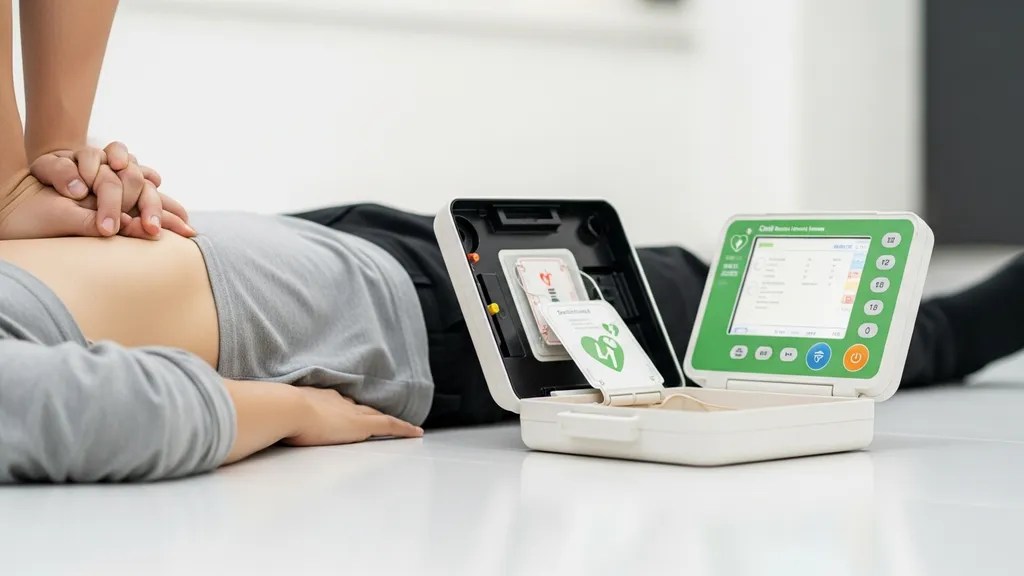
Begin chest compressions immediately. Place the heel of one hand on the center of the chest, put your other hand on top, and push hard and fast at a rate of 100 to 120 compressions per minute. Push at least 2 inches deep. Do not stop compressions until emergency medical services arrive or an AED is available. CPR combined with AED use gives the best chance of survival.
Step 3: Use an AED
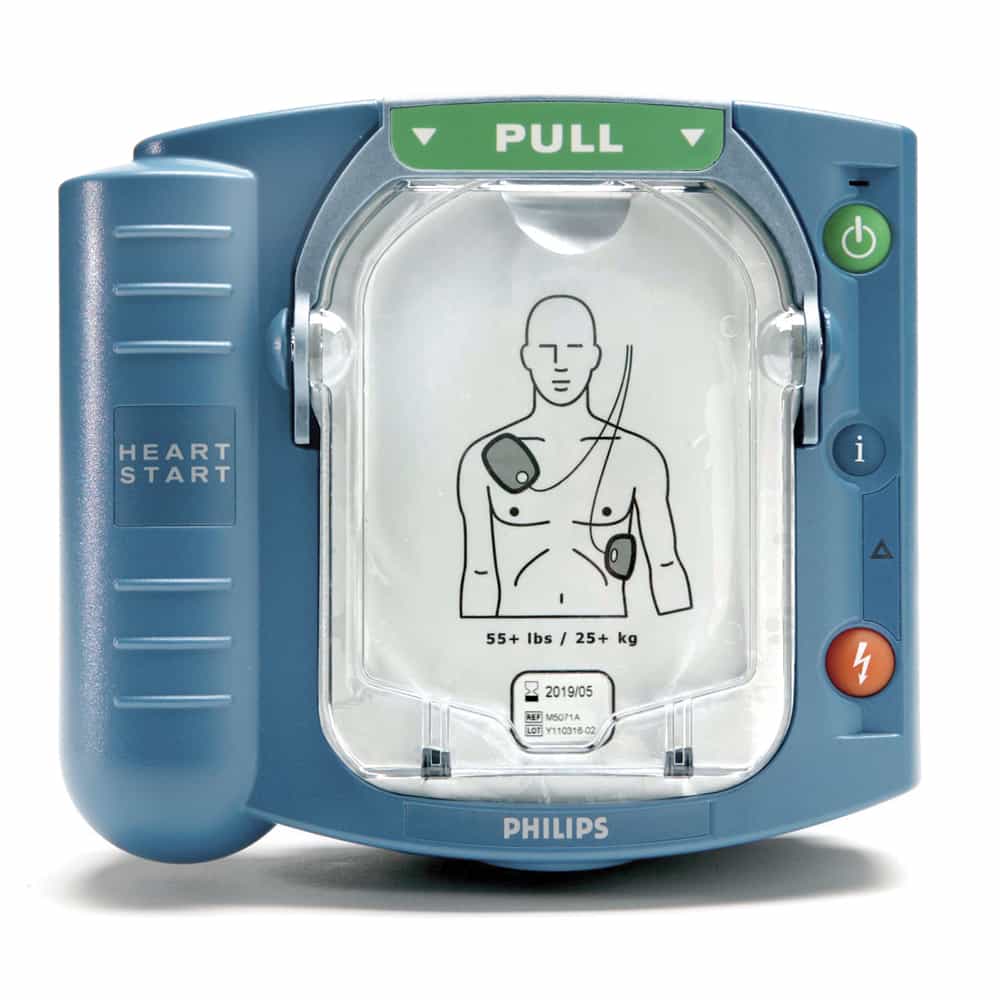
An automated external defibrillator (AED) analyzes the heart’s rhythm and delivers a shock if needed to restore a normal heartbeat. AEDs are designed for use by anyone, even without medical training. The device provides voice prompts that guide you through every step.
Using an AED within the first 3 to 5 minutes of cardiac arrest can increase survival rates to 70% or higher. Without defibrillation, survival rates drop below 5%.
Step 4: Continue Until Help Arrives
Alternate between CPR and AED use as directed by the device. Do not stop until emergency medical personnel take over or the person begins breathing normally and regains consciousness.
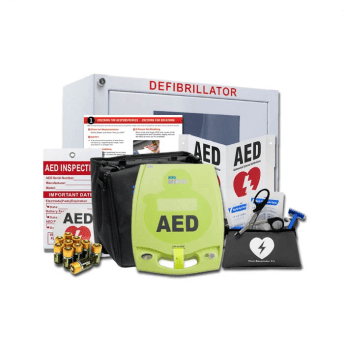
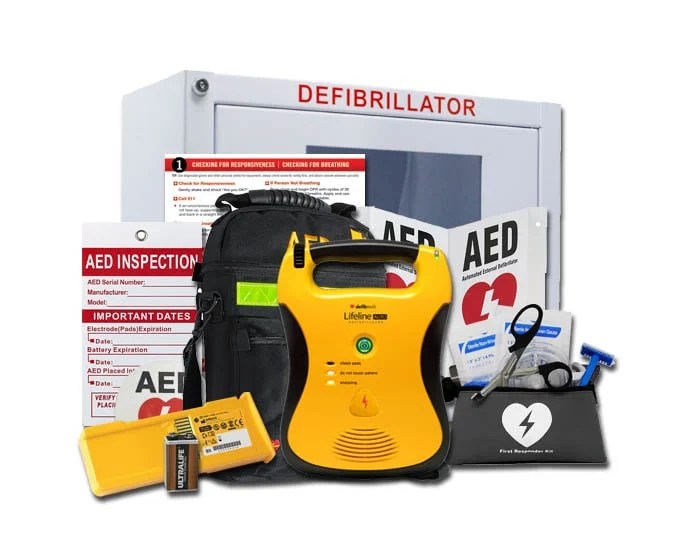
Being prepared for cardiac emergencies starts with having the right equipment. Response Ready carries AED value packages that include everything you need: the AED device, pads, battery, cabinet, signage, and a first responder kit. Get a personalized recommendation for your home, school, gym, church, or workplace.
Risk Factors That Increase the Chance of Cardiac Arrest
Understanding your risk factors helps you stay alert to warning signs. The major risk factors for sudden cardiac arrest include:
- Coronary artery disease (responsible for about 80% of sudden cardiac deaths)
- Previous heart attack (scarred heart tissue can disrupt electrical signals)
- Family history of sudden cardiac arrest or heart disease
- Heart failure or enlarged heart (cardiomyopathy)
- Abnormal heart rhythms (arrhythmias, particularly ventricular fibrillation)
- Age (risk increases significantly after age 45 for men and 55 for women)
- Smoking, obesity, diabetes, and high blood pressure
- Drug or alcohol abuse
- Sedentary lifestyle combined with other risk factors
If you have multiple risk factors, talk to your cardiologist about screening and consider keeping an AED in your home. A home AED can mean the difference between life and death when cardiac arrest happens where most people are: at home.
How to Prepare Before a Cardiac Emergency Happens
Preparation is the most powerful tool against cardiac arrest. Here is what you can do right now to be ready.
- Get CPR and AED certified. Response Ready offers CPR and AED training through a nationwide instructor network.
- Place AEDs in accessible locations. Homes, offices, gyms, schools, and churches should all have AEDs. Check your state’s AED requirements for compliance guidance.
- Maintain your AED. An AED is useless if the battery is dead or the pads are expired. Follow a regular AED maintenance checklist to keep your device ready.
- Register your AED. Registering your AED with local EMS ensures that dispatchers can direct bystanders to your device during emergencies.
- Know your risk. Talk to your doctor about heart health screenings, especially if you have a family history of cardiac disease.
Frequently Asked Questions
What are the first signs of cardiac arrest?
The first signs of cardiac arrest are sudden collapse, loss of consciousness, no breathing or abnormal gasping (agonal breathing), and no detectable pulse. These symptoms appear without warning and require immediate action: call 911, start CPR, and use an AED.
Can you feel cardiac arrest coming?
Some people experience warning signs in the hours or days before cardiac arrest, including chest pain, shortness of breath, heart palpitations, dizziness, nausea, and unusual fatigue. However, many cardiac arrests occur with no prior symptoms at all, which is why having an AED nearby and knowing CPR are so important.
What is the difference between a heart attack and cardiac arrest?
A heart attack is a circulation problem caused by a blocked artery that stops blood flow to part of the heart muscle. Cardiac arrest is an electrical problem where the heart suddenly stops beating entirely. A heart attack can lead to cardiac arrest, but they are different conditions. Learn more in our detailed guide on sudden cardiac arrest vs. heart attack.
How long do you have to respond to cardiac arrest?
Brain damage begins within 4 to 6 minutes without blood flow. For every minute without CPR and defibrillation, survival chances drop by 7% to 10%. Using an AED within the first 3 to 5 minutes can increase survival rates to over 70%.
Do I need medical training to use an AED?
No. AEDs are designed for use by anyone, including people with no medical background. The device gives clear voice instructions that guide you through each step. Learn more about how AEDs work.
Where should I keep an AED?
AEDs should be placed in high-traffic, easily accessible locations. Common placements include homes, offices, gyms, schools, churches, and community centers. Response Ready offers complete AED packages with wall cabinets and signage for proper placement.