- Published
- June 16, 2026
Cardiac Arrest Survival Rates: How AEDs and CPR Improve Your Chances


What Are the Cardiac Arrest Survival Rates in the United States?
Every year, more than 356,000 people in the United States experience an out-of-hospital cardiac arrest (OHCA). According to the American Heart Association, only about 10% of those victims survive. That means roughly 320,000 Americans die from cardiac arrest outside of a hospital every single year.
These numbers are staggering, but here is the critical part: cardiac arrest survival is not random. It depends almost entirely on what happens in the first few minutes after collapse. When bystanders perform CPR and use an automated external defibrillator (AED) before emergency medical services arrive, survival rates jump from under 10% to as high as 70% or more.
This article breaks down the latest sudden cardiac arrest statistics, explains why response time determines who lives and who dies, and shows how AED access and CPR training can dramatically shift the odds in your favor.
Response Ready provides AEDs from all six FDA-approved manufacturers and CPR/AED training programs to help you prepare for cardiac emergencies. Call 858-665-2025 or contact us online to get started.
Why Is the Cardiac Arrest Survival Rate So Low?
The overall out-of-hospital cardiac arrest survival rate sits near 10%, and most of that gap comes down to time. When the heart stops, blood flow to the brain ceases immediately. Brain damage begins within four to six minutes. After 10 minutes without intervention, survival becomes unlikely.
The average emergency medical services (EMS) response time in the United States is eight to 12 minutes. In rural areas, that number can exceed 15 minutes. By the time paramedics arrive, most cardiac arrest victims have already passed the critical treatment window.
This is why bystander action is the single most important factor in cardiac arrest outcomes. Professional medical care matters, but it almost always arrives too late to be the first line of defense.
Survival Rate by Response Time
The relationship between response time and survival is steep and unforgiving:
- Within 1 minute: Survival rates can exceed 90% when defibrillation is delivered immediately
- Within 3 to 5 minutes: Survival rates range from 50% to 70% with CPR and AED use
- Within 8 to 12 minutes: Survival drops to approximately 10% to 15%, even with paramedic intervention
- After 12 minutes: Survival falls below 5%, and the risk of permanent brain damage is extremely high
Every minute without defibrillation reduces the chance of survival by 7% to 10%. This decline is why public access to AEDs and widespread CPR training are not optional extras. They are the difference between life and death.
How AEDs Improve Cardiac Arrest Survival Rates
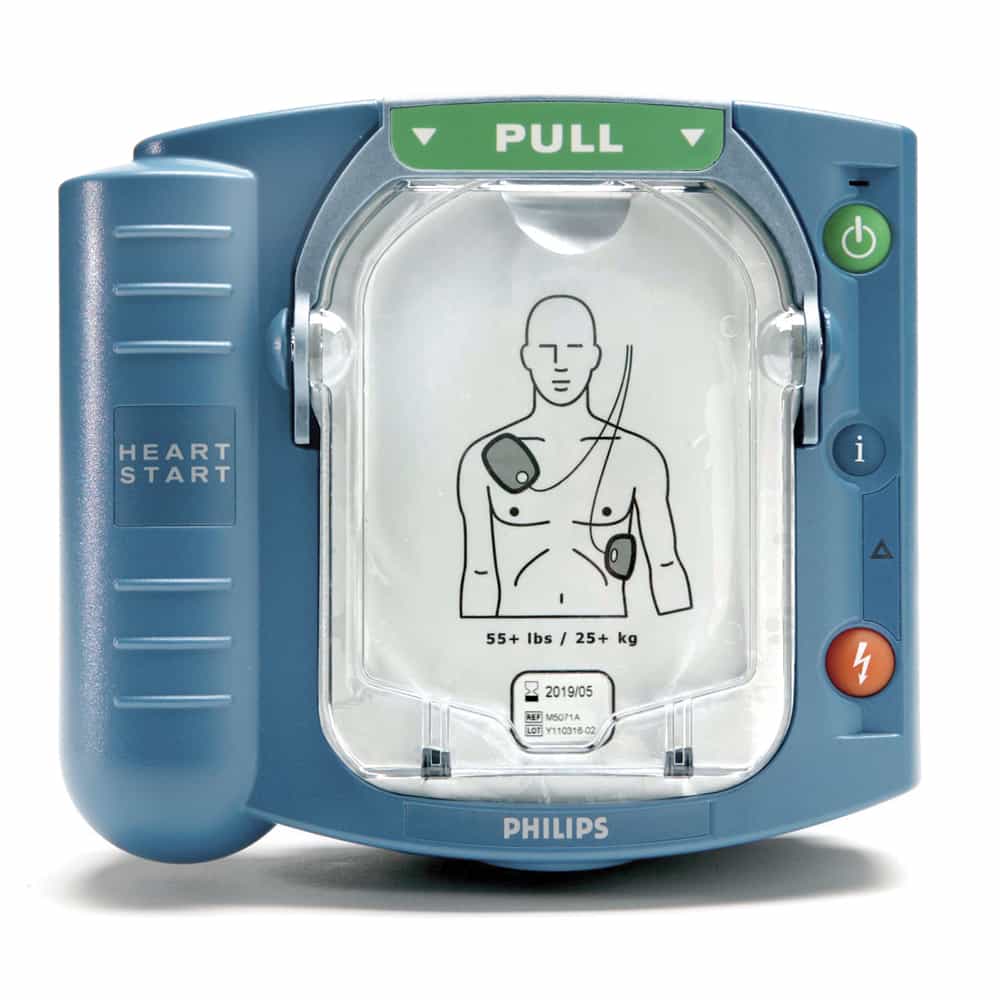
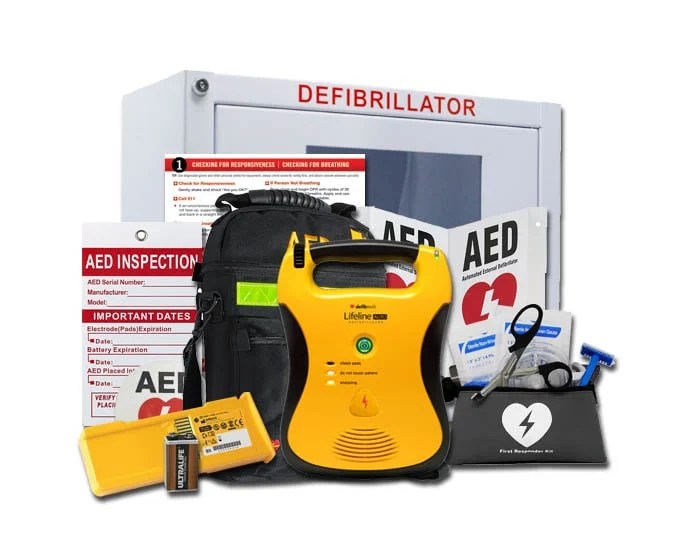
An AED is a portable device that analyzes the heart’s rhythm and delivers an electrical shock to restore a normal heartbeat during ventricular fibrillation or pulseless ventricular tachycardia, the two shockable rhythms that cause most cardiac arrests.
The statistics on AED effectiveness are clear:
- Without an AED: Approximately 10% of out-of-hospital cardiac arrest victims survive
- With bystander AED use: Survival rates increase to 38% or higher, according to the AHA
- With AED use within the first 3 minutes: Survival rates can reach 70% or more
A landmark study published in the New England Journal of Medicine found that patients who received defibrillation from a bystander-operated AED before EMS arrival were nearly twice as likely to survive compared to those who waited for paramedics. The data is consistent: early defibrillation saves lives.
AEDs are designed for use by anyone, regardless of medical training. Modern devices provide voice prompts, visual instructions, and automatic heart rhythm analysis. The device will not deliver a shock unless it detects a shockable rhythm, making it virtually impossible for a bystander to cause harm. Learn more about how defibrillators work.
How CPR Impacts Cardiac Arrest Survival
CPR (cardiopulmonary resuscitation) keeps oxygenated blood flowing to the brain and vital organs while the heart is in arrest. It does not restart the heart on its own, but it buys critical time until an AED or advanced medical care can be delivered.
The numbers tell the story:
- Without bystander CPR: Survival rates for witnessed cardiac arrest are approximately 10%
- With bystander CPR: Survival rates double or triple, reaching 20% to 30%
- With bystander CPR plus AED: Survival rates jump to 38% to 70%, depending on how quickly defibrillation is delivered
Despite the proven benefits, fewer than 40% of cardiac arrest victims receive bystander CPR. Fear of doing something wrong, lack of training, and not recognizing the emergency are the most common barriers. Hands-only CPR, which requires chest compressions without mouth-to-mouth breathing, has helped reduce these barriers. The AHA recommends hands-only CPR for untrained bystanders who witness a sudden collapse.
When CPR is combined with early AED use, the effect is greater than either intervention alone. CPR maintains blood flow while the AED addresses the underlying heart rhythm problem. Together, they form the most powerful combination of bystander interventions available. Learn more about how CPR and AEDs work together.
Want to be ready when it matters most? Response Ready offers CPR and AED certification courses through our nationwide training network. Call 858-665-2025 to schedule training for your team.
The Chain of Survival: A Statistical Breakdown
The American Heart Association’s chain of survival outlines the five critical links that determine cardiac arrest outcomes. When all five links are strong, communities see dramatically better survival rates.
- Early recognition and calling 911: Recognizing the symptoms of cardiac arrest and activating EMS immediately starts the clock in the victim’s favor
- Early CPR: Bystander CPR doubles to triples survival rates by maintaining blood flow to the brain
- Early defibrillation: AED use within three to five minutes delivers the highest survival improvement, pushing rates above 50%
- Advanced life support: Paramedics provide IV medications, advanced airways, and continued monitoring
- Post-cardiac arrest care: Hospital-based treatment including targeted temperature management improves neurological outcomes
Communities that implement all five links effectively have achieved sustained survival rates of 40% to 60% for witnessed cardiac arrests. Seattle, Washington, and King County are frequently cited as examples, where decades of investment in public CPR training and AED placement have produced some of the highest survival rates in the nation.
The takeaway is simple: survival is a system, not a single action. Every link matters, and the first three, recognizing the emergency, starting CPR, and using an AED, depend entirely on bystanders like you.
Key Sudden Cardiac Arrest Statistics Everyone Should Know
Understanding the scale of sudden cardiac arrest in the United States helps explain why AED access and CPR training are so urgent:
- 356,000+ out-of-hospital cardiac arrests occur in the U.S. each year (AHA)
- ~90% of out-of-hospital cardiac arrests are fatal
- 70% of cardiac arrests happen at home, where AED access is lowest
- 46% of cardiac arrest victims receive bystander CPR (improved from 30% a decade ago, but still too low)
- Under 12% of cardiac arrest victims receive bystander AED shock before EMS arrives
- 7-10% decrease in survival for every minute without defibrillation
- 2x-3x increase in survival when bystanders perform CPR
- Up to 70%+ survival rate when an AED is used within the first three minutes
These statistics paint a clear picture: the technology and training to save lives exists. The gap is access and awareness. Fewer than one in eight cardiac arrest victims currently receives a bystander AED shock, leaving an enormous opportunity to improve outcomes simply by placing AEDs in more locations and training more people to use them.
Who Is Most at Risk for Sudden Cardiac Arrest?
Sudden cardiac arrest can strike anyone at any age, but certain groups face higher risk:
- Adults over 45: Risk increases significantly with age, particularly for those with existing heart conditions
- Men: Males are approximately two to three times more likely to experience sudden cardiac arrest than females
- People with heart disease: Coronary artery disease, cardiomyopathy, and prior heart attacks increase risk substantially
- Family history: Genetic conditions such as hypertrophic cardiomyopathy and Long QT syndrome can cause cardiac arrest in otherwise healthy individuals, including young athletes
- Athletes: While rare, exercise-related cardiac arrest receives significant attention. High-intensity physical activity can trigger cardiac events in people with undiagnosed heart conditions
The reality is that cardiac arrest does not discriminate by location. It happens in homes, offices, gyms, schools, churches, airports, and public spaces. This is why the AHA and other organizations advocate for widespread AED placement in all settings where people gather.
Learn more about the difference between cardiac arrest and heart attack and the causes of sudden cardiac death.
How to Improve Cardiac Arrest Survival in Your Community
The data is clear about what saves lives. Here is how you can take action:
Place AEDs in Accessible Locations
Every second counts. AEDs should be placed in high-traffic areas, clearly marked with signage, and accessible within a two-minute walk. Key locations include lobbies, break rooms, gym floors, school hallways, and places of worship. Compare all six FDA-approved AED brands to find the right fit for your setting.
Train Your People
An AED is only effective if someone uses it. CPR and AED training gives bystanders the confidence and knowledge to act during a cardiac emergency. Response Ready partners with CPR1 to provide certified training programs across the United States.
Register and Maintain Your AED
Registering your AED with local emergency services ensures dispatchers can direct callers to the nearest device. Regular AED maintenance, including checking battery levels and pad expiration dates, ensures your device is rescue-ready when needed.
Consider a Managed AED Program
For organizations managing multiple AEDs, Response Ready’s AED Total Solution provides compliance tracking, maintenance reminders, medical director oversight, and ongoing support so nothing falls through the cracks.
Ready to protect your home, workplace, or community? Response Ready carries AEDs from all six FDA-approved manufacturers, with free shipping on orders over $99 and a 30-day money-back guarantee. Call 858-665-2025 or contact us today.
Frequently Asked Questions
What is the survival rate for cardiac arrest without treatment?
Without any bystander intervention (no CPR, no AED), the survival rate for out-of-hospital cardiac arrest is approximately 10%. Survival drops by 7% to 10% for every minute that passes without defibrillation, making immediate action critical.
How much does an AED improve survival rates?
When a bystander uses an AED within the first three to five minutes of cardiac arrest, survival rates can reach 50% to 70% or higher. Without AED use, the same victim has roughly a 10% chance of survival. AEDs are the single most effective intervention a bystander can provide.
Does bystander CPR really make a difference?
Yes. Bystander CPR doubles to triples the chance of survival from cardiac arrest. CPR maintains blood flow to the brain and vital organs, buying time until an AED or paramedics can provide definitive treatment.
How many cardiac arrests happen each year in the United States?
The American Heart Association reports that more than 356,000 out-of-hospital cardiac arrests occur annually in the United States. An additional 209,000 cardiac arrests happen in hospitals each year.
Can anyone use an AED, or do you need training?
Anyone can use an AED. Modern AEDs provide step-by-step voice prompts and will only deliver a shock if they detect a shockable heart rhythm. While formal CPR and AED training builds confidence and improves response speed, an untrained bystander can effectively operate an AED by following the device’s instructions.
Where should AEDs be placed for the best survival outcomes?
AEDs should be placed where people are most likely to experience cardiac arrest and where response time matters most. Priority locations include offices, gyms, schools, churches, airports, shopping centers, and homes, especially for families with members who have heart conditions or elevated cardiac risk. The goal is to have an AED accessible within a two-minute walk from any point in the building.
Disclaimer for information purposes only:
The information provided on this website is intended for general educational and informational purposes only. It is not medical advice and should not be used as a substitute for professional diagnosis, treatment, or care. Always consult a qualified healthcare or medical professional regarding any health-related questions or concerns.
While we strive to ensure the information shared is accurate and up to date, no guarantees are made regarding completeness, accuracy, or applicability to any individual situation. Use of this content is at the reader’s sole discretion and risk.
This website is part of the Response Ready family of emergency preparedness and training resources, including CPR & first aid training and compliance services, AED sales and program support, AED program management software, and medical oversight solutions provided through our affiliated platforms:
• CPR1.com
• AEDLeader.com
• AEDTotalSolution.com
• MDSIMedical.com
By accessing or using this website, you agree to release, indemnify, and hold harmless the website owners, authors, contributors, and affiliated entities from any claims, losses, damages, or liabilities arising from the use or reliance on the information presented.