- Published
- June 18, 2026
7 Tips to Avoid Common Mistakes When Buying an AED


Buying an AED isn’t like buying a fire extinguisher you mount on the wall and hope you never need. It’s the first step in creating a complete life-saving system, and treating it as a one-time purchase is a critical error. True preparedness involves a thoughtful strategy that includes the right device, ongoing maintenance, and a team that feels confident enough to act. To get there, you need to avoid common mistakes that many people make when they’re just starting out. In this article, we’ll break down the seven biggest pitfalls—from legal missteps to poor planning—and give you a clear roadmap for building a successful AED program.
7 Common Mistakes to Avoid When Buying an AED
Choosing to place an Automated External Defibrillator (AED) in your business or office, school, or community center is one of the most important decisions you can make. It’s a commitment to protecting lives. But the journey doesn’t end with simply buying a device. The path to true preparedness is filled with common pitfalls that can undermine your investment and, more importantly, a person’s chance of survival during a sudden cardiac arrest.
Many organizations focus solely on the initial purchase, only to discover later that they’ve overlooked critical factors like ongoing maintenance, user confidence, and legal compliance. These oversights can turn a life saving device into a liability. We’re here to guide you through the seven most common and costly mistakes we see buyers make, and more importantly, show you how to avoid them from the start.
Mistake #1: Choosing an AED That’s Too Complicated
When someone collapses from sudden cardiac arrest, the person rushing to help is rarely a medical professional. It’s a coworker, a teacher, or a bystander. In a moment of intense stress, the last thing they need is a device that requires a manual to operate. Many well-intentioned buyers select an AED with advanced features they believe are better, only to find the complexity intimidates potential rescuers. This hesitation can be fatal. The fear of using the device incorrectly or causing more harm is real, and a complicated interface only amplifies that anxiety. The goal is to empower anyone to act, and that starts with a machine that is fundamentally simple and intuitive.
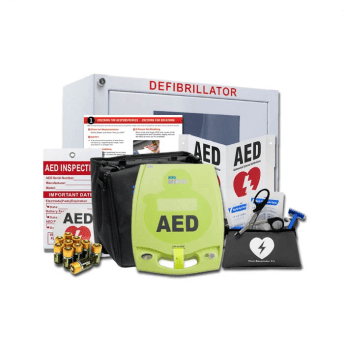
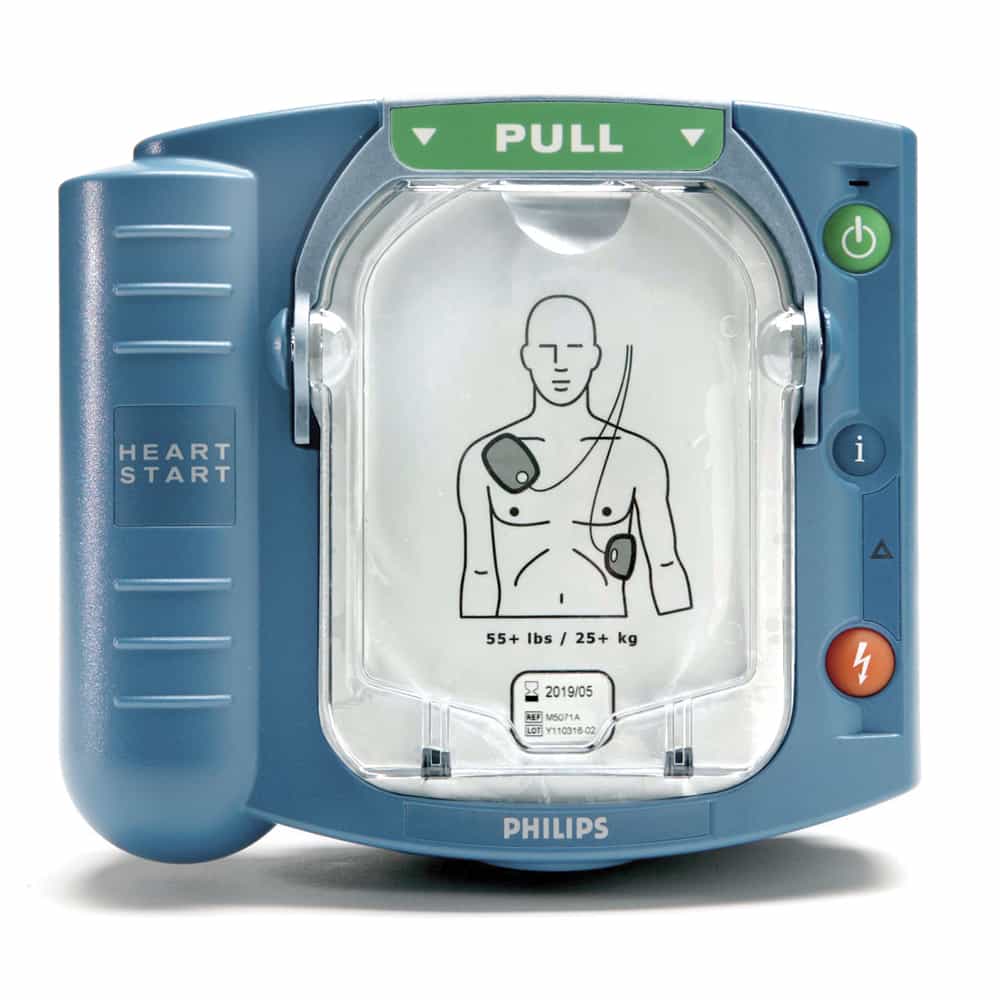
The most effective AEDs are designed for lay responders, featuring clear, calm voice prompts and simple visual diagrams that guide the user through every step. Some models are semi-automatic, meaning they instruct the user to press a button to deliver a shock, while fully-automatic models will deliver the shock on their own after analyzing the heart rhythm. A fully-automatic device removes one more step from the process, which can reduce a rescuer’s anxiety and ensure a shock is delivered without delay. When you’re evaluating your options, prioritize a straightforward design over unnecessary bells and whistles. The best AED is the one someone will actually feel confident using.
It’s easy to focus on the upfront cost of a unit, but the true value of an AED is measured by its effectiveness in an emergency. A less expensive device that is confusing or difficult to use is a poor investment if it fails to save a life. Investing in a user-friendly AED ensures that your preparedness plan is practical, not just theoretical. True readiness combines the right equipment with the confidence to use it. Pairing an intuitive device with proper CPR and AED training is the most reliable way to ensure your team is prepared to respond decisively when every second counts.
Is Your AED Simple Enough for a Crisis?
During a cardiac emergency, panic is the enemy of action. A person with no medical background is suddenly thrust into the role of first responder. If an AED is complicated, with confusing diagrams or audio prompts that are hard to follow under pressure, hesitation can cost precious seconds.
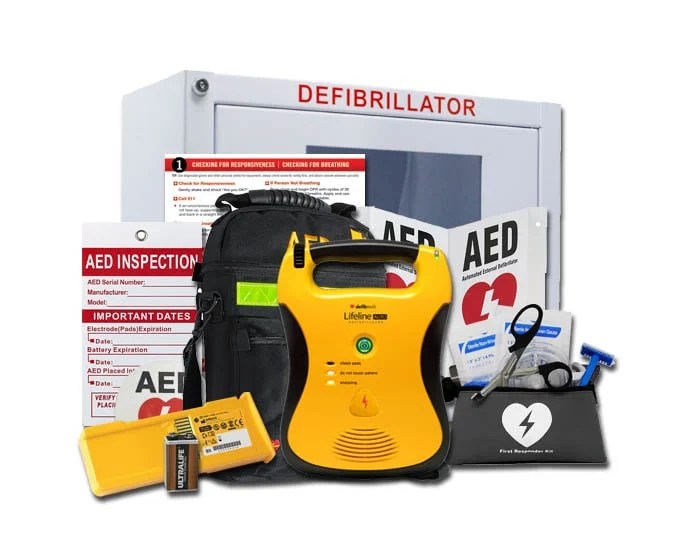
The single most important feature of an AED for a public space is its ease of use for a layperson. The goal is to empower anyone to act decisively. This is where design philosophy makes a difference. For example, the Defibtech Lifeline View AED was engineered specifically to combat this challenge. It features a full color video screen that shows you exactly what to do step by step, from placing the pads to performing CPR. This visual guidance cuts through the noise and chaos of an emergency, providing a level of calm and clarity that simple audio prompts cannot match.
Mistake #2: Forgetting About Ongoing Maintenance
An AED is a long-term commitment, not a one-time purchase. It’s easy to focus on the initial investment and feel a sense of accomplishment once the device is mounted on the wall. But the truth is, an AED requires consistent attention to remain a life-saving asset. Forgetting about ongoing maintenance is one of the most common and dangerous mistakes we see. A neglected device with an expired battery or dried-out pads is just as ineffective as having no AED at all. This oversight can quickly turn your well-intentioned investment into a serious liability, failing the very person it was meant to protect during a critical moment.
So, what does maintenance actually look like? At its core, it’s about managing the device’s essential components, primarily the AED pads and batteries. Both have specific expiration dates, typically lasting between two to five years. Once they expire, you must replace them for the AED to function correctly. Electrode pads can lose their adhesion, and batteries will inevitably lose their charge. Keeping track of these dates and ordering replacements ahead of time is non-negotiable. It’s also important to perform regular visual inspections to ensure the device hasn’t been tampered with and that the readiness indicator shows it’s prepared for an emergency.
Managing these details across one or multiple devices can feel overwhelming, which is why a structured approach is so important. A comprehensive management program can take the guesswork out of readiness by tracking expiration dates, sending replacement reminders, and ensuring your device software is up to date. This is especially helpful for organizations that need to maintain compliance with local and state regulations. For instance, our AED rental program includes full-service maintenance, so you never have to worry about expired supplies. Ultimately, a proactive maintenance plan ensures your AED is always ready to respond, giving you and your community true peace of mind.
Remember to Plan for Ongoing Maintenance
An AED is not a “set it and forget it” device. It is a piece of medical equipment that requires regular checks to ensure it’s ready when needed. In fact, studies show that a staggering 20 to 25 percent of all AED failures are caused by correctable maintenance issues, most often a dead battery or expired electrode pads. A device that fails its self test is a device that cannot save a life.
Managing these details across one or multiple locations can quickly become an administrative burden. This is why a comprehensive AED program management system, for example the Response Ready App, is not a luxury, it’s a necessity. A managed program automates readiness checks, sends reminders for expiring pads and batteries, and provides medical oversight, ensuring your devices are always compliant and ready to rescue.
Neglecting the “Health” of Your AED Program
Checking AED Pads and Batteries Regularly
Think of your AED like a smoke detector—you wouldn’t trust one with a dead battery to protect your home, and the same logic applies here. An AED is only effective if it’s ready to work at a moment’s notice. One of the most common oversights we see is neglecting the device’s essential components. In fact, studies show that up to a quarter of all AED failures stem from simple, preventable maintenance issues. The top culprits are almost always expired AED pads and dead batteries. A device that can’t pass its own readiness check is essentially just a box on the wall, unable to deliver the life-saving shock someone in cardiac arrest desperately needs.
Keeping track of expiration dates and maintenance schedules can feel like a full-time job, especially if you’re managing multiple devices. This is where having a reliable system in place becomes so important. Instead of relying on sticky notes or calendar reminders that can easily get lost in the shuffle, a dedicated program management solution automates the entire process. It ensures your devices are always compliant and ready for an emergency by sending you alerts when it’s time to replace AED batteries or pads. This proactive approach removes the guesswork and administrative stress, giving you the confidence that your life-saving investment is always ready to work when every second counts.
Mistake #3: Underestimating the Need for Training
Having an AED in the building is a fantastic first step, but it’s only half the solution. A life-saving device is only effective if someone has the confidence to grab it and use it. In the chaos of an emergency, hesitation is natural. Proper training is what bridges the gap between having the equipment and being ready to act. It transforms a bystander into a responder by building the muscle memory and self-assurance needed to take control of a scary situation, ensuring the AED is used quickly and correctly when every second is critical.
The numbers don’t lie. According to the American Heart Association, when a bystander performs CPR and uses an AED immediately, a person’s chance of survival can double or even triple. That’s a staggering difference made by one person’s willingness to step in. Training does more than just show you which button to press; it teaches you to recognize the signs of sudden cardiac arrest, how to perform high-quality chest compressions, and how to work as a team until professional help arrives. It empowers your people with a complete skillset, turning your investment in an AED into a truly effective emergency response plan.
Investing in your team’s skills is just as critical as investing in the hardware itself. A simple online video can’t replicate the confidence gained from hands-on practice. That’s why we believe so strongly in certified CPR and AED training that gives people the chance to practice on manikins and ask questions in a supportive environment. When you equip your staff or community members with this knowledge, you’re not just checking a box for compliance; you’re building a culture of preparedness and empowering them to be the heroes you need them to be when it matters most.
Why AED Training Isn’t Optional
Placing an AED is the first step, but building the confidence to use it is just as crucial. While modern AEDs are designed for untrained users, formal training transforms bystanders into confident responders. Effective CPR and AED training familiarizes people with the device, teaches them how to recognize the signs of sudden cardiac arrest, and reinforces the critical steps of the chain of survival.
A trained team is more likely to act quickly and effectively, significantly increasing the chances of a positive outcome. Investing in accessible online or in person courses for your staff or community members builds a culture of safety and ensures your life saving technology is supported by life saving skills.
Overcoming the Fear of Taking Action
One of the biggest hurdles to life-saving action isn’t a lack of knowledge—it’s the fear of making a mistake. In a high-stress emergency, the thought of doing something wrong can be paralyzing. This is precisely why effective training focuses on building confidence as much as competence. It creates a safe space to be imperfect. As researchers from Stanford have noted, it’s difficult to admit mistakes, but doing so is a huge part of learning. A quality training program encourages you to see fumbles during practice not as failures, but as opportunities to learn and grow. By working through the steps, asking questions, and correcting errors in a supportive environment, you build the muscle memory and self-assurance needed to act decisively when someone’s life is on the line.
Why Passive Learning Isn’t Enough
Watching a five-minute video or reading an AED manual is a start, but it’s not enough to prepare you for a real crisis. True readiness comes from active participation. As we emphasize in our training programs, people learn best by practicing and doing, not just by listening to a lecture. When your heart is pounding and adrenaline is surging, you won’t have time to recall a diagram you once saw. Instead, you’ll rely on the muscle memory you built by actually placing pads on a manikin, hearing the device’s prompts, and simulating the entire rescue process. This hands-on experience is what bridges the gap between knowing what to do and having the confidence to do it. It turns passive knowledge into an instinctive, life-saving skill.
Mistake #4: Misunderstanding Legal Requirements
When you decide to place an AED, you’re focused on protecting people, not pouring over legal documents. But navigating the legal landscape is a critical step that many organizations overlook. There isn’t one single federal law for AEDs in the United States; instead, there’s a patchwork of state and local regulations. This variation can be confusing, but these laws exist for a good reason: to ensure that AEDs are not only present but are also safe, effective, and ready to be used by anyone in an emergency. Understanding these requirements from the start protects your organization and, most importantly, gives a cardiac arrest victim the best possible chance of survival.
So, what do these laws typically cover? Most state regulations address three key areas: placement, maintenance, and immunity from liability. Laws often require AEDs in public spaces to be clearly visible and accessible, not locked away in an office. They also mandate regular maintenance to ensure the device is functional—after all, an AED with an expired battery is of no use to anyone. The best part? Every state has Good Samaritan laws that provide legal protection for lay rescuers who use an AED in good faith. These laws are designed to remove the fear of “doing something wrong” and encourage people to act decisively when a life is on the line.
Trying to decipher these regulations on your own can feel overwhelming, but you don’t have to become a legal expert. This is where partnering with a knowledgeable provider makes all the difference. A comprehensive AED program, like our AED Total Solution, is designed to take the guesswork out of compliance. We help ensure your program includes physician oversight (a requirement in many states), automates readiness checks, and sends you reminders for expiring pads and batteries. This ongoing support keeps your device ready and your organization protected, allowing you to focus on what truly matters: creating a safe environment for everyone.
Are You Following Local AED Laws?
AED laws, often called Public Access Defibrillation (PAD) laws, vary significantly from state to state. These regulations can cover everything from where an AED must be placed and how it should be registered with local EMS to specific training and maintenance requirements. While all 50 states have Good Samaritan laws to protect those who render aid in good faith, some of these protections are tied to meeting specific compliance standards.
Navigating this legal landscape can be confusing, but ignoring it can create unnecessary liability. A robust program management solution helps you stay on top of these requirements. It provides the framework for medical direction and documentation needed to not only comply with local laws but also to maximize your legal protection.
### Common Legal Mistakes in AED Compliance One of the biggest hurdles for any organization is understanding the legal side of owning an AED. It’s easy to assume that Good Samaritan laws provide a blanket of protection, but the reality is more nuanced. These laws are designed to encourage people to help in an emergency, but they often come with specific conditions for the AED owner. Failing to meet state or local requirements for device registration, maintenance checks, and proper training can create significant liability. Think of legal compliance not as a box to check, but as an essential part of ensuring your AED program is truly effective and that your organization is protected. #### Unilateral vs. Mutual Misunderstandings Legal issues often stem from simple misunderstandings—some are widespread, while others are specific to the AED owner. A common “mutual” misunderstanding is the myth that only medical professionals can use an AED. In reality, Good Samaritan laws in every state exist to protect any layperson who steps up to help during a cardiac arrest. The more dangerous mistake is the “unilateral” one, where an organization believes its legal protection is automatic. Many states tie liability protection to specific actions, such as documenting regular maintenance and ensuring users have access to proper training. Simply owning the device isn’t enough; you must actively manage it to maintain that legal shield.
Mistake #5: Lacking a Cohesive Emergency Response Plan
An AED is a powerful tool, but it’s only one piece of the puzzle. Without a clear and practiced plan, even the best device can be rendered ineffective by chaos and hesitation. When a cardiac arrest occurs, critical questions arise instantly: Who calls 911? Who retrieves the AED? Who starts CPR? If these roles aren’t defined beforehand, precious minutes are lost to confusion. A well-intentioned purchase becomes a missed opportunity to save a life simply because there was no strategy for its deployment. An emergency response plan turns a group of bystanders into a coordinated team, ensuring everyone knows their role when seconds count.
A strong response plan is more than just a document; it’s a living part of your organization’s culture of safety. It should clearly outline step-by-step procedures, identify key responders, and include regular drills to build muscle memory. This is where professional CPR and AED training becomes essential. Training empowers your team by familiarizing them with the equipment and their responsibilities, reinforcing the chain of survival and transforming uncertainty into confident action. When people are trained, they are far more likely to act quickly and effectively, creating a safer environment for everyone.
Do You Have a Clear Emergency Response Plan?
When an emergency strikes, chaos can take over. Having an AED is only one part of the equation. You also need a clear, practiced plan that everyone understands. Who calls 911? Who retrieves the AED? Who starts CPR? Where is the AED located, and is it easily accessible?
A well defined emergency response plan answers these questions before they need to be asked. It should be written, posted, and practiced through drills. This ensures a coordinated and efficient response that makes the most of every critical second. As part of our support, we help organizations develop site specific plans that integrate seamlessly with their AED program.
Avoiding Tunnel Vision in Preparedness
It’s easy to fall into the trap of “all else equal” thinking when creating your response plan. This is the assumption that after you make a decision—like where to place your AED—everything else will stay the same. But preparedness isn’t static. As experts from the Stanford Graduate School of Business advise, “Don’t assume things will stay the same after you make a decision. Always think about how your decision will change the situation and how others might react.” An effective AED program accounts for change. What happens if your office layout is reconfigured, or if the person designated to perform readiness checks leaves the company? Avoiding tunnel vision means looking beyond the initial setup and building a program that is resilient enough to adapt to these inevitable shifts.
Thinking Dynamically About Your Program
A dynamic approach to preparedness acknowledges that your actions create reactions. Placing an AED is a great first step, but you also need to plan for the responses it will generate. Will staff members feel more confident, or will they be intimidated? Do you have a plan for post-event support and device servicing after it’s used? The world is always changing, and your program must be able to change with it. This means anticipating potential issues, from new state compliance laws to simple logistical hurdles, and adapting your strategy accordingly. A truly effective program isn’t just a piece of equipment on a wall; it’s a living system that is continuously monitored, evaluated, and improved to ensure it remains ready and compliant.
Running Drills to Test Your Plan
The single best way to know if your emergency plan works is to test it. A plan that only exists on paper is an unproven theory. A well-defined emergency response plan answers critical questions before they need to be asked, and it should be written, posted, and practiced through drills. Running regular, unannounced drills is the only way to reveal the hidden gaps in your strategy. You might discover the AED is in a locked room, the signage is unclear, or people hesitate because they lack confidence. These drills do more than just test logistics; they build the muscle memory and self-assurance your team needs to act decisively in a real crisis. This practical experience is what turns a good plan into a life-saving one, and it’s a core component of effective CPR and AED training.
Mistake #6: Focusing on Price Instead of Long-Term Value
It’s tempting to let the initial price tag drive your decision when buying an AED. After all, budgets are a reality for every organization. However, focusing solely on the upfront cost can be a costly mistake in the long run. The true expense of an AED is its total cost of ownership, which includes not only the purchase price but also the ongoing costs of maintenance and supplies. A device that seems like a bargain at first may come with more expensive or harder-to-find replacement parts, ultimately costing you more over its 8- to 10-year lifespan. Thinking about the purchase as a long-term investment in safety, rather than a one-time expense, ensures your program is sustainable and always ready.
Every AED requires regular upkeep to remain effective. The most significant ongoing costs are for replacing electrode pads and batteries, which have expiration dates and must be replaced every few years. This isn’t a minor detail—studies show that up to 25% of AED failures are due to correctable maintenance issues like these. Investing in a quality AED from a reputable brand often means a longer warranty, better reliability, and greater peace of mind. The long-term value of knowing your device is dependable and supported far outweighs any initial savings from a cheaper, less reliable alternative.
Are You Prioritizing Price Over Long-Term Value?
It’s tempting to choose an AED based on the lowest price tag. However, this often proves to be a false economy. The total cost of ownership includes not just the initial purchase but also the price and lifespan of replacement pads and batteries. Some less expensive units may require more frequent and costly consumable replacements, leading to a higher overall cost over the life of the device.
Beyond consumables, consider the value of reliability and support. Investing in a quality, FDA approved device from a trusted AED superstore ensures durability and performance. When you factor in the cost of a potential failure due to poor quality or a lack of support, the long term value of a reliable system becomes clear. Explore our value packages to find a solution that combines affordability with long term reliability.
The Dangers of Rushing the Purchase
Deciding to get an AED is a huge step toward protecting your community, and it’s natural to want to check that box as quickly as possible. But rushing this decision is one of the biggest pitfalls we see. When the focus is solely on getting a device delivered tomorrow, critical details get missed. You might overlook whether the AED is right for your specific environment—like a pool or a school—or forget to plan for essential training and maintenance. This haste can turn a well-intentioned purchase into a source of liability, creating a false sense of security. True preparedness isn’t just about owning an AED; it’s about building a reliable system around it.
Understanding the Total Cost of Ownership
The sticker price of an AED is only the beginning of the story. To make a smart investment, you need to consider the total cost of ownership over the device’s entire lifespan, which is typically around eight to ten years. This includes the recurring cost of essential AED accessories, primarily replacement electrode pads and batteries. Some AED models that seem cheaper upfront require more frequent and expensive replacements, making them the pricier option in the long run. Factoring in these long-term expenses from the start ensures your budget is realistic and your life-saving program remains sustainable for years to come.
Mistake #7: Going It Alone Without a Trusted Partner
Purchasing an AED isn’t like buying a new printer for the office. It’s the first step in establishing a life-saving program, and the complexities can be overwhelming. From selecting the right device and understanding state laws to tracking expiration dates and arranging training, managing an AED program involves many moving parts. Attempting to handle it all on your own can lead to critical oversights that compromise your readiness. A good partner doesn’t just sell you a box; they provide the expert support and peace of mind that comes from knowing your program is effective, compliant, and ready for an emergency. This partnership is the foundation of a successful program.
A trusted partner acts as your guide through the entire process. They help you assess your specific environment to select the right AED package, ensuring the device you choose meets the needs of your potential users and location. Beyond the initial sale, they provide access to certified CPR and AED training that empowers your team with the skills and confidence to act decisively. This ongoing relationship ensures you have a resource for questions, maintenance support, and compliance management, turning a one-time purchase into a sustainable, long-term safety solution that protects your community for years to come.
Why You Need a Partner, Not Just a Vendor
Many online stores are happy to sell you a box and wish you luck. They are transactional vendors. A true partner, however, is invested in your success from day one and for the entire life of your AED program. A partner provides comprehensive support that extends far beyond the initial sale.
At Response Ready, our mission is to be your partner in preparedness. With over a decade of expertise, we provide end to end support, from helping you select the right AED to implementing training and ongoing program management. We’re here to answer your questions, solve your challenges, and provide the peace of mind that comes from knowing your organization is truly ready to respond. You can learn more about us and our commitment to making life saving technology accessible and simple.
Frequently asked questions
Q: Are AEDs difficult for someone without medical training to use?
A: No, modern AEDs are specifically designed for laypeople. Devices like the Defibtech Lifeline View provide clear voice and video instructions to guide you through every step, making the process simple and intuitive even in a high stress situation.
Q: What happens if I use an AED and the person doesn’t survive? Can I be sued?
A: All 50 states have Good Samaritan laws to protect bystanders who act in good faith to help someone in an emergency. Adhering to your state’s specific PAD laws, which often include proper maintenance and training, provides the strongest liability protection. Our program management service helps ensure you meet these requirements.
Q: How often do I need to replace the batteries and pads?
A: This varies by model. Electrode pads typically last two to four years, and batteries last between four and seven years. A key mistake is failing to track these dates. An AED program management service automates this process, notifying you well before your consumables expire.
Q: Do I need a doctor’s prescription to buy an AED?
A: While AEDs are medical devices regulated by the FDA, a federal law passed in 2000 allows for their sale without a prescription for public access defibrillation programs. Our team provides the necessary medical direction and oversight required for a compliant program.
Q: Is it better to have one expensive AED or several cheaper ones?
A: The primary goal is to ensure an AED can be retrieved and used within three to four minutes of a collapse. It is often better to have multiple reliable, user-friendly devices strategically placed throughout a larger building than one high end device locked in an office. We can help you map out the most effective placement for your space and budget.
The Problem with Unstructured, Unreliable Sources
When you decide to buy an AED, it’s easy to get lost in a sea of online retailers. The problem is that many are just digital storefronts focused on a single transaction. This approach leaves you to figure out the hard parts alone: navigating state-specific compliance laws, tracking expiration dates for pads and batteries, and ensuring your team feels ready to act. Many organizations focus solely on the initial purchase, only to discover later that they’ve overlooked these critical factors. Without a structured plan and a reliable source for guidance, that life-saving device you invested in can quickly become a source of anxiety and potential liability.
How a Partner Helps You Plan and Prepare
A true partner does more than just ship you a box; they help you build a complete preparedness program from the ground up. This relationship starts with helping you choose the right AED for your specific environment and budget, but it extends much further. A partner provides the framework for success, including access to certified CPR and AED training that builds confidence, and program management tools that take the guesswork out of maintenance. It’s about having an expert in your corner for the long haul, ensuring your program is effective, compliant, and sustainable for years to come.
Key Takeaways
- Prioritize Confident Action, Not Just Equipment: A successful AED program combines an easy-to-use device with a clear emergency plan and hands-on training. The goal is to empower anyone to respond quickly and effectively, turning bystanders into lifesavers.
- Commit to Proactive Program Management: An AED is a long-term responsibility. Stay prepared by consistently tracking and replacing expired pads and batteries, understanding your state’s legal requirements, and budgeting for the total cost of ownership, not just the initial price.
- Choose a Partner, Not Just a Vendor: Avoid going it alone. A dedicated partner provides expert guidance on everything from device selection and compliance to training and maintenance, ensuring your life-saving program is effective and sustainable for years to come.
Related Articles
Disclaimer for information purposes only:
The information provided on this website is intended for general educational and informational purposes only. It is not medical advice and should not be used as a substitute for professional diagnosis, treatment, or care. Always consult a qualified healthcare or medical professional regarding any health-related questions or concerns.
While we strive to ensure the information shared is accurate and up to date, no guarantees are made regarding completeness, accuracy, or applicability to any individual situation. Use of this content is at the reader’s sole discretion and risk.
This website is part of the Response Ready family of emergency preparedness and training resources, including CPR & first aid training and compliance services, AED sales and program support, AED program management software, and medical oversight solutions provided through our affiliated platforms:
• CPR1.com
• AEDLeader.com
• AEDTotalSolution.com
• MDSIMedical.com
By accessing or using this website, you agree to release, indemnify, and hold harmless the website owners, authors, contributors, and affiliated entities from any claims, losses, damages, or liabilities arising from the use or reliance on the information presented.