- Published
- March 21, 2026
4 Inspiring AED Success Stories That Saved Lives


When sudden cardiac arrest strikes, every minute matters. But what happens in that critical window can change everything. A life is saved, a family is kept whole, and a community feels the ripple effect of that second chance. This is the power of an Automated External Defibrillator (AED) in the hands of an everyday hero. We’ve gathered some of the most moving success stories to show just how profoundly these devices, and the people who use them, can alter the course of a life.
In this article, we’ll share real-world examples of how AEDs made a difference, what contributed to their successful use, and how you can prepare your own space to be the next life-saving location.
Want to equip your home, office, or school with an AED? Explore our AED collection and find the model that fits your environment.
What is a Success Story?
When we think of success stories, our minds often jump to tales of entrepreneurs who built empires from their garages or artists who overcame countless rejections. These are powerful accounts of perseverance and transformation. But in the world of emergency preparedness, a success story is something far more immediate and profound. It’s the story of a life saved. It’s the account of an ordinary person who, faced with a crisis, used their training and the right tools to give someone a second chance. These aren’t stories about achieving fame or fortune; they’re about rewriting an ending from tragedy to hope.
An AED success story is the ultimate example of overcoming a challenge. The challenge is sudden cardiac arrest, a condition that is fatal within minutes if left untreated. The chain of survival describes the exact sequence of actions needed to change the outcome. The hero is a bystander—a coworker, a gym member, a teacher—who refuses to stand by. The climax isn’t a product launch or a book deal; it’s the moment an Automated External Defibrillator (AED) delivers a life-saving shock, and a heart begins to beat again. These stories showcase the incredible impact that one person’s readiness can have on an entire family and community, proving that the greatest successes are often measured in heartbeats.
The Core Themes: Perseverance, Transformation, and Impact
Every great AED success story shares a few core themes. First is perseverance. It’s the determination of a rescuer performing chest compressions until help arrives, and the foresight of an organization that invested in equipment and training long before it was ever needed. Second is transformation. A sudden cardiac arrest event transforms everyone involved. A victim becomes a survivor, and a bystander becomes a hero. The entire experience reshapes a community’s understanding of its own strength and resilience. Finally, there’s the incredible impact. Saving one life sends ripples of joy and gratitude through countless others, reinforcing the value of preparedness for years to come.
Failure as a Stepping Stone to Success
Sometimes, the motivation to prepare comes from a place of regret. Many people who become passionate advocates for CPR training or public access defibrillators do so after witnessing an emergency where they felt helpless. That feeling of not knowing what to do—or not having the right equipment available—can feel like a personal failure. But just like a career setback can push someone to find their true calling, this experience can become a powerful catalyst for change. It transforms a past moment of powerlessness into a future of empowerment, ensuring that next time, they will be ready to act confidently and effectively.
Famous Stories of Overcoming Adversity
We celebrate famous figures for overcoming adversity—authors facing rejection, inventors facing bankruptcy. But the adversity faced in a sudden medical emergency is just as daunting. The challenge isn’t a business competitor; it’s the clock ticking. The heroes in these stories aren’t household names, but their courage is just as remarkable. They are everyday people who push past fear and uncertainty to take decisive action. Their success isn’t measured in public acclaim but in the quiet, profound victory of saving a life, making them some of the most inspiring figures of all.
Defining Success on Your Own Terms
In a high-stress emergency, it’s easy to worry about doing everything perfectly. But success isn’t about a flawless, movie-style rescue. Success is defined by your willingness to act. Simply recognizing an emergency, calling 911, and starting chest compressions is a victory. Retrieving and applying an AED is a monumental success, regardless of the outcome. The most important thing you can do is try. Good Samaritan laws exist in many places to protect people who step up to help. Your intervention gives a person their only chance at survival, and that action, in itself, is the most important success of all.
Beyond a Single Moment: Different Types of Achievement
The dramatic moment of using an AED is the peak of a success story, but it’s built on a series of smaller, equally important achievements. The decision to purchase an AED for your office is an achievement. The effort to get your team certified in CPR and AED use is an achievement. Even the simple, routine act of checking your AED’s battery and pads is a quiet success that ensures readiness. Each of these steps is a critical part of the life-saving chain. True preparedness isn’t about a single heroic act but a consistent commitment to creating a safe environment every single day.
The Motivation to Act: Why People Prepare
What drives someone to move beyond awareness and take concrete steps to prepare for an emergency? For most, it isn’t fear. While the thought of a crisis is sobering, the true motivation is often a deep-seated desire to protect the people and communities we care about. It’s a proactive choice rooted in responsibility and love. Hearing stories of successful rescues can be a powerful motivator, showing us that our actions can and do make a life-or-death difference. It shifts the focus from “what if?” to “what can I do?”
This motivation turns preparedness from a task on a to-do list into a meaningful expression of our values. It’s about taking control in situations that feel uncontrollable and building a bubble of safety around our loved ones, coworkers, and neighbors. Whether it’s by assembling a first aid kit, learning CPR, or advocating for an AED in a public space, people who prepare are driven by a powerful sense of purpose. They understand that readiness is one of the most impactful ways to show they care, ensuring they can be the help until professional help arrives.
Finding Purpose in Protecting Others
Many of us search for a deeper sense of purpose in our lives—a way to make a tangible, positive difference. Emergency preparedness offers a direct path to that feeling. When you learn how to respond to a medical crisis or equip your space with life-saving tools, you are taking on the role of a protector. You are building a safety net for your family, your colleagues, and even strangers. This isn’t just about having supplies on hand; it’s about embodying a mindset of care and readiness, transforming you from a passive bystander into a capable, confident first responder.
Aligning Your Actions With Your Values
If you value safety, community, and responsibility, then taking steps to prepare is one of the most authentic ways to live out those values. It’s about closing the gap between what you believe and what you do. Choosing to equip your home or workplace with a reliable, FDA-approved AED package is a direct action that says, “I care about the people here.” Investing in certified training for your team demonstrates a commitment to collective well-being. Aligning your actions with your values makes preparedness feel less like an obligation and more like a natural extension of who you are and what you stand for.
What Makes an AED a Lifesaver?
Sudden cardiac arrest can happen anywhere, on the sports field, at work, in the classroom or even at home. It often occurs with no warning and requires immediate action. When used within the first few minutes, an AED can dramatically increase the chances of survival by restoring a normal heart rhythm.
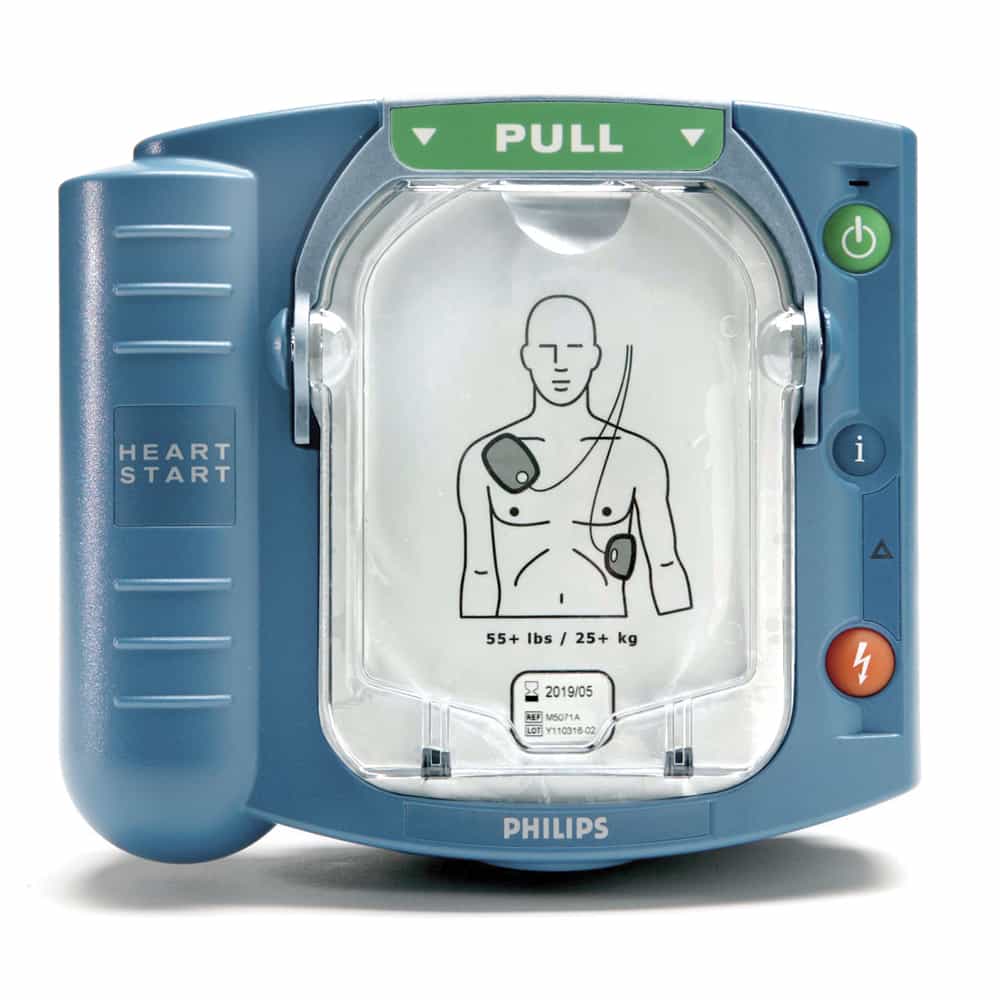
Devices like the Philips HeartStart OnSite AED and Philips HeartStart FRx AED are specifically designed so that anyone can use them even with no prior medical training.
Below are some powerful stories that show why having an AED on hand can change everything.
From the Sidelines to Lifesaver: A Coach’s Quick Action
During a high school soccer game, a 16-year-old player suddenly collapsed on the field. Coaches and bystanders rushed to his side. He wasn’t breathing, and he had no pulse. Fortunately, the school had an AED stored just steps away.
The athletic director retrieved the device while a coach began CPR. Within two minutes, the AED was applied, and a shock was delivered. The student regained a pulse before emergency responders arrived.
The AED had been placed in a clearly marked cabinet and was regularly maintained. This life was saved thanks to quick thinking, proper training, and reliable equipment.
A Second Chance at the Gate: An Airport AED Story
In a busy international airport terminal, a man in his fifties collapsed at the gate, unconscious and gasping. Two nearby travelers ,both trained in CPR, called for help and immediately began chest compressions. An airline agent grabbed the nearest AED mounted in a visible wall cabinet.
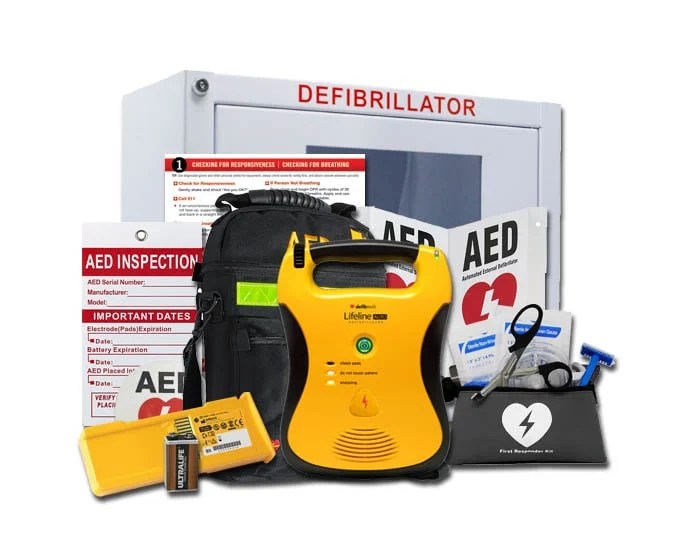
The AED package included pads, a battery, a prep kit and visual instructions. The machine delivered one shock, and the man began to breathe again within moments. He was stabilized by EMS shortly after.
This event sparked the airport authority to review AED access across the facility and increase staff training.
Teamwork Saves a Life: A Jogger’s Park Rescue
In a public park, a 40-year-old jogger collapsed on the trail. A passerby noticed him lying face down and called 911. Another bystander began CPR while a third sprinted to the nearby community center, which had recently installed an AED.
By the time paramedics arrived, the AED had already delivered one shock, and the man was responsive. He made a full recovery.
The AED had only been installed a month earlier, after a local fundraiser. It was stored in a climate-controlled AED cabinet with signage that made it easy to find, a decision that ultimately saved a life.
When a Colleague Collapsed: How a Teacher Became a Hero
In a quiet office environment, a teacher in her mid-40s went into cardiac arrest during a lunch break. Coworkers called for help and remembered that an AED was installed near the main hallway.
A fellow staff member retrieved the Philips HeartStart OnSite AED, applied the pads and followed the voice prompts. The AED advised a shock, which was delivered successfully. EMS arrived minutes later, and the woman survived without neurological damage.
This case reinforced the school district’s commitment to placing AEDs in every building,and providing refresher training every year.
What We Can Learn From These AED Success Stories
These AED success stories share common threads:
- The AED was easily accessible and fully functional
- Someone nearby knew how to act, or followed the device’s prompts
- CPR was started quickly while the AED was retrieved
- The device had been maintained with valid pads and batteries
AEDs save lives when they’re used within the first few minutes. That’s why visibility, preparedness and confidence are just as important as the device itself.
Want to take your readiness even further? Consider adding a Bleeding Control Kit – Standard or Premium to your AED station to respond to trauma situations as well.
Building Habits for Long-Term Success
The incredible outcomes in these stories weren’t just luck—they were the result of preparation. Being ready to act in an emergency isn’t a one-time decision; it’s a mindset built through consistent habits. Just like any other skill, readiness requires practice and attention. It’s about turning the intention to protect others into a series of small, manageable actions that become second nature. By focusing on building simple, sustainable habits, you can create a culture of preparedness in your home, workplace, or community. This approach transforms readiness from a daunting task into an empowering part of your daily life, ensuring you have the confidence and tools to act effectively when it matters most. The following habits are practical ways to make preparedness a lasting and impactful practice.
The Power of Consistency and Daily Practices
True preparedness comes from small, consistent efforts, not grand, infrequent gestures. You don’t need to dedicate entire weekends to emergency drills. Instead, think about integrating small checks into your routine. For example, take 15 minutes each month to inspect your first aid kit, ensuring supplies are stocked and not expired. Make it a habit to glance at your AED’s status indicator light every time you walk by to confirm it’s ready. These minor, regular actions build a powerful foundation of readiness. Consistency ensures that your equipment is functional and your knowledge stays fresh, so if a crisis occurs, your response is confident and immediate. It’s these daily practices that turn a piece of equipment into a life-saving tool.
Practical Habits for a Prepared Mindset
Getting started is often the hardest part, but you don’t have to do everything at once. Don’t wait until you have the “perfect” emergency plan to take action. The key is to start with small, practical steps that build momentum. Begin by placing a well-stocked first aid kit in your car and home. Next, sign up for a basic CPR and AED training course to learn foundational skills. Once you feel comfortable, you can think about adding an AED to your home or advocating for one in your workplace. Each step you take makes you and those around you safer. By breaking preparedness down into achievable goals, you can steadily build your skills and supplies without feeling overwhelmed, creating a resilient mindset along the way.
Focusing on Progress, Not Perfection
The goal is to be more prepared tomorrow than you are today. Waiting for the perfect time or the perfect budget to get started can lead to inaction. Making the decision to purchase an AED or organize a training session for your team might not feel easy, but it’s a decisive step toward creating a safer environment. Every action, no matter how small, contributes to a larger state of readiness. Celebrate the progress you make, whether it’s learning how to apply a tourniquet or simply creating an emergency contact list. It’s about moving forward, not achieving an unattainable standard of perfection.
The Importance of Continuous Learning
Emergency response guidelines evolve, and skills can fade over time. Preparedness isn’t a one-and-done task; it’s an ongoing commitment to learning. Sustainable habits are key to long-term success. If your efforts feel like a chore, they won’t last. Find ways to make learning engaging, like taking a refresher course with friends or family. Regularly renewing your CPR certification ensures your technique remains effective and up-to-date. Committing to continuous learning keeps your skills sharp and your confidence high, ensuring you are always ready to provide the best possible help in an emergency.
How Your Community Can Be the Next Success Story
These stories aren’t rare, they happen every day in ordinary places, thanks to people like you who prepare. Installing an AED, checking its status regularly, and making sure others know where it is can turn a tragedy into a miracle.
If you don’t yet have an AED on-site, we make it easy to get started. Our AED packages include everything you need: the device, accessories, signage, and storage.
Finding Inspiration in Shared Stories
Reading these accounts is about more than just feeling good; it’s about understanding what works. Each story highlights a few simple truths: the AED was accessible and ready to use, someone started CPR right away, and a bystander felt confident enough to act. Success wasn’t a matter of luck, but of preparation. These events show that when a community invests in readiness—by maintaining their devices with valid pads and batteries and ensuring people know what to do—the outcome can be life-changing. They serve as a powerful reminder that preparedness turns bystanders into lifesavers.
Creating a Network of Responders with Training and Equipment
The next success story could happen in your workplace, school, or neighborhood, and it starts with creating a network of responders. This means equipping your space with the right tools and empowering people with the knowledge to use them. Placing AEDs in visible, accessible locations is the first step. The second, equally important step is training. When people feel prepared, they are more likely to act decisively in an emergency. Hands-on CPR and AED training builds the confidence needed to step in when every second counts, turning a group of individuals into a team of potential heroes.
Ready to Make a Difference? Here’s How
You don’t need to be a doctor to save a life. With the right tools, a calm mindset and a few simple steps, anyone can respond in a crisis.
Shop AEDs now and be ready to write your own AED success story, at work, in the community or even at home.
Frequently Asked Questions
Do I need to be a medical professional to use an AED? Absolutely not. Modern AEDs are specifically designed for people without any medical background. Once you turn it on, a clear, calm voice will walk you through every step, from where to place the pads to when to press the shock button. The device analyzes the heart rhythm itself and will only deliver a shock if it’s necessary, so you can act with confidence.
What if I’m afraid of doing something wrong or hurting the person? That feeling is completely understandable, but taking action is their only chance. The most dangerous thing you can do in a sudden cardiac arrest situation is nothing at all. Remember, the AED is designed to be safe and will not shock someone who doesn’t need it. Good Samaritan laws also exist to protect people who step up to help in an emergency. Your willingness to try is the most important thing.
Where should we install an AED to make sure it’s actually useful? Think about visibility and speed. The best spot is a central, high-traffic location where it can be seen and accessed in under two minutes. This could be a main lobby, a hallway near an elevator, or by the entrance of a gym. Avoid tucking it away in a locked office or a supply closet. Using a marked wall cabinet with clear signage makes it easy for anyone to find in a crisis.
What’s the first thing I should do if I see someone collapse: start CPR or find the AED? The best response involves teamwork. The very first step is to check on the person and call 911. If someone else is with you, have one person start chest compressions immediately while the other retrieves the AED. If you are alone, call 911, get the AED if it’s close by, and apply it as soon as you can. The device will guide you on when to perform CPR.
Besides buying the device, what else is involved in maintaining an AED? Keeping an AED ready is simpler than you might think. It mainly involves routine checks to ensure the status indicator light shows it’s ready to use. You’ll also need to track the expiration dates on the electrode pads and the battery, which typically last for several years. Setting a recurring calendar reminder for a quick monthly check is a simple habit that ensures your device is always prepared to help.
Key Takeaways
- Your willingness to act is the most important factor: In a sudden cardiac arrest, the most significant variable is a bystander’s decision to intervene. The stories show that starting CPR and applying an AED immediately, even if you’re nervous, is what truly saves lives.
- Effective rescues are built on proactive steps: A successful outcome is planned long before an emergency happens. It requires having an accessible, well-maintained AED and ensuring people have the basic training and confidence to use it when needed.
- Preparedness is an ongoing commitment, not a one-time task: Saving a life isn’t just about the heroic moment; it’s about the quiet, consistent habits that make it possible. Simple routines like checking your AED’s indicator light and keeping your CPR skills current are what ensure you’re always ready.
Related Articles
Disclaimer for information purposes only:
The information provided on this website is intended for general educational and informational purposes only. It is not medical advice and should not be used as a substitute for professional diagnosis, treatment, or care. Always consult a qualified healthcare or medical professional regarding any health-related questions or concerns.
While we strive to ensure the information shared is accurate and up to date, no guarantees are made regarding completeness, accuracy, or applicability to any individual situation. Use of this content is at the reader’s sole discretion and risk.
This website is part of the Response Ready family of emergency preparedness and training resources, including CPR & first aid training and compliance services, AED sales and program support, AED program management software, and medical oversight solutions provided through our affiliated platforms:
• CPR1.com
• AEDLeader.com
• AEDTotalSolution.com
• MDSIMedical.com
By accessing or using this website, you agree to release, indemnify, and hold harmless the website owners, authors, contributors, and affiliated entities from any claims, losses, damages, or liabilities arising from the use or reliance on the information presented.