- Published
- April 14, 2026
Preparing your AED for all ages the importance of pediatric pads and accessories


A guide to pediatric AED preparedness for all ages
When you decide to place an Automated External Defibrillator (AED) in your home, school, or community center, you are taking a powerful step to protect those around you. But a crucial question often follows: are you prepared to save a life of any age? The stark reality is that sudden cardiac arrest (SCA) does not discriminate, and thousands of children are affected every year in the US, making AED readiness in daycare centers and childcare facilities especially important. In fact, research shows that 87.5% of these tragic events in children happen at home.
Preparing for a pediatric cardiac emergency requires more than just having an AED on the wall. It requires having the right tools and knowledge to act decisively when every second is critical. This guide provides the clear, straightforward information you need to ensure your emergency plan truly covers everyone, especially the youngest and most vulnerable among us.
Why children need a different response
It is a common misconception to think of children as simply small adults, especially during a medical emergency. Their physiology is fundamentally different, and this is critically important when it comes to defibrillation. An adult AED is calibrated to deliver a powerful electrical shock, typically around 150 joules, to reset a chaotic heart rhythm. For a small child, this level of energy can be excessive and potentially harmful.
Pediatric pads are engineered to solve this problem. They work with the AED to automatically reduce or attenuate the energy of the shock to a level that is safer and more appropriate for a child’s heart, usually around 50 joules. Using the correct equipment ensures the intervention is not only life saving but also tailored to the patient’s specific needs.
Understanding pediatric AED pads
Pediatric AED pads are specifically designed for children who are under 8 years of age or weigh less than 55 pounds (25 kg). These pads are smaller to fit a child’s torso properly and, as mentioned, they ensure the AED delivers a reduced-energy shock.
When considering an AED for a location where children are frequently present, such as a school, daycare, community pool, or your own home, having a pediatric solution is not just an option, it is a necessity. Recognizing the signs of sudden cardiac arrest in children and infants is the first step, and having the right equipment is the second.
The Defibtech Lifeline AED a no compromise approach to child safety
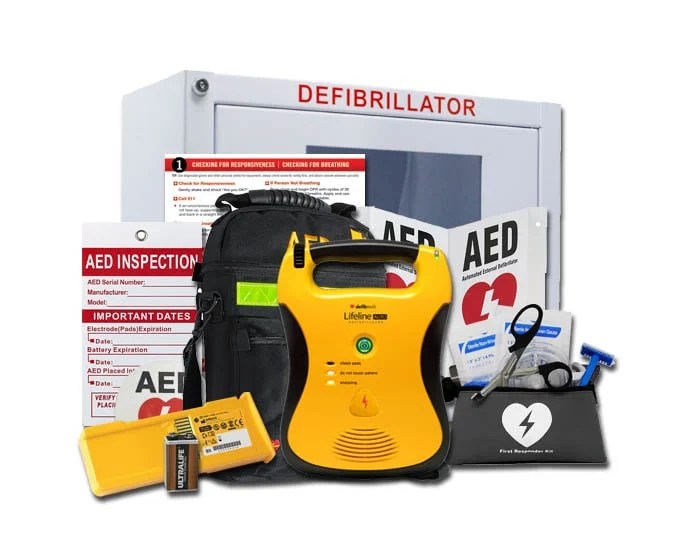
The Defibtech Lifeline AED is an ideal choice for its ruggedness and user-friendly design. To make it ready for all ages, it pairs with dedicated Defibtech Lifeline AED pediatric pads. While some AED models use universal pads with a “child mode” button, the Defibtech AED utilizes separate, purpose built pads for children.
This dedicated approach offers a key advantage in a high stress emergency. There is no button to forget or switch to find. When you connect the pediatric pads to the Defibtech Lifeline AED, the device automatically recognizes them and adjusts its energy level. This design eliminates a potential point of confusion or error during a chaotic rescue, ensuring the correct therapy is delivered without hesitation. It represents a clear, uncompromising commitment to child safety.
How to use pediatric AED pads correctly
Proper pad placement is essential for an AED to work effectively. The goal is to create a clear path for the electrical current to pass through the heart.
Pad placement is critical
Because children have a smaller torso, the standard adult placement (one pad on the upper right chest, one on the lower left side) can cause the pads to be too close or even touch. This is dangerous and can prevent the AED from working.
For infants and small children, the recommended placement is anterior posterior. This means you place one pad in the center of the child’s chest and the other pad in the center of their back, between the shoulder blades. This configuration ensures the heart lies directly in the path of the electricity. Always follow the visual instructions printed on the pads themselves.
What if only adult pads are available
The American Heart Association is clear: it is far better to use an AED with adult pads on a child than to not use one at all. If you are in an emergency and only have adult pads, you should still proceed.
To do this safely, use the same anterior posterior placement. Place one adult pad on the child’s chest and the other on their back. The most important rule is to make sure the two pads do not touch each other. While not ideal, rapid defibrillation is the most critical factor in surviving a sudden cardiac arrest, and using adult pads is a necessary and acceptable step if it is your only option.
Building a complete emergency response system
True preparedness extends beyond the AED itself. A cardiac arrest is often part of a larger emergency scenario that could involve trauma or other injuries. Assembling a comprehensive response kit ensures you are ready for anything.
The AED is the heart of your emergency plan, but it should be supported by other essential tools. Storing your AED alongside a well stocked first aid kit creates a centralized emergency station. Consider adding a Bleeding Control Kit to handle severe trauma, as uncontrolled bleeding can be just as life threatening as cardiac arrest.
A complete First Responder Kit containing items like trauma shears, gloves, and CPR rescue masks provides the supplementary equipment needed to manage the scene safely and effectively until professional help arrives. Equipping your space with these tools transforms a single device into a comprehensive safety solution for your family, students, or community members.
Frequently asked questions about pediatric AEDs
Q: At what age should I use pediatric AED pads?
A: You should use pediatric AED pads on children who are under 8 years old or weigh less than 55 pounds (25 kg). If a child is over 8 years old or weighs more than 55 pounds, you should use standard adult pads.
Q: What happens if I use adult pads on a child?
A: If pediatric pads are not available, you should use adult pads. Place one pad on the center of the child’s chest and the other on their back, ensuring the pads do not touch. An adult-level shock is better than no shock at all in a life or death situation.
Q: Can I use pediatric pads on an adult?
A: No, you should never use pediatric pads on an adult. The reduced energy dose delivered by pediatric pads is not strong enough to be effective for an adult heart and will likely fail to restore a normal rhythm.
Q: How do I know if my AED is compatible with pediatric pads?
A: Most modern AEDs, including the Defibtech Lifeline AED, have corresponding pediatric pads available. Check your AED manufacturer’s guidelines or contact our expert team at Response Ready to confirm compatibility and purchase the correct accessories.
Q: How often do I need to replace pediatric AED pads?
A: Like adult pads, pediatric AED pads have a limited shelf life and must be replaced after use or once they reach their expiration date, which is typically around two years. Regular checks of your AED and its accessories are essential for readiness. By using the Response Ready App, we can ensure the pads are replaced in time and seamlessly, so you are never without in a life threatening situation.
Disclaimer for information purposes only:
The information provided on this website is intended for general educational and informational purposes only. It is not medical advice and should not be used as a substitute for professional diagnosis, treatment, or care. Always consult a qualified healthcare or medical professional regarding any health-related questions or concerns.
While we strive to ensure the information shared is accurate and up to date, no guarantees are made regarding completeness, accuracy, or applicability to any individual situation. Use of this content is at the reader’s sole discretion and risk.
This website is part of the Response Ready family of emergency preparedness and training resources, including CPR & first aid training and compliance services, AED sales and program support, AED program management software, and medical oversight solutions provided through our affiliated platforms:
• CPR1.com
• AEDLeader.com
• AEDTotalSolution.com
• MDSIMedical.com
By accessing or using this website, you agree to release, indemnify, and hold harmless the website owners, authors, contributors, and affiliated entities from any claims, losses, damages, or liabilities arising from the use or reliance on the information presented.