You’ve made the life-saving decision to buy an Automated External Defibrillator (AED) for your school, business, or community. That’s a fantastic first step. But what happens during a real emergency? A hidden AED or one with missing key accessories can create dangerous, life-threatening delays. When every second counts, you can’t afford to have your device be anything less than 100% ready. This is why simply owning an AED isn’t enough. To be truly prepared, you need a complete station—a dedicated, visible, and fully-stocked hub that makes saving a life as straightforward as possible.
This guide is your practical checklist for building that station. We will walk through each component, explaining its purpose and why it’s a critical part of your emergency response plan. We will help you move from simply having an AED to having a comprehensive system that empowers anyone to act confidently and save a life.
What is a Complete AED Station?
A complete AED station is much more than just the defibrillator. Think of it as a dedicated, all-in-one emergency hub designed to make saving a life as straightforward as possible. While the AED itself is the star player, a complete station includes everything needed to ensure the device is protected, easy to find, and ready to use at a moment’s notice. It’s the difference between having a fire extinguisher stored in a dusty closet versus having one mounted in a visible, clearly marked cabinet with instructions. This comprehensive approach transforms a piece of medical equipment into a fully functional life-saving system that empowers anyone to respond effectively during a sudden cardiac arrest emergency.
Setting up a proper station removes the guesswork and potential for panic-induced delays when every second is critical. It ensures that a bystander can quickly locate the AED, access it without trouble, and have all the necessary accessories on hand. By creating a designated and fully equipped location, you build a system that supports immediate action. This thoughtful preparation is the foundation of a strong emergency response plan, giving your community the tools and confidence needed to act decisively. An AED package is often the best starting point, as it bundles the device with the essential items needed to build out your station.
Why Visibility and Accessibility Are Critical
An AED can’t save a life if no one can find it. During a cardiac emergency, the environment can be chaotic, and responders are under immense pressure. That’s why making your AED highly visible and easily accessible is non-negotiable. Placing an AED in a well-marked, wall-mounted cabinet in a central, high-traffic location—like a lobby, hallway, or near an entrance—drastically increases the chances that a bystander will see it and use it. The goal is to make its location intuitive. Clear signage acts as a beacon, guiding people directly to the life-saving device without wasting precious time searching.
A proper AED cabinet serves two key functions: it protects your investment from dust, damage, and theft while keeping it in plain sight. A sturdy, wall-mounted enclosure ensures the defibrillator remains secure and ready for use, whether it’s placed indoors or outdoors. This combination of protection and immediate accessibility is what makes a public access defibrillation program successful. When someone collapses, people shouldn’t have to ask where the AED is; the answer should be obvious. This simple step can be the deciding factor in a successful rescue, turning a moment of crisis into a story of survival.
Get certified in CPR
Adult & Pediatric First Aid/CPR/AED — Blended Learning
Self-paced online + in-person skills check. 2-year certification.
CPR, AED & First Aid Certification
Instructor-led on-site. Practice on real manikins and AED trainers.
The Essential Components of an AED Station
Building a complete and effective AED station involves assembling a few key components that work together seamlessly. Each piece plays a specific role in ensuring your emergency response is as smooth and efficient as possible. By making sure your station is fully stocked and properly organized, you create a reliable resource that empowers anyone in your organization or community to step up and act with confidence. Think of it as a checklist for readiness, where every item contributes to a better outcome. Here are the essential parts you’ll need to create a truly prepared AED station that is ready for anything.
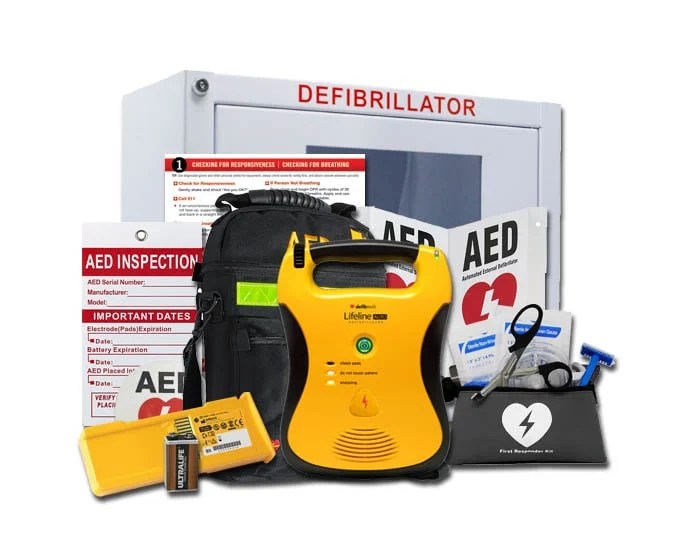
First and foremost is the AED device itself. This is the heart of your station, so it’s crucial to choose a reliable, FDA-approved model and ensure it’s always ready. This means regularly checking the status indicator to confirm it’s functional. Next, you’ll need a sturdy AED cabinet to house the device, protecting it while keeping it visible. Complementing the cabinet, clear and bold signage is essential for guiding people to the AED’s location from various points in your building. Finally, don’t forget the essential accessories that make the device usable. This includes at least one extra set of defibrillator pads and a spare battery, as these items have expiration dates and are critical for operation. A CPR and first aid response kit stored within or near the cabinet is also a smart addition to manage the scene effectively.
Your AED: The Heart of Your Station
The first step is selecting the right defibrillator for your specific environment. Are you equipping a busy office, a rugged sports complex, or a community center with visitors of all ages? Your choice of device will be the cornerstone of your station.
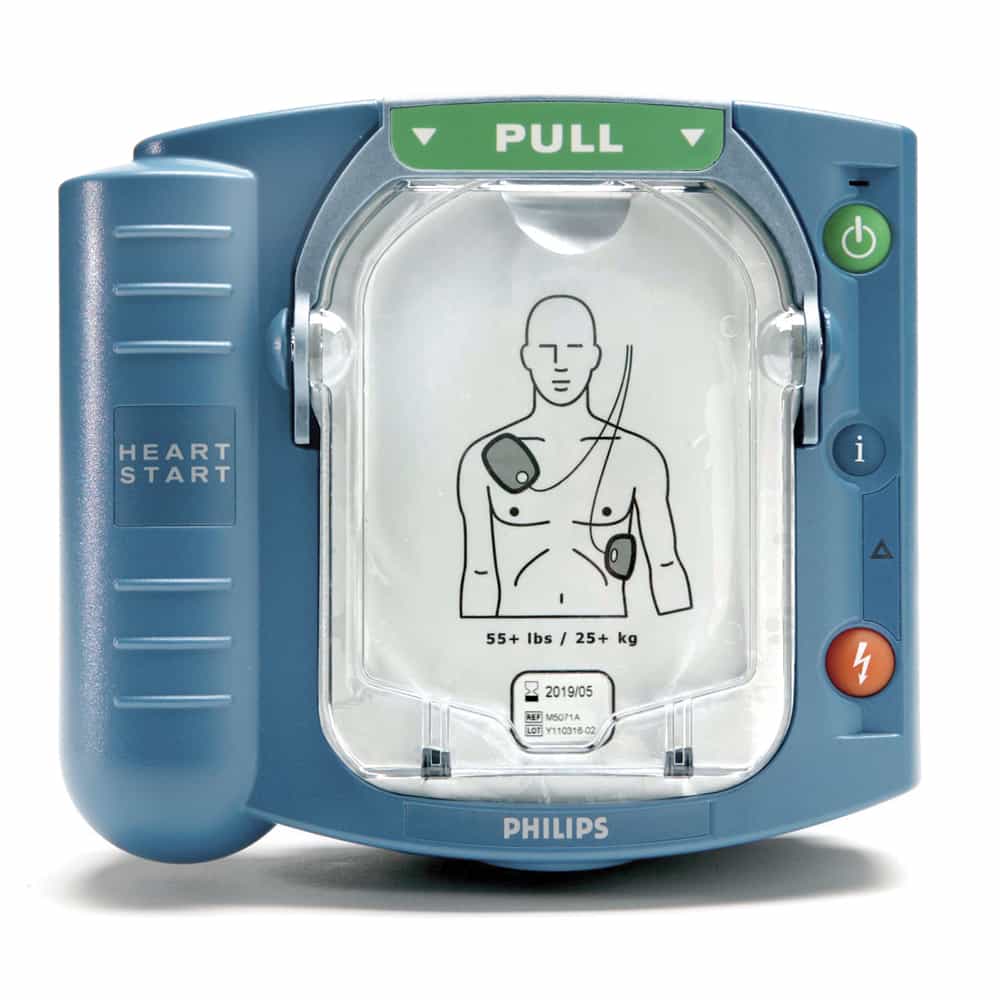
For instance, a model like the Philips HeartStart OnSite AED is renowned for its user friendly design, making it ideal for locations where first time responders are likely to be the users. For environments requiring a more durable unit with advanced features, a Defibtech Lifeline AED might be a better fit. Our team has over a decade of expertise to help you find the perfect match from our curated selection of FDA approved devices in our AED superstore.
Where Should You Keep Your AED?

An AED is useless if no one can find it. The cabinet you choose is just as important as the device itself, serving to protect your investment and make it instantly recognizable. In a moment of panic, a clearly marked cabinet becomes a beacon for rescuers.
Consider these options based on your location:
Keep it Secure with Alarmed Cabinets
An alarmed AED cabinet does more than just deter theft. When the door is opened, the loud alarm alerts everyone in the vicinity that an emergency is underway, drawing more help to the scene. This is the most popular choice for schools, gyms, and office buildings.
Finding the Right Fit: Standard vs. Specialized Cabinets
For quieter or more secure areas, a standard non alarmed cabinet keeps the device clean, protected, and visible. We also offer specialized solutions like weatherproof outdoor cabinets for pools and sports fields, and sleek fully recessed cabinets that comply with ADA guidelines for hallways.
Point the Way with Clear AED Signs
During a sudden cardiac arrest, every second is critical. Clear, intuitive signage can shave precious time off the response by guiding a rescuer directly to the AED. Don’t let your life saving device go unnoticed.
A 3D transforming wall sign is essential for hallways and large open spaces, as it can be seen from multiple directions. Pairing this with an AED wall poster above the cabinet reinforces the location and provides simple graphical instructions. Placing an AED On Site decal on your front door or window informs visitors and first responders that your facility is equipped to handle an emergency. Which creates not only peace of mind for you but for them as well.
What’s Inside a First Responder Kit?
When you open an AED, you need to apply the pads directly to the victim’s bare chest. However, clothing, moisture, or chest hair can interfere with pad contact and prevent the device from working correctly. A first responder kit contains the simple tools you need to prep the victim quickly.

A complete first responder kit should include:
-
Trauma shears: To cut through clothing quickly.
-
Prep razor: To shave a small area of the chest for optimal pad adhesion.
-
Gauze pads or wipes: To dry the skin.
-
CPR barrier mask: To provide rescue breaths safely.
-
Gloves: To protect the rescuer.
Having these tools stored with the AED in its cabinet means you won’t waste time searching for them when they’re needed most.

RECOMMENDED
HeartSine Samaritan 350P AED Package
Compact, fully-automatic AED designed for first-time responders. Pads, battery, carry case and wall sign included.
Strategic Placement for Your AED Station
Once you have the right components, the next question is where to put them. The location of your AED station can make the difference between a life saved and a tragic outcome. The goal is to ensure that anyone can find and retrieve the AED in under three minutes. This means thinking critically about your space, identifying potential hotspots, and ensuring your station is both visible and compliant with any relevant regulations. Proper placement turns your equipment into a truly effective emergency response system.
High-Traffic and High-Risk Areas
Think about the natural flow of your building. Where do people gather most often? Lobbies, cafeterias, main corridors, and near elevators are prime high-traffic locations. Placing an AED in these areas maximizes the number of people who will see it daily, making it easier to remember in an emergency. Next, consider high-risk zones—places where a cardiac event is more likely to occur. This includes gyms, pools, sports fields, and manufacturing floors. An AED should be centrally located in these spots, turning the clearly marked AED package into a beacon for rescuers when panic sets in and every second counts.
Meeting Compliance Standards
Placement isn’t just about visibility; it’s also about following the rules. In public hallways, for example, an AED cabinet must comply with Americans with Disabilities Act (ADA) guidelines, which limit how far an object can protrude from a wall. For these spaces, a sleek, fully recessed cabinet is the perfect solution. Environments like pools or athletic fields require specialized accessories like weatherproof outdoor cabinets to protect the device from the elements. It’s always a good idea to check your local and state regulations to ensure your AED program is fully compliant, giving you confidence that your station is not only ready but also correctly installed.
Keeping Your AED Ready: Management and Compliance Tips
Your responsibility doesn’t end after installation. AEDs require routine checks to ensure their batteries and pads have not expired and the device is ready. This is where many programs fail, but we make it easy.
The Response Ready App simplifies this entire process. It allows you to track expiration dates, log monthly readiness checks, and manage multiple devices across different locations right from your phone. Our users agree it’s an invaluable tool, as one user noted, “This app makes it so much easier to manage defibrillators in different locations. Convenient and intuitive.”
Furthermore, confidence is key. A device is only as effective as the person using it. We offer accessible CPR and AED training courses that give your team the skills and confidence to act decisively.
Routine Checks and Maintenance Logs
An AED is designed to be low-maintenance, but not “no-maintenance.” Think of it like the smoke detector in your home—it needs regular, simple checks to ensure it’s ready to work when you need it most. We recommend a quick visual inspection at least once a month. Just look for the green readiness indicator light or checkmark, confirm the cabinet is unobstructed, and ensure the first responder kit is fully stocked. Keeping a simple maintenance log, either in a binder or digitally, is a great way to stay organized. This creates a record of readiness that is crucial for compliance and gives you confidence that your station is always prepared to save a life.
Tracking AED Pad and Battery Expiration
The two most critical components to monitor are the AED pads and batteries, both of which have specific expiration dates. The conductive gel on AED pads can dry out over time, preventing a solid connection to the victim’s chest. Similarly, AED batteries lose their charge and must be replaced to ensure the device can deliver a shock. Manually tracking these dates can be a hassle, especially if you manage multiple devices. This is exactly why we developed the Response Ready App. It simplifies the entire process by sending you reminders for expiring supplies, allowing you to log monthly checks, and managing all your devices from one place. As one user noted, “This app makes it so much easier to manage defibrillators in different locations. Convenient and intuitive.”
Simplify Your Setup with a Complete AED Station Package
Building your station piece by piece can feel overwhelming. To make it simple, we have assembled AED value packages that bundle everything you need into one purchase.
A perfect example is our Heartsine Samaritan PAD 450P Value Package. It includes the user-friendly 450P AED with CPR rate feedback, an alarmed wall cabinet, a 3-way wall sign, and a complete first responder kit. It’s a comprehensive, cost effective solution that ensures you are fully prepared from day one.
We are committed to being a long term partner in your safety journey. Our customer centric policies, like a 30 day money back guarantee and a one year price promise, give you complete peace of mind with your purchase.
Ready to take action? Browse AED station supplies at Response Ready.
Frequently asked questions
Q: Do I really need a special cabinet for my AED?
A: Yes, we highly recommend it. A cabinet protects your device from dust and damage, makes it highly visible in an emergency, and helps prevent theft. An alarmed cabinet also serves as an excellent alert system to notify others that an emergency is in progress.
Q: What is the difference between adult and pediatric pads?
A: Pediatric pads are designed for children under 8 years of age or weighing less than 55 pounds. They deliver a reduced level of energy more appropriate for a child. If your facility, like a school or community center, is frequented by children, having pediatric pads or a pediatric key is essential.
Q: How often do I need to replace batteries and pads?
A: Most AED pads and batteries have a shelf life of two to five years, which is printed on the packaging. Forgetting to replace them is a common point of failure for AED programs. Our Response Ready App helps you automatically track these dates and sends you reminders so you are never caught unprepared.
Q: Is training required to use an AED?
A: While modern AEDs are designed with voice and visual prompts to guide an untrained user, we strongly encourage official training. Training empowers people with the confidence and skills to perform CPR and use the AED correctly, which can significantly improve a victim’s chance of survival.
Q: Why should I buy from Response Ready?
A: We offer more than just a product. We provide complete life saving solutions. From expert recommendations and free shipping to ongoing support with our compliance app, we simplify every step. Our goal is to make this life saving technology accessible and affordable for everyone.
Key Takeaways
- A Complete Station is More Than Just the AED: To be truly prepared, pair your defibrillator with a visible cabinet, clear signage, and a first responder kit to remove guesswork during an emergency.
- Strategic Placement Saves Precious Seconds: Install your station in a central, high-traffic location like a lobby or gym. The goal is for anyone to find and use the device in under three minutes.
- Maintain Constant Readiness with Routine Checks: An AED requires simple but consistent upkeep. Regularly check the device’s status indicator and track expiration dates for pads and batteries to ensure it’s always ready to perform.

Not sure which AED or training fits your needs?
A Response Ready product expert walks you through it — no obligation.
Related Articles
- Your essential checklist for a complete AED station
- The complete AED readiness checklist for you
- AED Guideline Archives — Response Ready