Why Do Schools Need AED Programs?
An AED program for schools is a structured plan that places automated external defibrillators throughout a campus, trains staff to use them, and keeps every device inspection-ready year-round. According to the American Heart Association, approximately 9,500 students under age 18 experience sudden cardiac arrest (SCA) in the United States each year, and survival rates drop roughly 10 percent for every minute that passes without defibrillation.
Browse AED packages built for K-12 schools at Response Ready and get free shipping on orders over $99.
Schools present a unique challenge because emergency medical services often take eight minutes or longer to arrive. An on-site AED can deliver a life-saving shock in under three minutes, bridging the gap between a cardiac event and the arrival of paramedics. For school administrators, nurses, PTA members, and school board members, implementing an AED program is both a safety imperative and, in many states, a legal requirement.
Get certified in CPR
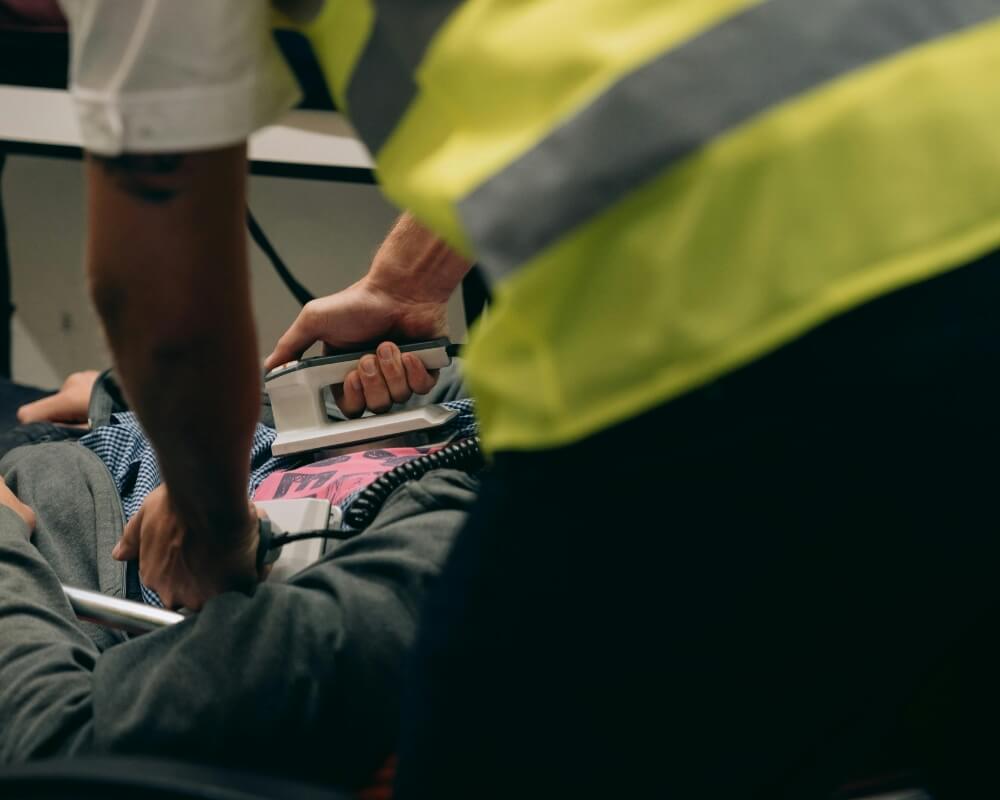
Adult & Pediatric First Aid/CPR/AED — Blended Learning
Self-paced online + in-person skills check. 2-year certification.
CPR, AED & First Aid Certification
Instructor-led on-site. Practice on real manikins and AED trainers.
Which States Require AEDs in Schools?
State AED mandates for schools vary widely across the United States, and school administrators must understand the specific AED requirements by state that apply to their district. Currently, 16 states have passed legislation requiring AEDs in some or all K-12 schools.
Below is a summary of notable state mandates:
| State | Requirement | Key Details |
|---|---|---|
| California | All public schools | Schools must maintain at least one AED on campus |
| New York | All public schools and chartered nonpublic schools | AEDs required at school-sponsored events |
| Texas | UIL schools participating in athletics | AEDs must be present at athletic venues and practices |
| Illinois | All public schools | Physical fitness facilities must have AEDs accessible |
| Florida | Public schools with athletics programs | AEDs required at all athletic events and practices |
| New Jersey | All public schools | Schools must have AEDs and trained personnel on site |
| Pennsylvania | All public schools | AEDs required in school buildings and at athletic events |
| Oregon | Schools with interscholastic activities | AEDs must be available during athletic events |
Even in states without explicit mandates, school districts face growing pressure from parent groups, insurance carriers, and community safety advocates to adopt AED compliance programs. Good Samaritan laws in every state provide liability protection for trained AED users who act in good faith during an emergency.
How Many AEDs Does a School Need?
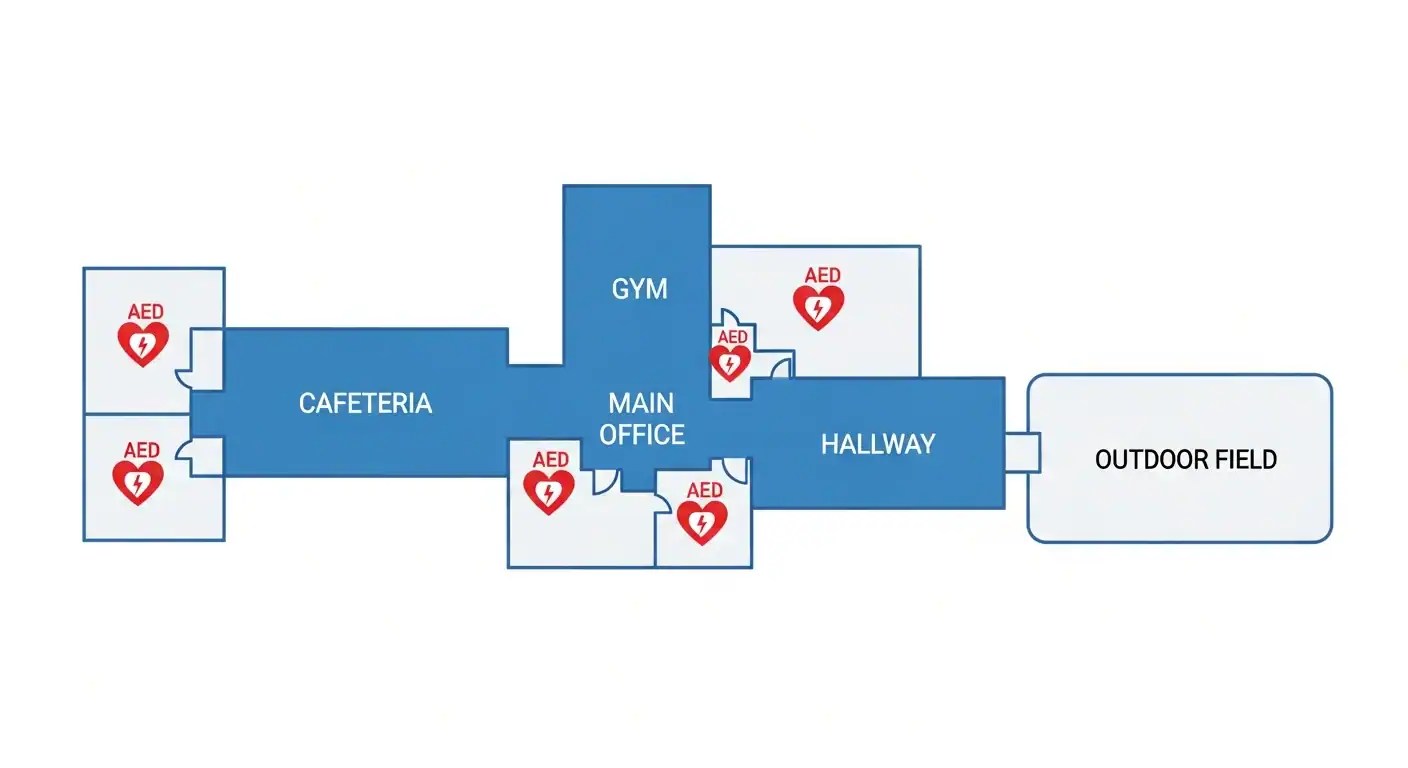
The number of AEDs a school campus requires depends on building size, layout, and the three-minute response-time standard recommended by the American Heart Association. The goal is to place AEDs so that any location on campus is within a 90-second round trip of a device.
General placement guidelines for schools include:
- One AED per building floor for multi-story school buildings
- One AED near the main gymnasium or athletic facility, where cardiac events during physical activity are most likely
- One AED in or near the cafeteria or auditorium, areas with high occupancy during assemblies and meals
- One AED at outdoor athletic fields, stored in a weatherproof cabinet
- One AED in the school nurse’s office as a central response point
- Additional AEDs for remote buildings such as portable classrooms, field houses, or separate wings
A typical K-12 school campus needs between 3 and 10 AEDs depending on the size and number of buildings. Response Ready works with school districts to create customized placement plans based on campus layout, student population, and state requirements.
What Does an AED Program for Schools Cost?
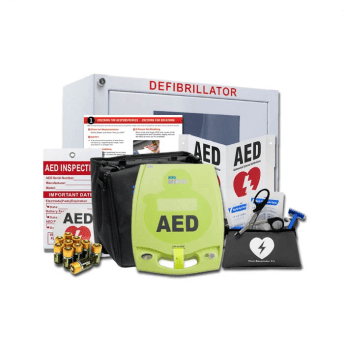
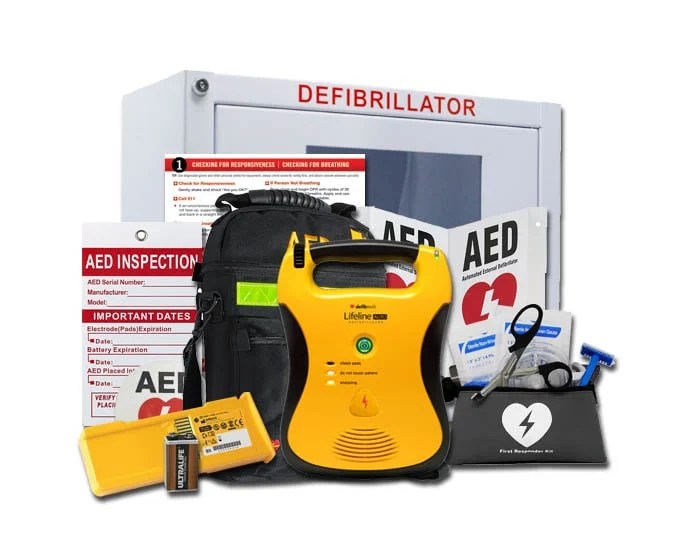
An AED program for schools involves more than the initial device purchase. School administrators should budget for the AED unit itself, a wall-mounted cabinet with signage, replacement pads and batteries, staff training, and ongoing program management. Response Ready provides complete AED value packages designed to reduce the total cost of outfitting a school.
Here is a breakdown of typical school AED program costs:
| Cost Component | Estimated Range | Notes |
|---|---|---|
| AED device (value package) | $1,400 to $2,400 | Includes carry case, pads, battery, cabinet, signage, first responder kit |
| Replacement pads | $25 to $75 per set | Replace every 2 to 4 years or after each use |
| Replacement battery | $100 to $300 | Replace every 4 to 5 years depending on model |
| CPR/AED training | $30 to $75 per person | Certification valid for 2 years |
| Program management (optional) | $99 per year per device | Response Ready AED Total Solution covers compliance tracking |
For a school purchasing five AED value packages, the initial investment typically falls between $7,000 and $12,000, with annual maintenance costs under $500 per device. Response Ready AED value packages bundle the device, cabinet, signage, and accessories together, saving hundreds of dollars compared to purchasing components separately.
Funding Sources for School AED Programs
Schools have multiple avenues to fund AED purchases without straining operating budgets:
- State and federal grants: Many states offer safety grants specifically earmarked for emergency equipment in schools
- PTA and booster club fundraising: Parent-teacher associations frequently sponsor AED purchases as high-impact safety projects
- Corporate sponsorships: Local businesses may donate AEDs in exchange for recognition as community safety partners
- Insurance premium offsets: Some school insurance carriers offer reduced premiums for campuses with compliant AED programs
- AED rental programs: Response Ready offers AED rental plans starting at $45 per month per device, which include maintenance, pad and battery replacements, and compliance tracking
School districts working within tight budgets often turn to AED rental options for schools to meet state mandates without dipping into capital reserves. Monthly plans starting at $45 cover the device plus all consumable replacements and compliance documentation, so administrators are not tracking expiration dates across multiple buildings. Multi-unit pricing is available for districts deploying AEDs in every school.
How Should Schools Train Staff to Use AEDs?
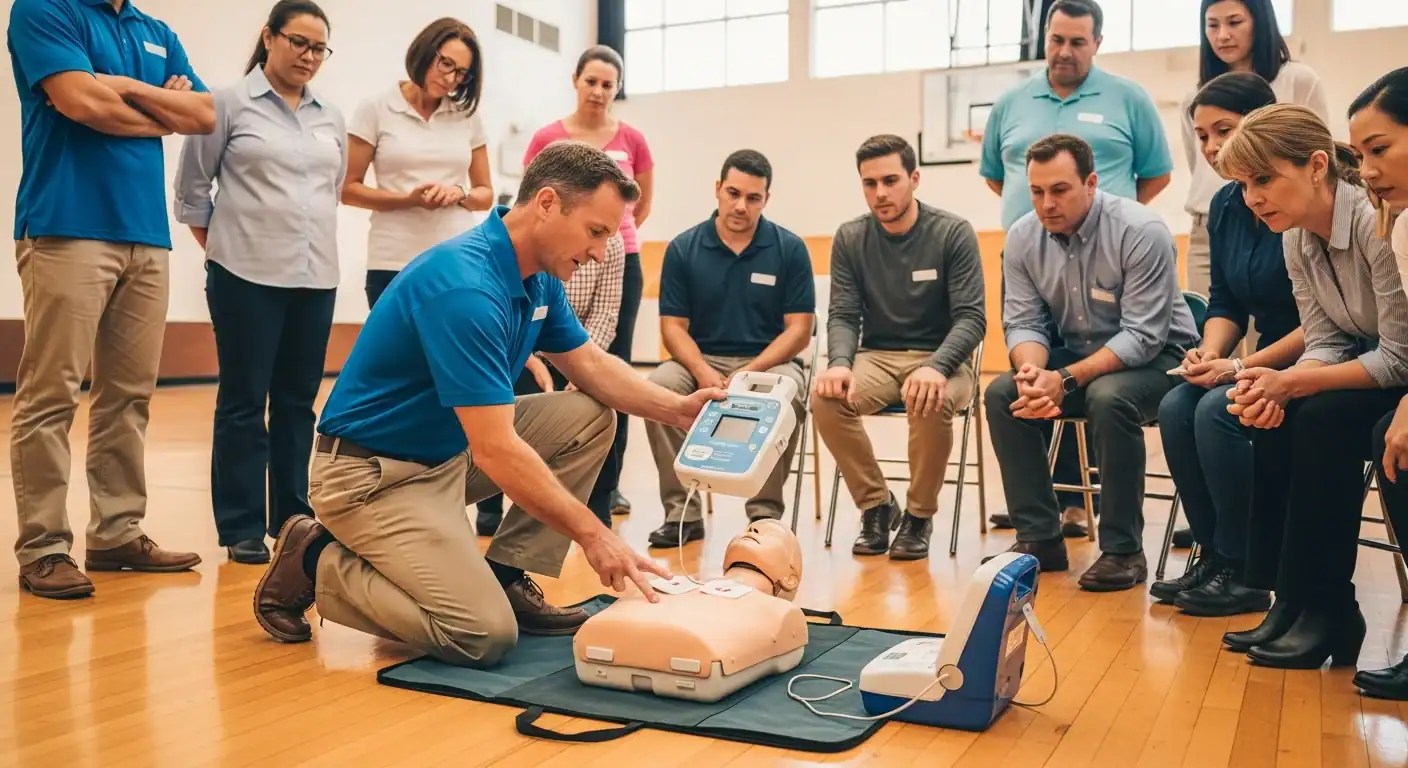
Staff training is the foundation of an effective school AED program. Response Ready recommends that schools train a minimum of 10 to 20 staff members in CPR and AED use, ensuring that at least one trained responder is present in every building during school hours, after-school activities, and athletic events.
A well-designed school AED training program should cover:
- Recognizing sudden cardiac arrest: Understanding the difference between SCA and other medical emergencies
- Calling 911 immediately: Designating who calls EMS and who retrieves the AED
- Performing hands-only CPR: Starting chest compressions while the AED is being retrieved
- Using the AED: Following the device’s voice prompts to attach pads and deliver a shock
- Coordinating with EMS: Providing accurate information to paramedics upon arrival
Many state mandates require trained personnel to be on site whenever students are present. AED certification courses are typically 2 to 4 hours long, and certifications remain valid for two years. Schools should schedule annual refresher training to keep skills current and account for staff turnover.
For districts that need training equipment, Response Ready offers AED trainer devices and CPR training manikins that simulate realistic emergency scenarios without delivering an electrical shock.

RECOMMENDED
HeartSine Samaritan 350P AED Package
Compact, fully-automatic AED designed for first-time responders. Pads, battery, carry case and wall sign included.
What AED Features Matter Most for Schools?
School environments require AEDs with specific features that support quick, confident use by non-medical responders. When selecting an AED for a school setting, administrators should prioritize the following characteristics.
- Clear voice prompts and visual instructions: AEDs like the Defibtech Lifeline VIEW provide step-by-step video coaching on a built-in screen, reducing hesitation for first-time users
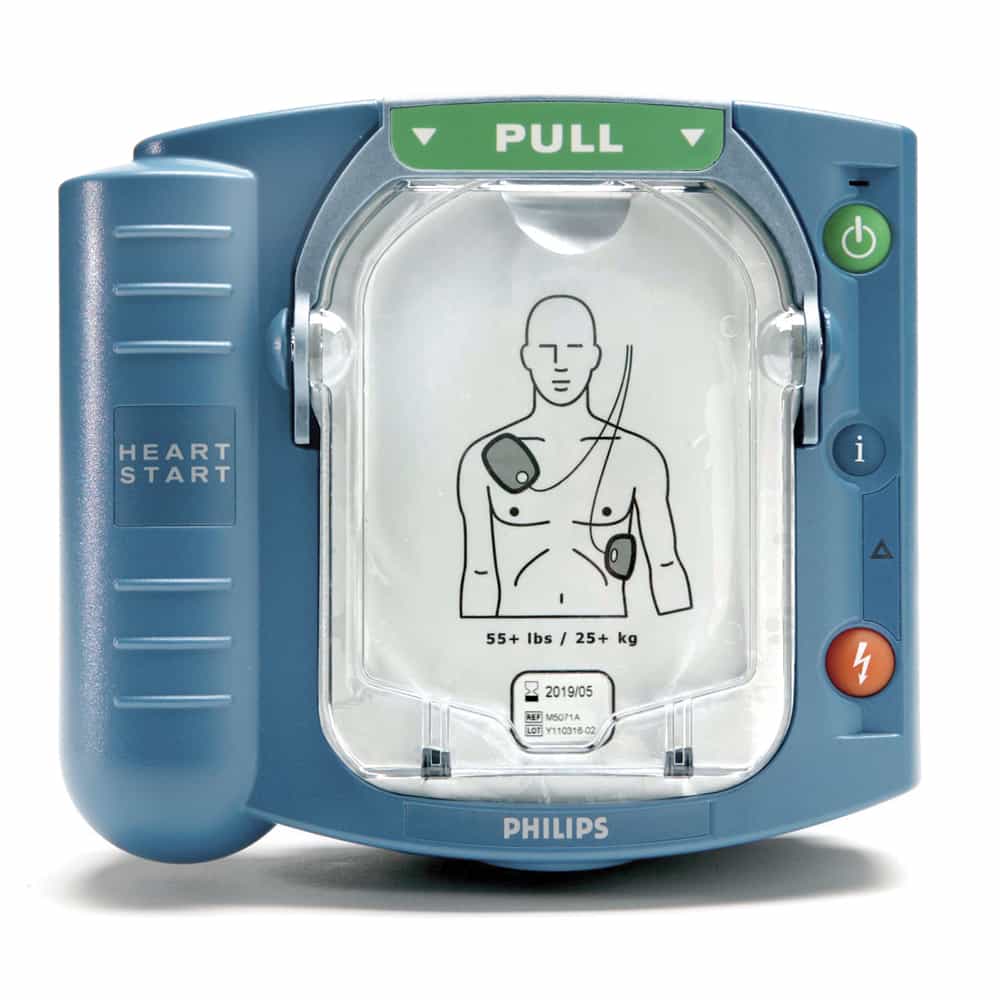
- Pediatric capability: Elementary and middle schools, as well as daycare centers and childcare facilities, should select AEDs that support pediatric electrode pads or have a pediatric mode switch for treating younger children
- Durability and weather resistance: AEDs placed near outdoor athletic fields should have at least an IP55 dust and water resistance rating
- Low maintenance requirements: Self-testing AEDs with long-life batteries (4 to 5 years) and pads (2 to 4 years) minimize upkeep for busy school staff
- Lightweight and portable: Devices under 5 pounds are easier to transport across large campuses quickly
- CPR feedback technology: AEDs with real-time CPR coaching, like the ZOLL AED Plus, help untrained or nervous rescuers perform effective chest compressions
Response Ready carries AEDs from all six FDA-approved manufacturers, so school districts can compare features across brands and select the best fit for their campus. Browse the complete AED buyer’s guide for a detailed comparison.
How Do You Manage an Ongoing School AED Program?
Response Ready AED Total Solution is a managed compliance platform that automates the ongoing tasks schools need to maintain a ready and compliant AED program. Purchasing AEDs is only the first step; maintaining them properly is what keeps a school prepared for a real emergency.
Effective school AED program management includes these ongoing tasks:
- Monthly visual inspections: Check the AED’s status indicator light, verify pads are sealed and unexpired, and confirm the battery is charged
- Expiration tracking: Monitor pad and battery expiration dates and order replacements before they expire
- Post-event procedures: After any AED use, replace pads immediately, download event data for medical review, and obtain a loaner device while the used unit is serviced
- Documentation and record-keeping: Maintain inspection logs, training records, and maintenance history for compliance audits
- Annual program review: Assess whether AED placement, staffing, and training meet current state requirements
For schools that lack dedicated safety staff, Response Ready’s AED Total Solution program handles compliance tracking, sends automated inspection reminders, manages pad and battery replacements, and provides medical director oversight through Dr. Ann Jarris, MD, MBA, FACEP. The program costs $99 per year per device.
Contact Response Ready to build a customized AED program for your school district.
How Do School AEDs Provide Liability Protection?
One of the most common concerns among school administrators is liability. The good news is that all 50 states have Good Samaritan laws that protect individuals who use an AED in good faith during an emergency. Schools that maintain a properly managed AED program, with trained staff, regular inspections, and documented maintenance, receive strong legal protections.
To maximize liability protection, schools should take the following steps:
- Register AEDs with local EMS: Many states require schools to notify their local emergency medical services of AED placement locations
- Maintain physician oversight: Some states require a medical director to oversee AED programs. Response Ready provides medical director services through Dr. Ann Jarris, MD, MBA, FACEP
- Document everything: Keep detailed records of AED inspections, staff training certifications, and any emergency uses of the device
- Create a written emergency action plan: Outline the response protocol so every staff member knows their role during a cardiac emergency
A documented, compliant AED program demonstrates a school’s commitment to student and staff safety. This proactive approach significantly reduces legal exposure compared to schools that lack AED coverage entirely.
Step-by-Step Guide to Implementing a School AED Program
Implementing an AED program in a school does not need to be complicated. The following seven steps provide a clear roadmap for school administrators, from initial planning through ongoing management.
- Assess your campus needs: Map your buildings and facilities, calculate the number of AEDs needed based on the three-minute response standard, and identify high-risk areas like gyms, athletic fields, and cafeterias
- Review state requirements: Check your state’s AED mandate for schools, including placement rules, training requirements, physician oversight needs, and EMS notification obligations
- Secure funding: Identify budget sources including grants, PTA fundraising, corporate sponsors, or the monthly rental option from Response Ready
- Select AEDs and accessories: Choose AED models with school-friendly features such as pediatric pads, voice prompts, and low-maintenance designs from Response Ready’s full AED catalog
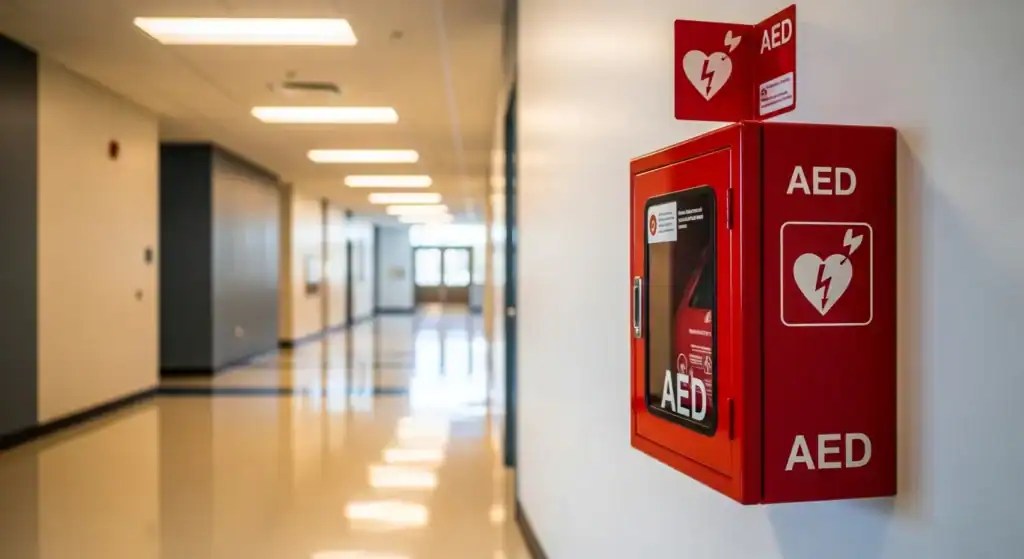
- Install and position AEDs: Mount AEDs in highly visible, unlocked cabinets with signage directing people to the nearest device
- Train staff: Certify at least 10 to 20 staff members in CPR and AED use, ensuring coverage for all buildings and time periods
- Enroll in program management: Sign up for the AED Total Solution to automate inspections, compliance tracking, and supply replacements

Not sure which AED or training fits your needs?
A Response Ready product expert walks you through it — no obligation.
Frequently Asked Questions About AEDs in Schools
Are AEDs required in all U.S. schools?
No. Currently 16 states mandate AEDs in some or all K-12 schools. However, the American Heart Association recommends that every school have an AED program regardless of state requirements, and many districts adopt programs voluntarily to protect students and staff.
Can a student use an AED in an emergency?
Yes. AEDs are designed for use by anyone, including untrained bystanders. The device provides step-by-step voice prompts and will only deliver a shock if it detects a heart rhythm that requires defibrillation. Good Samaritan laws protect anyone who uses an AED in good faith during an emergency.
Do schools need special pediatric AEDs?
Schools do not need separate pediatric AEDs. Most AED models support pediatric electrode pads or have a pediatric mode that reduces the energy dose for children under 8 years old or weighing less than 55 pounds. Elementary schools should confirm their chosen AED supports pediatric pads.
How often do school AEDs need to be inspected?
Schools should visually inspect AEDs at least once per month. Check the device’s status indicator, verify pad and battery expiration dates, and confirm the cabinet is accessible. Most AEDs also perform daily or weekly self-tests automatically. The AED maintenance checklist provides a complete inspection guide.
What is the average lifespan of a school AED?
Modern AEDs typically last 8 to 10 years with proper maintenance. Electrode pads need replacement every 2 to 4 years, and batteries last 4 to 5 years. All six FDA-approved AED manufacturers carried by Response Ready offer 7- to 8-year device warranties.
Can schools rent AEDs instead of buying them?
Yes. Response Ready offers AED rental programs starting at $45 per month per device. Rental plans include the AED, free pad and battery replacements, compliance tracking through AED Total Solution, and medical director oversight, making them an affordable option for budget-conscious school districts.