What Is Sudden Cardiac Death?
Sudden cardiac death (SCD) is the unexpected loss of life caused by a sudden stop in heart function. It is the largest cause of natural death in the United States, claiming approximately 356,000 lives every year outside of hospitals alone, according to the American Heart Association. Unlike a massive heart attack, which involves a blockage of blood flow to the heart muscle,
Ready to protect your organization from sudden cardiac emergencies? Contact Response Ready or call 858-665-2025 to discuss AED placement and training programs tailored to your facility.
The term is often confused with sudden cardiac arrest (SCA), and for good reason: sudden cardiac death is the fatal outcome of sudden cardiac arrest when the victim does not receive treatment in time. The distinction matters because sudden cardiac arrest is reversible if treated within minutes using CPR and an automated external defibrillator (AED). Without intervention, cardiac arrest becomes cardiac death in a matter of minutes.
Understanding the causes, risk factors, and prevention strategies behind sudden cardiac death is the first step toward reducing these preventable fatalities in your community, workplace, or school.
Causes and Risk Factors Behind Sudden Cardiac Death
Sudden cardiac death is almost always triggered by an abnormal heart rhythm called ventricular fibrillation, where the heart’s lower chambers quiver chaotically instead of pumping blood. Several underlying conditions can set the stage for this fatal arrhythmia.
Coronary Artery Disease
The most common cause of sudden cardiac death in adults over 35 is coronary artery disease (CAD). Narrowed or blocked coronary arteries reduce blood flow to the heart muscle, creating areas of damaged tissue that can disrupt the heart’s electrical signals. A massive heart attack caused by a complete coronary blockage can trigger ventricular fibrillation and lead to sudden cardiac death within minutes if not treated.
Structural Heart Conditions
Conditions like hypertrophic cardiomyopathy (an abnormally thickened heart muscle), dilated cardiomyopathy, and arrhythmogenic right ventricular dysplasia can cause sudden cardiac death, particularly in younger individuals and athletes. These structural abnormalities create unstable electrical pathways that can trigger fatal arrhythmias during physical exertion or emotional stress.
Electrical Disorders
Inherited conditions such as Long QT Syndrome, Brugada Syndrome, and Wolff-Parkinson-White Syndrome affect the heart’s electrical conduction system directly. These conditions may produce no symptoms until a sudden, life-threatening arrhythmia occurs. They are a leading cause of sudden cardiac death in young people under 35 who appear otherwise healthy.
Additional Risk Factors
- Previous heart attack: Scar tissue from a prior heart attack creates areas where abnormal electrical signals can originate
- Heart failure: A weakened heart is six to nine times more likely to experience fatal arrhythmias
- Family history: A first-degree relative who experienced sudden cardiac death significantly increases personal risk
- Age and sex: Men are two to three times more likely to experience SCD than women, with risk increasing after age 45
- Substance use: Recreational drug use (particularly cocaine and methamphetamines) can trigger fatal arrhythmias even in healthy hearts
Can Sudden Cardiac Death Be Prevented?
The most critical fact about sudden cardiac death is this: it does not have to be fatal. When sudden cardiac arrest occurs and is treated with defibrillation within the first three to five minutes, survival rates can exceed 70%. Without intervention, survival rates drop approximately 10% for every minute that passes.
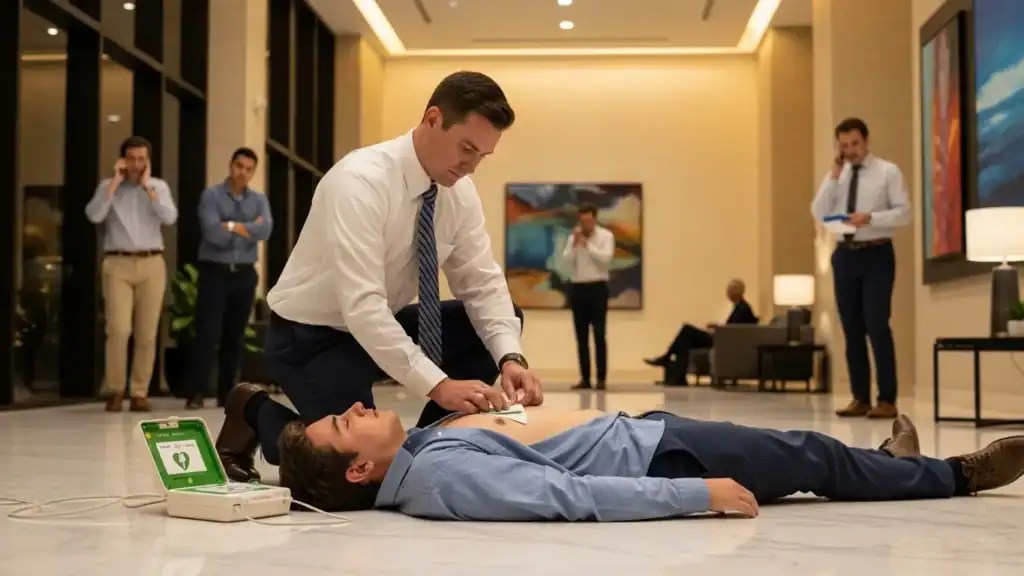
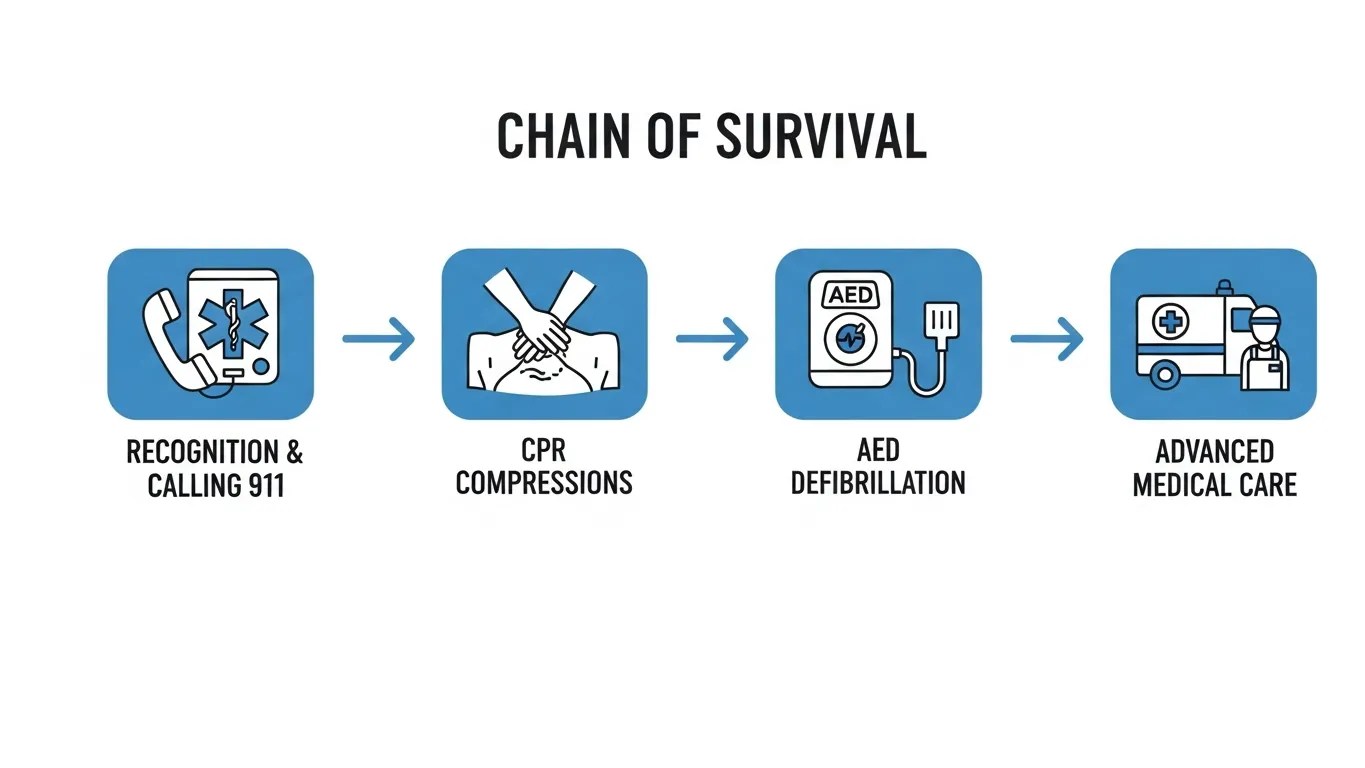
The gap between cardiac arrest and cardiac death is a window of opportunity. Closing that window requires three things: rapid recognition, immediate CPR, and early defibrillation with an AED. This sequence is known as the Chain of Survival, and every link in that chain depends on trained bystanders who are prepared to act.
Cardiac Arrest Treatments That Save Lives
Effective cardiac arrest treatments in the critical first minutes include:
- Calling 911 immediately: Professional emergency medical services need to be dispatched while bystander care begins.
- CPR (cardiopulmonary resuscitation): Chest compressions maintain minimal blood flow to the brain and vital organs, buying time until defibrillation can occur.
- AED defibrillation: An AED delivers a controlled electrical shock that can restore a normal heart rhythm. This is the only treatment that can reverse ventricular fibrillation.
- Advanced medical care: Paramedics and hospital teams provide medications, advanced airway management, and ongoing cardiac monitoring.
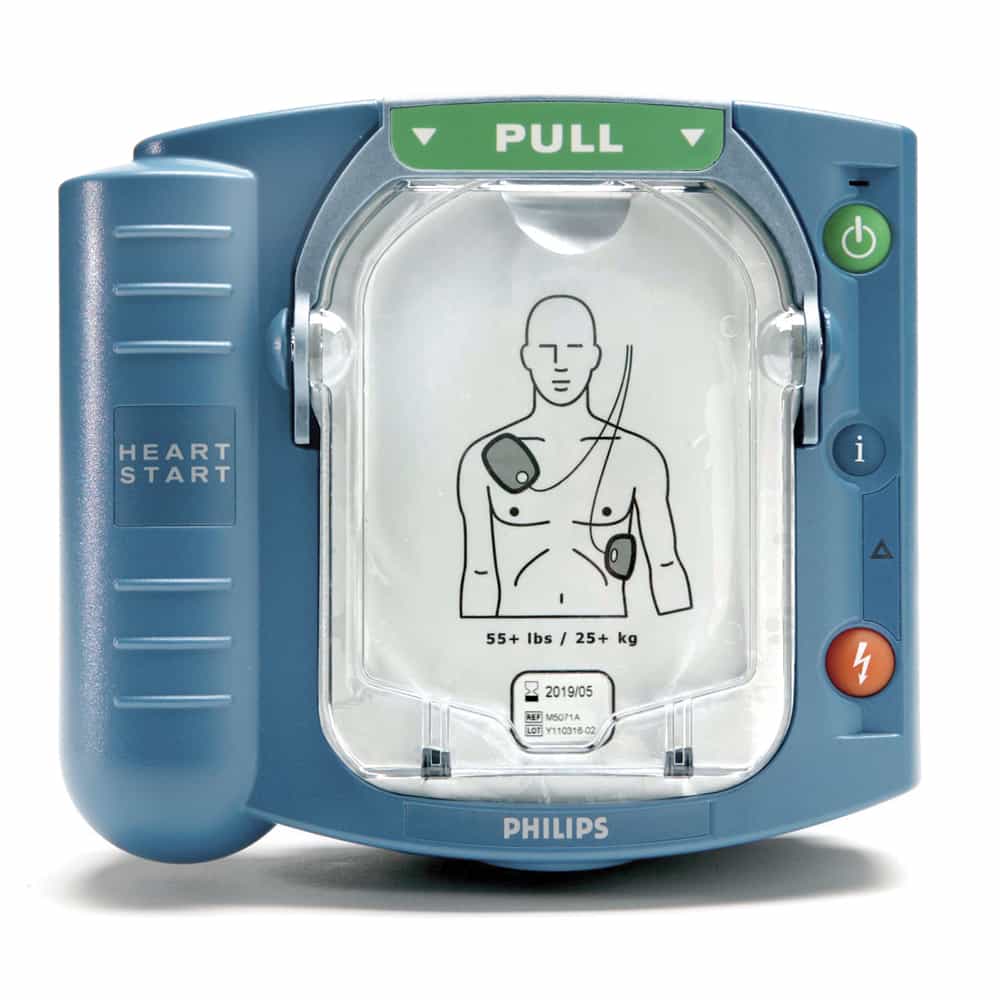
The first three steps can be performed by anyone, including people with no medical training. Modern AEDs are designed to guide users through every step with voice prompts, making them accessible to bystanders in any setting.
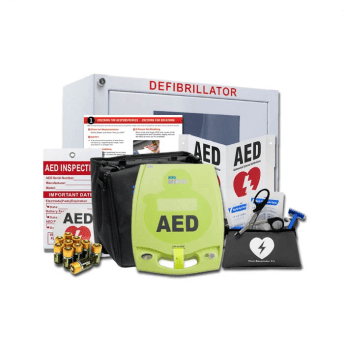
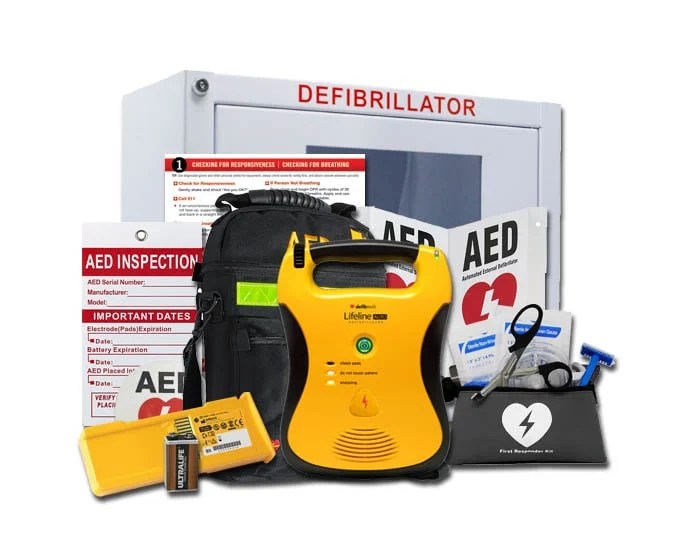
Explore AED options from all six FDA-approved manufacturers in one place. Browse AED packages that include everything your facility needs to be prepared.
The Role of AEDs in Preventing Sudden Cardiac Death
Automated external defibrillators are the single most effective tool for preventing sudden cardiac arrest from becoming sudden cardiac death. Research consistently demonstrates that public access defibrillation programs dramatically improve survival rates in communities, workplaces, and schools where AEDs are placed.
How AEDs Work
An AED analyzes the victim’s heart rhythm through electrode pads placed on the chest. If it detects a shockable rhythm such as ventricular fibrillation or pulseless ventricular tachycardia, it delivers an electrical shock designed to reset the heart’s electrical activity. The device makes the shock/no-shock decision automatically, which means even untrained bystanders can use an AED safely in an emergency.
Where AEDs Make the Biggest Difference
Sudden cardiac arrest does not discriminate by location. It can happen anywhere: in offices, schools, gyms, houses of worship, airports, and homes. Placing AEDs in high-traffic and high-risk locations reduces the average time to defibrillation, which directly translates to more lives saved.
Key locations where AEDs have proven impact include:
- Workplaces and corporate offices: Employees spend a third of their day at work, making offices a common SCA location
- Schools and universities: Sixteen states now mandate AEDs in schools, recognizing the risk to both students and staff
- Fitness centers and gyms: Physical exertion can trigger cardiac events, especially in individuals with undiagnosed heart conditions
- Churches and community centers: Congregations with older demographics face elevated cardiac risk during gatherings
- Homes: Nearly 70% of out-of-hospital cardiac arrests occur at home, making residential AEDs a critical but often overlooked investment
Building a Community Preparedness Program
Owning an AED is only part of the equation. A complete cardiac emergency preparedness program combines equipment, training, and ongoing maintenance to ensure your facility is genuinely ready when sudden cardiac arrest strikes.
Step 1: Assess Your Facility’s Needs
Consider your building’s layout, foot traffic patterns, and the demographics of people who use the space. The goal is to place AEDs so that any person in any part of the building can reach one within 60 to 90 seconds. For large facilities, this may require multiple AEDs strategically positioned on different floors or wings.
Step 2: Choose the Right AED
Response Ready is the only distributor that carries AEDs from all six FDA-approved manufacturers: Philips, ZOLL, HeartSine, Stryker/Physio-Control, Cardiac Science, and Defibtech. This means you get an unbiased recommendation based on your facility’s specific needs rather than being limited to a single brand.
Step 3: Train Your Team
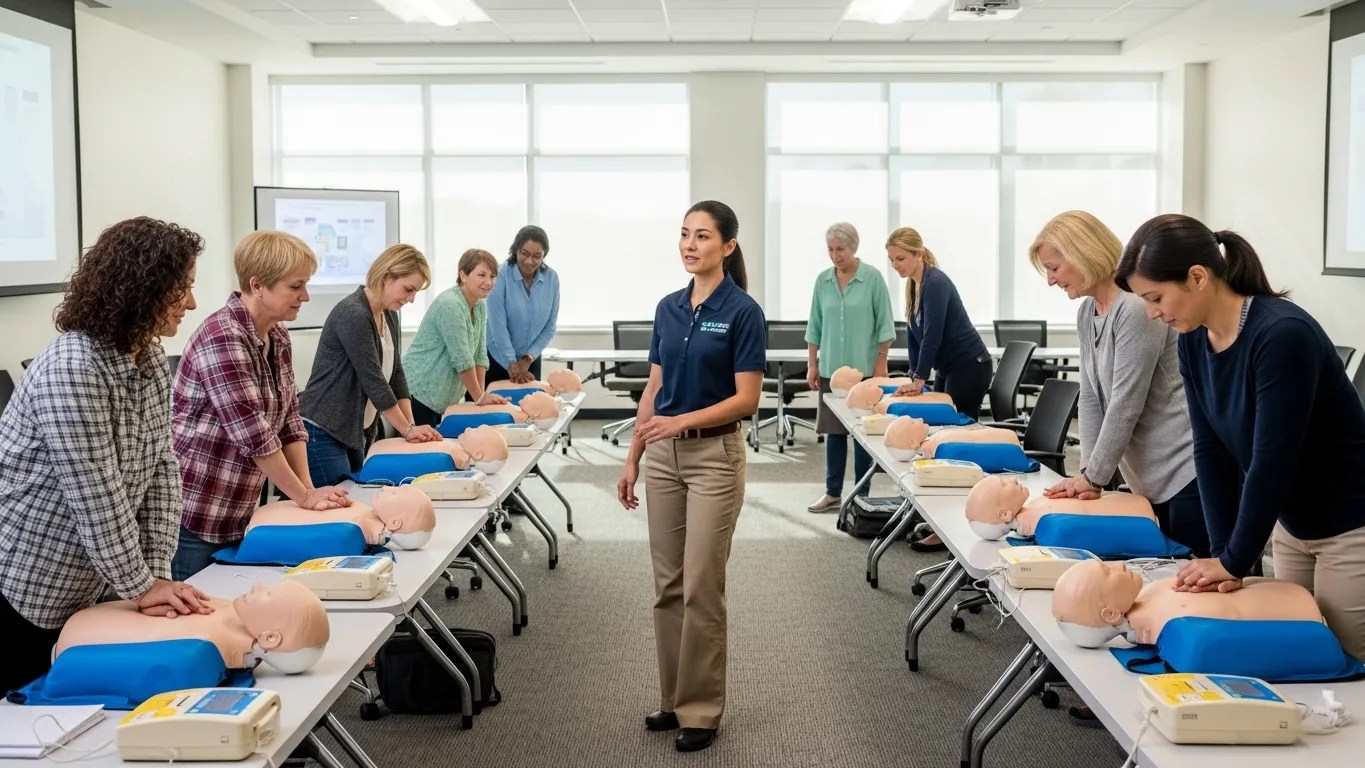
While AEDs are designed for use by anyone, training builds confidence and reduces hesitation during a real emergency. CPR and AED certification programs teach participants how to recognize cardiac arrest, perform effective chest compressions, and operate an AED correctly. Response Ready’s nationwide instructor network through CPR1 makes scheduling group training convenient for organizations of any size.
Step 4: Maintain Your Equipment
An AED with expired pads or a dead battery is not a rescue device. It is a liability. Establish a regular AED maintenance schedule that includes weekly visual inspections, monthly comprehensive checks, and annual professional reviews. Response Ready’s AED Total Solution program automates this process with expiration alerts, guided inspections, and medical director oversight from Dr. Ann Jarris (MD, MBA, FACEP).
Building a cardiac emergency preparedness program for your school, workplace, or community? Contact Response Ready at 858-665-2025 for a free consultation on AED placement, training, and ongoing program management.
How Does Sudden Cardiac Death Compare to a Heart Attack?
Many people confuse sudden cardiac death with a heart attack, but they are distinct medical events with different causes, symptoms, and outcomes. The following table breaks down the key differences:
| Factor | Sudden Cardiac Death (SCD) | Heart Attack (Myocardial Infarction) |
|---|---|---|
| Cause | Electrical malfunction stops the heart | Blood clot blocks blood flow to heart muscle |
| Onset | Sudden, without warning in many cases | Gradual, often with warning signs (chest pain, shortness of breath) |
| Heart still beating? | No, the heart stops completely | Yes, the heart continues to beat (usually) |
| Consciousness | Victim loses consciousness within seconds | Victim is usually conscious and aware |
| Reversible? | Yes, if CPR and AED used within 3-5 minutes | Yes, with medical intervention (stents, clot-busting drugs) |
| Survival rate (untreated) | Less than 10% | Higher, but depends on severity |
| Immediate treatment | CPR + AED defibrillation | Aspirin, nitroglycerin, call 911 |
| Can one cause the other? | No (SCD is the outcome of untreated SCA) | Yes, a massive heart attack can trigger cardiac arrest leading to SCD |
Understanding these differences matters because the response to each event is entirely different. A heart attack victim needs medical care at a hospital. A sudden cardiac arrest victim needs CPR and an AED immediately, before paramedics arrive.
Who Should Be Screened for Sudden Cardiac Death Risk?
While community preparedness addresses the response side of prevention, medical screening addresses the individual risk side. The following groups should discuss cardiac screening with their healthcare provider:
- Competitive athletes: Pre-participation cardiac screening can identify structural and electrical heart abnormalities before they cause a catastrophic event
- Individuals with family history of SCD: If a first-degree relative experienced sudden cardiac death before age 50, screening is strongly recommended
- Patients with known heart conditions: Anyone diagnosed with heart failure, prior heart attack, or cardiomyopathy should have ongoing cardiac monitoring
- People experiencing warning signs: Unexplained fainting, chest pain during exertion, or rapid heartbeat episodes warrant immediate evaluation
Early detection of at-risk individuals, combined with accessible AEDs and trained bystanders, creates a comprehensive defense against sudden cardiac death at both the individual and community levels.
Sudden Cardiac Death by the Numbers
| Statistic | Value |
|---|---|
| Annual out-of-hospital cardiac arrests in the US | 356,000+ |
| Survival rate without bystander intervention | Less than 10% |
| Survival rate with AED use within 3-5 minutes | Up to 70% |
| Survival rate decrease per minute without defibrillation | ~10% |
| Percentage of cardiac arrests occurring at home | ~70% |
| Average EMS response time in the US | 8-12 minutes |
These numbers make one thing clear: the gap between average EMS response time and the window for effective defibrillation is exactly where bystanders with AEDs save lives.
Frequently Asked Questions
What is the difference between sudden cardiac death and a heart attack?
A heart attack (myocardial infarction) occurs when blood flow to part of the heart muscle is blocked, usually by a blood clot. The heart typically continues beating during a heart attack. Sudden cardiac death results from the heart suddenly stopping due to an electrical malfunction. A massive heart attack can trigger cardiac arrest, but they are distinct medical events with different causes and treatments.
Can sudden cardiac death happen to young, healthy people?
Yes. While most cases occur in adults over 35 with coronary artery disease, sudden cardiac death can strike young athletes and seemingly healthy individuals. Undiagnosed conditions like hypertrophic cardiomyopathy, Long QT Syndrome, and commotio cordis (a blow to the chest) are leading causes in younger populations.
How quickly does sudden cardiac arrest lead to death?
Brain damage can begin within four to six minutes of cardiac arrest. Without CPR and defibrillation, sudden cardiac arrest typically becomes fatal within 10 minutes. This is why immediate bystander response with CPR and an AED is critical.
Are AEDs safe for untrained people to use?
Yes. Modern AEDs provide step-by-step voice instructions and automatically analyze the heart rhythm before allowing a shock. The device will not deliver a shock unless it detects a shockable rhythm, making it safe for anyone to use. You cannot accidentally harm someone with an AED.
What are the most effective cardiac arrest treatments?
The most effective cardiac arrest treatments follow the Chain of Survival: early recognition and calling 911, immediate CPR, rapid AED defibrillation, and advanced medical care. Of these, early defibrillation with an AED is the single intervention most strongly associated with survival.
Does every business need an AED?
While not every state mandates AEDs for all businesses, the American Heart Association recommends that all public and private facilities have AEDs accessible within a 60 to 90-second walk. Many states now require them in schools, fitness centers, and government buildings. Check your state AED requirements to determine your legal obligations.