How to choose the best AED for your home or small business
Choosing an automated external defibrillator (AED) is one of the most important decisions you can make for your family, employees, or community. It’s more than just a purchase, it’s a commitment to being prepared for a sudden cardiac arrest. But with so many options available, it’s easy to feel overwhelmed. In a high stress emergency, clarity is everything. You need a device that an untrained person can use confidently and correctly, without hesitation.
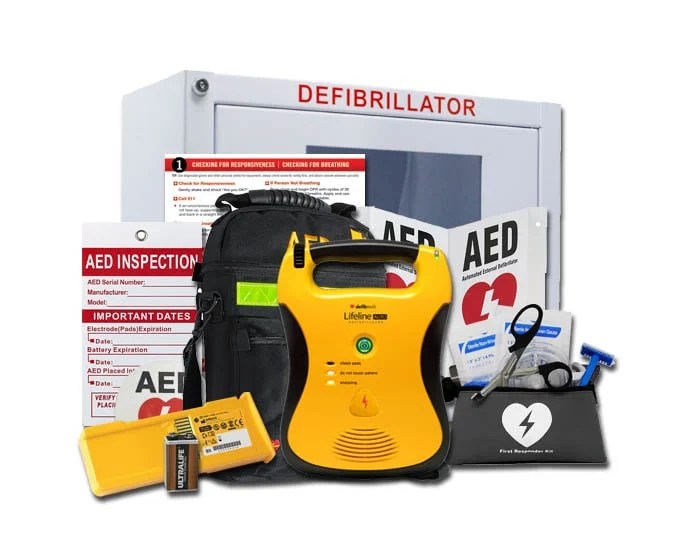
That’s where the conversation about AEDs changes. While most devices provide audio prompts, one stands out by showing you exactly what to do. This guide offers a clear comparison framework to help you evaluate top AEDs, focusing on the features that matter most in the real world. We will explore why the Defibtech Lifeline View AED and its full color video guidance represents a new level of confidence for everyday responders in homes, schools, and small businesses.
Seeing is believing why video guidance is a game changer
In the middle of an emergency, listening to a series of verbal commands can be challenging. Adrenaline is high, and the pressure to act fast can make it difficult to process audio only instructions. The Defibtech Lifeline View was designed to solve this very problem. It is the first and only AED to feature a full color video screen that provides clear, step by step visual instructions.
Instead of just hearing “place pads on patient’s bare chest,” you see a video of exactly where and how to place them. As you move to CPR, the screen shows you the correct hand placement and compression rhythm, accompanied by a metronome. This visual coaching is invaluable for an untrained responder. It reduces confusion, minimizes the chance of error, and empowers anyone to deliver lifesaving care with confidence. While other devices rely solely on your ability to listen and interpret, the Lifeline View provides a personal coach right on the device.
Get certified in CPR
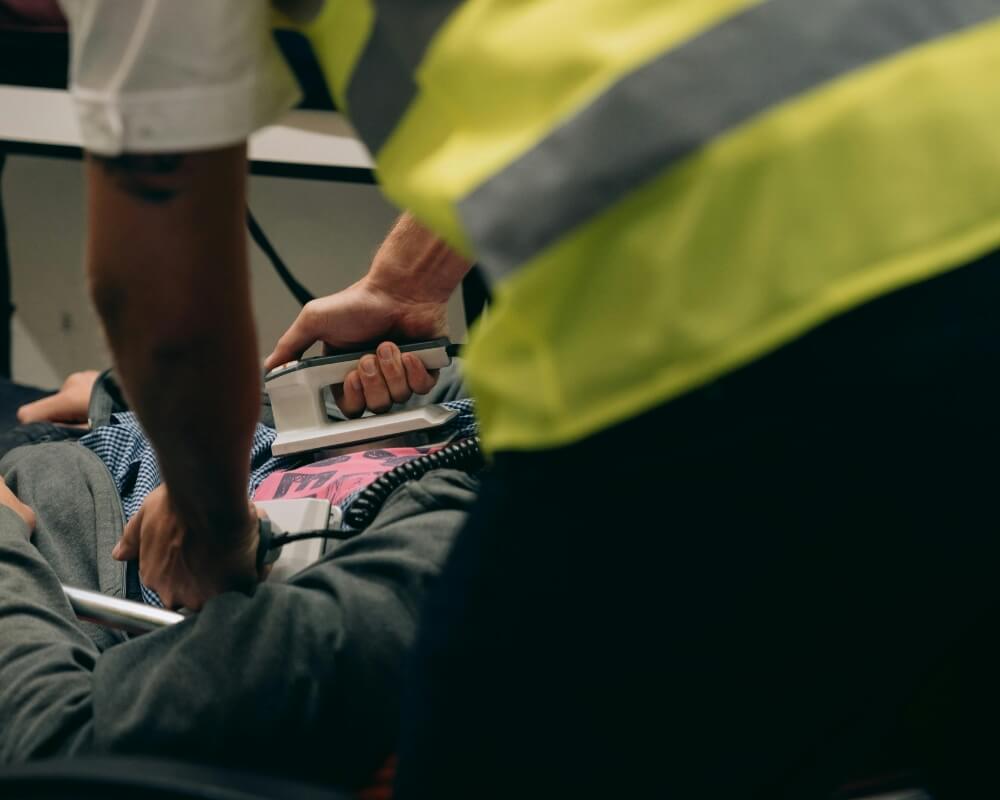
Adult & Pediatric First Aid/CPR/AED — Blended Learning
Self-paced online + in-person skills check. 2-year certification.
CPR, AED & First Aid Certification
Instructor-led on-site. Practice on real manikins and AED trainers.
How top AEDs stack up for untrained responders
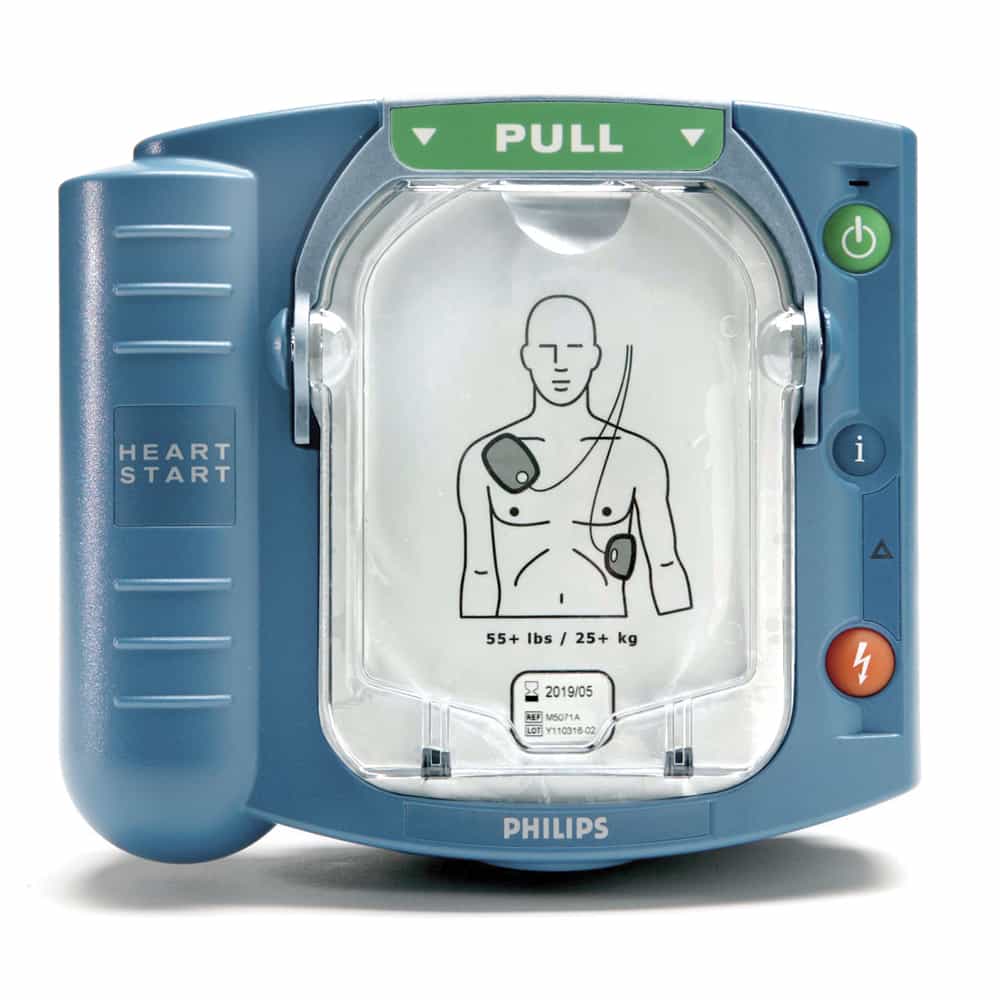
To make an informed decision, it’s helpful to see how leading devices compare on the criteria that matter most for non medical settings. We’ve broken down the key features of the Defibtech Lifeline View alongside other popular models like the Philips HeartStart OnSite and the ZOLL AED Plus.
|
User / Organizational Need |
Defibtech Lifeline VIEW |
Philips HeartStart OnSite |
ZOLL AED Plus |
HeartSine Samaritan PAD 350P |
|
Clear guidance during high-stress emergencies |
Best-in-class: Full-color video + voice eliminates confusion |
Clear voice prompts with simple visuals |
Voice + graphics, but less intuitive than video |
Voice prompts with universal icons |
|
Suitable for completely untrained responders |
Excellent, video shows exactly what to do, step by step |
Very strong, designed for lay rescuers |
Moderate, CPR feedback helps but requires focus |
Moderate , simple but less instructional |
|
Regulatory confidence & clinical validation |
Highest level: FDA PMA approval |
FDA 510(k) cleared |
FDA 510(k) cleared |
FDA 510(k) cleared |
|
Low maintenance & predictable readiness |
4-year battery reduces frequent replacements |
4-year battery with proven reliability |
Longest battery life (5 years) |
4-year Pad-Pak system simplifies management |
|
Long-term cost control (pads replacement) |
Pads replaced every 2 years |
Pads replaced every 2 years |
Pads last up to 5 years (lowest pad cost over time) |
Pads last 4 years |
|
Use in public, industrial, or outdoor locations |
High protection (IP55) for dust & water |
Limited protection (IP21), indoor use only |
High protection (IP55) |
Highest protection (IP56) |
|
Long-term investment security |
8-year warranty supports long service life |
8-year warranty |
7-year warranty |
8-year warranty |
|
Best fit for environments prioritizing ease of use |
Airports, schools, offices, public spaces |
Offices, schools, indoor facilities |
Workplaces emphasizing CPR quality |
Sports clubs, mobile teams, harsh environments |
Beyond the box what FDA approval and maintenance really mean
When you’re evaluating a medical device, understanding its regulatory status and long term upkeep is crucial for peace of mind. These details often get lost in feature lists but are vital for ensuring your AED is both safe and ready when needed.
Understanding FDA approval for AEDs
All AEDs sold in the U.S. must be cleared by the Food and Drug Administration (FDA), but not all clearances are the same. The Defibtech Lifeline View has received Premarket Approval (PMA), which is the most rigorous review process the FDA conducts. PMA requires manufacturers to provide sufficient scientific evidence proving the device’s safety and effectiveness. This is a higher standard than the more common 510(k) clearance, which only requires a device to be “substantially equivalent” to one already on the market. The Lifeline View’s PMA status (P160032) provides an extra layer of assurance in its reliability and performance.
How long do AED batteries and pads really last
The initial purchase price is only part of the story. The total cost of ownership includes replacing essential accessories like batteries and electrode pads. Most AED batteries last between two and five years, and pads typically expire within two to five years, even if unused.
The Defibtech Lifeline View uses a 4 year battery, while its pads have a 2 year shelf life. Planning for these replacements is a key part of maintaining readiness. At Response Ready, we offer a full selection of accessories, from Defibtech pads to replacement kits for all major brands, making it easy to keep your device compliant and ready to save a life. For organizations with multiple devices, our AED program management service through the Response Ready App automates these reminders to ensure nothing gets missed.

RECOMMENDED
HeartSine Samaritan 350P AED Package
Compact, fully-automatic AED designed for first-time responders. Pads, battery, carry case and wall sign included.
Is the Lifeline View the right fit for you
The best AED is one that fits the unique needs of its environment and the people who might have to use it. The Defibtech Lifeline View’s video guidance makes it an exceptional choice for settings where professional responders are not immediately on hand.
For homes and families: If you are caring for an elderly parent or a loved one with a known heart condition, the Lifeline View removes the guesswork. In a moment of panic, seeing what to do can make all the difference, empowering a family member to act decisively.
For small businesses: As a business owner, you have a duty of care to your employees and customers. The Lifeline View is simple enough for any staff member to operate with minimal training, providing effective emergency response capability without needing a dedicated medical team. Check out our value packages that bundle everything you need to get started.
For schools and community centers: In public spaces filled with people of all ages, clarity is paramount. The Lifeline View’s video screen can guide a teacher, coach, or volunteer through the entire rescue process, including CPR and rescue breathing, ensuring the chain of survival remains strong until help arrives. Our comprehensive training courses can further bolster your community’s preparedness.
The confident choice for everyday heroes
When a sudden cardiac arrest occurs, every second counts. Choosing an AED is about empowering ordinary people to perform an extraordinary act. While many devices provide effective therapy, the Defibtech Lifeline View is uniquely designed to build confidence in the rescuer. Its full color video, robust design, and stringent FDA approval make it the standout choice for anyone looking to protect their home, workplace, or community.
At Response Ready, our mission is to make this life saving technology accessible. We are an online AED superstore with over a decade of expertise, ready to help you find the perfect solution.
Ready to see the difference for yourself? Explore the Defibtech Lifeline View AED today and take the first step toward true preparedness.

Not sure which AED or training fits your needs?
A Response Ready product expert walks you through it — no obligation.
Frequently asked questions
Q: Why is video guidance on an AED so important for someone without medical training?
A: Video guidance is crucial because it caters to how people learn and react under stress. Visual instructions are often easier to follow than audio only prompts, reducing cognitive load and improving accuracy. For an untrained user, seeing exactly where to place pads and how to perform CPR provides immense confidence and can lead to a more effective rescue.
Q: What is the real cost of owning an AED over its lifetime?
A: The total cost includes the initial device purchase plus the scheduled replacement of batteries and electrode pads. Batteries typically last 4 to 5 years, while pads last 2 to 5 years, depending on the model. For the Defibtech Lifeline View, you should budget for new pads every 2 years and a new battery every 4 years to ensure it is always ready for use.
Q: How do I know if an AED is safe and reliable?
A: Look for its FDA approval status. The Defibtech Lifeline View has FDA Premarket Approval (PMA), the agency’s most rigorous review standard, which confirms its safety and effectiveness through extensive clinical data. This provides a higher level of assurance than the more common 510(k) clearance.
Q: Can I use the Defibtech Lifeline View on a child?
A: Yes. When equipped with pediatric pads, the Defibtech Lifeline View reduces the energy of its shock to a level appropriate for a child under 8 years of age or weighing less than 55 pounds. The device detects the pediatric pads and automatically adjusts its protocol.