- Published
- March 25, 2026
How to Run an Effective AED Management Program


Placing an AED in your building is a powerful statement about safety, but it can also bring a nagging worry. Is it working correctly? Are the electrode pads expired? Are we legally covered if something goes wrong? This uncertainty can undermine the very confidence you sought to create. True readiness isn’t just about having the hardware; it’s about knowing it will work flawlessly when needed. An effective aed management program is the key to replacing that anxiety with assurance. We’ll explore the two main paths to managing your device so you can feel truly prepared, not just equipped.
This isn’t just a logistical question. It’s about confidence, liability, and readiness. The fear of an AED failing during an emergency due to an expired battery or a missed inspection is a serious concern. Choosing the right management path is essential for turning your investment into a reliable, life-saving asset. This guide will walk you through the options so you can make a confident and informed decision.
Why AED Readiness is a Matter of Minutes
When someone experiences sudden cardiac arrest, the clock starts ticking immediately. Their chance of survival decreases significantly for every minute that passes without defibrillation. This is why having an AED nearby is so important—it’s not just about owning the equipment, but ensuring it’s accessible and functional in seconds. An AED that’s locked away, has a dead battery, or has expired electrode pads is no better than not having one at all. True readiness means bridging the gap between the moment of collapse and the first life-saving shock. It’s a responsibility that hinges on consistent oversight and preparation, because in a cardiac emergency, there is simply no time to spare.
What is Sudden Cardiac Arrest?
It’s easy to confuse sudden cardiac arrest (SCA) with a heart attack, but they are very different. A heart attack is a “plumbing” problem where blood flow to the heart is blocked, while SCA is an “electrical” problem. As the Mayo Clinic explains, an AED is a device that can help when someone’s heart has suddenly stopped working due to a malfunction in its electrical system. This can happen to anyone, regardless of age or fitness level, often without any warning. The heart quivers erratically instead of pumping blood, and the person collapses. The only effective treatment is an electrical shock from a defibrillator, which is why having accessible AEDs in public spaces is a community-wide safety measure.
The Role of AEDs and CPR in Survival
While CPR is a critical first step, it often isn’t enough on its own. Performing chest compressions keeps oxygenated blood flowing to the brain and other vital organs, buying precious time. However, as the Mayo Clinic notes, “often only an AED shock can restart the heart.” The combination of immediate CPR and the prompt use of an AED is the key to improving survival rates. The AED analyzes the heart’s rhythm and, if necessary, delivers a controlled shock to restore a normal heartbeat. This powerful one-two punch is most effective when people feel confident to act, which is why professional CPR and AED training is so valuable for turning bystanders into prepared responders.
The Legal and Financial Side of Owning an AED
Beyond the moral imperative to save a life, owning an AED comes with practical responsibilities. Good Samaritan laws in many states offer legal protection to those who use an AED in good faith, but this protection is often tied to the expectation that the device is properly maintained. Neglecting your AED program can create liability risks for your organization. Furthermore, the initial purchase price is just one part of the overall investment. You also have to account for the ongoing costs of consumables, training, and program management. Understanding these legal and financial aspects is essential for creating a sustainable and effective AED program that you can rely on for years to come.
Your Legal Responsibilities as an AED Owner
When you place an AED in your facility, you take on a duty of care. As industry experts at AED.com point out, “AED owners are legally responsible to ensure their AEDs are ready to respond in an emergency situation.” This means more than just mounting it on a wall. Your responsibilities typically include performing regular readiness checks, tracking the expiration dates of AED pads and batteries, and keeping records of your maintenance activities. While specific requirements vary by state and local jurisdiction, the core principle is universal: a well-maintained device is a legally defensible one. Failing to keep your AED in working order could undermine the legal protections designed to encourage their use.
Understanding the Costs and Regulations
The total cost of an AED program extends beyond the initial device purchase. You’ll need to budget for recurring expenses like replacement AED batteries and electrode pads, which expire every two to five years. You may also need to factor in costs for training certifications and medical oversight. Navigating the web of local and state regulations can also be a challenge, as compliance rules are not the same everywhere. This is why many organizations use a management program to “make sure they follow all laws and are always ready to be used.” For those looking for a more hands-off approach, an AED rental program can simplify budgeting and bundle maintenance into one predictable cost.
Is Your AED Truly Rescue Ready? A Maintenance Checklist
Before comparing management styles, it’s important to understand what a truly “rescue ready” AED program involves. It’s more than just hanging a box on the wall. Proper maintenance is an ongoing commitment. While specific requirements can vary, a comprehensive program generally includes regular checks of these key components.
-
Visual inspection:
Is the AED unit free from damage? Is it stored in a visible and accessible location? -
Status indicator:
Most AEDs have a small light or symbol that indicates readiness. A green light or checkmark typically means the device has passed its self test and is ready. A red light or X signals a problem that needs immediate attention. -
Consumables check:
AEDs rely on two critical components with firm expiration dates: -
Electrode pads:
These single use pads must be replaced after any use or when they expire, typically every two to four years. -
Battery:
Batteries also have a limited lifespan and must be replaced according to the manufacturer’s schedule. -
Accessory check:
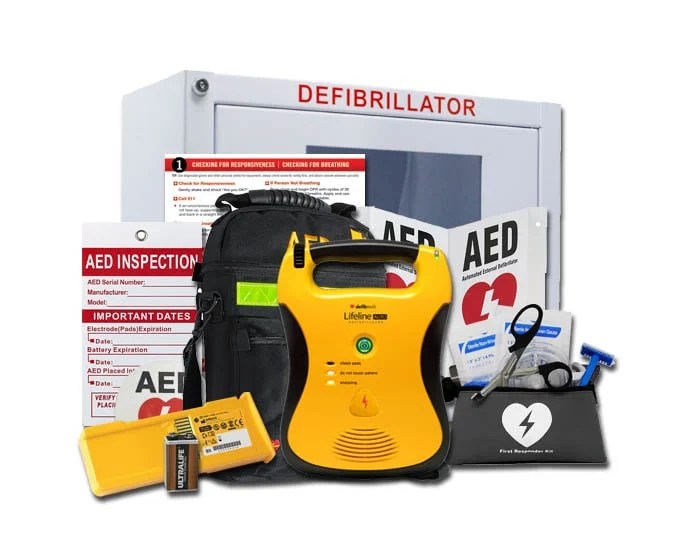
Are rescue kit items like razors and scissors present? Is the cabinet alarm functional? -
Compliance documentation:
Are your inspection logs up to date? Have you registered your AED with your local emergency medical services (EMS) as required in many areas?
This checklist forms the foundation of any effective AED program. The real decision is who will be responsible for executing it consistently.
Checking the Status Indicator
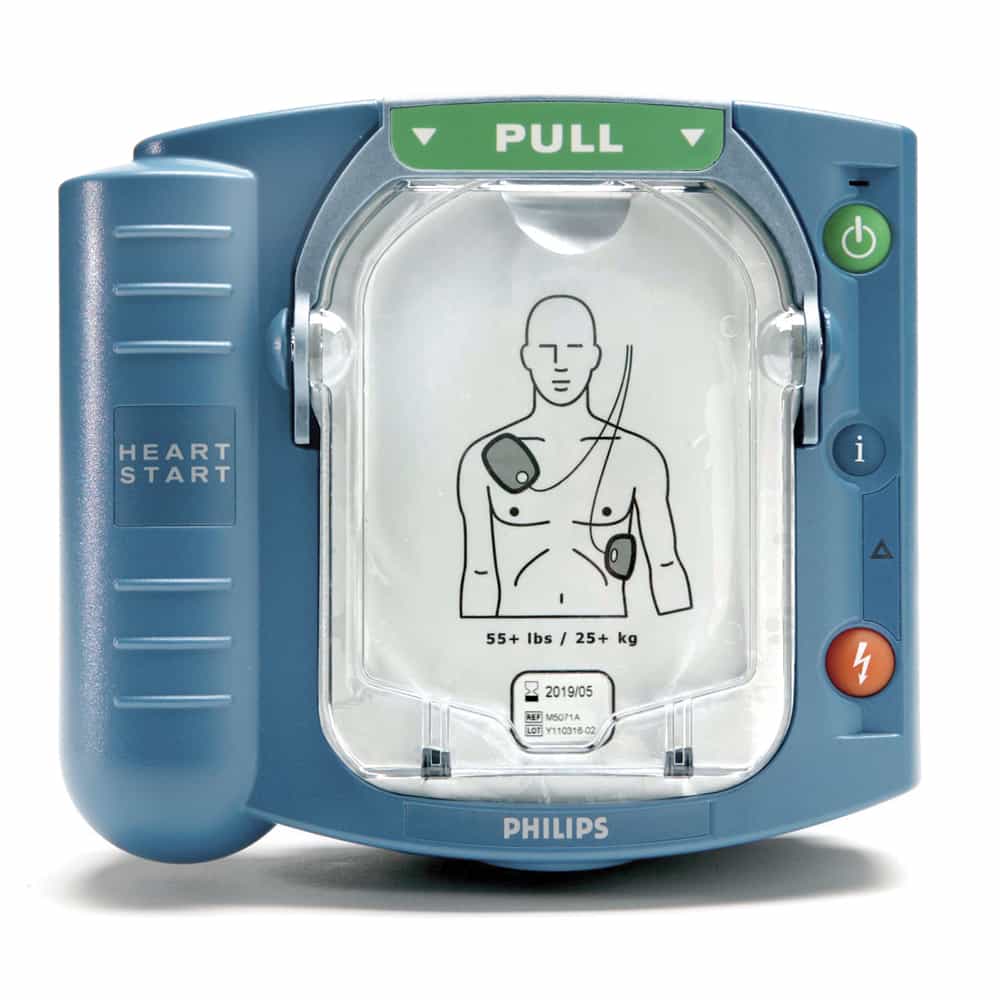
Think of the status indicator as your AED’s pulse. It’s the simplest and fastest way to confirm if the device is ready to perform. Most AEDs conduct regular self-tests, and this little light or symbol is how they report the results. A green, flashing light or a visible checkmark typically means everything is working correctly—the battery is charged, the pads are connected, and the internal software is good to go. However, if you see a red light, an “X” symbol, or hear a persistent chirping sound, the AED is signaling a problem. This requires immediate attention, as it could indicate a low battery, expired pads, or an internal malfunction that would prevent it from working in an emergency.
Tracking Supply Expiration Dates
An AED relies on two critical, time-sensitive components: the battery and the electrode pads. Just like the batteries in a smoke detector, an AED battery has a specific lifespan and must be replaced according to the manufacturer’s schedule to ensure it can deliver a life-saving shock. Similarly, electrode pads have a firm expiration date, usually every two to four years. The conductive gel on the pads can dry out over time, which can prevent them from adhering properly to the skin and delivering an effective shock. Keeping a log of these expiration dates and ordering replacements ahead of time is a non-negotiable part of responsible AED ownership.
How Should You Manage Your AED Program?
For a small business owner, school administrator, or volunteer at a community center, time and resources are always in short supply. The core of your decision boils down to a classic dilemma: save money by doing it yourself or save time and reduce risk by getting expert help. Let’s explore the possibility of two main paths.
Option 1: Managing Your AEDs In-House
The do it yourself approach involves tasking someone within your organization to handle the entire maintenance checklist. On the surface, this seems like the most cost effective option.
Pros:
-
Lower upfront cost:
You avoid the subscription fees associated with professional management services. -
Direct control:
You have direct, hands on control over the device and its maintenance schedule.
Cons:
-
Significant time commitment:
Properly tracking expiration dates, performing monthly checks, and maintaining logs for multiple devices takes time away from core responsibilities. The research shows this is a major pain point for busy professionals who become the de facto safety coordinators. -
Risk of human error:
A missed check, an unrecorded battery replacement, or a forgotten compliance deadline can have serious consequences. When tasks are added to an already full plate, things can easily fall through the cracks. -
Complex compliance:
Keeping up with local and state regulations for AED registration and medical oversight can be confusing and time consuming. Failing to comply can create significant liability issues. -
Lack of expert oversight:
Without a background in AED management, you might not know what to do if the device fails a self test or how to properly handle post event data downloads.
The DIY approach puts the full weight of compliance and readiness squarely on your organization’s shoulders. While it seems cheaper, the hidden costs of staff time and the potential risk of a non-functional device can be immense.
Option 2: Using a Professional Management Service
Professional program management outsources the tracking, compliance, and oversight of your AED to experts. This is the model preferred by organizations that want to eliminate guesswork and ensure their program is always ready. Competitors often present this as a high level service, but true value lies in the details.
Pros:
-
Guaranteed compliance:
A good management service ensures your AED is registered with local EMS and that you have the required medical direction, shielding you from liability concerns. -
Automated tracking:
Forget manual spreadsheets, these programs automatically track battery and pad expiration dates and send reminders well in advance, so you are never caught by surprise. The Response Ready App is a perfect example of how technology simplifies this, allowing users to scan and record readiness checks in seconds. -
Expert support:
If your AED chirps or shows an error code, you have an expert to call. They can diagnose the issue and guide you through the solution, ensuring your device has minimal downtime. -
Reduced administrative burden:
This approach frees your team to focus on their primary duties, directly addressing the resource scarcity that most organizations face. It transforms AED management from a constant worry into a solved problem.
The primary goal of professional management is to provide confidence. It’s the assurance that your life-saving device is backed by a system designed to keep it ready for anything.
Centralized Device Tracking
For any organization with more than one AED, keeping track of everything can quickly become a logistical headache. A professional management service simplifies this by creating a single, centralized system for all your devices. This isn’t just a simple list; it’s a comprehensive dashboard for “managing inventory, location, serial numbers, and self-test reports.” Imagine knowing exactly where every AED is, when it was last checked, and its current status, all from one place. This is especially critical for school districts, corporate campuses, or fitness chains with multiple locations, ensuring that no device gets overlooked and every unit is accounted for and ready.
Automated Supply and Certification Reminders
One of the biggest risks in a self-managed program is human error. It’s easy to forget an expiration date when you’re juggling dozens of other responsibilities. Professional services eliminate this risk with automated reminders. You’ll get emails “60 and 30 days before batteries and electrode pads expire,” giving you plenty of time to order replacements. This system also tracks the certification status of your trained staff, sending alerts before their training expires. It’s a simple but powerful feature that ensures your life-saving equipment and your life-saving team are always prepared to respond confidently.
Post-Event Support and Data Management
What happens after an AED is used in an emergency? The moments and days following a cardiac arrest event can be chaotic, and managing the AED is the last thing you want to worry about. This is where a professional service provides incredible value. If an AED is used, the service can immediately send a loaner device while yours is serviced. They also handle the critical post-event tasks, like downloading the event data for a physician to review and completing necessary reports for compliance. This comprehensive support ensures your program is back up and running quickly and that all follow-up requirements are handled correctly.
Regulatory and Compliance Support
Navigating the legal landscape of AED ownership can be complex, with requirements varying by state and even city. A key benefit of a professional management service is the peace of mind that comes from expert compliance support. The service “ensures your AED is registered with local EMS and that you have the required medical direction, shielding you from liability concerns.” This oversight is crucial for protecting your organization. By handling the paperwork and staying current on regulations, a management program like Response Ready’s AED Total Solution removes the burden of legal guesswork, allowing you to focus on fostering a safe environment.
A Better Way: The AED Total Solution
Simply outsourcing management is a great step, but the most effective approach combines user friendly hardware with a seamlessly integrated management system from a single, trusted source. This eliminates the gaps that can exist when you buy a device from one company and get a management service from another.
This is the thinking behind packages like the AED Total Solution, often paired with intuitive devices. It’s not just a service, it’s a complete readiness system. When you acquire your AED through a provider like Response Ready, the management program is built around your specific device from day one.
This integrated approach means:
-
Your device is automatically enrolled in the management program.
-
Medical direction and EMS registration are handled as part of the setup.
-
The system knows your exact battery and pad expiration dates from the start.
This removes the friction and potential for error, delivering the ultimate peace of mind. It’s the most logical solution for any busy organization that values both safety and efficiency.
Which AED Management Style is Right for You?
|
Feature |
Self-management (DIY) |
AED total solution |
|
Readiness checks |
Manual tracking, relies on memory or spreadsheets |
Automated reminders, simple app-based logging |
|
Compliance |
Your responsibility to research and maintain |
Medical direction and EMS registration handled for you |
|
Time commitment |
High, requires dedicated staff time each month |
Minimal, a few minutes for guided monthly checks |
|
Expert support |
Limited, must research issues independently |
Direct access to AED experts for troubleshooting |
|
Peace of mind |
Low, constant worry about missed details or failure |
High, confidence that your program is always ready |
From Compliant to Confident: The Real Goal of AED Management
Ultimately, the choice of how to manage your AED program comes down to your tolerance for risk and the value you place on your time. While the DIY approach may seem appealing initially, it introduces a significant administrative burden and the potential for life threatening mistakes.
For schools, small businesses, and community organizations, an integrated program management solution offers a clear path to both compliance and confidence. By letting experts handle the details, you can focus on your mission, secure in the knowledge that you are fully prepared to save a life. Exploring a comprehensive AED sales and accessories provider that also offers robust management ensures you have a partner for the entire life of your device.
Ready to take action? View AED rental plans at Response Ready.
Frequently asked questions
Q: Is professional AED program management expensive?
A: When you consider the cost of staff time, the risk of non-compliance fines, and the potential liability of a failed AED, professional management is often more affordable than it appears. Many programs, like those offered by Response Ready, are designed to be an accessible and cost effective add on to your AED purchase, providing immense value and peace of mind.
Q: What is medical oversight and why do I need it?
A: Medical oversight, or medical direction, involves a licensed physician who oversees your AED program. They provide a prescription for the device (as required by the FDA), review event data after a rescue, and ensure your program follows established medical protocols. Many states require it for liability protection, and it is a core feature of any reputable program management service like AED.
Q: Can’t I just use a calendar to track expiration dates myself?
A: You can, but it’s a strategy that’s prone to human error. Staff turnover, missed calendar alerts, or simple forgetfulness can lead to expired supplies. An automated system eliminates this risk by providing persistent, proactive notifications and a clear, centralized record of your entire program’s status, which is vital for both readiness and liability protection.
Q: What happens if we use our AED?
A: A key benefit of professional program management is post event support. After a rescue, the service will guide you on how to download the event data for medical review, provide a loaner device if needed, and help you restock your electrode pads and other used accessories to get your AED back into service as quickly as possible.
Key Takeaways
- An AED is Only as Good as Its Maintenance: True preparedness means having a system to regularly check the device’s status indicator and track the expiration dates for its battery and electrode pads. Without this, your AED might fail when it matters most.
- Choose Between Saving Time or Saving Money Upfront: Managing your AED in-house seems cheaper but puts the burden of compliance, tracking, and potential failure on you. A professional service is an investment in guaranteed readiness and expert support.
- Leverage Expert Support for Total Confidence: An AED management service handles the complex parts of ownership, including legal registration, medical oversight, and post-event data management, so you can be confident your program is always compliant and ready.
Related Articles
Disclaimer for information purposes only:
The information provided on this website is intended for general educational and informational purposes only. It is not medical advice and should not be used as a substitute for professional diagnosis, treatment, or care. Always consult a qualified healthcare or medical professional regarding any health-related questions or concerns.
While we strive to ensure the information shared is accurate and up to date, no guarantees are made regarding completeness, accuracy, or applicability to any individual situation. Use of this content is at the reader’s sole discretion and risk.
This website is part of the Response Ready family of emergency preparedness and training resources, including CPR & first aid training and compliance services, AED sales and program support, AED program management software, and medical oversight solutions provided through our affiliated platforms:
• CPR1.com
• AEDLeader.com
• AEDTotalSolution.com
• MDSIMedical.com
By accessing or using this website, you agree to release, indemnify, and hold harmless the website owners, authors, contributors, and affiliated entities from any claims, losses, damages, or liabilities arising from the use or reliance on the information presented.