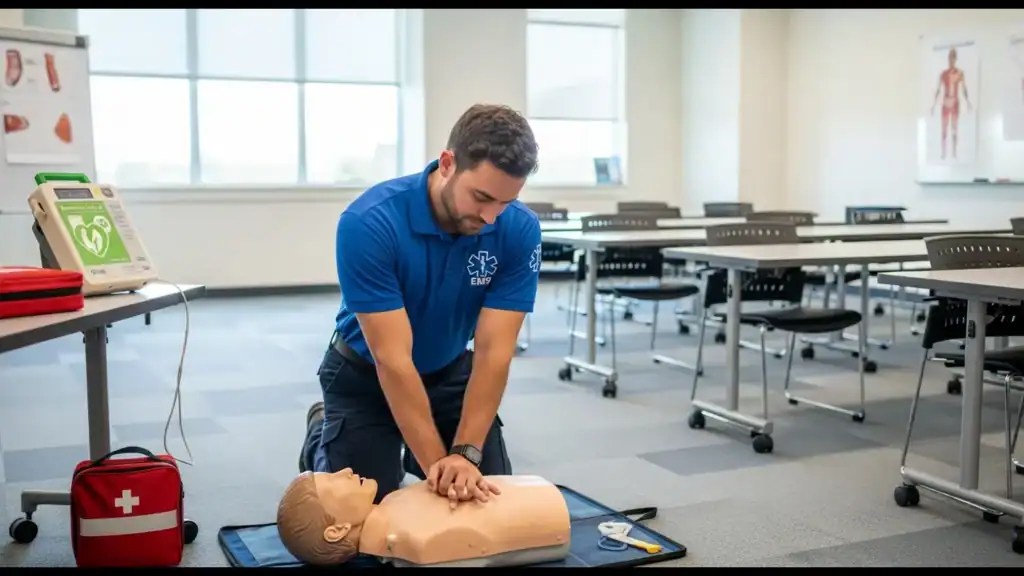
CPR stands for cardiopulmonary resuscitation, a lifesaving technique that combines chest compressions and rescue breaths to keep blood and oxygen flowing when someone’s heart stops beating. It is one of the most important emergency skills any person can learn, and our step-by-step CPR guide walks you through the entire process, and understanding the full CPR meaning is the first step toward being ready to save a life.
Contact Response Ready to schedule certified CPR and AED training for your team, school, or community group.
Each year, more than 350,000 out-of-hospital cardiac arrests occur in the United States. Without immediate CPR, a person’s chance of survival drops by 7 to 10 percent for every minute that passes. Knowing the CPR meaning behind those three letters, and the science that supports them, could make you the difference between life and death for someone you love.
What Does CPR Stand For?
CPR stands for cardiopulmonary resuscitation. Breaking the word down reveals its medical roots:
- Cardio comes from the Greek word kardia, meaning heart.
- Pulmonary comes from the Latin word pulmonarius, meaning lungs.
- Resuscitation comes from the Latin resuscitare, meaning to revive or raise up again.
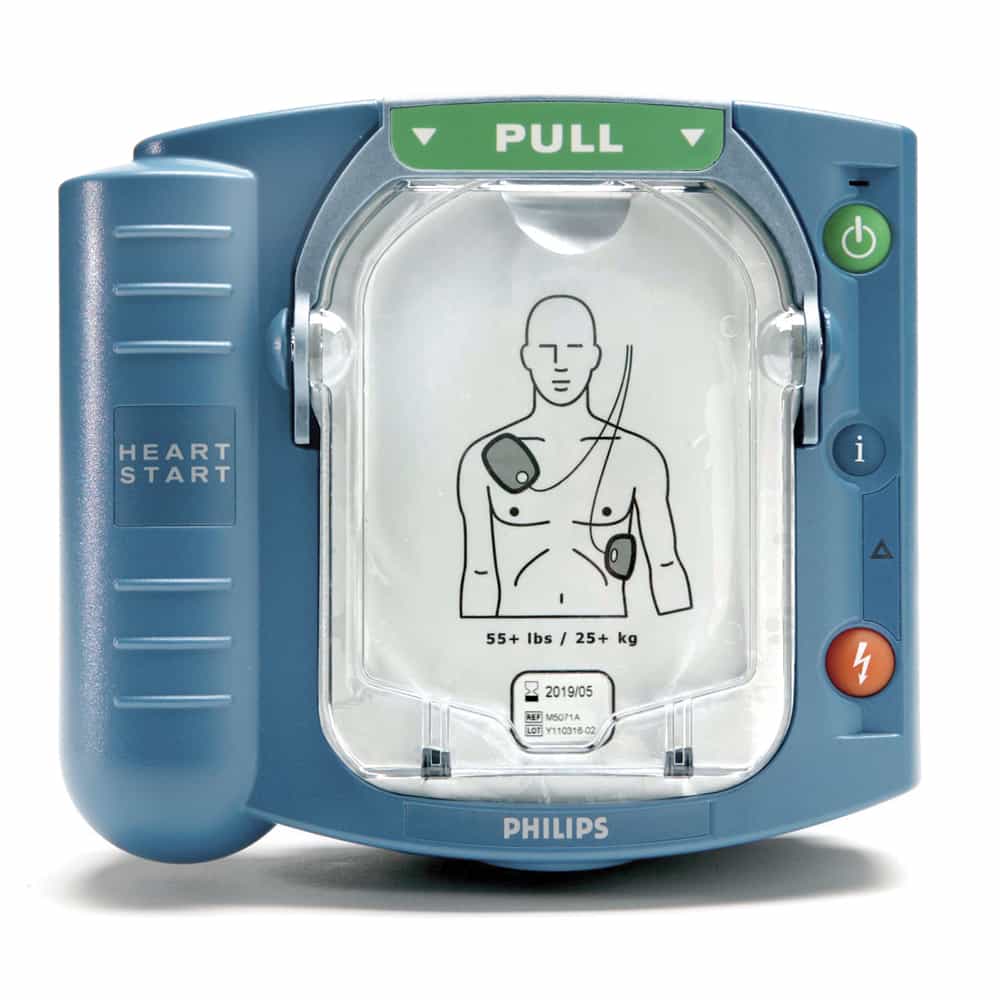
Put together, cardiopulmonary resuscitation literally means “reviving the heart and lungs.” The technique manually restores circulation and breathing in a person who is in cardiac arrest, buying critical time until professional medical help arrives or an automated external defibrillator (AED) can be used. Knowing the difference between CPR and an AED helps you understand why both are essential.
Ready to Learn CPR and Save a Life?
Response Ready offers certified CPR and AED training through our nationwide CPR1 training program. Not sure how long your CPR certification lasts? Most certifications are valid for two years. Whether you want to protect your family, workplace, or community, our expert instructors will give you the hands-on skills and confidence to act when it matters most. Contact us today to schedule your training session.
A Brief History of CPR
The story of CPR stretches back centuries, evolving from crude methods to the evidence-based protocol used worldwide today.
- 1740: The Paris Academy of Sciences officially recommended mouth-to-mouth resuscitation for drowning victims, marking one of the earliest formal endorsements of artificial respiration.
- 1891: Dr. Friedrich Maass performed the first documented external chest compressions on a human patient, laying the groundwork for modern CPR techniques.
- 1960: The American Heart Association (AHA) formally endorsed the combination of mouth-to-mouth breathing with chest compressions, creating the CPR method we recognize today.
- 1966: The AHA established the first standardized CPR guidelines, creating a unified protocol that could be taught consistently across the country.
- 2008: The AHA introduced hands-only CPR as a simpler alternative for bystanders, removing the rescue breathing barrier and encouraging more people to take action during cardiac emergencies.
These milestones transformed CPR from an experimental idea into a proven, accessible lifesaving procedure. Today, the Chain of Survival recognizes early CPR as one of its most critical links.
Why Is CPR So Important?
When the heart stops pumping blood, the brain begins to suffer irreversible damage within 4 to 6 minutes. CPR keeps oxygenated blood circulating to the brain and vital organs, preserving life until the heart can be restarted.
Here is why CPR matters by the numbers:
- Nearly 9 out of 10 people who experience cardiac arrest outside a hospital die.
- Bystander CPR can double or even triple a victim’s chance of survival.
- When CPR is combined with an AED, survival rates can reach 38 to 74 percent compared to just 5 to 10 percent with CPR alone.
- Only about 40 percent of cardiac arrest victims receive bystander CPR before paramedics arrive.
These statistics show that more trained bystanders directly means more lives saved. Every person who learns CPR becomes a potential first responder in their home, workplace, or community.
Types of CPR
There are several forms of CPR tailored to different situations and skill levels. Understanding the differences helps you choose the right response.
| CPR Type | Technique | Best For | Training Required |
|---|---|---|---|
| Conventional CPR | 30 compressions + 2 rescue breaths | Healthcare providers, trained rescuers | Yes, certification recommended |
| Hands-Only CPR | Continuous chest compressions only | Untrained bystanders, adults in cardiac arrest | No formal training needed |
| Infant CPR | Two-finger compressions + gentle breaths | Infants under 1 year old | Yes, pediatric CPR course |
| Child CPR | One or two-hand compressions + breaths | Children ages 1 to puberty | Yes, pediatric CPR course |
Conventional CPR (Compressions Plus Rescue Breaths)
Conventional CPR alternates 30 chest compressions with 2 rescue breaths. This is the standard taught in most certification courses and is recommended for healthcare providers, lifeguards, and trained rescuers. It provides both circulation and direct ventilation to the victim’s lungs.
Hands-Only CPR
Hands-only CPR uses continuous chest compressions without rescue breaths. The AHA recommends this approach for untrained bystanders or anyone uncomfortable performing mouth-to-mouth. Studies have shown that hands-only CPR is nearly as effective as conventional CPR for adult cardiac arrest victims in the first several minutes.
The steps are simple:
- Call 911 immediately.
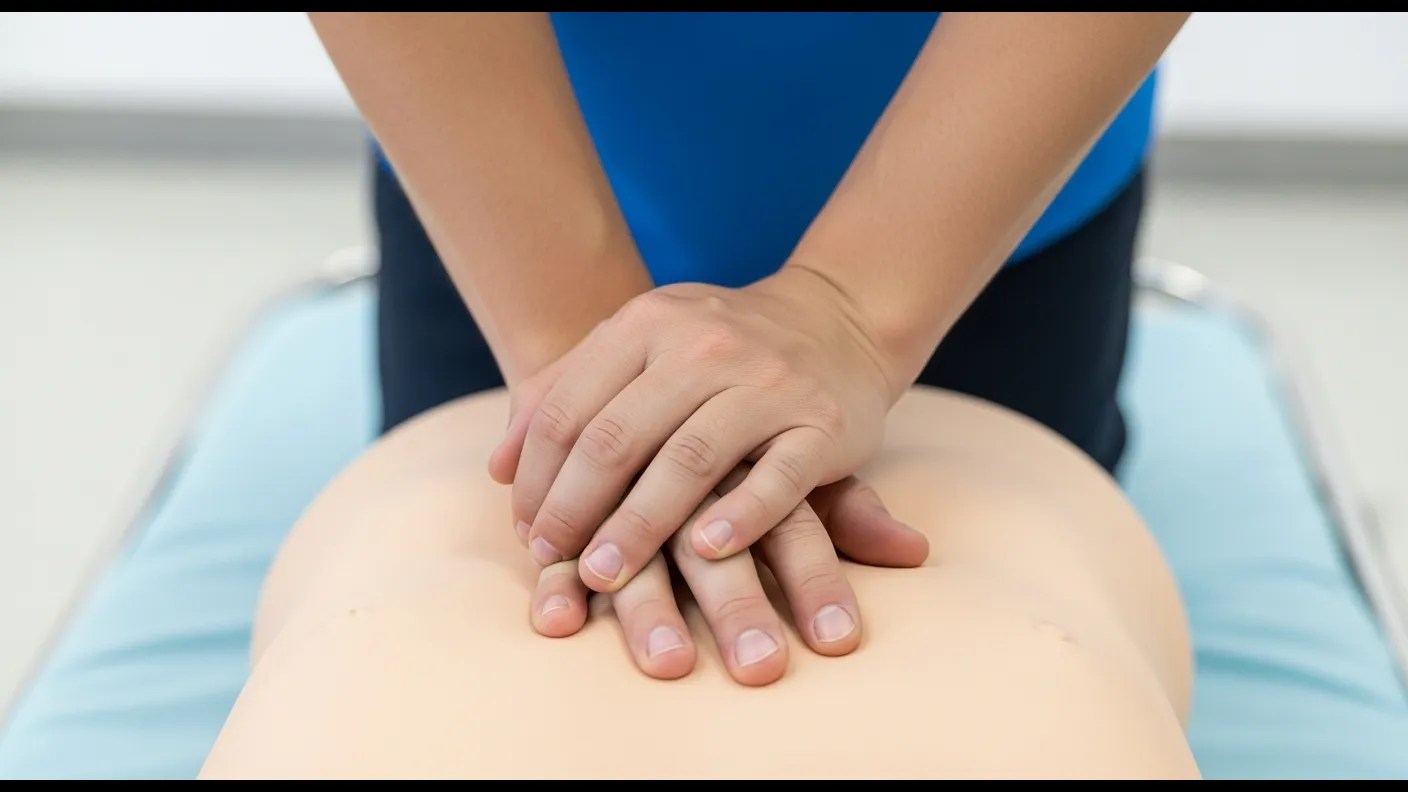
- Push hard and fast in the center of the chest at a rate of 100 to 120 compressions per minute.
- Do not stop until paramedics arrive or an AED is available.
Infant and Child CPR
CPR for infants and children requires modified techniques because of their smaller body size. For infants, two fingers are used instead of full hands for compressions. For children ages 1 to puberty, one or two hands may be used depending on the child’s size. Compression depth and breathing ratios also differ from adult CPR.
Explore AED Packages to Pair With Your CPR Training
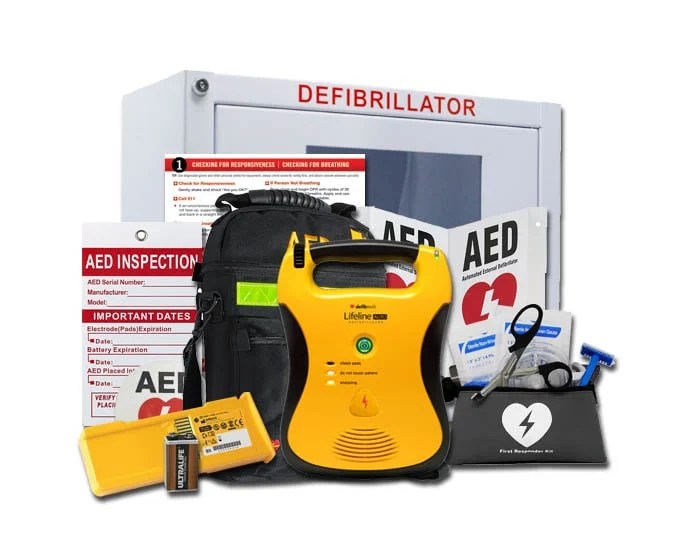
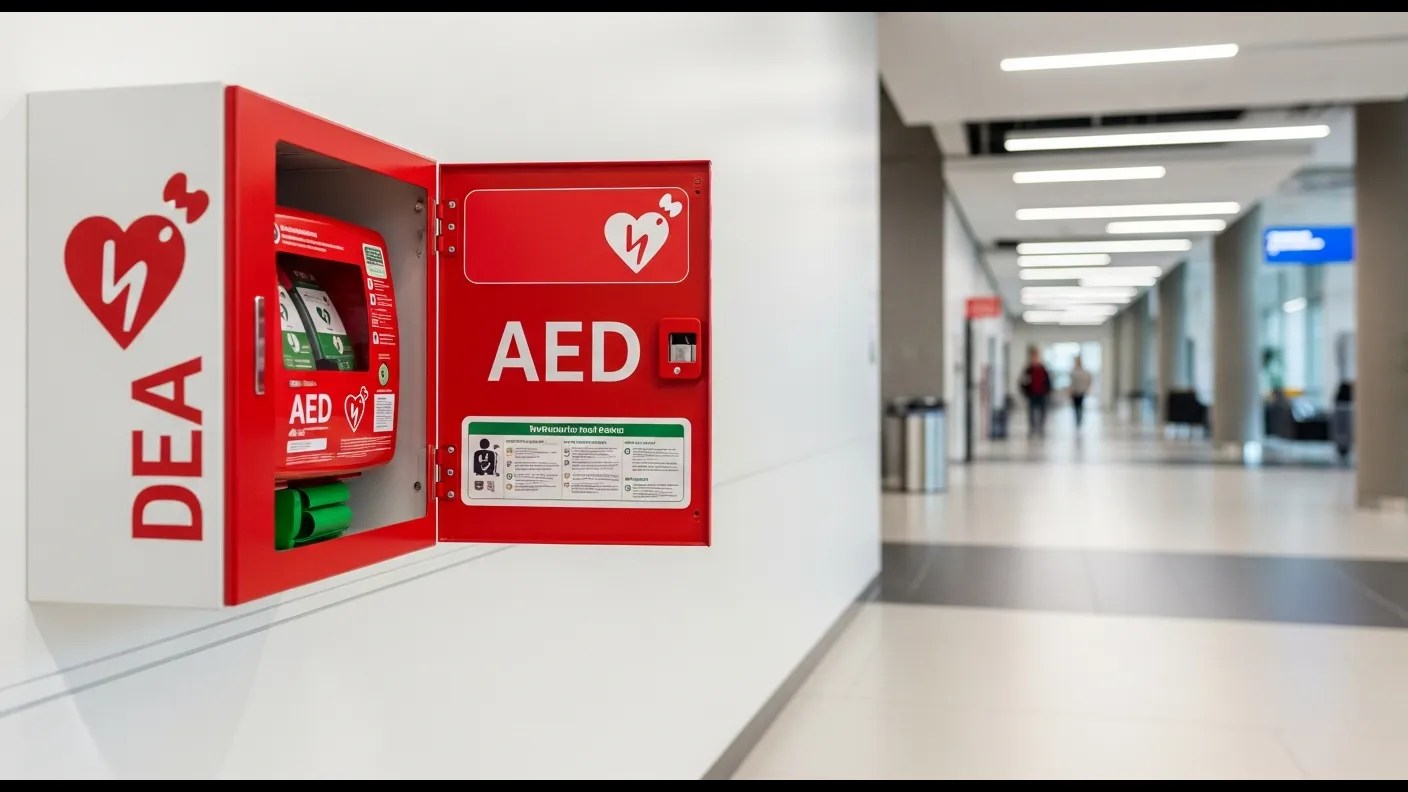
CPR and AEDs work together to give cardiac arrest victims the best chance of survival. Response Ready carries complete AED packages that include the defibrillator, carrying case, signage, and accessories in one bundle. Pair your CPR certification with the right equipment for your home, school, or workplace. Browse our full selection to find the right fit.
Current AHA Guidelines for CPR (2025)
The American Heart Association updates its CPR guidelines every five years based on the latest scientific evidence. Here are the key recommendations from the current guidelines:
- Compression rate: 100 to 120 compressions per minute.
- Compression depth: At least 2 inches (5 cm) for adults, but no more than 2.4 inches (6 cm).
- Full chest recoil: Allow the chest to completely return to its normal position between compressions.
- Minimize interruptions: Keep pauses in compressions to fewer than 10 seconds.
- Ventilation ratio: 30 compressions to 2 breaths for single-rescuer CPR on adults.
- Use an AED as soon as one is available: Early defibrillation with an AED dramatically improves outcomes.
The AHA also emphasizes the importance of the Chain of Survival, which includes early recognition, calling 911, immediate CPR, rapid defibrillation, and advanced medical care.
Who Should Learn CPR?
The short answer is everyone. Cardiac arrest does not discriminate by age, location, or health status. But certain groups have an especially strong reason to get trained:
- Parents and caregivers: Children and elderly family members are vulnerable populations where CPR knowledge is essential.
- Teachers and school staff: Many states require AEDs in schools, and trained staff can respond within seconds.
- Workplace safety teams: OSHA recommends CPR and first aid training for employees, particularly in settings with physical hazards.
- Fitness professionals: Gym and studio employees are often the first responders when a member collapses during exercise.
- Church and community leaders: Congregations with aging populations face higher cardiac arrest risk during gatherings.
- Coaches and athletic trainers: Sudden cardiac arrest is a leading cause of death in young athletes.
Response Ready’s CPR1 training program brings certified instruction to your location, making it easy for groups of any size to get trained. We also provide AED program management to keep your equipment compliant and rescue-ready year-round.
CPR and AEDs: Why Both Matter
CPR and AEDs are not competing treatments. They are complementary, and using both together gives a cardiac arrest victim the highest possible chance of survival.
CPR keeps blood flowing to the brain and organs while the heart is in arrest. An AED analyzes the heart’s rhythm and delivers an electrical shock to restore a normal heartbeat. Without CPR to maintain circulation, even an AED may not be effective because the heart muscle has been starved of oxygen.
This is why Response Ready recommends that every location with trained CPR rescuers should also have an accessible AED. Our AED value packages include everything needed to set up a complete emergency response station, from the defibrillator itself to wall cabinets, signage, and accessories.
Learn more about the relationship between these two lifesaving tools in our guide: The Difference Between AED and CPR.
Get CPR Trained and Equipped Today
Every second counts during a cardiac emergency. Response Ready makes it simple to prepare with certified CPR and AED training through our CPR1 program, AED packages for every setting, and ongoing program management to keep you compliant. Call us at 858-665-2025 or reach out online to get started.
If you work in healthcare or plan to, you may also want to understand the key differences between BLS and CPR certification to determine which credential your role requires.
Frequently Asked Questions
What does CPR mean in simple terms?
CPR stands for cardiopulmonary resuscitation. It is an emergency procedure that uses chest compressions and rescue breaths to keep blood and oxygen circulating when a person’s heart has stopped beating.
Can you perform CPR without training?
Yes. The AHA recommends that untrained bystanders perform hands-only CPR, which involves pushing hard and fast on the center of the chest at 100 to 120 compressions per minute until help arrives. No mouth-to-mouth breathing is needed.
How long should you perform CPR?
Continue CPR until professional medical help arrives, the person shows obvious signs of life such as breathing or movement, an AED becomes available and advises a shock, or you are physically unable to continue.
Is CPR alone enough to save someone?
CPR alone can sustain life temporarily, but survival rates are much higher when CPR is combined with an AED. Studies show that CPR plus AED use can increase survival rates to 38 to 74 percent compared to 5 to 10 percent with CPR alone.
What is the difference between CPR and an AED?
CPR is a manual technique that keeps blood circulating through chest compressions and breathing. An AED is a device that delivers an electrical shock to restore a normal heart rhythm. Both are used together during cardiac arrest for the best outcomes.
How often should you renew CPR certification?
Most CPR certifications are valid for two years. The AHA recommends recertification every two years to stay current with updated guidelines and maintain your skills through practice.