When you are responsible for the safety of others, especially children, every decision matters. If you are purchasing an Automated External Defibrillator (AED) for a school, community center, church, or family-focused business, you have likely asked an important question: do I really need pediatric pads? The simple answer is yes. A child’s heart is not just a smaller version of an adult’s, and providing the correct type of care during a sudden cardiac arrest (SCA) is critical.
For every minute that defibrillation is delayed, a victim’s chance of survival drops by 7 to 10 percent. In a situation where seconds count, being properly equipped is everything. This guide will walk you through the essential science, clear guidelines, and practical steps to ensure your AED is truly ready to save a life of any age.
The critical difference why pediatric pads are essential
The key difference between adult and pediatric AED pads lies in the amount of electrical energy they deliver. This isn’t just a minor detail; it’s a crucial factor rooted in physiology that directly impacts the safety and effectiveness of a rescue attempt.
The science of energy attenuation
An AED works by delivering a controlled electrical shock, measured in joules, to reset a heart’s chaotic rhythm during SCA. A standard AED is calibrated to deliver a shock of around 150 to 200 joules, an appropriate dose for an adult.
However, that amount of energy can be dangerously high for a small child. This is where pediatric pads come in. They contain a built in attenuator, which is a component that automatically reduces the energy dose to a much safer level, typically around 50 joules. This process of energy reduction is called attenuation.

The risks of using too much power
Using adult pads on a small child without attenuation poses significant risks. Delivering a 150 joule shock to a body that only requires 50 joules can cause serious harm, including myocardial damage (damage to the heart muscle) and skin burns. While the immediate goal is to save a life, causing unintended harm is a serious concern that proper equipment can prevent. Equipping your AED with pediatric pads removes this risk and ensures the right level of care can be delivered.
The clear cut rules when to use pediatric AED pads
The American Heart Association and other leading health organizations provide straightforward guidelines for when to use pediatric pads. The decision is based on two simple factors: the child’s age and weight.
-
Guideline 1 Age:
Use pediatric pads for children under 8 years of age. -
Guideline 2 Weight:
Use pediatric pads for children who weigh less than 55 pounds (25 kg).
If a child meets either of these criteria, pediatric pads are the appropriate choice. Having these pads on hand eliminates stressful guesswork during an emergency, allowing a rescuer to act with confidence. For any organization that serves young children, this makes having a set of pediatric pads an essential part of your safety plan.
How to guide correct pad placement on a child
Correct pad placement is vital for the AED to analyze the heart’s rhythm and deliver an effective shock. The placement for children is different from the standard adult placement to accommodate their smaller torso size.

Scenario A Using pediatric pads
For a child under 8 years old or 55 pounds, the preferred method is an anterior-posterior placement. This means one pad is placed in the center of the child’s chest (the anterior position), and the other pad is placed on the center of the child’s back, between the shoulder blades (the posterior position). This configuration ensures the heart lies directly in the path of the electrical current.
Scenario B What if I only have adult pads
In a life-or-death situation, any attempt at defibrillation is better than none. If a child is in cardiac arrest and you only have adult pads, you should absolutely use them. The risk of not delivering a shock is far greater than the potential harm from a high energy dose.
When using adult pads on a child, you must also use the anterior-posterior placement described above. The most important rule is to ensure the pads do not touch each other. If the pads overlap, the electrical current will travel across the surface of the skin instead of through the heart, rendering the shock ineffective. Placing one pad on the chest and one on the back prevents this from happening. While this works in an emergency, having dedicated pediatric pads is the safest and most effective solution, as highlighted in our guide on choosing the right AED for a school.
Making the responsible choice for your community
The evidence is clear. Lay rescuer use of AEDs in pediatric cardiac arrest is associated with significantly better survival and neurological outcomes. But true preparedness means having the right equipment for every potential victim. For any school, house of worship, or community gathering place where children are present, pediatric pads are not an optional accessory; they are a fundamental component of a complete life saving program.
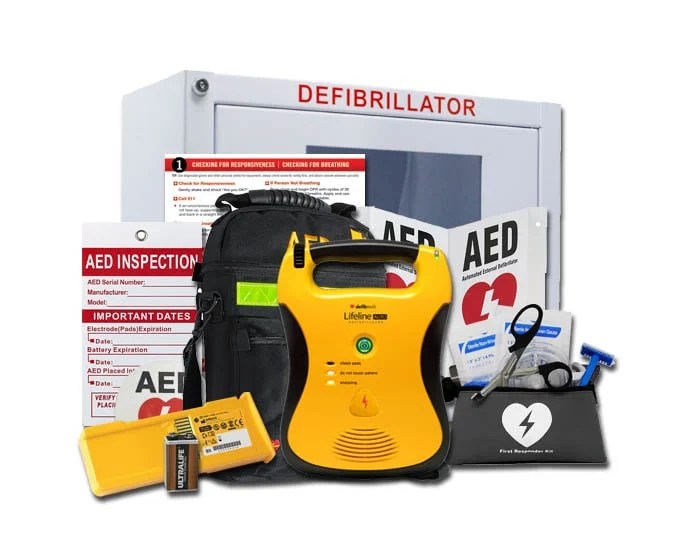
When you invest in an AED, you are investing in peace of mind. Ensuring that investment covers every member of your community, regardless of age, is the final step in fulfilling that promise. When building your Defibtech Lifeline AED Value Package, adding a set of pediatric pads is the crucial step to ensure you are equipped to help a person of any age.
Frequently asked questions
Q: Can I use adult pads on a child if that’s all I have?
A: Yes. While not ideal due to the higher energy dose, a shock from adult pads is significantly better than no shock at all. You must use a front and back (anterior-posterior) placement and ensure the pads do not touch each other.
Q: Can I use pediatric pads on an adult?
A: No. The attenuated energy dose of approximately 50 joules is too low to be effective for an adult heart. Using pediatric pads on an adult will likely fail to restore a normal heart rhythm.
Q: Do pediatric AED pads expire?
A: Yes. Just like adult pads and AED batteries, pediatric pads have a specific shelf life, usually around two years. It is critical to monitor expiration dates as part of your regular AED program management.
Q: What happens if a child is over 8 but under 55 pounds?
A: The age and weight criteria are guidelines. If you are unsure, the most important factor is preventing the pads from touching. If you can place the standard adult pads on the child’s chest and back without them overlapping, it is acceptable. Having pediatric pads on hand removes this difficult judgment call from a high stress situation.
Q: Why is CPR and AED training so important for our staff?
A: Effective and confident use of an AED is proven to increase survival rates. Formal CPR and AED training gives your team the skills to act quickly, follow device instructions correctly, and understand crucial concepts like pad placement, which is why AED and CPR skills go hand in hand.