Why CPR and AED Certification Matters
Every year, more than 350,000 people in the United States experience sudden cardiac arrest outside of a hospital. Fewer than 12% survive. The difference between life and death often comes down to one factor: whether someone nearby has CPR training and knows how to use an AED.
Browse CPR and AED certification courses from Response Ready
If you are looking into CPR and AED certification, you are making a decision that could save a life at work, at home, or in public. This guide covers the types of certification available, who needs them, how the training works, and how to choose the right course for your situation.
What Is CPR and AED Certification?
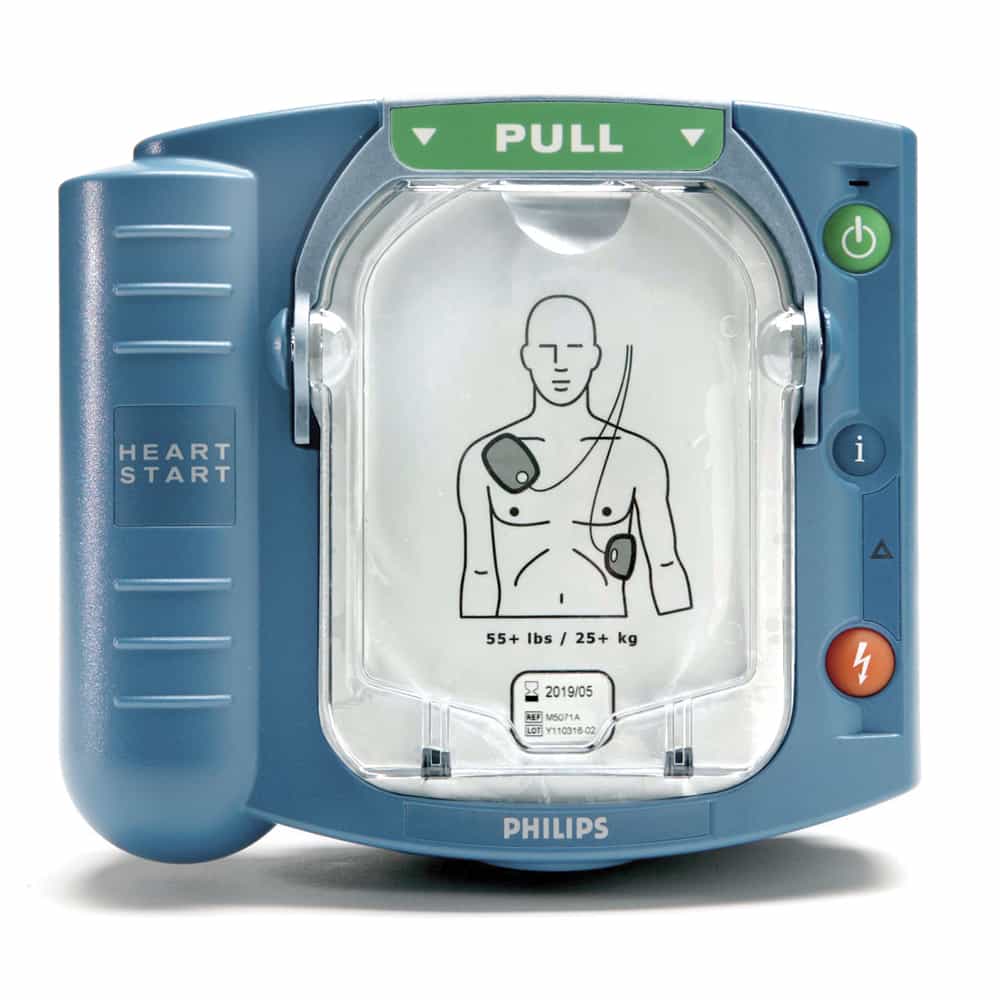
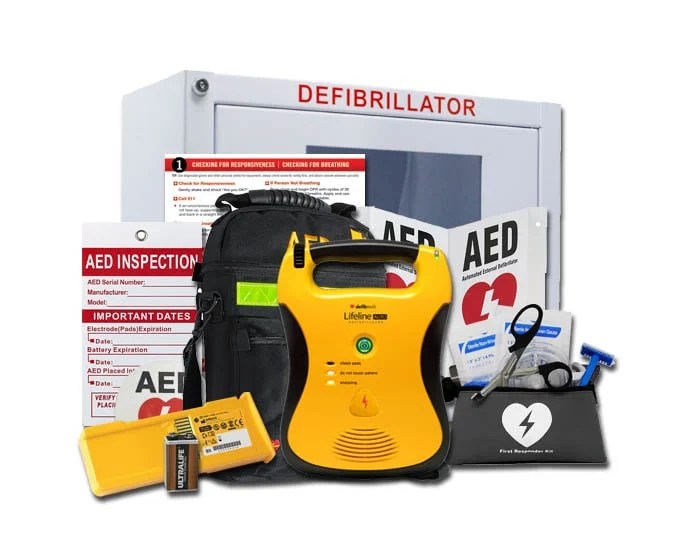
CPR certification proves you have learned how to perform cardiopulmonary resuscitation, the emergency technique that combines chest compressions and rescue breaths to keep blood flowing when someone’s heart stops. AED training teaches you how to operate an automated external defibrillator, the portable device that can analyze a heart rhythm and deliver a shock to restore a normal heartbeat.
Most modern certification courses combine both CPR and AED instruction into a single program. After completing the course and passing a skills assessment, you receive a certification card that is valid for two years.
What Are the Different Levels of CPR and AED Certification?
Not every CPR course covers the same material. The right certification depends on your profession, your workplace requirements, and the situations you are most likely to encounter.
Heartsaver CPR/AED (Community Level)
This entry-level course is designed for the general public, including office workers, teachers, parents, coaches, fitness instructors, and anyone who wants to be prepared. It covers adult CPR, AED use, and choking response. Some versions add child and infant CPR.
Best for: Workplaces, schools, churches, gyms, and community organizations
Heartsaver First Aid with CPR/AED
This expanded course adds first aid skills to the CPR/AED curriculum. You learn how to respond to bleeding, burns, poisoning, allergic reactions, and other common emergencies in addition to cardiac arrest.
Best for: Childcare providers, teachers, camp counselors, and anyone required to have both CPR and first aid certification
Basic Life Support (BLS) for Healthcare Providers
BLS is the most rigorous CPR certification. It covers adult, child, and infant CPR along with two-rescuer techniques, bag-mask ventilation, and team-based resuscitation protocols. This is the standard required by hospitals, clinics, and EMS agencies.
Best for: Nurses, doctors, EMTs, paramedics, dental professionals, medical students, and other healthcare workers
Comparing CPR and AED Certification Levels
| Certification Level | Duration | Who It Is For | Key Skills Covered |
|---|---|---|---|
| Heartsaver CPR/AED | Approximately 3 hours | General public, workplaces, schools | Adult CPR, AED use, choking response |
| Heartsaver First Aid + CPR/AED | Approximately 4 hours | Childcare, teachers, camps | CPR, AED, first aid (bleeding, burns, poisoning) |
| BLS for Healthcare Providers | Approximately 4 hours | Nurses, EMTs, doctors, paramedics | Adult/child/infant CPR, two-rescuer, bag-mask, team protocols |
All three levels include AED training and hands-on skills assessment. Certification cards are issued on completion day and remain valid for two years.
Who Needs CPR and AED Certification?
Some people need certification because their job requires it. Others pursue it voluntarily because they recognize the value of being prepared. Here are the groups that benefit most from AED training and CPR certification:
- Healthcare professionals – Nurses, CNAs, EMTs, paramedics, and physicians typically need BLS certification
- Teachers and school staff – 16 states now mandate AEDs in schools, and many districts require staff to be certified
- Fitness professionals – Over 20 states mandate AEDs in gyms and fitness centers
- Childcare providers – Most states require first aid and CPR certification for daycare and preschool workers
- Corporate employees – OSHA guidelines encourage workplace CPR training, and many companies make it mandatory
- Coaches and camp counselors – Organizations working with youth often require current CPR/AED certification
- Church and community leaders – Congregations with older members benefit significantly from having trained responders on site
- Parents and caregivers – Voluntary certification gives families confidence to respond to emergencies at home
How Does CPR Training Work? Online vs. In-Person
CPR and AED certification courses come in three formats. Each has trade-offs in convenience, depth, and skill retention.
Fully In-Person Training
In-person CPR training gives you direct, hands-on practice with manikins and AED trainers under the guidance of a certified instructor. You practice compressions, rescue breaths, AED pad placement, and choking response in real time. The instructor corrects your technique immediately.
This format produces the highest skill retention and confidence. Classes typically run three to four hours for Heartsaver courses and about four hours for BLS.
Blended Learning (Online + In-Person Skills Session)
Blended courses split the training into two parts. You complete the knowledge portion online at your own pace, then attend a shorter in-person session (usually 45 to 90 minutes) to demonstrate your hands-on skills. This format works well for busy professionals who want scheduling flexibility.
Fully Online (Awareness Only)
Some providers offer online-only CPR courses. While these can teach concepts and theory, they do not provide hands-on practice and are generally not accepted by employers, regulatory bodies, or healthcare facilities. If you need a legitimate certification recognized by OSHA or your employer, choose in-person or blended learning.
What Certification Providers Should You Consider?
Several organizations offer nationally recognized CPR and AED certification. The most widely accepted include:
- American Heart Association (AHA) – The gold standard for BLS and Heartsaver certifications. Accepted by virtually every employer and regulatory body in the US
- American Red Cross – Widely recognized, particularly popular for workplace and community training programs
- EMS Safety Services – Accepted by OSHA and many state regulatory agencies
- National Safety Council (NSC) – Strong reputation for workplace safety training
When comparing providers, check whether your employer or state licensing board specifies a particular certification. Healthcare workers almost universally need AHA BLS certification. For community and workplace training, both AHA and Red Cross certifications are widely accepted.
How CPR1 Makes Training Accessible Nationwide
Finding quality CPR training that fits your schedule and location should not be the hard part. That is exactly why CPR1, the training division of Response Ready, maintains a nationwide network of certified professional instructors who bring the classroom directly to your facility.
CPR1 instructors combine years of real-life emergency response and clinical experience with an engaging, hands-on teaching approach. Whether you are certifying a team of 10 at your corporate office or training 25 staff members at a school, CPR1 delivers on-site instruction designed to build genuine confidence and long-term skill retention.
CPR1 Training Courses
- CPR and AED Training – Covers adult, child, and infant CPR, AED operation, choking response, and recovery position techniques. Groups of 10 to 25 people.
- CPR, AED, and First Aid Training – Combines complete CPR/AED certification with comprehensive first aid instruction in one course. Ideal for organizations that need both certifications.
- Stop the Bleed Training – Teaches tourniquet use, wound packing, and bleeding control techniques for traumatic emergencies.
Every CPR1 graduate walks away with their certification card on the same day they complete the course. No waiting, no additional paperwork.
How Long Does CPR Certification Last?
CPR and AED certifications are valid for two years from the date of completion. After that, you need to take a renewal course (often called a recertification) to keep your credentials current.
Renewal courses are typically shorter than initial certification because they focus on updating skills and reinforcing technique rather than covering material from scratch. If you are a healthcare professional, your employer will likely track your certification expiration date and require proof of renewal.
Tip: Set a calendar reminder at the 20-month mark so you have time to schedule your renewal before your certification expires.
Why AED Training Is Essential, Even If Your State Does Not Require It
Even if your state does not mandate AED certification, the data is overwhelming. When an AED is used within the first few minutes of sudden cardiac arrest, survival rates can reach 70% or higher. With CPR alone (no AED), survival drops to roughly 10%.
An AED is designed to be used by anyone, even without training. But trained operators respond faster, place pads correctly, and integrate AED use with effective CPR. That combination of skills is what saves lives.
If your organization has an AED on site, every person who works near it should have basic AED training. The device is only effective if someone is willing and able to use it quickly.
How to Choose the Right CPR and AED Certification Course
Use this framework to select the right course for your needs:
- Check your employer or licensing requirements first. Healthcare workers need BLS. Most other professions accept Heartsaver CPR/AED or equivalent.
- Choose in-person or blended learning. Avoid online-only courses if you need a credential recognized by employers or regulatory bodies.
- Prioritize hands-on practice. The quality of your training directly affects your ability to perform under pressure. Look for small class sizes and experienced instructors.
- Consider bundling CPR with first aid. If your workplace or state requires both certifications, a combined course saves time and money.
- Verify the certification is nationally recognized. AHA, Red Cross, and EMS Safety Services certifications are accepted across all 50 states.
Ready to get certified? View CPR1 training options and book your course
Frequently Asked Questions About CPR and AED Certification
How long does a CPR class take?
Most Heartsaver CPR/AED courses take about three hours. BLS courses for healthcare providers run approximately four hours. Blended learning courses have a shorter in-person portion (45 to 90 minutes) after completing online modules.
How much does CPR certification cost?
Costs vary by provider and format. Individual blended learning courses through Response Ready start at $68 for Adult First Aid/CPR/AED. On-site group training for businesses starts at $785 for groups of up to 10 people.
Can I get CPR certified online?
You can complete the knowledge portion online through blended learning programs. However, a hands-on skills session with an instructor is required for most legitimate certifications. Fully online CPR certificates are generally not accepted by employers or regulatory agencies.
Do I need to recertify every two years?
Yes. CPR and AED certifications expire after two years. Renewal courses refresh your skills and update you on any changes to resuscitation guidelines.
Is CPR certification required by law?
Requirements vary by state and profession. Many states mandate CPR certification for teachers, childcare workers, fitness professionals, and healthcare providers. Even where not legally required, most employers consider it a best practice. Check your state’s CPR and AED laws for specific requirements.
Take the Next Step Toward CPR and AED Certification
Knowing CPR and how to use an AED is one of the most practical skills you can have. Whether your employer requires it or you want the confidence to act in an emergency, getting certified is straightforward and worth the investment.
Response Ready’s CPR1 instructors deliver professional, hands-on CPR and AED training at your location, anywhere in the country. Contact us to schedule a training session for your team, or book a CPR/AED course today.