If you have ever looked into emergency response training, you have probably seen the terms BLS and CPR used almost interchangeably. They are related, but they are not the same thing. Choosing the wrong certification could mean you are underprepared for your job requirements, or you could spend time and money on a course you do not actually need.
This guide breaks down exactly what BLS and CPR cover, who needs each one, and how to pick the right certification for your situation.
Explore CPR and BLS training courses at Response Ready to find the right certification for your career or personal preparedness goals.
What Is CPR?
CPR stands for cardiopulmonary resuscitation. It is a lifesaving technique used when someone’s heart stops beating or they stop breathing. The core of CPR involves chest compressions, which manually pump blood through the body, and rescue breaths, which deliver oxygen to the lungs.
Standard CPR training is designed for the general public. It teaches you how to recognize a cardiac emergency, call 911, perform chest compressions at the correct rate of 100 to 120 per minute, and use an AED (automated external defibrillator). Most CPR courses also cover choking response for adults, children, and infants.
CPR certification is offered by organizations like the American Heart Association (AHA) and the American Red Cross. Courses typically take a few hours and are available in classroom, blended, or fully online formats. Certification is valid for two years. For a detailed look at the different certification levels and how to choose between them, see our CPR and AED certification training guide.
CPR training is ideal for parents, teachers, coaches, childcare workers, fitness instructors, and anyone who wants the confidence to act during a cardiac emergency. You do not need a medical background to take a CPR class.
What Is BLS?
BLS stands for basic life support. It is a more advanced certification that builds on standard CPR skills and adds clinical techniques used in healthcare settings. BLS covers everything CPR does, but it goes further.
A BLS certification course includes high-quality CPR for adults, children, and infants, the use of bag-valve masks (BVMs) for ventilation, multi-rescuer coordination and team-based resuscitation, advanced airway management techniques, and how to recognize and respond to respiratory arrest, cardiac arrest, and choking in a clinical environment.
BLS training emphasizes the kind of coordinated, team-based response you would see in an emergency room, ambulance, or clinic. You learn to work alongside other rescuers, communicate clearly during a code, and use equipment that goes beyond what a bystander would have access to.
The AHA’s BLS course is the most widely recognized version. It is required for most healthcare professionals and is accepted by hospitals, nursing programs, medical schools, and EMS agencies nationwide. Like CPR, BLS certification is valid for two years.
BLS vs CPR: Key Differences
Understanding the differences between basic life support and standard CPR comes down to scope, audience, and clinical depth.
| Feature | CPR Certification | BLS Certification |
|---|---|---|
| Target audience | General public, lay rescuers | Healthcare professionals, clinical staff |
| Chest compressions | Yes | Yes (with emphasis on quality metrics) |
| Rescue breaths | Yes (mouth-to-mouth or pocket mask) | Yes (bag-valve mask, advanced airway) |
| AED use | Yes | Yes |
| Multi-rescuer scenarios | No | Yes (team dynamics and role switching) |
| Bag-valve mask ventilation | No | Yes |
| Advanced airway management | No | Yes |
| Course length | 2-4 hours | 4-6 hours |
| Certification validity | 2 years | 2 years |
| Typical cost | $50-$80 | $60-$100 |
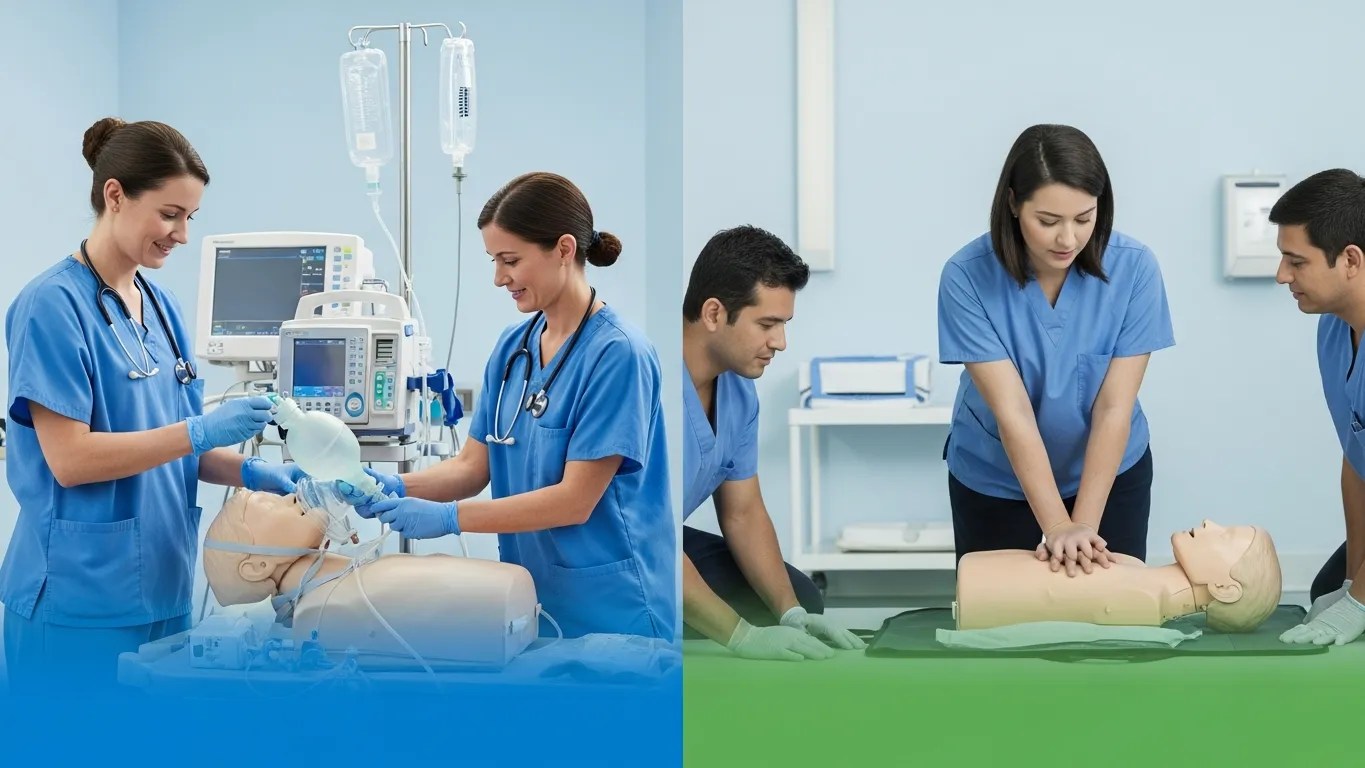
The simplest way to think about it: CPR is a subset of BLS. Every BLS course includes CPR, but CPR courses do not include the advanced skills taught in BLS.
View the BLS blended learning course at Response Ready to get started with your basic life support certification today.
Who Needs BLS Certification?
BLS certification is a professional requirement for anyone working in a clinical or pre-hospital healthcare setting. If your job involves direct patient care, your employer almost certainly requires current BLS certification.
Professionals who need BLS include:
- Registered nurses (RNs) and licensed practical nurses (LPNs)
- Physicians and physician assistants
- Paramedics and EMTs
- Dentists and dental hygienists
- Physical therapists and occupational therapists
- Respiratory therapists
- Nursing students and medical students
- Certified nursing assistants (CNAs)
- Surgical technologists
- Athletic trainers in clinical settings
Many nursing and medical school programs require BLS certification before students begin clinical rotations. Hospitals and healthcare systems also require BLS as a condition of employment and mandate renewal every two years.
If you are not sure whether your role requires BLS or standard CPR, check with your employer or licensing board. When in doubt, BLS gives you the more comprehensive skill set.
Who Should Get CPR Certification Instead?
If you are not a healthcare professional, a standard CPR certification is usually the right choice. CPR training prepares you to respond to cardiac emergencies in everyday settings like your home, workplace, school, or gym.
CPR certification is a great fit for:
- Parents and caregivers
- Teachers and school administrators
- Coaches and youth sports staff
- Personal trainers and fitness instructors
- Childcare and daycare workers
- Office safety teams and first aid responders
- Lifeguards
- Anyone who wants to be prepared in an emergency
Many states require CPR certification for certain professions. For example, most states mandate that teachers, coaches, and childcare workers maintain current CPR certification. Some AED compliance laws also require designated staff to hold CPR/AED certification.
AHA vs Red Cross: Choosing a Certification Provider
The two most recognized providers for both BLS and CPR certification in the United States are the American Heart Association (AHA) and the American Red Cross.
American Heart Association (AHA)
The AHA is the gold standard for BLS certification, especially in healthcare. Most hospitals, nursing programs, and EMS agencies specifically require AHA BLS certification. The AHA offers both in-person and blended learning formats, where you complete online coursework before attending an in-person skills session.
American Red Cross
The Red Cross offers BLS and CPR courses that are widely accepted across industries. Their Basic Life Support blended learning course combines online education with a hands-on skills session, making it convenient for busy professionals. Red Cross certifications are valid for two years and include digital certificate access.
Which One Should You Choose?
For healthcare workers, check with your employer first. Many hospitals and clinical programs mandate AHA specifically. If your employer accepts either, both are excellent options.
For non-healthcare professionals, either provider works well. The Red Cross tends to offer more locations and scheduling flexibility for community-level CPR courses.
Browse all available training courses at Response Ready to find an AHA or Red Cross certification class near you.
How to Choose Between BLS and CPR
Deciding between BLS and CPR comes down to answering a few straightforward questions:
Do you work in healthcare or plan to? Choose BLS. It is the industry standard and covers the clinical skills your job requires.
Are you a student entering a healthcare program? Choose BLS. Most nursing, medical, dental, and allied health programs require it before you begin clinical rotations.
Are you a non-medical professional or community member? Choose CPR. It gives you everything you need to respond effectively in a non-clinical setting.
Do you want the most comprehensive training possible? Choose BLS. Since BLS includes all CPR skills plus advanced techniques, it is the broadest single certification you can get at this level.
Keep in mind that both certifications require renewal every two years. Many people in healthcare maintain BLS as their primary certification, while non-clinical family members or colleagues may hold standard CPR certification.
What to Expect During BLS and CPR Training
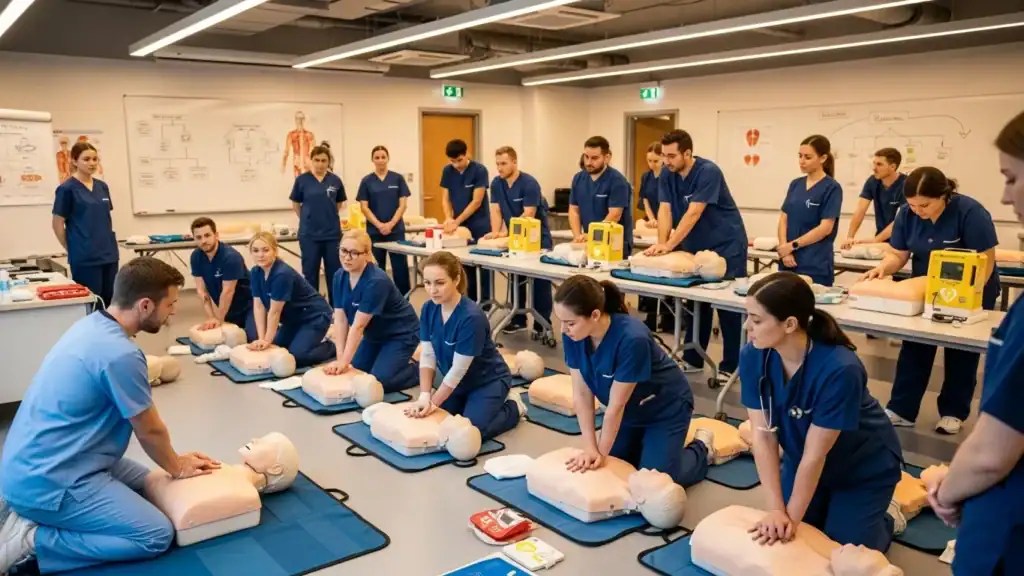
Both BLS and CPR courses combine knowledge-based learning with hands-on practice. Here is what a typical training experience looks like.
CPR Course Structure
- Duration: 2 to 4 hours
- Classroom or blended format (online + in-person)
- Hands-on practice with manikins (adult, child, infant)
- AED demonstration and practice
- Step-by-step CPR technique for different age groups
- Choking response for conscious and unconscious victims
- Written or online assessment
BLS Course Structure
- Duration: 4 to 6 hours
- Classroom or blended format
- Everything in a CPR course, plus:
- Bag-valve mask (BVM) ventilation practice
- Team-based resuscitation scenarios
- Multi-rescuer CPR with role assignments
- Advanced airway management overview
- Skills testing with pass/fail evaluation
Both courses end with a skills assessment where you demonstrate your ability to perform the techniques correctly. BLS courses tend to have more rigorous testing because the certification is tied to professional practice standards.
The Role of AEDs in Both BLS and CPR
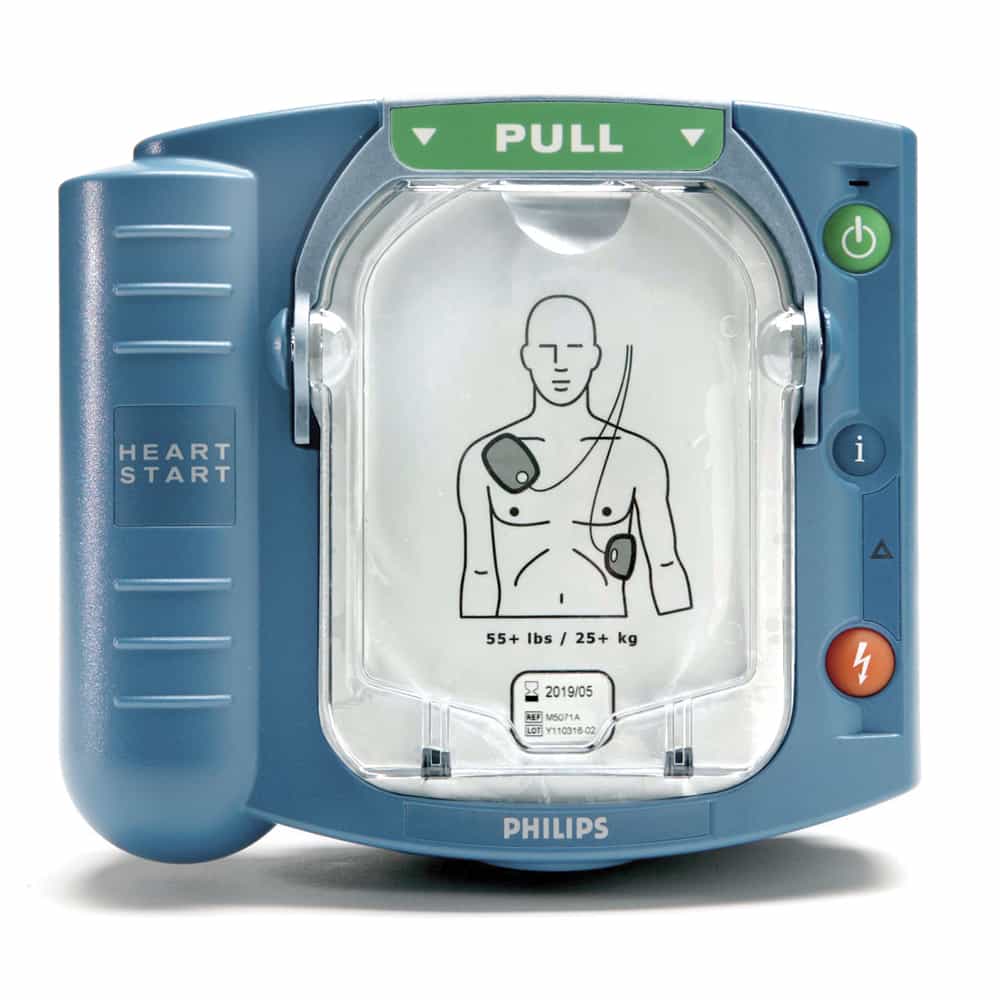
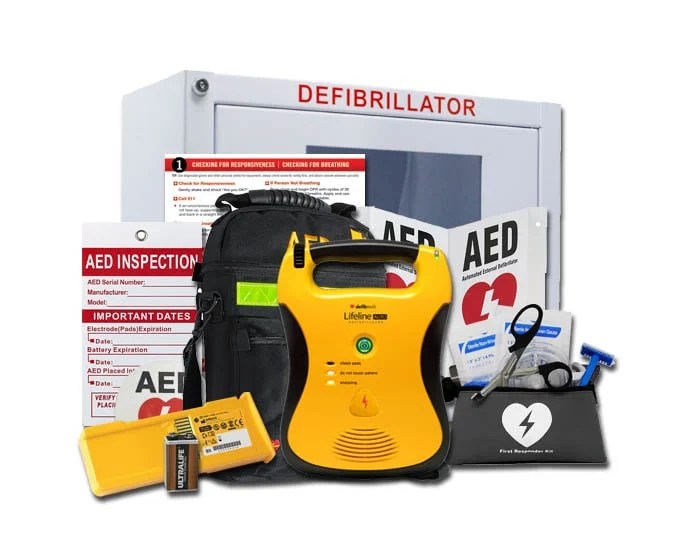
Both BLS and CPR training include instruction on using an automated external defibrillator. An AED is a portable device that analyzes a person’s heart rhythm and delivers an electric shock if needed to restore normal function. Studies show that using an AED within the first few minutes of cardiac arrest can more than double a person’s chance of survival.
Whether you hold a BLS or CPR certification, knowing how to use an AED is a critical part of the chain of survival. Having an AED accessible in your workplace, school, gym, or home can make the difference between life and death during a sudden cardiac emergency.
Response Ready carries AEDs from all six FDA-approved manufacturers and offers complete AED setup guidance for any environment.
Frequently Asked Questions
Is BLS harder than CPR?
BLS is more comprehensive than CPR but not necessarily harder. BLS covers additional skills like bag-valve mask ventilation and team-based resuscitation that standard CPR does not include. If you study the material and attend the hands-on session, most people pass both certifications without difficulty.
Can I take BLS if I am not a healthcare worker?
Yes. BLS courses are open to anyone, not just healthcare professionals. If you want the most thorough emergency response training available at this level, BLS is a solid choice regardless of your occupation.
Does BLS certification include CPR?
Yes. BLS certification covers all the skills taught in a standard CPR course, plus advanced techniques like multi-rescuer coordination and bag-valve mask ventilation. If you have a current BLS certification, you do not need a separate CPR certification.
How long does BLS certification last?
BLS certification is valid for two years from the date of issue. After two years, you need to take a renewal or recertification course to maintain your credential. Both the AHA and Red Cross offer renewal courses that are shorter than the initial certification.
How much does BLS certification cost?
BLS certification typically ranges from $60 to $100 depending on the provider, location, and format. Blended learning options that combine online coursework with an in-person skills session are often the most convenient and cost-effective choice.