- Published
- March 25, 2026
AED pad placement and why it matters


When sudden cardiac arrest strikes, having an AED (Automated External Defibrillator) nearby can make the difference between life and death. But even if you have the right device ready to use, correct AED pad placement is crucial to delivering an effective shock. If you are looking for a full walkthrough of the entire process, start with our step-by-step guide on how to use an AED.
In this article, we’ll walk you through everything you need to know about AED pad placement, including adult and pediatric placements, common mistakes to avoid, and how to prepare for real emergencies.
If you’re looking for AED pads, replacement supplies or full packages, you can view our complete selection on the AED accessories page.
Why AED pad placement matters
AED pads do more than stick to the skin. They create a pathway for the electric shock to travel through the heart. Proper placement ensures the shock passes through the heart muscle to stop abnormal rhythms and allow a normal rhythm to resume.
Incorrect pad placement can reduce the effectiveness of the shock, delay life-saving action or even prevent the AED from delivering a shock at all. That is why understanding where and how to place the pads is essential.
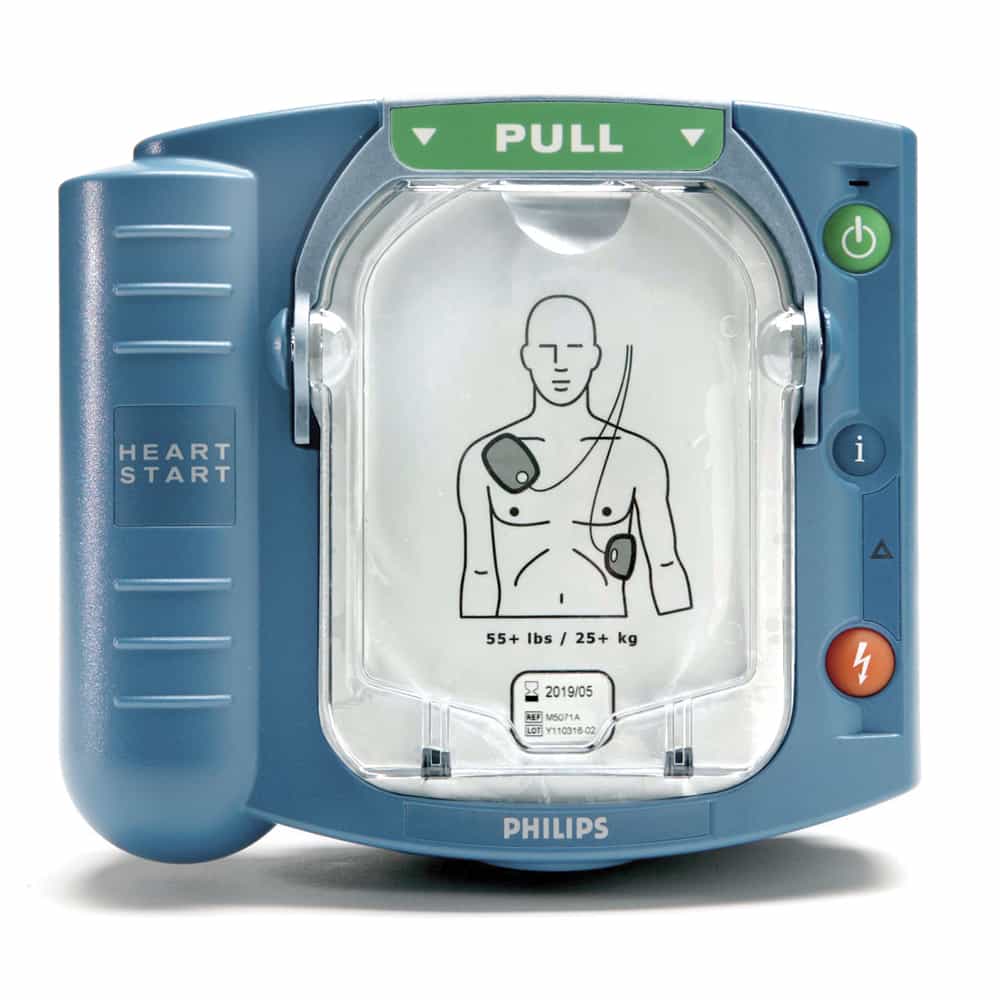
AEDs like the Philips HeartStart OnSite AED and Philips HeartStart FRx AED provide voice and visual prompts to guide users step-by-step, even if they have no medical training.
Standard adult AED pad placement
For adults and children over eight years old or weighing more than 55 pounds (25 kg), AED pads should be placed in the following locations:
-
One pad on the upper right side of the chest, just below the collarbone
-
One pad on the lower left side of the chest, slightly below and to the side of the left nipple
This is called an “anterolateral” placement. It allows the electrical current to travel diagonally through the heart.
Most AED pads are pre-labeled with diagrams showing where to place them. Follow the device’s voice prompts carefully, and always ensure the chest is dry and bare before applying the pads.
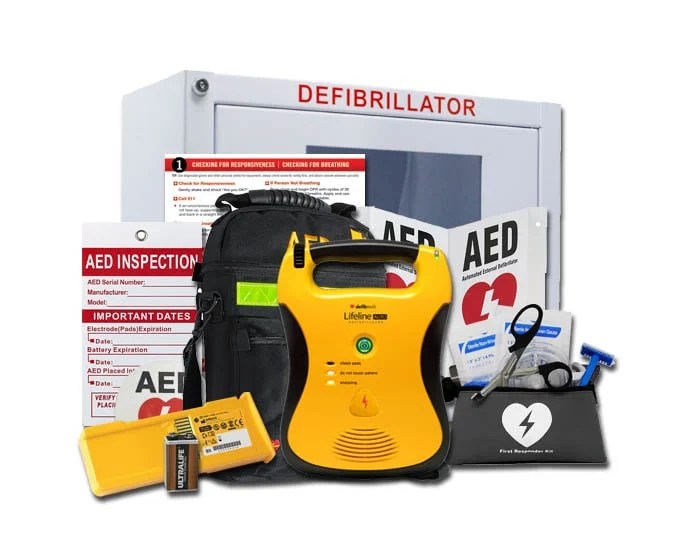
If clothing is in the way, use scissors from the AED prep kit included with many AED packages.
Pediatric AED pad placement
For infants and young children under eight years old or under 55 pounds, pediatric pads should be used if available. If your AED, like the Philips HeartStart FRx AED, has a child mode or infant/child key, activate it.
Pediatric pad placement is different:
-
One pad is placed in the center of the chest
-
One pad is placed in the center of the back, between the shoulder blades
This is called “anteroposterior” placement. It ensures the smaller heart is effectively targeted without causing additional harm.
If pediatric pads are not available, adult pads can be used — but make sure they do not touch each other. If needed, reposition slightly to maintain good contact with the skin.
Steps for correct AED pad placement
-
Expose the person’s chest completely. Remove clothing, bras, or jewelry that could interfere.
-
Dry the chest quickly if wet or sweaty. Use a towel or gauze from the prep kit.
-
Peel the backing off the AED pads without touching the sticky side.
-
Place the first pad firmly on the upper right chest.
-
Place the second pad firmly on the lower left chest.
-
If using pediatric pads, follow the instructions for chest and back placement.
-
Make sure pads are fully adhered and not lifting or wrinkled.
-
Let the AED analyze and follow its prompts.
Correct pad placement allows the AED to accurately assess the heart’s rhythm and deliver a life-saving shock if needed.
Common mistakes to avoid
Even in high-stress situations, try to avoid these common errors:
-
Placing pads too far apart or too close together
-
Allowing pads to overlap, especially on smaller children
-
Applying pads over thick body hair without shaving first
-
Skipping drying when the chest is wet or sweaty
-
Ignoring the AED’s voice or visual instructions
That’s why practicing ahead of time through a CPR and AED training course is a smart investment for any workplace, school or organization.
Tips for easier AED use
To make pad placement faster and easier:
-
Keep your AED stored in a visible, accessible cabinet
-
Ensure your AED accessories include spare pads, batteries, scissors, gloves and wipes
-
Train key staff members in basic CPR and AED use
-
Check your AED monthly to confirm pad expiration dates and battery status
Some customers also add a Bleeding Control Kit – Standard or Bleeding Control Kit – Premium to their AED station for full emergency preparedness.
Be ready to act when it matters most
Understanding AED pad placement is just as important as having an AED on-site. When someone suffers sudden cardiac arrest, you won’t have time to read instructions slowly or second-guess your actions. Knowing where and how to place the pads will let you respond with confidence.
Shop AEDs now and equip your space with everything you need to respond fast and effectively — because the right action at the right time saves lives.
Proper pad placement only works when your pads are in good condition. Learn when to replace your electrode pads and batteries with our AED battery and pad replacement guide.
Disclaimer for information purposes only:
The information provided on this website is intended for general educational and informational purposes only. It is not medical advice and should not be used as a substitute for professional diagnosis, treatment, or care. Always consult a qualified healthcare or medical professional regarding any health-related questions or concerns.
While we strive to ensure the information shared is accurate and up to date, no guarantees are made regarding completeness, accuracy, or applicability to any individual situation. Use of this content is at the reader’s sole discretion and risk.
This website is part of the Response Ready family of emergency preparedness and training resources, including CPR & first aid training and compliance services, AED sales and program support, AED program management software, and medical oversight solutions provided through our affiliated platforms:
• CPR1.com
• AEDLeader.com
• AEDTotalSolution.com
• MDSIMedical.com
By accessing or using this website, you agree to release, indemnify, and hold harmless the website owners, authors, contributors, and affiliated entities from any claims, losses, damages, or liabilities arising from the use or reliance on the information presented.