You’ve decided to invest in an automated external defibrillator (AED)—a critical step toward protecting your family, students, or employees. While comparing models, you’re likely focused on features like ease of use and battery life. But what about the environment where it will live? A device perfect for a quiet office might not survive a humid pool area or a dusty workshop. This is where the AED IP rating becomes so important. It’s a simple score that tells you exactly how well the device is protected from the elements, ensuring it’s tough enough for your world.
The long term reliability of your AED depends on its ability to withstand the unique conditions of its surroundings. Choosing a device that isn’t suited for its environment can lead to malfunction and failure when every second counts. Understanding a simple technical specification, the Ingress Protection (IP) rating, is the key to making a confident decision and ensuring your device is ready when you need it most.
Is Your AED Safe? Why Its Environment Matters
An AED is a sophisticated piece of medical technology. Its internal components, battery, and electrode pads are vulnerable to environmental factors like dust, moisture, and extreme temperatures. A device placed in an environment it wasn’t designed for is at risk. For example, fine dust in a woodshop or community theater backstage can settle inside a poorly sealed unit, compromising its electronic circuits. Likewise, moisture from humidity, splashes, or cleaning crews in a gym or locker room can cause corrosion and lead to device failure.
This isn’t just a theoretical concern, an AED’s readiness is directly linked to its ability to function despite its surroundings. That’s why you need to match the device’s durability to its placement. A home AED stored in a clean closet has different requirements than one mounted in a high traffic community center, where it might be exposed to bumps, dust, and occasional splashes. Choosing an appropriately rugged device is about making a smart investment in reliability.
What is an AED IP Rating?
The International Protection Rating Standard
So, how can you tell if an AED is tough enough for your specific location? The answer lies in its Ingress Protection (IP) rating. Think of the IP rating as a standardized report card that scores how well the device’s outer casing protects its sensitive internal electronics from solids (like dust and dirt) and liquids (like water). The rating is always followed by two numbers. The first digit, from 0 to 6, indicates its protection against solid objects, while the second digit, from 0 to 8, represents its resistance to moisture. The higher the numbers, the more rugged the device is.
Understanding this rating is key to choosing the right device. An AED with a lower rating might be perfectly fine for a clean, dry office, but it wouldn’t last long in a dusty workshop or near a swimming pool. For those tougher environments, you’d want a device with a higher IP rating to ensure it stays ready to perform. When you browse different AED packages, you’ll see they are often designed for specific settings, and the IP rating is a big reason why. It’s a simple specification that gives you the confidence of knowing your life-saving investment is properly protected.
What Do the Numbers on an AED IP Rating Mean?
The Ingress Protection or IP rating is a universal standard that tells you exactly how well a device’s enclosure protects it against solids and liquids. It’s a simple, two digit code that removes the guesswork from terms like “water resistant” or “durable.” Understanding this rating allows you to quickly compare the environmental resilience of different AED models.
The first digit rates protection against solids like dust and debris on a scale of 0 to 6.
-
IP5X:
Dust protected. While some dust might get in, it won’t be enough to interfere with the device’s operation. This is a good standard for most indoor public spaces. -
IP6X:
Dust tight. No dust can enter the device. This is the highest level of protection, ideal for industrial or very dusty settings.
The second digit rates protection against liquids like water on a scale of 0 to 9.
-
IPX4:
Protected against splashing water from any direction. Suitable for areas where occasional splashes may occur. -
IPX5:
Protected against low pressure water jets from any direction. The device can be rinsed off.
-
IPX6:
Protected against powerful water jets. The device can withstand being sprayed down with a hose, making it great for poolsides or outdoor venues.

Understanding IP ratings helps you quickly compare AEDs’ environmental durability. The HeartSine Samaritan PAD 360P’s IP56 rating stands out, ensuring reliable performance in challenging settings such as schools and manufacturing facilities.
The First Digit: Protection Against Solids
The first number in an IP rating tells you how well the AED is protected against solid objects, from fingers to fine dust particles. This rating is on a scale from 0 to 6. For most AEDs, you’ll see a 5 or a 6 in this position. A rating of IP5X means the device is “dust protected.” While a small amount of dust might get inside, it won’t be enough to interfere with the AED’s operation. This level of protection is perfectly suitable for most indoor environments like offices, schools, and community centers. An IP6X rating means the device is completely “dust tight,” offering the highest level of protection. No dust can get in, making it the ideal choice for more demanding settings like manufacturing plants, workshops, or agricultural environments where airborne particles are common.
The Second Digit: Protection Against Liquids
The second number indicates the device’s resistance to moisture, ranging from a light splash to a powerful jet of water. This scale goes from 0 to 9. An IPX4 rating means the AED is protected from splashing water from any direction, which is great for general use where it might get accidentally splashed. Moving up, an IPX5 rating means it can handle low-pressure water jets, so it could be gently rinsed off if needed. For more exposed locations, you should find an AED with an IPX6 rating. These devices can withstand powerful water jets, making them a reliable choice for pools, marinas, and outdoor venues where they might be exposed to heavy rain or cleaning crews with hoses. Choosing the right level of water protection ensures your device remains functional even in damp or wet conditions.
What an ‘X’ Means in an IP Rating
Sometimes you might see an ‘X’ in place of a number, such as IPX6 or IP5X. This doesn’t mean the device has zero protection against that element. It simply means the manufacturer has not submitted the device for official testing and certification for that specific type of ingress (either solids or liquids). For example, an AED with an IPX6 rating has been certified to withstand powerful water jets, but it hasn’t been formally rated for dust protection. While it likely offers some defense against dust by nature of its sealed design, it’s not guaranteed. It’s always best to choose a device with a full two-digit rating if you know it will be placed in an environment with specific solid or liquid hazards.
What IP Ratings Don’t Tell You
While an IP rating is an excellent tool for assessing an AED’s defense against dust and water, it doesn’t paint the complete picture of its overall durability. The rating system is strictly focused on ingress protection and tells you nothing about how the device will fare against other real-world challenges. For instance, the IP code won’t tell you if an AED can survive a fall from its wall mount in a busy school hallway or handle the constant vibrations in a vehicle or manufacturing facility. It also doesn’t cover factors like resistance to chemicals, extreme temperatures, or altitude changes.
These factors are just as important for ensuring your device is ready to perform when an emergency strikes. A high IP rating is crucial for certain environments, but it’s only one piece of the puzzle. When selecting an AED, you also need to consider its physical toughness and the manufacturer’s specifications for impact and vibration. This is especially true for devices intended for mobile use by first responders or for placement in high-traffic, unpredictable public spaces. A truly resilient device combines a strong IP rating with robust construction that can handle the bumps and jolts of everyday life.
Beyond Dust and Water: Drop and Shock Standards
Physical durability is a critical factor that IP ratings don’t address. The good news is that all AEDs approved by the FDA must meet minimum standards for drop and shock resistance. This ensures that any device you purchase has a baseline level of ruggedness. However, some manufacturers design their AEDs to far exceed these basic requirements. They often conduct their own rigorous testing and provide specific details on drop height tolerance and vibration resistance. If you’re placing an AED in a gym, on a sports field, or in an industrial setting, looking for a model with superior drop and shock specifications is a smart move. This ensures your investment is protected and, more importantly, that it will work after an accidental impact. Proper training also includes how to handle and care for the device, further contributing to its longevity and readiness.
Meet the HeartSine Samaritan PAD 360P: Built to Last
When it comes to resilience in a wide range of environments, one device consistently sets the standard, the HeartSine Samaritan PAD 360P. It boasts an industry leading IP56 rating, which provides an exceptional level of protection that makes it suitable for nearly any public access or business setting.
What the IP56 means for you:
-
Dust protection (the “5”):
The 360P is highly protected against dust ingress. This makes it a perfect choice for schools with busy gyms, workshops, or community centers where airborne particles are common. -
Water protection (the “6”):
The device is shielded from powerful water jets. This means it can stand up to being sprayed during cleaning, poolside splashes, or even exposure to rain, offering peace of mind that other devices can’t match. -
Trust in proven durability:
The HeartSine Samaritan PAD 360P undergoes rigorous IP56 testing to ensure consistent lifesaving performance in demanding environments, backed by certifications and real-world validation.
This ruggedness doesn’t come at the expense of usability. The HeartSine 360P is also one of the most lightweight and compact AEDs on the market, featuring simple, two button operation and clear visual and voice prompts. Its combination of durability and user friendliness makes it an ideal choice for first time buyers in nearly any setting, from a small business to a large public venue.
How Common AEDs Compare on IP Ratings
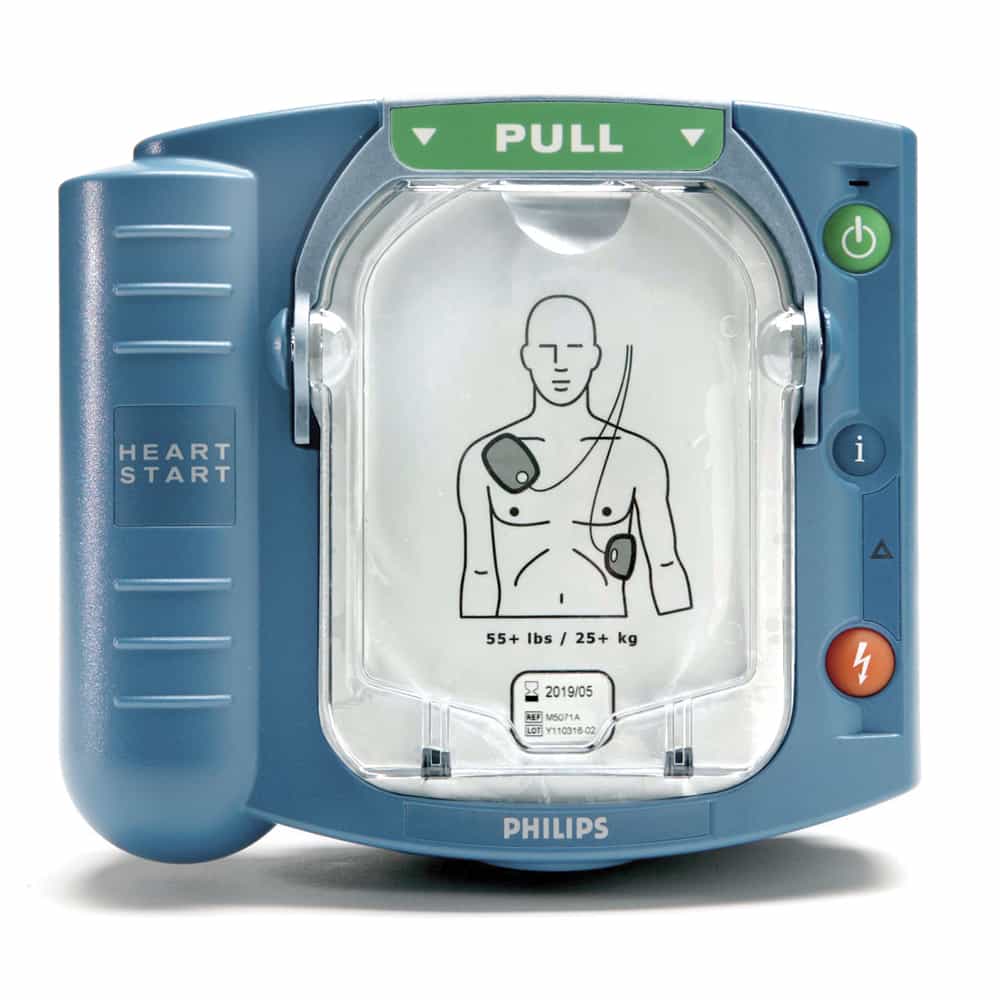
Not all AEDs are built to withstand the same environmental challenges, and their IP ratings make that clear. When you start comparing different automated external defibrillators, you’ll see a wide range of ratings that reflect their intended use. A device with a lower rating, like the Philips HeartStart OnSite (IP21), is perfectly suited for a clean, dry, and predictable environment like a home or a corporate office. It’s protected from condensation and small objects but isn’t designed to handle significant dust or water exposure. This is a great, reliable choice for many settings, but it wouldn’t be the right fit for a manufacturing plant or a marina.
On the other end of the spectrum, you have devices built for toughness. The ZOLL AED Plus has a solid IP55 rating, offering excellent protection against dust and low-pressure water jets, making it a durable option for gyms, warehouses, and public venues. The HeartSine Samaritan PAD series takes it even further with an IP56 rating, providing the same high level of dust protection plus resistance to powerful water jets. This superior durability is why it’s a top choice for police cars, poolsides, and industrial sites where conditions can be unpredictable. Understanding these differences is key to selecting a device that won’t just work, but will last.
Examples of AED IP Ratings
To make this more concrete, let’s look at a few popular models side-by-side. The Philips HeartStart OnSite, with its IP21 rating, is designed for controlled indoor spaces. It’s a fantastic, user-friendly device for a home or quiet office where exposure to dust and water is minimal. The ZOLL AED Plus, rated at IP55, is a significant step up in durability. It can handle dusty environments and being wiped down or splashed, making it a reliable workhorse for schools, fitness centers, and other high-traffic public areas. Finally, the HeartSine Samaritan PAD 360P, with its best-in-class IP56 rating, is engineered for the toughest conditions. It’s protected against powerful water jets, making it the ideal choice for pools, boats, and outdoor or industrial settings where reliability is non-negotiable.
Using an AED in Wet Conditions
One of the most common questions people have is whether an AED can be used in the rain or near water. The answer is a resounding yes, but with a few important safety precautions. Sudden cardiac arrest doesn’t wait for perfect weather, and modern AEDs are designed to function in less-than-ideal circumstances. Hesitation can be the biggest barrier to saving a life, so knowing how to act confidently in a wet environment is a critical part of being prepared. The goal is to deliver a shock as quickly and safely as possible, and a little water shouldn’t stop you. By following a few simple steps, you can ensure both the victim and the rescuer remain safe while the AED does its job effectively.
Can You Use an AED in the Rain?
You absolutely can use an AED in the rain, snow, or near a swimming pool. These devices are built to be used in real-world emergencies, which often happen outside of a climate-controlled room. The key is not to let the wet conditions cause you to delay action. If someone collapses outdoors in a storm, the immediate priority is to call 911, start CPR, and get the AED. While it’s helpful to find shelter if possible, like under an awning, you should not waste precious time moving the person a long distance. The most important thing is to ensure the person’s chest is wiped dry before applying the pads to guarantee good adhesion and effective shock delivery. This is a crucial skill covered in any good CPR and AED training course.
Safety Steps for a Wet Environment
When using an AED in a wet environment, a few quick safety checks are all you need. First, if the person is in a puddle or standing water, try to move them to a drier spot. A damp surface is fine, but you want to avoid submersion. Next, and most importantly, wipe their chest dry before applying the electrode pads. A towel, a shirt, or even gauze from a first aid kit will work. This ensures the pads stick properly and the electrical current is delivered to the heart, not across the skin’s surface. Finally, make sure no one is touching the person when the AED delivers a shock. By following these straightforward steps, you can confidently and safely operate an AED, no matter the weather.
Which AED is Right for Your Environment?
Choosing the right device starts with an honest assessment of its future home. While a higher IP rating always provides better protection, here is a simple framework to guide your decision.
Choosing an AED for Your Home
In a typical clean, dry home environment, you have many great options, including the extremely popular Philips HeartStart OnSite. However, if you plan to store the AED in a garage, basement, or workshop, opting for a device with a higher IP rating like the HeartSine 360P is a wise decision for long term reliability.
Equipping Your School or Office
These are often mixed environments. An AED in a carpeted front office faces different conditions than one in a gym locker room, school bus, or kitchen breakroom. A versatile, high IP rating device like the HeartSine 360P eliminates worry, allowing you to place it wherever it’s most needed without concern for dust or moisture.
For Tough Conditions: Industrial and Outdoor Use
For pools, manufacturing plants, sports stadiums, construction sites, and marine environments, a high IP rating is non negotiable. The IP56 protection of the HeartSine Samaritan PAD 360P ensures your device can withstand the daily rigors of these challenging locations and be ready to perform flawlessly in an emergency.

Confidently implement lifesaving AEDs with a clear, stepwise roadmap tailored to your environment. Choose the HeartSine Samaritan PAD 360P for unmatched durability and reliability where it matters most.
Using Protective Cases for Added Durability
Even the most rugged AED can benefit from an extra layer of defense. If you plan to keep your AED in a vehicle, take it to sports practices, or carry it on the go, a protective carrying case is a smart investment. Think of it as insurance for your insurance. High-quality cases are designed to absorb the shock from accidental drops and bumps, shielding the device’s sensitive electronics from damage. They also provide an additional barrier against dust and moisture, which is especially important in unpredictable environments. By adding a durable case, you’re not just protecting the device itself; you’re ensuring it remains fully functional and ready to go, giving you confidence no matter where you are. It’s a simple step that significantly extends the life and reliability of your life-saving equipment.
More Than a Device: Getting the Support You Need
Choosing the right AED is the first step. Ensuring it stays ready is just as important. At Response Ready, we provide complete support to make managing your AED program simple and effective. Our AED program management solutions handle compliance and readiness checks, while our innovative Response Ready App simplifies monthly inspections, a feature users love for managing devices across multiple locations.
From finding the right AED accessories to providing accessible CPR and AED training courses, our goal is to empower you with the confidence that comes from total preparedness.
Frequently asked questions
Q: Does a higher IP rating make an AED more expensive?
A: Not necessarily. While durability is a premium feature, models like the HeartSine Samaritan PAD 360P offer an exceptional IP56 rating at a competitive price point, providing excellent value. The potential cost of a failed device is far greater than the initial investment in a durable one. You can learn more about what to expect when buying an AED.
Q: Do I still need a protective cabinet if my AED has a high IP rating?
A: Yes. An AED cabinet provides physical security, high visibility, and an added layer of protection from impact and extreme temperatures. An IP rating covers dust and water, while a protective cabinet protects against theft, tampering, and environmental wear and tear.
Q: Can I use any AED outdoors?
A: Not all AEDs are suitable for outdoor use. You must choose one with a high IP rating, like IP56, to withstand rain, dust, and humidity. It should also be stored in a specialized outdoor cabinet to protect it from extreme heat or cold, which can damage the device, battery, and pads.
Q: How do I find the IP rating of an AED?
A: The IP rating is always listed in a device’s technical specifications, which you can find on our product pages. At Response Ready, we make this information clear for all our models so you can easily compare features and find the right fit for your needs.
Q: Is the HeartSine Samaritan PAD 360P a good choice for a first time buyer?
A: Absolutely. Its combination of rugged durability (IP56 rating), compact design, and simple, clear instructions makes it one of the most user friendly AEDs available. It is a top tier, reliable choice for homes, schools, and businesses alike.
Key Takeaways
- Choose an AED for its future home: An AED’s IP rating tells you how well it stands up to dust and water. Match this rating to the device’s environment—a higher rating is essential for tougher locations like pools, workshops, or outdoor venues to ensure it works when you need it.
- Know what the IP numbers mean: The first digit rates dust protection and the second rates water protection, with higher numbers offering more defense. A device rated IP56, for example, is highly protected from both dust and powerful water jets, making it a reliable choice for almost any setting.
- You can safely use an AED in wet conditions: Don’t hesitate to use an AED in the rain or near water. The most important step is to quickly wipe the person’s chest dry before applying the pads to ensure they stick properly and can deliver an effective shock.
Related Articles
- Choosing an AED for your environment what the IP rating means for you
- AED Guideline Archives — Response Ready
- Choosing a durable defibrillator for any environment