- Published
- June 16, 2026
What Does the AED Abbreviation Stand For?

The idea of using a medical device that delivers an electrical shock can sound intimidating. But what if I told you it was designed specifically for people without any medical background? The AED abbreviation stands for Automated External Defibrillator, and its design is brilliantly simple. It talks to you, guides you through every step, and makes the critical decisions for you. It will not deliver a shock unless it’s absolutely necessary, removing any fear of causing harm. Our goal here is to replace that hesitation with confidence by explaining exactly how an AED works, when you should use one, and what makes it so user-friendly. For a deeper look at the full AED meaning and everything you need to know, see our complete guide to what AED stands for.
Key Takeaways
- Know When to Use an AED: An Automated External Defibrillator is the right tool for sudden cardiac arrest—when someone is unresponsive and not breathing normally. The device is designed to treat this specific electrical problem in the heart.
- Trust the Device to Guide You: AEDs are built for people without medical training. They give clear voice commands and have safety features that prevent you from delivering a shock unless it’s absolutely necessary, so you can’t make a mistake.
- Prepare Before an Emergency Happens: Ensure your AED is always ready by performing quick readiness checks on its indicator light, battery, and pads. Taking a training course helps build the confidence to act quickly and effectively when it matters most.
What Does AED Stand For?
If you’ve ever searched for the term “AED,” you might have noticed two very different results pop up: a life-saving medical device and a form of currency. It’s a classic case of the same acronym meaning completely different things. Let’s clear up the confusion and break down what AED stands for in each context, starting with the one that saves lives.
The Medical Device: Automated External Defibrillator
In the world of emergency preparedness, AED stands for automated external defibrillator. This is a portable, user-friendly medical device designed to help someone experiencing sudden cardiac arrest (SCA). When a person’s heart suddenly stops beating effectively, an AED can analyze the heart’s rhythm and, if needed, deliver a controlled electrical shock to help restore a normal heartbeat.
You’ve likely seen these compact devices in public places like airports, gyms, and schools. They are specifically designed for laypeople—not just medical professionals—to use in an emergency. Because sudden cardiac arrest can be fatal within minutes, having accessible automated external defibrillators and people ready to use them is critical for saving lives.
The Currency: United Arab Emirates Dirham
In finance and international travel, AED stands for the United Arab Emirates Dirham. This is the official currency of the United Arab Emirates (UAE). Just like the U.S. dollar is divided into cents, one dirham is made up of 100 smaller units called fils. The symbol for the dirham is د.إ.
So, while you might see “AED” on a currency exchange board, it has no connection to the medical device. For the rest of this guide, when we talk about an AED, we’ll be referring exclusively to the automated external defibrillator—the incredible piece of technology that empowers everyday people to become heroes in an emergency.
What Is an Automated External Defibrillator?
An Automated External Defibrillator, or AED, is a portable, life-saving device designed to help someone experiencing sudden cardiac arrest (SCA). Think of it as a smart first aid tool for the heart. When a person’s heart suddenly stops beating effectively, an AED can analyze its rhythm and, if needed, deliver a controlled electric shock to help restore a normal heartbeat. The “automated” part means the device does the complex work for you—it determines if a shock is needed, so you don’t have to make a medical diagnosis. The “external” part simply means it works from outside the body, using pads placed on the chest.
These devices are incredibly user-friendly, with clear voice prompts and visual instructions that guide you through every step. You’ve probably seen them in airports, gyms, and schools, but they are also becoming an essential part of preparedness in workplaces and even homes. The goal of an AED is to empower anyone—not just medical professionals—to step in and provide critical help during an emergency. It bridges the gap between the moment a person collapses and the time professional help arrives. Because when it comes to cardiac arrest, every second truly counts, and having an AED nearby can dramatically improve the chances of survival.
A Simple Explanation of What It Does
At its core, an AED does two main things: it analyzes and it treats. When you place the device’s electrode pads on a person’s chest, the AED immediately begins to analyze their heart’s electrical activity. It’s looking for a specific, life-threatening irregular rhythm that causes most cases of sudden cardiac arrest. If this dangerous rhythm is detected, the device will tell you that a shock is needed. It then charges and instructs you to press a button to deliver a controlled electrical shock. This shock is designed to briefly stop the heart, giving it a chance to reset and resume a normal, effective rhythm. All of this happens automatically, so you don’t have to make any medical decisions. You just have to follow the simple audio and visual cues from the AED itself.
How This Technology Saves Lives
When someone suffers from sudden cardiac arrest, their heart is no longer pumping blood to the brain and other vital organs. For every minute that passes without intervention, their chance of survival drops by about 10%. While CPR is crucial for keeping oxygenated blood flowing, it often can’t correct the underlying electrical problem in the heart. That’s where an AED becomes essential. It is the only treatment that can restore a normal heart rhythm in cases of ventricular fibrillation. By delivering a quick shock, an AED can be the difference between life and death, buying precious time until emergency medical services arrive. Having access to an AED and knowing how to use it means you are prepared to give someone the best possible chance of survival. That’s why CPR and AED training is so valuable—it gives you the confidence to act decisively when it matters most.
How Does an AED Work?
An AED might seem like a complex medical device, but it’s designed to be incredibly straightforward. Think of it as a smart, calm partner in an emergency. Its main job is to safely guide you through the process of helping someone in sudden cardiac arrest. The device automates the most difficult decisions, so you can focus on following simple instructions. It works in three basic steps: it analyzes the heart, determines if a shock is needed, and then tells you exactly what to do next. This process removes the guesswork and empowers you to act confidently when every second is critical.
It Analyzes the Heart’s Rhythm
When you place the electrode pads on the person’s chest, the AED immediately gets to work. Its internal computer begins to analyze the heart’s electrical activity to determine if the person is experiencing a shockable rhythm. This is the key to how an AED works—it makes the diagnosis for you. You don’t need any medical training to interpret the heart’s rhythm; the device does it all. It can tell the difference between a heart rhythm that needs a shock and one that doesn’t. This built-in intelligence ensures that a shock is only administered if it can actually help, making modern AEDs both effective and safe for anyone to use.
It Delivers a Controlled Shock
If the AED detects a life-threatening arrhythmia like ventricular fibrillation, it will advise a shock. This is the “defibrillation” part. The device delivers a controlled electrical shock through the pads to the heart. The goal isn’t to “jump-start” the heart like a car battery, but rather to stop the chaotic, unproductive quivering and allow the heart’s natural pacemaker to resume a normal rhythm. The AED will not deliver a shock unless it is absolutely necessary. This critical safety feature means you can’t accidentally harm someone. The device charges itself and will tell you when to press the shock button, ensuring the right treatment is given at the right time.
It Guides You with Step-by-Step Instructions
From the moment you turn it on, an AED provides clear, calm voice instructions and often visual diagrams to walk you through every step. It will tell you where to place the AED pads, when to stand clear while it analyzes the heart, and when to press the button to deliver a shock. For example, you’ll hear commands like, “Apply pads to patient’s bare chest,” and “Do not touch the patient.” This guidance is designed to keep you and the person you’re helping safe. By following these simple prompts, you can provide life-saving care effectively. While the device is easy to use on its own, formal CPR and AED training can help you feel even more prepared to act without hesitation.
Who Can Use an AED?
The short answer? Anyone. Automated External Defibrillators are specifically designed for people without any medical training to use during an emergency. You’ve probably seen them in public places like airports, gyms, and schools, but smaller versions can also be purchased for the home without a prescription. Think of an AED as a smart, portable co-pilot for a medical crisis. It walks you through exactly what to do if you suspect someone is experiencing sudden cardiac arrest. The moment you turn it on, it provides clear, calm instructions, making it possible for any bystander to step in and provide life-saving help while waiting for emergency services to arrive. The goal is to empower you to act with confidence, not to turn you into a medical expert overnight. The device handles the complex analysis and decision-making, so you can focus on following the simple directions. This technology bridges the critical gap between the onset of cardiac arrest and the arrival of professional responders, a period where immediate action can dramatically improve survival rates.
Why Anyone Can Be a Rescuer
You don’t need a medical degree or a special certificate to use an AED. The moment you open the device, it begins speaking to you, guiding you through every single step with simple voice commands and often with visual diagrams. It will tell you where to place the electrode pads on the person’s chest and when to stand clear. The machine does the complex work of analyzing the heart’s rhythm to determine if a shock is needed. One of the biggest fears people have is that they might hurt the person. But if the AED advises a shock, it’s because the person needs it to restore a normal heart rhythm. The shock can only help them. While formal CPR & AED training is an excellent way to build your confidence, it isn’t a requirement for using the device.
Common Myths About Using an AED, Busted
Several common misconceptions stop people from acting in an emergency, but they are easily cleared up. The most persistent myth is that only medical professionals or trained personnel should use an AED. This is completely false; these devices were created for the general public. Another major fear is accidentally shocking someone who doesn’t need it. An AED is designed with safety checks and will not deliver a shock unless it detects a life-threatening heart rhythm. You cannot accidentally shock a bystander or a person who has fainted. People also worry about using an AED on someone who is pregnant or has a pacemaker. Modern AEDs for sale are safe to use in these situations. The priority is always to treat the sudden cardiac arrest, as it is the most immediate threat to life.
When Should You Use an AED?
You should use an automated external defibrillator (AED) anytime you suspect someone is experiencing a sudden cardiac arrest (SCA). This is a life-threatening emergency where the heart’s electrical system malfunctions, causing it to stop beating effectively. When this happens, blood flow to the brain and other vital organs ceases almost immediately. Acting within the first few minutes is critical, as the chance of survival decreases with every passing minute. An AED is the only tool that can restart a heart in this state.
It’s common to confuse sudden cardiac arrest with a heart attack, but they are different conditions. A heart attack is a “plumbing” problem, where a blockage prevents blood from flowing to the heart muscle. The person is typically awake and can describe their symptoms. SCA, on the other hand, is an “electrical” problem. The heart’s rhythm becomes chaotic, and the person will collapse, become unresponsive, and stop breathing normally. While a heart attack can sometimes lead to SCA, an AED is specifically designed to treat the underlying electrical issue of cardiac arrest by delivering a controlled shock. Using one is the most effective action a bystander can take to save a life.
How to Recognize the Signs of Sudden Cardiac Arrest
You don’t need to be a medical expert to recognize the signs of SCA. The symptoms are sudden, clear, and dramatic. If you see someone collapse, look for these three key indicators:
- They are unresponsive. The person does not respond when you tap them on the shoulders and ask loudly, “Are you okay?”
- They are not breathing normally. They may have stopped breathing entirely, or they may be taking infrequent, noisy gasps. This is called agonal breathing and is a definite sign of cardiac arrest.
- There is no pulse. While checking for a pulse can be difficult for an untrained rescuer, the first two signs are enough to justify immediate action.
If someone is unresponsive and not breathing normally, assume it’s SCA. Don’t hesitate—you cannot harm someone by using an AED if they are in cardiac arrest.
What to Do in an Emergency
If you think someone is in cardiac arrest, act quickly and calmly. First, make sure the area is safe for you and the victim. Then, confirm they are unresponsive and not breathing normally. Point to a specific person and tell them to call 911 and find an AED. If you are alone, call 911 yourself and put your phone on speaker.
Immediately begin CPR by placing your hands in the center of the person’s chest and pushing hard and fast at a rate of 100 to 120 compressions per minute. As soon as the AED arrives, turn it on. The device will guide you with clear voice instructions. Attach the AED pads to the person’s bare chest as shown in the diagrams. The AED will analyze the heart’s rhythm, so make sure no one is touching the person. If a shock is needed, the device will tell you to stand clear and press the shock button. After the shock, continue CPR until emergency services arrive. Taking a CPR and AED training course can give you the confidence to act decisively in these critical moments.
Where Can You Find an AED?
Automated external defibrillators are becoming much more common, and for good reason. You can find these life-saving devices in many of the places you visit every day. The goal is to make them as accessible as possible, so a bystander can always grab one in an emergency. Knowing where to look—both in public and at home—is a key part of being prepared to help.
In Public Spaces, Schools, and Workplaces
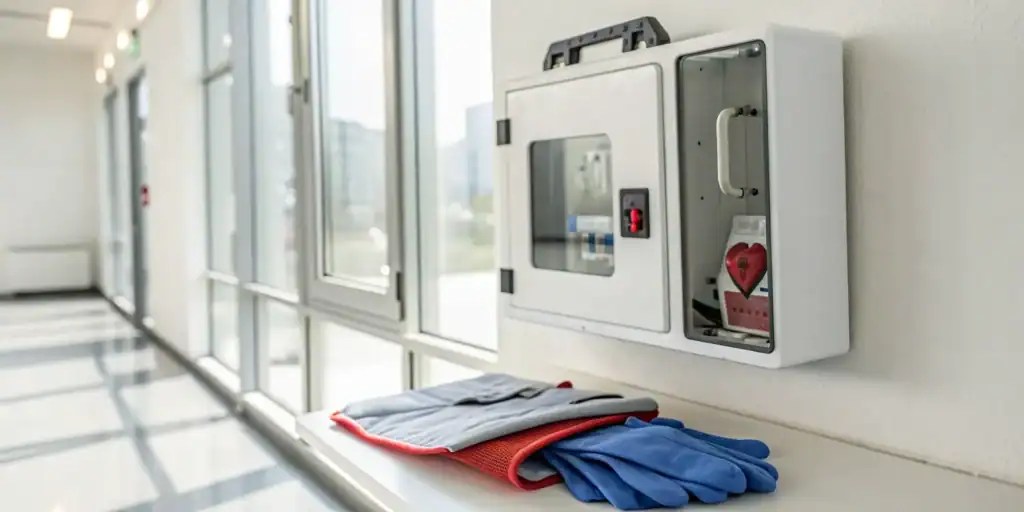
You’ve probably walked past an AED without even realizing it. They are often stored in wall-mounted cabinets in high-traffic areas like airports, shopping malls, gyms, and office buildings. Schools and sports arenas are also common places to find them. According to OSHA, having AEDs readily available in the workplace can make a huge difference in saving a life during a sudden cardiac arrest.
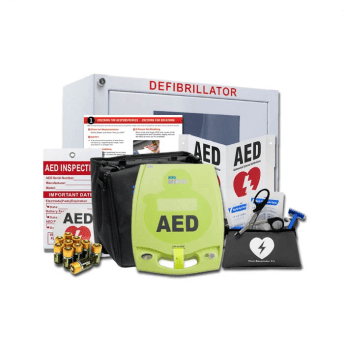
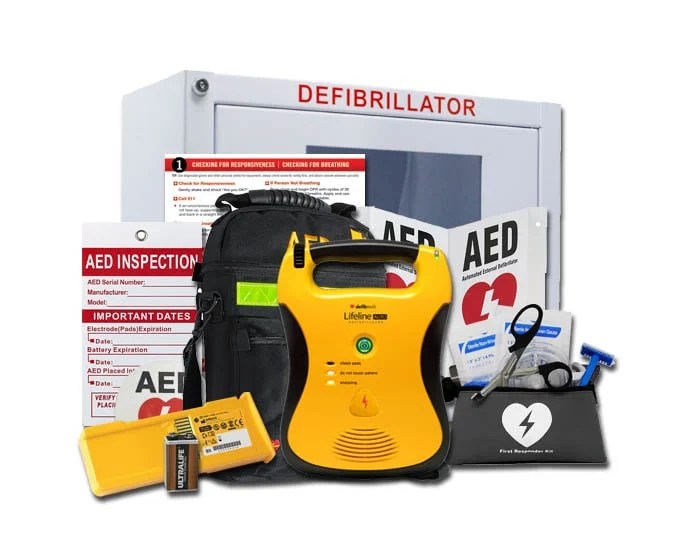
More organizations are recognizing their responsibility to protect the people in their buildings. They are equipping their spaces with complete AED packages that include everything needed to respond to an emergency. The next time you’re out, take a moment to spot the nearest AED. Knowing its location ahead of time can save precious seconds when it matters most.
Why You Might Want One at Home
While it’s great that AEDs are available in public, many sudden cardiac arrests happen at home. Having an AED in your house could be the key to saving a loved one’s life, especially if you live far from emergency medical services. You can buy an AED for your home without a prescription, and they are designed to be used by anyone, regardless of training.
Think of it like having a fire extinguisher or a first aid kit. It’s a tool you hope you never need, but if you do, it can prevent a tragedy. A home AED provides peace of mind, ensuring you are prepared to act immediately. When a cardiac emergency strikes, the time between the collapse and the first shock is critical, and having a device within reach can change the outcome.
What Makes AEDs So Easy to Use?
If you’ve ever hesitated to learn about AEDs because you were worried they’re too complicated for non-medical folks, I get it. The idea of using a device to deliver an electrical shock sounds like something reserved for doctors on TV. But the reality is, these devices were specifically designed for people like you and me to use with confidence during a high-stress emergency.
Modern AEDs for sale are incredibly user-friendly, and their design is focused on one thing: guiding a layperson to save a life. You don’t need to interpret complex medical data or make a critical diagnosis. The device does the heavy lifting for you. It’s built with clear instructions, intelligent safety features, and a straightforward design that removes the guesswork. Let’s break down exactly what makes them so simple to operate when every second counts.
Clear Voice Prompts and Visual Guides
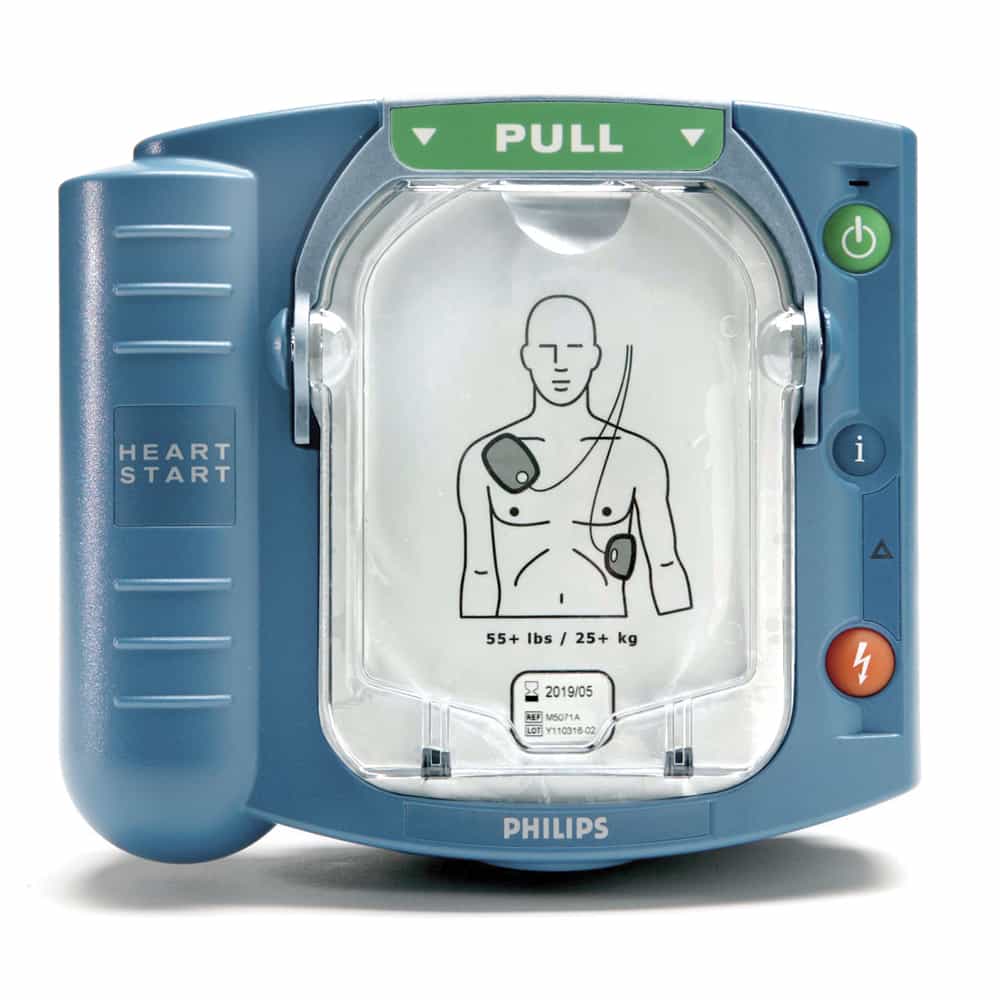
The moment you open or turn on an AED, it begins speaking to you in a calm, clear voice. It provides simple, step-by-step instructions for the entire process, from start to finish. The device will tell you exactly where to place the electrode pads on the person’s chest, often using simple diagrams printed right on the pads themselves. It guides you through each action, like when to perform CPR and when to stand back. These audio and visual cues are designed to be unmistakable, even in a chaotic situation. Think of it as having an expert calmly talking you through exactly what you need to do.
Smart Safety Features
One of the biggest fears people have is accidentally hurting someone with an AED. Here’s the most important thing to know: you can’t. An AED is a smart device. After the pads are applied, its first job is to analyze the person’s heart rhythm. It will only advise and deliver a shock if it detects a specific, life-threatening arrhythmia that a shock can correct. If the person’s heart doesn’t need a shock—or if they have a normal heartbeat—the device will not activate. This built-in safety feature makes the decision for you, ensuring a shock is only delivered when it can help.
Simple, Portable Design
AEDs are built to be grabbed and used in a hurry. They are lightweight, compact, and stored in brightly colored cases that are easy to spot. You’ll find them in public places like airports, gyms, and schools, ready for anyone to use. The design is minimalist, usually featuring just a few buttons (often just one green button to turn it on and one orange button to deliver a shock). Everything from the pull-handle on the AED pads to the long-life batteries is made for reliability and ease of use. This simple, portable design means you can focus on the person in front of you, not on figuring out complicated equipment.
How Do You Maintain an AED?
Owning an AED is a powerful step toward protecting your family, colleagues, or community. But just like the smoke detector in your home, it needs a little attention to ensure it’s ready to work when you need it most. The good news is that modern AEDs are designed to be low-maintenance, and keeping yours in top shape is surprisingly simple.
You don’t need to be a technical expert. Most of the work involves quick visual checks and replacing a couple of key components every few years. The device itself will even tell you if it needs attention. Think of it as a partnership: the AED runs its own internal checks, and you just need to confirm that everything looks good from the outside. Establishing a simple routine for checking your device takes only a few minutes and provides the invaluable confidence that your AED is ready to save a life at a moment’s notice.
Keeping Batteries and Pads Ready
An AED has two critical components with limited lifespans: the battery and the electrode pads. The AED batteries that power the device typically need to be replaced every two to five years, depending on the model. The electrode pads are also marked with an expiration date because the gel that helps them stick to the skin and conduct electricity dries out over time.
It’s essential to always have a fresh, unexpired set of AED pads ready to go. Since pads are for one-time use only, it’s also a great idea to keep a spare set on hand. Always purchase accessories from an authorized dealer to ensure they are FDA-approved and compatible with your specific device.
Performing Simple Readiness Checks
Most modern AEDs perform regular, automatic self-tests to check their internal circuitry, battery, and pad connections. After a successful self-test, the device will display a readiness indicator—usually a green checkmark or a flashing green light—that tells you it’s ready for use. If the device detects an issue, it will alert you with a sound, like a chirp or a beep, and a visual cue, like a red “X” or a flashing red light.
Make it a habit to glance at the readiness indicator once a month. During this quick check, also confirm that the electrode pads and battery have not passed their expiration dates. This simple routine ensures your device is always prepared and helps you address any potential issues long before an emergency occurs.
Why Is AED Training Still a Good Idea?
Even though modern AEDs are designed for anyone to use, regardless of experience, taking a training course is one of the best things you can do to prepare for an emergency. Think of it like a fire drill. You already know how to exit a building, but practicing the route ensures you can do it quickly and calmly when stress is high. The same logic applies here.
An emergency is chaotic and overwhelming. Having hands-on practice with an AED builds muscle memory and familiarity, which are invaluable when every second counts. Training demystifies the process, replacing fear and hesitation with the quiet confidence that you know exactly what to do. It’s not just about learning the steps; it’s about preparing your mind to act decisively. This preparation can make all the difference for the person in cardiac arrest and for your own ability to manage a high-stakes situation effectively.
Gain the Confidence to Act Fast
In a moment of crisis, hesitation can be costly. The biggest benefit of training is the confidence it gives you to step in and take charge. During a CPR and AED training course, you’ll practice applying the pads, listening to the prompts, and standing clear for a shock. This hands-on experience helps solidify the steps in your mind, so you can perform them almost automatically. It also helps bust a common myth: that you could accidentally hurt someone. AEDs are smart devices that will not deliver a shock unless one is needed. Knowing this helps remove any fear of making a mistake, empowering you to act quickly and correctly.
Explore Your Training Options
The idea that only medical professionals can use an AED is completely false. These devices were created for lay rescuers—people just like you. Training simply makes you a more effective and prepared rescuer. The good news is that getting certified is more accessible than ever. You can find courses offered in community centers, workplaces, and even through blended online and in-person formats. Taking a course not only prepares you to use an AED but also teaches you how to recognize the signs of sudden cardiac arrest and perform CPR, which are critical skills for keeping someone alive until the AED arrives. It’s a small investment of time that provides a lifetime of readiness.
Related Articles
- What Is an AED? How AED Work— Response Ready
- Certified AED Defibrillators for Workplace Safety — Response Ready
- Certified AED Defibrillators for Workplace Safety — Response Ready
- Certified AED Defibrillators for Workplace Safety — Response Ready
- Certified AED Defibrillators for Workplace Safety — Response Ready
Frequently Asked Questions
Can I accidentally hurt someone with an AED? This is the most common fear, and the answer is a clear no. An AED is a smart medical device that makes the diagnosis for you. After you apply the pads, it analyzes the person’s heart rhythm. It will only advise and deliver a shock if it detects a life-threatening electrical problem that a shock can correct. If the person has a normal heartbeat or a rhythm that won’t respond to a shock, the device will not activate. You simply cannot deliver a shock by mistake. The greatest danger in a sudden cardiac arrest is inaction, and an AED is designed to empower you to help safely.
What’s the difference between a heart attack and sudden cardiac arrest? It’s easy to confuse the two, but they are very different emergencies. Think of a heart attack as a “plumbing” problem—a blockage is preventing blood from getting to the heart muscle. The person is typically awake and can complain of symptoms like chest pain. Sudden cardiac arrest is an “electrical” problem. The heart’s internal wiring malfunctions, causing it to stop beating effectively. The person will collapse, become unresponsive, and stop breathing normally. An AED is specifically designed to treat the electrical problem of sudden cardiac arrest.
Is CPR still necessary if I have an AED? Yes, absolutely. CPR and an AED work together as a team to give someone the best chance of survival. While the AED is the only thing that can correct the heart’s electrical rhythm, CPR is crucial for keeping oxygen-rich blood flowing to the brain and other organs. You should perform CPR until the AED arrives and is ready to use. After the AED delivers a shock, it will typically instruct you to continue CPR until emergency medical services take over.
Do I need special training or a license to own an AED for my home? You do not need a prescription, license, or any special certification to purchase and keep an AED in your home. These devices are cleared by the FDA for public use and are designed to be operated by anyone, regardless of their training background. While formal training isn’t a requirement to own one, taking a CPR and AED course is an excellent way to build the confidence you need to act quickly and effectively in an emergency.
What should I do after the AED delivers a shock? After a shock is delivered, your job isn’t over, but the AED will continue to guide you. You should leave the pads attached to the person’s chest. The device will re-analyze the heart’s rhythm after a couple of minutes and will let you know if another shock is needed. In the meantime, it will almost always instruct you to continue performing CPR. You should follow its prompts and continue providing care until professional responders arrive and tell you to stop.
Disclaimer for information purposes only:
The information provided on this website is intended for general educational and informational purposes only. It is not medical advice and should not be used as a substitute for professional diagnosis, treatment, or care. Always consult a qualified healthcare or medical professional regarding any health-related questions or concerns.
While we strive to ensure the information shared is accurate and up to date, no guarantees are made regarding completeness, accuracy, or applicability to any individual situation. Use of this content is at the reader’s sole discretion and risk.
This website is part of the Response Ready family of emergency preparedness and training resources, including CPR & first aid training and compliance services, AED sales and program support, AED program management software, and medical oversight solutions provided through our affiliated platforms:
• CPR1.com
• AEDLeader.com
• AEDTotalSolution.com
• MDSIMedical.com
By accessing or using this website, you agree to release, indemnify, and hold harmless the website owners, authors, contributors, and affiliated entities from any claims, losses, damages, or liabilities arising from the use or reliance on the information presented.