- Published
- February 4, 2026
9 AED Safety Tips Everyone Should Follow


An AED is one of the most powerful tools for saving a life, but hesitation can be a huge roadblock. What if I use it wrong? Can I make things worse? These fears are completely normal, but they can cost precious seconds. The good news is that AEDs are designed to be incredibly safe and simple, even for untrained bystanders. This guide will give you the essential AED safety tips everyone should follow, helping you push past the uncertainty and act with confidence when it matters most.
In this article, we’ll share essential AED safety tips for public spaces, workplaces, and homes. Whether you already have an AED or are considering installing one, these tips will help you make sure the device is easy to use, properly maintained, and ready for action when it matters most.
Why Acting Fast with an AED Matters
When someone experiences sudden cardiac arrest, their heart stops beating effectively, and they lose consciousness almost immediately. It’s a life-or-death situation where the clock starts ticking instantly. The response in the first few minutes is the single most important factor in determining the outcome. While waiting for emergency medical services is essential, their arrival can take several minutes—time the person in cardiac arrest simply doesn’t have. This is where a bystander with access to an AED can completely change the story. Acting fast isn’t just helpful; it’s the key to giving someone a fighting chance.
Understanding the Survival Window
The concept of a “survival window” is critical in a cardiac emergency. Research shows that using an AED within the first three to five minutes of cardiac arrest can increase the chance of survival by up to 70%. After this brief window, the odds of survival decrease dramatically for every minute that passes without defibrillation. This is why having an AED on-site—in your office, school, or community center—is so vital. It closes the gap between when a person collapses and when professional help arrives, turning a potential tragedy into a story of survival.
Immediate CPR combined with the quick use of an AED is the most effective way to respond. While CPR helps circulate oxygenated blood to vital organs, it’s the AED that can deliver an electrical shock to restore a normal heart rhythm. Modern AEDs are designed for anyone to use, with clear voice prompts and simple instructions that guide you through every step. You don’t need to be a medical professional to save a life; you just need the confidence to act and the right tools to do so.
When Should You Use an AED?
Before reaching for the AED, it’s important to confirm that it’s needed. An AED should only be used on someone who is:
- Unconscious
- Not breathing normally
- Not responding to touch or voice
If a person suddenly collapses, check for signs of life, call 911 immediately, begin CPR, and ask someone to bring the nearest AED. Using an AED on someone who still has a pulse can do more harm than good but don’t worry, most modern AEDs won’t allow you to deliver a shock unless one is necessary.
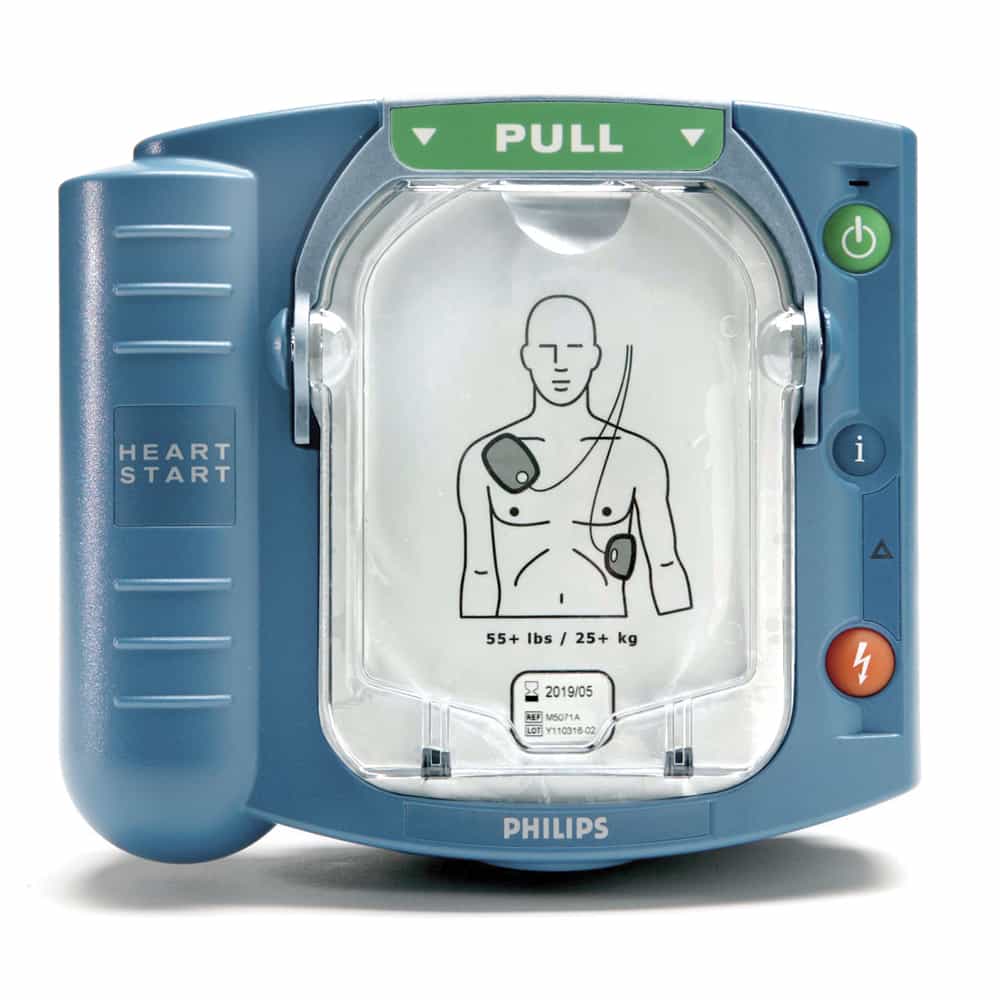
Devices like the Philips HeartStart OnSite AEDand Philips HeartStart FRx AED are designed to walk you through this process with clear voice prompts and built-in safety checks.
The Most Important Rule: Let the AED Decide
When you’re in a high-stress emergency, it’s natural to second-guess yourself. You might worry about using the AED incorrectly or wonder if the person truly needs it. Here’s the most important thing to remember: if you think someone is in cardiac arrest, your job is to turn the AED on and apply the pads. The machine will handle the rest. Modern AEDs are incredibly smart; they analyze the person’s heart rhythm and will only advise a shock if it detects a life-threatening arrhythmia. Your role is to act quickly and trust the device to make the medical decision. Hesitation is the real danger, so let the AED be your guide.
You Can’t Accidentally Hurt Someone
One of the biggest fears people have is accidentally shocking someone who doesn’t need it. You can put that worry aside. An AED will not deliver a shock unless its analysis confirms a shockable heart rhythm is present. The device is designed with safety as the top priority. After you apply the AED pads, the machine runs its own diagnostic. If no shock is needed, it will tell you to continue CPR. This built-in failsafe ensures that you cannot harm someone by mistake, giving you the confidence to step in and help.
Semi-Automatic vs. Fully Automatic AEDs
When you’re looking at different AEDs for sale, you’ll notice they come in two main types: semi-automatic and fully automatic. Both are equally effective at saving lives, but they differ in how the shock is delivered. A semi-automatic AED will advise you when a shock is needed and then prompt you to press a flashing button to deliver it. This gives the rescuer final control over the shock. A fully automatic AED also advises a shock, but after giving a clear verbal warning to stand back, it delivers the shock on its own without requiring you to press a button. The choice between them often comes down to personal preference or specific workplace protocols, but rest assured, both are designed to be simple and guide you through every step.
How to Prep Someone for AED Pads
Proper pad placement is key to delivering a safe and effective shock. Always ensure the person’s chest is:
- Completely exposed
- Free of moisture, sweat, or rain
- Clear of jewelry, underwire, or body piercings
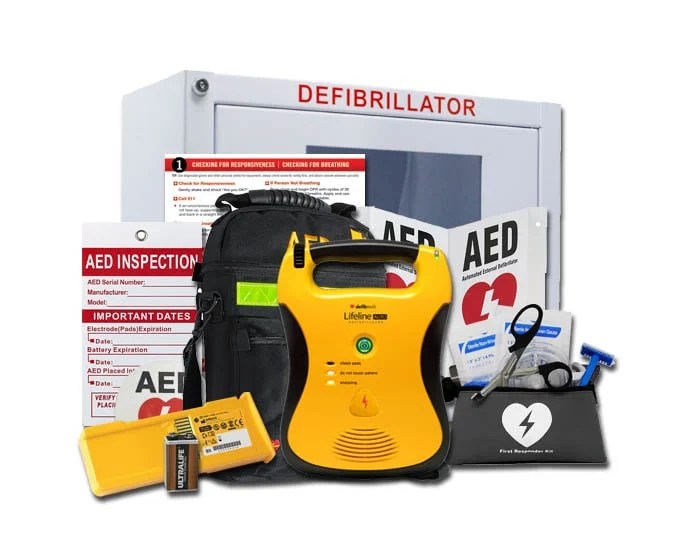
Use a towel or cloth to dry the skin, and a razor (if included in your AED kit) to remove chest hair if it prevents the pads from sticking. Most AED packages include a prep kit with gloves, scissors, wipes, and a razor for this reason.
Avoid placing pads over medical devices like pacemakers or medication patches. Move them slightly to one side or remove the patch safely if necessary.
Proper Pad Placement for Adults
Getting the pads in the right spot is crucial for the AED to work effectively. The goal is to create a clear path for the electrical current to travel through the heart. Thankfully, every AED provides simple visual diagrams right on the pads themselves, and the device will talk you through the steps. For an adult, you’ll place one pad on the upper right side of their bare chest, just below the collarbone. The second pad goes on the lower left side of their chest, on the ribcage below the armpit. This diagonal placement ensures the heart lies directly in the shock’s path. Just follow the pictures, listen to the voice prompts, and you’ll get it right.
Clearing the Chest Area Safely
Before you can place the pads, you need a clean, clear surface. This means quickly removing any clothing or bras to completely expose the person’s chest. You also need to check for anything that could interfere with the pads making direct contact with the skin. This includes excess moisture from sweat or water, thick chest hair that prevents the pads from sticking, medication patches, and metal jewelry or piercings. A good first aid kit or an AED responder kit usually includes essentials like gloves, trauma shears, and a razor to help you prep the area quickly and safely, so you can focus on applying the pads and letting the AED do its job.
Drying the Chest (Without Alcohol)
The person’s chest must be dry before you apply the AED pads. If the skin is wet from sweat, rain, or from being pulled out of water, the pads won’t stick properly, and the electrical current may not be delivered effectively. Quickly wipe the chest area with a towel or any available cloth until it’s dry to the touch. One important warning: never use an alcohol wipe to clean the chest. Alcohol is flammable and could create a fire hazard when the AED delivers a shock. Stick to a dry cloth to ensure both safety and good pad contact.
Removing Medication Patches
As you prepare the chest, look for any medication patches, like those for nicotine or pain relief. An AED pad should never be placed directly on top of a patch. The patch can block the electrical shock from reaching the heart and may cause burns to the skin underneath it. If you see one, put on gloves (if available) and quickly peel it off. Wipe the area clean to remove any leftover residue before applying the AED pad. If the patch isn’t in the way of proper pad placement, you can leave it on.
Working Around Jewelry and Tattoos
It’s a common myth that you can’t use an AED on someone with body piercings or tattoos. Tattoos are just ink in the skin and pose no risk, so you can place pads directly over them without a second thought. Metal, however, can conduct electricity, so you should avoid placing pads directly on top of body piercings or necklaces. You don’t need to waste time trying to remove them; just adjust the pad placement by an inch or so to the side. The goal is to ensure the pad has full contact with the skin, not the metal.
Using an AED in Special Situations
Sudden cardiac arrest doesn’t always happen in a perfect, controlled environment. You might find yourself needing to respond in challenging situations, like near a pool or when the person is pregnant. It’s normal to feel hesitant in these moments, but modern AEDs are designed with safety features to account for these variables. Knowing how to handle these special circumstances ahead of time will give you the confidence to act without delay, because every second is critical for survival.
Near Water
If someone collapses in a pool, lake, or even in the rain, your first step is to move them to a drier spot. You don’t need a completely dry surface—damp ground or small puddles are okay—but the person should not be in standing water. Once they are moved, quickly wipe their chest dry before applying the AED pads. Water conducts electricity, and a wet chest can cause the shock to travel across the skin instead of through the heart. As long as the chest is dry and no one is touching the person, it is safe to deliver a shock.
On a Pregnant Woman
It is absolutely safe—and vital—to use an AED on a pregnant woman who is in sudden cardiac arrest. Your priority is to save her life, as this provides the best possible chance of survival for the baby. Do not hesitate or change your approach. Follow the same steps you would for any other adult: call 911, start CPR, and apply the AED pads in the standard upper-right and lower-left chest positions. The AED will analyze her heart rhythm and only advise a shock if it’s necessary. Acting quickly is the most important thing you can do for both mother and child.
Hands Off: Staying Safe During Analysis and Shock
One of the most important AED safety tips is to make sure no one is touching the person during heart rhythm analysis or shock delivery. Most AEDs will say:
“Analyzing. Do not touch the patient.”
“Shock advised. Stay clear.”
Touching the victim can interfere with the reading or result in accidental shock to the rescuer. Always give a clear, loud warning like “Clear!” before the shock is delivered.
“Clear!” – Don’t Touch the Person or Wires
When an AED is analyzing the person’s heart rhythm, even the slightest movement or electrical interference from another person’s touch can disrupt the reading. This is why the device gives clear instructions like, “Analyzing. Do not touch the patient.” An incorrect analysis could prevent the AED from delivering a life-saving shock. The safety risk is even greater during the shock itself. The electrical current is designed to pass through the person’s body to reset the heart, and anyone in direct contact could also get shocked. Listening to the AED’s voice prompts is the best way to ensure it can do its job effectively.
Before pressing the shock button, your job is to be the final safety check. Make eye contact with anyone nearby, loudly and clearly state, “Everybody clear!” and do a quick visual scan to confirm no one is touching the person, their clothing, or any of the wiring. This simple but powerful action ensures the safety of your team and any bystanders. Modern automated external defibrillators are designed for safety, but the human element of clear communication is what makes the entire process work seamlessly. This step empowers you to control the scene and act with confidence.
Using an AED on a Child? Here’s What to Know
If the person is a child under eight years old or weighs less than 55 pounds (25 kg), use pediatric pads or activate the child mode on your AED. For example, the HeartStart FRx AED includes a child key that adjusts the energy level of the shock safely.
If pediatric pads aren’t available, adult pads can still be used in an emergency, just ensure they are placed correctly and do not touch each other.
Using Adult Pads on a Child
While dedicated pediatric pads are always the best choice for a child, you can use adult pads if they are the only option available. The most important thing is to act fast. To do this safely, you’ll need to adjust the placement. Instead of putting both pads on the front of the chest, place one in the center of the child’s chest and the other on their back, right between the shoulder blades. This front-and-back placement prevents the pads from touching, which is the most critical rule to follow. An AED is smart enough to adjust its analysis for a smaller body, and it will still only deliver a shock if one is truly needed. Never delay helping a child in cardiac arrest because you only have adult pads—using them correctly is far better than doing nothing at all.
CPR First: Why You Shouldn’t Wait for the AED
While an AED is vital, chest compressions should begin immediately after calling for help. CPR helps keep oxygen flowing to the brain and heart until a shock can be delivered.
Start CPR right away and continue until the AED is ready. Once the AED is in use, it will tell you when to pause and when to resume compressions. To feel more confident in high-stress situations, consider taking a CPR and AED training course to practice the skills in advance.
What to Do After the Shock
The AED has just delivered a shock, or perhaps it determined that a shock wasn’t needed. It can be a moment of uncertainty, but the rescue isn’t over yet. The next few minutes are just as critical, and the AED will continue to be your guide. It’s designed to walk you through the entire process, from the first analysis to the moment paramedics arrive. Your job is to listen carefully to its instructions and continue providing care. The steps you take immediately after the shock play a huge role in giving the person the best possible chance of survival. Let’s cover exactly what you need to do.
Resume CPR Immediately
Whether a shock was delivered or not, the AED’s next instruction will almost always be the same: “Begin CPR.” It’s essential to start chest compressions again right away. This is because even after a successful shock, the heart needs help to get back to a normal rhythm and circulate oxygen-rich blood to the brain and other vital organs. The AED will guide you, typically instructing you to perform CPR for two minutes. Don’t worry about keeping track of time; the device will tell you when to stop so it can re-analyze the person’s heart rhythm. This cycle of CPR and analysis will continue until help arrives, and it’s a core skill you’ll master in any CPR and AED training course.
Leave the AED Pads in Place
If the person starts to show signs of life, like breathing or moving, it’s a huge relief. Your first instinct might be to remove the AED pads, but it’s important that you don’t. Leave the AED pads attached to their chest and keep the device turned on. Sudden cardiac arrest can be unpredictable, and there’s a chance the person’s heart could stop again. By leaving the pads in place, the AED can continue to monitor their heart rhythm and will be ready to deliver another shock if it becomes necessary. Just stay with them and wait for paramedics to arrive—they have the training and equipment to take over from there.
Is Your AED Ready for an Emergency?
An AED is only useful if people know where to find it — and it’s in working order. Store it in a clearly labeled, unlocked AED cabinet in a central location. Add signage to help guide people during an emergency.
To keep your device ready:
- Perform monthly visual inspections
- Check the battery status indicator
- Replace pads and batteries before they expire
- Restock any used or missing items after use
You can easily find replacement AED accessories including pads, batteries, prep kits, and cases.
Perform Regular Visual Inspections
One of the simplest yet most important steps in AED maintenance is performing regular visual checks. Think of it as a quick monthly health check-up for your device. According to guidance from Emergency First Response, a consistent inspection plan is key to ensuring your AED is ready for an emergency. Look at the status indicator—usually a small light or symbol—which will tell you if the device has passed its latest self-test and is ready for use. Also, take a moment to inspect the outside of the AED and its accessories for any visible cracks or damage that could affect its performance.
Manage Your Supplies
An AED is only as good as its working parts, which means keeping track of your supplies is essential. The two most critical components are the AED pads and the battery. Pads have a gel that dries out over time, so they come with an expiration date that you absolutely must follow. It’s a great practice to have at least one spare set on hand. Similarly, AED batteries don’t last forever. Each manufacturer provides a recommended replacement schedule, so be sure to check your device’s manual and replace the battery accordingly to avoid a powerless device when you need it most.
Keep Written Maintenance Records
Keeping a simple log of your maintenance checks might seem like extra work, but it’s a powerful tool for staying prepared. A written record helps you track when inspections were performed, note the expiration dates of your pads and batteries, and document any actions taken. This log provides a clear history of your device’s readiness and ensures nothing gets overlooked. For businesses, schools, or community organizations, these records are also important for demonstrating compliance with local safety regulations. Following a simple maintenance schedule greatly increases the chance that your AED will be ready to help save a life.
Always Follow the Manufacturer’s Guide
While these tips apply to most AEDs, your device’s user manual is the ultimate authority on its care. Different models from brands like Philips, ZOLL, or HeartSine have unique features and specific maintenance requirements. Your manual will provide detailed instructions on everything from running self-tests to understanding status indicators and replacing accessories. Always refer to the manufacturer’s guide for the most accurate information on your particular device. Keeping the manual with your AED or in a designated, easy-to-find spot ensures you have the right instructions when you need them.
Beyond the AED: Why You Need a Bleeding Control Kit
AEDs are often used in high-risk situations like accidents, sports injuries, or workplace incidents. These scenarios can also involve severe bleeding, which needs immediate attention.
Adding a Bleeding Control Kit – Standard or a more comprehensive Bleeding Control Kit – Premium gives you the tools to manage trauma, bleeding, and shock — all while waiting for emergency responders to arrive.
Many customers choose to bundle AEDs and bleeding kits together with our ready-made AED packages.
What’s in an AED Prep Kit?
A prep kit is a small but mighty part of your emergency setup, containing everything you need to prepare a person’s chest for pad placement. Since good pad-to-skin contact is essential for the AED to work correctly, this step can’t be skipped. Most kits include trauma scissors to quickly cut through clothing, a razor to shave dense chest hair that could prevent pads from sticking, and sterile wipes or a small towel to dry the skin. You’ll also find a pair of disposable gloves to protect you as the rescuer. These kits are often included with new devices and are a standard part of our AED packages, ensuring you have all the necessary tools on hand from the start.
Are You Legally Protected When Using an AED?
People often hesitate to use an AED because they’re afraid of doing something wrong. Fortunately, Good Samaritan laws protect individuals who use an AED in good faith during an emergency. As long as you act reasonably and try to help, you’re protected from liability.
AEDs like the Philips HeartStart OnSite and FRx are specifically designed to minimize user error and give clear, calming instructions — even under pressure.
Build Confidence with Regular Practice
Even if your team has been trained, regular review is crucial to staying ready. Schedule periodic drills, review the AED’s location and usage steps, and ensure that new staff members know how to respond.
Keeping your team informed and prepared builds confidence and could make the difference between hesitation and heroic action.
You’re Ready: Responding with Confidence in an Emergency
By following these simple AED safety tips, you can turn uncertainty into action. AEDs are incredibly effective, but they must be used correctly, stored properly, and maintained consistently.
Shop AEDs now and equip your space with the tools and knowledge needed to respond quickly, confidently, and safely because every second counts.
Frequently Asked Questions
Can I really hurt someone with an AED if I use it wrong? This is a common and completely understandable fear, but you can rest easy. Modern AEDs are designed with a powerful safety feature: they will not deliver a shock unless they detect a specific, life-threatening heart rhythm. The machine makes the medical decision for you. Your only job is to turn it on and apply the pads, and the device will guide you from there. You simply cannot accidentally shock someone who doesn’t need it.
Do I need to be certified or trained to use an AED? No, you do not need to be certified to use an AED in an emergency. These devices are designed for the public, with clear voice prompts and simple diagrams that walk you through every step. While training is fantastic for building confidence, the most important thing is to act quickly. Good Samaritan laws also exist to protect people who step in to help during a crisis.
What if I only have adult pads and the person is a child? If a child is in cardiac arrest and you only have adult pads, you should absolutely use them. The key is to adjust the placement to ensure the pads don’t touch each other. Place one pad in the center of the child’s chest and the other in the center of their back. Using the AED is always the right choice, as it gives the child the best chance of survival.
What’s the first thing I should do after the AED delivers a shock? Immediately after a shock is delivered, the AED will almost always instruct you to resume chest compressions. Don’t wait to see if the person is waking up. The heart needs help to start pumping blood effectively again, and your CPR provides that support. Listen to the device’s prompts, as it will tell you exactly when to start and stop CPR until help arrives.
Is it safe to use an AED on a pregnant woman or someone with a pacemaker? Yes, it is safe and necessary in both situations. For a pregnant woman, saving her life is the best way to save the baby, so you should proceed without hesitation. If you see a lump under the skin indicating a pacemaker, simply avoid placing the pad directly on top of it. Adjust the pad placement by an inch or so to the side to ensure good contact with the skin.
Key Takeaways
- Let the AED Take the Lead: Your job is to act, not to diagnose. Simply turn the device on, apply the pads as shown, and follow its voice commands. The AED is built to analyze the heart rhythm and will only advise a shock if necessary, removing all the guesswork.
- Prep the Person and Clear the Scene: For a shock to be effective, the pads need direct contact with a bare, dry chest. Just before a shock is delivered, your most important safety step is to loudly announce “Clear!” and do a quick visual check to ensure no one is touching the person.
- Continue Care After the Shock: The rescue doesn’t end once a shock is delivered. Always follow the AED’s next instruction, which is almost always to resume CPR immediately. Leave the pads attached until professional help arrives so the device can keep monitoring.
Related Articles
Disclaimer for information purposes only:
The information provided on this website is intended for general educational and informational purposes only. It is not medical advice and should not be used as a substitute for professional diagnosis, treatment, or care. Always consult a qualified healthcare or medical professional regarding any health-related questions or concerns.
While we strive to ensure the information shared is accurate and up to date, no guarantees are made regarding completeness, accuracy, or applicability to any individual situation. Use of this content is at the reader’s sole discretion and risk.
This website is part of the Response Ready family of emergency preparedness and training resources, including CPR & first aid training and compliance services, AED sales and program support, AED program management software, and medical oversight solutions provided through our affiliated platforms:
• CPR1.com
• AEDLeader.com
• AEDTotalSolution.com
• MDSIMedical.com
By accessing or using this website, you agree to release, indemnify, and hold harmless the website owners, authors, contributors, and affiliated entities from any claims, losses, damages, or liabilities arising from the use or reliance on the information presented.