- Published
- June 16, 2026
OSHA AED Requirements: What You Need to Know in 2026


You know that having an Automated External Defibrillator (AED) can save a life. That is the easy part. The tricky part is understanding all the rules that come with it. If you are installing one in your workplace, school, or gym, you have questions. What are the specific OSHA AED requirements? What does the latest state-level AED legislation say? And what about ongoing AED inspection requirements to stay compliant and ensure your device is always ready? We will walk you through everything you need to know, so you can be prepared with confidence.
In this article, we break down the basics of AED regulations in the US, including national guidelines, state-by-state differences, and best practices to help you stay compliant and prepared.
If you are looking to equip your location with an AED, browse our complete AED collection for trusted, compliant devices.
Why Every Second Counts: The Reality of Sudden Cardiac Arrest
Key point: Survival from sudden cardiac arrest drops 7-10% per minute without an AED. Brain damage begins in 4 minutes. Having an on-site AED is the only way to bridge the gap before EMS arrives.
To understand why AED regulations exist, it is important to grasp the life-or-death urgency of a sudden cardiac arrest (SCA) event. Unlike a heart attack, where blood flow to the heart is blocked, SCA is an electrical problem where the heart suddenly stops beating altogether. When this happens, the person collapses, stops breathing normally, and becomes unresponsive. Without immediate intervention, the outcome is almost always fatal. The statistics paint a clear picture of just how quickly you need to act.
Survival Rates and Critical Timeframes
When someone experiences sudden cardiac arrest, the clock starts ticking immediately. According to the Occupational Safety and Health Administration (OSHA), a person’s chance of survival decreases by 7% to 10% for every minute that passes without CPR and a shock from an AED. After just 10 minutes, survival becomes extremely rare. This narrow timeframe is why public access to defibrillation is so critical. Having an AED on-site at your school, office, or gym means that a trained bystander can deliver a life-saving shock long before paramedics can arrive, dramatically improving the chances of a positive outcome.
Need an AED for your facility? View our AED value packages, which include everything you need to get started.
The 4-Minute Window to Prevent Brain Damage
Beyond survival itself, the speed of response is also crucial for preventing permanent disability. The brain is highly sensitive to a lack of oxygen, and when the heart stops pumping blood, the brain is the first organ to suffer. As OSHA highlights, irreversible brain damage can occur in as little as four minutes. This is an incredibly short window, often shorter than the average emergency medical services response time. This is why immediate bystander action is so essential. Starting CPR and using an AED right away keeps oxygenated blood flowing to the brain, protecting it from damage and giving the person the best possible chance at not just surviving, but making a full recovery.
Does the Law Require an AED at Your Workplace?
Key point: No single federal law mandates AEDs everywhere, but OSHA’s General Duty Clause and 29 state-level OSHA plans create strong regulatory pressure. Many states require AEDs in schools, gyms, and government buildings.
In the United States, there is no single federal law requiring AEDs in all buildings. Instead, AED regulations are primarily governed at the state level. However, there are federal guidelines that promote public access to defibrillators, especially in schools, airports, and government buildings.
Many states do require AEDs in specific locations such as:
- Public schools
- Fitness centers and gyms
- Dental and medical offices
- Government facilities
- Large public venues and stadiums
Requirements vary by state, so it is important to check your local AED legislation. Regardless of legal obligation, having an AED on-site significantly improves survival rates and shows that you take safety seriously.
The Role of the Occupational Safety and Health Administration (OSHA)
While OSHA does not have a single, universal standard that mandates AEDs in every workplace, its regulations play a significant role in encouraging their placement. OSHA’s primary mission is to ensure safe and healthful working conditions, and a key part of that is being prepared for medical emergencies. For employers, this means looking beyond basic compliance and thinking about what it truly takes to protect your team. An effective emergency response plan, which often includes an AED, is a fundamental part of creating that safe environment.
OSHA’s General Duty Clause and Response Times
The cornerstone of OSHA’s requirements is the General Duty Clause, which broadly requires employers to maintain a workplace free from recognized hazards. When it comes to sudden cardiac arrest, the most significant hazard is time. OSHA guidelines emphasize that for serious incidents like cardiac arrest, medical care should be available within three to four minutes. Since the average EMS response time is often longer than this critical window, having an on-site AED becomes a practical way to meet this expectation. An AED is the only definitive treatment for sudden cardiac arrest, making it an essential tool for bridging the gap until professional help arrives.
Key OSHA Standards for First Aid
OSHA’s standards for first aid and medical services are where AEDs fit into the regulatory picture. While these rules do not explicitly name AEDs, they require that workplaces have adequate first-aid supplies and trained personnel ready to respond. In a modern context, a comprehensive first-aid program should include an AED, especially in workplaces with a higher risk of cardiac events or those located far from medical facilities. Pairing an AED with well-stocked first aid and bleeding control kits ensures you have the tools needed to handle a range of emergencies.
Protecting Responders: The Bloodborne Pathogens Standard
An often-overlooked aspect of an AED program is protecting the rescuer. OSHA’s Bloodborne Pathogens Standard is designed to protect employees who might come into contact with blood or other potentially infectious materials during an emergency. This is why proper CPR and AED training is so important; it not only teaches how to use the device but also covers safety precautions, like using personal protective equipment (PPE) included in rescue kits.
State and Industry-Specific AED Rules
Beyond federal OSHA guidelines, AED regulations become much more specific at the state and industry levels. This is where you will find the most direct requirements for placing and maintaining an AED. Because these rules can vary significantly from one place to another, it is crucial to understand what applies to your specific location and type of business.
OSHA-Approved State Plans
It is important to know that 29 states and territories have their own OSHA-approved State Plans. These state-level agencies can create and enforce their own workplace safety standards, as long as they are at least as effective as federal OSHA’s. In many cases, these state plans have more specific and stringent requirements for AEDs, mandating them in certain types of facilities like gyms, schools, or large office buildings. If your business is in one of these states, you will need to check your local AED regulations to understand your exact obligations for AED placement, maintenance, and training.
Requirements for High-Risk Industries
Certain industries with a higher risk of cardiac arrest, such as those involving strenuous physical labor or exposure to electrical hazards, often face stricter AED requirements. For example, workplaces in the electric power generation, transmission, and distribution industries may have specific rules mandating on-site defibrillators due to the increased risk of electrocution causing cardiac arrest. If you operate in a high-risk field, it is essential to research industry-specific standards to ensure you have the right AEDs and a response plan that meets or exceeds those requirements.
AED Requirements by State: 2026 Summary
Key point: AED mandates vary widely. States like California, New York, and New Jersey have the broadest requirements covering schools, fitness centers, and government facilities. All 50 states provide Good Samaritan protections for AED users.
One of the most common questions is which states require AEDs and where. The table below provides a quick overview of AED mandate categories across all 50 states as of 2026. Click your state for full details on statutes, immunity protections, and compliance steps.
| State | Schools | Gyms/Fitness | Government | Good Samaritan | Details |
|---|---|---|---|---|---|
| Alabama | Required | — | — | Yes | View Alabama laws |
| Alaska | — | — | — | Yes | View Alaska laws |
| Arizona | Required | — | — | Yes | View Arizona laws |
| Arkansas | Required | Required | — | Yes | View Arkansas laws |
| California | Required | Required | Required | Yes | View California laws |
| Colorado | Required | — | — | Yes | View Colorado laws |
| Connecticut | Required | Required | — | Yes | View Connecticut laws |
| Delaware | Required | — | — | Yes | View Delaware laws |
| Florida | Required | Required | — | Yes | View Florida laws |
| Georgia | Required | Required | — | Yes | View Georgia laws |
| Hawaii | — | — | — | Yes | View Hawaii laws |
| Idaho | — | — | — | Yes | View Idaho laws |
| Illinois | Required | Required | — | Yes | View Illinois laws |
| Indiana | Required | Required | — | Yes | View Indiana laws |
| Iowa | Required | — | — | Yes | View Iowa laws |
| Kansas | Required | — | — | Yes | View Kansas laws |
| Kentucky | Required | — | — | Yes | View Kentucky laws |
| Louisiana | Required | Required | — | Yes | View Louisiana laws |
| Maine | — | — | — | Yes | View Maine laws |
| Maryland | Required | Required | — | Yes | View Maryland laws |
| Massachusetts | Required | Required | — | Yes | View Massachusetts laws |
| Michigan | Required | Required | — | Yes | View Michigan laws |
| Minnesota | Required | Required | — | Yes | View Minnesota laws |
| Mississippi | Required | — | — | Yes | View Mississippi laws |
| Missouri | Required | — | — | Yes | View Missouri laws |
| Montana | — | — | — | Yes | View Montana laws |
| Nebraska | Required | — | — | Yes | View Nebraska laws |
| Nevada | Required | — | — | Yes | View Nevada laws |
| New Hampshire | — | — | — | Yes | View New Hampshire laws |
| New Jersey | Required | Required | Required | Yes | View New Jersey laws |
| New Mexico | — | — | — | Yes | View New Mexico laws |
| New York | Required | Required | Required | Yes | View New York laws |
| North Carolina | Required | — | — | Yes | View North Carolina laws |
| North Dakota | — | — | — | Yes | View North Dakota laws |
| Ohio | Required | Required | — | Yes | View Ohio laws |
| Oklahoma | Required | — | — | Yes | View Oklahoma laws |
| Oregon | Required | Required | — | Yes | View Oregon laws |
| Pennsylvania | Required | Required | — | Yes | View Pennsylvania laws |
| Rhode Island | Required | Required | — | Yes | View Rhode Island laws |
| South Carolina | Required | — | — | Yes | View South Carolina laws |
| South Dakota | — | — | — | Yes | View South Dakota laws |
| Tennessee | Required | Required | — | Yes | View Tennessee laws |
| Texas | Required | Required | — | Yes | View Texas laws |
| Utah | Required | — | — | Yes | View Utah laws |
| Vermont | — | — | — | Yes | View Vermont laws |
| Virginia | Required | Required | — | Yes | View Virginia laws |
| Washington | Required | Required | — | Yes | View Washington laws |
| West Virginia | Required | — | — | Yes | View West Virginia laws |
| Wisconsin | Required | Required | — | Yes | View Wisconsin laws |
| Wyoming | — | — | — | Yes | View Wyoming laws |
For the complete index of all state AED legislation pages, visit our AED Laws and Requirements hub.
Looking for a compliant AED program? Our AED Total Solution handles maintenance, training reminders, and compliance tracking for you. Contact us to learn more.
What Are the Core AED Program Requirements?
Key point: A compliant AED program includes four pillars: medical oversight from a licensed physician, staff training in CPR and AED use, device registration with local EMS, and ongoing maintenance with regular inspections.
Most US states recommend or require AED programs to include a few key components.
Why You Need Medical Oversight for Your AED
Some states require a licensed physician or medical professional to oversee your AED program. This person may help with selecting the appropriate AED, approving training plans, and reviewing any incidents involving AED use. Response Ready provides medical director services through Dr. Ann Jarris, MD, MBA, FACEP, to meet this requirement.
Getting Your Team Trained and Ready
In many states, people who may use an AED are required to complete certified training in CPR and AED use. This can be easily arranged through our CPR and AED training courses, designed for workplaces and organizations.
How to Properly Register Your AED
Some states require that AEDs be registered with local emergency services or the department of health. This allows 911 operators to direct callers to the nearest AED in an emergency.
Keeping Your AED Accessible and Ready to Use
Proper maintenance is often a legal requirement. This includes:
- Keeping the device functional at all times
- Replacing AED pads and batteries when needed
- Performing regular inspections
- Storing the AED in an accessible cabinet with signage
Failing to maintain an AED can result in legal liability and failed response during a crisis.
Strategic AED Placement
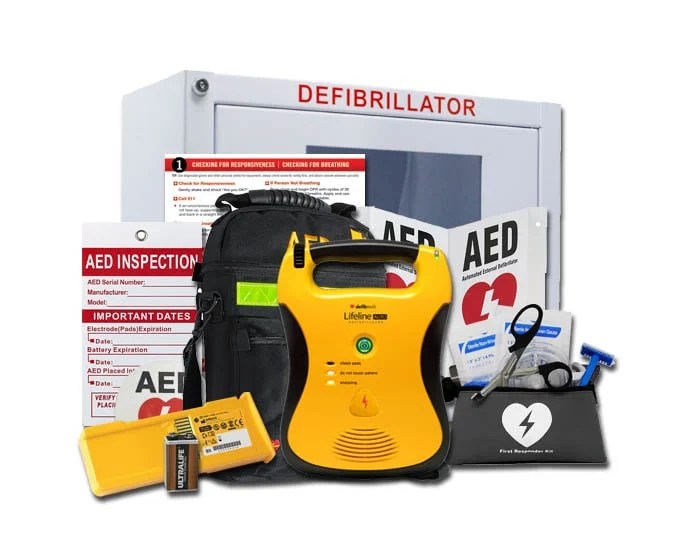
Where you place your AED is just as important as having one in the first place. During a sudden cardiac arrest, the goal is to deliver a shock within three to five minutes of collapse, and strategic placement makes this possible. Following OSHA recommendations, AEDs should be in visible, accessible locations marked with clear signage. Think about high-traffic areas like lobbies, cafeterias, fitness centers, or main hallways. A well-placed device from a complete AED value package that includes a cabinet and signage ensures that a responder can find it and act quickly when every second counts.
OSHA Guidelines for AED Maintenance and Inspection
An AED only saves lives if it is ready to work correctly. That is why OSHA requires employers to inspect and maintain their devices according to the manufacturer’s specifications. This involves performing regular checks to confirm the AED is operational, keeping detailed maintenance records, and monitoring the expiration dates of critical accessories. You will need to replace AED pads and batteries before they expire to ensure your device is always ready for an emergency. For organizations that want to simplify compliance, our AED Total Solution manages maintenance schedules, training needs, and compliance checks for you.
How Good Samaritan Laws Protect You
Key point: All 50 states have Good Samaritan laws that shield AED users and owners from lawsuits, as long as the device was properly maintained and used in good faith during an emergency.
One common concern is legal responsibility. Fortunately, all 50 states have Good Samaritan laws that protect individuals and organizations that use AEDs in emergencies. For an in-depth look at what these laws cover, see our guide to Good Samaritan law and AED legal protections.
These laws generally:
- Protect laypeople who act in good faith
- Shield AED owners from lawsuits if the device was properly maintained
- Apply to both trained and untrained responders
If your AED is used appropriately and kept in good working order, you are protected in most cases.
What Are the AED Rules for Schools?
Key point: More than 30 states require AEDs in public schools. Requirements typically include at least one device on premises, accessibility during athletics, staff CPR training, and inclusion in emergency action plans.
Many states now require AEDs in public and charter schools. Some also extend the requirement to private schools and colleges. Regulations often include:
- Having at least one AED on the premises
- Ensuring the AED is accessible during athletic activities
- Training staff in CPR and AED use
- Including AED protocols in emergency plans
Our complete AED value packages are ideal for schools and include the device, accessories, storage, and signage.
Do Gyms and Fitness Centers Need an AED?
Key point: Over 20 states mandate AEDs in fitness facilities. Requirements include accessible devices during operating hours, trained staff on-site, visible signage, and regular maintenance.
More than 20 states mandate AEDs in fitness facilities. This includes gyms, martial arts studios, and community recreation centers. Requirements often cover:
- Accessible AEDs during operating hours
- Trained staff available on-site
- Visible signage and ongoing maintenance
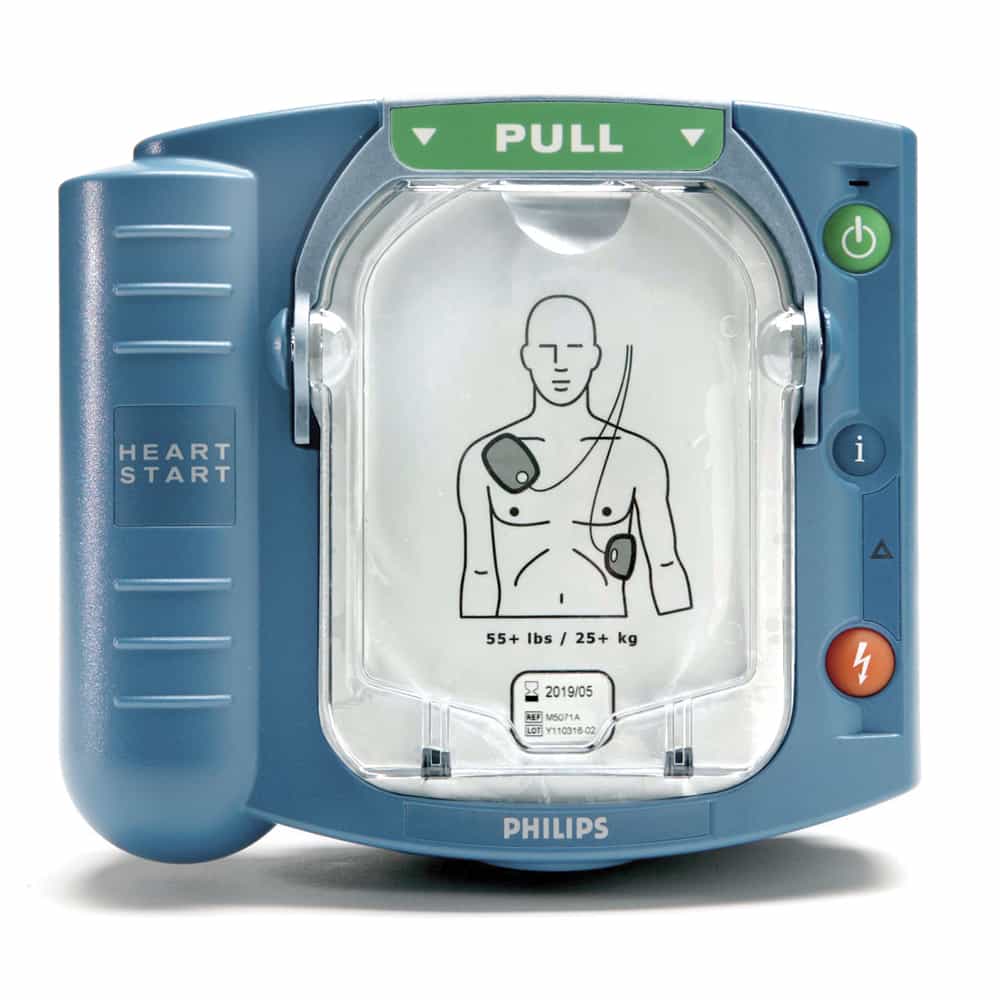
The Philips HeartStart OnSite AED is a great choice for gyms thanks to its ease of use and durability.
Your Action Plan for a Successful AED Program
Key point: Even without a legal mandate, best practices include choosing a user-friendly AED, installing it in a visible cabinet, keeping spare pads and batteries, training your team, and adding bleeding control supplies.
Even if your state does not require an AED, following best practices ensures you are ready in a cardiac emergency.
We recommend:
- Choosing a user-friendly AED like the Philips HeartStart FRx AED
- Installing it in a clearly marked AED cabinet
- Keeping extra pads and batteries on hand
- Scheduling regular CPR and AED training for your team
- Adding a Bleeding Control Kit for complete emergency readiness
Understanding AED regulations in the US helps you stay both legally compliant and truly prepared. With the right equipment, proper maintenance, and basic training, your workplace or facility can be ready to save lives at any time.
Ready to get started? Shop AEDs now to find the right device, accessories, and support you need to meet AED guidelines and protect your team. Call us at 858-665-2025 for personalized guidance.
Frequently Asked Questions
Is an AED legally required at my business?
There is not a single federal law that requires every business to have an AED. Instead, the rules are set at the state level and can vary quite a bit. Many states mandate them in specific places like schools, gyms, and government buildings. The best approach is to check your local state regulations to know for sure what applies to you.
What if I use an AED and something goes wrong? Can I be sued?
This is a common and completely valid concern. Fortunately, every state has Good Samaritan laws designed to protect people who step in to help during an emergency. As long as you use the AED in good faith and the device has been properly maintained, these laws generally shield you from liability.
Besides just buying the device, what are the main things I need to do for my AED program?
A successful AED program involves more than just the device itself. You will need to ensure staff members are trained in CPR and how to use the AED. It is also critical to perform regular maintenance checks to confirm the device is ready and to replace pads and batteries before they expire. Finally, make sure the AED is stored in a visible, accessible location so anyone can find it quickly in a crisis.
How often do I need to check on my AED?
You should always follow the inspection schedule recommended by the device manufacturer. This typically involves performing regular visual checks, often monthly, to ensure the status indicator shows it is ready for use. You also need to keep a close eye on the expiration dates for the electrode pads and batteries and replace them as needed.
Does OSHA have a specific rule that says I must have an AED?
OSHA does not have a standard that explicitly requires an AED in every workplace. However, its General Duty Clause requires employers to provide a workplace free from recognized hazards. Since the average emergency response time is often longer than the few minutes a person has during cardiac arrest, having an on-site AED is considered a key part of meeting that duty.
What are the AED requirements by state?
AED requirements vary by state. Most states require AEDs in schools and many require them in fitness centers. States like California, New York, and New Jersey have the most comprehensive mandates covering schools, gyms, and government buildings. Check our state-by-state AED legislation guide for specific details.
Key Takeaways
- Check State and Industry-Specific Rules: Federal OSHA guidelines are a starting point, but the specific laws requiring an AED are set at the state level. Be sure to research the regulations for your location and industry to stay compliant.
- Build a Program, Not Just a Purchase: An effective AED plan goes beyond the device itself. It includes strategic placement for quick access, regular inspections, and keeping essential accessories like pads and batteries up-to-date.
- Proper Maintenance Ensures Legal Protection: Good Samaritan laws protect you when you act in good faith, and that includes having a well-maintained device. Consistent upkeep is the best way to ensure your AED is ready to use and that you are covered legally.
Disclaimer for information purposes only:
The information provided on this website is intended for general educational and informational purposes only. It is not medical advice and should not be used as a substitute for professional diagnosis, treatment, or care. Always consult a qualified healthcare or medical professional regarding any health-related questions or concerns.
While we strive to ensure the information shared is accurate and up to date, no guarantees are made regarding completeness, accuracy, or applicability to any individual situation. Use of this content is at the reader’s sole discretion and risk.
This website is part of the Response Ready family of emergency preparedness and training resources, including CPR & first aid training and compliance services, AED sales and program support, AED program management software, and medical oversight solutions provided through our affiliated platforms:
• CPR1.com
• AEDLeader.com
• AEDTotalSolution.com
• MDSIMedical.com
By accessing or using this website, you agree to release, indemnify, and hold harmless the website owners, authors, contributors, and affiliated entities from any claims, losses, damages, or liabilities arising from the use or reliance on the information presented.