- Published
- June 16, 2026
Who can use an AED?


AEDs (Automated External Defibrillators) are life-saving devices designed to be used by anyone, not just doctors, nurses or first responders. In the case of sudden cardiac arrest (SCA), every second matters. That’s why AEDs are built to be simple, intuitive and safe, so even people with no medical background can use them to help save a life. If you want to know the exact steps, read our complete guide on how to use an AED.
In this post, we’ll answer the question “Who can use an AED?”, explain how they work, and why it’s important that these devices are accessible in public and private spaces. We’ll also highlight legal protections, share examples of everyday users, and show how you can prepare your space with the right tools and training.
AEDs are designed for everyone
AEDs are intentionally made to be used by untrained bystanders. Whether you’re a teacher, office worker, coach, parent or passerby. If you witness someone collapse and stop breathing, you are absolutely capable of using an AED.
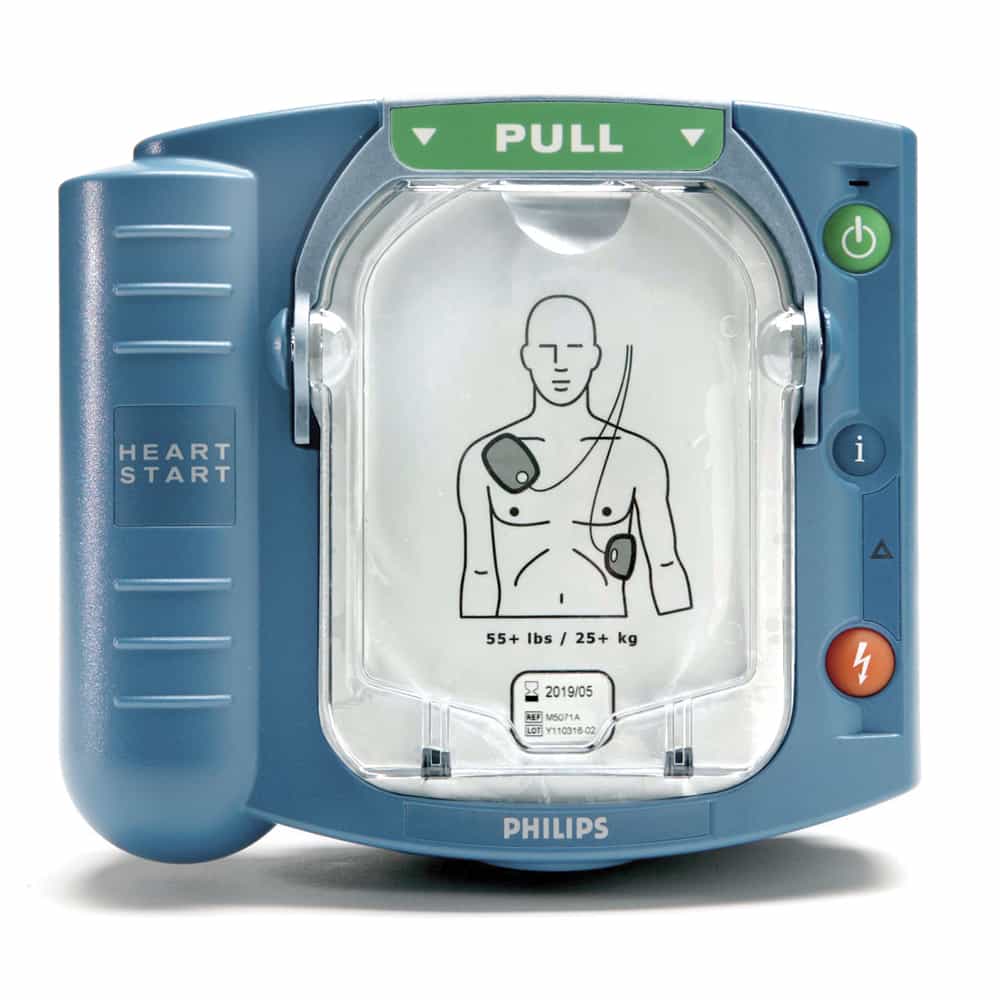
Devices like the Philips HeartStart OnSite AED and Philips HeartStart FRx AED are great examples. They provide:
- Step-by-step voice instructions
- Visual diagrams to show where to place pads
- CPR coaching during chest compressions
- Built-in heart analysis to determine if a shock is needed
The AED will only deliver a shock if the person’s heart rhythm requires it. If not, it won’t allow a shock, even if you press the button. This makes AEDs incredibly safe to use, even for someone who’s never seen one before.
Real people saving real lives
AEDs are commonly used in emergencies by:
- Teachers and school staff
- Security personnel in malls or offices
- Parents and caregivers at home or in public
- Sports coaches, gym staff and lifeguards
- Event volunteers and venue staff
You don’t need certification or prior experience. If there’s an AED nearby, you can use it. These life-saving devices are placed in public areas like airports, schools, shopping centers, offices, gyms and community centers for that exact reason,so that the closest person can take action immediately.
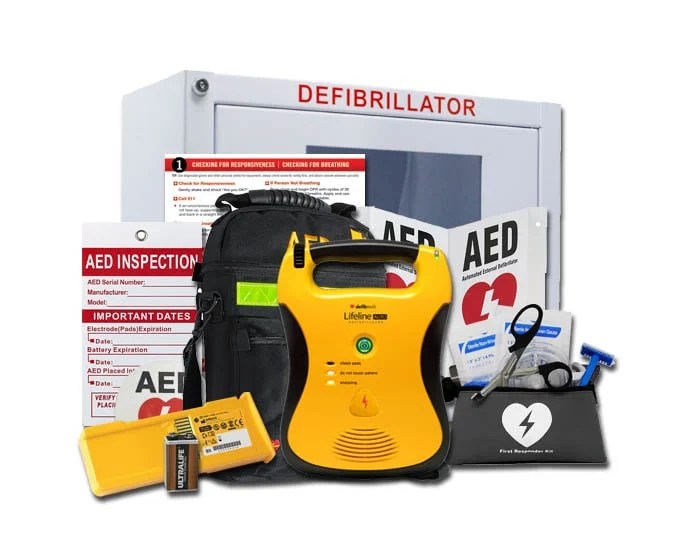
Want to ensure your space is prepared? Browse our complete AED packages, which include the AED, pads, batteries, case and signage. Everything you need to stay ready.
You don’t need training, but it helps
AEDs are simple by design, and you don’t need a certificate or medical license to use one. That said, getting basic training can help you feel more confident in an emergency.
Our AED training courses are designed for individuals and teams who want hands-on experience with CPR and defibrillation. While training is optional, it’s a great way to boost your readiness, especially if you manage a public space or oversee safety protocols in the workplace.
If you have an AED on-site, whether in a school, office, factory or gym, we recommend offering regular CPR and AED training to staff. Confidence saves lives just as much as the tools do.
You’re protected under the law
Many people hesitate to use an AED because they’re afraid of doing something wrong. But here’s the truth: you are protected.
Good Samaritan laws exist in all 50 U.S. states, protecting anyone who acts in good faith during an emergency. As long as you’re trying to help, not harm, and follow the device’s instructions, you’re legally protected. Learn more about how Good Samaritan laws protect AED users at the federal and state level.
This means:
- You don’t have to worry about legal liability
- You won’t be held responsible for unintended outcomes
- You’re encouraged to act quickly when someone’s life is in danger
The law is on your side. When a person collapses from cardiac arrest, you can act with confidence knowing both the AED and the law are designed to support your efforts.
Why speed matters
Sudden cardiac arrest can happen to anyone, anywhere, regardless of age or health history. When it does, time is the most important factor. For every minute without CPR or defibrillation, the chance of survival drops by 7–10%.
That’s why it’s critical that AEDs are easily accessible and that bystanders know they can use them. Delivering a shock within the first 3 to 5 minutes can make the difference between life and death.
Want to ensure your AED is visible and ready? Consider installing an AED cabinet in a central location with proper signage so it’s easy to find during an emergency.
Prepare for more than cardiac emergencies
In addition to AEDs, it’s smart to prepare for other medical emergencies like trauma or bleeding. Our Bleeding Control Kit – Standard and Bleeding Control Kit – Premium are designed to help manage severe injuries while waiting for emergency services.
Many of our AED packages can be bundled with bleeding control kits to provide a complete response solution, whether for a workplace, school, sports facility or public event.
So, who can use an AED?
You can. Your colleague can. A teacher, a student, a passerby, AEDs are for everyone. They’re built with the expectation that the person who grabs the device won’t have medical training. That’s why they speak to you, guide you and only deliver a shock if it’s absolutely necessary.
AEDs save lives every day, and ordinary people, just like you are the ones saving them.
Shop AEDs now and get the tools you need to respond with confidence in any emergency.
Disclaimer for information purposes only:
The information provided on this website is intended for general educational and informational purposes only. It is not medical advice and should not be used as a substitute for professional diagnosis, treatment, or care. Always consult a qualified healthcare or medical professional regarding any health-related questions or concerns.
While we strive to ensure the information shared is accurate and up to date, no guarantees are made regarding completeness, accuracy, or applicability to any individual situation. Use of this content is at the reader’s sole discretion and risk.
This website is part of the Response Ready family of emergency preparedness and training resources, including CPR & first aid training and compliance services, AED sales and program support, AED program management software, and medical oversight solutions provided through our affiliated platforms:
• CPR1.com
• AEDLeader.com
• AEDTotalSolution.com
• MDSIMedical.com
By accessing or using this website, you agree to release, indemnify, and hold harmless the website owners, authors, contributors, and affiliated entities from any claims, losses, damages, or liabilities arising from the use or reliance on the information presented.