Choosing a durable defibrillator for any environment
When you place an Automated External Defibrillator (AED) in a school gymnasium, a community poolside, or a busy workshop, you expect it to be ready in a moment of crisis. But what if the environment itself is a challenge? Daily bumps, dust, moisture, and vibrations can compromise the readiness of a standard device. For organizations responsible for public safety, choosing an AED isn’t just about its medical capabilities, it’s about ensuring it can withstand the reality of its surroundings.
An AED is a critical investment in safety, but its reliability is only as strong as its construction. Research shows that device failures can and do happen, with a staggering 21.2% of AEDs distributed between 1996 and 2005 being recalled for various issues. Common failure points often involve sensitive components like batteries and pads, which are particularly vulnerable in demanding settings. This is why durability is not a premium feature,it is an absolute necessity for ensuring peace of mind and protecting lives.
Understanding the language of durability
When comparing AEDs, you will encounter technical terms like IP Ratings and military standards. Understanding what they mean is key to making a confident decision. These are certifications that guarantee a device’s resilience against common environmental threats.
An Ingress Protection (IP) rating tells you how well a device is sealed against solids like dust (the first digit) and liquids like water (the second digit). For example, an IP54 rating means the AED is protected against significant dust accumulation and can handle water splashes from any direction. This is crucial for a device that might be near a swimming pool, in a dusty workshop, or used outdoors in the rain. A higher rating, like IP55, offers even greater protection. Understanding AED IP ratings what do water and dust resistance mean for your device?
Beyond dust and water, military grade standards like MIL-STD-810G test for a much wider range of stresses. This certification ensures the device can survive drops, constant vibrations like those in a vehicle, and extreme temperatures. An AED that has passed these rigorous tests is proven to function reliably whether it’s mounted in a school bus, carried across a sports field, or stored in a non-climate controlled space.
Get certified in CPR
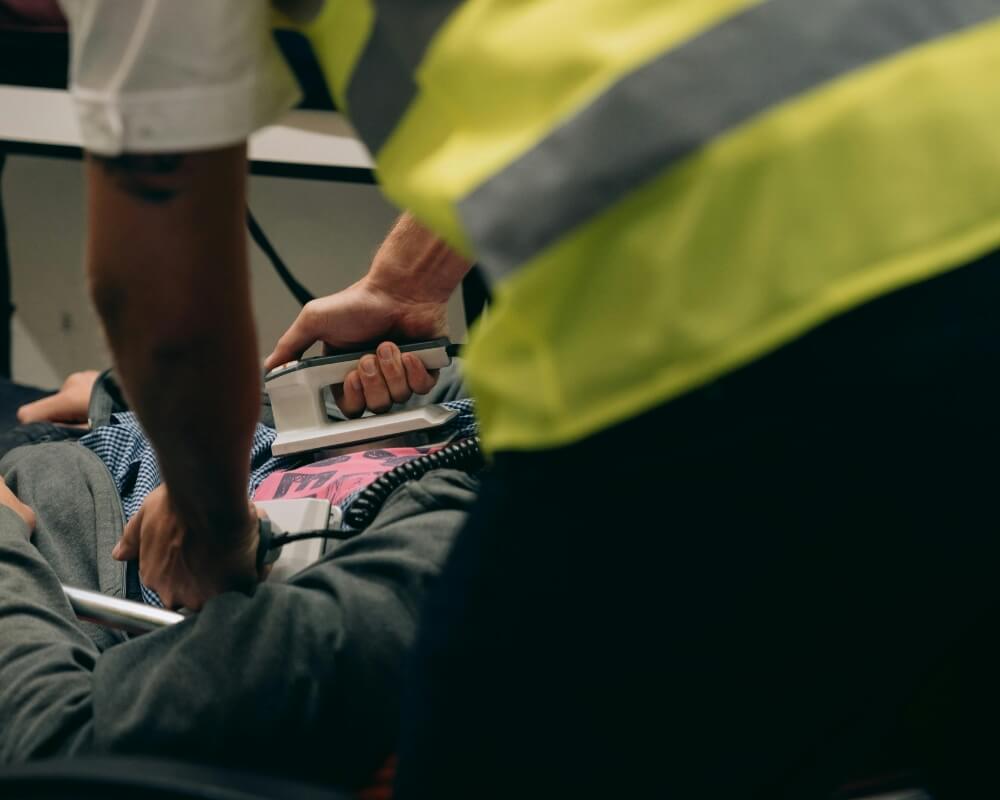
Adult & Pediatric First Aid/CPR/AED — Blended Learning
Self-paced online + in-person skills check. 2-year certification.
CPR, AED & First Aid Certification
Instructor-led on-site. Practice on real manikins and AED trainers.
Matching the right AED to your space
The ideal AED for a quiet office is not necessarily the best choice for a high-traffic community center. Thinking through the specific challenges of your environment will help you select a device that is truly prepared for an emergency.
For schools and community centers
These locations are full of activity, which means an AED is exposed to accidental bumps, drops, and a high volume of people. A durable device with proven shock resistance is essential. Furthermore, because a sudden cardiac arrest can happen to anyone, having an AED that is simple for any bystander to use is critical. Many rugged models feature clear, calm voice prompts and straightforward operation to guide rescuers through the process, even in a chaotic situation.
For outdoor events and recreation
For community sports leagues, summer camps, or outdoor festivals, an AED must be portable and resilient against the elements. A high IP rating for water and dust resistance is non-negotiable. These devices need to withstand sudden rain showers, dusty fields, and being transported frequently. Lightweight design and a long battery life are also key considerations, ensuring the AED is ready to go wherever it’s needed.
For small businesses and workshops
Environments like manufacturing facilities or auto shops present unique challenges, including dust, debris, and constant vibrations from machinery. An AED with a high dust protection rating (the first digit in the IP code) and proven vibration resistance (MIL-STD-810G) will ensure its internal components remain secure and operational.

RECOMMENDED
HeartSine Samaritan 350P AED Package
Compact, fully-automatic AED designed for first-time responders. Pads, battery, carry case and wall sign included.
A benchmark for resilience the Defibtech Lifeline AED
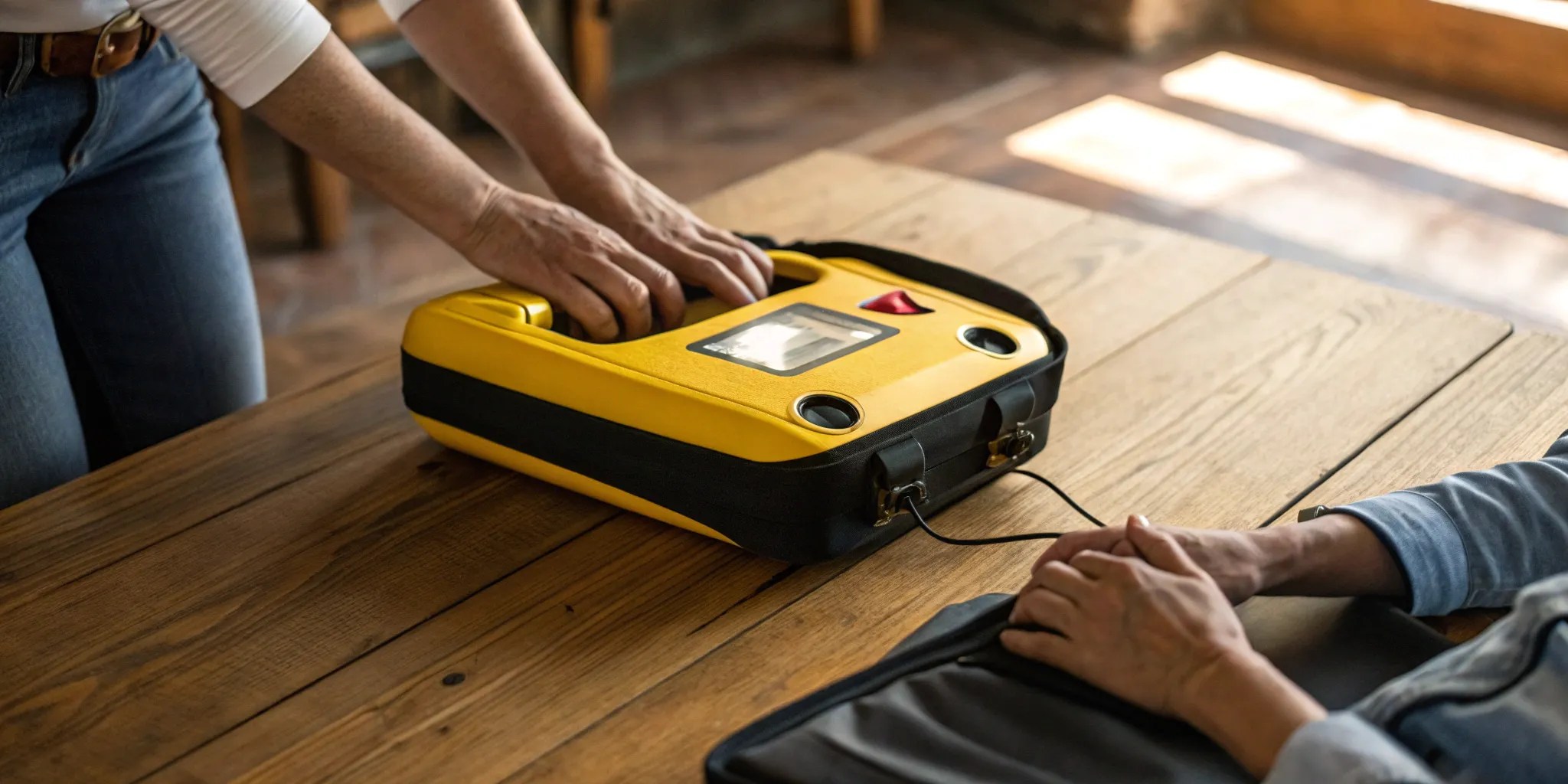
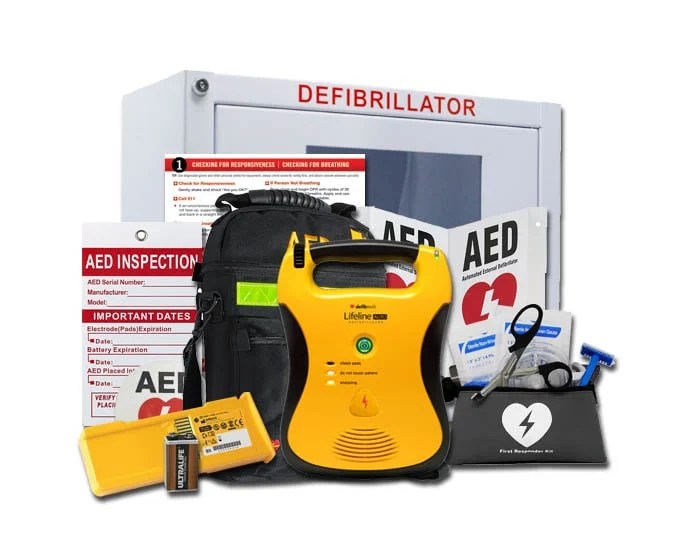
When it comes to proven durability, the Defibtech Lifeline AED sets a high standard. It was designed from the ground up to meet the demands of challenging environments. Its bright yellow, impact-resistant body is easy to spot and built to last.
What truly sets it apart are its credentials. The Defibtech Lifeline AED has been tested to military standards for shock and vibration, making it durable enough to be used in helicopters and jet aircraft. Its IP54 rating protects it from dust and water ingress, ensuring it’s ready for use in almost any setting, indoors or out. The combination of a compact, rugged design and straightforward two button operation makes it an exceptionally reliable choice for schools, businesses, and community spaces where you need a device that is both tough and easy to use.
Building a complete and resilient safety program
Choosing a durable device is the first step. To ensure it’s always ready, you need a supportive program built around it. Proper placement and protection are just as important as the device itself.
Installing your AED in a clearly marked, easily accessible protective cabinet shields it from damage, theft, and environmental extremes. Regular readiness checks are also crucial. Tools like the Response Ready App can simplify this process, allowing you to easily log monthly inspections and receive automated reminders for battery and pad replacements. This proactive approach helps in protecting your AED investment and guarantees it will perform when called upon.
Ultimately, investing in a rugged AED is an investment in certainty. It provides the confidence that your life saving equipment is prepared to handle not only a medical emergency but also the environment in which it occurs.
Not sure which AED or training fits your needs?
A Response Ready product expert walks you through it — no obligation.
Frequently asked questions
Q: Do I need a special cabinet for an AED in a busy school hallway?
A: Yes, using a protective wall cabinet is highly recommended in high traffic areas. A cabinet not only protects the AED from accidental bumps and damage but also keeps it secure and makes it highly visible. Many cabinets come with alarms to alert staff if the device is accessed.
Q: Can a rugged AED be used on a child?
A: Most rugged AED models, including the Defibtech Lifeline, can be used on children. This typically requires separate pediatric electrode pads, which deliver a lower energy shock appropriate for a child’s smaller body. It is essential to have these pads on hand if your AED will be located where children are present.
Q: What is the difference between water resistant and waterproof?
A: “Water resistant” means the device can resist the penetration of water to some degree, but not entirely. An IP rating with a second digit of 4 or 5 (like IP54 or IP55) indicates resistance to splashes or light jets of water. “Waterproof” implies it can be fully submerged. Most AEDs are water resistant, not waterproof, which is sufficient for nearly all emergency scenarios.
Q: How does a rugged AED’s cost compare to a standard one over time?
A: While a rugged AED may have a slightly higher upfront cost, its total cost of ownership can be lower. Its durable construction reduces the risk of damage and costly repairs or replacement. Furthermore, many rugged models feature long life batteries and pads, decreasing the frequency and cost of maintenance over the device’s lifespan.
Q: Is a fully automatic or semi automatic AED better for a noisy place like a gym? (See also: AED requirements for gyms and fitness centers)
A: In a noisy environment, a semi automatic AED is often preferred. This model requires the rescuer to push a button to deliver the shock, ensuring everyone is clear and ready. The clear voice prompts guide the user through this step, providing an extra layer of control in a loud or chaotic setting.